The Sky Hasn’t Fallen In Colorado

Alex Altman checks in on the state of the state post-legalization:

It seems inevitable that some problems will materialize. Supporters of Colorado’s marijuana industry fret about heavy taxes and high prices, the potential of dwindling supply, overregulation, and the specter of intervention from the federal government. A car accident involving a stoned driver, use by minors or pot tourists carrying their product across state lines could all tarnish the rollout. Then there is the biggest concern: a lack of access to banking services that has forced legal pot businesses to operate mostly in cash, both a legal and safety hazard. “We’re not going to get it 100% right the first time,” [implementation task force member Sam Kamin] cautions.

But a few days into Colorado’s big experiment, there are few, if any, major failures to point to.

Bruce Barcott peers into the future:

Marijuana today is a craft-scale industry. It may not stay that way very long. Bigger players are waiting in the wings.

 In the past year, Allen St. Pierre, executive director of NORML, the nation’s biggest marijuana-­advocacy group, has met half a dozen times with representatives of the beer, wine and liquor industries. They’ve talked about the coming legalization of marijuana and what it will mean for the sector of what St. Pierre calls “problematic adult commerce.” The NORML leader didn’t ask for those meetings. The booze people came to him.

It’s easy to assume that Big Tobacco and Big Alcohol are licking their chops at the emerging marijuana industry, waiting for their chance to scoop up a massive share of the market. In truth, it’s not that simple. Tobacco, St. Pierre tells me, has production and distribution channels that could easily absorb cannabis. “But they don’t have the Dionysian background,” he says. “The alcohol guys, they’re in the pleasure business. They know how that works.”

Beer companies are the most likely first movers. Beer sales have been slipping in recent decades, as more Americans move up to wine or cocktails. Their customer seeks an inexpensive, low-level buzz. Here’s one way to think about it: At the end of the week, the beer consumer has 20 bucks in his pocket. He can spend that all on beer, or maybe he buys a six-pack and a gram of pot. “I think they’ll be happy to sell you both,” says St. Pierre.

Alcohol companies also have excellent working relationships with state lawmakers and regulators. That’s no small thing. Legalization rides on the growing belief that marijuana should be treated like alcohol, not like heroin or cocaine. For the feds to go along with these pilot projects, they need assurance that state officials can turn pot into a product as tightly regulated as beer or wine.

The Netflix Network, Ctd

Alexis Madrigal attributes the success of the streaming giant to its ability to hyper-tailor content to viewer interests, using 76,897 genre descriptors:

Using large teams of people specially trained to watch movies, Netflix deconstructed Hollywood. They paid people to watch films and tag them with all kinds of metadata. This process is so sophisticated and precise that taggers receive a 36-page training document that teaches them how to rate movies on their sexually suggestive content, goriness, romance levels, and even narrative elements like plot conclusiveness. They capture dozens of different movie attributes. They even rate the moral status of characters. When these tags are combined with millions of users viewing habits, they become Netflix’s competitive advantage. The company’s main goal as a business is to gain and retain subscribers. And the genres that it displays to people are a key part of that strategy. “Members connect with these [genre] rows so well that we measure an increase in member retention by placing the most tailored rows higher on the page instead of lower,” the company revealed in a 2012 blog post. The better Netflix shows that it knows you, the likelier you are to stick around.

And now, they have a terrific advantage in their efforts to produce their own content: Netflix has created a database of American cinematic predilections. The data can’t tell them how to make a TV show, but it can tell them what they should be making. When they create a show like House of Cards, they aren’t guessing at what people want.

Salmon puts this strategy in a less favorable light. He observes that Netflix “can’t afford the content that its subscribers most want to watch”:

As a result, Netflix can’t, any longer, aspire to be the service which allows you to watch the movies you want to watch. That’s how it started off, and that’s what it still is, on its legacy DVDs-by-mail service. But if you don’t get DVDs by mail, Netflix has made a key tactical decision to kill your queue — the list of movies that you want to watch. … So Netflix has been forced to attempt a distant second-best: scouring its own limited library for the films it thinks you’ll like, rather than simply looking for the specific movies which it knows (because you told it) that you definitely want to watch. This, from a consumer perspective, is not an improvement.

Last month, Netflix commissioned a survey that found “of 1,500 US adults who stream TV shows at least once a week, 61% binge watch regularly”:

Respondents were not provided with a definition of binge watching, but 73% defined it as watching two to six single episodes of a TV show in one sitting. That may come as a surprise to some self-proclaimed binge watchers, as watching two episodes in one go actually seems so normal that it’s hardly worth noting. … 73% of those surveyed said they enjoy binge watching and don’t feel guilty about it – big shocker there. And 79% said binge watching makes shows more enjoyable, while 37% said they prefer to “save” new shows or seasons to stream them at a later date instead of watching them when they’re new.

On that note, David Koepsell contends that rapidly consuming a TV series creates a shared cultural canon:

While in the past, I might have felt trapped by having missed the first three seasons [of Game of Thrones], unlikely to try to lock into the next and begin mid-story, I could quickly come up to speed with something that is clearly now an important part of our culture. The New Canon is both unhindered by geography and unrestrained by time. Binging is a legitimate and sometimes necessary way for us to join the broader culture, engage with fans around the world, and perform a new form of communion.

Michelle Smith also sees advantages to binging:

A significant number of people still consume series such as True Blood by viewing or streaming weekly in order to avoid spoilers and keep current with social media conversations. Yet many other TV viewers now prefer to gorge on an entire season via streaming, downloading, or DVD. This method of consumption removes the suspenseful wait between episodes, and enables the viewer to more clearly follow, and remember, plot developments.

Previous Dish on Netflix and streaming video here, here, and here.

Is Hillary Already Running?

Maggie Haberman reports on Clinton’s 2016 “shadow campaign”:

Publicly, Clinton insists she’s many months away from a decision about her political future. But a shadow campaign on her behalf has nevertheless been steadily building for the better part of a year — a quiet, intensifying, improvisational effort to lay the groundwork for another White House bid. … Several sources said in interviews that her team is discussing how she will weigh in on policy debates over the course of the next year. She is working closely with clusters of aides on different policy initiatives — one involves child development, and Clinton is also being advised to address income inequality. Her memoir about her time at the State Department, initially expected for June, is likely to be out later in the summer, putting a book tour closer to the time when she would campaign for candidates in the midterms. That’s also closer to when she’s likely to announce her plans, after the November election.

Morrissey yawns:

The first signs of primary campaigns will begin to pop up in about 12 months, if the pattern from the last two cycles holds. People who want to run for the presidency are expected to start doing some preliminary due diligence at this stage in the cycle, regardless. The best that Politico has on Hillary Clinton is that she took one consultant meeting a few months ago?

… Maggie Haberman does a good job of running down some of the insiders and outsiders that would form the campaign, if it launches, but there’s nothing in the piece that suggests that anything has changed at all since that one outside consultation last summer. It will make a useful touchstone for later when Hillary finally decides to enter the race or retire for good, but it gives no insight into where that decision is, nor any surprises on preparation for the campaign as a contingency.

Philip Bump isn’t surprised at the strategists clamoring to campaign for Hillary, given the money involved:

As The New Yorker‘s Ryan Lizza put it, Clinton’s not having yet announced her own campaign left “every Dem consultant hustling for a buck.” That’s meant at least one conflict as those hustlers compete for space. In early 2013, Haberman reports, Clinton aide Huma Abedin (wife of Anthony Weiner) was asked to resolve a dispute between Ready For Hillary and Priorities USA. The former was soliciting money from donors the latter considered its domain. Clinton’s team resolved the dispute by creating a very campaign-like divide: Ready For Hillary would become the field staff, in essence, doing voter contact and data. Priorities USA would continue vacuuming up money from big donors. That split makes obvious why Clinton hasn’t had to announce any actual plans to run. Her decision to postpone any official announcement until later this year — Haberman figures it will come after midterms in November — makes perfect sense. Why go through the legal headache of formulating an official campaign infrastructure when there exist staffers and organizations that can raise money and reach out to voters and serve as an echo chamber without doing so? It gives the Clinton team semi-plausible deniability, distance from seeming as though it’s stepping on Obama’s second term.

Will Legal Marijuana Decrease Alcohol Consumption?

Oktoberfest 2008

One aspect of the debate that’s finally reaching the boomer elites is that although alcohol is widely understood to be much more harmful than cannabis, why add to the substances that could possibly make people happy/fucked up? The one possibility that those favoring continued Prohibition haven’t quite grasped is that more cannabis use could actually decrease alcohol consumption (which is one reason the beer and spirit companies remain opposed).

Now, we don’t have solid data on this, obviously, because we’ve only had a few days of seriously legal pot in Colorado. But we do have more than a decade of data from California where the medical marijuana law has made pot de facto legal for many people (excepting, of course, the black and the Hispanic). Nagourney noted the evidence a while back in the NYT:

Research suggests both that marijuana has become an alcohol substitute for younger people here and in other states that have legalized medical marijuana, and that while driving under the influence of any intoxicant is dangerous, driving after smoking marijuana is less dangerous than after drinking alcohol.

A paper (pdf) summarizes the research, which is not yet conclusive but highly suggestive. Money quote:

Studies based on clearly – defined natural experiments generally support the hypothesis that marijuana and alcohol are substitutes. For instance, DiNardo & Lemieux (2001) found that increasing the Minimum Legal Drinking Age (MLDA) from 18 to 21 encourages marijuana use. Using data from the NSDUH and a regression discontinuity design, Crost & Guerrero (2012) found a sharp decrease in marijuana use at 21 years of age, suggesting that young adults treat alcohol and marijuana as substitutes. Finally, Anderson, Hansen, & Rees (2013) examined the relationship between legalizing medical marijuana and drinking using data from the Behavioral Risk Factor Surveillance System.

These authors found that legalization was associated with reductions in heavy drinking especially among 18 – through 29 – year – olds.

In addition, they found that legalization was associated with an almost 5 percent decrease in beer sales, the alcoholic beverage of choice among young adults (Jones, 2008). The results of DiNardo & Lemieux (2001), Crost & Guerrero (2012) and Anderson, Hansen, & Rees (201 3) suggest that, as marijuana becomes more available, young adults inColorado and Washington will respond by drinking less, not more. If non – medical marijuana states legalize the use of recreational marijuana, they should also experience reductions in drinking with the accompanying public health benefits.

So we could actually substitute one socially disruptive and dangerous drug for another, less personally harmful, less addictive and in many areas, medicinal substance that you could grow in your garden in a civilized society. I’m not sure how David Frum or David Brooks would respond to this data. But they should, don’t you think?

(Photo: Two men in Bavarian costume take a nap on the ground during day two of the Oktoberfest beer festival on September 21, 2008 in Munich, Germany. By Johannes Simon/Getty Images)

Marriage Equality Update

SCOTUS has stayed the Utah ruling:

The Supreme Court on Monday morning put on hold a federal judge’s decision striking down Utah’s ban on same-sex marriage, thus stopping a wave of such marriages across the state.  The Court’s order reinstates the state ban and will keep it intact until after a federal appeals court has ruled on it. …

With the Justices’ order in the case, it now appears almost certain that the question of state power to bar same-sex marriages will not be before the Justices during the current Term.  A case on that issue would have to be granted this month to be reviewed before the Court is expected to finish this Term in late June.

Rick Hasen is unsurprised:

Recognizing a constitutional right to same sex marriage is a big deal, which requires thought, consideration and preparation in the public if this is going to happen through the courts.

In Utah, one of the most conservative states in the union, we went all of a sudden overnight from no gay marriage to gay marriage.  There was little indication for those not following developments it would happen.  I think it did happen because Utah’s lawyers continually botched their stay requests, and the Judge was following the arguments that were presented to him.  And once things started, Utah botched again how it handled its request in the 10th Circuit.

Key here I think is lowering the temperature, even (especially) for those Justices who ultimately support finding a right to same sex marriage.

Denver Nicks adds:

More than 900 gay and lesbian couples have already married since the initial ruling.  The status of those unions following the Supreme Court’s ruling is unclear.

Meanwhile, In Iraq…

Al-Qaeda militants have taken over the Anbar province cities of Fallujah and Ramadi, prompting a campaign by the military to win them back. Ariel Zirulnick explains how the group’s resurgence is linked to the Syrian civil war:

Anbar is overwhelmingly Sunni Arab and the toppling of Saddam Hussein began a process in which their community has felt more and more politically and economically marginalized relative to the country’s majority Shiite Arab community. While that process of disenfranchisement paused briefly towards the end of the US occupation of the country, when a US military strategy of outreach to Sunni Arab tribes with promises of jobs and a seat at the political table paid huge dividends, Shiite Prime Minister Nouri al-Maliki has persistently antagonized Sunni Arab politicians and citizens alike since the US military’s departure at the end of 2011.

Many of the Sunni Arabs of Anbar now view Maliki much as they did Iraq’s interim American rulers and with a civil war in Syria raging next door, the local Al Qaeda franchise is finding the wind at its back once more. The Islamic State in Iraq, which incorporated many Syrian jihadi fighters during the battle against US forces, formally merged with Al Qaeda supporters in Syria last year to form the Islamic State of Iraq and the Levant (ISIL, also commonly referred to as ISIS) which has become one of the most powerful groups fighting against the Syrian regime. The cross-border movement is far from supported by all in Anbar – its heavy-handed treatment of citizens of towns it controls and contempt for the local culture, tradition and tribal notables saw to that – but the number of people willing to join up, and almost as importantly willing to turn a blind eye rather than informing the authorities about militant movements, has swelled.

Frud Bezhan looks at how the crisis unfolded and what it might portend:

According to Kamran Karadaghi, a London-based Iraqi political commentator and former chief of staff to Iraqi President Jalal Talabani, much of the current fighting is a result of the longstanding political crisis in Iraq. ‘The political establishment has failed to reconcile with the Sunnis,’ he says. ‘The Sunnis are almost completely sidelined. The Sunni provinces of Iraq, especially Anbar, were once staunch opponents of federalism but now they want federalism for themselves. That shows you to what extent they’re dissatisfied.’ Tensions spiked in Anbar after Sunni lawmaker Ahmed al-Alwani was arrested in Ramadi on December 28, reportedly on terrorism charges. Days later, on December 30, Iraqi security forces broke up a yearlong sit-in being staged by Sunni protesters who complained of being marginalized by the Shi’ite-led authorities and unfairly targeted by security forces. The crackdown triggered clashes between the military and local tribesmen. The dismantling of the Sunni protest camp also prompted 44 lawmakers, many of them Sunnis, to submit their resignations. Protests against the government first broke out in Sunni areas of western and central Iraq in late 2012 and have continued for more than a year.

The ongoing fighting could have significant implications. Domestically, the violence will deepen tensions between the government and minority Sunnis. Karadaghi believes this could bring Iraq to the brink of civil war and lead to the country’s disintegration along sectarian lines. ‘The violence will only deepen the crisis in Iraq,’ he says. ‘Without a real and genuine reconciliation and political solution, the situation will escalate and become worse and worse. It might turn into a real Sunni-Shi’ite confrontation.’

Looking at these and other recent events, Daniel Byman pronounces 2013 “the year we lost Iraq”:

Al Qaeda in Iraq (AQI) has seemingly returned from the dead. On the verge of strategic defeat as U.S. forces departed Iraq, AQI has since regrouped into a large and growing force, contributing to the surge in violence in Iraq and the broader region. Although the neighboring conflict in Syria partially drives AQI’s resurgence, the causes of the group’s comeback are much deeper. Domestically, the weakness of the Iraqi state – and thus the ability of small, violent groups to operate with considerable freedom – has been a persistent problem since the fall of Saddam’s regime. Politically, the government of Iraqi Prime Minister Nuri al-Maliki made progress in restoring faith in Iraq’s institutions and establishing order in 2008-2009. However, in recent years he has focused on consolidating power and, in so doing, has alienated Iraq’s Sunni Muslim community. Iraqi security services are now more brutal, more political, and less skilled than they were when U.S. forces departed Iraq in 2011. As the Sunnis became marginalized, AQI’s popularity again grew.  Iraq’s neighbors contribute to the problem, sending money and volunteers directly to AQI or indirectly to the organization to support its role in the Syrian conflict. As the violence spreads, it has taken on its own dynamic. Iraqis trust the security services less, and more Sunnis support AQI for revenge or because of a perceived need for self-defense from the Shi’a-dominated security services or associated militias. This in turn leads the regime and the Shi’a community to view the Sunnis with even more suspicion and in their eyes justifies greater regime repression. Unfortunately, none of these problems are abating, and several are getting worse. So AQI’s power is likely to grow.

(Video: Raw footage of fighting in Anbar province from the Associated Press.)

Medical Marijuana In West Virginia

Yep, this is one issue that brings red states and blue states together – even though West Virginia is a strange kind of peuce. The latest poll (pdf) finds that West Virginians favor medical marijuana by 57 – 34 percent (it was 53 – 40 a year ago); they believe pot is less harmful than alcohol by 44 – 24 percent; and there’s a small minority to legalize it altogether (46 – 44). If almost twice as many people in West Virginia believe booze is more dangerous than pot, how do the Prohibitionists hope to win?

Update from a reader:

Color me unsurprised. It’s not well known, but marijuana has a long history in Mountaineer country. You can read some of it in this fun NY Times piece from 1991. The town in the piece, Moorefield, is where my parents met and married in the early 1970s. They were back-to-the-landers and of course that crowd smoked their share, but they weren’t the first. For quite a few old and lifelong residents it was just part of life, and one of many useful plants that could be gathered for free in the woods and river bottoms. The blueberries are excellent, too.

Conservatives For Government

In the new issue of National Affairs, Michael Gerson and Peter Wehner re-establish government as a conservative value:

It speaks well of conservatives that they want to be thought of as the defenders of the Constitution. But at a minimum, “constitutional conservatives” should recognize what both the federalist founders and Lincoln actually envisioned for the republic edmundburke1771-sdthey created and preserved. They were, on the whole, rigorous, empirical, modern thinkers, as well as sober and skeptical heirs of the Enlightenment, who believed they were fortunate to inhabit an age of progress. Far from being constrained by the prevailing physical, political, or economic arrangements of America in 1787, the founders fully expected America to spread across a continent, undergo economic and social change, and emerge as a global actor. And they purposely designed a constitutional system that could accommodate such ambitions.

Of course, this does not answer the question of how big the federal government should be, or what precisely it should and should not do. But it does warn against short-circuiting that discussion with overly simplistic and legalistic appeals to the Constitution as a purely limiting document. Our debates about what government ought to do must be debates about what we take our constitutional order to be and what we think are appropriate national goals. Such questions should be addressed through the political process established by the Constitution; we cannot expect them all to be settled in detail simply through direct interpretation of the Constitution’s text.

What I disliked about the essay was its caricature of Obama’s moderate centrism as over-reaching statist liberalism – but I can see nonetheless why this is a potent rhetorical point to entice some of the more doctrinaire libertarians to take notice. What I liked was its understanding that a conservative movement that sees government – all government – as the enemy is nether conservative nor viable as a vehicle for governance. Coming from a British Tory tradition, of course, my libertarian instincts have always been complemented by a deep belief that government is good, as long as it is not over-stretched, over-spent and devoted to utopian schemes as opposed to pragmatic responses to contingent social, political and economic problems. And these problems will necessarily change from decade to decade, century to century. The trouble with current rigid Republican ideology is that is cannot adjust to this reality. It is an avoidance of thought with respect to grappling with social change in order to sustain a coherent society and polity.

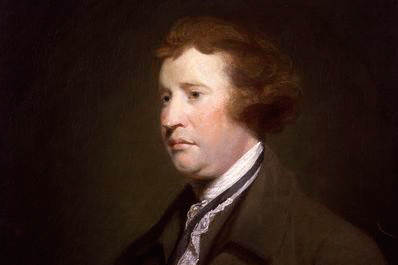
I also requires balance and moderation – two dirty words on the American right. This was a great, Burkean passage:

The proper measure of action is prudence. If Prohibition was a disaster in one direction, so, in the other direction, would be the licensing of methamphetamines and heroin for sale at every convenience store. Responsible, self-governing citizens do not grow wild like blackberries, which is why a conservative political philosophy cannot be reduced to untrammeled libertarianism. Citizens are cultivated by institutions: families, religious communities, neighborhoods, and nations.

And those nations also have histories which affect our current way of life. To deny the legacy of slavery and segregation, for example, simply because they no longer exist, is a terribly unconservative thing to believe. It treats a country’s development as an Etch-A-Sketch.

Conservative government, in other words, should be as strong as it is limited, as pragmatic as it is cautious, as empirical as it is open to a broader conversation with liberals and everyone else. It’s great to see this fundamental truth reasserted by Pete Wehner and Michael Gerson. I just hope someone within the conservative movement will listen. My hopes, sadly, are not very high.

Unraveling The Mystery Of Crapping Dogs

The latest from science:

The researchers measured the direction of the body axis of 70 different dogs while they were off-leash during 1,893 acts of defecation and 5,582 acts of urination over a two-year period. They found that, under calm magnetic field conditions, dogs prefer to orient their bodies along the North-South axis when they poop. However, this behavior did not occur during unstable magnetic field conditions, and the best predictor for this change of behavior was the rate of change of magnetic declination.

A reader points out:

The coauthor of the study is named Sabine Begall.

John Aravosis chimes in:

Every dog owner is familiar with the intricacies of doggy-pooping.  It seems to be a quite delicate dance, for some dogs – and conditions must be just right or it won’t happen.  My Sasha is a relatively easy pooper, but things still need to be just right.  My mom’s dog, Kukla, on the other hand, is a basket case.  Kukla usually has to walk blocks and blocks first – regardless of whether it’s approaching zero outside – and even then the result is not always guaranteed.

On Nixing Fixes

dish_corrections

Michelle Nijhuis mourns the death of the corrections column:

[T]he real power of the corrections column is rooted in good old shame. Journalists trained in the practice of public corrections learn that while it’s shameful to make mistakes in print, it’s even more shameful to hide them. Corrections columns serve as both punishment and partial absolution. And corrections columns get read because—well. Don’t we all love to read about others’ mistakes once in a while? Corrections also offer hilarious contrasts in tone and content. “Mr. Vidal called William F. Buckley Jr. a crypto-Nazi, not a crypto-fascist, in a television appearance during the 1968 Democratic National Convention,” The New York Times wrote in a correction to its obituary of Gore Vidal. …

I say every publication should have a corrections column. Many digital publications append corrections to individual posts and articles, which is a good start but lacks the shaming power of the column. The column form allows readers to judge the publication’s overall reliability—and forces us writers to make prominent, appropriately embarrassing confessions.

The Dish does its own part to draw attention to corrections. Some classics here, here, and here. The Dish’s blunder of the decade here.

(Image via HuffPo)