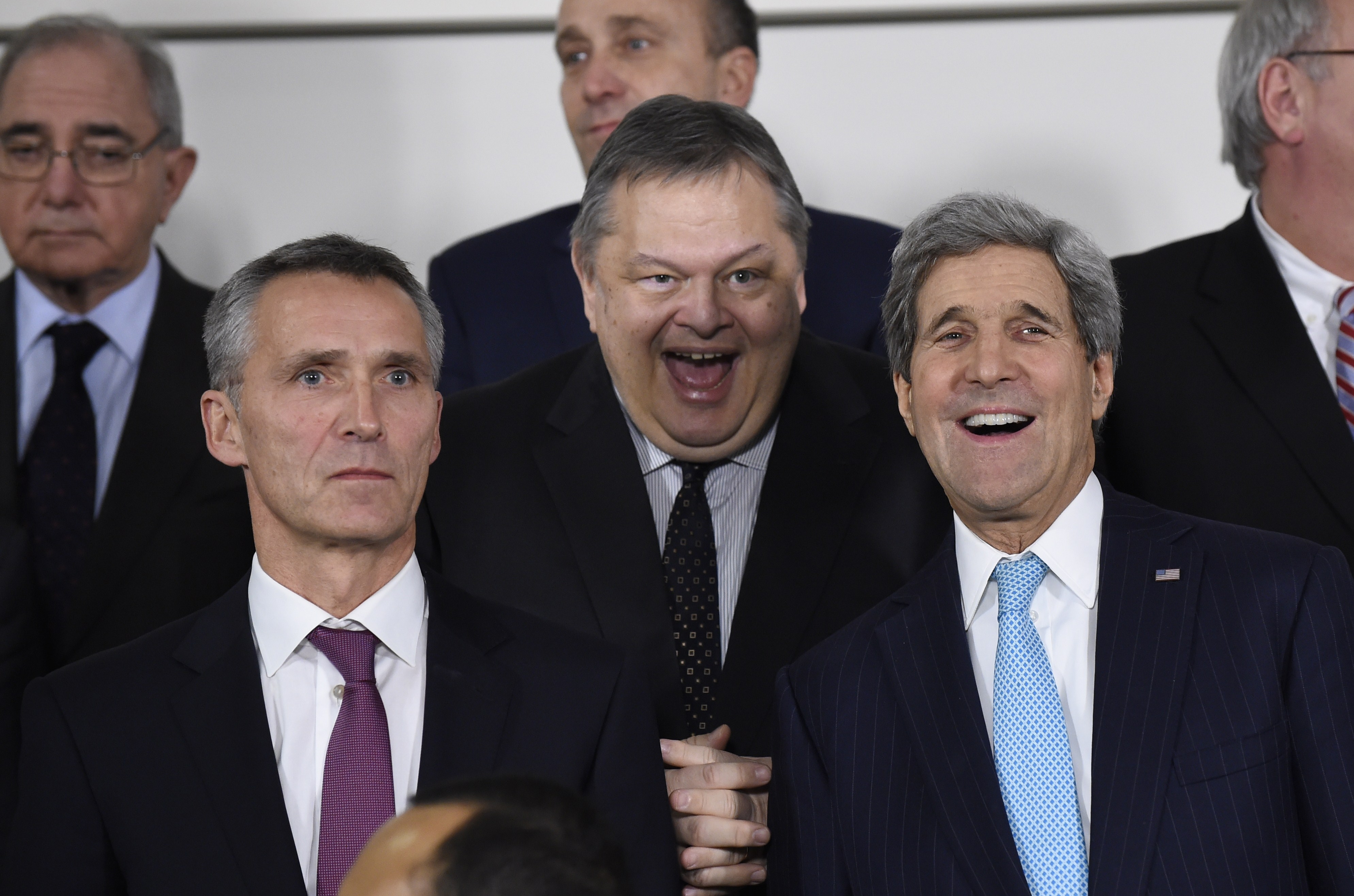
From left to right, NATO Secretary General Jens Stoltenberg, Greek Foreign Minister Evangelos Venizelos and US Secretary of State John Kerry as they pose for a group photograph at the Foreign Affairs ministers’ meeting at the NATO headquarters in Brussels, on December 2, 2014. By John Thys/AFP/Getty Images.
Category: The Dish
The Costs Of Poor Hospital Design
They’re considerable:
Most of us have been lost in a hospital. The corridors all look the same, the signs for the department you want are there one minute and then gone the next. Everybody seems too busy for you to bother them asking for directions. Getting lost is not only a cause of stress to patients and their families, but, when staff have to give directions, it is also a waste of clinical time. One study in a 600-bed hospital estimated that poor wayfaring cost over $220,000 a year. Much of this was due to the 4,500 hours of clinical time a year – approximately two full-time positions – that was spent giving directions to lost patients and even staff.
Nostalgia As The Most Important Special Effect
Responding to the megaviral new teaser for the upcoming Star Wars sequel (seen parodied above), Ian Crouch reflects on George Lucas’ mixed legacy with the franchise, as well was what we might expect now that other creative forces have the reins:
Lucas, having created the “Star Wars” movies, committed the great sin in his prequels (“The Phantom Menace,” “Attack of the Clones,” and “Revenge of the Sith”) of not being much interested in re-creating the original trilogy. He gave up the spit-and-glue aesthetic of those films, whose clunky reminders of real-world physical realities were a key to their charm, in order to explore the early limits of digital filmmaking. Matters such as characterization or narrative (never mind acting) got lost along the way. It turned out that Lucas didn’t have much to say beyond the fact that he had new ways to say things. What resulted were technical marvels and boring, soulless movies. And then Lucas, perhaps chastised by the mass revolt against his new creations or else no longer interested in prolonging the space opera that built his career and maybe, in its way, derailed it, sold “Star Wars” to Disney, in 2012. Even in its low moments, “Star Wars” has been a cash cow, and Disney has promised not only a new trilogy but stand-alone spinoff movies as well. We’re about to get a lot of a galaxy far, far away—and whatever sanctity the franchise possessed in the eyes of its fans will ultimately get sequelled and prequelled out of us in the end.
But it hasn’t happened yet. In [J.J.] Abrams, Disney has chosen not only a director for its new movie but a dedicated librarian of a particular version of the franchise, a curator of the sights and sounds of his own childhood at the movies. (Abrams has performed something similar with his “Star Trek” reboots; here, he is attempting a rehabilitation, if not a resuscitation.) The teaser is less a preview of a movie than an assurance of Abrams’s bona fides as a fan, and his commitment to righting the wrongs of the prequels. By getting the details right, he has shown himself to be a trustworthy protector of the best parts of the original “Star Wars” movies. As to whether or not he has a new story to tell: wait til next year.
Correction Of The Day
A touching gesture by a loving family:
Kai was shocked by his mum’s openness. “I am so happy with what she has done. This last week has changed everything for me,” Kai said. “I am still me but I am more me than I was a few days ago and feel free.
Dressed To Diagnose
Anna Reisman explains why doctors’ clothing matters:
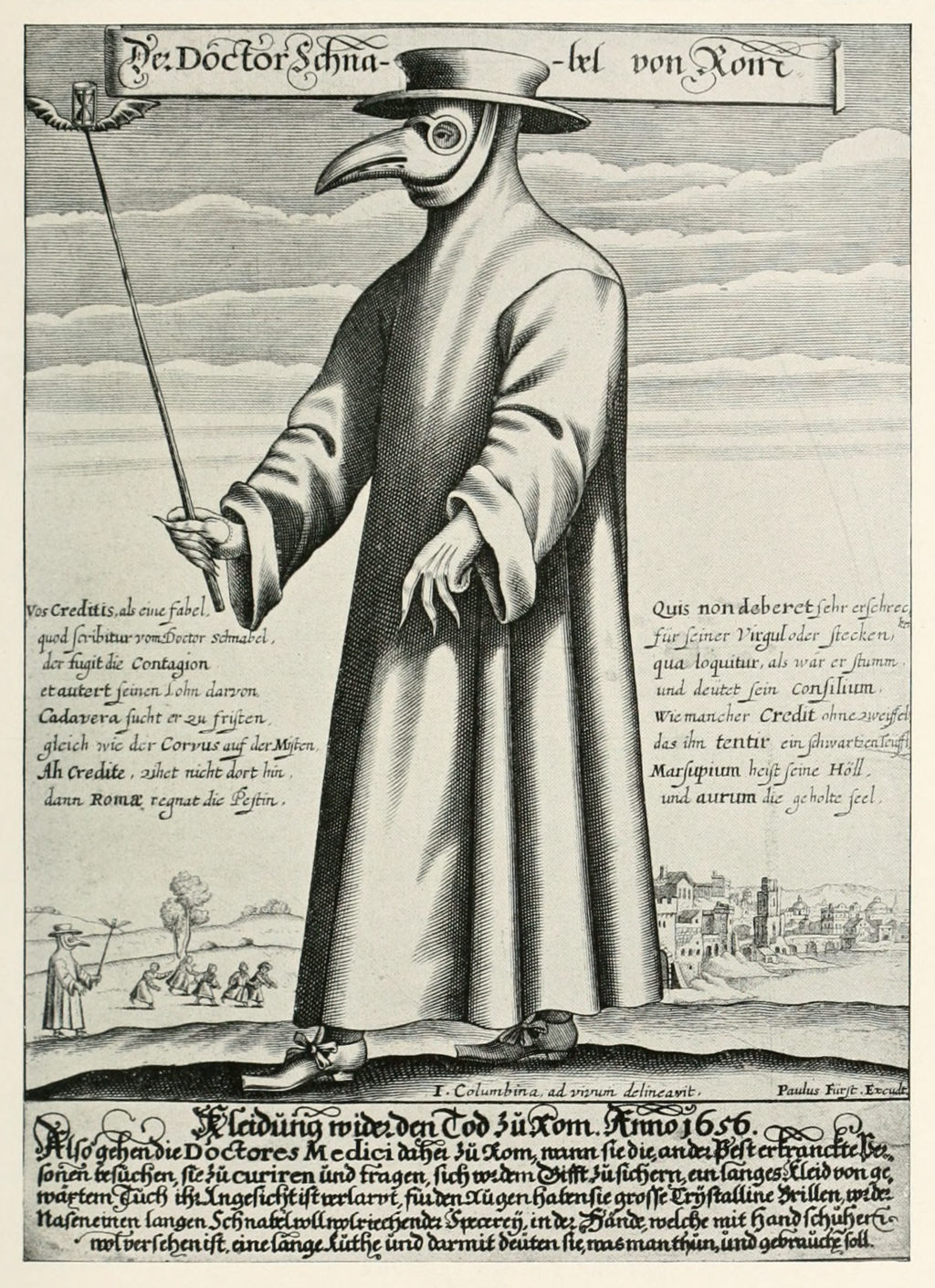
In days of yore, the doctor was clearly identifiable by the white lab coat over shirt and tie, his agreeable nurse counterpart unmistakable in white dress and cap (which, depending on one’s school,
might be shaped like a coffee filter, sailor’s cap, or a hamantaschen). But in the 21st century, especially in primary-care medicine, much has changed; with more categories of clinicians (nurse practitioners, physician assistants) in every sphere of medicine, the traditional clinical clothing boundaries have blurred.
The definition of what counts as professional clothing is also in flux, thanks to increasing knowledge of infectious risks. Earlier this year, the Society for Healthcare Epidemiology Association (SHEA) published new guidelines for healthcare-personnel attire in hospital settings. Their goal was to balance the need for professional appearance with the obligation to minimize potential germ transmission via clothing and other doodads like ID badges and jewelry and neckties that might touch body parts or bodily fluids. The SHEA investigators’ take-home points regarding infection: White coats should be washed weekly, at the minimum; neckties should be clipped in place (70 percent of doctors in two studies admitted to having never had a tie cleaned); and institutions should strongly consider a “bare below the elbow” (BBE) policy, meaning short sleeves and no wristwatches or jewelry.
(Image via Wiki: “Paul Fürst, engraving, c. 1721, of a plague doctor of Marseilles. The plague doctor’s costume was the clothing worn by a plague doctor to protect him from airborne diseases. The costume consisted of an ankle length overcoat and a bird-like beak mask often filled with sweet or strong smelling substances (commonly lavender), along with gloves, boots, a brim hat, and an outer over-clothing garment.”)
The View From Your Window
A Marijuana Breathalyzer
It’s in development:
WSU chemistry professor Herbert Hill says that the team is using ion-mobility spectrometry – the same tech used by airport security and custom agents to detect drugs and explosives – and repurposing it for the new device. Unlike an alcohol breathalyzer, the WSU solution won’t determine how stoned a driver is, but instead just detect the presence of THC. After that, police would follow up with a blood test to be used as evidence in court, similar to an alcohol DUI.
David Knowles provides context:
While driving while stoned is against the law in all four states—Washington, Colorado, Alaska, and Oregon—where marijuana has been made legal for recreational use, as well in those where the drug has been given the green light for medical use, police have had to rely on blood tests and traditional standardized field sobriety tests such as walking a straight line. A 2012 studyfound that just 30 percent of those under the influence of THC failed the standard sobriety tests, and the results of blood tests can take up to twenty-four hours.
Samantha Murphy Kelly notes that this “isn’t the first time a product intended to keep marijuana-influenced drivers off the road has introduced”:
Earlier this month, a breathalyzer called Cannabix, which also detects THC in one’s system, was revealed at the National Marijuana Business Conference in Las Vegas. Cannabix is slated to roll out first to law enforcement and businesses, then to consumers; it is scheduled to hit the market next year.
Mental Health Break
Just let it play:
Putting Government Programs To The Test
The Obama administration has launched a series of evidence-based initiatives that have the potential to revolutionize the way the federal government funds social programs and what program sponsors at the state and local level must do to win and retain federal dollars. Specifically, grantees must show they are spending their federal dollars on programs that have evidence from rigorous evaluations of producing positive impacts on children’s development or achievement as measured by outcomes such as teen pregnancy, educational achievement or graduation rates, performance at community colleges, employment and earnings as young adults, or reducing rates of incarceration. Second, they must evaluate their programs using scientific designs to ensure that they are continuing to have impacts and to reform the programs if they are not.
This strategy requires a pipeline of social programs that have been tested and shown to be effective by rigorous evaluations. However, experience shows that most social programs, including some of the most celebrated such as DARE and Head Start, produce modest or no impacts that last when subjected to rigorous evaluations. An important virtue of focusing on evidence is not simply that the public will have reliable information about whether programs work, but that the evidence places pressure on programs to change and improve when they are not working.
He lists five examples of programs that work. One is a promising early-education initiative:
Success for All is a comprehensive school-wide reform program, primarily for high-poverty elementary schools, with a strong emphasis on early detection and prevention of reading problems before they become serious. Key program elements include daily 90-minute reading classes, each of which is formed by grouping together students of various ages who read at the same performance level; a K-1 reading curriculum that focuses on language development (e.g., reading stories to students and having them re-tell), teaching students the distinct sounds that make up words (i.e. phonemic awareness), blending sounds to form words, and developing reading fluency; daily one-on-one tutoring (in addition to regular classes) for students needing extra help with reading; and cooperative learning activities (in which students work together in teams or pairs) starting in the grade 2 reading classes.
The impact:
On average, 2nd-graders at Success for All schools score approximately 25-30% of a grade level higher in reading ability than their counterparts at the control schools.
Ebola, ISIS, Putin: Meep Meep Watch
Cast your mind back, if you can bear it, to the frenetic last days of the campaign in the mid-terms. The world, the GOP kept insisting, was coming undone – and everything was Obama’s fault. Somehow, Obama had fumbled the response to Ebola, letting infected people into the country, and risking a huge and fatal pandemic. At the same time, ISIS represented a grave threat to American security, was expanding with no limits in sight, proving that Obama had lost Iraq or thrown “victory” away in an act of reckless disengagement. And for good measure, Russia’s Putin was running rings around the president, creating a new world order in the Caucasus, while Obama fecklessly wrung his hands.
As a piece of political performance art, you have to hand it to the Republicans. They rolled up so many base-tingling themes into one hellish, end-times scenario: Obama as Carter, unable to stand up to the Soviets Russians; Obama as secret Muslim terrorist, standing by as Islamists terrorized Iraq and Syria; Obama as a dangerous import from Africa, which is why, we were told, the “O” in Ebola stood for Obama.
Funny, isn’t it, that almost all these themes evaporated after the election. And we now, moreover, have more time and evidence to judge how the president has responded to these different, emergent challenges. There have been no new Ebola cases in the US since the election; and the demon doctor who went bowling is now cured. Today, Obama touted some other measures of progress:
The administration announced Tuesday that it has set up a network of 35

hospitals across the country to deal with Ebola patients. It also said that the number of labs that can test for Ebola has increased from 13 in 13 states in August to 42 labs in 36 states. The White House said the administration has also increased the deployment of civilians and military personnel in West Africa, bumping the U.S. presence to about 200 civilians and 3,000 troops. It said the U.S. has opened three Ebola treatment units and a hospital in Liberia …NIH researchers last week reported that the first safety study of an Ebola vaccine candidate found no serious side effects, and that it triggered signs of immune protection in 20 volunteers. U.S. health officials are planning much larger studies in West Africa – starting in Liberia in early January – to try to determine if the shots really work.
The downside? The GOP is unlikely to apportion enough money to keep the progress up. Concern about Ebola seems to be acutely timed to election campaigns. Afterwards? No longer that worried.
Then the campaign against ISIS. I’m still opposed to what the administration has done. But it behooves me to note today’s key measure of real progress – the new Iraqi prime minister’s deal with the Kurds on oil revenues:
In reaching a deal, Mr. Abadi, who has been prime minister for less than three months, has further distanced his government from a legacy of bitter sectarian and ethnic division under his predecessor, Nuri Kamal al-Maliki. As prime minister, Mr. Maliki deeply alienated the Kurds and enraged Iraq’s Sunni Arab minority with his confrontational personality and policies that were seen as both exclusive and abusive. “The new team, under Abadi, is a cooperative team, a positive team,” said Mr. Zebari, a Kurdish politician who was also Iraq’s foreign minister in the Maliki government.
This is the easy part, compared with an attempt to include the currently revolting Sunnis into a genuinely multi-sectarian government, and to roll back the territorial gains of the Islamic State. But it’s a start. My own skepticism about whether Abadi was truly a unifying figure deserves provisional retirement. And the IS has been rolled back in several key areas. And Kobani has not fallen. If you take Obama’s posture at face value – that he was trying to prevent much worse happening in Iraq and laying out a years-long strategy to nudge Iraq’s democracy along – I can’t see clear evidence that he has failed. Within the very limited goals he set, he has so far succeeded.
Then Putin.
The right was all aglow either with envy of the diminutive tantrum-thrower or with disgust that he had so easily rolled the West on Ukraine. Many found the slow, undramatic unfolding of sanctions as pathetically weak in the face of such unvarnished aggression. But, again, look where Putin is now. I’m with Kevin Drum:
Ukraine is more firmly allied to the West than ever. Finland is wondering if it might not be such a bad idea to join NATO after all. The Baltic states, along with just about every other Russian neighbor, are desperate to reinforce their borders – and their NATO commitments. Russia has been dumped from the G7 and Putin himself was brutally snubbed by practically every other world leader at the G20 meeting in Brisbane. Economic sanctions are wreaking havoc with the Russian economy. China took advantage of all this to drive a harder bargain in negotiations over the long-planned Siberian gas pipeline. Even Angela Merkel has finally turned on Putin.
Russia, meanwhile, is headed for an outright recession next year, hobbled by sanctions and the collapsing oil price (caused in part by America’s shale oil revolution in the Obama years). Now, as with Ebola and ISIS, there are obvious caveats. Obama’s successful cornering of Putin could mean the dictator could get even more reckless; Ukraine remains torn apart in the East. But from the perspective of now, does Putin seem the stronger strategist or does Obama?
I point this out because the conservative media-industrial complex is really about delivering news that can work as political messaging. When the news doesn’t fit that template, they move swiftly on to something else that does. But reality tells us something different: that you should judge a presidency not by short-term panics, but by long term progress in the face of contingent events. Six years after the worst recession since the 1930s, we have accelerating growth, a collapsing deficit, falling healthcare costs and universal health insurance; a decade after the Federal Marriage Amendment, we have over 30 states with marriage equality; six years since Obama took office, we have the toughest new carbon regulations yet on the books and an agreement with China.
I’ll say it again. Meep meep.
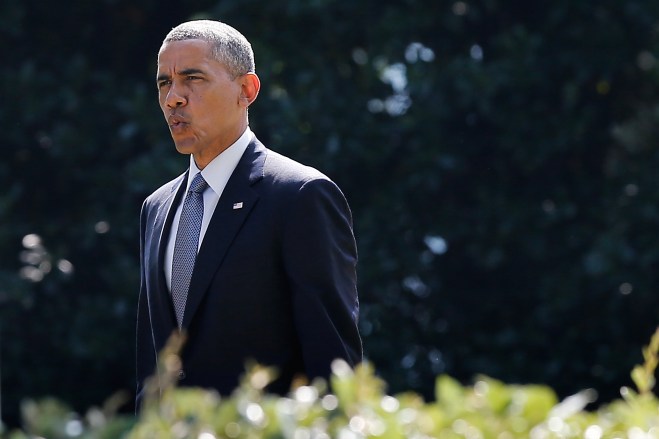
(Photo: Win McNamee/Getty)