If the new media brands that have emerged over the last couple of years were described (accurately) as new advertising agencies, the stories might not have had as much traction (or contained as much hope for the future of journalism). But that, it is quite clear, is what most of these new entities are. Vox has now dropped any pretensions that it is not becoming an ad agency, creating “articles” that perpetuate and distribute the marketing strategies of major corporations.
The logic of this, from a business standpoint, is so powerful almost no one can resist it. Display or banner advertising is sinking into an after-thought, leaving journalism with a huge revenue crisis – especially when you have no subscription income from readers. And when you’re drowning in venture capital, the pressure to to find a way to pay it back eventually must, even now, be crushing. There’s no other explanation for the fullscale surrender of journalism to what would, only five years ago, have been universally understood as blatant corruption.
What always amazes me about the interviews with the various media professionals involved is their use of the English language. It’s close to impenetrable to anyone outside the industry – e.g. “publishers have to get better with understanding the product side of native” – which, of course, helps to disguise the wholesale surrender of journalism to public relations. What also amazes me is how silent the actual editors of these sites are on the core, and once-deemed-unethical, foundation of their entire business. So we’re unlikely to hear Ezra explain to his liberal readers how he’s now engaged in the corporate propaganda business. But if you scan the interview with Vox‘s new fake article guru, Lindsay Nelson, some truths slip out. To wit:
You’re going to need to be great storytellers and create things that help advertisers with the goals that they have for that quarter … We’re trying to become a consulting partner, where we help brands and guide them to develop a content marketing strategy that is 12-months long … If there’s something in the news that a brand wants to be close to you can get them up and running with the same type of polish that they would expect from advertising that takes much longer.
So even breaking news may well be advertising in the near future. And good luck telling the difference.
Ana Swanson flags a 2012 paper in which “researchers argued that black people commit a much lower share of crimes than whites assume”:
The paper compares two surveys of people’s perceptions about violent crime with actual statistics. The “mean perceived percentage” figures are based on responses of white people in two telephone surveys: A random telephone survey of 1,575 adults conducted in Florida by the Research Network in 2005, and a nationally representative sample of 961 respondents directed by Oppenheimer Research in the summer of 2010. The “actual percentage” figures are drawn from various annual statistics published by the U.S. Department of Justice.
Noah Berlatsky has a hard nugget of truth for aspiring writers: “If you want to get paid … finding your own voice can be a distraction – even a hindrance”:
The bulk of writing opportunities that will actually provide you with a living wage are work-for-hire – writing textbook entries, or exam questions, or website content boilerplate. And when you’re doing work-for-hire, no one cares about your voice. Or rather, they do care, in that they actively don’t want anything to do with it. The point of work-for-hire is to make your voice disappear into the house style. Mostly that style is flat and factual. (“The enormous growth of world population in the last hundred years has been sparked by advances in medicine and disease prevention, by increases in life expectancy, and by agricultural improvements.”) …
Perhaps there’s someone out there so famous or so obscure that they can say whatever they will in public in a unique voice untouched by editors or market considerations. But for the vast majority of working scribblers, writing is less about finding your own voice than about figuring out how to say something someone, somewhere will pay you for, or at least listen to. If there’s a voice, it’s always an adjusted and negotiated voice, rather than a pure effusion of individuality.
First diagnosed with schizophrenia in 1978, [Scott] Panetti was hospitalized over a dozen times by 1992 and involuntarily committed to a mental hospital at least twice. On one such occasion in 1986, Panetti had buried his furniture in the backyard because he believed the devil was inside it.
In 1992, shortly after Panetti stopped taking his medication, he shaved his head, dressed in army fatigues, and killed his in-laws with a hunting rifle in front of his wife and three-year-old-daughter. He turned himself in shortly after, and told police officers that “Sarge” was responsible for the killings.
Sally Satel insists that it is “wrong to execute, even to punish, people who are so floridly psychotic when they commit their crimes that they are incapable of correcting the errors by logic or evidence”:
Yet Texas, like many other states, considers a defendant sane as long as he knows, factually, that murder is wrong. Indeed, Panetti’s jury, which was instructed to apply this narrow standard, may have been legally correct to reject his insanity defense because he may have known that the murders were technically wrong.
Nancy Leong and Justin Marceau review the relevant law:
The U.S. Supreme Court, in a 1986 case called Ford v. Wainwright, prohibited the execution of people who are so out of touch with reality that they do not know right from wrong and cannot understand their punishment or the purpose of it. Panetti’s attorneys argue that this holding applies to him. His severe mental illness causes him to believe that Satan, working through the state of Texas, is seeking to execute him for preaching the Gospel—and, therefore, he cannot possess a rational understanding of the link between his crime and his punishment. To most people, Panetti’s lengthy history of mental illness and his bizarre behavior strongly suggest that Ford should prevent his execution. Yet in practice, Ford’s guarantee is often compromised when courts refuse to order mental health evaluations in a timely fashion, as Panetti’s seven years without a competency evaluation illustrate all too clearly.
Ian Millhiser argues that, by “the Supreme Court’s own reasoning, he fits the criteria of a man who should be constitutionally ineligible for execution”:
And yet, the Supreme Court has not extended this rule to severely mentally ill individuals like Panetti. The justices have said that he should not be executed if he suffers from “gross delusions preventing him from comprehending the meaning and purpose of the punishment to which he has been sentenced,” but this is a much weaker protection from execution than the absolute bar the Court announced in cases involving people with intellectual disabilities. Among other things, it hinges upon Panetti’s present state of mind, giving Texas the opportunity to argue that he is currently lucid enough to be killed.
One could point to a formalistic legal distinction to justify this inequity; some state legislatures banned capital punishment for juveniles and the mentally disabled well before the court stepped in, while no state — other than the 18 states with no death penalty — formally bars the death penalty for the seriously mentally ill. But this line of thinking is overly simplistic.
In its most recent Eighth Amendment decisions, the court has eschewed such formality and replaced it with a more holistic approach that looks at a number of different factors in order to gauge whether a punishment is excessive, and therefore cruel and unusual. For instance, it questions how often the punishment is imposed and carried out in practice; whether the punishment serves any penological purpose; and whether the administration of a punishment to a particular class of people elevates the risk of wrongful execution. This broader, and far more sensible inquiry, leaves little doubt that it would be cruel and unusual to execute someone as mentally ill as Scott Panetti.
Katie Halper points out that “a diverse group of individuals and organizations—beyond the usual prison-reform suspects—are calling for clemency”:
These include 55 prominent Evangelical Christians and seven retired and active bishops from the United Methodist Church; former US Representative Ron Paul; former Texas Governor Mark White; ten Texas state legislators; nearly 30 former prosecutors and US attorneys general; Murder Victims Families for Reconciliation, the American Bar Association, and the European Union.
Brent Bozell, Pat Nolan, and Richard Viguerie also speak out:
We are leaders in the conservative movement, and no one could accuse us of being soft on crime. There is much debate about the effectiveness and the morality of the death penalty. Some crimes are so terrible, and committed with such clear malice, that some believe execution is the only appropriate and proportional response. But Scott Panetti’s is no such case. He is one of the most seriously mentally ill prisoners on death row in the United States. Rather than serving as a measured response to murder, the execution of Panetti would only serve to undermine the public’s faith in a fair and moral justice system.
And Stephanie Mencimer looks at the bigger picture:
The Supreme Court hasn’t been especially sympathetic lately to arguments about mental illness and the death penalty. Last year, it refused to block the execution of another seriously mentally ill inmate in Florida, John Ferguson, who went to his death believing he was the prince of God. But Panetti’s pro bono lawyers, Kathryn Kase and Greg Wiercioch, argue that public opinion on the issue is changing, and that the law needs to change with it. They cite a new poll showing that nearly 60 percent of Americans oppose executing someone with a serious mental illness. They also reference new research showing that juries and judges today are far less likely to choose death for a mentally ill defendant than they were 20 or 30 years ago. In 11 former and current death penalty states that allow for a “guilty but mentally ill” verdict, there hasn’t been a death sentence imposed on a mentally ill person in at least 20 years.
The project was inspired by the 2010 pilot study by Daniel C. Dennett and Linda LaScola, “Preachers Who Are Not Believers” (PDF), which exposed and explored the surprisingly common phenomenon of non-believing clergy. The need to give these people support — and if possible, an exit strategy – was immediately recognized in the atheist community, and starter funding for the Clergy Project was quickly provided by the Richard Dawkins Foundation for Reason and Science. Founded in March of 2011 with 52 members, the Clergy Project currently has over 270 members – and since recent news stories about it began appearing, in outlets from MSNBC to NPR to the Religious News Service to CNN, applications to join have been going up at an even more dramatic rate.
The cascade of news stories began when Methodist minister Teresa MacBain came to the American Atheists convention following last March’s Reason Rally – and made a dramatic unscheduled appearance at the podium, to announce that she was an atheist.
David Watkins writes, “I’ve met a few such people, over the years, and they’ve suggested to me the ranks of clergy who fit that description are far greater than anyone realizes”:
Clergy have a set general tasks – counselor, community organizer, etc.–and their and their parishioners religious beliefs and commitments are one of the primary tools they’re expected to use in these tasks. This gives them a perspective on their faith lay people are considerably less likely to have–they see how it can work, but also how and when it doesn’t. There are a variety of ways to cope with that, and some of them, it seems to me, could have a significantly corrosive effect on faith.
Still, he wishes that Christina didn’t view the phenomenon “through the eyes of evangelical atheism”:
Conversion stories are old and familiar. I’m much more interested in those who chose to stay in their positions. Not the megachurch grifters and profit-takers, but the ordinary and decent people making a modest living and trying sincerely to do good and help people. Some of them, no doubt, are like Rumpole’s father: “a Church of England clergyman who, in early middle life, came to the reluctant conclusion that he no longer believed any of the 39 articles” but “as he was not fitted by character or training for any other profession” he soldiered on. Some of these people might appreciate the rescue Christina wishes to offer; others may simply be comfortable where they are. But it’s a third group that interests me the most: those who have ceased to believe but don’t see that as a reason they should leave their position. How do they view the positive value of the religious beliefs they teach and reinforce? How do they counsel or approach fellow doubters? For obvious reasons, such a perspective is very rarely stated forthrightly.
Rather than risk a government shutdown after federal funding expires next week, Boehner proposed a plan to approve an omnibus appropriations bill that would fund the government through the end of September with one exception: The Department of Homeland Security would receive money only through March, allowing the new Republican majority in Congress next year to take another try at blocking Obama’s directive. The House would separately vote—as soon as this week—on a largely symbolic measure disapproving of the president’s action and giving lawmakers an opportunity to formally express their opposition.
Hardline conservatives who have caused problems for leaders for years were not falling in line. These conservatives estimate their ranks are 30 to 40, enough to derail a vote. That swelling Republican opposition gives Pelosi and her down-in-the-dumps House Democrats some unexpected power: the ability to rescue Boehner’s Republican Conference as Democrats have again and again in the big fights of the past three years.
As threats go, this is just about the opposite of threatening not to increase the debt limit. In a debt limit fight, the threat sounds mild—even politically popular—while the actual stakes are horrific. Threatening to shut down the Department of Homeland Security, by contrast, sounds insanely reckless, but would actually accomplish very little, and, most importantly, it would leave the deportation program completely intact.
DHS secretary Jeh Johnson is already warning that defunding the department will have significant impacts on security. Allahpundit imagines how this will play out:
Think Boehner and McConnell are going to pull the plug on DHS in March and risk a White House media campaign along these lines, at a moment when people like Christie and Rubio are announcing they’re running for president to rebuild America’s national defense? Me neither. The only way out is to supersede Obama’s order by passing some immigration bills of their own — which, coincidentally, is what Jeb Bush encouraged them to do at a fundraiser yesterday that included McConnell. Raul Labrador also expects to see some Republican bills on immigration next year.
Jennifer Rubin warns that “the American people overwhelmingly don’t want a shutdown, and a majority would blame the GOP if one occurred”:
In sum, there is no way to achieve what Heritage Action wants now with no Senate majority and Obama in the White House. (Sound familiar?) The GOP can take a run at separately withholding funding on immigration after a short-term funding measure runs out next year, but even then the fee-based system will likely continue.
Mataconis agrees that a shutdown would be terrible for the GOP:
A new CNN/ORC poll, for example, shows that 50 percent of those surveyed would blame a shutdown on Congressional Republicans while only 33 percent would blame President Obama and 13% would blame both parties equally. These numbers nearly the same as they were prior to the shutdown in October 2013 which, by all accounts, was an all around disaster for the GOP tempered only by the fact that it was quickly followed by the disastrous rollout of the Affordable Care Act and that it occurred sufficiently in advance of the 2014 midterms to allow Republicans to recover to a significant degree. This time, a shutdown would occur just before the GOP takes control of Congress and would threaten to taint public opinion of the new Congress from Day One.
(Photo: Speaker of the House Rep. John Boehner(R-OH) listens to Rep. Cathy McMorris Rodgers(R-WA) make remarks after a meeting on upcoming spending legislation, on December, 02, 2014 in Washington, DC. By Bill O’Leary/The Washington Post via Getty Images)
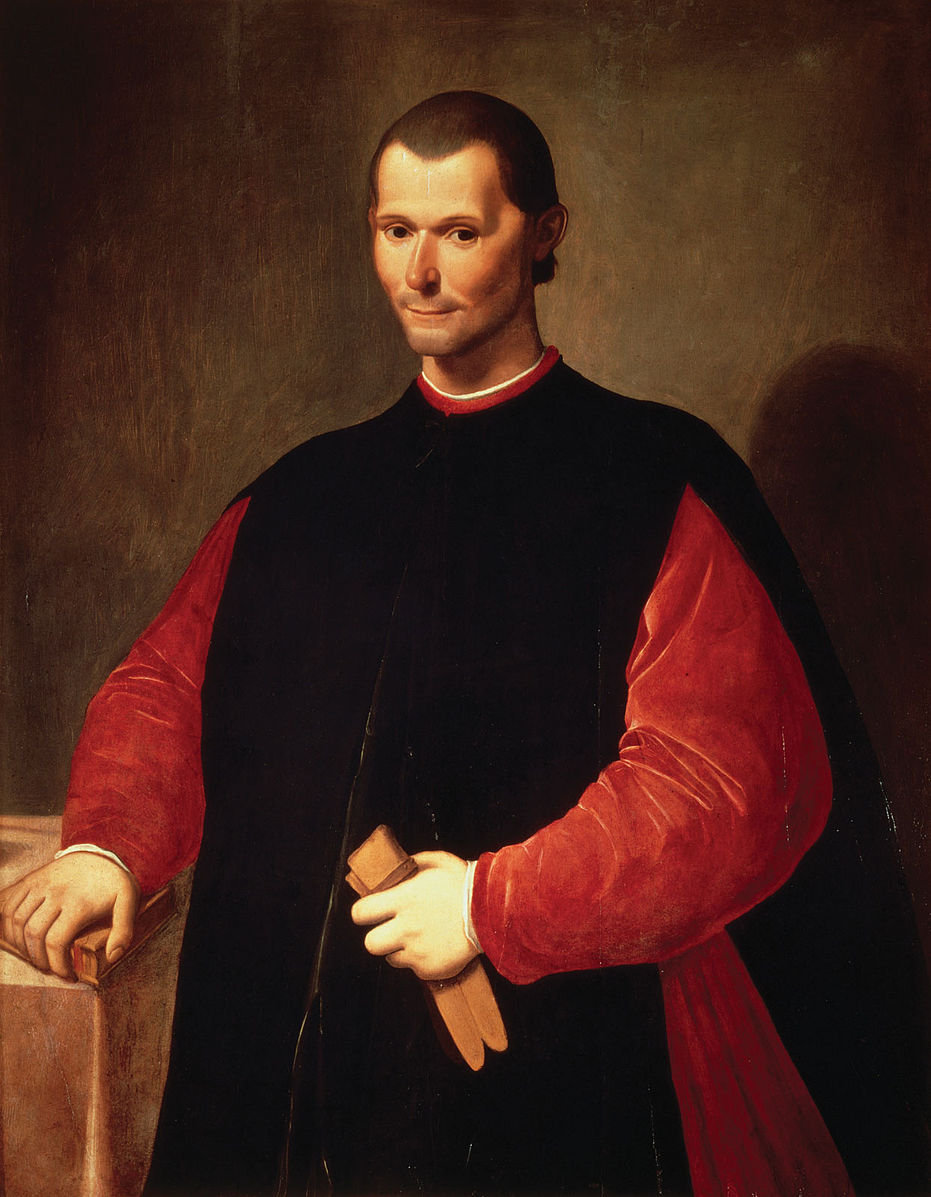
Kate Havard elaborates on the revisionist case Maurizio Viroli makes in his Redeeming “The Prince”: The Meaning of Machiavelli’s Masterpiece, which portrays the Florentine writer as being concerned mainly with the liberation of Italy. Such a case rests on the claim “that the most important chapter in The Prince is the last, ‘Exhortation to Seize Italy and to Free Her From the Barbarians'”:
This is an audacious claim because the Exhortation is usually regarded as the worst and least interesting chapter in the book. For those who love Machiavelli for his cynicism, the fervor, patriotism, and piety in the Exhortation is puzzling. Was Machiavelli forced to include it? Was he merely shilling for a job? Is this some kind of trick? Is somebody being esoteric?
Viroli says no. When a book is as spare and carefully constructed as The Prince, it is unwise to dismiss any of it as superfluous. It’s especially unwise to dismiss its final chapter as meaningless, because, of course, this is the book where Machiavelli advises all men to “look to the end” for ultimate guidance.
“Looking to the end” is the literal translation of what has become the bumper-sticker version of Machiavelli, the assertion that “the ends justify the means.” Looking to the end is not permission to do anything: It demands consideration of the worthiness of the goal. The worthiness of Machiavelli’s goal—Italian liberation—is what redeems the prince, in Viroli’s view, and so he argues that The Prince is not a guidebook for evildoers.
(Portrait of Niccolò Machiavelli, by Santi di Tito, via Wikimedia Commons)
Alberto Mucci spotlights the activist group Spaghetti Open Data, which he describes as “one of the Italy’s most important and determined groups in the 2.0 fight against the country’s organized crime networks”:
Last spring the collective met in Bologna for a four day hackathon the at culminated in the “ConfiscatiBene” (Italian for “seized goods”) project: a national database able to gather and organize with clarity and in a single place (this might seem obvious, but it’s really not the case in Italy) a list of all goods confiscated by the Italian authorities from the Mafia.
Before Spaghetti Open Data, accessing such information was nearly impossible. I’ll use myself as a case study to demonstrate how demoralizing interacting with the Italian authorities can be.
If, for example, I decided I wanted to know what type of seized goods existed in a certain region of Sicily, I would have quickly discovered that the data I am looking for is dispersed in scattered regional, provincial and ministerial websites that are nearly impossible to read for anyone without the patience of a saint and a degree in IT from Stanford. Let’s say that after a week of scraping, I got fed up with the databases and decided to pick up the phone. The results would be similar. The Italian institutions fighting against the Mafia usually don’t share the database among each other; rather they operate independently (moved at times by petty jealousies, and internal power struggles) and create situations where the work of different departments overlaps and everything ends up becoming more confusing that it should be.
“Sometime you have this paradoxical situation where, for example, the anti-Mafia police (DIA) in Palermo do not have immediate access to the information they need on another part of the country,” Andrea Borruso, a member of Spaghetti Open Data, tells me during a Skype interview. “It’s ridiculous and totally inefficient.” Why is this so important? Because easy and efficient access to data is key in the fight against the increasingly powerful networks of the Mafia.
Is the gang-rape story at UVA credible? We’ve been covering it for a while now – perhaps a little too credulously – but a reader did raise some questions about its credibility in our second post. My old roommate and friend, Rich Bradley, had a ballsy must-read on it last week that raises one obvious question: why did the reporter not even try to talk to any of the alleged rapists? This should set off alarm bells for any editor, and yet the editor insists all due skepticism was applied, even though he never personally spoke with Jackie. I’m sorry but if you’re running a story about such a terrible accusation relying on one key source and do not personally vet that source, you’re not doing your job. Tom Maguire even dug up a comment on the NYT message board for a piece on the rape that claims first hand knowledge that some quotes in the piece were indeed made up. Erik Wemple has also weighed in:
This lapse is inexcusable: Even if the accused aren’t named in the story, Erdely herself acknowledges that “people seem to know who these people are.” If they were being cited in the story for mere drunkenness, boorish frat-boy behavior or similar collegiate misdemeanors, then there’d be no harm in failing to secure their input. The charge in this piece, however, is gang rape, and so requires every possible step to reach out and interview them, including e-mails, phone calls, certified letters, FedEx letters, UPS letters and, if all of that fails, a knock on the door. No effort short of all that qualifies as journalism.
I have to agree. That doesn’t mean the gang-rape didn’t happen; and it doesn’t mean that the university’s response was defensible. It does mean that when you’re reporting on a terribly serious and appalling crime, you talk to as many of those involved as you possibly can. I have a feeling that this story is by no means over.
Many of this week’s posts were updated with your emails – read them all here. You can always leave your unfiltered comments at our Facebook page and @sullydish. 22 more readers became subscribers today. You can join them here – and get access to all the readons and Deep Dish – for a little as $1.99 month. Gift subscriptions are available here. Dish t-shirts are for sale here and our new mugs here.
Congrats on the slow and steady growth. I’ve been a loyal and daily reader for somewhere around a decade now and subscribed as soon as you started your new model. Here’s what will lose me faster than anything: if you go the way of so many websites that have to have a massively cluttered webpage with ads here and there, countless articles to link to. Most news sites and blogs have turned into a mess in their efforts to be all things to all people. Besides your varied content, what I love best about your website is the very simple set-up and interface. Change that and you’ll lose me.
Slow and steady is a beautiful thing, even in the Internet age.
“After the funeral, while I was downtown desperately celebrating my birthday, a Negro soldier, in the lobby of the Hotel Braddock, got into a fight with a white policeman over a Negro girl. Negro girls, white policemen, in or out of uniform, and Negro males—in or out of uniform—were part of the furniture of the lobby of the Hotel Braddock and this was certainly not the first time such an incident had occurred. It was destined, however, to receive an unprecedented publicity, for the fight between the policeman and the soldier ended with the shooting of the soldier.
Rumor, flowing immediately to the streets outside, stated that the soldier had been shot in the back, an instantaneous and revealing invention, and that the soldier had died protecting a Negro woman. The facts were somewhat different—for example, the soldier had not been shot in the back, and was not dead, and the girl seems to have been as dubious a symbol of womanhood as her white counterpart in Georgia usually is, but no one was interested in the facts. They preferred the invention because this invention expressed and corroborated their hates and fears so perfectly. It is just as well to remember that people are always doing this. Perhaps many of those legends, including Christianity, to which the world clings began their conquest of the world with just some such concerted surrender to distortion. The effect, in Harlem, of this particular legend was like the effect of a lit match in a tin of gasoline. The mob gathered before the doors of the Hotel Braddock simply began to swell and to spread in every direction, and Harlem exploded,” – James Baldwin, “Notes of a Native Son“.
(Photo: A protester waves a “black and white” modified US flag during a march following the grand jury decision in the death of 18-year-old Michael Brown in Ferguson, Missouri, on November 24, 2014. By Jewel Samad/AFP/Getty Images.)



 The Dish
