Going Against The Stream, Ctd

A reader sounds off on Swift vs Spotify:

Musician here, with music on Spotify/iTunes etc. Spotify, and streaming services in general, ARE THE BEST THING TO HAPPEN TO MUSIC SINCE CDs. Why? Because people are paying for music again.

Musicians want to turn back time. Back to the days where people bought CDs for $19 a piece and the record labels and the musicians made a killing. Those days are dead. Napster killed them. But instead of monetizing Napster, the musicians and record companies tried to kill it. Then they fought iTunes (which is also slowly losing to streaming services, unless Beats takes off). In the meantime, most people were just stealing their music from Pirate Bay, Kazaam, Bit Torrent, etc.

The problem with Aloe Blacc, Taylor Swift and every other musician, is that they think their music is worth a lot more than it actually is. They should be happy that people are paying for music again instead of stealing it. The irony is, they are bitching about Spotify when people can still hear all their music for free – on YouTube. Because the major labels refused licensed to Spotify in time, the public went to YouTube to listen to their music, which is 100% free and musicians make NO money from. If most of the public was on Spotify or beats or Pandora, the musicians would be making a lot more money. Instead, they are tilting at windmills.

One of several more readers:

I am a rabid fan of music (and part owner of a vinyl record store) and have always believed that people who create music deserve to reap the fruits of their labor and artistic expression. And although nothing will beat the sound and warmth of a needle bouncing through the grooves of vinyl, there is also no question that Spotify is one of my very favorite applications. Here’s an idea:

Why doesn’t Spotify truly establish themselves as the most Artist-Friendly service, and offer a more expensive Ultra-Premium subscription (say, for $20 or $30 or $50/month more than the $10 they currently charge me), with the understanding that the incremental difference that I choose to pay (because I want to support the artists) gets paid out 80-90% directly to the artist/publisher?  I’d sign up for that in a heartbeat.  Much like I happily pay The Dish more than your asking price for the valuable and independent news content you provide, I would also happily pay a higher price to Spotify as a Musical Content Provider.  They would make more money, and the artists would make more money.

Bill Wyman was right: People will just flock to The Pirate Bay to get Taylor’s music virtually for free. (Frankly, she would have to pay ME to listen to that dreck, but that’s just a matter of taste, I suppose.)  But given the option to pay up a little bit and establish oneself as being committed to paying the artists for the art they give us, while still leveraging the massive benefits of a customizable platform like Spotify … well, that would be the best of both worlds. Digital distribution is never going away, the industry, artists and content providers need to work together more effectively to make the process work for everyone.

Another illustrates how Spotify helps the little guy:

My friend is the founder of a mid-market band and tackled this issue on their blog. As the sort of band that is most financially impacted with a lot less cushion than Swift, he seems willing to take the hit to build their brand:

Spotify has undeniably changed the consumption patterns of our fans…My guess is that Spotify turned a lot of iTunes downloaders into streamers. That certainly affected our bottom line and ability to recoup what we spent on the record. But far more people consumed our music which is the probably more important for long term growth of the band…To me, everyone that streams our songs for free (or pays a tiny amount to do so on Spotify/YouTube) would probably just not consume our music if their only choice was to pay for it. By giving them the chance to hear us for next to nothing we are (hopefully) creating a relationship with a fan that will result in financial support down the road.

I’ve heard this from other musicians struggling to break through. They see streaming as a means to building a fan base, while artists like Taylor Swift may see streaming as a threat to their hegemony in the music business.

Another sees a savvy strategy from that hegemon:

Taylor Swift is either an incredibly talented businesswoman and promoter at age 24 or has some really good people working for her. The two really go hand in hand. Taking her music off of Spotify was not about hating streaming. It’s not even about thinking music should not be free. If she had a problem with streaming, she would have removed her albums from other streaming services. Instead she targeted the largest streaming provider and got THEM to complain about it. Here we are a week after her album release still talking about her and bringing up how many albums she sold in the first week.

It’s an excellent publicity stunt, but considering she makes approximately $6 million a year from streaming on Spotify, it’s not one that will be continued too long. Every media outlet pushing this “story” has been providing Taylor with the best thing ever – free advertising that doesn’t even look like advertising.

The Best Of The Dish Today

US-VETERANS DAY

No word back from  WAM on whether they were the ones behind the suspension of a journalist from Twitter for disagreeing with them. But good to know that Gawker believes that journalists who sail close to the wind need to be silenced if possible. Name-calling is something they absolutely never do.

As always on some of these fraught gender questions, Dish readers find the nuances. Our discussion thread on masculinity that does not denigrate women is a hugely interesting one. Today’s post includes this reader:

As a millennial, straight, white, male, feminist, gamer, I think I’d have a good case for being able to make some claims about masculinity. But what really gives me some credibility here is that I used to be the angry, homophobic, misogynistic young man. Over the past decade, I’ve had my mind changed on damn near everything that I once believed. I’ve also come to accept that being masculine doesn’t have one definition.

Puts the entire #gamergate fooferaw in some context. Meanwhile, another reader flags a small but important story:

On November 6, 2014, a Florida court decided that a healthy four year old boy will undergo an unnecessary, risky surgery at the insistence of his father. The boy’s name is Chase and his 81ab41d2-55e1-4ff3-b2b9-008437e51489_profilemother is fighting a battle to save him.

According to court records, in December 2011, Heather Hironimus signed a parenting agreement which gave Chase’s father, Dennis Nebus, permission to have their (then) baby boy circumcised. Three years later, Chase is still intact, happy and healthy …

Genital autonomy advocates believe Chase’s physical and mental health are at risk. He is aware of his body and does not want to have surgery on his genitals. Forcing a child to undergo cosmetic surgery is a violation of basic human rights and medical ethics. This is an unprecedented case worthy of international media attention.

The purpose of this fundraiser is to draw attention to Chase’s case and to provide a safe place for concerned citizens to contribute financially for the appeal. Heather has been (illegally) prohibited from fundraising for her appeal, so we are doing it for her, without her participation.

You can donate here.

Today, we covered our usual diversity of topics: Taylor Swift’s decision to opt out of Spotify (dumb); Obama’s decision to back net neutrality (dead-on); John Roberts’ choice on Obamacare again at SCOTUS (a toughie); and Flannery O’Connor’s view of Ayn Rand (hilarious). Plus: Putin’s collapsing economy (which might be bad news for European security); and a totes adorbs drumming toddler.

The most popular post of the day – by a mile – was The SJWs Now Get To Police Speech On Twitter; followed by Where The Logic Of “Hate Crimes” Leads.

Many of today’s posts were updated with your emails – read them all here.  You can always leave your unfiltered comments at our Facebook page and @sullydish. 22 more readers became subscribers today. You can join them here – and get access to all the readons and Deep Dish – for a little as $1.99 month. Gift subscriptions are available here. Dish t-shirts are for sale here.

See you in the morning.

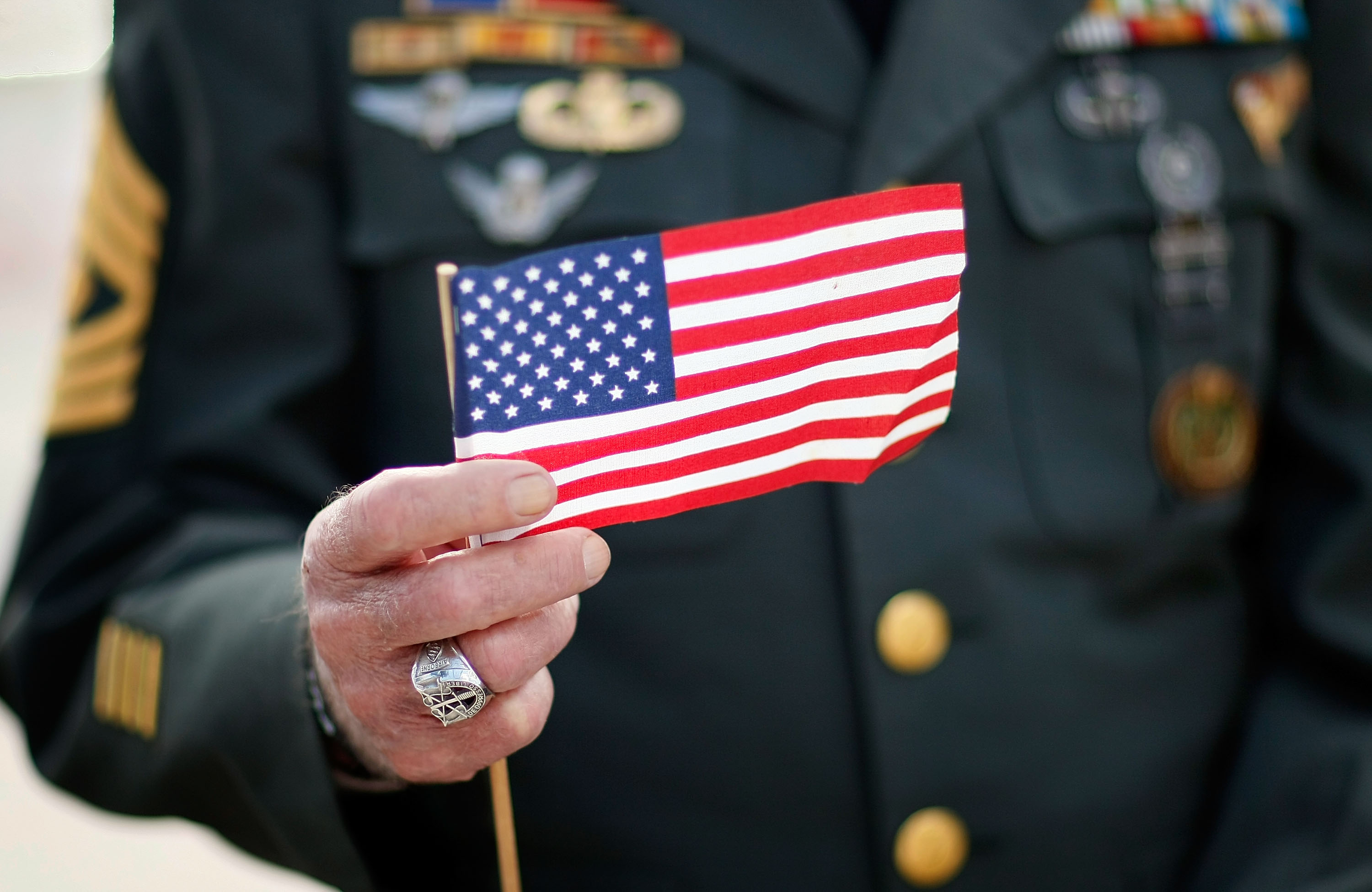
(Photo: A US Navy veteran salutes during the Veterans Day Parade in New York on November 11, 2014. By Jewel Samad/AFP/Getty Images.)

The Soldiers Who Didn’t Make It Back

Marine Lance Cpl. Travis Williams was the only member of his squad to survive an explosion by a roadside bomb. He movingly tells the story of the attack and aftermath:

Robert M. Poole reflects on Arlington’s Section 60:

As the last combat troops leave Afghanistan and new fighting spreads over Syria and Iraq, Section 60 is nearing capacity—a testament to the human cost of America’s longest war, a conflict largely hidden from ordinary life in America. “This is one of the few places you’d know we’ve had a war going on,” retired Navy Commander Kirk S. Lippold, skipper of the U.S.S. Cole, said last year, standing near the center of Section 60. He had come to pay his respects to three shipmates—Technician Second Class Kenneth Eugene Clodfelter, Chief Petty Officer Richard Dean Costlow and Seaman Cherone Louis Gunn—now lying side by side beneath neat white tombstones.

The trio of sailors, among 17 killed when Al Qaeda suicide bombers attacked the Cole in Yemen in 2000, were among the earliest casualties in the long war that in fact began months before the phrase “9/11” entered Americans’ vocabulary. “Their deaths were prelude to everything that’s happened in Iraq and Afghanistan,” said Lippold, who regularly visits this part of the national cemetery, just across the Potomac River from Washington, D.C.

In the years since the Cole bombing, Section 60 has been filling up row by row. It is the busiest part of the cemetery, with the crack of rifle salutes and the silvery notes of Taps announcing the arrival of new conscripts with depressing frequency. The whole history of our recent wars can be traced among the closely packed tombstones, which mark the graves of soldiers, sailors, marines and airmen who earned a berth in the national cemetery by volunteering, suiting up and paying the ultimate sacrifice in Afghanistan, Iraq and other battlegrounds of the war on terror.

Sallie Lewis notes that Arlington is being expanded to make room:

Around thirty funeral services take place at Arlington National Cemetery every day. Saturdays are thankfully slower, when there’s typically only six to eight. As the large number of regular burials continues to consume space at Arlington, the question of future availability looms. The Millennium Project attempts to address this by adding twenty-seven additional acres to the northern edge of the cemetery, along with 30,000 new burial sites. The first interment there is expected to occur in the summer of 2019.


When Shakespeare Read Montaigne

Danny Heitman takes a stroll through Shakespeare’s Montaigne, a new edition of John Florio’s 16th-century English translation of the Essays that almost certainly made its way into the playwright’s hands:

Many of the details of Shakespeare’s life are unknown, and how closely he might have read Florio’s Montaigne is unclear. But in a couple of plays, Shakespeare’s debt to Montaigne seems obvious. In “Of the Cannibals,” an essay about people recently discovered in the New World, Montaigne writes admiringly of natives who “hath no kind of traffic, no knowledge of letters, no intelligence of numbers, no name of magistrate, nor of politic superiority.” Very similar language appears in The Tempest, when Gonzalo considers the kind of society he wants to establish on the island where he and others have been shipwrecked. There’s another apparent instance of borrowing in King Lear, which includes a passage that seems cribbed from Montaigne’s observations about the ideal relationship between parents and children.

Beyond that, the question of Montaigne’s influence on Shakespeare becomes more speculative. [In his introduction, scholar Stephen] Greenblatt shrugs at that ambiguity, concluding that whatever the possibilities, the mere existence of these two men was a miracle in itself: “Two of the greatest writers of the Renaissance—two of the greatest writers the world has ever known—were at work almost at the same time, reflecting on the human condition and inventing the stylistic means to register their subtlest perceptions in language.”

An excerpt from Greenblatt’s introduction on the connection between the two great writers, in which he notes that “what is a problem for the scholarly attempt to establish a clear line of influence is, from the perspective of the common reader, a source of deep pleasure”:

And though, as we have noted, they came from sharply differing worlds and worked in distinct genres, they share many of the same features. Both Montaigne and Shakespeare were masters of the disarming gesture, the creation of collusion and intimacy: essays that profess to be “frivolous and vain” (“The Author to the Reader”); plays with titles like As You Like It and Much Ado About Nothing. Both were skilled at seizing upon anything that came their way in the course of wide-ranging reading or observation; both prized the illumination of a brilliant perception over systematic thought; both were masters of quotation and transformation; both were supremely adaptable and variable. Both believed that there was a profound link between language and identity, between what you say and how you say it and what you are. Both were fascinated with ethical meanings in a world that possessed an apparently infinite range of human behaviors. Both perceived and embraced the oscillations and contradictions within individuals, the equivocations and ironies and discontinuities even in those who claimed to be single-minded and single-hearted in pursuit of coherent goals. Montaigne and Shakespeare created works that have for centuries remained tantalizing, equivocal, and elusive, inviting ceaseless speculations and re-creations. In a world that craved fixity and order, each managed to come to terms with strict limits to authorial control, with the unpredictability and instability of texts, with a proliferation of unlimited, uncontrolled meanings.

The Love Of War

Miami Area Observes Veterans Day

Veteran Dan Gomez heartily endorses William Broyles’ 1984 essay “Why Men Love War“:

It is the most perfect piece of military writing on the subject of ‘why’ that I have ever come across. It is for me, the ‘big bang’ theory of why we fight.

Broyles’ takes the reader through a fantastically descriptive journey of what war feels like and he gets it down better than anything I’ve ever read or even anything I’ve even seen in film. It’s a long form piece that he wrote more than fifteen years after returning from Vietnam. He had the time to reflect on his experience and the space in the magazine to get it all down. In 6,588 words, he paints the thoughts in his head and the feelings in his heart.

Thats why men in their sixties and seventies sit in their dens and recreation rooms around America and know that nothing in their life will equal the day they parachuted into St. Lo or charged the bunker on Okinawa. Thats why veterans reunions are invariably filled with boozy awkwardness, forced camaraderie ending in sadness and tears: you are together again, these are the men who were your brothers, but its not the same, can never be the same. Thats why when we returned from Vietnam we moped around, listless, not interested in anything or anyone. Something had gone out of our lives forever, and our behavior on returning was inexplicable except as the behavior of men who had lost a great perhaps the great love of their lives, and had no way to tell anyone about it. …

This month marks the thirty-year anniversary of the publication of ‘Why Men Love War.’ It’s no less true today than it was then. I hope that it will be widely read, especially among today’s newest generation of veterans, to give them the peace of mind that what they’re experiencing is not new. If they read with an open mind, they might even come closer to reconciling their feelings on war, and recognize that there is no great answer but the terrible truth. We love war because it’s fun. It’s terrible, reviling, and true. The dirty, nasty thing was a blast, and we know we’re not supposed to think that. We’re especially not supposed to feel that. But we do.

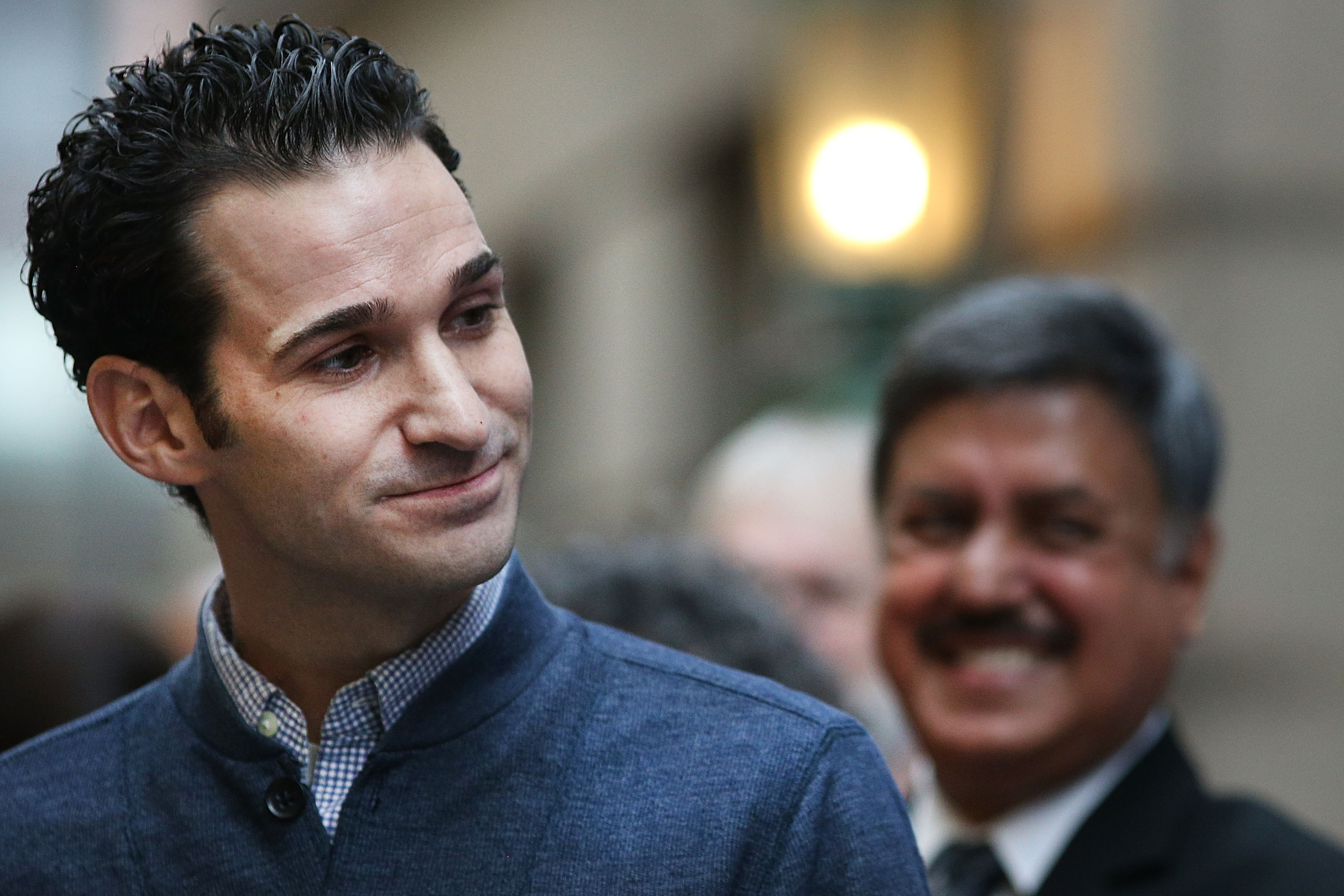
(Photo by Joe Raedle/Getty Images)

Ruble Trouble

Screen Shot 2014-11-11 at 3.18.49 PM

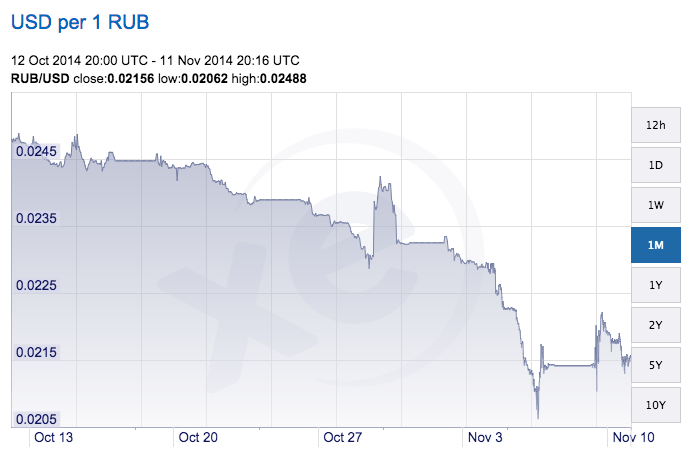
The Russian economy looks like it’s on the verge of a full-fledged meltdown. The central bank projects zero growth next year and barely more than that in 2016, while the ruble’s value has plummeted. Amanda Taub voxplains what the heck is going on:

The fall in the ruble appears to be mainly the result of two factors: a sharp decline in global oil prices and sanctions that Western countries put on Russia in retaliation for invading Ukraine. Those two things might not appear connected, but in a sense one led to the other. Many Russia-watchers believe that, when Russia’s economy began weakening, and, thus, so did Putin’s approval ratings, Putin responded in part by trying to increase his popular support by stirring up nationalism. That is likely one of the reasons why he invaded Ukraine, which also distracted from the poor economy. If that’s right, then that would mean that the sanctions meant to weaken Russia’s economy are also a result of Russia’s weak economy. And that, in turn, should prompt questions about what Putin might do to shore up his support in the face of this new bad economic news.

The Bank of Russia’s usual response to such a slump is to dig into its massive reserves to shore up the currency, but yesterday, the bank announced that it would allow the ruble to float freely:

The bank had been burning through its $400 billion in reserves to cushion the drop of the ruble, spending a reported $30 billion in October alone to support the national currency. The bank statement said the decision to allow the ruble to float freely “did not amount to a total renunciation of any interventions in the currency market, which would be possible in case a threat to financial stability appears.” The ruble had dropped to 48 to the dollar on November 7, but the Russian central bank’s November 10 announcement lifted the ruble to 45 to the dollar. Earlier in day, President Vladimir Putin expressed confidence that the plummeting ruble will stabilize, saying its volatility is not tied to the country’s economy.

Bershidsky analyzes the move:

Putin’s government isn’t interested in a strong ruble now: As low oil prices make it difficult to balance the budget and as exporters, many of them state-controlled, complain about the lack of access to Western capital markets, a devaluation is the first order of business. What Putin doesn’t need is panic among ordinary Russians, which could damage his high approval ratings. As long as the central bank does its job of reducing volatility and deterring speculators, bank insiders will be free to use information about the timing of interventions to make a bit of money on the side. And Russia has a lot of hard currency to burn — $454.2 billion in international reserves at the beginning of November.

That logic, however, only holds if one believes — as Putin does, according to Kremlin insiders — that both the Western sanctions against Russia and, more importantly, the oil price drop are only temporary. If they last longer than a year or two, Russia will be in real, long-term financial trouble and it will be harder for Putin to hold on to unlimited power.

The way Ioffe sees it, the ruble’s decline “is merely a symptom of something much deeper and more worrying”:

This is Putin digging in; this is Putin reinforcing his foxhole and preparing for the long fight ahead. He will not let go of eastern Ukraine, and he is trying to keep the reserves full so that he can survive the long fight ahead. The problem, though, is that the pressure inside the system is rising. Food prices are jumping and, though so far, Russians mostly blame the West for their country’s economic malaise, it’s not clear how long that will last. …The ruble crashing won’t change anything today or tomorrow, but this is just the system starting to eat itself, this is just the system starting to crack. As I’ve written before, historically, economic crisis triggers political crisis in Russia. No one knows when one of those cracks brings the whole thing down, but there’s a growing sense in Moscow that it will happen sooner than we all think. Putin seems intent on it.

(Chart via xe.com)

Masculinity Without Denigrating Women, Ctd

Several readers attest to blurred lines between traditional gender norms. A straight dude:

Alyssa Rosenberg asked, “How much does masculine culture depend on women and femininity as a reference point?” My response: well, what do you mean be “femininity”?  Traditional patriarchal notions about femininity (confined to the domestic sphere, trapped sexually in the Virgin/Whore dynamic, passive, smells nice, cooks good) are part of the problem, and part of the culture that is changing as rapidly as attitudes towards GLBT people. The traditional white masculinity that is so deplorable will never totally go away, as you’ve argued, in part because the traditional femininity that it requires will never go away either. Some women do want to stay home, raise kids, etc. Some women do believe that Good Girls Don’t.

But as women – lesbian and bi, sure, but also straight – get away from these hoary (and whorey) old notions, straight men and their masculinity will shift too. Because straight men do base our identities on relationships with women, those identities change (and already have changed) as more women are co-workers, bosses, team-mates, drinking buddies – you name the non-traditional hetero relationship.

As for Rosenberg’s specific query about action heroes and cheerleaders:

I’m not much for action movies, but give me Joss Whedon’s strong women over most male heroes.  And my NFL team hasn’t had cheerleaders since 1986 (it also hasn’t won a championship without them).  But I am much more likely to enjoy watching women in roller derby, or WBNA games, or NCAA Lacrosse, or World Cup Soccer, than I am to lament the lack of cheesecake on the sidelines at Soldier Field. Those women athletes and action heroes?  Not traditionally feminine, but strong and sexy despite that.  Or because of it.

Another guy touches on a racial angle:

As a Hispanic, I am subtly pressured to be a stereotype of the Macho Latino by my friends. I went to a bar where you could dance. I don’t think I dance well, but I think I have more fun than my friends, male or female. I’m less inhibited than they are. But when my friend saw me dance for the first time, she expressed disappointment that I’m worse than the average Hispanic man. I used one of the white men in our group as a reference point because he barely danced. Isn’t that better? It wasn’t to her. I had to dance like a Hispanic man: more skilled, more flamboyant, and more sexual than a white man.

A straight woman writes:

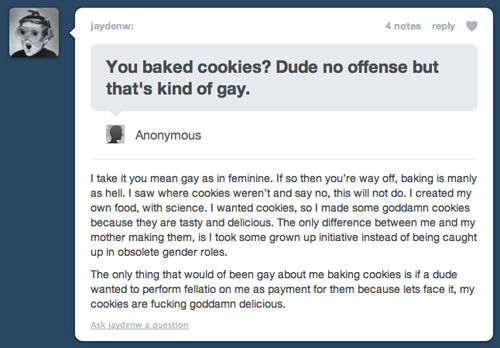
I was frustrated by your reader’s response: “All the things that make me a man, things that I enjoy, are apparently just externally forced cultural norms that I am too dumb and weak to transcend.” Those aren’t the things that make him a man! I am a women and I also enjoy hockey fights! I love the movie Training Day and all the gory violence! I also love sewing my own clothes, baking, using circular saws to build furniture, and eating grilled meats.

I think the destructive thing about “masculine culture” is the idea that being a man PER SE includes liking violent movies and games and EXCLUDES things that are not traditionally considered masculine – like baking.  What makes me a woman is my anatomy and, I guess, the fact that I feel pretty at home in that anatomy.  A woman who hates makeup and shopping and likes playing basketball doesn’t suddenly become a man. A man who DOESN’T like violence (or women) or sports doesn’t suddenly become not a man.

I’m reminded of this hilarious reddit response to a homophobic comment (I know this thread isn’t about homophobia, but it’s a very slippery slope):

unnamed (3)

I know I’m kind of mixing issues here, but I think he problems that arise from masculine culture arise, as some readers have said, from a fear of being considered gay or feminine or not a man. But I think (I hope) that our culture in general is moving away from the all or nothingness of boy stuff and girl stuff.  I think as culture moves more and more toward recognizing that everyone is their own blend of feminine and masculine and it’s all good, this kind of thing will straighten itself out.

This reader seems to think so:

As a millennial, straight, white, male, feminist, gamer, I think I’d have a good case for being able to make some claims about masculinity. But what really gives me some credibility here is that I used to be the angry, homophobic, misogynistic young man. Over the past decade, I’ve had my mind changed on damn near everything that I once believed. I’ve also come to accept that being masculine doesn’t have one definition.

Plurality may, in fact, be what is so infuriating and terrifying for so many modern males. The idea that Tim Cook, Ron Swanson, Barack Obama, and Ryan Gosling can all be masculine is deeply confusing to anyone looking for an identity to ape. Instead, my generation is being asked to be male and be masculine in a world where that is no longer defined in opposition to the other sex but as a stand alone set of values and behaviors.

As you implied, there is too much biology and cultural inertia at play here to expect masculinity or testosterone-driven male behavior to just evaporate, but I see that one of the great opportunities my generation has been given. I don’t have to be the breadwinner. I don’t have to be outdoorsy. I don’t have to like sports or woodworking. I have a buddy who is a trans man and he is way more stereotypically masculine than I am. Yet we share a mutual admiration for each other because we are masculine in different but complimentary ways. And we both love a good steak and nice whiskey, but so does my one of my very feminine co-workers, so I’m not sure what to make of that.

My point, if there is one here, is that the straight, white, male doesn’t have an obvious definition anymore. As the party of the straight, white, male, the GOP has built itself on a house of sand just as the tide is coming in. I’m not sure what the future holds for either men or the Republican Party, but I’m trying to stay optimistic. My straight male friends and I are far more affectionate with each other (big hugs, genuine “I love you” email sign offs, that sort of thing), open with each other emotionally (crying over Robin Williams), and about our embarrassment over being frustrated about losing traditional roles (a few of us have girlfriends and wives who make more than us).

I don’t know what all that means for the future of masculinity, but I’m optimistic.

The “I” In SEAL Team Six

Last week, former Navy SEAL Robert James O’Neill outed himself as the man responsible for killing Osama bin Laden:

O’Neill confirmed to The Washington Post that he was the unnamed SEAL who was first to tumble through the doorway of bin Laden’s bedroom that night, taking aim at the terrorist leader as he stood in darkness behind his youngest wife. In an account later confirmed by two other SEALs, the Montana native described firing the round that hit bin Laden squarely in the forehead, killing him instantly.

However, other sources dispute O’Neill’s account:

Shortly after the Post story went up, Reuters reported that “a source close to another SEAL team member” was contesting O’Neill’s story. The source said two other men entered the room before O’Neill, and one of them fired the fatal shot. According to the Post, O’Neill acknowledged that shots were fired at bin Laden by at least two other SEALs, but he says it was his bullet that killed the terrorist leader.

A former SEAL Team Six member told the New York Times that before tackling the women, the point man managed to wound bin Laden with a shot to his side. … Then there’s the version of events presented in No Easy Day, penned by former SEAL Matt Bissonnette. In the 2012 book, Bissonnette writes that the point man shot bin Laden in the head, and then he and another SEAL fired more shots. “In his death throes, he was still twitching and convulsing,” Bissonnette wrote. “Another assaulter and I trained our lasers on his chest and fired several rounds.”

Mark Thomson shakes his head at the very idea of crediting a single SEAL with the kill:

O’Neill’s and Bissonnette’s decisions to go public with their role violates the SEALs’ tenets and irritates many in the military. These SEALs, in the eyes of the public, become heroes once their stories are told. But the action that warrants such acclaim has been built on the backs, boots and blood of thousands of anonymous troops (not to mention Pentagon civilians). An untold number of them played critical roles in the hunt for bin Laden; remove any one from the chain of success and the mission could have failed, with the loss of O’Neill, Bissonnette and the other SEALs who participated in the raid.…

It is the selfless nature of American troops that makes their work honorable. Both the public and the press seemingly relish identifying such SEALs, and glorifying their exploits, without care for what may be lost in the transaction. If fame, and the fortune it can bring, become part of the allure of signing up with U.S. Special Operations Command, the men and women who actually make those missions possible are going to sour on their private sacrifice. The net result will be a less-capable force.