Slight Is Right?

by Dish Staff

Screen Shot 2014-08-28 at 6.35.33 PM

Research suggests that people are willing to pay a premium to support small businesses:

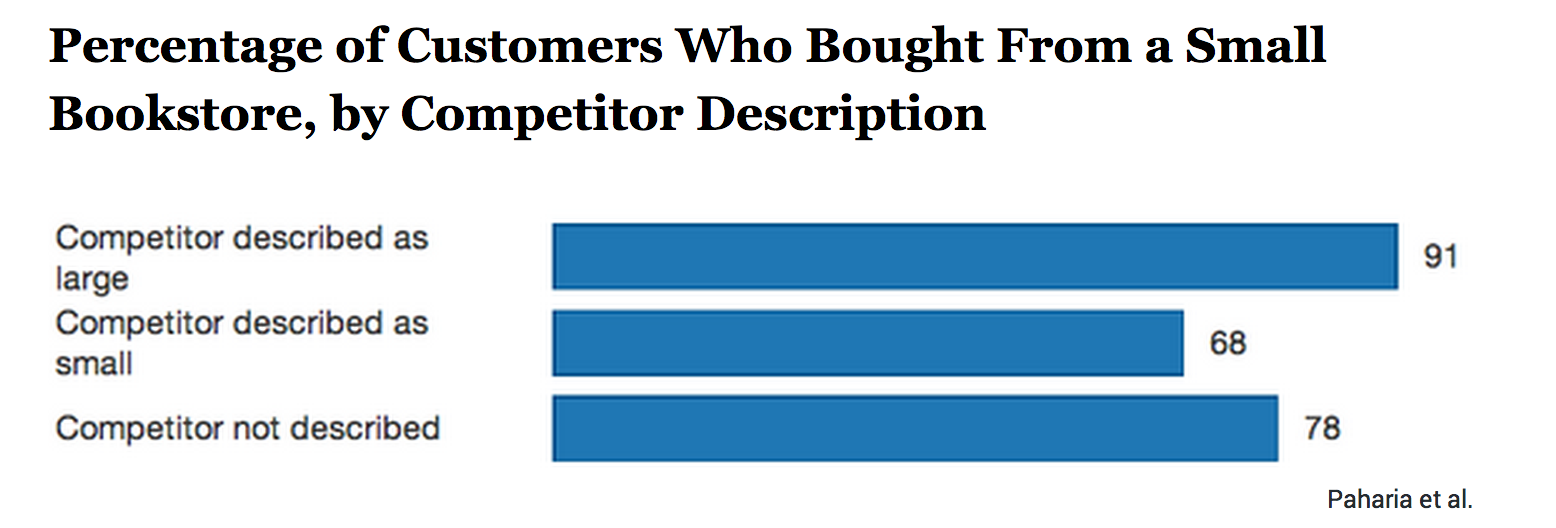
In one experiment, the researchers gave subjects a $5-off coupon upon entering a local bookstore. Some of the coupons had short blurbs explaining that the store was in direct competition with a store on the scale of Barnes and Noble, and some explained that the store was competing with another mom-and-pop bookstore. (A control group was given coupons without any text like this.) Those who received the large-competitor coupon were far more likely to make a purchase than those who got small-competitor coupons—even though the coupons made no comments on the store’s superior quality.

Proximity also matters. The researchers analyzed Yelp reviews of local coffee shops, and found that, in general, the closer a shop was to the nearest Starbucks, the higher its rating was on Yelp.

Firms may already be aware that the narrative of the underdog carries immense sway with consumers—researchers suspect people are drawn to companies whose stories they perceive to mirror their own experiences. But this study expands that: “Consumers may want to punish stronger competitors…[and watch] them fail,” the study’s authors write. And this doesn’t just have to do with products, like coffee, that benefit from being seen as authentic; a local electronics store could theoretically sell more batteries by simply playing up its stiff competition with Radioshack.


Off With Their Heels

by Phoebe Maltz Bovy

https://twitter.com/BuzzFeedFashion/status/497013670472589314

Rebecca Willis ponders the eternal question of why (some) women wear high heels:

We’ve heard it all before and it is, of course, a conundrum. Women say they feel empowered in heelsperhaps because they can look men in the eyewhen in reality they are physically handicapped by them. A lot of ink has been spent over the years trying to explain why we still wear them. To summarise: a high heel is sexual, changing the way we move, signalling passivity and availability. It’s misogynist, rendering women decorative and in need of a strong arm to hold. It’s a sign that we’ve escaped the prison of domesticityhave you tried doing housework in heels? And it’s a status symbol, as tallness is associated with privilege and good nutrition. Even so, many women, women with brains enough to understand that feet are a feminist issue, still want to wear heels. The long view may be that we’re going through a patch of cultural turbulence, but the close-up is that we really want that sense of lift. So for now let’s accept the existence of that desire, however ideologically unsound it may be. …

You have only to go to the chemist’s and stand in front of the shelves of gel insoles, corn pads, blister plasters and heel grips to see that footwear can be torture. And women are more tortured than men: according to the American Academy of Orthopaedic Surgeons, women are two to four times more likely to have hallux valgus (that’s bunions to you and me) and four to five times more likely to have hammer toes. If we could make ourselves immune to fashion and novelty, we’d be better off spending our money on a couple of custom-made pairs of shoes rather than lots of the off-the-shelf, one-shape-fits-all variety.

But what if this question is not, in fact, eternal? In a piece accompanied by a sketch by Konstantin Kakanias of fashion’s A-list in their preferred flats, Sadie Stein (NYT) announces a new, hobble-free era:

Today, all the old tropes and even the recent ones (Birkenstocks, Tevas, shower sandals) have been taken out of the box and made to look fresh and new. You can find driving moccasins, once an icon of staid WASPiness, bristling with ironic attitude, deck shoes in the farthest reaches of Brooklyn.

In the summer heat, urban women resembled Greek goddesses in strappy sandals. On runways from Marc by Marc Jacobs to Chanel, the look was bright sneakers and flat boots. Rather than teetering to their town cars, top fashion editors and stylists were suddenly able to hop on Citi Bikes or toodle through the Tuileries. From Lanvin’s laceless oxfords to the Row’s crocodile brogues, Marni’s tasseled loafers to riffs on Dr. Martens at Céline and Alexander McQueen — these are shoes you want to walk in. Nothing could feel more grown-up right now.

So, could this be it? If Fashion says heels are done, does that mean the next big thing will be higher heels than ever before? Most likely. But as a short, shoe-loving woman who was avoiding heels before it was cool, I vote for the flat-shoe trend to go on indefinitely (oxymoronic as that wish may be).

Keeping The World On Track

by Dish Staff

dish_gloablroadmap2

Of the 15.5 million miles of road estimated to be added to the planet’s surface by the year 2050, 90% will be in developing countries. For a new paper headed by conservation biologist William Laurance, scientists created a Global Road Map to mark “regions that should stay road-free, those where roads would be most useful and those where there is likely to be conflict between the competing interests of human development and protecting nature”:

Laurance and his colleagues argue that roads could have the most benefit when they link agricultural areas to the rest of society, since global food demand is expected to double by the middle of this century. With that in mind, the researchers identified the regions of the world that are most suitable for intensifying agricultural production. These are largely areas that are warm for at least part of the year and have enough rainfall to grow crops. Then the team created a map of regions that would be best to preserve, such as those with high biodiversity, those important for carbon storage and protected areas like national parks. …

The Amazon, Siberia and southwest Africa were among the regions where further road building would be unwise, according to the maps. India, Africa just south of the Sahara, large swaths of land stretching from Eastern Europe west into Russia, and the central United States would be home to prime spots for new roads that would assist agriculture. Central America, Southeast Asia, Madagascar, Turkey and Spain, though, have a lot of area where the nations would have to weigh the needs of their populations with the desire to protect the land. Many of the conflict areas are in poor countries, “and telling those countries not to build roads is hardly going to be popular,” Stephen Perz of the University of Florida, Gainesville, writes in an accompanying commentary. However, “a global road plan is not intended to ‘keep developing countries poor’, but rather to highlight the costs as well as the benefits of building roads,” he argues.

(GIF showing roads and croplands encroaching on the Amazon rainforest in Brazil between 2000 and 2012 via NASA Earth Observatory and Smithsonian.com)

Don’t Knock Weird Science

by Dish Staff

That’s Josie Glausiusz’s takeaway after reading a paper published earlier this year by Patricia Brennan, an evolutionary biologist who’s received federal funding for her research into the sexual anatomy of ducks (a subject explored in the hilarious video from Ze Frank seen above):

Brennan and her colleagues explain that many people believe the federal government should fund only applied science designed to “cure disease, develop renewable energy, or improve agriculture.” They may not understand that the scientific process is “convoluted and unpredictable,” or that it takes a great deal of basic science work before its application leads to significant health or economic benefits. Another problem, Brennan told me, is that many people “have absolutely no idea how science is funded and how little money we actually get for it.” In fact, as she notes, the percentage of the overall budget that Congress allocates to science “has declined from 2.91 to 2.77 percent of our GDP between 2009-2011 (and that percentage includes the science budget for the Department of Defense, which is about half of all our research budget).” For comparison, 19 percent of the U.S. budget, or $643 billion, was allocated for defense and “security-related international activities” in 2013.

She and her colleagues cite a number of technologies inspired by esoteric evolutionary innovations. Examples include Geckskin, “a reusable, glue-free adhesive pad” invented after decades of research on the soft hairs coating gecko toepads, which enables the lizards to walk upside down; and widespread use of an enzyme called Taq polymerase—first isolated in 1965 from a bacterium surviving in hot springs in Yellowstone National Park—to replicate short strings of DNA. That enzyme has brought “vast benefits” to medicine, agriculture, and the criminal justice system, they say. Brennan’s own research could lead to improved understanding of hypospadias, a birth defect that causes malformation of the penis in baby boys.

(Un)happy Labor Day

by Dish Staff

Is the American labor movement “friendless”? Roger Martin reflects on its unpopularity in partisan politics:

A key marker occurred in 1992 when President Bill Clinton signed into law a tax change that allowed only the first $1 million in CEO compensation to be deducted for corporate income tax purposes. It was supposed to discourage corporations from paying their CEOs more than what was then thought to be an excessive $1 million (imagine that!) – and failed spectacularly as they were given stock options instead, which made them wealthier than ever before.

But in whose favor was this measure intended? Labor?  Hardly.  There was no obvious benefit to them.  Capital?  Yes indeed. Shareholders were complaining about CEOs demanding ever-higher compensation – and the Democrats responded to help capital reign in CEO talent. Arguably the attention to the needs of capital has continued in the Obama administration. This administration featured enthusiastic embrace of the TARP bailouts of banks that protected their shareholders first and foremost and the continued low interest policies that favor capital owners.  Of course, the argument can be made that these policies help labor too, by avoiding a recession/depression. But the careful attention to capital first is a relatively new behavior for the Democrats.

Meanwhile, the Republican Party has increasingly shifted its allegiance to high-end talent, a tiny offshoot of labor that began to emerge around 1960. During the Reagan era, for instance, they cut the top marginal income tax rate from 70% in 1980 to 50% just two years later. By 1988 it was 28%. In seven years, an executive earning a million-dollar salary went from keeping $340,000 after federal taxes to keeping $725,000. That’s quite a raise.

Looking Forward to Labor Day

by Bill McKibben and Sue Halpern

dish_beachchairs

We used to think we worked pretty hard, but that was before we agreed to help out this week in Andrew’s absence. As Dish guest-bloggers we were each doing three posts a day, and the pressure seemed unrelenting – we’d sigh the minute one went up on the site because it felt like the countdown clock was ticking already. It felt like Lucy on that chocolate assembly line. We’ve always admired this place, but now we’re in a kind of awe: we have no idea how the staff and the proprietor keep it up day after day (and we think Maureen Dowd et al are living the high life – I mean, once every three days? Come on.)

We realized, too, that though we’ve always thought of ourselves as opinionated, there are actually vast swaths of current events on which we have no useful thought at all. Vladimir Putin is clearly a bad guy, but God knows what we should do about him. Ditto Libya. There are other questions, happily, where we can subcontract our opinion-forming to each other: anything to do with computers and internets, for instance, is Sue’s domain, for instance. Ditto butterflies, dogs, and how the brain works. Bill, as you may have noticed, is good on climate change and also climate change. But that leaves a little uncovered; which is why the crowd wisdom that comes with a Dish subscription seems like such a good value.

The one other thing we both know a little about is journalism.

We’ve written for pretty much everyone there is to write for over the years. It’s an honor to have added the Dish to that list: there’s good work going on here, and in quantity. We always knew Andrew was remarkable;  now we have a sense of the depth of the bench. Thanks to them for making this week so smooth for us.

Since we’re good Vermonters, we’ll conclude with a small going away present, our very own (and very simple) granola recipe, which we make each and every week. Since soon the days will start to cool, you might want to make it too:

Preheat oven to 250

In big bowl, mix 10 cups oats with a cup or two or even three of chopped pecans and cashews

Mix in 1/2 cup oil, 1 cup maple syrup, and 1/2 cup water

Spread over two lightly greased cookie sheets

Bake 30 minutes, turn over with a spatula

Return to over for 30 minutes and then, when the timer goes off, simply turn off the heat and let it sit in the over for a few hours till it cools

In our experience, if you eat this, you will start to favor single-payer health insurance, despise big oil companies, and hope Bernie Sanders runs for president. It’s our second-favorite morning Dish.

(Photo by Robert S. Donovan)

Lessons From A Long-Time Loner

by Dish Staff

dish_mainemoonlight

Christopher Knight spent nearly three decades living alone in the woods of Maine, earning him the nickname “the North Pond Hermit,” before getting caught for theft and sentenced to prison. Michael Finkel asked Knight about what he learned from a solitary, hardscrabble existence:

Anyone who reveals what he’s learned, Chris told me, is not by his definition a true hermit. Chris had come around on the idea of himself as a hermit, and eventually embraced it. When I mentioned Thoreau, who spent two years at Walden, Chris dismissed him with a single word: “dilettante.”

True hermits, according to Chris, do not write books, do not have friends, and do not answer questions. I asked why he didn’t at least keep a journal in the woods. Chris scoffed. “I expected to die out there. Who would read my journal? You? I’d rather take it to my grave.” The only reason he was talking to me now, he said, is because he was locked in jail and needed practice interacting with others.

“But you must have thought about things,” I said. “About your life, about the human condition.”

Chris became surprisingly introspective.

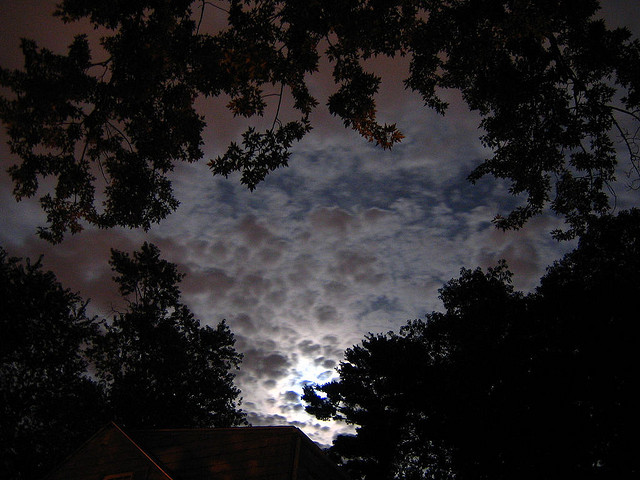
“I did examine myself,” he said. “Solitude did increase my perception. But here’s the tricky thing—when I applied my increased perception to myself, I lost my identity. With no audience, no one to perform for, I was just there. There was no need to define myself; I became irrelevant. The moon was the minute hand, the seasons the hour hand. I didn’t even have a name. I never felt lonely. To put it romantically: I was completely free.”

That was nice. But still, I pressed on, there must have been some grand insight revealed to him in the wild. He returned to silence. Whether he was thinking or fuming or both, I couldn’t tell. Though he did arrive at an answer. I felt like some great mystic was about to reveal the Meaning of Life.

“Get enough sleep.”

He set his jaw in a way that conveyed he wouldn’t be saying more. This is what he’d learned. I accepted it as truth.

(Photo by Flickr user Ctd 2005)

He Worshipped His Way

by Dish Staff

Frank Sinatra discussed his approach to faith in a 1963 interview with Playboy:

Playboy: All right, let’s start with the most basic question there is: Are you a religious man? Do you believe in God?

Sinatra: Well, that’ll do for openers. I think I can sum up my religious feelings in a couple of paragraphs. First: I believe in you and me. I’m like Albert Schweitzer and Bertrand Russell and Albert Einstein in that I have a respect for life—in any form. I believe in nature, in the birds, the sea, the sky, in everything I can see or that there is real evidence for. If these things are what you mean by God, then I believe in God. But I don’t believe in a personal God to whom I look for comfort or for a natural on the next roll of the dice. I’m not unmindful of man’s seeming need for faith; I’m for anything that gets you through the night, be it prayer, tranquilizers or a bottle of Jack Daniel’s. But to me religion is a deeply personal thing in which man and God go it alone together, without the witch doctor in the middle. The witch doctor tries to convince us that we have to ask God for help, to spell out to him what we need, even to bribe him with prayer or cash on the line. Well, I believe that God knows what each of us wants and needs. It’s not necessary for us to make it to church on Sunday to reach Him. You can find Him anyplace. And if that sounds heretical, my source is pretty good: Matthew, Five to Seven, The Sermon on the Mount.

Playboy: You haven’t found any answers for yourself in organized religion?

Sinatra: There are things about organized religion which I resent. Christ is revered as the Prince of Peace, but more blood has been shed in His name than any other figure in history. You show me one step forward in the name of religion and I’ll show you a hundred retrogressions.

Update from a reader:

Kitty Kelly, in “His Way: The Unauthorized Biography of Frank Sinatra,” claims the interview (questions and answers) was written by Mike Shore, Sinatra’s friend and an executive with Reprise Records; however, Sinatra did sign off on it against the advice of people who feared the effect it may have on his career, so good for Frank. The interview is getting a lot of play on the Internets today – I was initially surprised by (and then suspicious of) Sinatra’s eloquence, but I’ll defer to James Phalen, over at Why Evolution is True, who offered the clearest skeptical eye regarding the interview’s authorship: “Only Steven Pinker (and Hitch before him) speaks (or spoke) in complete paragraphs.”

(Hat Tip: 3QD)

Return To Pangaea

by Dish Staff

dish_panamacanal

Morgan Meis meditates on the symbolic meaning of the Panama Canal, which officially opened 100 years ago this month:

[F]or all this talk of progress and accumulated knowledge of the continents and seas, there is also something prehistoric about the desire to bring all the continents closer together. That’s because they were all together once. … On Pangaea, what we now know as Africa was nestled in the crook between North and South America, almost like a baby. Eurasia was connected to the top of North America. Then, over millions of years, the land mass began to break up, due to motion of the tectonic plates. The continents separated from one another. The oceans filled up the spaces in between. What was one, split into many.

Unknowingly, unconsciously, the engineers of the Panama Canal were acting as agents of the ancient supercontinent of Pangaea. Bring it all back together. Shorten the distances. Heal the wounds, maybe, from the terrible splitting that tore the world out of its oneness hundreds of millions of years ago. That is how it can seem, anyway, when you take the long view, when you look at it from a geological perspective. It is like an old dream of continental unity that we never knew we had. It is like the crust beneath the earth found a way to influence the minds of the men who crawl upon the surface. “Bring us back together.” You can hear it whispered from the cracks and crevices and fault lines that go down into the dark places beneath.

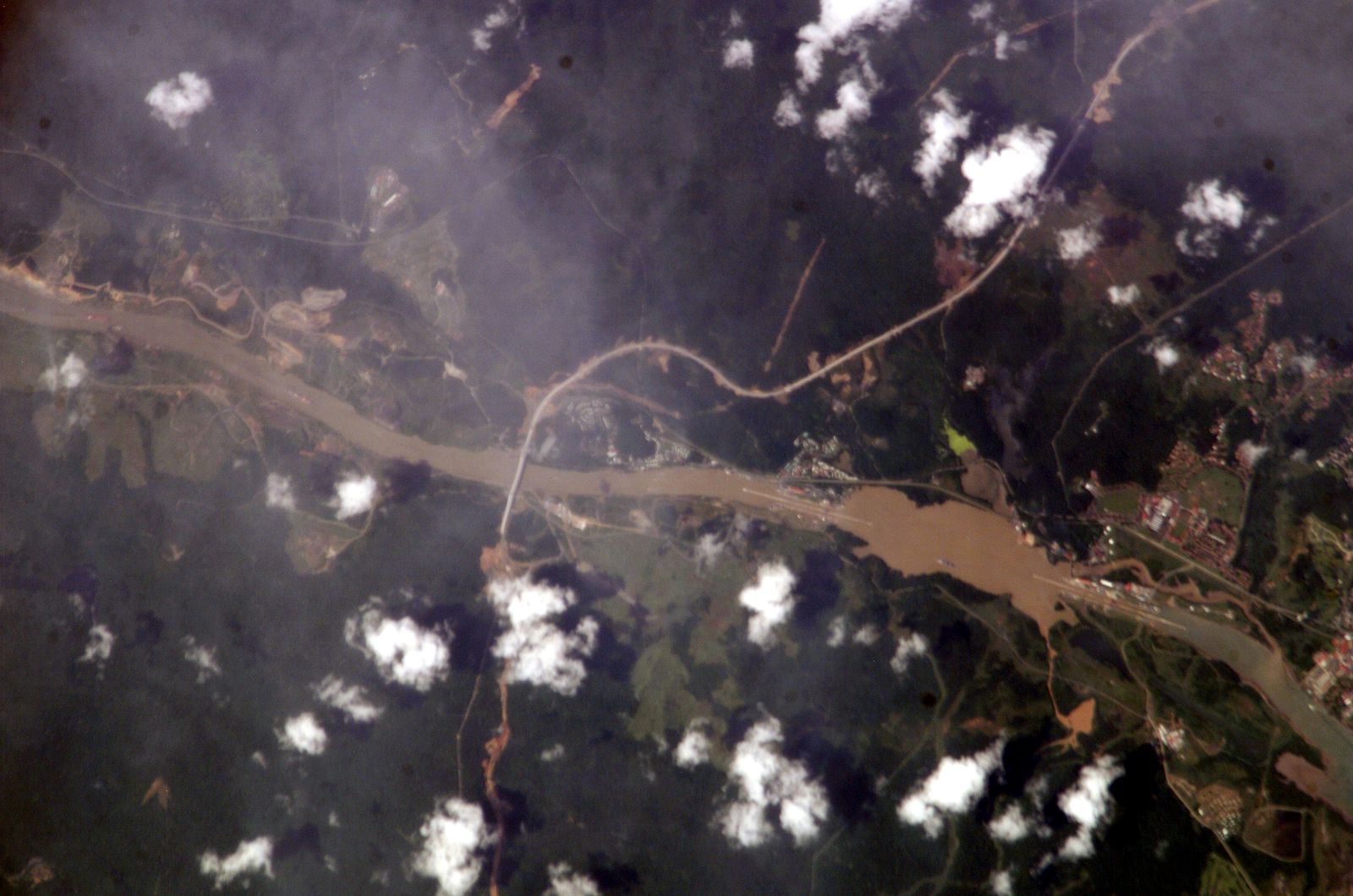
(Image of the Panama Canal as seen from space via Wikimedia Commons)

Poems From The Country Parson

by Dish Staff

Reviewing John Drury’s Music at Midnight: The Life and Poetry of George Herbert, Mark Jarman traces the distinctiveness of Herbert’s religious vision to his years as a priest in a country parish – a situation quite different from that of his contemporary John Donne:

I don’t think we can ignore this dimension of George Herbert’s career, even as it seems to be the mirror opposite of John Donne’s. Where Herbert forsook the dish_herbertchurch aspiration of a career at court for a life in the country, Donne extricated himself from his country exile and got himself installed in a big urban church. … Herbert got his taste of worldliness at Cambridge, and as the son of his remarkable mother, and the rest from observing and living among and serving the good country people of his parishes. Increasingly, I think it is helpful to understand how George Herbert lived and believed in order to appreciate fully the beauty of his poetry. So much of the poetry acknowledges an ordinary human ambivalence with regard to faith. With John Donne, I recognize something else, something more dramatic, especially in his religious poetry—and that is the lineaments of ambition thrown into relief by apprehension and anxiety about the grace of God and the fear both that he may not be worthy of it and that he may not believe in it. I do not mean to imply that Herbert by contrast is more complacent, but he is more aware of the subtlety of belief, especially in its daily practices and encounters with God.

Recent Dish on Herbert here. We featured his poetry Easter weekend here, here, and here.

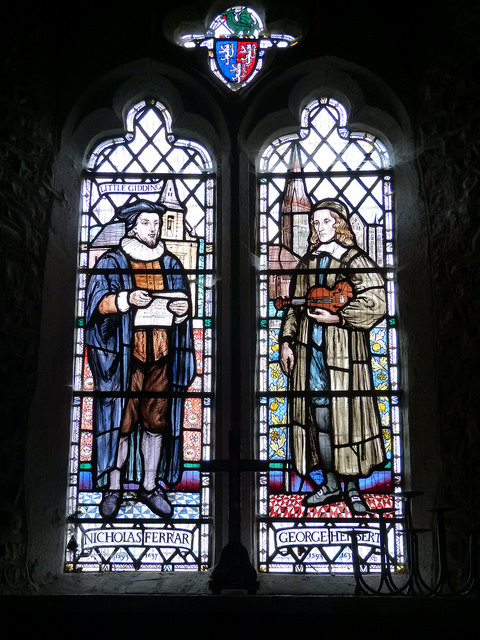
(Photo of stained glass depicting Herbert at Saint Andrew’s church in Bemerton, Wiltshire, where he was a rector, by Flickr user Granpic)