Aural Sex

Autonomous Sensory Meridian Response, or ASMR for short, refers to the pleasant tingles some people get from certain sensations, particularly whispers and other soft sounds. The little-understood phenomenon has not attracted much scientific research, but has spawned a sizable community on YouTube, where a search for “ASMR” results in 2.8 million hits. Jordan Pearson takes a look at this subculture and the wildly popular videos, like the one above, that its members produce and consume:

ASMR as an internet phenomenon that took off in 2010, when a Reddit thread asking if anyone else had ever experienced it went viral, and thousands of people realized they weren’t the only ones who’d noticed the pleasant and foreign feeling. An internet subculture of roleplay videos meant to evoke the sensation has since taken off. Tingle-seekers—lots of them—watch videos delivering agreed-upon triggers like soft whispers in order to feel what devotees vaguely describe as “brain orgasms” or pleasant tingles, though there really isn’t any word in the English language to accurately describe the strange sensation.

Many people have started making these videos themselves—gaining hundreds of thousands of YouTube subscribers along the way—and often with a twist: elaborate roleplaying with a weirdly maternal bent.  “The most popular roleplay requests are the ones that involve a lot of what I call ‘personal attention.’ An example of that would be, if you go to the eye doctor, for instance, they’re going to be very close to you,” Ally Maque, an ASMR YouTube personality with over one hundred thousand subscribers told me. …

“I think the ASMR movement, demanding eye contact and prolonged attention, has sort of an undercurrent of optimism and care in the videos themselves that’s really nice. It’s hopeful,” Nitin Ahuja, a doctor and academic who published a recent paper on the topic, told me. “That’s really interesting to see against a backdrop of cynicism about technology wholesale.” Whether the popularity of ASMR videos that express caring and otherwise loving sentiments is a good or a bad thing, broadly speaking, is beside the point and probably a little unfair to the people who enjoy them, Ahuja said.

Selling Someone Else’s Body

Milo Scanlon reflects on his experience as a trans male sex worker. He describes how he’d “only used crack a few times when I [began] letting my dealer, easily 30 years my senior, fuck me in exchange for more”:

Gender identity and sex work intersected strangely. Though my crack dealer sometimes misgendered me, he also referred to me playfully as his “boyfriend,” putting his arm around me as I sat on his lap, hoping he would shotgun me a hit. I probably “passed” as male, with my shaved head, bound chest, hairy legs, and skinny physique, leaving no body fat for feminine curves. However, naked from the waist down, letting some guy stick his dick inside me, I didn’t feel particularly masculine. I didn’t feel particularly anything, besides bored, in pain, and craving my next high.

Many trans people experience “gender dysphoria”, a feeling of disconnect or discontent between our bodies and our minds. I believe this is part of why some trans people do sex work. It’s not our body, even though we’re stuck inside of it. We don’t feel like it’s ours. So exchanging sexual access to it for money, especially if we’re struggling to pay for drugs, hormones, surgery, or even food or rent, doesn’t seem so outrageous. We’re already disconnected.

Scanlon’s post is part of The Toast‘s excellent series on trans issues.

Debased On A True Story

Michelle Huneven recalls feeling “a sense of powerlessness and an utter lack of recourse” once she realized the novelist T.C. Boyle had based a character – whom she describes as a “talentless airhead poseur” – on her. Her advice for the fictionalized:

Go fetal. Give the writer a good talking to. Write a letter of complaint. Write your own book, your way. Keep it to yourself and seethe. You can sue, but the bar for libel lawsuits involving fiction is very, very high. And so is the cost. According to the libel lawyer Elizabeth McNamara, the fictionalized, like all litigants, sue for one of two reasons: because they feel wronged, or for money.

Your ex-girlfriend has put you in a story; you’re unmistakable—that’s your hair color, your tattoo, your speech impediment—only she’s made you a rapist. Or your cheating, lying ex-boyfriend has written a best seller featuring you, your family, and all your best lines; he’s sold the screen rights, he’s raking it in. Why shouldn’t you have a share of the pot?

“Since time, immemorial writers have used real life to inspire them and build upon their experience,” says McNamara. “But invariably, characters diverge from reality.”

There’s the rub. And there goes your case, out the window.

“We Are Of The World, After All”

Reviewing John Williams’ recently reissued novel, Augustus – which tells the story of the famed Roman Emperor whose rise to power began when he was adopted by Julius Caesar – Daniel Mendelsohn ponders what connects it to Williams’ other two novels – Stoner, about an English professor, and Butcher’s Crossing, a Western:

The main theme at play in all three of Williams’s mature novels is in fact rather larger: it’s the discovery that, as Stoner puts it to the mistress he must abandon for the sake of his family and his job, “we are of the world, after all.” All of Williams’s work is preoccupied by the way in which, whatever our characters or desires may be, the lives we end up with are the often unexpected products of the friction between us and the world itself—whether that world is nature or culture, the deceptively Edenic expanses of the Colorado Territory or the narrow halls of a state university, the carnage of a buffalo hunt or the proscriptions of the Roman Senate. At one point in Augustus a visitor to Rome asks Octavian’s boyhood tutor what the young leader is like, and the elderly Greek sage replies, “He will become what he will become, out of the force of his person and the accident of his fate.”

An inescapable and sober conclusion of all three novels is that the friction between “force of person” and “accident of fate” becomes, more often than not, erosion: a process that can blur the image we had of who we are, revealing in its place a stranger.

Beauty As Investment

Autumn Whitefield-Madrano muses:

The more I think about it, the more I wonder whether beauty work is coded similarly to other forms of inconspicuous consumption. Education is a prime example of inconspicuous consumption—higher education costs money, and while financial aid makes it possible for plenty of bright, poor high school seniors to go to Ivy League schools, you’re also unlikely to run across a whole lot of Rockefellers at the local community college. And going to the sort of schools where you do find Rockefellers gives you a level of cultural capital you’re going to have a harder time finding in other ways—you pick up on certain language patterns, cultural references, experiences, and fashions that mark you as having access to a certain social class, regardless of what your paycheck says.

Prestigious education is a long-term investment, in other words, and we understand such forms of investment as being correlated with wealth, even more so than we correlate it with being merely rich. (As Chris Rock puts it on wealthy vs. rich: “Here’s the difference: Shaq is rich. The white man who signs his checks is wealthy.”)

I don’t want to lapse into stereotypes about Upper East Side housewives with their plastic surgery and expensive hairdos. But the fact is, there is a marked difference in the faces of women walking down East 86th Street in Manhattan and 86th Street in Queens, you know? Wealth enables you not to buy expensive foundation, but to buy the kind of skin creams, personalized skin care and access to the world’s best dermatologists, and long-term know-how that enables a wealthy older woman to have the sort of look that marks her as a wealthy older woman. That is: Wealth enables you to treat beauty as a long-term investment.

Women At War

6a00d83451c45669e20168e767e500970c-800wi

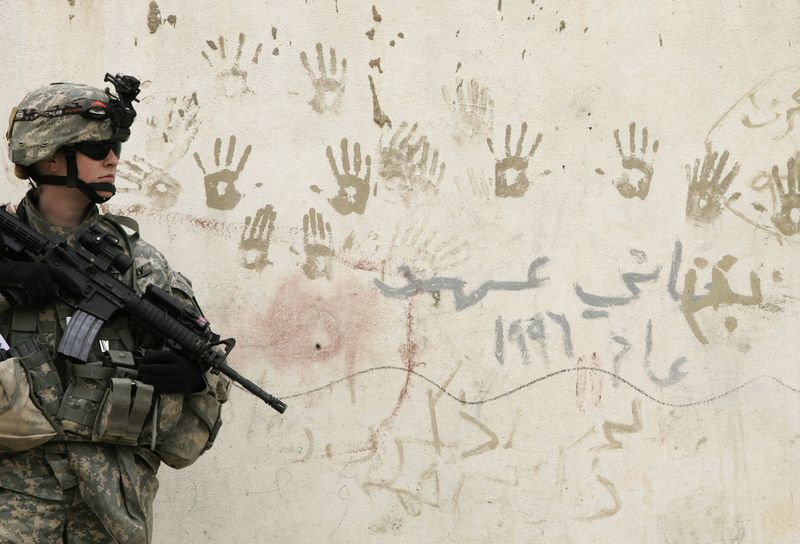
“The stories of women in war remain woefully undertold by journalists—as well as by the women who lived them,” writes Vanessa M. Gezari in a review of Helen Thorpe’s Soldier Girls. Gezari calls the book a “welcome corrective”:

The book follows three women serving in the Indiana National Guard through deployments in Iraq and Afghanistan—and, upon their return to Middle America, chronicles their difficult readjustments to civilian life. Thorpe’s narrative inevitably addresses large, systemic issues such as women’s changing roles in war and the ever-present danger of sexual assault. But her book is laudable for its clear focus on individuals and their idiosyncratic life stories. Her subjects are real women, sometimes likable, sometimes less so, who grapple with many of the challenges their male counterparts face, such as alcoholism and post-traumatic stress disorder. Thorpe’s subjects also struggle with more gender-specific dilemmas, such as reacclimating to motherhood after deployment and mollifying boyfriends who feel occasionally unnerved by the close bonds the women have formed with male soldiers who served alongside them. …

The three women at the heart of Thorpe’s story share a tender, familial bond that, like so much else in war literature, is generally ascribed to men. When Desma Brooks gets back from Afghanistan, neither her boyfriend nor her children greet her in the crowded gym filled with balloons and flags; instead, Michelle Fischer and another guardswoman have become her closest kin: “‘Let’s get the fuck out of here,’ Desma said. They drove to a hotel and they ordered take out food and they did nothing but watch movies on TV for two whole days.” This homecoming scene, short on conventional family sentiment, is an eloquent reminder of how women’s experiences are transforming military lore. Like the rest of the tale recounted in Soldier Girls, it also suggests how much of their story remains to be told.

Much more Dish on women in the military here.

(Photo: A US female soldier from Alpha Company, 2nd Battalion, 7th Cavalry Regiment secures the area during a joint house-to-house search operation between Iraqi and US forces, in the northern Iraqi city of Mosul, on April 15, 2007. By Mauricio Lima/AFP/Getty Images)

The View From Your Window Contest

VFYWC_216

You have until noon on Tuesday to guess it. City and/or state first, then country. Please put the location in the subject heading, along with any description within the email. If no one guesses the exact location, proximity counts.  Be sure to email entries to contest@andrewsullivan.com. Winner gets a free The View From Your Window book or two free gift subscriptions to the Dish. Have at it.