The Neocons’ Last Stand?

Hillary Clinton Awarded The 2013 Lantos Human Rights Prize

Jacob Heilbrunn suspects so:

Whether the neocons’ audacious attempts to once more guide the debate over foreign policy will succeed is an open question. Kristol, for one, seems to think this is his moment, writing recently, “A war-weary public can be awakened and rallied. Indeed, events are right now doing the awakening. All that’s needed is the rallying.”

Wrong. This is classic neocon bombast, which is to act as though foreign policy is simply a matter of willpower. It isn’t. Foreign policy is not a cheerleading event. A host of other factors—the strength of the economy, our alliances, the growing power of China, climate change and other developments—mean that American cannot simply act with impunity abroad, as the neocons would have it. What’s more, the American people are not ready to rally: A recent Pew poll indicates that 54 percent of the public, a new high, believes that the United States should “mind its own business” internationally. Put simply, Obama is not flouting the will of the public. He is expressing it. It’s the neocons who are out of step with history.

John Nichols spotlights a recent PPP poll on Iraq:

In fact, if there is one thing that unites Americans, it is their skepticism about steering back into Iraq. Eighty-two percent of Democrats oppose sending US troops to Iraq, as do 86 percent of independents. Notably, 57 percent of Republicans are also opposed. Just 28 percent of Republicans favor the ground-troops option.

Overall, just 16 percent of Americans are inclined toward the sort of approach that might satisfy Cheney.

Their main source of hope at this point? Hillary Clinton. Millman notes how far to the neocon right Clinton is among Democrats, when it comes to intervention:

The one thing that distinguishes her from your typical Democrat is that she is substantially more hawkish, having taken the hawkish side in essentially every political debate from Bosnia and Kosovo through Afghanistan and Iraq and into the Obama-era debates over Libya, Syria and Ukraine. If she weren’t Hillary Clinton, that fact would not only make her a long shot; it would probably be disqualifying.

There’s a real risk that she’d drag us back into the Manichean struggle with Iran, cave to the Greater Israel lobby on settlements, and give bleeding heart liberal interventionists another crack at meddling in someone else’s country once again. Her entire career has been about insulating herself from attacks from the right by appeasing them. I see no reason why she would stop now. It’s in her bones.

The Price-Tag On Obamacare

average_monthly_premium

Earlier this week, the HHS released a report (pdf) on Obamacare premiums. Yglesias, who posts the above chart, observes that the “average subsidy-eligible enrollee in the federal exchange gets a pretty cheap health plan.” But that fact worries Bob Laszewski:

The lowest income people––who pay the lowest premiums and out-of-pocket costs––are the ones who are obviously signing up. That explains why the average consumer subsidy is so high and the average net cost is so low.

As I have said on this blog before, the biggest consumer problem Obamacare has is that the plans––with their still high premiums even after the subsidy, big deductibles, and narrow networks––are not attractive to working class and middleclass families and individuals.

Simply, the Obamacare plans are unattractive to all but the poorest who get the biggest subsidies and the lowest deductibles.

Suderman points out that the “data released by the administration doesn’t account for premiums in the 14 states that ran their own exchanges this year” and that “those averages conceal an awful lot of variation.” He goes on to cite a Manhattan Institute study finding that health insurance has gotten significantly more expensive under Obamacare:

[T]he study by health policy fellow Yevgeniy Feyman found that, on average, premiums were up 49 percent under Obamacare. Again, that’s an average, and it masks some variation—in New York, which had unusually restrictive, badly designed health insurance market rules prior to Obamacare, premiums are actually down quite a bit—but it indicates that the overall trend for unsubsidized premiums is up.

The difference, then, is being made up by federal subsidies. According to the administration’s report, those subsidies are carrying 76 percent of the total cost of subsidized insurance plans selected in the federal exchange. The out-of-pocket average is $82. But the actual average premium price, without subsidies, is $346.

But the exact size of those premium increases is up for debate:

[A] new analysis from a conservative health-care economist suggests that Obamacare sticker shock wasn’t nearly as steep as other studies previously suggested. Consumers who bought their own coverage between 2010 and 2012 saw the average cost of their plan increase between 14 percent and 28 percent when they switched to new coverage under the Affordable Care Act, according to Mark Pauly, a professor of health-care management at the University of Pennsylvania’s Wharton School of Business.

Adrianna McIntyre digs into the details of that study. Why costs went up:

On balance, the authors suggest that the hike is attributable to insurers expecting an influx of sicker enrollees. Health reform makes insurance easier to obtain for sick people. The new insurance rules means that cost gets spread around across the sick and the healthy, so when enrollees get sicker overall, prices go up for everyone.

The other factor that might have driven up prices — the essential benefits package — doesn’t seem to have played a major role. This new paper finds that the generosity of the insurance benefits offered before Obamacare was roughly similar, on average, to the medium-level plans on today’s exchanges. And that suggests the change in who’s enrolling in insurance — not the richness of those insurance benefits — is driving the rise in prices.

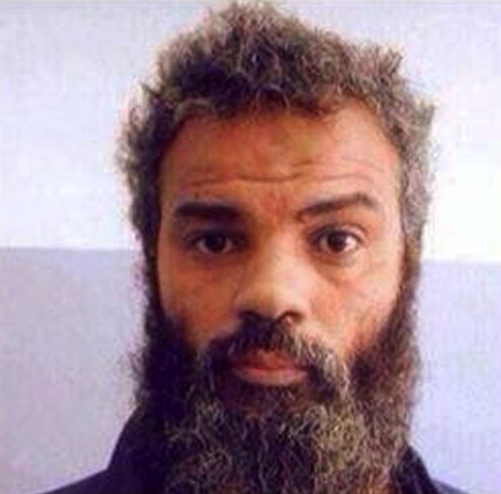
Was Gitmo Even An Option For Abu Khattala?

From a legal standpoint, Jack Goldsmith argues that the alleged Benghazi mastermind must be tried as a civilian, contra the FNC crowd’s insistence that he be sent to Guantánamo Bay:

Abu Khattala is an alien and not a privileged belligerent.  It might appear that he is an unprivileged belligerent because he has (or is alleged to have)abu-khattala “engaged in hostilities against the United States.”  However, the [Military Commissions Act] defines “hostilities” to mean “any conflict subject to the laws of war,” i.e., probably, an armed conflict.  While the Benghazi attacks were horrific, they might not – indeed, almost certainly don’t – rise to the level of a stand-alone armed conflict. …

There are other complications here, but my first take is that the critics of the Obama administration’s choice of civilian court to incapacitate Abu Khattala don’t have a legal leg to stand on.  If the United States wants to maintain custody over Abu Khattala, interrogate him as aggressively as possible, and incapacitate him for a long time, then a lawful interrogation on ship pursuant to the “public safety” exception before sending him to the United States for civilian trial appears to be the only legally available option.

Sam Kleiner reminds Butters and other detractors of civilian trials for terror suspects that these trials have been tremendously successful:

While Republicans like to portray federal courts as too weak to handle suspected terrorists, the reality is that they have a proven track record for securing convictions in these cases.

In case after case, skilled federal prosecutors have won convictions of suspected terrorists. Preet Bharara, the U.S. Attorney for the Southern District of New York, remarked after one conviction: “As we have seen in the Manhattan federal courthouse in trial after trialof Ahmed Ghailani, of Suleiman Abu Ghayth, and now of Abu Hamzathese trials have been difficult, but they have been fair and open and prompt.” Prosecutors have even been able to gather intelligence from suspects; in the trial of Abu Ghaith, a confidante of Osama Bin Laden, prosecutors produced a 22-page memorandum with all of the information that Ghaith shared both before, and after, he had an attorney.

Benjamin Wittes believes it made sense to send captives to Guantánamo in 2002, but not anymore:

The argument for Guantanamo—or some other detention facility—has to do with numbers. What happens when you capture, say, 10,000 people and know that most of them are foot soldiers but some of them are Abu Khattalas and some of them are mistakes—but you don’t know which are which? As John Bellinger has repeatedly pointed out, moreover, in the context of 2001 and 2002, the criminal law also did not yet cover the conduct of many people held at Guantanamo. So there was a substantive law problem in addition to a numbers problem.

Guantanamo, in other words, was a response to a specific set of circumstances—circumstances in which the criminal justice apparatus would simply have been overwhelmed by an influx of undeveloped cases. I believe it was a legitimate response, and I make no apologies for it. I also believe that at least some of the circumstances that gave rise to it could, and probably will, arise again. But that does not mean it is the answer to all problems. And it certainly is not the answer to the problem of an individual terrorist captured after a long period of investigation and against whom the evidence will support a strong criminal case. Dogmatically insisting on its use in such situations is as silly as rejecting it in principle.

The administration is actually “straddling the issue,” Mark Thompson writes, by questioning him on a Navy ship anchored in the Mediterranean:

The Administration has questioned at least two other terror suspects aboard ships for up to two months before dispatching them into the federal court system.

“The only reason for having him on a U.S. warship is to provide a nice quiet environment where the investigators can work their wiles on him,” says Eugene Fidell, a military-law lecturer at the Yale Law School and former president of the National Institute of Military Justice. “If the government wanted to have Khattala at the E. Barrett Prettyman courthouse [in Washington, D.C.] by four o’clock, he’d be there. The notion seems to have taken root that the government has, if not all the time in the world, as much time as it reasonably wants to see if can coax these people into making statements.”

The Fightin’ IP Attorneys?

Adam Raymond explains what has Washington sports fans riled up this morning:

Eight years after a group of Native Americans filed a lawsuit seeking to repeal the Washington Redskins trademark, the U.S. Patent and Trademark Office has done just that. The team’s name, the ruling says, is “disparaging to Native Americans” and trademarks that “disparage” or engender “contempt or disrepute” are prohibited by federal law.

The ruling doesn’t require the Redskins to change their name, but if it’s upheld after the inevitable appeals, the team may decide to do so anyway since its name will no longer be protected. If anything, the ruling should settle the debate over whether redskin is a slur or an honorific.

Jay Caspian King praises the decision:

As part of their appeal, the respondents argued that “Redskins,” as it referred to the football team, had been stripped of its associations with Native Americans – never mind the cartoon warrior on the team’s helmets and the headdresses worn by fans. Such disingenuous, purely linguistic claims have been used throughout history to justify all manner of terror; to argue that the name of the football team had shed its historical associations relies upon a terrible logic that says that, because a group of peoples has been, over centuries, killed, brutally dispossessed, and internally exiled – to the point that they are invisible to many of the residents of Washington, D.C. – their history should be trumped by the history of a football team.

Alyssa is also hoping for a name change:

I would not be surprised if [owner Dan] Snyder stands his ground anyway, after years of gleefully tweaking anyone who has issued a basic appeal to courtesy or financial common sense. But if he decides to change the name of his team, Snyder could seize an opportunity not just to reinforce his financial position, but to make a real gesture towards strengthening the franchise’s relationship with the city where it is located.

In contrast, Robert Tracinski is disturbed by the move:

Our system of government depends on the impartial administration of the laws by the executive. In this case, executive officials declared that a private company doesn’t deserve the protection of the law: if the ruling survives an appeal in the courts, the federal government will stop prosecuting violations of the team’s intellectual property rights, potentially costing it millions of dollars.

This ruling isn’t a slippery slope. It’s a slope we’ve already slid down: bureaucrats in Washington are now empowered to make subjective decrees about what is offensive and what will be tolerated, based on pressure from a small clique of Washington insiders. Anyone who runs afoul of these decrees, anyone branded as regressive and politically incorrect, is declared outside the protection of the federal government.

Kavitha Davidson considers the legal precedent:

Under trademark law, the [Patent and Trademark Office] reserves the right to reject an application if it “consists of or comprises immoral, deceptive, or scandalous matter; or matter which may disparage or falsely suggest a connection with persons, living or dead, institutions, beliefs, or national symbols, or bring them into contempt, or disrepute.” The office has exercised this clause many times, rejecting an application for “Khoran” liquor, since alcohol is considered sinful in the Islamic holy book. Basically any application involving the N-word is rejected, including Damon Wayans’s attempt to trademark his clothing line, “Nigga.” And a skiing equipment company was turned away from using the term “squaw.”

Joseph Stromberg looks ahead:

Today’s decision is an important victory for [plaintiff Amanda] Blackhorse and the plaintiffs, but it doesn’t guarantee that the team will actually lose the trademark registrations. For one, the team will almost certainly appeal the decision in federal court. … In the meantime, the team will keep full protection of its name and logo.

But Jordan Weissmann argues that losing the appeal wouldn’t hurt the team too much financially anyway:

[I]n the worst of all possible worlds for the NFL, a few companies might be able to start producing Washington apparel without any logos or player names. Irritating? Yes. Disastrous? Probably not.

Then there’s the question of who would actually want to go into that business. As of now, the companies that want to produce pro-football-branded merchandise have to negotiate with the NFL for a collective license that covers all of the teams. (That could change, however, depending on the outcome of a pending court case.) Any corporation that decided to go rogue and start selling unlicensed Washington gear would undoubtedly incite the NFL’s wrath. That might be fine for the odd guy with a stand selling T-shirts on the corner, but not, say, Nike.

For much more on this debate and mascot controversies in general, check out the Dish thread.

Maliki Must Go?

IRAQ-POLITICS-DEMO

Max Boot recommends “pressing the Iraqi government for serious political reforms that include embracing Sunni tribes, ending the persecution of Sunni leaders, curbing the prime minister’s authority and weeding out political hacks and sectarian actors from the security services.” To which one can only say: “Good luck with that!” As for the neocon-installed Maliki:

It is unlikely that he would agree to such reforms, so the United States needs to work behind the scenes to ensure that he doesn’t win a third term in office. His State of Law party was the top vote-getter in the April 30 elections, but it needs support from other factions to form a government. The U.S. should take advantage of ISIS’ attacks to press the other political parties to dump Maliki and find a more inclusive figure.

The Economist also speculates that Maliki may be on his way out:

Mr Maliki faces a stark choice. Either he must plunge his forces into a full-scale war of reconquest, at untold cost in lives. Or he must embrace the remaking of Iraq into a looser, genuinely federal state. But his days as Iraq’s leader may be numbered, as the Americans began hinting heavily that they would give extra military help only if he speedily departed.

But Maliki says he won’t quit to facilitate US airstrikes. And no leader in these circumstances is likely to resign. He’s not Sarah Palin. More to the point, deposing Maliki could be extremely dangerous:

There are likely to be months of wrangling before a new PM can be chosen. And maybe it will have to be a minority PM because the parliament is permanently hung. In the meantime, if al-Maliki is deposed, who will command the armed forces? So if you depose al-Maliki, you can’t be sure who will take his place. His successor may be even worse. As in Libya, the the government could also collapse.

One thing I’ve learned from having to study and watch this distant country for the past decade or so: whenever you think the worst has happened in Iraq, you’re wrong.

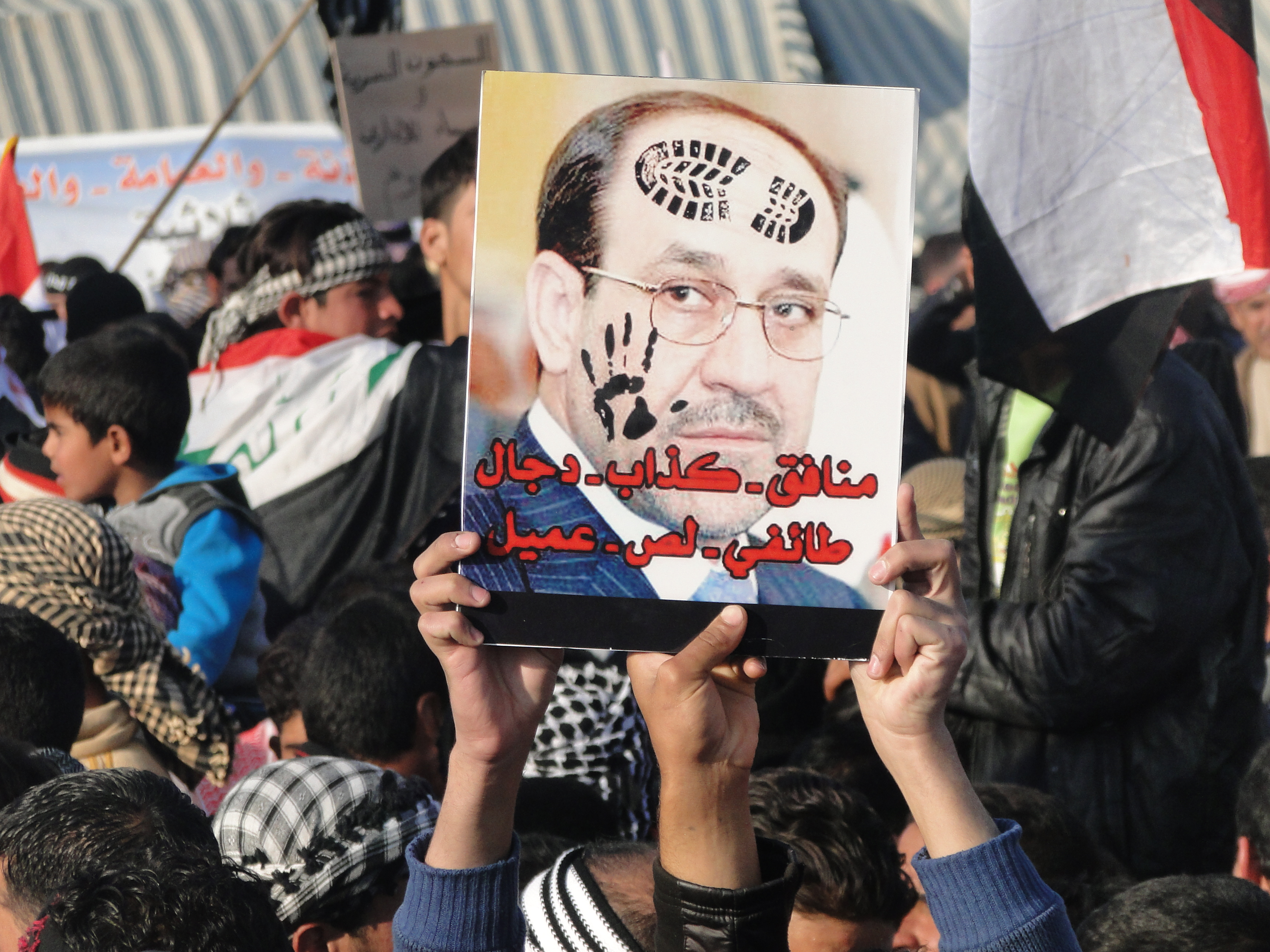
(Photo: Iraqi Sunni protestors hold up a portrait of Prime Minister Nuri al-Maliki with slogans reading in Arabic, “liar…sectarian, thief, collaborator” during a protest against him on the main highway to Syria and Jordan near Ramadi, Anbar’s provincial capital west of Baghdad, on January 4, 2012. By Azher Shallal/AFP/Getty Images)

Meanwhile, In Kabul

Afghan presidential candidate Abdullah Abdullah is alleging widespread fraud in last weekend’s runoff election against a former finance minister, Ashra Ghani:

Despite pleas from the United Nations, the United States, the European Union, and Ghani to give the [Independent Election Commission] time to conduct its count and review complaints, Abdullah is not accepting the second round election antics. In fact, it appears that he considers the IEC anything but ‘independent,’ and in many ways an instrument that remains loyal to the wishes and manipulations of Karzai.

If the vote’s credibility is shattered, Sune Engel Rasmussen warns that the ramifications could be very serious:

The consequences of an electoral failure go far beyond the immediate power struggle in Kabul. European and American officials have set a relatively clean election as a condition for the billions of dollars in aid on which the Afghan economy depends. And the ethnic tensions, as represented by the Abdullah and Ghani camps, could boil over.

Ghani, a former World Bank official educated in the U.S. who has served as finance minister and headed the security transition under Karzai, is Pashtun. To appeal to people in the North, he chose Abdul Rashid Dostum, a notorious Uzbek warlord, as his running mate. Abdullah, for his part, is of mixed Tajik and Pashtun ethnicity, and commands a lot of support from the Northincluding from Atta Muhammad Nur of the Balkh province, one of the most powerful governors in the country and a longtime rival of Dostum. Early Wednesday morning, Nur posted a Facebook photo of Mujahideen tanks rolling toward the frontline during the war against the Soviet Union in the 1980s. The accompanying text read, “To become president, Ashraf Ghani has to cross this border. Passing this border is impossible. A second generation of jihad is coming.”

Oy.

The Viennese Waltz With Iran Begins

Negotiators are meeting in Vienna this week to begin hammering out a final deal between Iran and the P5+1 on the Islamic Republic’s nuclear program, but the endeavor still faces a few major stumbling blocks:

Perhaps the biggest hurdle to overcome, six-power diplomats said, is Iran’s stance regarding its uranium-enrichment centrifuges, which one negotiator described as a “huge problem”. … “The Iranians have not yet shown a willingness to reduce their centrifuges to an acceptable number, making it difficult to envision a compromise at this point that we could all live with,” the negotiator told Reuters. Another Western official close to the talks confirmed the remarks as accurate.

A senior Iranian official seemed to confirm the assessment. “Our Supreme Leader (Ayatollah Ali Khamenei) has set a red line for the negotiators and that cannot change and should be respected,” he told Reuters. “Uranium enrichment should be continued and none of the nuclear sites will be closed.

On another key disagreement, however, Iran is backing down:

Abbas Araqchi, Iran’s deputy foreign minister, acknowledged amid a week of negotiations in Vienna that Tehran now accepts the principle that as part of the deal sanctions on its economy would be gradually eased as Iran gradually complies with limits on its nuclear activities.

Iran’s official line has been that it would require an immediate lifting of all of the sanctions at the time the deal is signed. The economic penalties have choked off its oil exports and limited its trade, and the Iranian government needs to have them lifted as soon as possible to help restore its teetering economy. “It’s a big deal,” said Cliff Kupchan, an Iran specialist at the Eurasia Group risk consulting firm. “Iran is recognizing that lifting sanctions will be tough and take time here. Araqchi’s statement lifts one barrier, a significant one, to a deal.”

David Sanger latest update (NYT) on negotiations:

The problem is that just as the Americans talk about reducing the number of centrifuges by roughly three-quarters, to just a few thousand operating machines, the Iranians propose expanding the numbers by tens of thousands. (There are 19,000 installed today, but only about half are running.)

At issue is a fundamental difference in points of view — Iran says it wants to produce all its own fuel for nuclear power plants — though it has only one major plant running, and the fuel for that comes from Russia. The West insists Iran should have only a token capacity, for research reactors.

“There’s no splitting the difference here,” said Robert J. Einhorn, who was on the American negotiating team until last year, and still advises the United States. “If the Iranians keep taking the view that they must have the capacity to fuel power reactors, they are not going to even get in the ballpark of the numbers the U.S. is talking about.”

Nader Uskowi scrutinizes the Iranian delegation’s upbeat attitude:

From what is reported of the talks so far, it seems that signing the JCPOA by 20 July deadline seems increasingly unlikely, and the six-month transition period under the current interim JPOA needs to be renewed.

Iranian Foreign Minister Javad Zarif still sounded optimistic, saying the final deal could be struck in July. But Mr. Zarif’s optimism could be because of his zeal to finalize the deal and to have the sanctions lifted as soon as possible. Iran was spending billions of dollars on the Syrian war, and now might be forced to spend billions of dollars more on the Iraqi conflict. The country needs to sell oil and use global banking system to finance the two wars. Considering that urgent need, Zarif might be saying something profound: The JCPOA will be signed, Iran will sign it, even if it has to give in on its demands, including the number of centrifuges.

But Ali Vaez worries that the negotiations will end up bogged down in “false dilemmas”:

The P5+1 is obsessed with the concept of “breakout time,” the time required to enrich enough uranium to weapons grade for one bomb. To lengthen it, the group is trying to define Iran’s “practical needs” for enriched uranium as minimally as possible. By contrast, Iran, having invested enormous resources and pride in its enrichment program, is trying to define those needs in maximal terms.

The negotiations will not get far debating over “needs,” which are ultimately a matter of interpretation. By the same token, breakout calculations are rough and purely theoretical guesstimates. They ignore time-consuming preparatory steps, inevitable technical glitches, the unpredictable weaponization process, the strategic and military illogic of breaking out with a single untested weapon, and the many convolutions of political decision making. Reducing a complex process to a one-dimensional race against time distorts reality, and overlooks competing interests and the natural tendency to avoid risk—including the nonnegligible risk of being caught.

Greg Thielmann and Robert Wright cover misconceptions about breakout time:

As a former U.S. official told the journalist Laura Rozen, “What everyone tends to forget is that, when U.S. government and academic experts speak on breakout timelines, they are usually describing a worst-case scenario … where Iran gets everything right the first time around, even if they are completing procedures they have never attempted before.”

Once a bomb is built, there’s testing to be done. States with nuclear weapons typically conduct multiple test explosions—particularly for the smaller, more efficient designs needed for missile warheads. Eight out of the nine countries that have nuclear weapons openly conducted tests before deployment—and the ninth, Israel, seems to have conducted a clandestine test off of South Africa. Preparing, conducting, and evaluating a test would take months—and would also mean that a new bomb had to be built, since the test would have eliminated the first one.

In short, even if “breakout time,” as conventionally defined, is only a few months, or even a few weeks, what you might call the “effective breakout time”—the time it takes to produce a deliverable weapon—is closer to a year, maybe longer.

Recent Dish on the Iran talks here, here, and here.

With Hindsight, Would You Still Invade Iraq?

That’s the question George Will asks the GOP’s presidential hopefuls:

Given the absence of Iraqi weapons of mass destruction, and given that we now know how little we know about “nation-building” and about the promotion of democracy in nations that need to be “built,” and given that Saddam Hussein’s horrific tyranny at least controlled Iraq’s sectarian furies, and given that Iraq under him was Iran’s adversary, and given that ten-year wars make Americans indiscriminately averse to military undertakings—given all this, if you could rewind history to March 2003, would you favor invading Iraq?

It appears that Norman Podhoretz would. He would, in fact, make the occupation as permanent as the Israeli one in the West Bank:

After explaining why and how the al-Qaeda affiliate ISIS has been able to capture city after city in Iraq and is now only about fifty miles from Baghdad, David Pryce-Jones flatly declares that “President George W. Bush is vindicated. The sole way Iraq could have continued was under a permanent American presence that gave and guaranteed state functions. President Obama’s withdrawal of American forces is already a historic error. They alone could have kept the peace. Arabs have a phrase to the effect that some mistake has opened the doors of Hell. President Obama has opened those doors.”

At what point did president George W Bush favor a permanent occupation of Iraq? He was the one who made 2011 the drop-dead date for withdrawal, after all. But it’s good to see the real agenda of the neocons explained: imperialism redux. It’s the only way to keep the forces of entropy under control, you see? If the Iraqis don’t want us? Fuck ’em. Their democracy is only as good as our imperial interests allow.

Breaking: Ted Olson Created The Conservative Case For Gay Marriage

That’s what the super-rich super-lawyer – who, unlike all the countless previous lawyers in the marriage equality movement, did not work pro bono – tells the world in his new book. Nathaniel Frank reviews it:

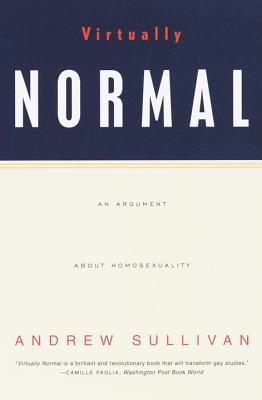
Olson and Boies seem to think they were the first to cast same-sex marriage as a conservative issue and to conduct bipartisan outreach, an idea that rightly made Andrew Sullivan apoplectic, given his pioneering 1989 New Republic cover story, “Here Comes the Groom: A (Conservative) Case for Gay Marriage.” Olson and Boies write that 20 years later, with their 2009 case, “we wanted to begin connecting with a constituency that hadn’t fully considered our side of the issue.” Yes, conservatives have a deplorable history on gay marriage and gay rights generally, but not because no one asked them to think differently until 2009.

One of the more unusual aspects of the marriage equality movement was the vital early and continuing role of gay conservatives in championing it. We were lampooned by the left for quite a while – even earning the term homocons in the 1990s. And when you read Olson’s virtually-normalarguments, you find that they contain nothing that I and Bruce Bawer, Jon Rauch, Dale Carpenter, John Corvino and many others hadn’t already pioneered as arguments and brought to conservative audiences and venues. In fact, large parts of Olson’s legal case are pretty damn close to plagiarism when you consider the content of the arguments.

Of course, we never caviled at this. The arguments we honed in the 1990s were designed to be used by others, to spread as memes. And there is nothing more rewarding in a civil rights movement than hearing others make arguments and even rhetoric that you helped pioneer. We were delighted to have Olson on our side. But when a straight man barges into the movement at the very last minute and actually claims he came up with these arguments all by himself and that there had been no conservative outreach before him, you can see why it smarts a little.

And, alas, the book echoes the themes of Becker’s: the marriage equality movement was born in 2009. It barely existed before then. It only had a political rather than a litigation strategy. It took two straight guys to whip it into shape and a straight woman to explain how they did it … and then the world changed overnight. None of this is true; and no one with any understanding of the movement would even think it, let alone put it in a book. But this Big Lie is central to Olson and Boies’ book. Money quote from Frank:

“Our effort,” they write, “and the efforts of the scores of people who helped and supported us have contributed, we hope, to the beginning of the end of this last major bastion of institutionalized discrimination in America.” They’re not talking about ending the marriage ban in California, but about ending marriage discrimination itself. Even when they credit others besides themselves with playing a role, it’s “the people who helped and supported us,” leaving little room for anyone outside their Prop 8 challenge.

More to the point, it’s absurd to suggest that the 2009 Prop 8 challenge was the “beginning” of anything related to the marriage equality effort. And this creation myth is not just a passing reference for the Olson/Boies team, which repeatedly suggests that they and their effort birthed the marriage equality battle in earnest. They recount a young gay lawyer on their legal team who, as he accompanied the plaintiffs to have their marriage application rejected, thought: “This is the first step toward marriage equality. It happened today. Right now.”

The proper response to this self-serving disinformation is outrage. But I can’t feel that any more. I’m just glad that victory has many authors. And sad that some are so graceless and pernicious and money-grubbing and vain.

Should We Just Tune Out The Neocons?

Kristol

Fallows is disgusted that Kagan, Kristol, and company are being allowed to participate the public conversation about Iraq today:

Am I sounding a little testy here? You bet. We all make mistakes. But we are talking about people in public life—writers, politicians, academics—who got the biggest strategic call in many decades completely wrongWrong as a matter of analysis, wrong as a matter of planning, wrong as a matter of execution, wrong in conceiving American interests in the broadest sense.

None of these people did that intentionally, and many of them have honestly reflected and learned. But we now live with (and many, many people have died because of) the consequences of their gross misjudgments a dozen years ago. In the circumstances, they might have the decency to shut the hell up on this particular topic for a while. They helped create the disaster Iraqis and others are now dealing with. They have earned the right not to be listened to.

I hold a somewhat different view, although I feel perhaps even more strongly than Fallows (with no legs to stand on, given my record). As long as these people forthrightly acknowledge they were terribly wrong in the past, they have every right to participate in the current debate. But when they either excise that past from history or even claim they succeeded, my head explodes. Beinart is pretty close to me on this:

Saying that Iraq hawks should have to squirm their way through debate number two [their past] before getting to debate number one is different than saying, as Paul Waldman recently did in The Washington Post, that “On Iraq, let’s ignore those who got it all wrong.” In fact, the two positions are antithetical.

You can either ignore the people who got Iraq wrong or you can ask them tough, searching questions about why they got it wrong. Doing the latter brings past debates to bear on present ones, and helps clarify what our disastrous 2003 intervention can teach us about intervention today. Doing the former offers no such opportunity at all.

Chait agrees, noting that those who would shush the neocons have also made mistakes:

Most Democrats in Congress opposed the Gulf War, warning of Saddam Hussein’s fearsome, World War I–style fortifications and citing 45,000 body bags as an indication of the likely U.S. death toll — predictions that turned out to be wildly incorrect. Why shouldn’t anti-Gulf war Democrats — that is, the vast majority of Democrats — have been excluded from subsequent foreign policy debates? If your answer is “because people died — Iraq,” then then you’re not arguing that pro-war arguments should be ignored because they’re analytically wrong, you’re arguing they should be ignored they’re inherently morally suspect, regardless of accuracy.

When you’re trying to set the terms for a debate, you have to do it in a fair way. … We shouldn’t disregard Dick Cheney’s arguments about Iraq because he’s Dick Cheney. We should disregard them because they’re stupid.

Stupid is too kind. They are the deranged views of a man with a mighty ax to grind and a sense of shame surgically removed. Larison makes an important point:

The Iraq war in particular was the greatest foreign policy blunder in a generation. Surely it must count against someone more to get a major policy decision horribly wrong than to be on the “wrong” side of a more debatable and relatively minor decision.

He follows up:

Chait is mostly wrong that “the ideological fault lines” aren’t the same. He can find some liberals that are pro-intervention now that were against the war, and he has identified a handful of hard-liners that were all for the war and now don’t want a new intervention (albeit for extremely hard-line reasons). Chait is an example of a previously pro-war liberal that now claims to be more skeptical about using force in Iraq. Nonetheless, overall the fault lines are depressingly familiar. Neoconservatives, liberal hawks, and more than a few “centrists” will loudly demand action while the rest of us marvel at how these people still have any influence in the wake of one policy failure after another.

Waldman weighs in:

Is there a bit of over-enthusiasm with which people like me are attacking the return of the Iraq War caucus? Maybe. Part of it comes from the fact that a decade ago, those of us who were right about the whole thing were practically called traitors because we doubted that Iraq would turn out to be a splendid little war. And part of it comes from the fact that the band of morons who sold and executed the worst foreign policy disaster in American history not only didn’t receive the opprobrium they deserved, they all did quite well for themselves.

Paul Wolfowitz became president of the World Bank. Paul Bremer, Tommy Franks, and George Tenet—a trio of incompetents to rival the Three Stooges—each got the Medal of Freedom in honor of their stellar performance. Bill Kristol was rewarded with the single most prestigious perch in the American media, a column in the New York Times. (The drivel he turned out was so appallingly weak that they axed him after a year.) The rest of the war cheerleaders in the media retained their honored positions in the nation’s newspapers and on our TV screens. The worst thing that happened to any of them was getting a cushy sinecure at a conservative think tank.

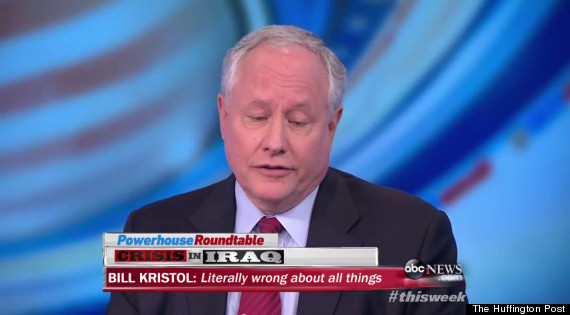
(Image from HuffPo’s “True Chyrons For Bush-Era Iraq War ‘Experts’“)