What’s The Truth About Gluten?

A gastroenterologist well known for a 2011 study that “served as as one of the strongest pieces of evidence to date that [gluten intolerance] is a genuine condition” has backed down from that position:

A study [Peter] Gibson published last summer suggests that, when it comes to gut distress, gluten is getting a bad rap. The study focussed on thirty-seven people who identified themselves as having both NCGS [non-celiac gluten sensitivity] and irritable bowel syndrome (IBS), an ailment characterized by a range of gut issues, including diarrhea or constipation, bloating, and stomach pain. The subjects all said that they felt better when they avoided gluten. To test whether the protein was really to blame, Gibson put them on one of three diets: gluten-free, low-gluten, and high-gluten. Each diet consisted of the same foods; the only difference was the amount of gluten. … It turned out that gluten seemed to have no measurable harmful effects.

What gives? As Robert T. Gonzalez puts it, “it is the pursuit of more definitive scientific evidence that makes Gibson’s research so noteworthy”:

That Gibson’s team found no specific response to gluten is not surprising in and of itself. (News flash: Scientific research often appears to contradict itself. For more on this reality as it pertains to health research, see this timely NatGeo piece by Virginia Hughes on the ongoing effort to determine whether resveretrol – a compound found in red wine – is or is not good for you.) Rather, it was Gibson’s willingness to call his own research into question – his readiness to double back and reevaluate his previous research on more rigorous terms – that we found not only striking, but encouraging for the future of research in this area.

Which suggests that headlines like “Researchers Who Provided Key Evidence For Gluten Sensitivity Have Now Thoroughly Shown That It Doesn’t Exist” and “Being Gluten-Free is Dumb” may be oversimplifying matters a bit. As gastroenterologist William Chey says:

It’s really hard to design and execute studies that really separate out constituent effects of food. … We’ve still got a long ways to go.

So I’ll keep avoiding the wheat. Update from a reader I can definitely relate to:

As one of those reviled gluten-sensitive folks, those terrible headlines you mention are truly annoying, but I’m definitely all for more research on this topic! After years of extremely annoying and embarrassing rashes and hives, and then a negative test for celiacs, my doctor (who has celiacs) recommended I try a gluten-free diet for a month anyway, just to see. I went (mostly) gluten free in June 2013 and haven’t had a major rash since. The occasional beer or sandwich with real bread doesn’t seem to bother me, but when I go overboard (as I definitely did on a recent trip to Napa) I get the faint beginnings of hives and eczema-like rashes, which then go away after I’m good for a few days.

Is it all in my head? Is it something else in gluten-containing foods doing this to me? I’d love to find out, but in the meantime this works!

Another reader:

I thought I would write because anyone who read the reader comments might have got the wrong idea about celiac disease. Your reader referred to a negative test for celiac disease – presumably he/she meant the anti-transglutaminase antibody test. While that is a typical test done for celiac disease, it is not conclusive on its own. This link is from Dr. Fasano naming the 4-out-5-rule criteria. The gold standard test for celiac disease is the small bowel enteroscopy. I would also note that many patients with celiac disease think they are fine with a bit of gluten here and there based on symptoms, but that is actually very dangerous; it could lead to EATL – Enteropathy-associated T-cell lymphoma.

I have celiac disease as well as three generations of my family including my grandfather who died of cancer because of untreated celiac disease. Anyone who thinks they may have celiac disease should NOT go on a gluten-free diet before seeing their doctor. Please see any of the national celiac associations for more advice.

Dish Intern Wanted: Three Days Left For Applications

[Re-posted from last week]

It’s that time of year again. Dish Publishing LLC is seeking an all-purpose intern to handle both administrative tasks and contribute to the editorial process. The admin side of the job will include: dealing with press inquiries and permissions, helping with support emails, managing the staff calendar, taking notes during meetings, making travel arrangements, and generally assisting the executive editors and me with sundry tasks. Strong organizational skills and attention to detail are musts. You need to be self-starting and pro-active in getting shit done.

The editorial side of the job will consist of ransacking the web for smart and entertaining nuggets, maintaining our social media presence, working on larger research projects, and helping the team guest-blog when yours truly takes a vacation. We prefer individuals who can challenge me and howler beaglemy assumptions, find stuff online we might have missed, and shape the Dish with his or her own personal passions. Reporting experience is also a big plus as we try to deepen our coverage. Someone with a background in web entrepreneurialism could catch our eye too.

The full-time internship pays $10 an hour, includes health insurance, and lasts for six months. The position is based in New York City. Since the Dish doesn’t have an office, most of the work will be done from home, but the staff meets regularly for lunch and coffee meetings and social gatherings.  I want to emphasize that this is an intense job for the intensely motivated, and one that can get a little isolating at times. But it’s a pretty unbeatable chance to learn what independent online journalism can be as an integral part of a close-knit team. We’ve decided to pare down to one intern to keep our lean budget under control, which means the one individual really does have to be special. You have to already know what we do here and care deeply about the Dish. And a sense of humor is a real asset.

We are hoping to hire very soon, so don’t delay if you’re interested. The cutoff for applications is this Friday, May 30, at midnight. The start date is July 7, but we are flexible. To apply, please e-mail your resumé and a (max 500-word) cover letter to apply@andrewsullivan.com.

What The Hell Just Happened In Europe? II

You can makes plenty of arguments that the results in the European elections for the populist right and left are not that big a deal. For that perspective see here. I’m not sure I share the complacency and for a simple reason. Of the many aspects of Europe’s sudden lurch toward populism, one looms large to me: the same core cultural divide we have seen polarize and gridlock America, a blue-red culture war over modernity. Blue Europe is internationalist, globalized, metrosexual, secular, modern, multicultural. Red Europe is non-interventionist, patriotic, more traditional, more sympathetic to faith, more comfortable in a homogeneous society. The essential deal between these two complex coalitions was always a simple one: the Blues got to engineer their European dream, as long as it gave the Reds prosperity. Money would take the multicultural blues away. And for so long, it sure did.

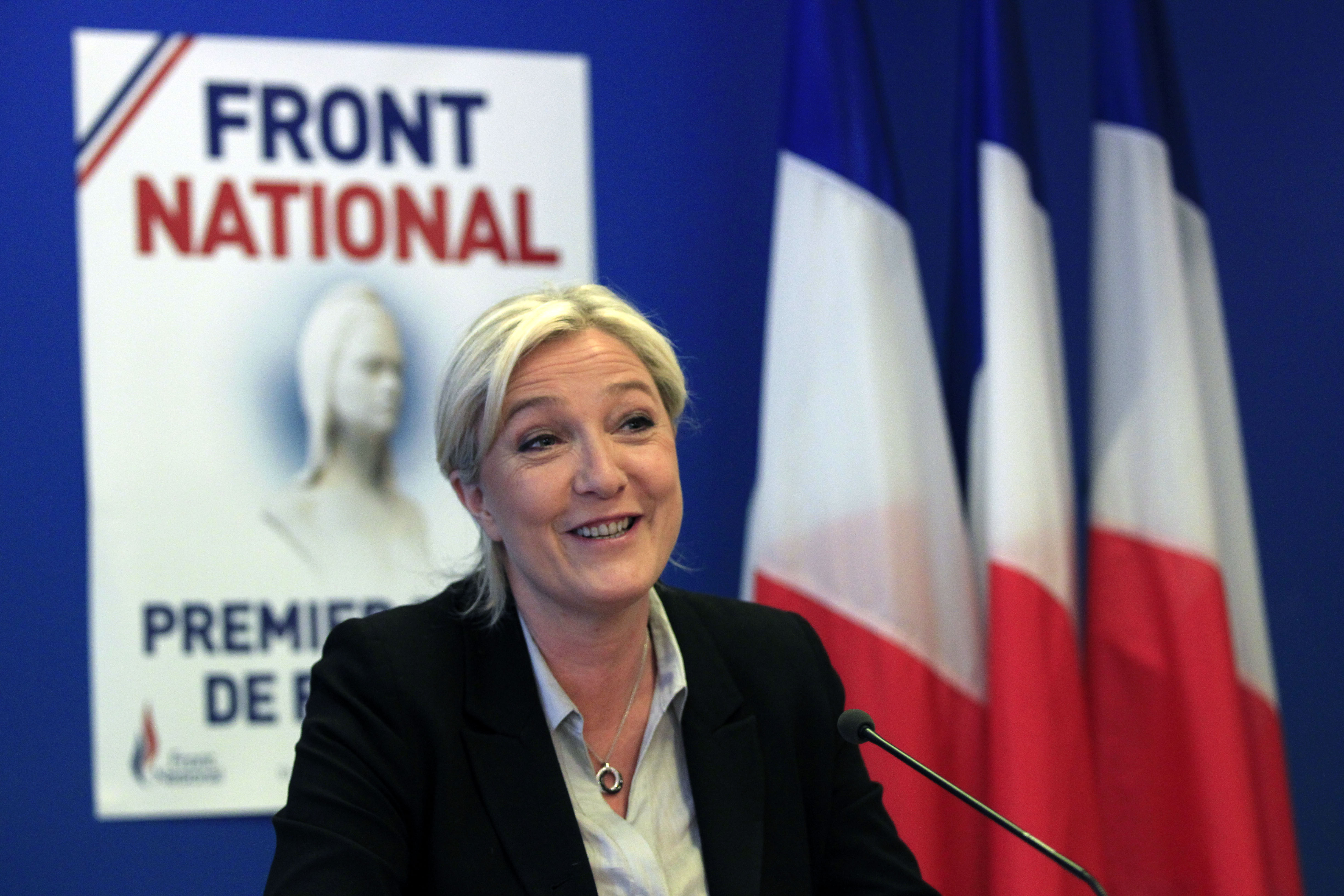
But when the money ran out, and the recession hit, and the EU only bailed out members on the basis of brutal austerity … the deal began to fray. Now that growth is returning, if only anemically, it appears, moreover, to be benefiting Blue Europe – the elites, the property-owners, the transnationals – while leaving ordinary, working- and middle-class Europeans in the dust. That fuels another layer of mistrust and despair. Then a reform like marriage equality is imposed from above (unlike the US), despite ferocious opposition from the social right in France and back-bench Tory queasiness in French Far-right Front National (FN) Party President Marine Le Pen Gives A Press Conference The European ElectionsBritain, leading to more discomfort. Mass immigration or migration across Europe – a wonderful idea in theory – only made things worse, leading to resentment and racism when it has occurred in already-beleaguered working class Europe. The emergence of an unassimilated Muslim population didn’t help things either. And, more to the point, Europeans increasingly feel they are not given a choice in any of this. So they vented. And America’s culture war finally put down roots in Europe.

I see both red and blue sides to this. I grew up in a prosperous part of Europe, Southeast England, but in a nonetheless recognizably English small town. I maybe ate at a restaurant a handful of times before I went to college. My high school class was 100 percent white. I was brought up in a church-going household with not much extra money around. And we were Tories of a patriotic hard-working type. These days, I’m an inhabitant of a very blue and different world. Catapulted from my home town and life by a magnet school, and then an Oxford scholarship, I now live on the East Coast of the US, married to a man, earning money off the Internet, and stay in hotels when I visit London.

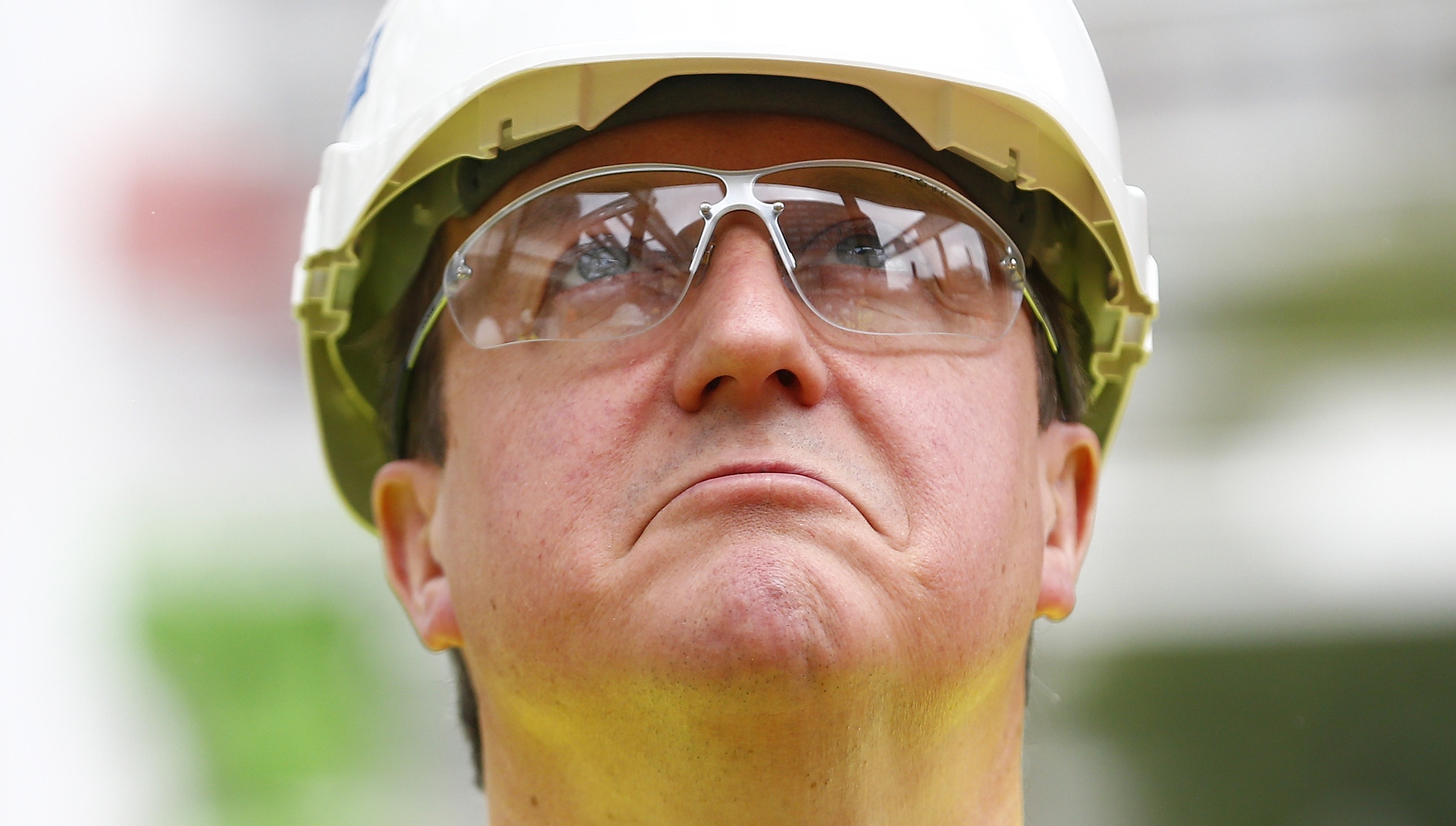
And here’s the thing about the last ten years or so. When I go to London now, it feels very much like home – i.e. a US blue state, multicultural, cosmopolitan, and slightly more international than even New York. It’s jammed full of Starbucks and Uber and hot spots. Only an hour south of there, you’re in a somewhat different world, changed but still culturally recognizable as the place I grew up in. Yes, there are pizza chains in the High Street, and a smattering of dudes on gay hook-up apps, and a Muslim cab driver, but there is also the cumulative weight of centuries of Englishness, an Island identity, a storied past. In the fields around where I grew up, you might still stumble across an Prime Minister David Cameron Visits A Construction Siteold concrete tank-barricade, designed to prevent a Nazi invasion. In the High Street, there’s a World War I memorial, and one to commemorate the Protestant martyrs burned at the stake under Queen Mary. Every part of this history tells the tale of an island nation, with a distinctive culture and amazing story. You don’t feel the weight of this history as powerfully in the roiling post-everything multicultural melee that is modern London. And you don’t internalize it quite as much.

What globalization is doing to us is scrambling these identities – creating one class doing relatively well with globalization and one that absolutely isn’t. The first is likely to be more tolerant, progressive, modern, risk-taking. The second is likely to be more traditional, conservative, cautious, security-seeking. This doesn’t completely square with left and right. In Europe, the right fostered the economic liberalization that undermined its traditional middle-class base. The populist left remains deeply suspicious of economic liberalism, but became a beneficiary of its cultural consequences. And in these circumstances, of course immigration would come to be an issue, as it has in the US. When you’re out of work in a part of the country left behind by the 21st Century, and suddenly have to compete for what jobs there are with thousands of new immigrants from Poland or Romania, you’re going to get mad. And the EU itself – especially among its elites – seems a spectacular symbol of this cultural and economic disconnect, a perfect target for the new populism.

That’s why I don’t believe the latest upset in the European elections is a fluke. I think it’s the new reality.

My sense from Britain, the country I know best, is that a hefty chunk of the population feels no connection to either major British party or to either party leader. David Cameron and Ed Miliband are products of Blue Britain. Nigel Farage is recognizably not. One recent moment of truth was the debate that Farage had with Nick Clegg, the Liberal-Democratic leader, over membership in the EU. Farage won it hands down against Clegg, a multilingual European elitist if ever there was one. And it was a victory of style as well as substance.

The task of a conservative in this moment, it seems to me, is not to resolve this struggle for either side – an impossibility anyway. It is to attempt to keep these two tendencies from going to war with each other in politics and culture. It is to retain a sense of national coherence and continuity in the midst of large-scale social change. That may prove impossible, but it can be done (look at the London Olympics opening and closing ceremonies). And it’s what David Cameron is now apparently trying to do. And about time. Over the next few years, Cameron and his successor will be confronting not only the possibility of Britain’s withdrawal from the EU but also the possibility of an end to the United Kingdom, if Scotland votes for independence. Both moves, it seems to me, are signs of an attempt by the English and Scottish to reassert control of their own destinies and to preserve their own cultural identities – which is why it would be foolish not to take both possibilities seriously. They remind me at least of a vital truth: that national identity remains the most potent and democratic form of political association. Screw with that, and you’ll merely have nationalism come back at you, with nostrils flaring. Europe’s elites have indeed screwed with that over the last decade or so. We have to hope the backlash does not destroy more than it builds.

(Photos: British Prime Minister David Cameron visits a construction site on May 27, 2014 in London, England. By Andrew Winning – WPA Pool/Getty Images. French far-right party National Front (FN) president Marine Le Pen delivers a speech during a press conference at the party’s headquarters on May 27, 2014 in Nanterre, France. By Chesnot/Getty Images.)

President Poroshenko

Fred Kaplan observes, “after the May 25 presidential election and the overwhelming victory of Petro Poroshenko, the dangers of a Russian invasion—and an escalation of tensions leading to an all-out East–West confrontation—have receded”:

Poroshenko seems to be the right man for the times: a billionaire chocolate manufacturer and media mogul who has aspirations of an alliance with the European Union but also huge commercial interests in Russia. He’s a dealer; he’s pragmatic. He recognizes that no Russian leader, least of all Vladimir Putin, will let Ukraine spin entirely out of the Kremlin’s orbit and that, therefore, a healthy Ukraine must pay obeisance to Moscow even while leaning westward. Putin seems to see things the same way. … The liberal protesters of the Maidan movement will be upset when Poroshenko sits down with Putin, but they will have to live with the fact that Moscow has interests in Ukraine—just as the eastern separatists will have to live with the fact that Donetsk will not become a city in Russia. The more these facts are recognized, the greater the chance that this tale might have a good ending.

Steve LeVine also believes that war with Russia is now highly unlikely:

A president Poroshenko is likely to assure Putin, probably in private, that Kyiv has no current plans to join NATO, which is the Russian leader’s main demand. But, as ousted president Viktor Yanukovych found out in the months preceding his flight in February, it would be political suicide for him to explicitly foreswear a formal link to the West. Putin understands local Ukrainian politics and, as long as he perceives no overt anti-Russian hostility and sees a partner with whom he can do business, he is likely to give Poroshenko a go.

Being a pragmatist (paywall), that is precisely the face that Poroshenko is likely to present to Putin. In other words, Poroshenko is likely to try to take control of a narrative that has turned long-conflicting west and east Ukraine into bitter and violent combatants.

Linda Kinstler reports on Poroshenko’s opening moves:

In a press conference Monday morning, Poroshenko made a number of statements indicating how he will steer the embattled country. For starters, he promised to step up the anti-terrorist operation in the east and to improve the equipment of Ukraine’s defense forces, which initially found themselves drastically ill-prepared to stave off incursions by pro-Russian forces. “The anti-terrorist operation will not and cannot last for months, it will last just for hours,” Poroshenko said, according to the Kyiv Post. He also said that interim Prime Minister Arseniy Yatsenyuk would keep his post, emphasized that opening a dialogue with residents of the eastern regionsbut not the “terrorist” separatist forces therewould be his first priority, and said he will try to return Crimea to Ukraine. “Poroshenko made clear he would explore all available legal channels to secure the return of the Black Sea peninsula to Kiev’s rule,” Reuters reports. The billionaire businessman said he will sell his major holding, the chocolate conglomerate Roshen, but not the Channel 5, the major opposition TV network that he owns.

On top of the security crisis in the east and the political crisis with Russia, Jamila Trindle reminds readers that the new president also has an economic crisis to contend with:

If Poroshenko can manage to keep the country together and get Russia off his back, the next challenge on his list will be the one that set off the crisis six months ago: his inheritance of a nearly bankrupt country. The International Monetary Fund has agreed to give Ukraine a $17 billion bailout, but is also requiring that Kiev impose austerity measures, such as raising taxes and cutting the gas subsidies that make it easier for many Ukrainians to heat their homes.

The cuts and changes required to fix the country’s money problems will likely be unpopular with the voters that just put Poroshenko in power. But they will be even harder if he fails to also solve the two more pressing problems of making peace with the separatists and appeasing Moscow. Any failure to solve those two conflicts will make fixing the economy much more difficult.

Robert Kahn takes a closer look at some of the economic choices he will have to make. Meanwhile, Bershidsky notices that Ukraine’s vote was much more pro-EU than the European Parliament elections in the union itself:

If anything explains the paradox of the two votes it is immigration: Ukrainians want to be part of Europe and to be able to travel and work there, while many protest voters in the EU voted for the right precisely because they want to keep people like Ukrainians out.

Jamie Dettmer notes with concern that many eastern Ukrainians were unable to vote on Sunday:

In the city of Donetsk, no polling stations were open and ballot boxes confiscated by armed separatists were stacked in front of the regional administration insurgents have long occupied and marked as “trash” bins. One polling station managed to open briefly in the city of one million but was closed ten minutes later by masked gunmen. And in the nearby town of Horlivka, right in the heart of east Ukraine’s so-called Bermuda Triangle, where dozens have gone missing in the past few weeks, no polling stations opened. With four hours until the polls closed, the turnout in Donetsk was only nine percent, compared to over 40 percent in the rest of the country, according to the election commission.

But Edward Lucas downplays the impact of these disruptions:

It is only part of the east. If you take Crimea as a lost cause, you have two provinces where things were seriously disrupted, about a tenth of the population. So in 90 percent of Ukraine, things went normally and 10 percent there was some severe disruption. But I still think, even with these lost or disrupted provinces, you’ll have a higher turnout than you have in most American elections….

By European standards, this is an impressive turnout. It’s going to be very hard for Russia to say that this is a perpetuation of a fascist coup. But this is a necessary but not sufficient condition—one of many necessary but not sufficient conditions—necessary for Ukraine to get back on its feet again.

Rebel activity in the east has ticked up in the wake of the elections, with pro-Russian separatists seizing the Donetsk airport yesterday. Max Fisher worries that a resurgence of violence could spell trouble:

The big question right now is whether the pro-Russia militias attacked the airport at Moscow’s behest or did it against Moscow’s wishes. Either case is bad. If the rebels attacked under Kremlin orders, which Ukrainian Foreign Minister Andrii Deshchytsia suggested could be a show of Moscow’s disapproval of Ukraine electing an unfriendly new prime minister, then that would signal that Russia’s recent conciliation with Ukraine was just an act and that it plans to continue fomenting disorder.

What seems perhaps more likely is that the pro-Russia rebels, buying into their own propaganda, are stepping away from Moscow’s control and staged today’s attack in spite of the Kremlin’s recent efforts to make nice with Ukraine. … The rebels sowing violence in eastern Ukraine may be pro-Russia, but today’s attack may indicate what has looked increasingly likely for some time: that they are getting further from Moscow’s influence.

Or perhaps, as Julia Ioffe puts it, Putin has “thrown them all under the bus”:

[N]ow, just when Putin has whipped the region into a murderous panic by making its residents believe they are in existential danger, he has washed his hands of them.

But just because Putin decides he wants out, doesn’t mean the story ends. His plan to destabilize Ukraine worked better than he could have expected. Putin, through people like the Demon and his television armada, have brought the region into what increasingly looks like a civil war, the men off fighting in the countryside and the women losing their minds to fear at home. Ukraine’s presidential elections will come and go, but it’s hard to imagine these people putting down their guns, or ever wanting to live in Ukraine as Ukrainians for a very long time.

The only thing that’s changed is that Putin, for all his passionate interest in these people’s fates just a month ago, doesn’t really care anymore. It just isn’t in his plans. He’s changed his mind.

“Traditional Masculinity Has To Die”

So proclaims Freddie deBoer in a post responding to the Santa Barbara shooting:

The association of male value with aggression, dominance, and power is one of the most destructive forces in the world, and so it has to be destroyed. Traditional masculinity has to die in just the same way that sexism and racism and homophobia have to die. It can’t be reformed, it can’t be rescued. It has to be replaced. It’s utterly infected, with the celebration of violence, sexual entitlement, throbbing misogyny, and a fake self-confidence that is almost always hiding total self-loathing. If the kind of sick masculinity that leads to these  crimes were a religion, people would call it incompatible with modernity. If it were a race, Fox News would talk about that race’s culture of violence. If it were a political ideology, it would be classified alongside white supremacy or anti-Semitism. How could it not be, given the spasms of horrific violence that we now expect to happen over and over again? I don’t excuse Rodger or anyone else for the terrible, unforgivable choices they make. The sickness within our culture is not an excuse. But it is part of the explanation, and it needs to be cut out like a cancer.

Oy. I understand and respect where Freddie is coming from, but I find the notion of extrapolating so broadly from a case of mental illness to an entire culture to be a little over the top. Absolutely, there are many aspects of misogynist, macho culture that are truly disgusting and need to be pushed back. #yesallwomen is a must-read for those of us shielded by virtue of gender from the verbal and physical onslaught so many women deal with on a regular basis. But severing “aggression, dominance and power” from maleness is as utopian a notion as removing all testosterone from half the human species. What we need is not grandiose and thereby doomed projects of cultural re-education, but a more powerful appeal to men to be gentlemen, to see maleness at its best as a tamed wildness.

James Poulos gets it right:

a searching, unflinching condemnation of postmodern male chauvinism can go badly awry if it labels the culprit as something called “traditional masculinity.”  Much like “traditional marriage,” traditional masculinity is a compound of competing, conflicting ideals. It has been for hundreds of years…

One tradition of manliness points [young men] toward the worship of wealth, sex, and power—and toward crushing depression if all those things elude their grasp. Another tradition of manliness would point them toward discipline, sacrifice, and self-denial. The first tradition, in fairy-tale terms, is the villain tradition. The second is for heroes. But in today’s world, the worst of traditionalism is being aggrandized, and the best is being lost in the noise.

Dreher considers “the role the sin of Envy plays in this evil deed”:

Envy, for Dante and his medieval world, is not really wanting what others have; it’s wanting them not to have it if one cannot have it oneself. Rodger was envious in both the medieval sense and in the more modern sense. We have created a popular culture in which the worth of people and the meaning of life is measured by hedonistic values, which are constantly celebrated by the culture. What’s more, we have created a popular culture in which young people are acculturated into believing that it is their right to have these things, and if these things aren’t readily available, it is a cosmic injustice wrought by someone else against their innocent person.

Jeff Deeney addresses the mental health outcry:

Involuntary commitments are not the silver bullet some want them to be in dealing with mass shooters. People who are involuntarily committed frequently leave psychiatric institutions little more stable than when they arrived. Some in the public assume that one can’t refuse medication in a psychiatric unit, when in fact forcibly medicating requires two doctors’ orders submitted to review by a judge, so many patients aren’t stabilized on medication because they resist taking it, even in a hospital setting. The public assumes that there is some life-changing intervention that happens inside psychiatric units after someone is committed, that leaves them permanently fixed after 72 hours. In fact, it’s more typical receive little more than observation to make sure one doesn’t harm oneself while on the unit. A social worker will refer you to an outpatient mental health program when you’re discharged, but if you don’t want to go to one you don’t have to. If you choose, like so many do, to return to the community with a small supply of medication you don’t intend to use let alone refill, that’s your prerogative.

This is why Elliot Rodger likely would have still committed murder even if the Sheriffs had detained him on the day they visited him. A 72-hour stay on a psych unit might have done little more than but make him more determined.

And Ezra wants less coverage of shootings:

There’s a reason the media rarely reports on suicides. Sociologists long ago discovered that suicide is contagious — and media coverage helps its spread. There are guidelines endorsed by the Centers for Disease Control, the World Health Organization, the National Institutes of Mental Health, the Office of the Surgeon General, and others warning against “inadvertently romanticizing suicide or idealizing those who take their own lives by portraying suicide as a heroic or romantic act.” They also caution media outlets against credulously relaying the testimony of the deceased. “The cause of an individual suicide is invariably more complicated than a recent painful event such as the break-up of a relationship or the loss of a job,” they write.

But the national media reports ceaselessly on mass murders. Cameras are often there to cover the actual shooting, and they don’t leave until weeks or months after the final press conference. Magazines profile the killers, lingering on their fashion affectations or their love of death metal or their disturbed art or the maddening realization that they didn’t seem like killers at all. These are all natural attempts to understand a tragedy. But the end up glorifying the murderer — and possibly creating copycats.

What The Hell Just Happened In Europe? I

The Economist charts the results of the European parliamentary elections:

EU Elections

Douglas Elliott downplays the Euroskeptic party gains:

This could have been a lot worse and I do not agree with some of the analysis that uses terms such as “earthquake” to describe the result. I do not see the outcome as fundamentally reshaping the political situation in Europe and it seems very likely that this is the high water mark for the protests parties. The next such election in five years should be in a considerably more favorable environment for Europe, cutting down the protest votes sharply. In the meantime, European Parliament votes generally do not carry over to national elections where voters are much more careful about who they hand power to. Further, two of the countries where the protest votes were largest, the UK and France, have different rules for national elections that make it much harder for protest parties to win seats than in the European Parliament elections.

Yglesias strikes a similar tone:

In practice, the increased vote share for far-right (and to a lesser extent far-left) parties will make very little difference. The [European People’s Party ‘s] candidate, former Luxembourg Prime Minister Jean-Claude Juncker will very likely form a Commission composed of members of mainstream parties of both the left and the right, with the center-right in the driver’s seat — exactly the situation that has prevailed since 2004.

But Desmond Lachman argues that “significance of the European parliamentary elections cannot be overestimated”:

The rise of the National Front in France has to raise questions about the continued effectiveness of the Franco-German machine that has been central to Europe’s move to greater economic and political integration. The rise of UKIP in the United Kingdom is all too likely to harden David Cameron’s stance in negotiations with Brussels on returning authority to London ahead of the promised 2017 referendum as to whether the United Kingdom should remain in the Union. Meanwhile, the rise of Syriza is bound to make it increasingly difficult for the Greek government to continue with budget austerity and economic reform so necessary to get the Greek economy moving again.

It would be a grave mistake for European policymakers to dismiss the strong vote for an assortment of anti-European parties as merely a protest vote at an election with no great significance.

Tracy McNicoll sees Marine Le Pen as the big winner:

Looking more closely, far-right Euroskeptical parties’ results were mixed. The Austrian Freedom Party (FPÖ), which saw one top candidate forced to step down last month after likening EU regulations to Nazi Germany, finished third nationally but topped 20 percent of the vote. Geert Wilders’ Dutch Party for Freedom (PVV), which some polls tipped to win, finished third in the Netherlands, losing one of its five seats. And Belgium’s Vlaams Belang also lost ground.

But one far-right performance easily eclipsed the rest. France’s Marine Le Pen, 45, quadrupled her party’s 2009 score. With 24.83 percent nationally, the National Front will hold a third of France’s seats in Strasbourg with 24 seats, up from three. Both Le Pens, Marine and 85-year-old Jean-Marie, won reelection. And Jean-Marie Le Pen’s blond scion looks to be just getting into her stride.

Tim Wigmore feels “perspective is needed” on UKIP’s strong showing:

Ukip came top, yes, but with 27.5% – and in an election in which turnout was a derisory 35%, 30% less than in the last general election. This “political earthquake” may yet do no more than mildly shake the cutlery. If Nigel Farage is serious about getting Ukip seats at the next general election, he will soon have to upset a lot of prominent party personnel. The party lacks the resources to target more than a dozen seats in 2015.

And Matt Ford reflects on Europe’s democratic deficit:

[T]he massive election comes at a time when the disconnect between the EU and the people it governs has arguably never been greater. A Pew Research poll this month found that majorities in seven major European countries think their voice doesn’t count in the EU, including 81 percent of Italians and 80 percent of Greeks. The European Union itself acknowledges the popular perception that EU bodies “suffer from a lack of democracy and seem inaccessible to the ordinary citizen because their method of operating is so complex.” It’s what the institution and many others call a “democratic deficit.”

Here’s the paradox, though: When given the chance to elect members of the European Parliament, fewer Europeans are taking the opportunity to make their voices heard than ever before.

Hey, Wait A Minute, Mr Kramer

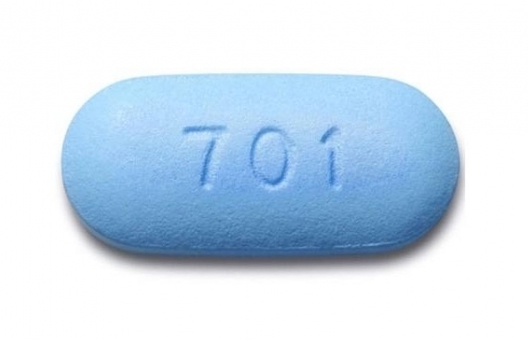
Again, on my week off, Larry Kramer sounded off about the breakthrough in HIV prevention made possible by Truvada, the one-pill-a-day drug that reduces your risk of contracting HIV by 99 percent:

Anybody who voluntarily takes an antiviral every day has got to have rocks in their heads. There’s something to me cowardly about taking Truvada instead of using a condom. You’re taking a drug that is poison to you, and it has lessened your energy to fight, to get involved, to do anything.

What on earth is he saying? Flash back to the early-1980s, in the age of The Normal Heart, which just got its HBO premiere (and brought back some of the real terror and horror of the plague years). Imagine a scene when someone rushes into a GMHC meeting and declares that there’s now a pill that will make you immune to HIV if you take it once a day. Would Larry seriously have said that anyone who then took it truvadahad “rocks in their heads”? I think of how it might have saved me. I was using condoms after all, and following the rules of safe sex. But I screwed up somewhere along the way, and Truvada would have been a safety net. Why would anyone not want to add that layer of security?

Larry claims that taking Truvada “has lessened your energy to fight, to get involved, to do anything.” If by that, he means some side-effects, then the obvious counterpoint is that if you get infected, the side-effects from the full cocktail are much worse than Truvada once a day. And I don’t see why being free of the terror of HIV infection somehow lessens the ability to get involved in the world. Many of us who survived thanks to the drugs went on to pursue gay equality with more energy, more fervor and more commitment than ever. I do not believe the marriage equality fight would have triumphed had it not been for the drive of so many AIDS survivors and our absolute commitment that our brothers would never be treated that way again.

Then this: It’s cowardly to take a pill rather than wear a condom? Is Larry saying we should go out in the world with fewer protections against HIV because there is more courage in more risk?

It seems to me simply prudent to have as many weapons in our arsenal against HIV as possible. That means condoms and Truvada. And, as condoms have fallen into disuse, Truvada may be by far the most secure option, as a realistic piece in the NYT simply notes:

Doctors and policy makers need to admit that 30 years of the ABC mantra — abstain, be faithful, use condoms — has failed. Men generally hate condoms, their lovers usually give in, almost no one abstains, precious few stay faithful … Unwanted pregnancies and syphilis are also prevented by condoms, which have been around for centuries. But they did not decline significantly until three mid-20th-century events: the Pill, legalized abortion and penicillin.

Notice this is about men – not gay men or straight men, but men. You need not ascribe any gay pathology to the reluctance to wear a condom when the consequence is much less dire than it once was. You simply have to be a dude with a dick.

Then there’s Larry’s perhaps understandable failure to see the true promise of what is before us.

Right now, we know that the anti-retroviral drugs make it basically impossible for a person with undetectable viral load to infect someone else with HIV. And we know that Truvada, taken correctly, reduces the risk of getting infected by 99 percent. Put those two together and you have a real chance of ending the epidemic in our lifetime. Yes: ending it. My view is that you have got to have rocks in your head if you do not want to try and see if we can do that.

Then the pessimism, bordering on absurdity:

Considering how many of us there are, how much disposable income we have, how much brain power we have, we have achieved very little. We have no power in Washington, or anywhere else, and I say it over and over again, and it’s as if it falls on deaf ears. It doesn’t occur to people how to turn that around.

Seriously? We now have openly gay military service. We have marriage equality in nineteen states and many countries all around the world. We may well have it nationally in as little as a year. We have landmark legal cases that are felling gay marriage bans across the country in an unprecedented wave. We have majority support in the country for marriage equality. We have treatments that reduce HIV to undetectable levels in the blood, and a drug to protect you from HIV indefinitely. We have an openly gay NFL player. We have a gay presence now in a whole slew of sports and across popular culture in such a way that the younger generation favors marriage equality by 78 percent in the latest Gallup poll. All of this was unimaginable in the dark years of the plague. And if the dead could return, they would, I hope, be amazed. AIDS did not finish us. It spurred us to an extraordinary social revolution, in which Larry played an important part.

There’s one area we have failed. We have failed to prevent transmission of HIV – especially among the young men of color who are among the most affected. We have failed to truly conquer the racism that still prevents treating all of us with HIV as equals. We have failed to adapt as the terror of the past has receded and as condoms stop being used. But, in my view, continuing this failure is not inevitable. We have a chance, because of remarkable pharmaceutical innovation, to corner this plague and deny it its safe harbors. We have a chance to defeat it in our lifetime.

Fight back. Fight AIDS. Back Truvada.

Hey, Wait A Minute, Mrs Palin

In the week I was off, former half-term governor Sarah Palin decided to go ballistic over Democratic push-back against Karl Rove’s line about Hillary’s possible “brain damage” after her fall. Palin demanded tough media scrutiny for Clinton – including medical records. Money quote:

America, you deserve fair and consistent coverage of relevant issues before deciding a Presidential/Vice Presidential ticket, so have faith the agenda-less media will refuse to push whispers and wildly inaccurate information about a partisan politician’s body part. Goodness, no one credible would print lies, continually harass a candidate’s doctor, disrupt local hospital staff, or even offer to pay locals to give “quotes” about her health records to be included in a “research book” by a public university professor (your tax dollars at work?) which the candidate’s attorney will need to respond to.

Let me agree wholeheartedly with Palin. When voting for someone to lead the US (or be the next-in-waiting), the public deserves a full accounting of a salient medical history. That’s why I repeatedly demanded Joe Biden’s medical records be released in 2008 – here, here, here, here and here. And that is all this blog asked of Palin when she was running for vice-president. Biden released his; Palin kept refusing to release hers. Her doctor effectively disappeared and refused to talk with the New York Times. Here’s the paper in October 2008:

Nothing is known publicly about Ms. Palin’s medical history, aside from the much-discussed circumstances surrounding the birth of her fifth child last April. Ms. Palin has said that her water broke while she was at a conference in Dallas and that she flew to Anchorage, where she gave birth to her son Trig hours after landing.

Last week Maria Comella, a spokeswoman for Ms. Palin, said the governor declined to be interviewed or provide any health records.

When did Palin actually release something about her health? She released a two-page letter from her doctor one hour before polling day.

No records at all. Was she subjected to a press grilling? I know of no reporter who asked her to verify her Trig stories; there were no questions ever about her weird stories about giving a speech while having contractions or getting on an airplane eight months pregnant and already in labor. The McCain campaign never asked her for verification or explanation of any of these stories. Those of us who did ask were then ridiculed and slimed by the press and the campaign.

These facts need to be remembered when Palin tries to rewrite history. And one above all: all Hillary Clinton needs to do, if she is to follow Palin’s example, is to wait until an hour before the polls open, and release a brief doctor’s note saying nothing is wrong. Somehow, I don’t think the press will let her get away with that. Which raises the question of why the press let Palin get away with the same thing. And still do.

Holocaust Fabulists

Earlier this month, the author of a made-up Holocaust memoir was ordered to pay $22 million to the publisher she duped:

[Misha] Defonseca’s extraordinary story was published almost 20 years ago as Misha: A Mémoire of the Holocaust Years. The book describes how, when she was six, the author’s Jewish parents were taken from their home by the Nazis, and how she set off across Belgium, Germany and Poland to find them on foot, living on stolen scraps of food until she was adopted by a pack of wolves. She also claimed to have shot a Nazi soldier in self-defense.

The story was a huge bestseller, and was made into a film in France, but in 2008, it was found to be fabricated. The author – whose real name was found to be Monique De Wael – said that “it’s not the true reality, but it is my reality,” and “there are times when I find it difficult to differentiate between reality and my inner world.

Adam Kirsch notes that in many cases, such fabulists aren’t inventing stories out of whole cloth:

[M]ost often, they actually did undergo some kind of serious war-related trauma. [Jerzy] Kosinski really did spend his childhood in hiding from the Nazis in Poland; [Herman] Rosenblat really did survive Buchenwald. Even Misha Defonseca lost her parents to the Nazis: they were Belgian Resistance fighters who were executed when she was a young child, after which she was raised by relatives. (Only [Benjamin] Wilkomirski appears to have invented every aspect of his story—though even there, it has been suggested that his experiences as a wartime orphan formed the basis of his Holocaust “memories.”)

Where Holocaust fakes go wrong, then, is not necessarily by claiming the mantle of the victim; often enough, they deserve that title. Rather, what they are guilty of is a perverse form of gilding the lily – of making their experiences seem worse than they really were. And not just worse, but more conventionally evil – evil in ways that resemble, not the reality of the Holocaust, but other fictional genres, from fairy tales to Hollywood romances.