Jeb’s Electability Argument

by Dish Staff

Jeb Bush Favorables

Kilgore finds it wanting:

[D]espite his name ID, his resume, and his “centrist” positions on at least some subjects, this on-paper “winner” is not very popular with the general electorate. In two solid years of being pitted against Hillary Clinton in polls, Bush has not led a single one, and trails her in the latest RealClearPolitics average by over 9%. That’s a poorer margin than for Ryan (6%), Christie (7%), and Huckabee (8%), and about the same as for Paul. Ted Cruz is the only regularly polled putative GOP candidate running significantly worse than Bush against HRC (an RCP average gap of 13%), and that’s largely because he’s far less well-known.

Hillary may currently beat him in the polls, but Frum insists that Jeb entering the race is bad news for her:

Republicans nominate septuagenarians like Ronald Reagan, Bob Dole, and John McCain; Democrats nominate spry 40-somethings like John F. Kennedy, Bill Clinton, and Barack Obama. The presidential campaign of yet another Bush epitomizes the Republican tendency to look backwards. Yet Hillary Clinton, who’ll be nearly as old on Election Day 2016 as was Ronald Reagan on Election Day 1980, epitomizes an equivalent Democratic tendency—and even more so. “To those who say it was never so, that America’s not been better, I say you’re wrong. And I know because I was there. And I have seen it. And I remember,” Bob Dole said in his acceptance speech at the 1996 Republican Convention. Hillary Clinton likewise rests her political case on nostalgia for days gone by, in her case, the 1990s. Republicans understandably speak to the old: Those are their voters. Democrats need to mobilize the young. The more often Democrats hear the 2016 race compared to that other Bush-Clinton race a quarter-century ago, the more they’re liable to wonder: Shouldn’t the party that talks most about “change” be able to offer something a little more fresh?

(Chart from HuffPo)

On The Right Not To Be “Triggered”

by Will Wilkinson

Michelle’s post on the the difficulty of teaching rape law in this, the age of the “trigger warning,” put me in mind of my graying Gen-Xer suspicions that kids these days are entitled precious overdramatic snowflakes too poignantly damaged by their not-very-harsh lives to conduct adult conversations about adult topics, and that this triggering business is bosh.

Trauma is all-too-real, and experiences that throw those who have been traumatized back into painful memories of their trauma are all-too-real. But how common is it, really? How important is it, really, to avoid triggering events? Is not being reminded of a trauma others cannot be reasonably expected to know anything about the sort of thing to which we might be morally entitled? Does anyone have a right not to be triggered, such that we’re all obligated not to do it? Is there any science about this that might help answer these question? It turns out there is! And because it confirms my biases I am eager to share it with you.

According to this useful round-up of the relevant research by Richard J. McNally, a Harvard professor of psychology, here are the main nuggets about triggering. So, most people who have been traumatized don’t develop post-traumatic stress disorder. PTSD is fairly common among victims of sexual assault, though about half of those who have been raped recover from their trauma in a few months. But what about the “triggering” stuff? That’s what I’m most interested in. Here’s McNally:

Trigger warnings are designed to help survivors avoid reminders of their trauma, thereby preventing emotional discomfort. Yet avoidance reinforces PTSD. Conversely, systematic exposure to triggers and the memories they provoke is the most effective means of overcoming the disorder.

Enabling avoidance may make PTSD worse. Sarah Roff, a psychiatrist, has sounded the same note in the Chronicle of Higher Education.

As a psychiatrist, I nonetheless have to question whether trigger warnings are in such students’ best interests. One of the cardinal symptoms of PTSD is avoidance, which can become the most impairing symptom of all. If someone has been so affected by an event in her life that reading a description of a rape in Ovid’s Metamorphoses can trigger nightmares, flashbacks, and panic attacks, she is likely to be functionally impaired in areas of her life well beyond the classroom. The solution is not to help these students dig themselves further into a life of fear and avoidance by allowing them to keep away from upsetting material.

Now, this does not imply that we ought to go around trying to trigger memories of trauma in order to confer upon the traumatized the therapeutic benefits of facing their troubles head-on. That kind of intentional confrontation ought to occur in a controlled, clinical context. But it seems clear enough that catering to avoidance by offering speculative warnings and by tiptoeing around possibly sensitive subjects doesn’t really help, and might even hurt a little. It seems pretty implausible that teachers and writers might have some kind of general obligation to do something that doesn’t really help and might even make things worse, doesn’t it?

Roff goes on to make an interesting point that had not occurred to me. Triggering works through a sometimes unpredictable associative logic, making it very hard to avoid stumbling into potentially triggering territory. She writes:

I am also skeptical that labeling sensitive material with trigger warnings will prevent distress. The scientific literature about trauma teaches us that it seeps into people’s lives by networks of association. Someone who has been raped by a man in a yellow shirt at a bus stop may start avoiding not only men, but bus stops and perhaps even anyone wearing yellow. A soldier who has seen a comrade killed by a roadside explosive device may come to avoid not just parked vehicles, but also civilians who look like the people he or she saw right before the device exploded. Since triggers are a contagious phenomenon, there will never be enough trigger warnings to keep up with them. It should not be the job of college educators to foster this process.

Moreover, it will be a shame, and a deep loss, if our educational culture becomes so painfully sensitive, so leery of any subject that might make anyone feel anxious and uncomfortable, that it becomes impossible to intelligently examine the dark side of the human experience in the classroom. We don’t need the pitiless anti-PC provocation to which some conservatives seem to prone, but we do need a firm, mature insistence that the serious, detailed collective exploration of violence, sex, war, pain, and death is simply too important to defer because of any one person’s troubled autobiography.

Would You Report Your Rape? Ctd

by Dish Staff

This reader thread, sparked by Danielle Campoamor’s story, is among the most powerful ones we’ve had this year. So far we’ve heard from a convict who was raped in prison, a white coed assaulted by a black basketball star, a young teenager sexually abused by his teacher, a followup from a woman who told us about her rape, and several others. Our next installment is from a gay reader – with an unexpected twist:

When I was 26, I was raped while traveling to London. I stayed several days longer than my straight friends and decided to go hit up the gay bars after they left. I met a guy from Germany, we danced and decided to go back to my hotel room. At some point he started to try to put it in. I told him that I wasn’t bottoming unless he wore a condom and that I didn’t have any. He held me down and went at it anyway. Which is the dictionary definition of rape, isn’t it?

I did not report the incident immediately and waited till I returned to the US several days later to seek treatment. I was honest with the doctor about what happened. She exerted extreme pressure on me to report the incident and get counseling. The process of trying to report such a crime is horrible. The police engaged in every behavior victim’s advocates dislike; victim blaming, disbelief, and homophobia were a constant.

The counseling service was likewise useless. I didn’t receive a return call about my situation for nearly two weeks. The woman who did call me back made it clear that she didn’t think my incident was worthy and then offered me a time-slot months in the future. I ended up just scheduling an appointment with my normal psychologist to discuss the incident.

I felt horrible and I wasn’t even traumatized by the rape itself. I couldn’t imagine what dealing with this bullshit and an actual traumatic experience would be like. I enjoyed that night with the German – a lot actually. He stayed the night, we hung out the next day and I stayed at his hotel that night. We had breakfast the next morning and said our goodbyes. I’m Facebook friends with him now. I expect to travel to Germany this summer to visit friends and we’re actively planning on meeting up for a day or two in Berlin.

Sex is a powerful experience. Like any powerful experience you can get hurt. I took a risk going out and picking up a random person to sleep with. I could have been very badly hurt but I wasnt. I did not contract any STDs or get physically hurt – both real possibilities. I learned to take some basic precautions and be prepared. I’ve started on PreP. I make sure to qualify hookups more than I used to.

I’ve also learned that I can’t be open about my experience because it doesn’t fit the narrative. I’ve literally had people blow up at me when I admitted that he’s apologized and I’ve forgiven him. I’ve learned never to suggest that other people might feel similarly; that makes me a rape-apologist. In the end, I’m not honest about my experience because too many people think they can cherry-pick ideas that validate their preferred narrative. But that’s the crux of the problem, isn’t it?

Hollywood Lets The Terrorists Win

by Dish Staff

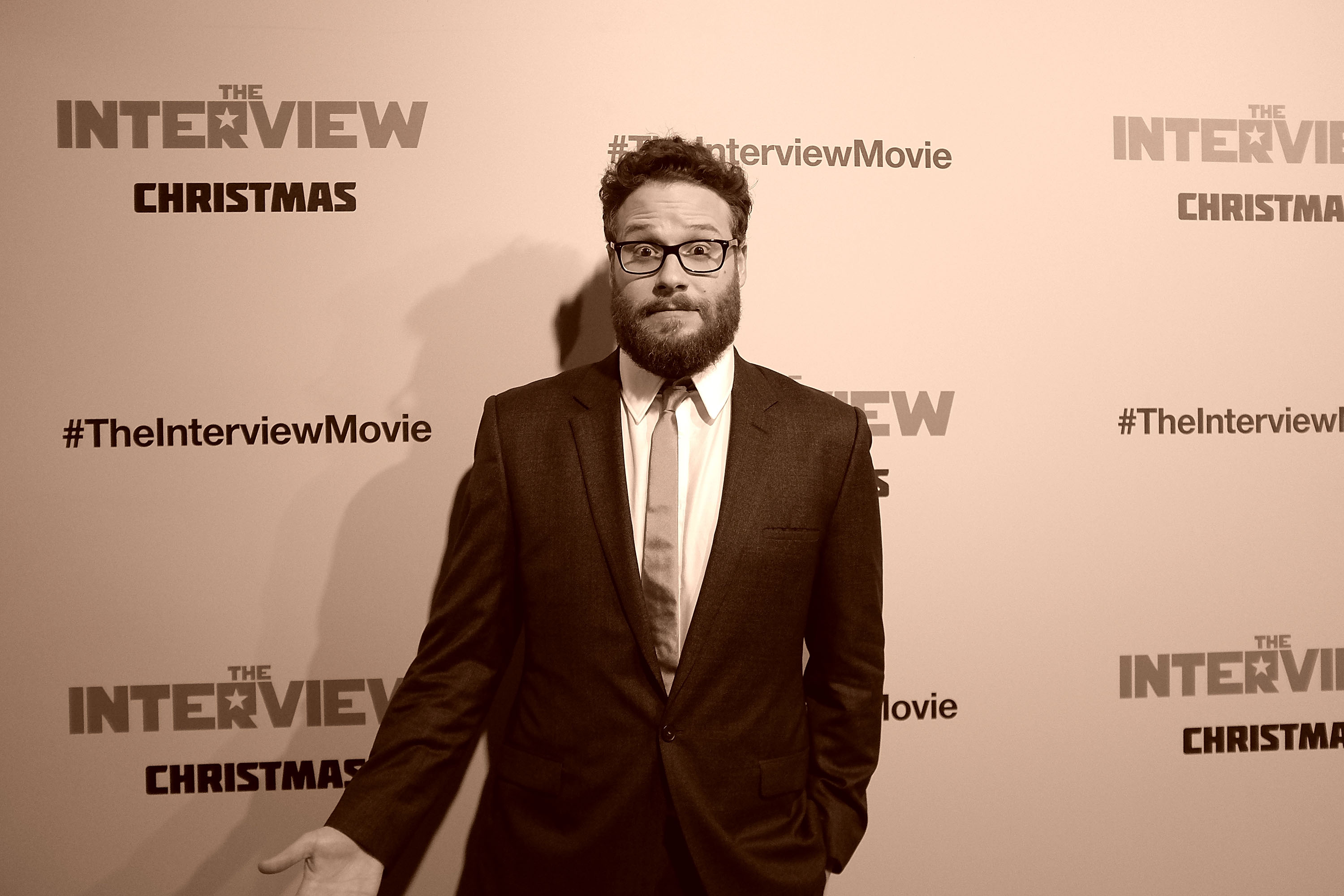
Columbia Pictures' Premiere Of "The Interview" - Arrivals

Cyber war expert Peter Singer calls Sony canceling the theatrical release of The Interview “a case study in how not to respond to terrorism threats”:

We have just communicated to any would-be attacker that we will do whatever they want.

It is mind-boggling to me, particularly when you compare it to real things that have actually happened. Someone killed 12 people and shot another 70 people at the opening night of Batman: The Dark Knight [Rises]. They kept that movie in the theaters. You issue an anonymous cyber threat that you do not have the capability to carry out? We pulled a movie from 18,000 theaters.

Eugene Volokh is also dismayed:

I sympathize with the theaters’ situation — they’re in the business of showing patrons a good time, and they’re rightly not interested in becoming free speech martyrs, even if there’s only a small chance that they’ll be attacked. Moreover, the very threats may well keep moviegoers away from theater complexes that are showing the movie, thus reducing revenue from all the screens at the complex.

But behavior that is rewarded is repeated.

Thugs who oppose movies that are hostile to North Korea, China, Russia, Iran, the Islamic State, extremist Islam generally or any other country or religion will learn the lesson. The same will go as to thugs who are willing to use threats of violence to squelch expression they oppose for reasons related to abortion, environmentalism, animal rights and so on.

Fred Kaplan wonders how far this will go:

Will hackers now threaten to raid and expose the computer files of other studios, publishers, art museums, and record companies if their executives don’t cancel some other movie, book, exhibition, or album?

Dreher notes that studios are already self-censoring:

[P]roduction on a new thriller starring Steve Carell and based in North Korea has now been cancelled. So film studios are afraid that what happened to Sony will happen to them. It is easy to imagine that studios and publishers will be intimidated into canceling or never taking on all kinds of projects on a wide variety of topics, simply out of legitimate fear of cybercrime or worse. Troubling.

Todd VanDerWerff expects Hollywood to become even more risk averse:

This decision was driven as much by placating theatre owners as much as anybody else, but it also has the effect of essentially writing off a whole area of the map.

What happens when someone wants to make a dumb action movie set in North Korea? Or a romantic comedy on both sides of the Korean border (as improbable as that would be)? Or a serious, weighty political drama about the struggles of the North Korean people, aimed at winning some Oscars? What do the bean-counters say then?

(Photo: Seth Rogen arrives at the Los Angeles premiere of ‘The Interview’ held in Downtown LA on December 11, 2014 in Los Angeles, California. By Araya Diaz/WireImage)

A Bottomless Heaping Of “Have”

by Phoebe Maltz Bovy

Reihan Salam dissects the concept of white privilege, making reference to a piece I wrote on the concept of privilege generally. He agrees with me that privilege-checking as sensitivity-signaling is silly, and I agree with him that unearned advantage is very much real. Here’s Reihan:

Even white Americans of modest means are more likely to have inherited something, in the form of housing wealth or useful professional connections, than the descendants of slaves. In his influential 2005 book When Affirmative Action Was White, Ira Katznelson recounts in fascinating detail the various ways in which the New Deal and Fair Deal social programs of the 1930s and 1940s expanded economic opportunities for whites while doing so unevenly at best for blacks, particularly in the segregated South. Many rural whites who had known nothing but the direst poverty saw their lives transformed as everything from rural electrification to generous educational benefits for veterans allowed them to build human capital, earn higher incomes, and accumulate savings. This legacy, in ways large and small, continues to enrich the children and grandchildren of the whites of that era. This is the stuff of white privilege. …

In Blurring the Color Line, CUNY Graduate Center sociologist Richard Alba argues that rapid aging of white America creates an opportunity for younger Latinos, blacks, and Asians. Even if whites want to hoard all of the most privileged jobs for themselves, they’ll have no choice but to open up competition to those with the necessary skills, regardless of race. But this process of opening things up, as WASPs did for southern and eastern European immigrants and their children in an earlier era, will go far more smoothly if we have a growing economy, which will give everyone an opportunity to climb the social ladder. If we instead have economic stagnation, we will see a fierce zero-sum contest for economic and political power, in which tribal identities—including white identity—will become more central.

I’d argue that this is exactly what we’re living through right now: If everyone’s wages were growing, and if everyone felt secure enough in their jobs to quit every now and again in search of better opportunities elsewhere, I doubt that we’d be talking quite so much about white privilege. We’d definitely talk about broken schools and mass incarceration and law enforcement policies that disproportionately damage the lives of nonwhites. Yet we might talk about these problems in a more forward-looking way, as formidable obstacles that need to be overcome by all Americans, not just guilty whites.

As I read him, what Reihan is saying is that the white-privilege conversation has emerged, paradoxically, because most white Americans – along with most non-white Americans – aren’t doing so great economically. A sense emerges that success (or just access to a living wage) is a zero-sum game. It emerges, that is, in all parts of society, except among the most entrenched of society’s haves.

There are, even in crap economic times, a handful of Americans whose central concern is that they have too much unearned comfort. Unfortunately but unsurprisingly, these are the very same people who are directing the cultural conversation about social injustice. I could get into why – journalism’s barriers to entry explain a lot – but the point, for our purposes, is that that’s how it goes. And for those already accustomed to apologizing for their very existence, further privilege-acknowledgment comes naturally. For this set, racism of resentment isn’t just worthy of condemnation (which, of course, it is; resentment explains but doesn’t excuse), but altogether baffling.

Reihan’s commenter nomoreno puts it well:

My experience is that white people who prattle on about white privilege, actually do have privilege, usually middle class, parents paid for college, hetero, etc… The problem is they think all other white people are in the same situation and are shocked that not everyone is.

As does commenter MysticWav:

I’m fine with the concept, I just hate the term. “Privilege” implies something extra to me in connotation. The proverbial silver spoon. That’s not the problem we face. Whites don’t have anything that we don’t all deserve. What we have a problem with is people that are “Disadvantaged”. Ones that don’t have the things we all deserve.

The language matters because it influences how we react to the problem and how we think about the necessary solutions. One inspires reflexive resentment from white people, the other inspires reflexive sympathy.

Indeed. The problem with the term “privilege” – both the luxe the word evokes and the manner in which it’s all too often used – is that it frames questions of justice in terms of haves graciously offering up some of their bottomless reserves of have to have-nots. It may help some posh racists change their ways, but it’s of absolutely no use in convincing anyone whose racism is one of resentment.

Bitcoin: The Next Internet?

by Dish Staff

Tim Lee believes the crypto-currency can thrive as a global payment system, even if it fails as a currency. He compares it to another innovation that proved far more influential than anyone thought it would be:

dish_bitcoinHistory suggests that open platforms like Bitcoin often become fertile soil for innovation. Think about the internet. It didn’t seem like a very practical technology in the 1980s. But it was an open platform that anyone could build on, and in the long run it proved to be really useful. The internet succeeded because Silicon Valley have created applications that harness the internet’s power while shielding users from its complexity. You don’t have to be an expert on the internet’s TCP/IP protocols to check Facebook on your iPhone.

Bitcoin applications can work the same way. There are already some Bitcoin applications that allow customers to make transactions over the Bitcoin network without being exposed to fluctuations in the value of Bitcoin’s currency. That basic model should work for a wide variety of Bitcoin-based services, allowing the Bitcoin payment network to reach a mainstream audience.

Henry Farrell is skeptical, predicting that governments would act quickly to shut down such a system if it seemed to be taking off:

Because so many international transactions are (a) settled in dollars and (b) settled across payment systems run by banks and other financial intermediaries that are vulnerable to U.S. pressure, the U.S. can use these systems to exert political control. Now, imagine the likely response of the U.S. (and the E.U., and, for that matter, China) to a payment network which is designed from the ground up to be decentralized, so that it is impossible for any specific intermediaries to really control payment flows from one actor to another. Such a network would be impossible for states to control. The U.S. wouldn’t be able to use it, for example, to squeeze Iran out of the world financial system. If such a network ever showed signs of really becoming established (rather than being a relatively small-scale thought experiment, and money suck for libertarians with more ideology than good sense), the U.S. would ruthlessly act to isolate it from the international financial system.

And that is the story of Bitcoin.

In response, Lee contends that it might be too late for that:

Bitcoin already has more powerful allies than it did two years ago. In 2014 alone, dozens of Bitcoin startups have raised money. Their backers aren’t going to stand idly by while the government destroys their investments. … The Bitcoin network probably can’t be shut down; it can only be driven underground. Doing so won’t prevent serious criminals from using it, but it will make it harder for law enforcement to track down people using the network. And Bitcoin has good applications as well as bad ones. After going before Congress and endorsing these arguments last year, it would be awkward for regulators to do an about-face and declare war on the technology.

In short, if the regulators were going to try to shut down Bitcoin, they would have done it two years ago when it was still a fringe technology with no real support among elites. Now it’s too late.

In an update to his original post, Farrell answers that Lee “seems to me to underestimate the willingness of the US and other major states to pursue their strategic interests, even if it annoys business, and the vulnerability of any payments systems to regulatory action”. Drum agrees with Farrell, stressing that China, for example, won’t give two Bitcoins about making its backers angry:

The evolution of the internet itself provides conflicting guidance as an analogy. Generally speaking, national governments have had considerable difficulty regulating internet content. It’s just too distributed and fast moving. So perhaps digital payment networks similar to Bitcoin will eventually thrive because they pose similar problems to would-be regulators. Like kudzu, they’ll simply be impossible to contain.

On the other hand, countries like China have shown that internet content can be regulated. It merely requires sufficient motivation. And even less authoritarian governments have managed to throw a lot of sand in the gears when they rouse themselves to action. Given that regulating commerce and money is easier than regulating content, this bodes ill for the future of Bitcoin. There’s not much question that it can harried into uselessness if national governments decide to do it.

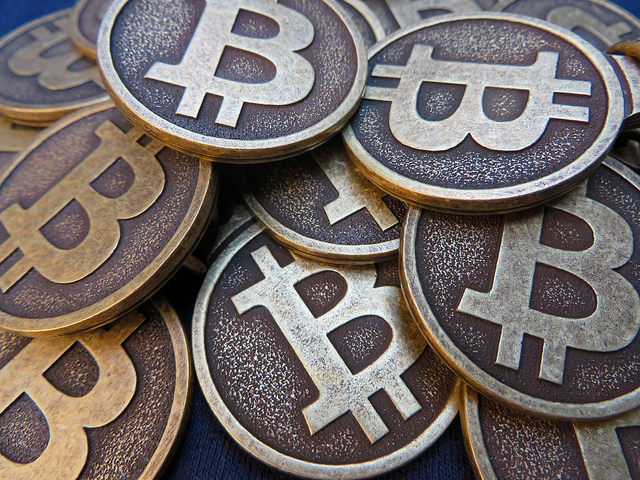
(Photo by Flickr user BTC Keychain)

Obama Scraps Our Failed Cuba Policy, Ctd

by Dish Staff

Readers react to the big news:

Normalization of relations is a great and long overdue policy.  I have a question about it that I haven’t seen addressed: will it create an opportunity to close Guantanamo?

Another:

Hopefully everyone’s noticed that the Republicans opposed to normalizing relations with Cuba:

A) Have no problem with us having diplomatic relations with China, another Communist country with an even worse human rights record.

B) Are currently defending the US’ own recent human rights abuses, i.e. torture.

We all know the real reason: political posturing.  Castro stripped Cuban aristocrats of their wealth.  They fled to Florida and have been propping up anti-Castro policy ever since.  There are no principles here.

Another asks:

Lost in all the coverage is the one issue I think is the most important – will this change the absurd “Wet-foot/Dry-foot policy?

After we normalize relations with Cuba, what happens to refugees who make it to U.S. shores? Or those who overstay their (presumably soon to be issued) visas? Will they be allowed to stay and fast-tracked to attaining resident status? Or will Cuban refugees be deported like Haitians, Mexicans and others who come here illegally? I’m not saying they should. But it’s wrong to treat economic refugees from Cuba who aren’t facing imprisonment as dissidents differently than those from other nations. Anyone have an answer to this?

Another outlines “the points to make”:

1) The 50-plus years of sanctions and embargoes were failing to drive the Castros and their ilk from power.  Diplomacy such as this – with an effort to defuse tensions to where the authoritarian regime will end political harassment – is due its chance to work.

2) The outrage against a friendly posture towards Cuba by the far right, and by the anti-Castro hardliners, are going to fall on deaf ears.  Polling has shown a sizable majority of Americans, sizable majority of CUBANS (especially younger generations distanced from the passions of the Cold War era) back an end to sanctions and normalizing relations.

3) Obama’s move is honestly a very small, very minor moment in our nation’s international efforts … except somehow this move is one of the cornerstones of Obama’s administration.  Because it is one of the moves his office has done to improve our nation’s international reputation that has been damaged by the heavy-handed neocon exploitations of the Bush/Cheney years.  This move is going to go over well with our Caribbean and Central/South American allies, for starters.  And it’s been a move we SHOULD HAVE done since the fall of the Soviet Union …

While Obama’s and the nation’s reputation remains stained by the failures to bring Cheney and his ilk to trial for their torture regime, he’s at least made good faith efforts in other areas – isolating Putin over his assault on Ukraine, getting Syria to clean out MWDs, treating with Iran as part of efforts to block ISIL and the Taliban, etc. – to show the United States takes its role as a superpower serious.  This move is part of that trend.

4) Obama shouldn’t have received that Nobel Peace Prize so early in his presidency; they should have waited until moves like this to demonstrate how he’s using diplomacy the best way possible: ending hostilities, improving relations with ally and foe alike, and

This isn’t over yet, obviously.  A lot has to get resolved over the issues of reparations (property ownership seized from the 1960s for example) and human rights (end to political arrests, open local elections).  But this is a huge step.  It breaks the stalemate of embargoes that weren’t working, and it forces the political ideologues to face new realities.

Meep-meep.

Another addresses Will’s post:

I’m one of the Twitterers who posted a comment about getting to Cuba before Starbucks (in an @reply to a friend). But my comment was not intended the way you suggest, and the way that a dozen other think pieces are also suggesting. I had not forgotten that Cuba was unbelievably poor, and that their mid-century architectural/technological condition was actually the sad result of arrested economic development. I have no interest in poverty tourism.

What I meant – and what I think most people meant – was that we hoped Cuba could grow fully into a nation with their own culture, as free from American normalization as possible. It would be a shame if American developers stormed in and turned the country into just another Floridianesque suburb. That seems all too possible.

Of course, if that kind of American assistance is what’s best for Cuba, then that’s fine. I want what’s best for them. But how do you say all this in a tweet. Really.

The backlash on these comments is exactly that Illiberal Left position that you’ve been writing about on the Dish, hacking away at harmless comments for not being explicitly clear that such and such person is not being maligned. It’s pouncing on people for personal gain and satisfaction.

I’m excited and hopeful for Cuba.

A Colorful History

by Dish Staff

Leann Davis Alspaugh revisits the mauve craze that swept Europe in the mid-19th century:

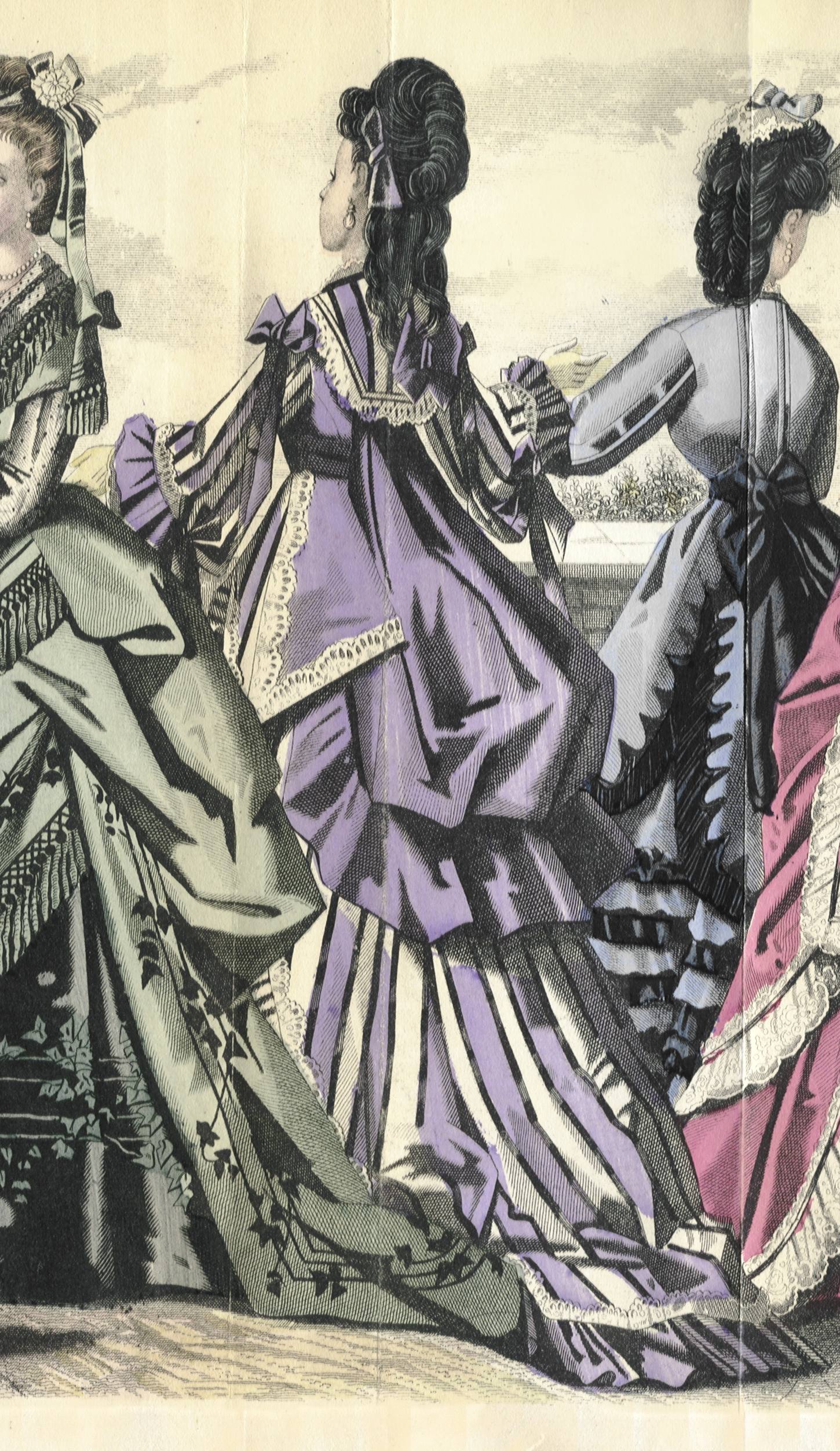
In the 1850s, the color mauve was discovered by a young chemist who was trying to synthesize Godey's Lady's Book May 1872 Fashion Plateartificial quinine. The residue from one his experiments became the world’s first aniline dye, guaranteed not to fade with time and washing. Queen Victoria wore a mauve gown to her daughter’s wedding, and Empress Eugénie of France cooed that the color matched her eyes—and an epidemic of “mauve measles” swept Europe. As cultural historian Simon Garfield noted in his 2001 book on the history of mauve, the color’s popularity led to burgeoning interest in the practical applications of chemistry and advances in the fields of medicine, weaponry, perfume, and photography. Mauve became indelibly associated with the elaborate, overstuffed décor of the Victorian period; when mauve returned in the 1980s, it was billed as “dusty rose,” a name much more congenial with that era’s other favorite color: hunter green.

(Image: Fig. 3 from a Godey’s Lady’s Book fashion plate, May 1872, via Flickr user clotho98)

What’s On Jeb’s Agenda?

by Dish Staff

Ambinder sees an opening:

Bush’s biggest opportunity corresponds to the biggest hole in the GOP platform: its radio silence on practical economic solutions for the middle class, which, it turns out, corresponds to the biggest bread-and-butter concern that Americans repeatedly chastise Washington for not addressing.

If he can move beyond supply-side economics and invent or adopt policies that directly benefit middle class voters who aren’t big savers, if he can speak to their concerns, if he can draw for us a picture for how a governing conservative president might function, then everything I’ve ever said about him — namely, that he’s a Bush and he can’t win the presidency, much less the nomination — goes out the window. If he can square THIS hexagon, and if he can get people to forget that he’s a Bush, he might be able to win both.

Republicans certainly don’t need a replay of Romney 2012, where the candidate focused too much on big macro issues like tax and entitlement reform — issues that failed to connect with voters struggling with everyday, middle-class problems. But that’s what a Bush candidacy could well look like. In an October fundraising letter for an education group he founded, Bush put forward a broad-strokes economic agenda that once again argued America needs to “radically simplify our tax and regulation structures to be fairer and more practical” and “reform our entitlement programs, which are now ballooning government beyond taxpayers’ means to pay for it.” That’s just GOP boilerplate that many voters will tune out.

But don’t fret quite yet, conservative reformers. There are still signs that Jebonomics has the potential to be smart and important. For instance, Bush also spent a lot of time in that letter discussing K-12 and higher education challenges and reform, both of which are crucial to improving middle-class fortunes. Anyone remember the Romney education plan, or him even talking much about student debt? The candidate actually had a plan, but it was a mystery to voters. Bush sounds like he could focus on these middle-class issues far more than Romney did.