How Bar Brawls Begin

Burt Likko, a lawyer who did work for an insurance company “which wrote liability policies to a whole bunch of seedy bars,” relays what he learned about the topic:

You might think that a bar fight is most commonly started between two guys fighting over a woman. That’s not so, at least not in my experience. Ejection seems to be a more precipitating event. More than half the bar fights I had to sort out started when a too-drunk patron was asked to leave and refused to do so. When the bar back or the bouncer attempts to escort the drunk out of the building, the drunk refuses to cooperate, and if the escorting turns in to physical handling, the drunk will wrestle away and attempt to run back in the bar. It is during this struggle that harmful physical contact between the drunk and someone else is initiated. By whom is not always clear — does the drunk punch the bouncer; does the drunk flail at the bouncer and hit a bystander; does the bouncer hit the drunk? These are the burning questions that must be sorted out in a bar-fight lawsuit.

He also shares his thoughts on the link between bar violence and sexual frustration:

[B]ased on what I heard from dozens of witnesses, those bar fighters who initiate confrontations with other patrons (as opposed to reacting badly to being 86′ed by the staff) do so as a substitute for obtaining sexual release. Dozens of witnesses over multiple cases reported to me that the person they identified as the assailant had either recently suffered a romantic reversal or had recently stuck out when trying to hit on a member of the opposite sex.

This suggests at least some substance to the trope of a link between propensity to violence and sexual frustration — the woman (or man) with whom the drunk was flirting is already spoken for and uninterested in extra-monogamous play, typically. “I’m not very likely to get laid today, so instead I’ll fight with someone,” seems to be roughly the thought pattern here. I speculate that this means on a neuro-biological level that engaging in aggression and violent behavior produces a feeling of satisfaction, which in turn triggers a release of endorphins or other similar hormones that the fighter’s brain craves.


You Know What They Say About A Book With Big Feet …

Tracy Clark-Flory interviews Virginia Wade, whose Cum For Bigfoot e-book series has taken off:

Why do you think the “Cum for Bigfoot” series has been such a wild success?

The longer I’m in this business and reading other people’s work, I’m beginning to realize dish_bigfootporn that it’s this capture fantasy, where you kind of have this thrill about being kidnapped and ravished, but of course you would never want that to happen to you in real life. The danger of it, the dark quality to it and the taboo nature of it, I think that all appeals — and actually to mostly female readers. When I started writing erotica I thought I was writing for men.

Also, it’s campy and funny and I didn’t take it too seriously. Actually, I don’t know why any readers would read my book [laughs]. I think it’s just that it’s so out there, so out of the realm of possibility. That’s why these dinosaur erotica books are so popular and these tentacle books are so popular. The chances of you getting tempted by a tentacle are, you know, pretty slim. Why do we read books? So that we can go somewhere else for a while and experience something that will never happen to us.

Do you find your books arousing?

When I write them they do kind of arouse me. They’re so filthy, oh my god. I’ve gotten some emails and messages from people telling me that, uh, yeah, they’re enjoying my books and thanking me for a good time. …

So, what kind of a lover is Bigfoot, exactly? Tender or rough? Giving or selfish?

He’s surprisingly gentle. The women really, really enjoy everything he does to them. It starts out — I can’t call it rape because then I’ll get in trouble — it’s one of those forced seductions. It’s not really any worse than a bodice-ripper romance — although my stuff’s pretty detailed. I’d forgotten how raunchy it was until someone quoted back something I’d written and it was something to the effect of “semen dripping from eyelashes” [laughs].

Last week, Lizzie Crocker zoomed out on the trend:

[R]eally, how strange is this so-called “literary phenomenon”? Take Bram Stoker’s Dracula: through observing the Count’s gradual seduction of Lucy Westenra (and her resulting metamorphosis), we come to see that she desired him from the beginning. The lines are slightly blurrier in the original King Kong, but bold enough for critics to extrapolate a sexual subtext, so that an ape holding a blonde woman hostage atop the Empire State Building in Manhattan is an ape holding a blonde woman atop a giant phallus in Manhattan. The difference between the woman-falls-for-demon-beast storyline in fiction then and now is a matter of the implicit versus the explicit. Today, there are no limits when it comes to explicit language and content in self-published erotica.

(Image of cover of Cum For Bigfoot via Amazon)

Of Romance And Revenue

Jesse Barron describes how romance writers thrive outside the traditional publishing industry:

Good romance writers can earn a living without anyone in New York publishing knowing their names, because they publish and promote their work themselves. A traditional publishing house might give an author 25 percent of the net price on an e-book (meaning that if an outlet marks down your title, you get 25 percent of the discounted price). The e-book distributor Smashwords, by contrast, forbids outlets from discounting and returns 60 to 75 percent of the cover price to the author. The Amazon, Kobo, and Sony e-book stores offer similarly good rates.

Romance titles are priced low, usually around four or five dollars, which makes it easier to sell a lot of them. A known author, rolling with Facebook and Goodreads promotion, can move more than a thousand units daily on Smashwords alone. A 60 percent cut of two thousand $5 e-books is $6,000. If your book sells well for a week, you’ve made $42,000. Publish two books a year, a not-unusual pace for an e-book author, and you’ve earned $84,000 before taxes. And that’s just from Smashwords — because contracts with most e-book distributors are nonexclusive, you can sell through other distributors, too, so you may have comparable revenue coming from Kobo, Amazon, and others. And this is assuming you’re not a top-tier author. The writers in the winner’s circle, which in romance is big, can easily pull six or seven figures.

A Novel Take On The Mind

E.L. Doctorow’s new novel Andrew’s Brain is structured as a dialogue between the main character and a man called “Doc.” Jane Smiley assesses the protagonist’s primary conflict:

Andrew’s burden is that he cannot get close to anyone, not because he is incapable, but because he seems to carry disaster with him wherever he goes. This may be simply thoughtlessness – he relates an incident from his childhood in which he was sledging at dusk down a driveway into the street; when a car stopped suddenly to avoid hitting him and hit another car parked at the kerb, the driver died, impaled on the steering wheel. More tragedies follow. Accidents? Fate? Failure of intelligence? Andrew can’t decide. Doctorow’s larger theme is one that fascinates: what is the source of evil, and, perhaps, how do evildoers experience their own actions, explain them, go on living?

Edmund Gordon offers a mixed review:

[I]n spite of its neat dimensions, Andrew’s Brain is a bit of a mess. Part rambling philosophical essay, part kittenish satire, part exuberant Nabokovian game, it ends up wholly congested and confusing. But Doctorow’s balmy prose makes it the kind of mess that it’s a genuine pleasure to wallow in for a while. He has an easy, lyrical way with scene-setting and characterization (the first time we encounter Andrew’s ex-wife Martha: “It happened to have been snowing that night, and Martha was transfixed by the soft creature-like snowflakes alighting on Andrew’s NY Yankees hat brim. Martha was like that, enrapt by peripheral things as if setting them to music”.)

He is a brilliant, careful observer of natural phenomena (of the mountains surrounding Andrew’s college town: “They took in the light, they’d bounce it down or suck it up as was their wont. It was a kind of mountain bureaucracy, and nobody could do anything about it, least of all the sun”.) And he has a poet’s flair for lovely-sounding nonsense (“There is nothing you can think of except yourself thinking. You are in the depthless dingledom of your own soul”).

In a recent interview about the book, Doctorow elaborates on his interest in the workings of the human brain:

The novel revolves around questions about the nature of the mind and consciousness. How did your study of philosophy inform your writing?

From my undergraduate days, I’ve always been interested in the major philosophical questions that don’t seem to have an answer that everyone agrees on. The idea of cognition – what it is and how it works – has preoccupied me in previous novels, as it does here. Currently the neuroscientists who accept the materiality of the mind – who regard the soul as fiction – don’t know yet how the brain becomes the mind, how it’s responsible for all our thoughts and feelings, our subjective life. How this three-pound “knitting ball”, as Andrew calls it, produces our subjective life. If we do ever figure it out, that could be a glorious intellectual achievement. At the same time, it carries grave dangers, because if we understand how the brain works in all its detail, then a computer could be built that emulates the brain and creates consciousness. This is not just Hollywood movie stuff. If that ever happens, it’s the end of the mythic world that we’ve lived in since the bronze age, with all the stories we’ve told ourselves about what human life is. That could be as much of a disaster as an asteroid hitting the planet.

Democrats For War With Iran, Ctd

President Obama Departs The White House

A Colorado reader emailed Senator Michael Bennet’s office to ask why he was co-sponsoring the AIPAC bill that drastically moves the goalposts on the Iran negotiations whose terms have already been set, adds a whole range of non-nuclear issues into the bargaining, includes demands that both the president of the United States and Iran have already ruled out, and commits the US in advance to joining a pre-emptive war on Iran, led by Israel. Here’s the money quote from the letter he received from Bennet’s office:

I support the ongoing negotiations and the President’s efforts to engage Iran and its people through direct diplomacy; I am also cognizant of the security risks Iran poses to our allies in the region and the international community at large. That is why I am a co-sponsor of the Nuclear Weapon Free Iran Act of 2013 (S. 1881). The bill would impose economic sanctions against Iran only if it violates any interim or final agreement that is reached with respect to its nuclear program.

S.1881 has been placed on the Legislative Calendar but is not currently under consideration on the Senate floor. I will continue to follow the negotiations closely and will keep your thoughts in mind should this legislation be brought before the full Senate.

There are three possible conclusions to be drawn from this:

a) Bennet hasn’t read the full bill he is co-sponsoring, which includes several AIPAC-inserted poison pills for any realistic negotiation with Iran; b) Bennet has read the bill, knows it’s a poison pill that could only, if passed, end all negotiations and commit the US to an Israeli war, and believes war with Iran is the right course of action; or c) is deliberately misrepresenting the scope of the bill to his constituents, privately opposes it, won’t vote to bring it to the Senate floor, and is doing all this because he is shit-scared of AIPAC, and what crossing them might do to his political future.

At best that’s cowardly; at worst, it’s craven; in its entirety, it’s pure Washington – the kind of politicking that Bennet once promised he would oppose. In other words, Bennet is just another calculating Washington pol, prepared to sabotage his own president’s negotiations and provoke another Middle East war for his own careerist reasons.

Readers are encouraged to write their Senators, especially Democratic ones undermining their own president, to ask why they support the AIPAC bill. The Dish will publish the responses. It’s one way to get some accountability on this. And to get the Democrats who favor war with Iran on the record now. Let’s give the night-flower some sunlight, shall we?

(Photo: Senator Bennet with the president whose negotiations he is threatening to sabotage. By Mark Wilson/Getty.)

The Facts That Inform Great Fiction

In a review of Sarah Churchwell’s Careless People a “lavish excavation of the real-life milieu whose scandals, frolics and gaudy personalities gave F. Scott Fitzgerald the raw material for The Great Gatsby” — Tom Carson reflects on the utility of such literary history:

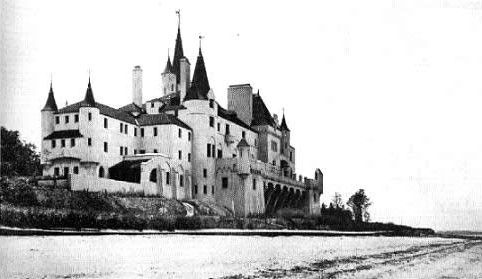
[H]ow much does this sort of whack-a-mole scholarship add to our understanding of dish_beacontowers either Fitzgerald or Gatsby?  A fair amount, I’d say.  Even when Churchwell’s specific guesses may be dead wrong, she’s given us a raft of plausible speculations on the interplay between a novelist’s mind and the hurly-burly around him, meanwhile reminding readers of one of Fitzgerald’s greatest gifts: selectivity. Nonetheless, it’s telling that one reason reviewers in 1925 couldn’t see past Gatsby‘s surface was that its plot struck them as little more than a pastiche version of the sort of sensationalistic, sordid affair they read about in the papers every day. Because Fitzgerald transmuted dross into gold and the dross has grown fairly obscure almost 90 years later, Churchwell has done us a favor by evoking how his imagination was stimulated by all sorts of trifling current events.  Better yet, her own writing is so spirited that you want her to be right about everything, even when you suspect otherwise—and come to think of it, that’s a kind of susceptibility Nick Carraway knew all about.

In another review of Careless People, Joanna Scutts observes:

Amid all the suggestive fragments of history that Churchwell uncovers, the most memorable are the counterintuitive details that remind us that nostalgia isn’t the same as memory. As asides to the main story, she tells us (often by means of illustrations and photographs) that in 1922 skirts were still ankle-length; that it was unlikely that anyone danced the Charleston at Gatsby’s parties; that the swastika was a benign symbol that a bootlegger could use to distinguish his fleet of taxicabs; and that the phrase “American dream” wasn’t invented until 1931, six years after “Gatsby” was published.

(Image of Beacon Towers in Sands Point, New York, 1920, the property that partly inspired the fictional Gatsby mansion, via Wikimedia Commons)

A Short Story For Saturday

A passage from the opening paragraphs of Nathaniel Hawthorne‘s 1843 story “The Birthmark“:

In those days when the comparatively recent discovery of electricity and other kindred mysteries of Nature seemed to open paths into the region of miracle, it was not unusual for the love of science to rival the love of woman in its depth and absorbing energy. The higher intellect, the imagination, the spirit, and even the heart might all find their congenial aliment in pursuits which, as some of their ardent votaries believed, would ascend from one step of powerful intelligence to another, until the philosopher should lay his hand on the secret of creative force and perhaps make new worlds for himself. We know not whether Aylmer possessed this degree of faith in man’s ultimate control over Nature. He had devoted himself, however, too unreservedly to scientific studies ever to be weaned from them by any second passion. His love for his young wife might prove the stronger of the two; but it could only be by intertwining itself with his love of science, and uniting the strength of the latter to his own.

Such a union accordingly took place, and was attended with truly remarkable consequences and a deeply impressive moral. One day, very soon after their marriage, Aylmer sat gazing at his wife with a trouble in his countenance that grew stronger until he spoke.

“Georgiana,” said he, “has it never occurred to you that the mark upon your cheek might be removed?”

Peruse Nathaniel Hawthorne: Tales and Sketches for more of his short fiction. Previous SSFSs here.