Montoz, Switzerland, 12.42 pm
Montoz, Switzerland, 12.42 pm
On Monday night, John Podhoretz stormed out of a debate in New York on what it means to be “pro-Israel”, following a question about the American Studies Association’s decision to participate in an academic boycott of the Jewish state:
The discussion touched on the recent Pew survey of American Jewry, the decision by the Hillel at Swarthmore College to include anti-Zionists among its invited speakers and other much-debated recent events. But after an audience member asked the panelists’ opinions of the boycott vote, things went beyond the merely testy. Mr. Ben-Ami criticized the boycott, but then turned the discussion to Israeli policies that, in his view, made it difficult for some Americans to believe that Israel really did want peace with the Palestinians. Mr. Podhoretz then accused Mr. Ben-Ami of blaming Israel for the boycott. When some audience members started booing, Mr.Podhoretz suggested they also hiss, before abruptly leaving the stage in a move that, according to Ha’aretz, “took the debate-hardened audience entirely by surprise.”
And that wasn’t all. Within an hour, the event’s moderator, Jane Eisner, editor of The Jewish Daily Forward, had taken to the Forward’s blog to write that Mr. Podhoretz had, “mystifyingly,” provoked the audience into hissing him before “wagging his finger at Ben-Ami in a manner at once threatening and condescending.” “I was stunned by what I can only describe as a temper tantrum,” she said, calling Mr. Podhoretz “a rude, angry man.”
Fisher explains why these conversations can get so sensitive:
The controversy was not over the boycott itself, or the merits of the “BDS Movement,” which advocates boycotts, divestment and sanctions to change the Israeli government’s behavior with regard to the Israeli-Palestinian conflict.
The most telling fact of this incident is that all four people on stage agreed about the issue at hand: that BDS campaigns such as the academic boycott are harmful and counterproductive. But if they agreed, why did they argue so vehemently that one of the participants marched off mid-event? …
In debates about Israel, disagreements that might seem minor on the surface – the “tyranny of small differences,” as one Israel-watcher put it to me – are often something much graver. If you know what to watch for, you can observe somber, serious people like these four panelists talk around underlying issues so sensitive they are rarely addressed or even acknowledged. Issues that are almost always below the surface, but too deep to come out except in moments of the most heated candor, often surprising even the people naming them.
Marc Tracy looks into J-Pod’s Jewish soul:
Here’s my guess: Podhoretz reacted as he did because he felt like a victim—in this case, of being inappropriately silenced, by the crowd and by the moderator. And here’s the thing: Podhoretz’ reaction was so confusing to many observers because most people do not share Podhoretz’ sense of himself and other Jews as victims.
Let me explain. Podhoretz and other Jewish American conservatives traffic in feelings of victimhood and marginalization: of a community under threat. It is hard to blame them, since historically this has been the default mode of the Jewish people. And even today, things could be better for the Jews of Israel, who are not infrequently terrorized by rockets that target civilians and must deal with an officially anti-Semitic and bordering-on-nuclear Iran. Moreover, Podhoretz’s fairly unique role as the Upper West Side’s resident neoconservative must only exacerbate any personal feelings of victimhood.
JPod should get over it – because he is so obviously not a victim of anything. But it’s another reminder that on this topic, the usual rules of robust debate do not always apply. Tough criticism of Israel is, in my experience, almost reflexively felt by many Jewish Americans to be anti-Semitic until proven otherwise, even if it isn’t. Many know that’s unfair, and have the self-restraint not to go there. But they still feel the sting, which makes debating this topic even more emotionally fraught than many others. It has pained me a great deal over the last few years and I wish I knew how to get past it.
But developing a thick skin is critical to being a minority in debate with a large majority. In debating gay issues over the years – sometimes in extremely hostile environments – I learned I just had to get over the victimhood I would occasionally feel. First, it didn’t help you get anywhere. It just perpetuated the gulf of mutual distrust and ignorance I was trying to bridge. Second, I was personally so very privileged in many other respects, I’d have had to gussy up some real lefty self-righteousness to feel I was a victim of anything, and I just couldn’t quite hack it. Last: I had to take yes for an answer at some point. But for JPod, it isn’t enough of a yes to live in a country that has a vibrant, indispensable and treasured Jewish community, and remains solidly committed to defending the Jewish state in its original boundaries. So many other litmus tests have to be passed, so many neoconservative orthodoxies have to be upheld and so many facts ignored – for him to feel that he isn’t a victim. And at some point, that has to be his problem, and not ours.
Another submission:
This is just a collision hathos: the reindeer gay bois, the overdone singing, the urging to enroll in Obamacare … I can’t stop watching. But I don’t want to enroll as much as make sure I get tested for herpes.
Previous Christmas Hathos here.
Fisher criticizes Obama’s decision to nominate Montana Senator Max Baucus as his next ambassador to China:
Baucus is not an obvious choice. He is not completely new to China; he’s traveled there to promote trade, something he’s advocated since at least the mid-1990s. But there’s little on his resume that screams “China,” which is unusual both in that there are lots of more obviously qualified candidates and that most U.S. ambassadors to Beijing have had significant ties to the country.
Past ambassadors to China have often spoken fluent Chinese. This includes Obama-appointed Ambassador John Huntsman; Obama’s second ambassador, Gary Locke, did not speak Chinese but is Chinese-American, which turned out to be a diplomatic asset in its own way. There are lots of countries where the U.S. ambassadors do not speak the language. But China, owing to its challenge as a diplomatic post and its importance to the United States, has traditionally been different. Baucus would be the first non-Chinese-speaker to hold the post in 13 years. The office was has been held by fluent Chinese-speakers from 1981 through 1995 and again from 2001 through 2011.
Of course, speaking Chinese does not in and of itself determine whether or not someone will be a good ambassador to China. George H.W. Bush did not speak Chinese when he took the job in 1974. But the point is that it’s not like becoming, say, U.S. ambassador to Australia, which typically goes to political allies or major campaign fundraisers. It’s not the gold watch you get at the end of your career. It is your career.
However, Keating notes that Baucus has talked tough on China in the past and won’t necessarily be a lightweight:
[W]hile he’s not exactly a China hand, Baucus does have something of a track record on U.S.-Chinese relations over the 35 years he’s spent in congress.
During the early 2000s he was chair (and is still a member) of the Congressional-Executive Commission on China, a group that’s generally extremely critical of China on human rights and economic policy. He has recommended that the United States strongly advocate for human rights in China and urged President Bush during a 2002 visit to “urge Chinese authorities to perform a comprehensive review of those imprisoned for counterrevolutionary crimes, to release unconditionally all prisoners of conscience, to ratify the International Covenant on Civil and Political Rights, and to invite the U.N. Special Rapporteur on Religious Freedom to visit China.” As Chairman of the Senate Finance Committee, he recently co-authored a letter accusing China of undervaluing “its currency, providing an unfair advantage to Chinese exporters and harming U.S. manufacturers and their workers”. Ahead of WTO meetings in March 2012, he wrote. “China will not end its currency undervaluation unless the U.S. seizes opportunities like this to insist it does.”
First Read argues that Baucus ending his term early could help the Democrats in next year’s election:
Ever since Baucus said he wasn’t running for re-election — and after former Gov. Brian Schweitzer (D) took a pass on running — Montana has become a clear pick-up opportunity for Republicans, giving them a do-able shot at netting the six seats needed to win back the Senate next year. But yesterday’s news means that the state’s Democratic governor, Steve Bullock, gets to appoint a replacement for Baucus, and most observers believe the replacement pick will be Lt. Gov. John Walsh (D), who is already running for Baucus’ seat. Putting someone like Walsh in the Senate would boost his name ID, give him the benefits of incumbency (staff, official duties), and potentially clear the Democratic primary (although it seems like fellow candidate John Bohlinger is someone who isn’t easily persuaded to get out of a race). At a minimum, Walsh — as an appointed senator — basically moves this race from Lean Republican to Toss Up.
Juliet Eilperin and Sean Sullivan note another reason Obama might be glad to ship the senator overseas:
It removes a credible critic of the Affordable Care Act from the scene. Baucus had expressed frustration with how the Administration was implementing its landmark health care law for months, suggesting in February it could be “a huge train wreck” if the government did not have enough money to spend on outreach to consumers. A month after the launch of HealthCare.gov the senator compared the federal health care marketplace to Humpty Dumpty, questioning whether the White House could repair the complicated online enrollment system. Baucus, who has chaired the Finance Committee since 2007 (and served as ranking member for the previous six years), has sought to conduct oversight of the Administration’s health care efforts for months, and it is less likely that the panel can do this aggressively — especially in the next few months — if he’s gone.
Ed O’Keefe previews the game of musical committee chairs that will follow Baucus’s retirement from the Senate:
Baucus, who already announced plans to retire after next year, has been the top Democrat on the powerful Senate Finance Committee since 2001. Sen. Jay Rockefeller (D-W.Va.) is the panel’s second-ranking Democrat, but he already chairs the Senate Commerce and Transportation Committee and also is retiring after next year. So the Finance Committee gavel is expected to go instead to Sen. Ron Wyden (D-Ore.), who currently chairs the Senate Energy and Natural Resources Committee, but is eager to lead a more prominent panel, according to several senior Senate aides.
So once Wyden goes, who takes over Energy? Sen. Tim Johnson (D-S.D.) is next in line, but he already chairs the Senate Banking Committee and also plans to retire after next year. So here again, Democrats are likely to turn to the third-ranking member, Sen. Mary Landrieu (D-La.). Landrieu faces a tough reelection battle next year and her leadership of Energy might put her at odds next year with the Obama White House, which is reportedly planning to take a series of executive actions regarding energy policy and climate change. If Landrieu takes over Energy, she would need to relinquish her leadership of the Senate Small Business Committee. On this panel, Sen. Maria Cantwell (D-Wash.) ranks second, but she already chairs the Senate Indian Affairs Committee. So if Cantwell opts to lead the Small Business Committee and drop her chairmanship of the Indian Affairs panel, Sen. Jon Tester (D-Mont.) — Baucus’s home state colleague — would become a committee chairman for the first time.
Woohoo! New Mexico just became the 17th state to secure marriage equality!! http://t.co/fCO4pSfhRI #BOLNews
— Believe Out Loud (@BelieveOutLoud) December 19, 2013
Details here.
Artists don’t always see eye-to-eye with their patrons, but when the patron is NASA and the artwork is the first sculpture on the moon, things get especially tricky:
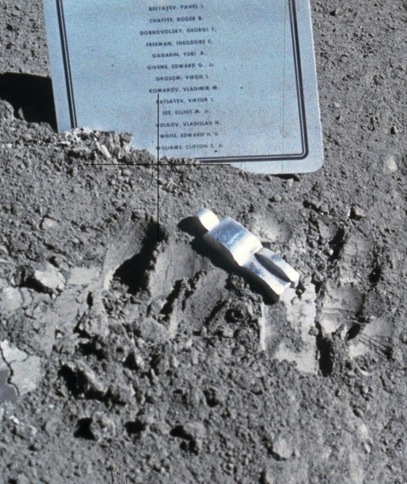
At 12:18 a.m. Greenwich Mean Time on Aug. 2, 1971, Commander David Scott of Apollo 15 placed a 3 1/2-inch-tall aluminum sculpture [by artist Paul Van Hoeydonck] onto the dusty surface of a small crater near his parked lunar rover. At that moment the moon transformed from an airless ball of rock into the largest exhibition
space in the known universe. Scott regarded the moment as tribute to the heroic astronauts and cosmonauts who had given their lives in the space race. Van Hoeydonck was thrilled that his art was pointing the way to a human destiny beyond Earth and expected that he would soon be “bigger than Picasso.”
In reality, van Hoeydonck’s lunar sculpture, called Fallen Astronaut, inspired not celebration but scandal. Within three years, Waddell’s gallery had gone bankrupt. Scott was hounded by a congressional investigation and left NASA on shaky terms. Van Hoeydonck, accused of profiteering from the public space program, retreated to a modest career in his native Belgium. Now both in their 80s, Scott and van Hoeydonck still see themselves unfairly maligned in blogs and Wikipedia pages – to the extent that Fallen Astronaut is remembered at all.
And yet, the spirit of Fallen Astronaut is more relevant today than ever. Google is promoting a $30 million prize for private adventurers to send robots to the moon in the next few years; companies such as SpaceX and Virgin Galactic are creating a new for-profit infrastructure of human spaceflight; and David Scott is grooming Brown University undergrads to become the next generation of cosmic adventurers. Governments come and go, public sentiment waxes and wanes, but the dream of reaching to the stars lives on. Fallen Astronaut does, too, hanging eternally 238,000 miles above our heads.
About that plaque next to the tiny sculpture:
On August 1, 1971, Fallen Astronaut was placed on the Moon by the crew of Apollo 15, along with a plaque bearing the names of eight American astronauts and six Soviet cosmonauts who had died:
- Theodore Freeman (October 31, 1964, aircraft accident)
- Charles Bassett (February 28, 1966, aircraft accident)
- Elliot See (February 28, 1966, aircraft accident)
- Gus Grissom (January 27, 1967, Apollo 1 fire)
- Roger B. Chaffee (January 27, 1967, Apollo 1 fire)
- Edward White (January 27, 1967, Apollo 1 fire)
- Vladimir Komarov (April 24, 1967, Soyuz 1 re-entry parachute failure)
- Edward Givens (June 6, 1967 automobile accident)
- Clifton Williams (October 5, 1967, aircraft accident)
- Yuri Gagarin (March 27, 1968, aircraft accident)
- Pavel Belyayev (January 10, 1970, disease)
- Georgy Dobrovolsky (June 30, 1971, Soyuz 11 re-entry pressurization failure)
- Viktor Patsayev (June 30, 1971, Soyuz 11 re-entry pressurization failure)
- Vladislav Volkov (June 30, 1971, Soyuz 11 re-entry pressurization failure)
Scott, Commander of the Apollo 15 mission, noted that “Sadly, two names are missing (from the plaque), those of Valentin Bondarenko and Grigori Nelyubov.” He explained that because of the secrecy surrounding the Soviet space program at the time, they were unaware of their deaths. Also not on the plaque are two US Air Force astronauts who died in 1967, Michael James Adams, in an X-15 accident and Robert Henry Lawrence, Jr., the first African American astronaut and part of the Manned Orbiting Laboratory Program, in a training accident. They are remembered on the Space Mirror Memorial.
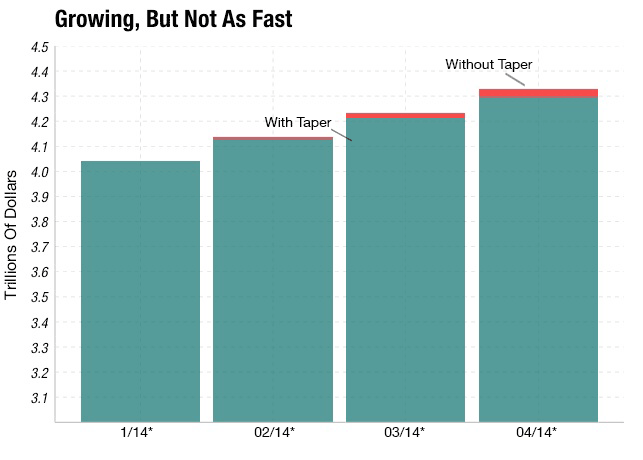
Planet Money graphed it. They had to start their chart at $3 trillion because otherwise “you wouldn’t even be able to see it”:
Matthew O’Brien approves of the Fed’s decision:
[T]he Fed will “taper” its purchases from $85 to $75 billion of bonds a month. And it will keep doing so in $10 billion increments next year as long as the recovery stays on track. But it will try to inject just as much monetary stimulus as it’s taking out by strengthening its promises. The Fed now says it will likely keep rates at zero “well past” the time unemployment falls below 6.5 percent, especially if inflation stays below its 2 percent target.
Markets approved. Stocks jumped, bonds didn’t fall, and expectations of future rates barely budged. In other words, Bernanke finally convinced markets that tapering isn’t tightening, even though he said it was a few months ago. Neat trick.
Daniel Gross’s take:
[T]he Fed isn’t really putting on the brakes. It is just taking its foot off the gas pedal a tiny bit. And as Bernanke passes control of the steering wheel to Janet Yellen, it’s still going at a very rapid clip.
Cassidy comments on the Fed’s other announcement, “that it would most likely keep interest rates at their current record-low levels even after the unemployment rate falls below 6.5 per cent—a figure it had previously identified as a possible threshold for rate hikes”:
That was a shift in the dovish direction. As if to emphasize it, Bernanke insisted that the taper itself did not signal a move toward a more restrictive policy, saying, “This is not intended to be a tightening…. We do not think there is an inflation problem, or anything like that.” To the contrary, Bernanke stressed that he and his colleagues were concerned about the inflation rate being too low: it’s currently running at about one per cent, well below the Fed’s target of two per cent. The Fed chairman even raised the prospect of the central bank further loosening its policy stance, saying, “If inflation does not show signs of returning to its target, we will take appropriate action.”
It was a bit like a mother warning a child that she would gradually reduce the number of bags of M&Ms he could eat every week, but, at the same time, reassuring the boy that his supply of Snickers bars would be uninterrupted, and might even be stepped up if he started to lose weight.
Ezra wishes that Congress had worked with Bernanke instead of working against him:
There’s an alternate history of the last three years in which Bernanke held rates low and Congress used the opportunity to rebuild America’s infrastructure, passed a huge tax cut for businesses that hire new workers, helped state and local government reinvest after the vicious cuts forced by the recession, and wiped out the payroll tax until further notice. That’s a world where millions more Americans have jobs today. And it’s a world Bernanke did everything he could to help Congress create.
I have to say I’m befuddled by the firing of Phil Robertson, he of the amazing paterfamilias beard on Duck Dynasty (which I mainly see via The Soup). A&E has a reality show that depends on the hoariest stereotypes – and yet features hilariously captivating human beings – located in the deep South. It’s a show riddled with humor and charm and redneck silliness. The point of it, so far as I can tell, is a kind of celebration of a culture where duck hunting is the primary religion, but where fundamentalist Christianity is also completely pervasive. (Too pervasive for the producers, apparently, because they edited out the saying of grace to make it non-denominational and actually edited in fake beeps to make it seem like the bearded clan swore a lot, even though they don’t.)
Now I seriously don’t know what A&E were expecting when the patriarch Phil Robertson was interviewed by GQ. But surely the same set of expectations that one might have of an ostensibly liberal host of a political show would not be extended to someone whose political incorrectness was the whole point of his stardom. He’s a reality show character, for Pete’s sake. Not an A&E spokesman. So here’s what he said – which has now led to his indefinite suspension (but he’ll be in the fourth season, apparently, which has already wrapped):
“Everything is blurred on what’s right and what’s wrong … Sin becomes fine. Start with homosexual behavior and just morph out from there. Bestiality, sleeping around with this woman and that woman and that woman and those men … “Don’t be deceived. Neither the adulterers, the idolaters, the male prostitutes, the homosexual offenders, the greedy, the drunkards, the slanderers, the swindlers—they won’t inherit the kingdom of God. Don’t deceive yourself. It’s not right … “
This is a fascinating glimpse into the fundamentalist mind. You’ll notice that, for the fundamentalist, all sin – when it comes down to it – starts with sex. This sexual obsession, as the Pope has rightly diagnosed it, is a mark of neurotic fundamentalism in Islam and Judaism as well as Christianity. And if all sin is rooted in sex, then the homosexual becomes the most depraved and evil individual in the cosmos. So you get this classic statement about sin: “Start with homosexual behavior and just morph out from there.”
This emphasis is absolutely not orthodox Christianity. There is nothing primary about sexual sin as such in Christian doctrine. It sure can be powerfully sinful – but it’s not where sin starts. And to posit gay people as the true source of all moral corruption is to use eliminationist rhetoric and demonizing logic to soften up a small minority of people for exclusion, marginalization and, at some point, violence.
If you think I’m hyperventilating, ask yourself what the response would be if in talking about sin, Phil Robertson had said, “Start with Jewish behavior …” The argument would be totally recognizable, once very widespread, and deeply disturbing. What we’re seeing here – and it’s very much worth debating – is how fundamentalist religion seizes on recognizable, immoral minorities to shore up its own sense of righteousness. You can gussy it up – but it’s right there in front of our nose.
Then Robertson says something that tells us nothing except he has never had an honest conversation with a gay person about what it is to be gay.
He simply assumes that all men must be heterosexual, and that making themselves have sex with another man must be so horrifying it mystifies him:
“It seems like, to me, a vagina—as a man—would be more desirable than a man’s anus. That’s just me. I’m just thinking: There’s more there! She’s got more to offer. I mean, come on, dudes! You know what I’m saying? But hey, sin: It’s not logical, my man. It’s just not logical.”
No, it isn’t logical if it were a choice for a straight guy. But it isn’t. All we’re seeing here is the effect of cultural isolation. The only thing I find objectionable about it – and it is objectionable – is the reduction of gay people and our relationships to sex acts. Mr Robertson would not be happy – indeed, rightly be extremely offended – if I reduced his entire family life and marriage to sex with a vagina.
But look: I come back to what I said at the beginning. Robertson is a character in a reality show. He’s not a spokesman for A&E any more than some soul-sucking social x-ray from the Real Housewives series is a spokeswoman for Bravo. Is he being fired for being out of character? Nah. He’s being fired for staying in character – a character A&E have nurtured and promoted and benefited from. Turning around and demanding a Duck Dynasty star suddenly become the equivalent of a Rachel Maddow guest is preposterous and unfair.
What Phil Robertson has given A&E is a dose of redneck reality. Why on earth would they fire him for giving some more?
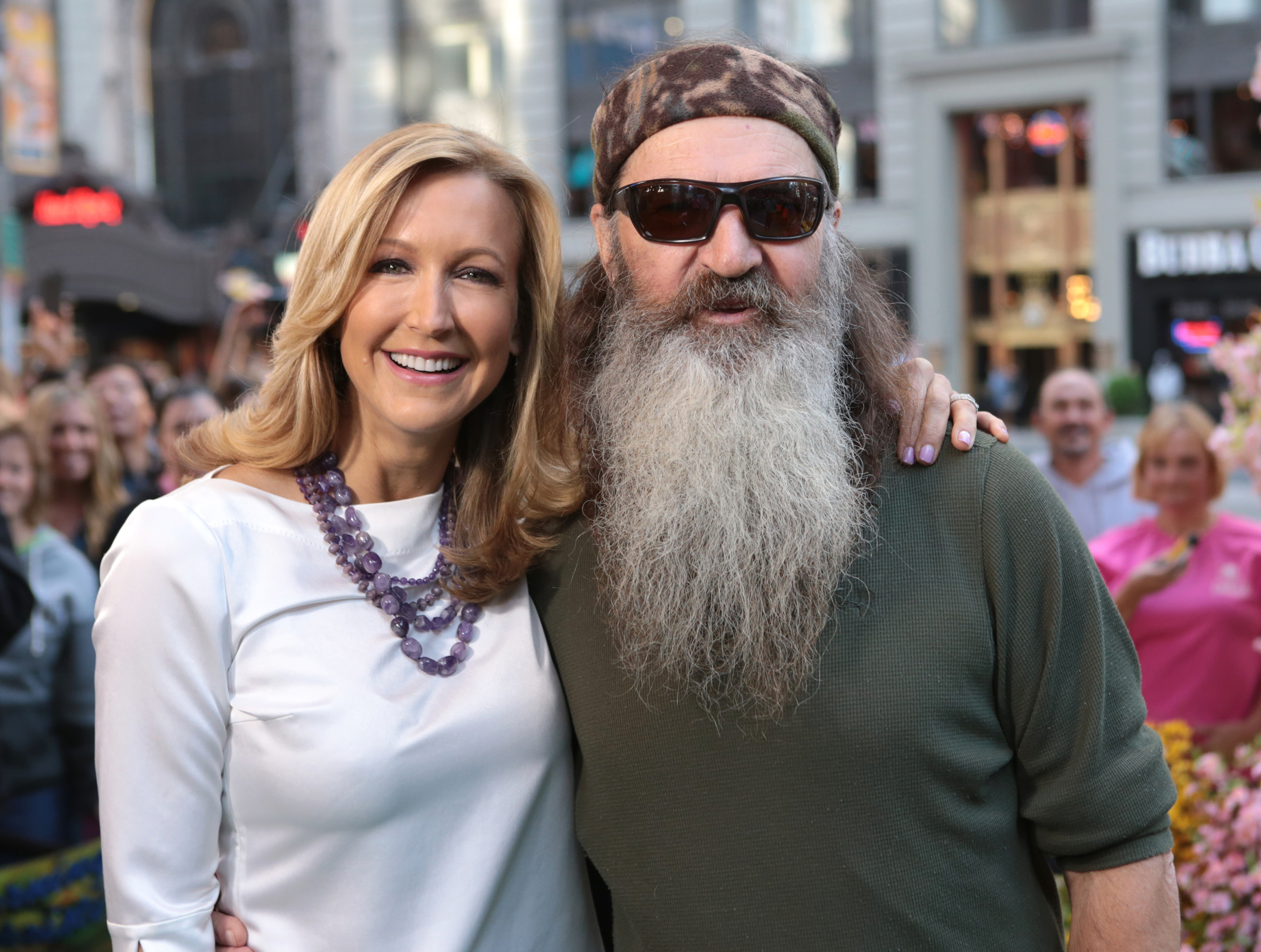
(Photo: Phil Robertson of ‘Duck Dynasty’ as a guest on ‘Good Morning America,’ 5/7/13, airing on the ABC Television Network. By Fred Lee/ABC via Getty Images.)
A new federal report (pdf) on adolescent drug use graphs the percentage of kids smoking marijuana over time:

The report (NYT) finds that more high schoolers smoked weed this year than last year and that fewer view it as harmful. And the numbers of teens drinking alcohol, smoking cigarettes, and using other drugs have fallen:
The report raises concerns that the relaxation of restrictions on marijuana, which can now be sold legally in 20 states and the District of Columbia, has been influencing use of the drug among teenagers. Health officials are concerned by the steady increase and point to what they say is a growing body of evidence that adolescent brains, which are still developing, are susceptible to subtle changes caused by marijuana.
Phillip Smith argues that the data don’t really support the headline:
There are short term ups and downs, but they seem to be of mainly rhetorical and polemical significance. If you look at the handy tables at the end of the report, you see that combined lifetime marijuana use for all three grades (8, 10, and 12), was at 30.7% last year, about the same as it was in 1995 (31.6%) or 2005 (30.8%). Much happens, but little changes. Ditto for annual use: 26.1% in 1995, 23.4% in 2005, 24.7% last year. Ditto for monthly use: 15.6% in 1995, 13.4% in 2005, 15.1% last year. Ditto for daily use: 2.7% in 1995, 2.9% in 2005, 3.6% last year. The daily use figures could be alarming (“Daily Teen Pot Smokers Up 25% Since 1995”), except the trend-line is not steadily upward, but varies from year to year (it was 3.7% in in 2001 and 2.7% in 2007).
NORML also pushes back against the media narrative:
Overlooked in the mainstream media’s reporting is that the use of both alcohol and tobacco among all grades surveyed has fallen consistently since the mid-1990s and now stands at all-time lows. (In fact, more teens now acknowledge using marijuana than cigarettes, the study found.) Teens are also finding alcohol to be less available and are far less likely to engage in binge drinking now than ever before. By contrast, teens self-reported annual use of cannabis has largely held steady since the late 1990s but remains elevated compared to the historic lows reported in the earlier that decade. (Present use levels, however, still remain well below the highs reported in the late 1970s.) Approximately 8 out of 10 12th graders surveyed said that marijuana was “fairly easy” or “very easy” to obtain, a percentage that has remained largely unchanged since 2009, but is well below previously reported highs circa the late 1990s. …
And what no public officials wish to acknowledge is the obvious elephant in the room. The reality that an increasing number of teens are steadily turning away from the legally regulated intoxicants alcohol and tobacco — a factoid that once again affirms that the most effective way to keep substances out of teens’ hands isn’t through criminal prohibition; it is through legalization, regulation, and public education. So why does the federal government (as well as the mainstream media) acknowledge the effectiveness of this strategy when it comes to booze and cigarettes, but continue to turn its back on these common sense principles when it comes to pot?
Sullum focuses on the oft-parroted trope that legalizing pot sends the “wrong message to children”:
Looking at annual, past-month, and “daily” use (meaning use on 20 or more of the previous 30 days) among eighth-, 10th-, and 12th-graders, you can see there were some slight increases and slight decreases, but none of the changes was statistically significant. “These findings should put to rest any claims that reforming marijuana laws and discussing the benefits will somehow contribute to more teens using marijuana,” says Mason Tvert, director of communications at the Marijuana Policy Project (MPP). “It’s time for prohibition supporters to stop hiding behind teens when debating marijuana policy.”
Pete Guither adds:
One third of 12th graders get their marijuana from someone else’s medical marijuana…. Um… think about it. Would you rather they had gotten it from a criminal dealer?
Rob Ford: the gift that keeps on giving. Update from a reader in Toronto:
In the past two days, Rob has issued three apologies and danced to Bob Marley in the Council chambers. He indeed keeps on giving. His powers have been largely removed by Council, so he’s turned to performance. I think of him now as the civic mascot.