
Beaverton, Oregon, 7.40 am
Beaverton, Oregon, 7.40 am
Some of it is calculated:
https://twitter.com/jetpack/status/558468003315335169
But some of it is subconscious, as Eric Posner explains:
To investigate the role of motivated reasoning in the sort of institutional flip-flops that politicians and judges engage in, Harvard Law School professor Cass Sunstein and I conducted a series of surveys. In one, we asked people whether President Bush acted rightly by using a loophole to make appointments in defiance of Senate opposition.
Most Republicans said he did the right thing while most Democrats said he acted wrongly. We then put Obama’s name in for Bush with a different group of respondents and asked the same question. This time the vast majority of Republicans opposed the appointments while most Democrats said he did the right thing.
We posed a similar question about use of the signing statement—Bush’s and now Obama’s controversial practice of signing a bill while stating that he will not enforce portions of it. Again, Republicans were more sympathetic to the practice when the question invoked Bush, Democrats when the question invoked Obama.
Like the football fans, most partisans see a neutral process in a favorable light if it advances their parties’ goals and in an unfavorable light if it does not. And this is true even if partisanship is not salient. We asked another group of respondents whether they supported same-sex marriage and whether they thought Congress could either mandate nationwide recognition of same-sex marriage or prohibit states from recognizing same-sex marriage. Same-sex marriage supporters were much more likely to believe that Congress could mandate it than ban it; opponents believed the opposite.
We call this phenomenon “merits bias”—a bias in favor of evaluating a rule or institution in terms of whether it advances one’s political goals. We suspect that some politicians and even judges suffer from merits bias while others cynically exploit merits bias in the general public. Many Democrats really do believe that the filibuster is justified when it blocks Republican nominees and not when it blocks Democratic nominees. And the same with Republicans. Political operatives and sophisticated observers know it’s a game, but most people don’t.

Katy Steinmetz sees a bright horizon for pot smokers and lovers of liberty:
A new report [from ArcView Market Research] predicts that 18 U.S. states will have legalized recreational marijuana in the next five years, a huge increase from the four states that currently have or are in the process of creating legal markets for pot. …
The map has a lot of overlap with the places where the Marijuana Policy Project (MPP), the group that helped launch legal weed in Colorado, already has workers on the ground in preparation for legalization votes over the next two years. Yet MPP is a bit more cautious in its outlook: the group believes 12 states could join Colorado, Washington, Oregon and Alaska in allowing recreational pot by 2017. Unlike ArcView (whose executive director sits on MPP’s board), they’re not banking on legalization taking root in Montana, New Jersey or Connecticut over the next few years, according to spokesperson Morgan Fox. He says they’re concentrating current efforts in Arizona, California, Maine, Massachusetts and Nevada. They see Texas — yes, Texas —as an outside possibility.
Know dope.
Max Ufberg looks back at the first week of The Nightly Show:
So far, [host Larry] Wilmore has already mocked the Academy Awards, poked fun at Al Sharpton, and taken down Bill Cosby (“That motherfucker did it”). The response has been favorable. Critics have praised Wilmore’s affability and wryness, even his “ideological unpredictability.” He has, as the New York Times’ Alessandra Stanley puts it, “a disarming way of laughing at his own jokes and those of others.” The show’s closing Bill Maher-style roundtable discussion format, while less of an immediate hit, certainly offers long-term potential.
Genetta M. Adams observes that Wilmore “comes at current events in the same manner that brothers at the barber shop or sisters at the hair salon do: straight up and no-holds-barred”:
And even if Wilmore’s takes on topics like Cosby aren’t particularly new, as Slate’s Willa Paskin rightly points out, “There has previously been no black perspective on late night to take these subjects on with such matter-of-fact vigor.” His signature segment, “Keep It 100,” can lead to some squirm-in-their-chairs moments for panelists who have to answer a question honestly or face the prospect of getting some “weak tea”—literally—as they’re handed tea bags. Rapper-activist Talib Kweli had such a moment when he was asked, “When it comes to black images, is hip-hop part of the problem or part of the solution?” …
Variety’s Brian Lowry wondered if The Nightly Show’s format and edgier take on the day’s news would make the show a “no-go zone” for newsmakers and celebrities who wanted to pitch their movies or books. But who cares? The last thing late night needs is another show for celebs to pimp their products.
Rawiya Kameir makes another key point:
One of Wilmore’s most important and praiseworthy attributes is his implicit acknowledgment that “minority issues” are really just American issues, and that they deserve to be treated as such.
Through a nightly panel segment comprised of actors, comedians, and journalists, Wilmore avoids the common host trope of filtering the world solely though his own worldview; instead, he allows a diverse group of guests to explain their own identities and perspectives. At the show’s core is a commitment to the idea of purposeful conversation, rather than the moral superiority that comes with being right.
Eric Thurm also considers the substance behind the laughs:
[T]he real center of attention is the dynamic between the panel members and the strength of their arguments — “The proof is common sense,” as Wilmore puts it. Though there are jokes, there’s also a sincere conversation about the implications of patriarchy and the way Cosby’s celebrity contributed to a collective unwillingness to believe his accusers, motivated largely by Ebony digital editor Jamilah Lemieux, who gets to make points about the way women who accuse men of rape are marginalized (when was the last time a rape victim got anything out of lying?). So the veneer of a comedy show allows the expression of uncomfortable truths and opinions in honesty. During the segment explicitly devoted to honesty — “Keep It 100” — there was a real, off-the-cuff fight between Keith Robinson and Baratunde Thurston over the relative importance of Thurston’s integrity and racial identity that was entertaining, revealing, and passionate. It was excellent television.
Watch that full segment here, with a segment of that segment above. Pilot Viruet points to another strength of the show:
What’s great about The Nightly Show‘s panels is that, as heated as the discussions may get, they are never disrespectful and they never get out of hand. Much of this is due to Wilmore himself, who knows how to moderate these hot-button panels, and how to rein in his guests without shutting them down. He has a very specific, calming cadence. As David Sims at The Atlantic (who was my guest for Tuesday’s taping) puts it, Wilmore is “a mellifluous radical who would say all kinds of hilarious, outrageous things that you’d barely notice because he did it so sweetly.”
And he’s not afraid of dissent:
[A]t the end of every episode, Wilmore invites Twitter to ask him questions so he too has to “Keep it 100.” This forces the host to think on his feet in response to tough queries — about race, Cosby, Obama, etc. — and keeps the show fair, because Wilmore knows that he is not exempt from the tough shit, either.
And Todd VanDerWerff notes the most obvious though no less important quality of The Nightly Show:
[U]ltimately, it’s just cool to have a show devoted to issues of interest to America’s racial minorities that primarily features those racial minorities. When white comedian Bill Burr made a joke on the panel in Monday’s debut episode about “speaking for all white people,” it was so funny precisely because the show often slots white men into the “token” roles minorities would play on other shows. There’s a fun subversiveness to this that The Nightly Show will surely play with in weeks to come.
We can’t argue with this contribution:
Humanity’s greatest invention? That’s obvious.
Dogs.
Think about it. Wolves are terrifying, but no animal is more loving than a dog. Wolves compete with us in the food chain – even hunt us in the food chain! – but dogs have an ancient tradition of being our best hunting partners. They could rip out our throats, but all they want to do is please us. What other animal is eager and effective at offering comfort in times of grief? And they’re often better at it humans.
Frankly, I like dogs a lot more than I like people. One of the few times I’m wary of a dog is when I see one being walked next to a baby in a stroller. It’s hard to know what that dog will do if you get too close to the baby. And when you think about it, doesn’t that really say it all?
The above video says even more. Another reader on the question at hand:
Indoor plumbing. I know there is a God because I don’t have to shit in the woods. So no one needed to invent religion. All we needed was indoor plumbing and you kill two birds with one stone.

A lot of readers can relate to this state of mind:
My daughter, who is a graduate student in England, says that the rush to buy bread, milk, and eggs before a storm is referred to there as “the French toast panic”.
Another suggests a different meal:
On one level, I can see this as a reasonable approach; with those three staples, you can make a reasonable meal of toast and omelet, providing you have power or a working cooking surface (like a propane grill). You can even keep them fresh in a power outage by simply putting them out in the snow by your door.
I think the urge to get these particular supplies is strongest in a certain age group: those who grew up in the Depression through the early 1950s, when such commodities were delivered daily to your door … and a major storm could halt deliveries for a few days.
A few more readers sound off:
It’s not about hunkering down. It’s about milk, bread, and eggs being items that have to be bought frequently.
I don’t need to make the pre-storm run on canned goods because I already have them. We have tons of soups and other canned goods because we stock up on those at Costco precisely because they have a long shelf life. Milk doesn’t have a long shelf life, so I run out of it and do need to pick some up every week. Plus my picky two-year-old might fight me on the non-perishable items, but she will always drink milk, so I know she is at least getting some nutrients.
Another turns south:
Watching the cable news channels yesterday afternoon, I seriously kept getting the urge to run out and buy emergency supplies … and I live in Palm Springs. It reminded me of my time living in Miami and the contagious panic-shopping people would do before hurricanes. I had gone to the drugstore on my lunch break (on a gorgeous sunny afternoon) and they were completely out of toilet paper. When I asked the cashier why, she replied “Because of Frances.” I said “Who is Frances?”, thinking it was a woman who hadn’t shown up for her shift or something. “No! The hurricane!” she told me. Frances was still at least three days out in the Caribbean, but people were already panicking … not just buying a few supplies, but stocking up like it was the apocalypse. Of course, I spent the afternoon driving to various stores until I found some TP for myself.
Update from a reader:
I am glad to know that I am not the only person with the hunker mindset. And I admit storms aren’t the only thing that cause me to panic. All I have to do is read a post-apocalyptic novel, which not only makes me feel inadequately stocked, but completely ill-prepared for a dramatic lifestyle change. After finishing Station Eleven (an account of the world after a devastating flu wipes out 99% of the population) and the last segment of David Mitchell’s Bone Clocks (which describes in vivid detail the struggles of living in a society where there is no power), I desperately needed a trip to Costco to buy every basic good I could find. I’m embarrassed to admit I did “hunker down” buying extra batteries, extra soap, extra ibuprofen, extra Neosporin, extra toilet paper – never mind that most of this stuff will go bad in a few years, and be depleted in no time if there ever really is a societal breakdown (assuming I don’t get raped, pillaged and murdered first).
My husband just shakes his head at me (rightly so). But, no doubt – it made me feel better even though I know the feeling of being “safe” is only illusory.
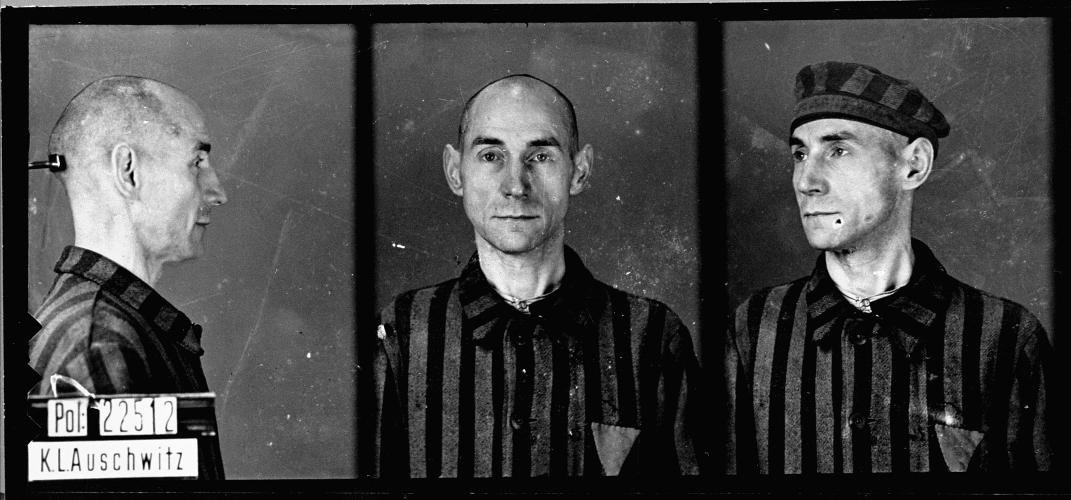
Liam Hoare reflects on yesterday’s 70th anniversary of the liberation of Auschwitiz:
Whether at the cement plant in Sachsenhausen, the underground V2 rocket factory in Buchenwald, or the stone quarry at Flossenbürg, homosexuals were subject to deadly assignments and a scarring, bone-shattering system of punishments. Sixty percent of gay internees died in the camps.
For those who remained alive, humiliation was an inevitable part of daily life. The Polish LGBTQ rights activist Robert Biedroń notes that homosexuals in the camps “were forced to sleep in nightshirts and to hold their hands outside the covers,” ostensibly in order to prevent masturbation. In Flossenbürg, homosexuals were required to visit female prostitutes—Jewish and Roma prisoners from a nearby camp—as a form of treatment. “The Nazis cut holes in the walls through which they could observe the ‘behavior’ of their homosexual prisoners,” Biedroń writes.
(Photo: Mug shot of homosexual Auschwitz prisoner August Pfeiffer, servant, born Aug. 8, 1895, in Weferlingen. He arrived to Auschwitz Nov. 1, 1941, and died there Dec. 28, 1941. From the State Museum of Auschwitz, Oswiecim, Poland)
Readers keep the thread going:
In discussing how the sitcom Friends dealt with homosexuality, it is important to note Episode 11 of Season 2, which was titled “The One With The Lesbian Wedding”. It’s funny that even though it was 1996 there was no mention of “commitment ceremonies” or “domestic partnerships”. It was a wedding, plain and simple, no questions asked.
A few more readers delve deeper into that episode and others:
Yes, Chandler at times goes too far in some of his jokes and comments – and actual living. But he also has an incredibly endearing relationship with Joey that he is never afraid to express – largely through hugs, but also through actual words. Their love may not be sexual, but it is real, and unconditional – a bromance not really rivaled until JD and Turk on Scrubs. I know it’s not the same – but Friends does show a tight, healthy friendship between two guys without fear of homophobic reactions. And Chandler continues to evolve, especially after he gets married, embracing his less-than-“manly” side and not making the same kind of jokes.
Also, Friends was the show that featured a gay wedding – and did not play it for laughs.
Ross even had to talk this former wife into going through with the ceremony after her parents didn’t support it. And then, he walked her down the aisle. Yes, Phoebe did have one laugh line during the ceremony, and yes, Chandler also has his comment, but the relationship was presented as real and loving throughout the entire series. Carol and Susan raised Ben (based on the number of scenes Ben was in with Ross, we can only assume that Carol and Susan had main custody), and that was never, ever brought up as a bad or weird or odd thing. It just was. The harshest comments about Carol and Susan came with a jealous Ross who was still in love with Carol. But, again, he’s the one who convinced her to go through with the ceremony.
Watch a great moment with Susan and Ross above. Another reader:
Friends put forward a “new” type of family long before Modern Family was a gleam in anyone’s eye. It showed Ross as being hurt and confused, but ultimately loving and respectful. It showed incredible sympathy for Carol, who was clearly understanding of the pain she caused Ross, but also confident and free. AND, most importantly, it showed sympathy and respect for Susan, who could have easily been portrayed as the lesbian homewrecker. All of this in 1994 – you know, the same year President Clinton was fighting to make the military safe from gay men and women coming out of the closet.
So yeah, Chandler and Joey make a few jokes (anyone who honestly thinks these two were written as models for how men should behave should really step away from their TVs for a while). And maybe we shake our heads at them now, the same way we do Eddie Murphy routines, Mel Gibson movies, and countless others. But to write that piece with no acknowledgement whatsoever about what Friends did in showing gay characters at a time when it was not as safe (or profitable) to do so, is just wrong.
Another notes about one of the creators of Friends:
I personally know David Crane. He is an out, proud gay man, and always has been. I met him BEFORE Friends was created. That show is homophobic? Bullshit.
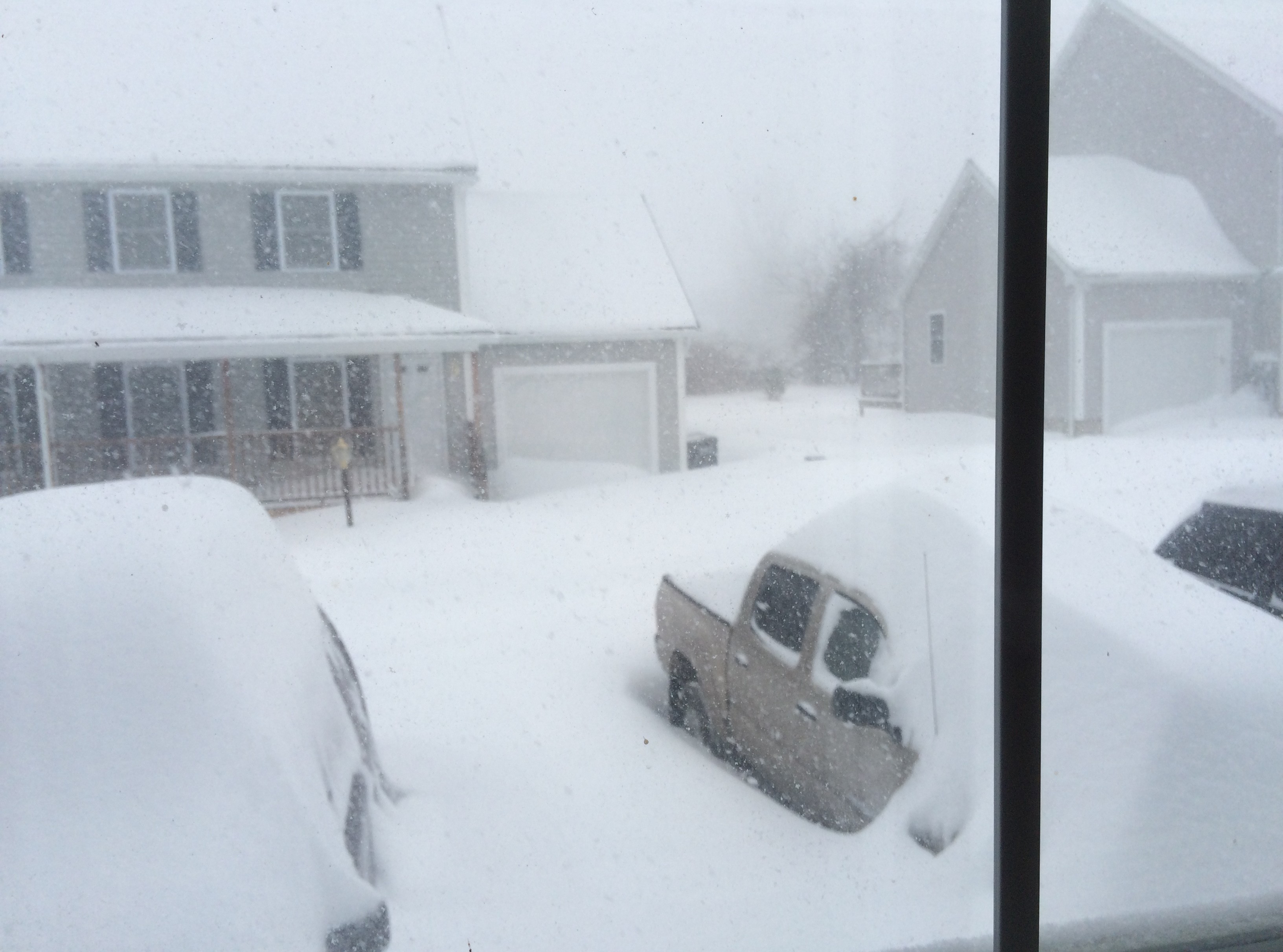
Littleton, Massachusetts, 9.20 am. Many more below:
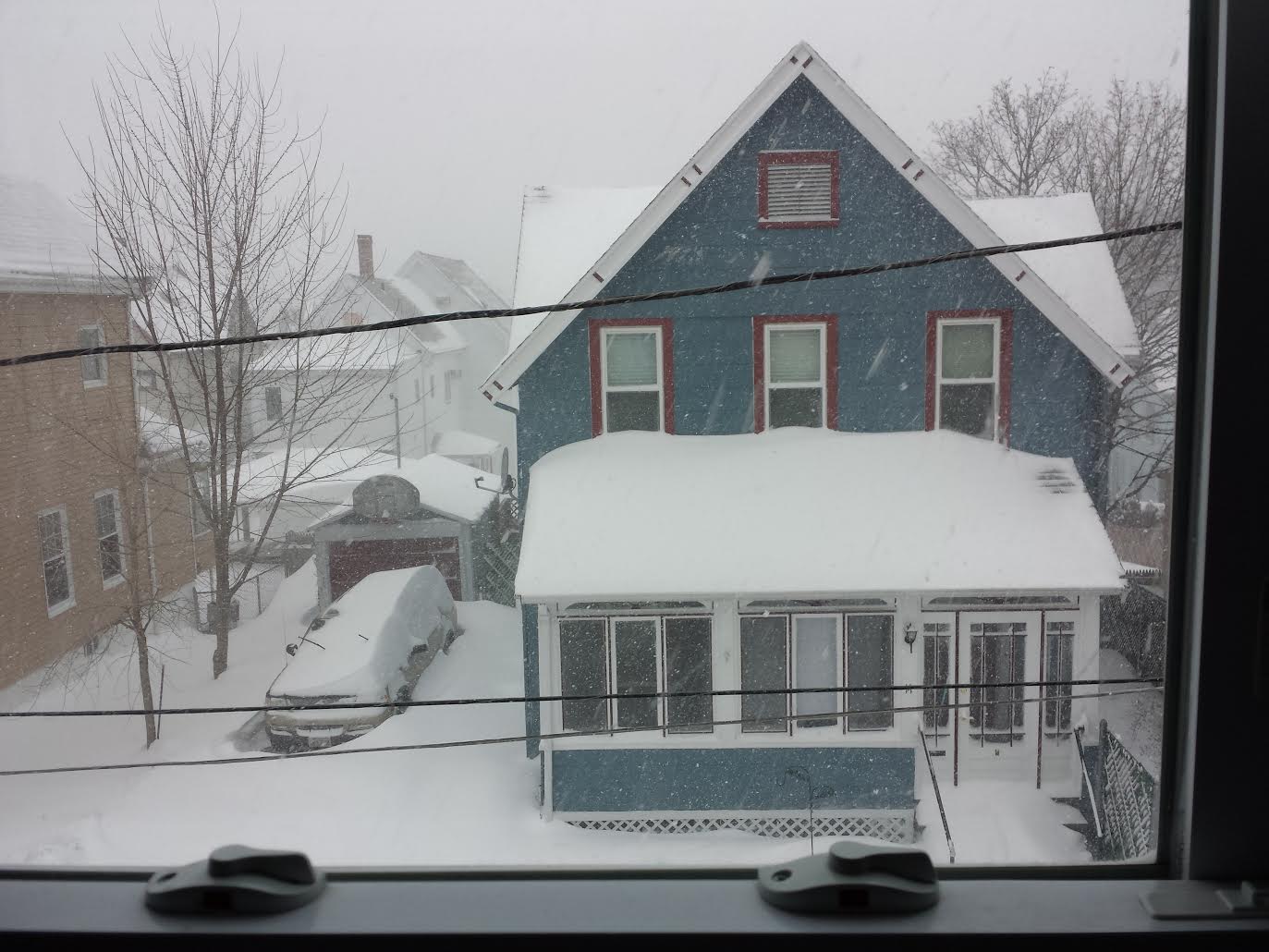
Malden, Massachusetts, 11.30 am
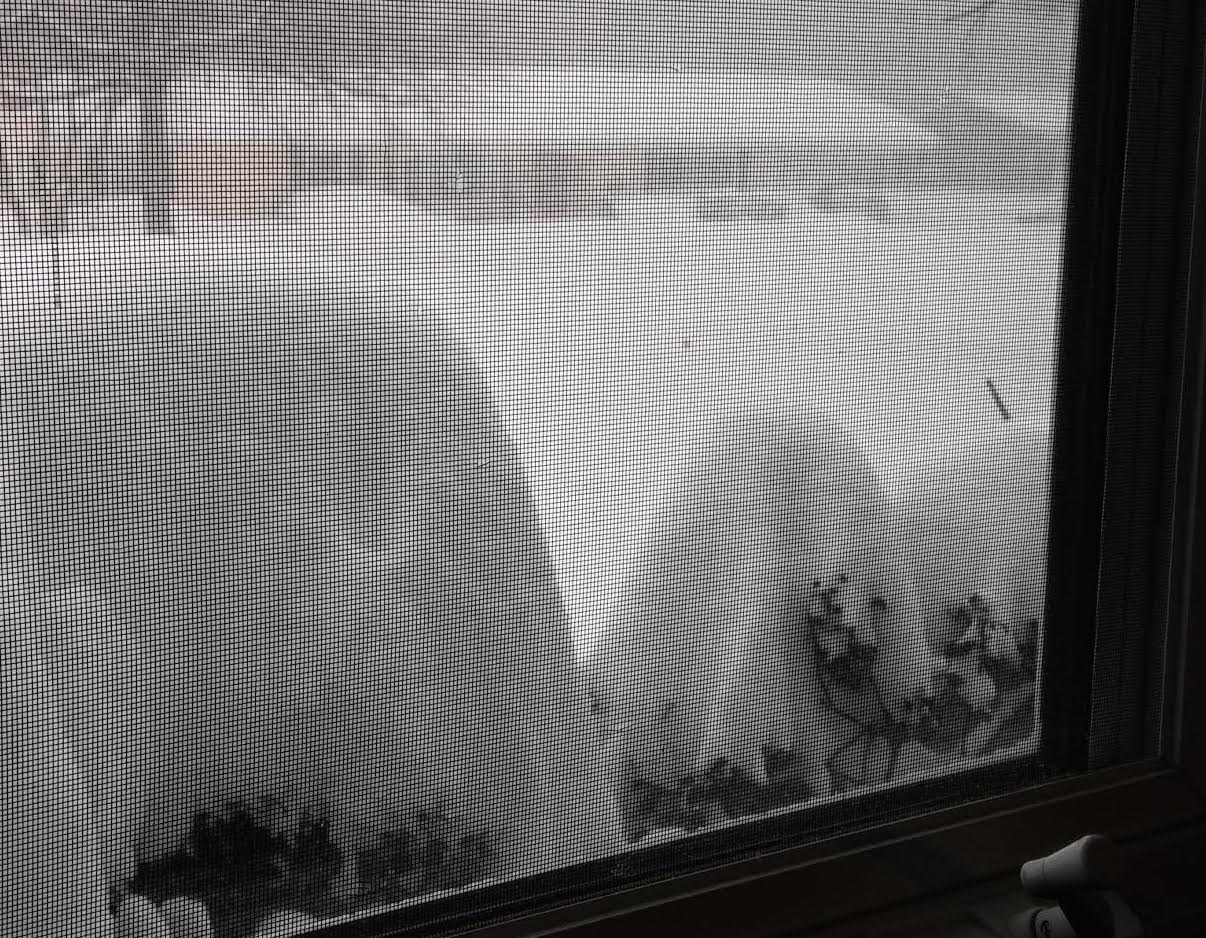
Framingham, Massachusetts, 9.10 am

Cambridge, Massachusetts, 12.20 pm

Topsham, Maine, 11.30 am

Concord, New Hampshire, 9.38 am

Portland, Maine, 3.17 pm

Hull, Massachusetts, 9.30 am

“Okay, fine, it’s not really the view from my window. Just a cranky NYer. Martial law for 8″ of snow – thanks, de Blasio.”
Sargent spots a divide in the GOP presidential field:
Marco Rubio, Mitt Romney, and Jeb Bush are calling for respect for the courts’ decisions on this matter and/or respect and understanding for people on both sides of the issue. But Ted Cruz and Bobby Jindal are suggesting continued resistance; both have talked about a Constitutional marriage amendment.
He wonders how this will impact the primaries:
Candidates who are striving for (relative) moderation on gay marriage, such as Bush, Rubio, and Romney, are framing their position as rooted in conservative values: Respect for the rule of law and/or for those (even gays and lesbians) who want to enshrine lifetime commitments to one another. Will that assuage GOP primary voters?
Perhaps, as Ross Douthat has suggested, continued resistance wouldn’t gain any traction among Republican primary voters in any case, largely because even many religious conservatives think this cultural battle is already lost. But if opposition to marriage equality does indeed remain deep among evangelicals, it could prove a tempting exploitation target indeed for the likes of Cruz and Jindal.
Whatever happens, Suderman expects that this will be last election where marriage equality is a factor:
Depending on who wins the Republican primary, that debate will probably bleed into the general election campaign to some degree, although I wouldn’t expect it to be a major issue, unless the GOP candidate really fumbles the response or decides to make it a major issue—which, given the way the polls are running, is probably not a great idea.
After that, however, I suspect that it will be over. Not over in the sense that no one in America ever speaks a word in opposition to gay marriage again, but over in the sense of it being a meaningful political issue. As Ross Douthat has suggested (and as Sargent notes), evangelicals may simply view the fight as lost and decide to let the issue rest.
But more than that, Republican candidates are likely to have a harder time generating support by opposing gay marriage, because there are likely to be fewer and fewer Republican voters who oppose it.
 The Dish