Studying Abroad In Autocracies

Jackson Diehl worries about the integrity of American universities as they expand into “unfree countries whose governments are spending billions of dollars to buy U.S. teaching, U.S. prestige — and, perhaps, U.S. intellectual freedom”:

In September a joint venture between Yale and Singapore will open on a campus built and paid for by that autocracy. Then there are the Persian Gulf states. The United Arab Emirates hosts branches of Paris’s Sorbonne and the Louvre and Guggenheim museums in addition to NYU. While funding jihadists in Syria and Libya, Qatar is on its way to spending $33 billion on an “education city” hosting offshoots of Cornell, Georgetown, Northwestern, Texas A&M and Carnegie Mellon.

Is it possible to accept lucrative subsidies from dictatorships, operate campuses on their territory and still preserve the values that make American universities great, including academic freedom? The schools all say yes, pointing to pieces of paper — some of them undisclosed — that they have signed with their host governments. The real answer is: of course not.

Drezner puts things in perspective:

I’d suggest that one’s attitude about this phenomenon depends on whether you’re concerned about a particular American university or about U.S. foreign policy.

If you care about the intellectual integrity of, say, NYU or Yale, then Diehl and [Anya] Kamenetz raise some pretty valid concerns.  Clearly, intellectual life in these satellite campuses is different from intellectual life in the home institution.  I’m more dubious about assertions that these differences will somehow “infect” the state of academic free speech in the United States, however.  Sure, these campuses are moneymakers for U.S. universities, but the bread and butter of higher ed’s revenue stream remains tuition and research dollars from the advanced industrialized states.  I suspect administrators in state schools fear their own legislatures more than the implications of going overseas.

On the other hand, from a U.S. foreign policy perspective, matters are less clear.  Diehl’s worldview is sympatico with the idea of spreading American values across the globe.  His column provokes a question:  is the likelihood of that spread of liberal values stronger or weaker with these kind of activities?  The counterfactual of no U.S. higher education involvement in authoritarian capitalist economies would be less discussion of the liberal arts in these venues.

Discrimination On The Lot

Derek Thompson is troubled by research “that finds merchants charging different prices to different people based entirely on their race and gender.” He writes that the “best weapon against sexist and racist pricing tactics is to arrive at the negotiating table with a price of your own”:

A study by economists Meghan R. Busse, Ayelet Israeli, and Florian Zettelmeyer looked at car repair shops and found that women tend to be quoted consistently higher prices than men when the callers didn’t mention a price. The most reasonable explanation, as Nanette Fondas explained on TheAtlantic.com, was that repair shops believe women are less informed about prices than men. So they’re gullible. But get this. When women and men suggested a price — any price, fair or too high — both genders got the same offer. Just saying a number closed the price gap. Once the mechanic had data telling him exactly how well-informed his potential clients were, gender was no longer “a useful basis.” In fact, repair shops were more likely to offer a price concession if asked by a woman.

Kicked Off Kickstarter

Reddit user Ken Hoinsky was running a successful Kickstarter campaign for his book Above the Game: A Guide to Getting Awesome With Women when controversy erupted over what some saw as the sexist and potentially dangerous nature of its contents – as a “guide for rape.” In response, Kickstarter issued an apology, banned “seduction guides” from its platform, and donated $25,000 to RAINN. Hoinsky, seen above, was disappointed in Kickstarter’s decision:

They’re a private company and they can do whatever they want, but it’s a cop-out, and it’s an overreaction on their part.

Maria Bustillos sympathizes with his situation:

No one has a “right” to Kickstarter. Out in the real world, however, we know that the rights to publish and speak are ten thousand times more important than the overheated rantings of some fool who can’t read. As PUA [pick up artist] guides go, Hoinsky’s is very, very far from being the most aggressive or objectifying. It is an entirely harmless book—as all books are. … [I]t is wrong and dangerous to suggest that shutting someone up is the best answer to any problem, ever.

Kat Stoeffel counters that “it’s okay to hate” Above the Game:

Hoinsky’s book may not be a rape manual, but it is a guide to exploiting the less-than-ideal conditions under which women have sex. It doesn’t hamper anyone’s free speech to say he’s unqualified to write about women to the point of being bad for them — or criticize Kickstarter for profiting from it.

Emily Greenhouse zooms out:

[T]he removal of Hoinsky’s project from Kickstarter might initially seem like a violation of free speech. But the right to publish is quite different from the right to speak, particularly on a platform like the Web. It’s the difference between a fundamental right and a market proposition. … It isn’t Kickstarter’s responsibility to endorse every project that it posts, and it isn’t Twitter’s responsibility to stand behind everything that’s tweeted. But their business models are built on the creations of others. Kickstarter skims money off of each successful project. What Kickstarter was made to realize, and what these other companies have already learned, is that when you profit from something, even if you don’t condone it, you’re complicit.

Will Support For Equality Slow?

Nate Cohn expects so:

When people discuss the inexorable rise of support for gay marriage, they talk about it like racial integration. The supporters of Jim Crowe were routed: it became impossible to publicly support segregation, and the opposition eventually died or flipped. But there’s another possibility: that gay marriage is somewhat more like abortion, where an entrenched minority remained steadfastly opposed, largely for moral and religious reasons. So far, the data suggests that gay marriage will be more like abortion, at least for a while.

Evangelical and Republican opposition to same sex marriage hasn’t budged.

According to Pew Research, Republican support for gay marriage has only crept up by a net-7 points since 2003, from 22-71 to 25-67. White evangelicals have moved a little quicker, but they still oppose by a 75-19 margin—a net-15 point improvement from 2003. In comparison, the public as a whole has shifted 30 points toward gay marriage—despite being held back by Republicans and evangelicals. Generational change isn’t helping very much, either. Just 30 percent of 18-34 year old evangelicals support gay marriage, which isn’t a huge improvement from the 25 percent who supported it in 2003. Young Republicans are a little more supportive of gay marriage than young evangelicals, but they still oppose gay marriage by 15 points, 39-54.

The Reverse Of A Carbon Tax

This embed is invalid

Jodi Beggs criticizes recent efforts by Virginia and North Carolina lawmakers to levy a tax on hybrid cars to make up for their reduced contribution to gas taxes:

Economically speaking, both Virginia and North Carolina are saying that they want at least some of their residents to switch back from purchasing hybrid cars to purchasing regular gas guzzlers. The most frustrating part is that this makes perfect sense from a self-interest perspective – the state legislature certainly feels a lot more pain from having an increasing budget shortfall than it does from producing some more pollution that everyone else who doesn’t write stupid policy has to deal with. …

Here’s the problem, though – it’s one thing for a for-profit business or consumer to be self-interested and not do what is best for society unless it has the proper incentives to do so, but a main principle of government is that it is supposed to have a fiduciary duty to society and be immune to what would typically be thought of as profit pressures. In this way, both Virginia and North Carolina are failing – can’t you both just find something that imposes costs on society to tax instead?

When Innovation Was A Crime

Emma Green traces back the word “innovator” to when it wasn’t such a positive buzzword:

According to [Canadian historian Benoît Godin], innovation is the most late-blooming incarnation of previously used terms like imitation and invention. When “novation” first appeared in thirteenth century law texts as a term for renewing contracts, it wasn’t a term for creation — it referred to newness. In the particularly entrenched religious atmosphere of sixteenth and seventeenth century Europe, doctrinal innovation was anathema. Some saw this kind of newness as an affiliation with Puritanism, or worse — popery. Godin cites an extreme case from 1636, when an English Puritan and former royal official, Henry Burton, began publishing pamphlets advocating against church officials as innovators, levying Proverbs 24:21 as his weapon: “My Sonne, feare thou the Lord, and the King, and meddle not with them that are given to change” (citation Godin’s, emphasis mine). In turn, the pot-stirring Puritan was accused of being the true “innovator” and sentenced to a life in prison and worse — a life without ears.

The Best Of The Dish Today

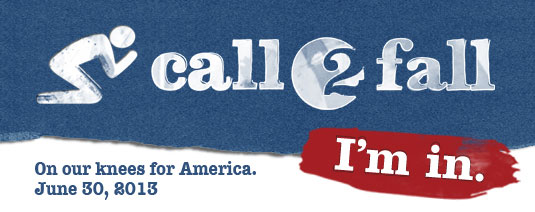
frc-on-our-knees-gay-marriageThe Christianist right unveiled their new slogan for overturning the Supreme Court’s ruling on marriage equality which, as is their wont, appears to include a dude giving a blowjob. “On our knees” for America elevates it; “I’m in” puts it way over the top. Congrats to the obvious mole in the Family Research Council who has been at this for ever. Not since Tea-baggers …

A paraplegic surfed; a moderate, conservative Justice maneuvered; I recalled Bill Clinton’s record as the most substantively and legislatively anti-gay president in history; the Inspector General of the IRS was caught in a possibly perjurious comment which effectively exposed the IRS “scandal” as an invention by … Darrell Issa for Roger Ailes. And the Catholic Bishops, in a rare moment of moral leadership, called on the president to end the forced-feeding at GTMO . Where were they when prisoners were being, you know, tortured?

The most popular post of the day was my reaction to the SCOTUS ruling on marriage, “I Believe”; the second most popular was my call for the IRS IG to resign.

See you in the morning.

Thirteen Down, Ctd

13colonies

A reader writes:

As long as we are engaging in marriage equality numerology, it should be noted that 13 is exactly the number of states that would have been required to defeat the Federal Marriage Amendment.  The amendment, which would have banned same-sex marriages in all 50 states, was first referred to the House Judiciary Committee 10 years ago this week, when no states allowed the practice.

Should NBA Players Dodge The Draft?

Travis Waldron thinks so. He explains why the draft – held tonight – is more problematic for basketball than it is for football or baseball:

The NBA Draft traces its origins to 1947, when the Basketball Association of America formed, and it followed the worst-team-picks-first model the NFL had established more than a decade before. Now, though, it’s effect on limiting the bargaining power of athletes is perhaps even more pernicious than the other drafts, since a top draft pick in the NBA has much more potential to change the fortunes of an entire team than a top pick in football or baseball. A baseball player is just one of hundreds in his organization. A football player is one of 53 on a roster. A basketball player, though, is one of just 13 on each team in a sport where an individual can single-handedly change the complexion of an entire team. … A top draft pick in the NBA may not win a title on his own, but he can certainly put a team on the brink of a title far faster. That means he’s worth more money to teams that desire his services — and it means he loses more money in a draft system that prevents multiple teams from competing for those services.

Yglesias is on the same page:

[The draft] is a convenient way for veterans and owners to conspire together to depress the wages of young players, but in the name of “competitive balance” it also creates a constant open-ended bailout of mismanaged teams and prevents best practices from spreading. Teams like the San Antonio Spurs and Denver Nuggets, who manage to work their way into the playoffs year after year, are hobbled in their ability to retain fresh talent, while squads like the Orlando Magic and Cleveland Cavaliers, who plainly don’t know what they’re doing, engage in a goofy boom-and-bust cycle of occasionally picking up superstar talent on the cheap only to see the star fly the coop because management can’t get it together.

This is all rationalized through a baffling argument about the needs of small-market teams that completely ignores the fact that the teams that are most disadvantaged by the draft system are well-managed small-market teams, who are being systematically denied the fruits of effective talent evaluation.