Some Suggestions On Gender Wars

Here’s a modest proposal that might help us bridge some differences: an avoidance of arguments in the gender debate that there is no legitimate debate to be had. There is always a debate to be had in any area of human inquiry or life – because most social and political questions weigh one good against another. So, to take an obvious example, the fight over “affirmative consent” balances the security of women from assault and rape against the due process rights of the accused. These things conflict in a liberal polity – because in a liberal world, moral, collective imperatives cannot properly come at the expense of individual injustice.

And it is simply a fact that there are cases of false allegations of rape, just as there are false accusations of every sort of crime. They’re very small in number, and we may exaggerate the problem, but they do exist. My instinct, for what it’s worth, in almost all these cases is to believe the woman. That goes for most alleged crimes and offenses regarding gender, including harassment in the workplace. Readers may have gotten the wrong impression from me about this, but from Anita Hill to Paula Jones, I’ve long supported the women’s side in some of these high profile cases. But there is always another side, and that requires some consideration. Even Bill Clinton deserved that. And what troubles me is the assertion by some on the fem-left side that there is only one side ever. And that even questioning that assertion is a sign of moral failure.

Take this piece from the Guardian today, lambasting Jed Rubenfeld’s nuanced take on the question in Sunday’s NYT. And notice not the engagement with another point of view, but a blanket dismissal of its right even to exist:

You might think that someone given a platform at the New York Times, like Yale law professor Jed Rubenfeld was in Sunday’s paper, might have done more than simply note that women are attacked “in appalling numbers” and colleges mishandle rape cases … The worst offense is Rubenfeld’s apparent belief that there is a “debate” to be had – as if there are two equal sides, both with reasonable and legitimate points. There are not. On the one side, there are the 20% of college women who can expect to be victimized by rapists and would-be rapists; on the other side is a bunch of adult men (and a few women) worrying themselves to death that a few college-aged men might have to find a new college to attend.

That echoes Ezra Klein’s endorsement of expelling male students accused of rape without due process. The contention is that it is neither legitimate nor reasonable to worry about someone being punished for a terrible crime he did not commit. And if this is something that worries you, then you really need to be educated by those more informed on the issue before you open your mouth:

If you can’t talk about rape without blaming victims, don’t talk about rape.

If you do happen to express concern about individuals losing due process in defending themselves from a charge that will follow them their entire life, you are one of the following: a male (ugh); a rapist-excuser; a rapist-enabler; or a “regressive rape apologist.” Or even worse, you are a “rape-truther” even if you cite three actual cases of alleged false accusations. The TPM piece that used that term did not prove that those cases didn’t exist, it merely insisted that they cannot exist. Remember “trutherism” was coined to describe delusional maniacs who believed the US government was behind the 9/11 attacks, despite massive, voluminous, unimpeachable evidence that this was not the case. But a college rape case we don’t even know the details of? This is a way not of engaging in debate, but of shutting it down.

Over the years, I’ve learned the various tricks to prevent free and open discussion: you’re not educated enough to talk about it; you’re male/female/black/white/gay/straight/Jewish/gentile or whatever and that disqualifies you from an opinion; you’re irresponsible even to raise the issue. But the over-arching theme is simply describing an argument as a moral delinquency rather than an intellectual mistake. If that is the nature of our public discourse, we are no longer in a discourse at all. We are in a church.

Will Obama’s Executive Amnesty Prove Popular?

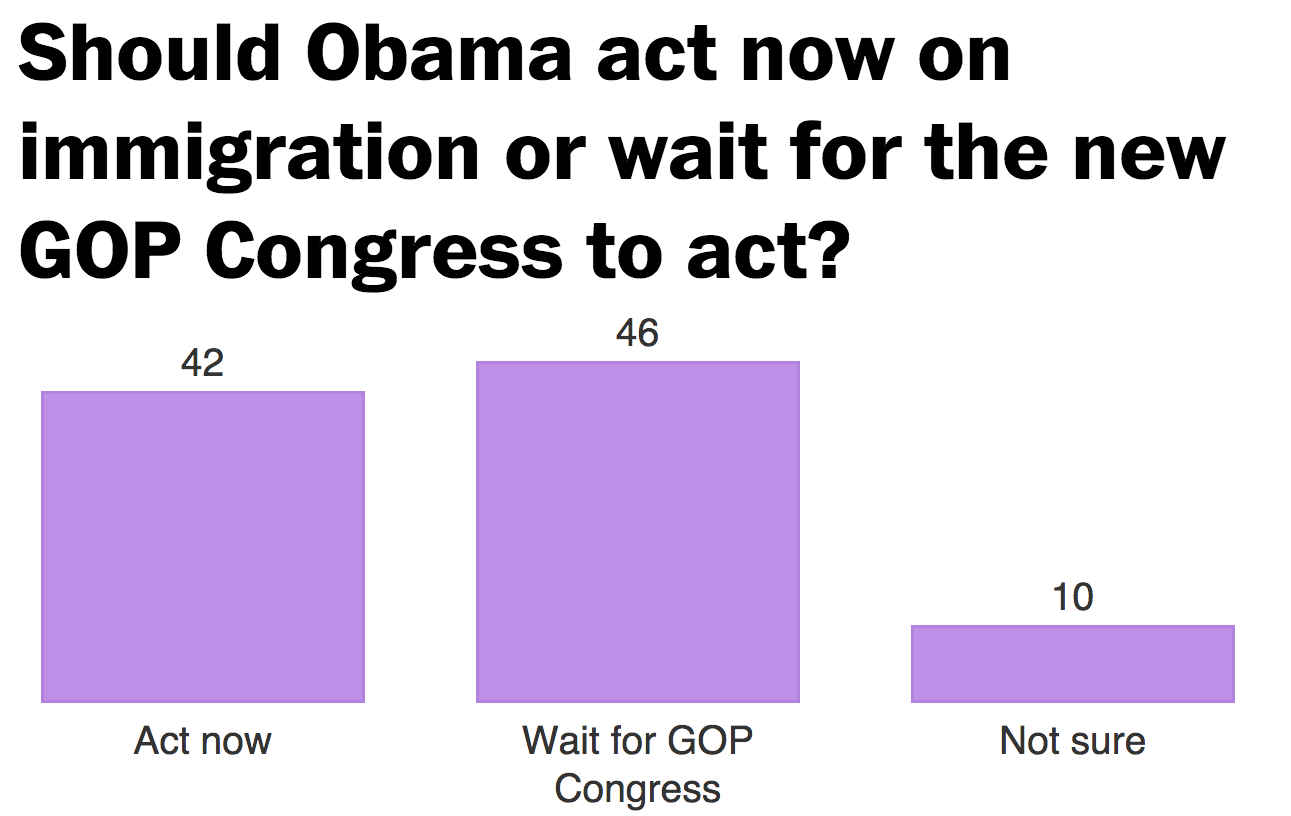
Should Obama Act

Americans are split on whether Obama should take action:

The split is somewhat counterintuitive, since a strong majority of Americans approve of what is likely to be the key element of the executive action: effectively legalizing millions of immigrants who are here illegally. As Post pollsters Peyton M. Craighill and Scott Clement pointed out over the weekend, 57 percent of those who voted on Nov. 4 favored legalization for these people, while 39 percent wanted deportation, according to exit polls. And even that split was actually narrower than most polls have shown.

But in politics, the process matters too, and many of those who otherwise support legalization also appear opposed to or hesitant about doing so without the regular checks and balances of the legislative and executive branches.

Yglesias bets that the executive action will help Democrats:

Hill staffers who believe in the political power of immigration reform point out that one of the biggest substantive drawbacks of executive action — its very tenuousness — is a political asset. What discretionary authority giveth, discretionary authority may taketh away, after all. If a Republican wins the White House in 2016, there will be no checks and balances to stop him from ordering the deportation of millions of immigrants granted relief by Obama. This dramatically heightens the stakes, not just for the immigrants themselves (who of course won’t be eligible to vote) but for their friends, family, coworkers, and employers.

Of course the higher stakes also involve higher stakes of backlash. But from the viewpoint of the party that benefits from higher turnout, the risk-reward ratio looks good.

Josh Marshall is on the same page:

If there are 5 million people who are affected by this order, the number of people who either have family ties to these individuals or affective relationships with them is much larger. I don’t know if it’s 15 million or 20 million or 40 million. But it’s a lot more than 5 million people who will feel acutely the fate of these people hanging in the balance with the 2016 election. And advocates on both sides of the immigration divide, deporters and pro-immigrant activists will press the issue throughout the 2016 cycle. The 5 million affected can’t vote and won’t be able to for years. But many family members, friends, community members and employers can.

Jennifer Rubin, on the other hand, argues that “it is essential that every Democratic senator and congressman in the new Senate take a vote (be it on the merits or on cloture of a filibuster) on the issue of executive action”:

At some point, they will need to face the voters and explain why they abdicated their responsibility and power to the executive branch. Maybe this is why Sen. Claire McCaskill (D-Mo.) declared about executive action on immigration, “I am not crazy about it,” although she blamed the GOP-controlled House for not acting on the issue. For someone who understood the voters’ intentions well enough to vote against Sen. Harry Reid (D-Nev.) as the new minority leader, surely she could see that the voters dislike unilateral action as much as they dislike the Reid era in the Senate. In any case, make each Democrat vote.

Frum selects another ripe target:

The president’s plan would be costly. The vast majority of those who would gain residency rights under the president’s reported action will be poor. Their low incomes will qualify them for means-tested social programs just as soon as their paperwork is in order. This will not be a small-dollar item. Forty-one percent of the net growth in the Medicaid population between 2011 and 2013 was made up of immigrants and their children. Legalize millions more poor immigrants, and sooner or later, programs from Medicaid to Section 8 housing vouchers to food stamps will grow proportionately. It’s not widely appreciated how much past immigration choices contribute to present-day social spending. In 1979, people living in immigrant households were 28 percent more likely to be poor than the native-born. By 1997, persons in immigrant households were 82 percent more likely to be poor than the native-born. Wittingly or not, U.S. immigration policy has hugely multiplied the number of poor people living in the United States. The president’s plan will put millions of them on the path to qualifying for welfare benefits.

Meanwhile, Bouie dubs Obama’s executive order a defeat for Republicans:

Democrats weren’t going to relent on immigration. Latinos are an important part of the Democratic coalition and key to the party’s effort to change the partisan dynamic in states like North Carolina, Georgia, Texas, and Arizona. And while Latino disappointment wasn’t determinative in this year’s elections, it’s dangerous for Democrats to delay action through 2016, both on the merits—there’s no guarantee of immigration reform in 2017—and on the politics; absent action on immigration, Latinos might just sit out the presidential election, dealing a blow to Democrats in key states like Florida, Colorado, and Nevada. (To that point, it’s no surprise that lawmakers from the latter two have urged Obama to move with executive action on immigration.)

Healthcare.gov Works – Finally

Waldman pays attention to the site’s success:

The news, an old saying goes, doesn’t cover successful airplane landings. But there’s one extremely notable successful landing happening right now, and unless you’ve gone to the inside pages of your newspaper, you might have missed it: open enrollment for the second year of the Affordable Care Act exchanges has begun, and in its first day, the federal exchange signed up 100,000 customers with only minor technical glitches.

But McArdle warns that this “open enrollment period isn’t the biggest test for Obamacare in the next 12 months”:

The biggest test will be what happens on or around April 15th.

That’s the first time all the people who didn’t buy insurance will get hit with the individual mandate penalty, and the ones who thought that it was a nominal $95 fee are in for a nasty shock. April 15th will also be the first time that people who got too much in subsidies are going to be asked to pay back some of that money.  I do not have hard figures on this, but my basic experience in personal finance and tax reporting suggests that approximately zero percent of those affected will be expecting the havoc it will wreak on their tax refund.  Brace for a wave of taxpayers angrily complaining to congressmen and their local newspapers.  The size of this pressure — and how the administration handles it — will tell us a lot about the future of this program.  As will Tax Day in 2016, when the penalties get bigger.

The View From Your Window Contest: Winner #231

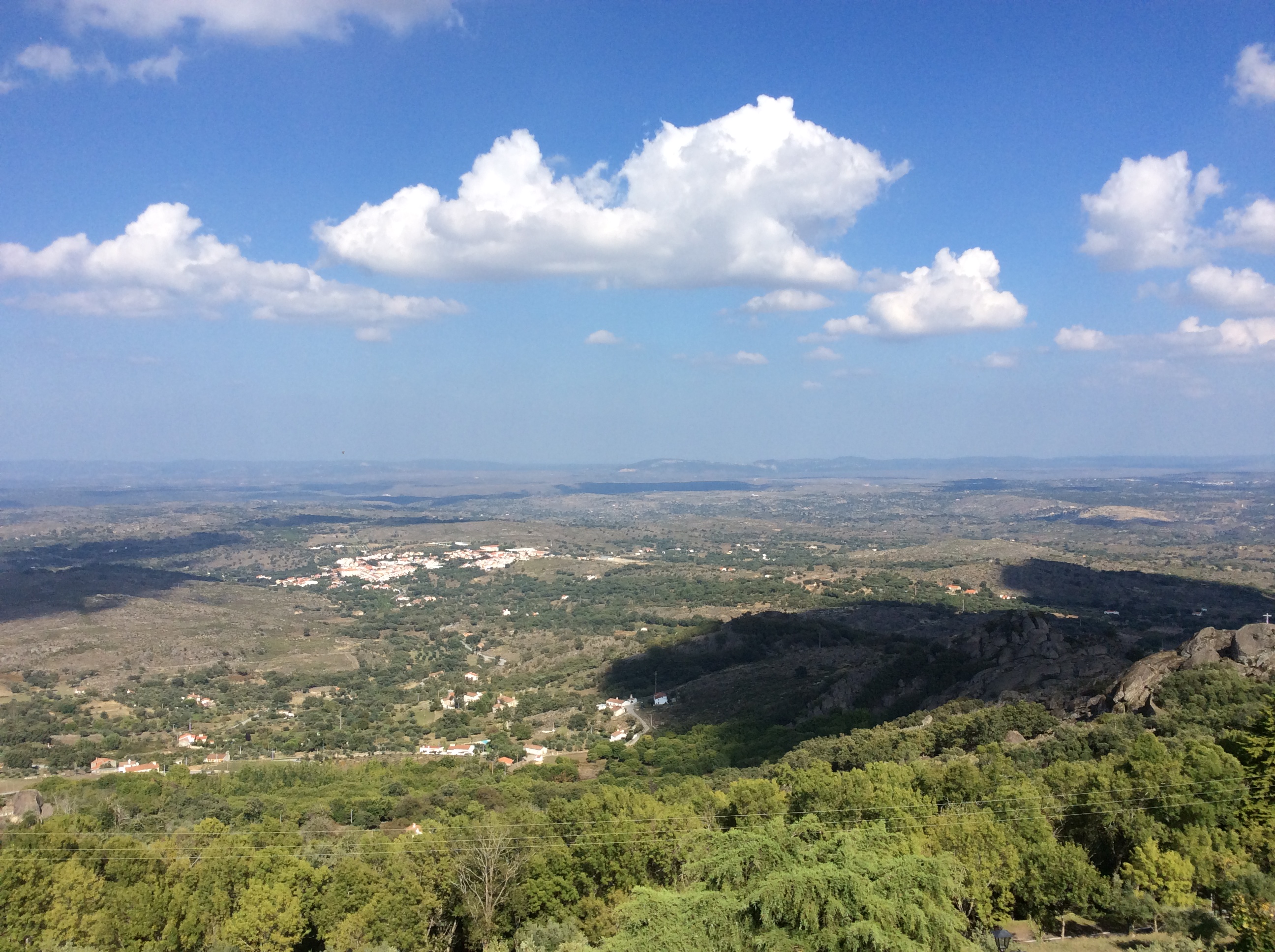
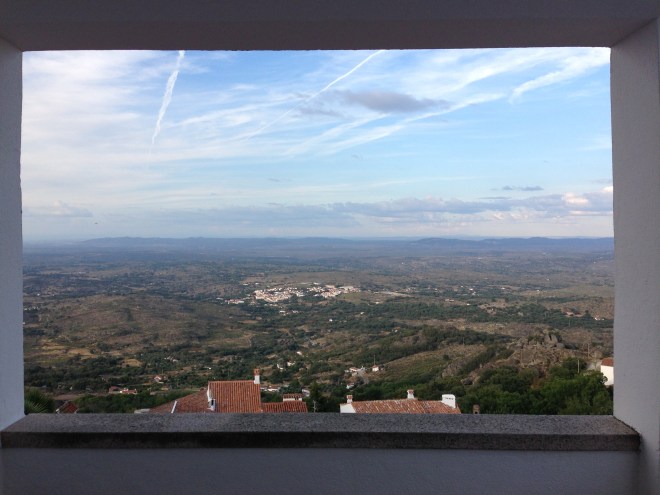
VFYW_C_231

A frustrated reader lashes out:

Jesus, could you get any more generic? Scrub brush, an outcropping with a wooden cross, telephone poles, white buildings with red-tiled roofs, a medium-sized range of hills in the background!? An image is beginning to crystallize in my mind of the typical winner of this contest. He is fat, bezitted, wears a carpel tunnel brace and cookie-crumb littered shirt. And he HAS NO LIFE!

So basically:

giphy

We love our contest players just the way they are. This one has a highdea:

Something tells me that Granada, Spain – right near the Alhambra. It could be intuition, it could just be the haze of a Saturday wake-and-bake.

Another is thinking the West Coast:

Joshua Tree National Park in Joshua Tree, CA. If that is not correct I am confident it is near there. I was at the Park two weeks ago and it certainly looks like it’s taken near the North entrance of the Park. The town in the background is Twentynine Palms.

Spinning the globe, this reader is going to need a nice red sauce:

When I first saw the contest picture, I said, “if this isn’t Italy, I’ll eat my hat.” Shortly thereafter, my dad found a white cross on some rocks just outside Palermo. Since then, I’ve found another similar cross in south Sicily. That, and the architecture, makes us 90% sure we’re in Sicily. The only other option is Tuscany, but the architecture there is softly different, and I doubt you’d return to Tuscany so soon after the Siena VFYW. Problems of terrain and building style — this window is so unique — mean we can’t find where. But I hope we’re close!

A sanguine reader adds, “Thank you for a few moments of Google touring Umbria – Cortona, Assisi, Abruzzi … it’s all good.” Most everyone correctly guessed some part of Europe this week, but this reader takes us to the right country, albeit the wrong town:

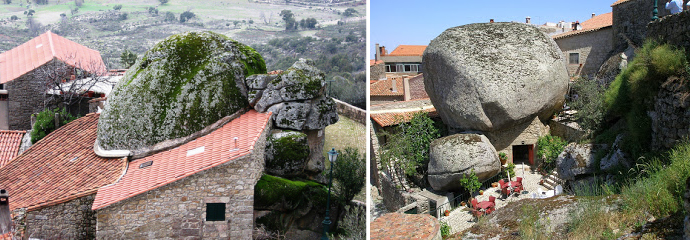
That view is from the village of Monsanto, Portugal. Beautiful place. Rocky:
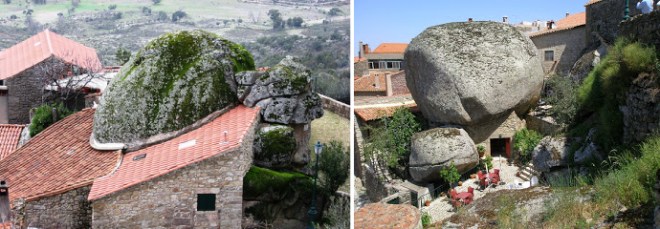
monsanto

I’m not sure exactly where the view is from, perhaps the Pousada de Monsanto, but I’m not sure if it’s the lobby, or the breakfast/dining room.  Or maybe someplace else, another hotel.

Another reader almost made the same mistake but recovered to nail the correct village and hotel:

Today’s entry comes from a window in the Pousada de Marvão hotel in b-e-a-utiful Marvão, Portugal.

I found almost no helpful hints hidden in this photo (even the seemingly helpful cross in the bottom right quadrant was useless). If the winner reveals some obvious, forehead-slap-worthy clue, I’m going to be pretty crushed. Searching things like “red tile roof valley” yields results for places far and wide: Costa Rica, Venezuela, Indonesia, all of Europe.

While trying to figure out if the palm tree in the lower left corner would yield anything interesting, I found my way to the Wikipedia entry for the European Fan Palm (Chamaerops). One of the countries this particular palm grows in is Portgual. A previous contest led me to mistakenly spend an awful lot of time in Portugal looking for red roofs. Was it about to happen again?

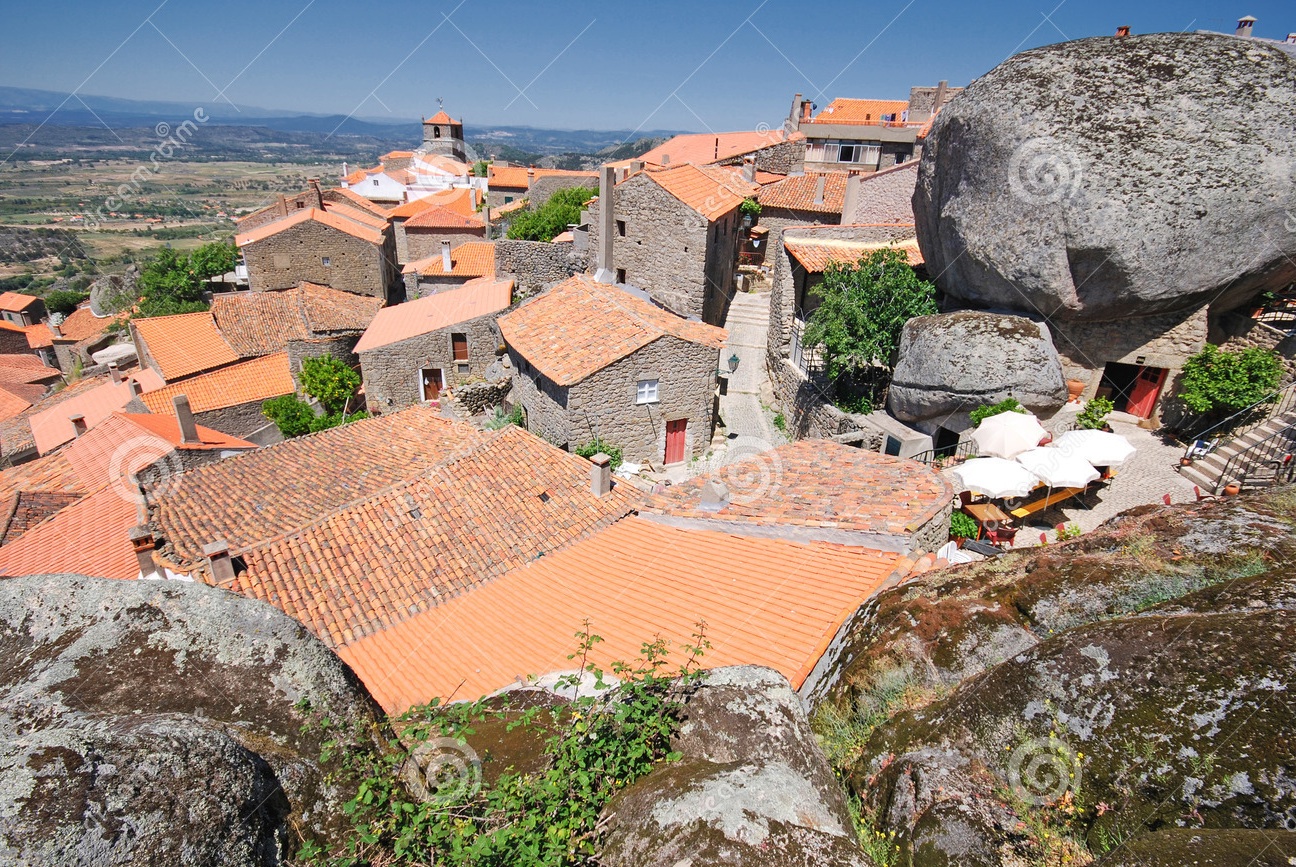
I Googled “Portugal Red Roof Village” and there it was – some place called Monsanto. The very first result features a giant boulder that seems to match the type of rocks in the lower right hand corner of our entry:

231-google-result

I fruitlessly spent the next hour surfing the various villages around Monsanto and trying to piece together the right angle for the window. Nothing worked. I started typing an entry saying that if I had to be wrong, Monsanto was the place to do it. It is seriously lovely.

Before hitting send, I took another peek at my Google Image results and it turns out another lead was sitting there right in the third row. I started poking around Marvão and it was mere minutes before I found my way to the Pousada de Marvão and this week’s view. I think this pull quote from Marvão’s Wikipedia entry says it all:

Nobel prize-winning author José Saramago wrote of the village ‘‘From Marvão one can see the entire land… It is understandable that from this place, high up in the keep at Marvão Castle, visitors may respectfully murmur, ‘How great is the world.’’

Both Monsanto and Marvão were worth making a virtual visit to and I’d love to see them in person. I’m grateful to this contest for showing me that they exist.

As always, Dishheads have been there:
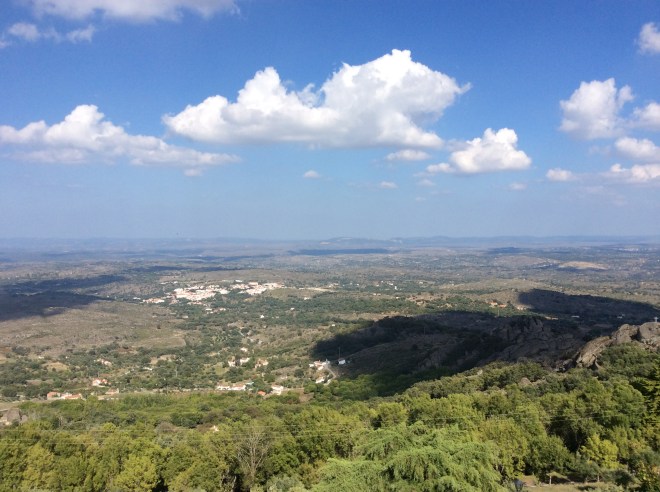
IMG_0067

Above is a photo I took a few weeks ago. You can imagine my surprise when I saw this month’s View From Your Window entry. It is taken from Marvao, Portugal, with Santo Antonio das Areias in the distance. I am guessing the photographer was staying in the Pousada de Marvao.

Another rhymes his way to the right window:

My very first guess came way too soon,
Eager elation! I shot for the moon.
Sometimes I suffer, in triangulation,
From Premature Extrapolation.

The town? Well that much I knew in a minute,
Which place, was the tough one – I just couldn’t win it.
But noticing patterns of discolored stone,
That match your sill, the Pousada is known!
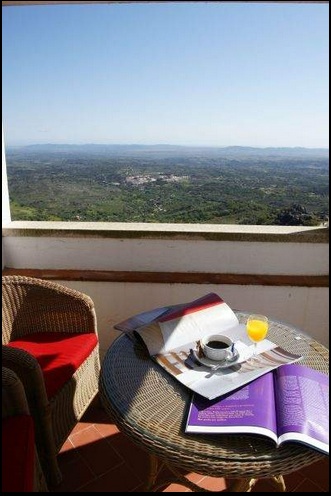
Pasted Graphic

Balcony view, the sure winning play,
The room is 210. How I know, I won’t say:

Pasted Graphic 1

Street views in Marvao? Endless rewards!
But this is, for US, all that Google affords:
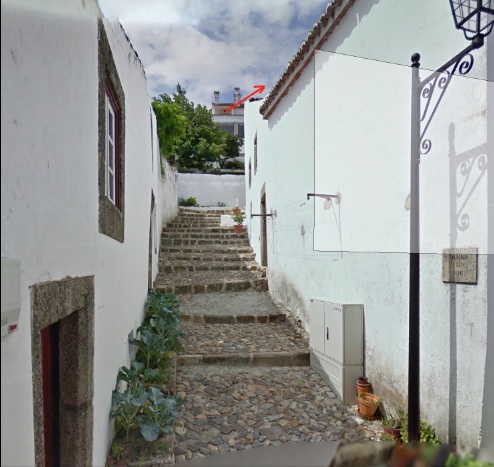
Pasted Graphic 5 copy

But sad to say, that player also blundered,
For only this veteran, nailed the room number:

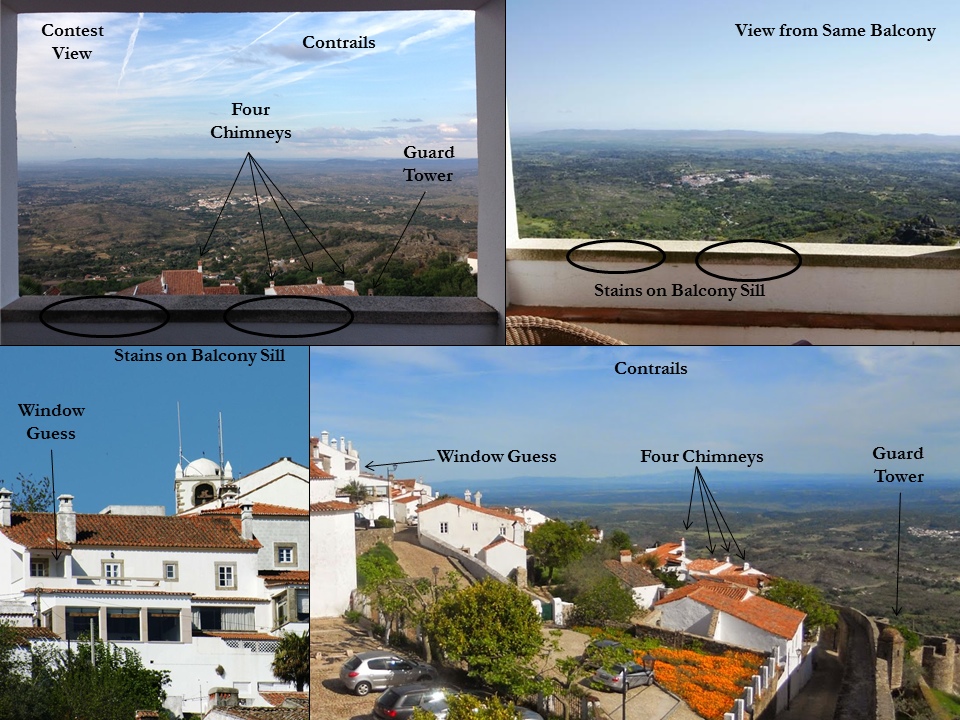
My first inclination was to search Spain given something about the landscape. I have spent a fair amount of time in Spain searching for other windows. Instead I bounced around Mediterranean countries looking for elongated, red roof tiles and eclectic chimneys similar to those in the contest view. The closest I found was the fortified town of Monsanto in Portugal. It had similar roofs, chimneys, as well as large boulders and outcrops. This prompted a search for Medieval fortified towns of Portugal on high promontories (appropriate for the soaring swifts in the contest photograph). A photograph of Marvão caught my eye because it included the distinct chimneys in the contest view. It was then obvious that the dark brown chimney to the right was, instead, a guard tower on town’s fortification walls. All other clues check out.
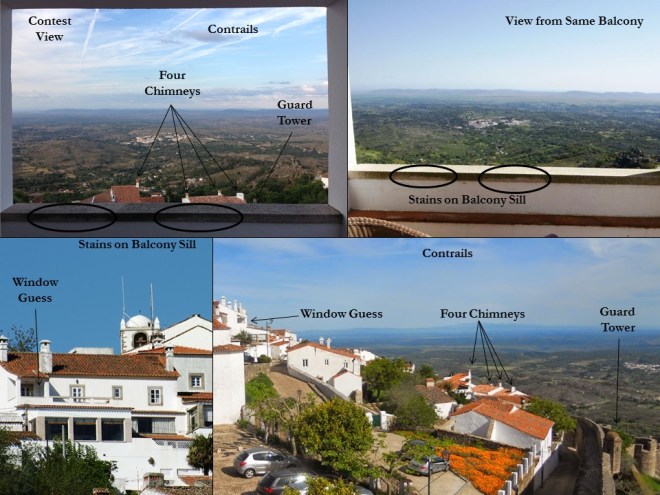
vfyw_Marvao2_11-15-2014

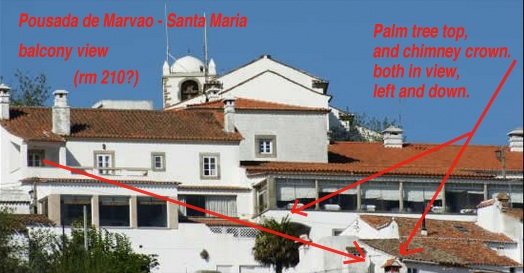
Once I found the hotel, it became clear that the contest view was from a balcony and not a window. There were no signs of glass or window framing or fixtures. Photographs from a balcony at Pousada de Marvão had much the same view and identical stains on the granite balcony sill as those barely visible in the contest photograph (see illustration). It is a fairly small balcony on the corner of one of the hotel’s cobbled-together appendages and can be seen in photographs of the hotel’s northeastern façade (see illustration). Based on guest reviews of the hotel, the room is probably #312 (said to be a small room with balcony). Room 310 is over the kitchen which is located northwest of the contest balcony with space for #311 between them. Number 311 is a double room with a terrace balcony which is also visible on the building’s façade.

Views from these fortifications are spectacular and the towns charming, but thoughts of their original purpose and use is actually quite sobering. Maybe it is all the ISIS coverage.

Another former winner looks in on Marvão:

You can see the parish of Santo António das Areias below (similar, but zoomed in picture here).  And Spain is beyond those faraway hills.  The area is within the Serra de São Mamede Natural Park.  For the Room number, I’ll guess #12.
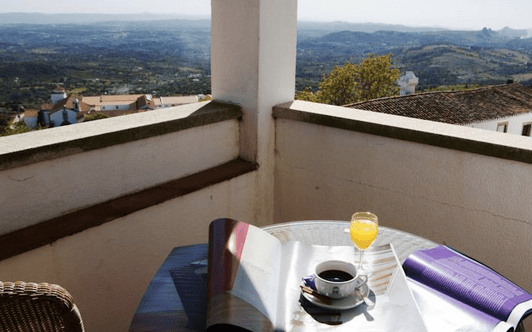
Second staged picture

Looking at the list of local events on the town’s website, I have some disappointing news to report.  We all missed the 31st annual Feast of the Chestnuts on Nov. 8 & 9 (pictures here) and the pig slaughter in the nearby village of Porto da Espada on Nov. 15.

To paraphrase Andy Zaltzman of The Bugle Podcast, this week I felt like a bad French restaurant.  “I [almost] ran out of thyme.”  But I got there in the end.  (And if you haven’t heard The Bugle, you might listen to John Oliver and Andy’s fuckeulogy to Bin Laden available here.) Thanks for the contest.

Chini had a little more trouble than usual, but it’s not because of carpal tunnel:

Discipline, discipline, discipline. It’s everything in this contest. Unfortunately, I started out this week with none and wound up wasting an hour or more of precious free time fruitlessly searching the Iberian plains. Then, later on Saturday, I applied my usual methods and presto! Location found in fifteen minutes. You lose focus in this game for one second …
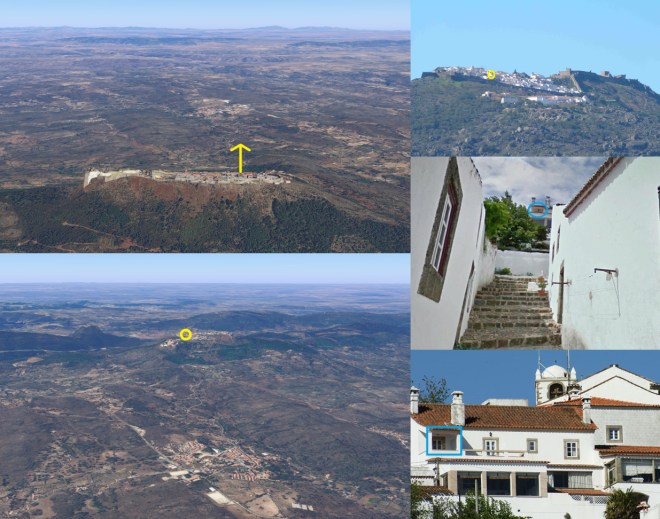
chini-231

This week’s win goes to another veteran without a victory:

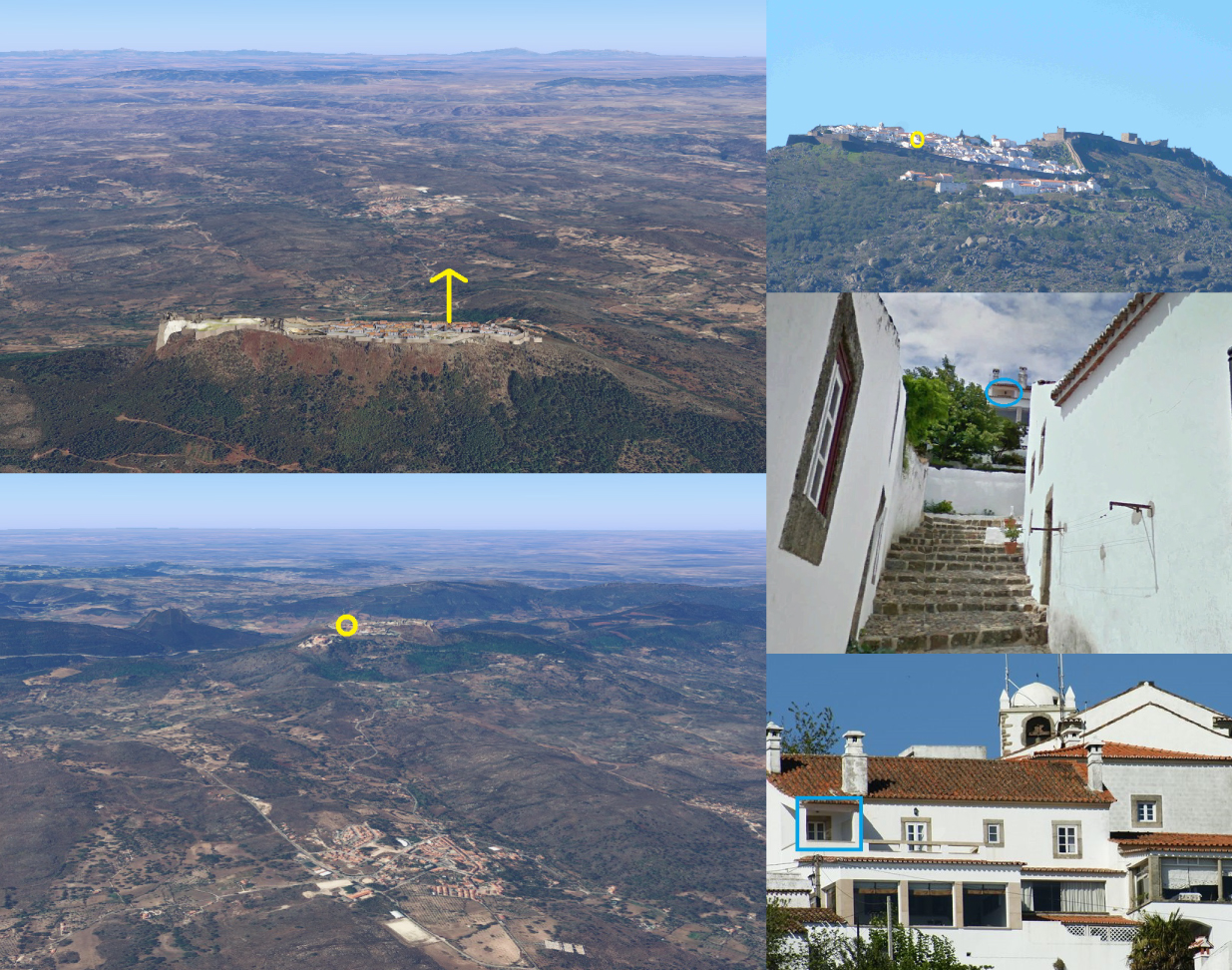
There is no view quite like that from Suite 210 of the Pousada de Marvao, looking northeast towards the hamlet of Santo Antonio das Areias,  And I should know, since I was chamber maid at that establishment for several months while working my way through hospitality school.  YES!  We can see it below, oh so clearly circled:
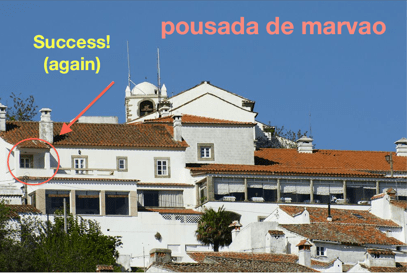
Screen shot 2014-11-16 at 12.31.59 AM

And I’ve got a picture of the view!  A different picture of the same exact view!

pousada-de-marvao-charming

It’s possible that I have it because I am insane and have wasted another day trying to please you!  Or perhaps I took it while cleaning.  It was such a beautiful day!  Oh, and I know I found some bridge in China, and a water tower in Mendocino, the I Street Bridge in Sacramento, some other bridge on the Oregon Coast and many more.  I am lucky that way, and have lived a varied and exemplary life.  But time to send me the book so that I can retire from such craziness and return to crosswords.

But why retire when all your future submissions can now be prefaced by “A former winner writes”? Speaking of prefaces, this week’s submission doubles as The View From Your Honeymoon:

The photo was taken from the window of room 312 at the Pousada de Marvao in Marvao, Portugal on September 12, 2014. We were there during our honeymoon (on our way from Lisbon to the Douro River valley.) Marvao is a fortified town on top of a mountain near the Spanish border. Our room had a lovely balcony, from which this picture was taken and on which we ate dinner, drank wine, and looked out at the valley below while it got dark and the lights came on.
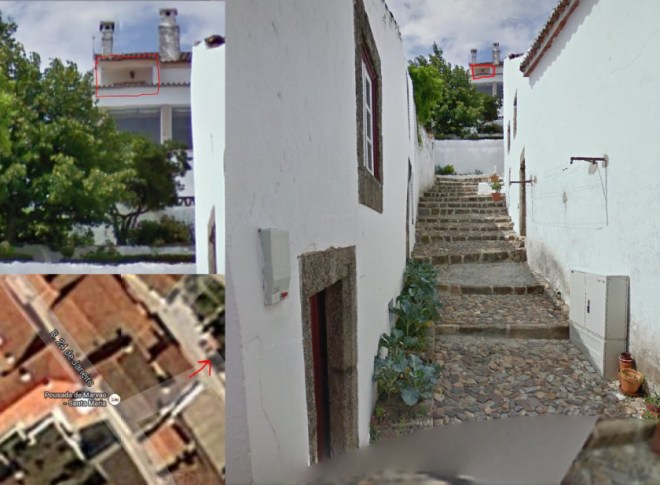
vfyw-orig

I would say the photo would be a hard one with the lack of any real distinguishing features, although I might be surprised as Marvao was named both a UNESCO Heritage Site candidate and was in the book 1000 Places to See Before You Die so people might recognize it from visiting.  The town is beautiful, and everyone there was friendly (and quite willing to deal with my extremely poor Portuguese.)  Coming from a large city, the quiet from the lack of traffic and general noise was incredibly restful.  I highly recommend visiting if you happen to be in Portugal (or western Spain – it’s right on the border); tour the castle, walk the parapet of the medieval walls, and watch the sun set from one of the high points in town.

I do have one caveat – I wouldn’t recommend it for those with a fear of height.  The drive up is winding, with some very steep cliffs very close to the edge of the road and a marked lack of guardrails.  Drive slow and drive careful, and when you arrive at the top of the mountain, have some port to relax.  (Also, on your way down, if you’re headed northwards, Google’s directions are not your friend – it sent us down what I would charitably describe as a horse trail.  Lots of fun in a rental car!)

Lastly, the View From Your Heat Map (zoom in by double-clicking an area of interest, or drag your cursor up and down the slide):

This embed is invalid


We’ll do an easier one next week. See you all on Saturday!

(Archive: Text|Gallery)
A Massacre Of Jews At Prayer

Israelis Killed In Synagogue Attack

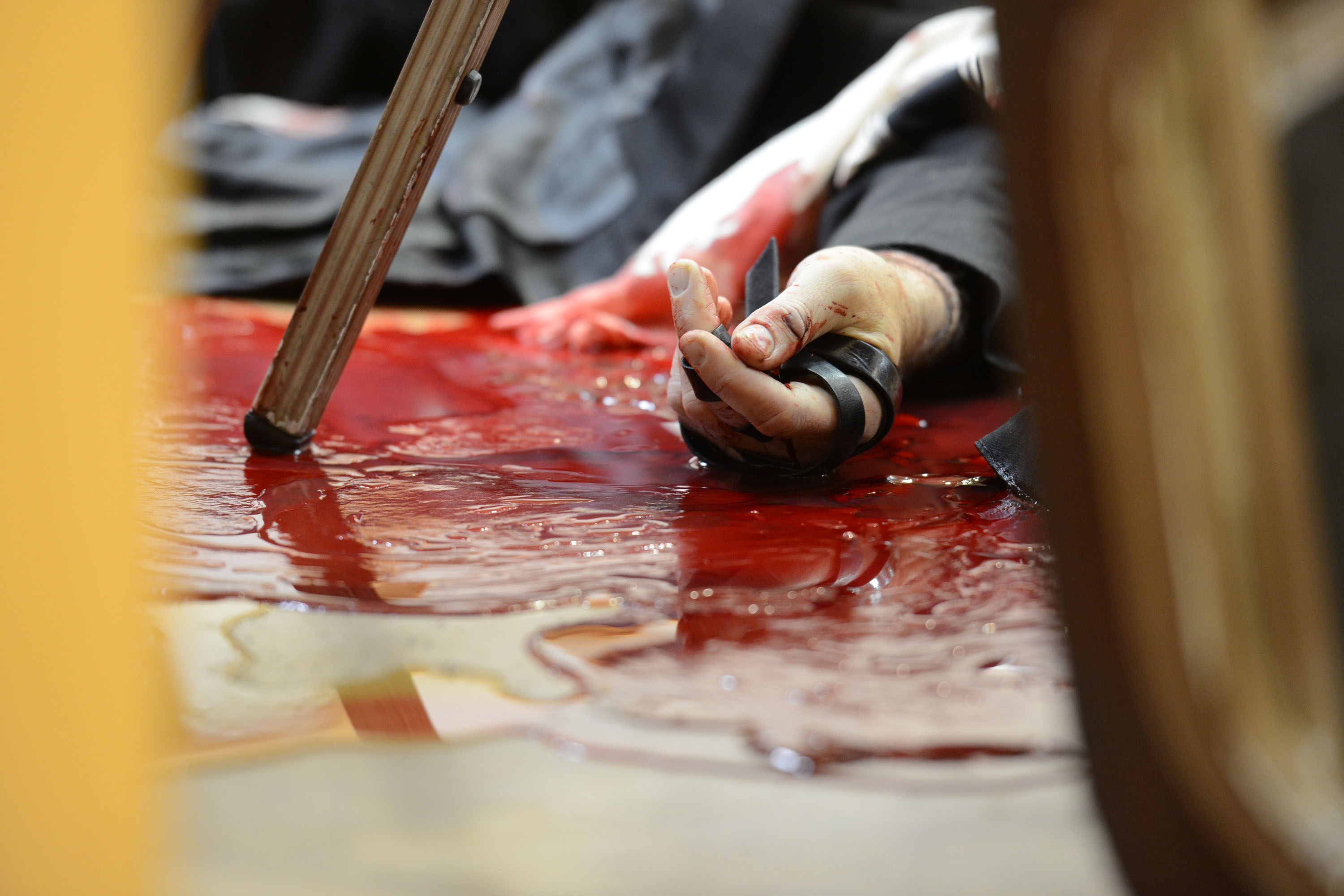
This is extremely distressing. Early this morning, two Palestinian cousins armed with meat cleavers and a gun burst into a synagogue in an ultra-Orthodox neighborhood of Jerusalem and killed four worshipers before dying in a shootout with police. The attack was the deadliest act of terrorism in the city in years and comes amid escalating tensions and violence surrounding the Temple Mount/Haram al-Sharif complex, and may also have been carried out in retaliation for recent attacks on Palestinians in the city. Hamas, which praised the murders and called for more such “revenge” attacks, is certainly spinning it that way:

Ghazi Hamad, a senior Hamas official in Gaza, said in a BBC interview that attacks like Tuesday’s should be anticipated. “Everyone expected that this would happen,” Hamad said. “Every day Jerusalem is boiling, every day there is a new crime against a Palestinian citizen. We didn’t see any effort of the Israeli government to stop the settlers from attacking the al-Aqsa mosque. They should open their eyes and see there is a revolution in Jerusalem, there is an uprising.”

Goldblog holds this up as further evidence of Hamas’s genocidal ambitions:

This is how a Hamas spokesman reacted to the massacre of Jews at prayer: “The new operation is heroic and a natural reaction to Zionist criminality against our people and our holy places. We have the full right to revenge for the blood of our martyrs in all possible means.”

Twenty years ago, shortly after the Jewish fanatic Baruch Goldstein massacred Muslims at prayer in Hebron, the then-prime minister of Israel, Yitzhak Rabin, said of the killer, “You are not part of the community of Israel. …  You are a foreign implant. You are an errant weed. Sensible Judaism spits you out.” Hamas’s endorsement of the massacre of Jews at prayer in their holy city confirms—as if we needed confirming—that its goal is the eradication of Israel and its Jews. We should pray for the day when the leaders of Gaza react to this sort of massacre in the manner of Yitzhak Rabin.

But David Horovitz also blames Abbas for fanning the flames:

[T]he centrality of religious dispute to this latest iteration of the Israeli-Palestinian conflict is now unmistakable. And at the core of this new iteration, Tuesday’s attack made murderously clear, is Muslim intolerance — of the very notion that Jews have a religious connection to the Temple Mount, and by extension to Jerusalem and to Israel. Appallingly in the last few weeks, Abbas made himself a party to this intolerance. Unlike Hamas, he does not openly call for Israel’s destruction. He may not, in his heart of hearts, even seek it. But he has allied himself to the extremists in castigating as “contamination” the Jewish desire to express the link to the site of the Biblical temples, the site that roots our historical legitimacy here.

Charles Pierce throws up his hands:

By the choice of targets, by the alleged motives in question, and by the ex post facto justification offered on behalf of the attackers, this was purely an act of religious war. By the choice of targets, by the alleged motives in question, and by the ex post facto justification of what is surely to come, the response is likely to be purely an act of conventional war, even though there will be a religious undertone to it that nobody will talk about. The response is also likely to be overwhelming. Thus, in the choice of targets, by the alleged motives in question, and by the ex post facto justifications of both sides, the violence will be speaking to the violence in a different language entirely. One cannot solve the other because one cannot understand why the other does what it does. This increasingly seems to be a problem that the modern world is unequipped to solve. The intellectual faculties needed to understand religious violence have atrophied in the west. It baffles us, a T-Rex in the Internet cafe. It baffles us and it goes on.

(Photo: This handout image supplied by the Israeli Government Press Office (GPO), shows a view of the scene of a shooting at a Synagogue where a suspected Palestinian attack took place on November 18, 2014 in Jerusalem, Israel. By Kobi Gideon / GPO via Getty Images.)

Chart Of The Day

Marijuana Kids

Poison control centers don’t get many calls about pot:

What you can see is that for kids 12-and-under, cases of marijuana poisoning are incredibly rare. There were 254 such calls in 2012. By contrast, there were about 1,000 calls related to kids ingesting energy drinks, 1,600 for kids drinking contact lens fluid, and over 4,000 for children who ate birth control pills.

Calls for caterpillar stings were twice as common as calls for marijuana exposure, and ingestions of liquid fabric softener were nearly three times as common.

Immigration And Precedents

Ramesh Ponnuru writes today:

There’s no evidence that any president, up to and including Barack Obama earlier in his tenure, ever thought that it would be proper to grant legal status to several million illegal immigrants unilaterally.

I agree with him that Obama should press the GOP (yet again) to pass comprehensive immigration reform rather than issue a mass deferral of deportation. But we should also be able to agree on some facts. And that sentence misleads – just as Ross’ latest column misrepresents the truth. Obama is not able to grant legal status to millions by himself. At best, he can grant temporary legal status by deferring deportation. But such a status would expire with his presidency. As for no precedent, granting 5 million immigrants a deferral of deportation is more expansive than 1.5 million under Reagan and the first Bush. But again, if we’re talking about mass deferrals of deportation in the millions, there sure is a precedent. And it was set by that icon of conservatism, Ronald Reagan, in an era when large swathes of the right actually believed in open borders.

Next Year’s Obamacare Premiums, Ctd

Employer Premiums

Patrick J. Egan puts the premium hikes in perspective:

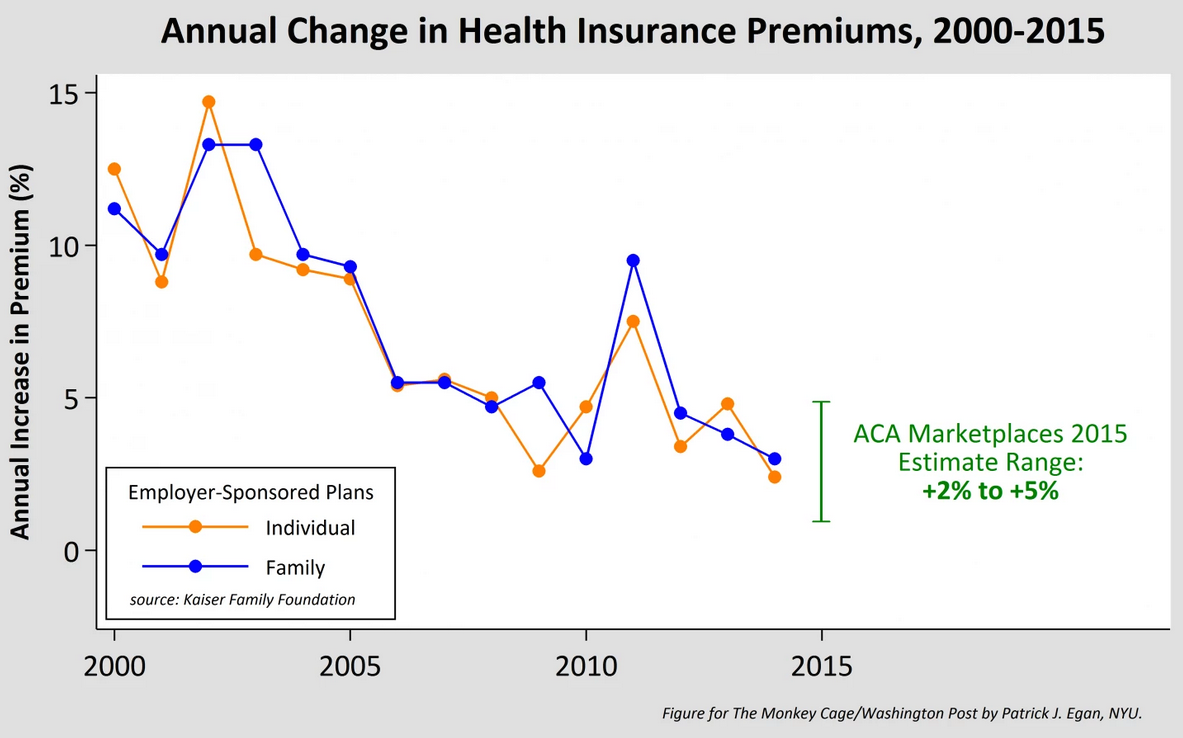
ACA premiums are rising. But most reporting on these numbers has lacked a critical bit of historical context. These price increases are no higher than recent premium increases on plans provided to Americans by their employers. Since 1999, the Kaiser Family Foundation has interviewed a nationally representative sample of employers about the health insurance they offer. The graph above displays changes in the average annual premiums paid for single and family coverage since 2000. Before 2007, increases were at least 5 percent per year. Since then, premiums have been rising more slowly, with the median increase at about 4 percent per year.  Shown alongside these figures is the range of estimates published over the past few days on expected premium increases on plans in the ACA marketplaces. They’re no different from recent trends in premiums for employer-sponsored plans.

Some Americans may need to “shop around” for a “better deal” (as HHS officials are putting it) — particularly those who face a price increase from their current insurer. But here again, context is helpful. More than half of the firms in the Kaiser Family Foundation survey reported doing the same thing last year: 58 percent said they shopped for a new plan or a new insurer, and 27 percent of those who shopped changed carriers.

Jonathan Cohn chimes in:

Health insurance premiums go up almost every year, just because of inflation and ever-improving technology, so modest hikes like these are good news. Even better news is the fact that, in some markets, the price of the benchmark silver plan has actually declinedsomething that almost never happens health care. As Larry Levitt, senior vice president of the Kaiser Family Foundation, observed earlier this year when such changes first became apparent, that’s like “defying the laws of physics.”

So what’s not to like? Well, these trends and averages mask tons of variation. New insurers are jumping into the marketplaces and in many cases they are offering newer, cheaper options. In addition, some insurers who last year asked for high premiums have decided to lower their prices. The common goal of both is to attract more customers and, all else equal, it’s a sign that the markets are healthy. But some insurers are raising prices, because they underestimated costs last year. Here’s what the prices look like, across the country:

Premium changes

The Physical Markings Of Psychic Pain

In a review of Bessel van der Kolk’s The Body Keeps the Score, Shaoni Bhattacharya describes trauma as “one of the West’s most urgent public health issues”:

[Van der Kolk] explains how trauma and its resulting stress harms us through physiological changes to body and brain, and that those harms can persist throughout life. Excess stress can predispose us to everything from diabetes to heart disease, maybe even cancer. … The book has gut-wrenching stories: about Vietnam veterans who committed war atrocities, incest survivors, broken adults that were terrorised as children or shunted between foster homes. Van der Kolk draws on hundreds of studies to back up his claim that “the body keeps the score”.

We meet a woman who had suppressed the memory of being raped at age 8 by her father, but when she ferociously attacked a new partner for no reason, she signed up for therapy with van der Kolk. Soon after, her eyesight started to fail: an autoimmune disease was eroding her retina. In a study, his team found that female incest survivors had abnormalities in the ratios of immune cells, compared with untraumatised women, exposing them to autoimmune diseases.

In an excerpt from the book published last month, van der Kolk endorses writing as a form of therapy:

As far as I’m aware, the first systematic test of the power of language to relieve trauma was done in 1986, when James Pennebaker at the University of Texas in Austin turned his introductory psychology class into an experimental laboratory. Pennebaker started off with a healthy respect for the importance of inhibition, of keeping things to yourself, which he viewed as the glue of civilization. But he also assumed that people pay a price for trying to suppress being aware of the elephant in the room.

He began by asking each student to identify a deeply personal experience that they’d found very stressful or traumatic. He then divided the class into three groups: One would write about what was currently going on in their lives; the second would write about the details of the traumatic or stressful event; and the third would recount the facts of the experience, their feelings and emotions about it, and what impact they thought this event had had on their lives. All of the students wrote continuously for 15 minutes on four consecutive days while sitting alone in a small cubicle in the psychology building. …

The team then compared the number of visits to the student health center participants had made during the month prior to the study to the number in the month following it. The group that had written about both the facts and the emotions related to their trauma clearly benefited the most: They had a 50 percent drop in doctor visits compared with the other two groups. Writing about their deepest thoughts and feelings about traumas had improved their mood and resulted in a more optimistic attitude and better physical health.

Van der Kolk adds, “Numerous experiments have since replicated Pennekbaker’s findings. Writing experiments from around the world, with grade-school students, nursing-home residents, medical students, maximum-security prisoners, arthritis sufferers, new mothers, and rape victims, consistently show that writing about upsetting events improves physical and mental health.”

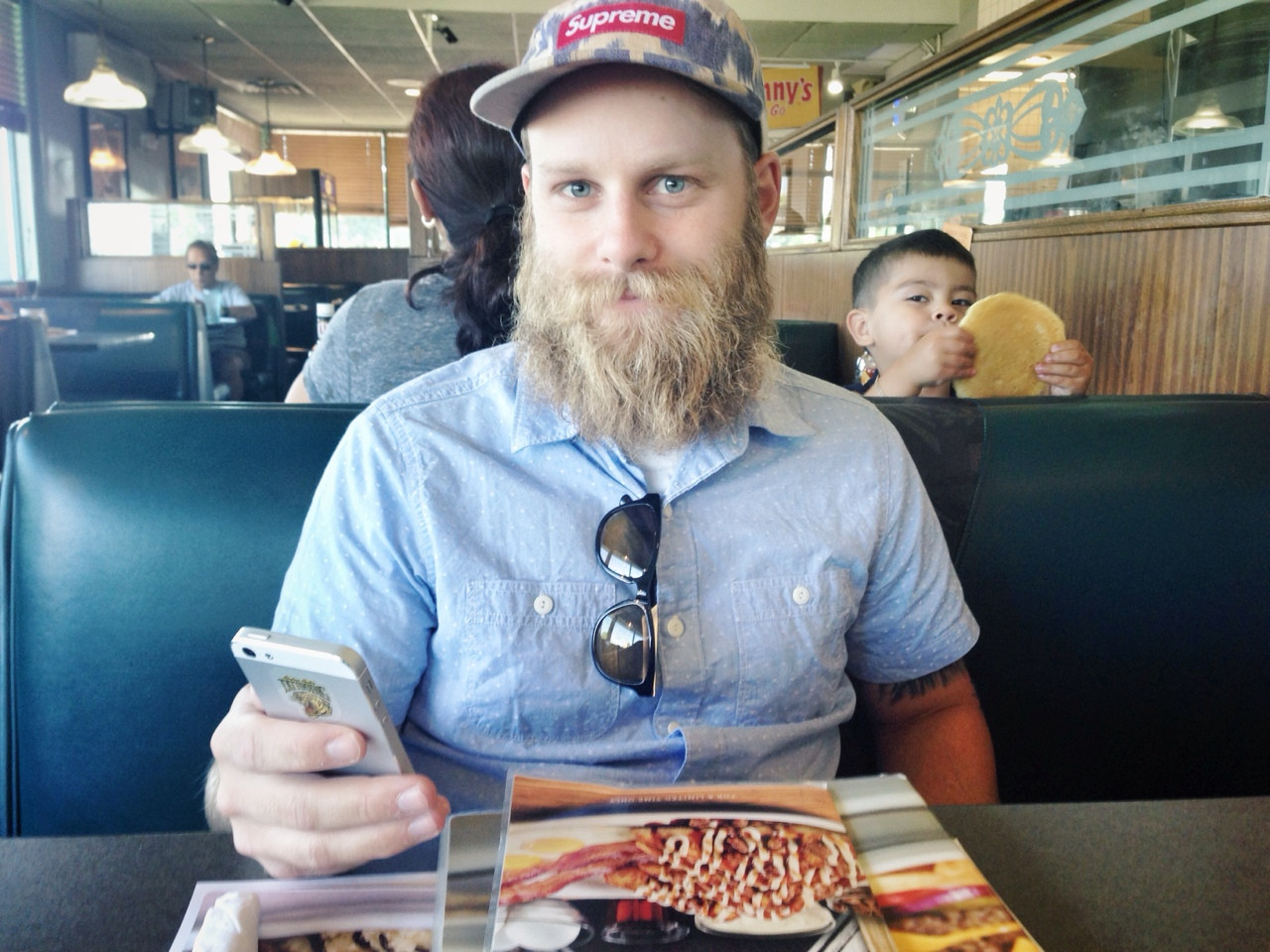
Lumbersexuals: The Triumph Of The Bears

Funny kid at Dennys was looking at my beard. - Imgur

It’s now eleven years since I wrote an early piece on bear culture for Salon. But I was obviously onto something bigger than I imagined:

“Bears” almost all have facial hair — the more the better. Of all the various characteristics of Beardom, this seems to be one of the most essential. The Ur-bears have bushy beards that meander down their necks and merge with a large forest of chest and back-hair to provide a sort of all-hair body environment … Bears at their most typical look like regular, beer-drinking, unkempt men in their 30s, 40s and 50s. They have guts. They have furry backs. They don’t know what cologne is and they tend not to wear deodorant.

Bears were partly a reaction to the whole ghastly metrosexual moment when straight men, for some elusive reason, decided to shave, product and starve themselves so as to look more like women (at the behest of those Queer Eye minstrels). And exactly the same kind of hirsute transition is now – a decade later – well under way among straights.

I regard this, in the spirit of Tim Teeman, first as a huge achievement for gay male America. Not only are we more comfortable in our own unpolished masculinity, we have created a cultural space for straight men to be the same. To put it another way: gays have helped redefine masculinity for straights – and for the first time, straights have not responded by feeling in any way tainted or discomfited by the association. In the process (don’t tell anyone), the gays have craftily transformed the public space by exponentially increasing the number of men we might have a hankering or a fetish for. Win-win!

(We’ve been quietly doing this for quite a while, of course. One reason every film star in an action movie looks like Arnold Scharzenegger is that gay men adopted steroids in the 1990s and strode around town with huge pecs and tight abs and traps that could lift a tow-truck – thereby upping the ante for the now relatively-puny straights. Yes, steroids in sports – especially football – also ramped up muscle culture. But the sexual and aesthetic appreciation of it – often suppressed in public female discourse – encountered no such restraints among the gays.)

The new vibe has many parts. It seems to me driven by a little cultural balancing of the high-tech 21st Century by the mores of the low-tech 19th – whether it be local brews, carpentry or sturdy all-weather clothing. This doesn’t mean being an actual lumberjack of course, as Holly Baxter explains:

I like the poseur who sits beside me at a nauseatingly hip cafe with his cold brew, Barbour jacket and anchor tattoos – I can’t deny it. He isn’t telling me he’s anything but a freelance web designer who can grow an impressively bushy moustache. He isn’t sitting at home, crying over his laptop and wondering why he can’t just get out there and be a “real man”. Instead, he’s playing with the concept of what masculinity looks like and does. He is at the same time both aggressively attached to the traditionally masculine look and completely removed from the lifestyle that it advertises.

Attaboy! It was the same idea that caused Victorian men to adopt the beards of those returning from the Crimean war – which was the first war that, because of the severe cold, allowed British soldiers to grow beards. No one mistook the newly bearded civilians for actual war heroes of course, but it was the heroic aesthetic that had cachet – and begat a new trend that lasted decades. There’s a minor parallel to that today as well. The wars in Afghanistan and Iraq also gave us real Special Ops heroes who grew big beards to melt into the surrounding population more easily. Of course, bearded hipsters are not actual war heroes, but they sure don’t mind looking like one. And what greater fantasy of male derring-do than a bearded, horse-riding badass chasing the Taliban in the mountains of Af-Pak?

I can’t help but wonder also if this public display of raw masculinity isn’t also a reaction to the relative decline in male power in American life and culture. As girls beat boys in school, and as women increasingly beat men in college, and as women out-pace men in vast swathes of the economy, and as old patterns of allegedly sexist male culture are policed and patrolled with ever-greater assiduity, the beard and the old-school manliness of the lumbersexual become new ways to express masculinity which cannot be denigrated or dismissed as sexist. It’s a way to reclaim manliness without running afoul of the new prophets of gender justice.

And it’s a default. If many cannot concede the power of testosterone in creating male culture, they surely have to concede its power in growing a beard. Think of it as testosterone’s last permissible stand against the forces of relentless sameness. And all you have to do to display it is … nothing.

(Photo: from our Beard of the Week last June.)