A Poem For Saturday

From Dish poetry editor Alice Quinn:

I’ve been reading The Collected Poems of Lucille Clifton 1965-2010 for weeks and am mesmerized by the beauty and power, the humor, complexity, and charge of her poems, often bringing to mind the work of another great, canny contemporary poet, the Nobel Prize winner Wislawa Szymborska.

Toni Morrison wrote the forward to the book, and I’ll quote some lines I treasure. “The love readers feel for Lucille Clifton – both the woman and her poetry – is constant and deeply felt….Her devoted fans speak often of how inspiring her poetry is – life-changing in some instances….I read her skill as that emanating from an astute, profound intellect.”

Just months before her death, Lucille Clifton learned that she had been awarded the Frost Medal for Lifetime Achievement in the Art by the Poetry Society of America. At the awards ceremony that spring, the poet Cornelius Eady, standing beside Lucille’s beautiful daughters, accepted the award on her behalf, reading remarks she had composed for the occasion.

Two of my favorite short poems of hers can be described as self-portraits – one of spirit, the other of fidelity to poetry. The first is “We Do Not Know Very Much About Lucille’s Inner Life”:

from the light of her inner life
a company of citizens
watches lucille as she trembles
through the world.
she is a tired woman though
well meaning, they say.
when will she learn to listen to us?
lucille things are not what they seem.
all all is wonder and
astonishment.

The other is “the making of poems”:

the reason why I do it
though I fail and fail
in the giving of true names
is I am Adam and his mother
and these failures are my job.

We’ll feature her poems today and over the weekend.

“in the evenings” by Lucille Clifton:

i go through my rooms
like a witch watchman
mad as my mother was for
rattling knobs and
tapping glass. ah, lady,
i can see you now,
our personal nurse,
placing the iron
wrapped in rags
near our cold toes.
you are thawed places and
safe walls to me as I walk
the same sentry,
ironing the winters warm and
shaking locks in the night
like a ghost.

(From The Collected Poems of Lucille Clifton 1965-2010, edited by Kevin Young and Michael S. Glasner with a foreward by Toni Morrison © 2012 by The Estate of Lucille Clifton. Used by permission of BOA Editions, Ltd.)


Don’t Rule Out Ransom

Simon Critchley considers the US and UK policy of refusing to pay ransom to terrorists, noting that “governments like the Spanish, the French, and the Italian … have simply found other, more clandestine and covert ways of making such payments.” He notes that “the next move these [latter] governments make is simply to deny that such payments have been made”:

All of this suggests a moral dilemma: Is it better to (a) remain morally consistent, refuse negotiation and ransom payment to an allegedly evil organization, but watch your citizens get beheaded? Or (b) sign up to a principled agreement not to negotiate with “terrorists,” but then negotiate nonetheless, pay a large amount of money to release the citizens of your country, and simply deny the fact publicly?

In this case, I would argue that (b) is the best and wisest course of action. Consider the following scenario. Imagine that when the Spanish, French, and other governments began to negotiate with ISIS, the responsible parties in the UK and US did so as well. Based on what we know of the European negotiations, it seems likely that the lives of Foley, Sotloff, Haines, and Henning could have been spared. Also, Peter Kassig could be back in US and not threatened with a very likely beheading, and the voluble John Cantlie could hopefully return quietly to life in the UK. This would have required paying some money, probably quite a lot of money. Some reports indicated that ISIS had asked for 100 million euros for James Foley, but wasn’t he worth that much? European soccer players are traded for such sums. In October, the Pentagon reported that it had spent $1.1 billion on military operations since the offensive against ISIS began last summer.

In this way, the horrific spectacle of videoed beheadings of Western captives could have been avoided—executions that led to principled proclamations of the “pure evil” of ISIS on the part of David Cameron and Barack Obama and contributed in significant part to the subsequent, wildly expensive, and very probably ineffective policy of air strikes on ISIS in Syria. Absent these beheadings, the strikes in Syria might have been averted or at least conducted in a more covert, less febrile, and hysterical atmosphere.

We’re Not Ready For This Jelly

dish_jellyfish

Gwynn Guilford provides an overview of recent research into why “jellyfish blooms appear to be getting bigger, more frequent, and more destructive”:

Perhaps the most disquieting observation about the rise of jellyfish … has to do with new polyp habitats. A few centuries ago, when a jellyfish larva—i.e. a fertilized egg—looked for a surface to start cloning on, it had to make do mostly with the odd seabed rock or oyster shell. If a larva couldn’t find such a surface, it would be eaten or die out.

The odds of finding a place to settle used to be pretty long. But humans are bettering those larvae’s chances of survival.

Bridges, ports, drilling platforms, ship hulls—these are just a few examples of miles upon miles of smooth surfaces that polyps are colonizing. Research published last year reported polyps of numerous species taking over everything from buoys to floating plastic cigarette packaging (paywall).

study on moon jellyfish published in October offers a more direct link between booming coastal development and jellyfish blooms. The research team, which included the prolific Shin-ichi Uye and three other marine biologists, counted the number of baby moon jellyfish in a bay before and after a new floating pier was installed. The jellyfish polyps rapidly colonized the new pier’s underside, resulting in a four-fold surge in their numbers after the dock’s arrival.

Guilford goes on to clarify, “Though this latest research is building a strong case that man-made disturbances to the ocean are amplifying blooms, the lack of historical data on jellyfish means these links still aren’t certain.”

Previous Dish on the jellyfish menace here.

(Photo by Flickr user franzi ヅ)

Before There Was Fox News

Helen Rittelmeyer looks back to the origins of lowbrow conservatism, surveying the “pamphleteers, satirists, and hacks” who took up Edmund Burke’s critique of the French Revolution and its defenders, like Thomas Paine, in the 1790s:

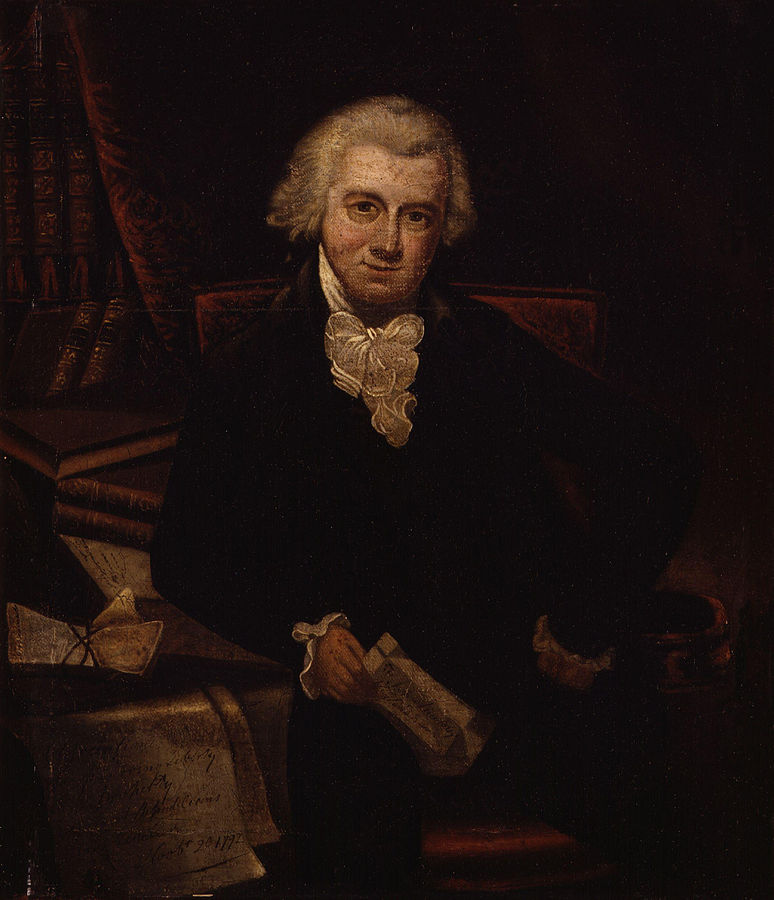
[A]nother lawyer thought that it would be better to answer Paine than to muzzle him. This was John Reeves, an ultra-monarchist barrister andjournalist who in 1792 founded the Association for dish_johnreevesPreserving Liberty and Property Against Republicans and Levellers. (If only the modern Tea Party had resurrected that name.) Later, when Reeves was charged with seditious libel for having written a pamphlet so fulsomely pro-monarchy that it appeared to reduce parliament to a mere appendage, Burke wrote eloquently in his defense, claiming that while the pamphlet had probably gone beyond what was strictly orthodox, its author was guilty of nothing more than a few ill-chosen metaphors.

Within a year of the Association’s first meeting—in a tavern, the Crown and Anchor—there were more than 1,000 clubs spread throughout the kingdom, their mission to halt the spread of Jacobinical ideas among the British public. Modern historians have focused on the Association’s more rambunctious pastimes, like burning Tom Paine in effigy and throwing the occasional radical in the local river, but far more of their effort was spent distributing loyalist literature. Reeves loved the excitement of publishing more than the practice of law, and he took great relish in reprinting suitable tracts—such as the Rev. William Paley’s unselfconsciously titled Reasons for Contentment, Addressed to the Labouring Part of the British Public—and, later, in accepting unsolicited submissions from amateur scribblers eager to help the cause. Prices were kept low partly to entice poorer buyers and partly to allow rich sympathizers to buy literature in bulk and hand it out for free. One pamphlet was listed at “Price only ONE HALFPENNY, or 3s. per Hundred to such as give them away.”

(Image of John Reeves by Thomas Hardy, 1792, via Wikimedia Commons)

The Doob Tube

Michael Tesler tries to measure how “TV helped change attitudes about marijuana”:

The large increase in support for legalization over the past decade was concentrated among Americans who watch a lot of TV. After accounting for other variables, support for marijuana legalization has increased by almost 20 percentage points among individuals who watch at least four hours of TV a day (nearly one-third of the population). Meanwhile, opinions remained relatively static among Americans who do not watch much television.

One his commenters contends that the Internet played a bigger role:

On any 30 minute discussion show, there are at least five minutes of commercials, five minutes of introduction, and five minutes of the host asking questions. That leaves 15 minutes divided by 2. If you speak at 100 WPM, that gives you 750 words to tell all there is to know about the subject. Don’t refer to any books because saying the titles will only waste precious air time, and no one will remember them, anyway. If you don’t win by knockout, you lose.

On the other hand, on the internet, each point can be explained in detail, authoritative references are a click away, and anyone from anywhere can participate for free. Idiots can run their mouths with stupid prohibitionist stuff on TV and get away with it simply because there isn’t time to go through all the stupidity. On the internet, they get handed their heads.

The Numbers On Rape

Ingraham highlights how few cases get resolved:

In the most recent crime data released by the FBI, only 40 percent of documented rape cases ended in “clearance.” Clearance indicates that officers were able to close a case, either via an arrest, or in some cases due to victim non-compliance – this latter method is called an “exceptional” clearance. This percent of rape cases cleared has declined sharply since 1995, while clearance rates for murder and aggravated assault have held steady.

But the reality is far more troubling than these numbers suggest.

Earlier this year, law professor Corey Yung released a lengthy paper providing evidence that police departments are systematically undercounting rape in large cities across the country. His numbers, which he calls “conservative,” suggest that “an additional 796,213 to 1,145,309 forcible rapes of women have been reported to authorities, but police have hidden them from the public record, thereby feeding the myth of the ‘great decline’ in rape.”

On Monday, Amanda Hess hoped that reporting will soon improve:

Last year, the FBI finally updated the definition for the modern era. Rape is now defined as “penetration, no matter how slight, of the vagina or anus with any body part or object, or oral penetration by a sex organ of another person, without the consent of the victim.” Now, the FBI hopes that the statistics will finally reflect “a long list of sex offenses that are criminal in most jurisdictions, such as offenses involving oral or anal penetration, penetration with objects, and rapes of males” that had previously been erased from the big picture. The new definition also drops the “forcible” qualifier in favor of “without the consent of the victim,” encouraging jurisdictions to report rapes perpetrated without a show of physical force.

Today, the FBI released Crime in the United States 2013, its first annual report to rely on this more inclusive definition of rape. The agency estimates that when crimes involving male victims, oral and anal rape, and sexual assaults committed with objects are included, the numbers of sex offenses reflected in the UCR program could increase by more than 40 percent. That hasn’t happened yet: Because “not all state and local agencies have been able to effect the change in their records management systems” to reflect the new terminology, the 2013 numbers actually reflect an estimated 6.3 percent decrease in rapes, as calculated by the old definition.

Dara Lind further unpacks what the definition change means:

[T]he FBI now has to consider unreported rape of men. Rape of men is a tremendous problem, especially in US prisons. Some estimates have indicated that, because of prison rapes, more men are actually raped in the US than women. But prison rape is especially likely to go unreported, and it looks like that’s a huge issue for the FBI. Among the 14 states that sent detailed reports to the FBI last year, there was one rape of a male for every 44 rapes of females. So if the FBI’s definition of rape is going to include rapes of men in practice, not just in theory, it’s going to have to figure out how to get a better handle on prison rape.

Recent Dish on rape statistics here.

Who Supports The War On ISIS?

386cf27f-c4e4-4128-831e-4c55fb42b68d.0

Arabs do, according to a new regional survey:

The poll comes from the Arab Center for Research and Policy Studies, which asked 4,800 randomly selected people from around the Arab world about US foreign policy and ISIS. When asked “how would you evaluate the foreign policy of the United States towards the Arab region,” 73 percent of respondents answered negative or “negative to some extent.” This makes the broad support for the anti-ISIS campaign even more surprising. When asked if they supported the US-led airstrikes against ISIS, a majority in every single country said they support the campaign[.]

What’s that about? Well, the poll also asked about attitudes toward ISIS and found them to be overwhelmingly negative in most Arab countries, so supporting a war against the group follows somewhat logically. But as Beauchamp notes, that support “isn’t necessarily durable”:

At the beginning of the 2011 US-led intervention in Libya, for instance, there was a fair amount of Arab support for the campaign. By November, after the intervention ended, a plurality of Arab respondents in one poll thought toppling Qaddafi had been the wrong thing to do. It’s also possible to over-interpret these results. You might look at the Iraq numbers and assume that ISIS is losing the battle for popular opinion in Iraq — and for a group that depends on popular support to survive, that’s deadly. But it’s probably very hard to sample Sunni Iraqis in ISIS-controlled territory, who are really ISIS’s base.

The Two-State Dissolution?

If you haven’t already, take some time this weekend to read David Remnick’s article on Israeli President Reuven Rivlin, the shaky status of the two-state solution, and the resurgent chatter about an alternative. Remnick explores the history of the one-state idea and interviews a wide range of Israeli and Palestinian figures – from Sari Nusseibeh to Caroline Glick – on why it’s in the headlines again. No excerpt quite captures the substance of the piece in its entirety, but here’s the gist of it:

The one-state/two-state debate is highly fraught not least because of proximity. Too much history, too little land. This is not India and Pakistan; the map of Ireland is a veritable continent compared with Israel and the Palestinian territories. Gaza is about as close to Herzliya as Concord is to Hanover; the West Bank, as Israelis are quick to point out, is seven miles from Ben Gurion Airport. Any two-state solution with a chance of working would have to include federal arrangements not only about security but also about water, cell-phone coverage, sewage, and countless other details of a common infrastructure. Talk of a one-state solution, limited as it is, will never be serious if it is an attempt to mask annexation, expulsion, or population transfer, on one side, or the eradication of an existing nation, on the other. Israel exists; the Palestinian people exist. Neither is provisional. Within these territorial confines, two nationally distinct groups, who are divided by language, culture, and history, cannot live wholly apart or wholly together.

Meanwhile, escalating violence in Jerusalem and elsewhere – centered as usual on the Temple Mount/Haram al-Sharif – has raised fears that a third Intifada may be afoot.

The situation in the city got precarious enough last week that Israel temporarily restricted access to the holy site, leading to widespread protests and prompting an emergency meeting of Netanyahu, John Kerry, and Jordan’s King Abdullah (the restrictions were lifted today):

Jordan recalled its ambassador to Israel last Wednesday in protest at what it described as “the increasing and unprecedented Israeli escalation in the Noble Sanctuary and the repeated Israeli violations of Jerusalem,” the Jordanian state news agency reported. Netanyahu called Abdullah last Thursday, assuring him that Jordan’s special status regarding the Temple Mount and the Muslim holy places in Jerusalem, as specified in the peace agreement between the two countries, would be preserved.

Like many of Remnick’s sources, Daniel Gordis is bearish on prospects for peace at the moment, especially after the latest Gaza War:

There is simply no incentive for Israelis to compromise. What’s in it for them? they ask. Would a deal neutralize Iran’s quest for a nuclear weapon? Would it stop Islamic State? Then why move the border closer to Israel’s capital and international airport? France may soon recognize a Palestinian state, as Sweden recently has, but none of that will change life for ordinary Palestinians. Israelis and Palestinians have lost all goodwill. The Israeli administration detests Obama and believes that a renewed poisonous attitude to Jews and Israel in Europe makes European capitals anything but fair arbiters. And with the Arab street ever more radicalized, the other side is no more inclined to be accommodating.

And Mazal Mualem wonders how long Netanyahu’s popularity can last, given the state of things:

The Protective Edge campaign that lasted 50 days and undermined the personal security of Israeli citizens from the Gaza envelope to the Tel Aviv area put the veteran prime minister in a new situation. He can no longer flatter himself that there was no war during his term of office, versus Olmert, who fought two. Netanyahu is now responsible for the longest round of fighting in Gaza, a campaign that brought no clear victory and did not tilt the balance.

Netanyahu faces what is emerging as a third intifada. Soldiers and young Israelis are being murdered in central Israeli cities in stabbing and vehicular terror attacks; Jerusalem is burning while concrete blocks and police are posted in bus and train stations. The atmosphere in Arab localities within the Green Line is tense, explosive. What will Netanyahu tell Israeli citizens in the coming election campaign that will probably take place in 2015? That he defeated Hamas? That he brought security? That he “forged a secure peace”?