Noah Millman compares Mark Sanford to other politicians who cheated on their wives:
We are willing to forgive our politicians for a multitude of private sins, because really what we care about is that we come first. They can treat their spouses and children abominably if we know that at the end of the day all they really care about is winning. Because to win they have to do what we want. Or at least convince us that they have.
But a man who might throw it all away because he’s convinced he’s finally found his soul mate? That doesn’t sound like an alpha dog people are going to want to follow slavishly. Nor does it sound like somebody ruthlessly determined to stay on the right side of his constituents. It sounds like somebody who can be overcome by emotion. It sounds almost . . . human.
Nate Cohn thinks that Sanford could cost the GOP an easy seat.
Jimmy Stamp traces the design-origins of the modern chess set:
Prior to 1849, there was no such thing as a “normal chess set.” At least not like we think of it today. Over the centuries that chess had been played, innumerable varieties of sets of pieces were created, with regional differences in designation and appearance. As the game proliferated throughout southern Europe in the early 11th century, the rules began to evolve, the movement of the pieces were formalized, and the pieces themselves were drastically transformed from their origins in 6th century India. Originally conceived of as a field of battle, the symbolic meaning of the game changed as it gained popularity in Europe, and the pieces became stand-ins for a royal court instead of an army. Thus, the original chessmen, known as counselor, infantry, cavalry, elephants, and chariots, became the queen, pawn, knight, bishop, and rook, respectively. By the 19th century, chess clubs and competitions began to appear all around the world, it became necessary to use a standardized set that would enable players from different cultures to compete without getting confused.
That set would come about because of Howard Staunton, a London chess player and promoter who introduced and popularized the design that is now ubiquitous throughout the world:
According to the most widely told origin story, the Staunton set was designed by architect Nathan Cook, who looked at a variety of popular chess sets and distilled their common traits while also, more importantly, looking at the city around him. Victorian London’s Neoclassical architecture had been influenced by a renewed interest in the ruins of ancient Greece and Rome, which captured the popular imagination after the rediscovery of Pompeii in the 18th century. The work of architects like Christopher Wren,William Chambers, John Soane, and many others inspired the column-like, tripartite division of king, queen, and bishop. A row of Staunton pawns evokes Italianate balustrades enclosing of stairways and balconies.
[I]f the recent cavalcade of endorsements is caused in part by senators perceiving that same-sex marriage has potentially become the national majority position, endorsements will begin to decelerate once it has become unambiguously the majority stance. Some senators will continue to oppose it, either because it does not yet constitute a majority position in their states (like Senator Heidi Heitkamp of North Dakota, they may say it should be decided at the state level), or because they oppose it on moral grounds, or because they are more concerned about a primary challenge than the general election.
In other words, the past year or two has been a good time for senators to jump on the same-sex marriage bandwagon, and most of the stragglers (i.e., Democrats from blue or purple states) have been rounded up. The remaining senators who have not taken the opportunity yet may have good political reasons for it, and may wait some time before they do.
Meanwhile, National Journalnames the five Republican senators most likely evolve on marriage equality.
Dominic Tierney is confused by conflicting messaging from Republicans:
Consider Marco Rubio. The senator just threatened to filibuster any gun-control legislation because the Second Amendment “speaks to history’s lesson that government cannot be in all places at all times, and history’s warning about the oppression of a government that tries.” The specter of government despotism looms so large our only salvation lies with a nation of armed watchmen.
But curiously, Rubio also strongly supports beefing up government power by creating a vast military establishment. In 2012, he described defense cuts as “catastrophic” because “history has proven that the stronger the U.S. military is, the more peaceful the world becomes.” According to Politico, in a recent speech at the University of Louisville, “Rubio made the case for American military might around the world.”
Wait a sec, won’t American military might mean a government that’s in more places at more times? Isn’t this precisely the terrifying prospect we must arm ourselves against?
I absolutely agree that television shows can function like novels, in that they can tell long-arc stories, develop characters in a rich way, and play with large themes. But there are technological divides that separate what they can do. In a book, you can stay within the medium and flip back and forth if you don’t remember who a character is, or need to check back in on an event that happened previously. Increasingly, large books hold character guides and world maps. The entire universe of the story is there in a single volume. And that means you can throw an enormous amount of material at a reader. But in a television show, if the world gets big enough, you may need to venture outside of the medium to refresh yourself, whether you’re checking Wikipedia for a character name, switching disks to see an old scene, or skimming through Netflix to find the right moment. If you can’t remember something, you may have to break the spell.
What’s important to remember is that most things in American politics are slow moving; even with a major, galvanizing event the pendulum won’t swing immediately in the other direction. It took more than a decade for “guns” to become an issue that cowed liberals and Democrats. Since 1994, when an activist position on gun control — remember the assault weapon ban? — helped cost Democrats the house, they began retreating from an issue that seemed like a political loser. After Al Gore’s gun position helped cost him New Hampshire, and with it the presidency, in 2000 and wedge cultural issues again benefitted Bush in 2004, Democrats became, pardon the pun, gun shy.
What we need to see with Sandy Hook and its aftermath isn’t whether it yields immediate legislation, but whether it helps build support for future political coalitions that actually have the power to secure new national gun laws.
Today on the Dish, Andrew answered readers on why he changed his mind on Iraq, Harry Enten found support for immigration reform at critical mass, and Pew measured escalating support for post legalization. Felix supplied a fairly grim reason to sweat the bitcoin boom, Iraq asked Obama to pass the drones, and we checked in on the Gitmo hunger strike. We also surveyed the coming inter-activist skirmishes over fracking, discovered another cholera scandal rocking the UN, and Shafer yearned for a new vocabulary for North Korea coverage.
Elsewhere, we continued to argue libertarianism vs. Christianism, questioned the efficacy of the presidential pulpit, Harry Levine described the appeal of stop-and-frisk from a cop’s perspective, and Cowen factored alcohol into the pursuit of gun control. Brian Merchant found out how much Republicans like renewable energy, we considered cutting back on the GOP’s traveling debate roadshow in 2016. Readers spoke up about the low budget weddings, disapproved of UPenn’s no-smokers policy, and doubted any connection between the tactics of the NRA and Black Panthers.
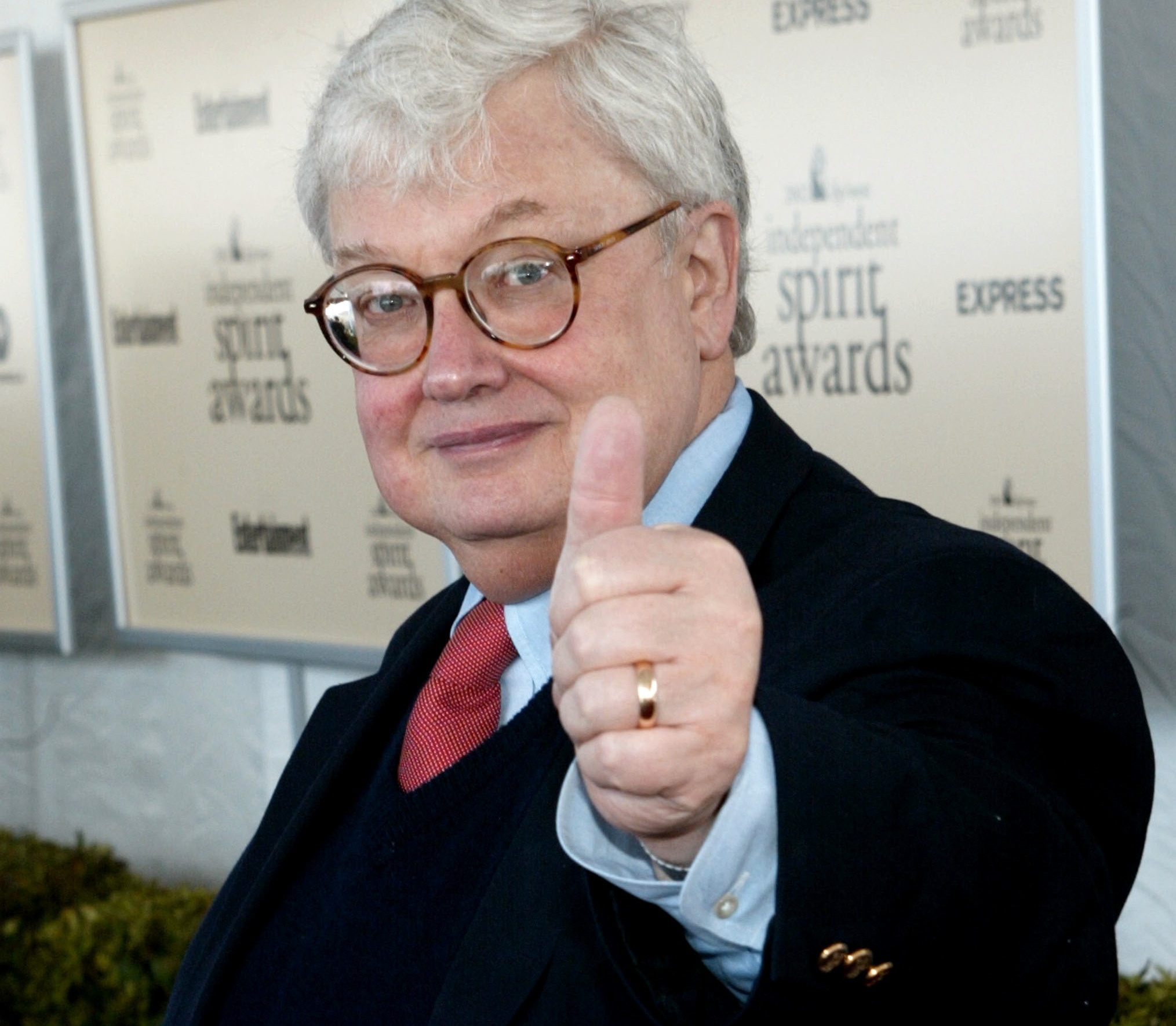
In assorted coverage, we paid respects to the late, great Roger Ebert, let readers ask Josh Fox anything, and remembered Bruce Springsteen’s intense relationship with the Big Man. We read the brochure for pot’s Nappa Valley, flagged some major Sully bait, and heard readers sound off on the limits of graphic war imagery.
Later, Oppenheimer explored the limits of his parenting skills, Richard Nieva spotlighted the share-economy and its discontents, and we considered the status of Pixar films in light of the Nemo-sequel. We met a member of the US chemical battalion in the Face of the Day, made it through the MHB bit-by-bit and took a breath in North Galiano Island, British Columbia for the VFYW.
I know it is coming, and I do not fear it, because I believe there is nothing on the other side of death to fear. I hope to be spared as much pain as possible on the approach path. I was perfectly content before I was born, and I think of death as the same state. I am grateful for the gifts of intelligence, love, wonder and laughter. You can’t say it wasn’t interesting. My lifetime’s memories are what I have brought home from the trip. I will require them for eternity no more than that little souvenir of the Eiffel Tower I brought home from Paris.
(Photo: Film critic Roger Ebert attends the 2002 Independent Spirit Awards in Santa Monica, California on March 23, 2002. By Frederick M. Brown/Getty Images)
Stefan Helmreich meditates on the act of cupping a seashell to one’s ear:
For generations, people who live by the sea have held that, when pressed to the ear, seashells resound with something like the roar of the ocean—a sensation whose explanation has offered a puzzle pleasurable and provocative to scientists and lay listeners alike.
In his 1915 Book of Wonders, popular science writer Rudolph Bodmer suggested that the association followed from the symbolic power of shells: “The sounds we hear when we hold a sea shell to the ear are not really the sound of the sea waves. We have come to imagine that they are because they sound like the waves of the sea, and knowledge that the shell originally came from the sea helps us to this conclusion very easily.” But the likeness, he urged, had a technical explanation—though one in which similitude still figured. Both sea and seashell sounds were generated by waves: “The sounds we hear in the sea shell are really air waves”—waves, that is, of concentrated, resonant noise from the listener’s surroundings.