Answer Of The Day

It comes (via David Corn) from Richard Perle on NPR:

Montagne: Ten years later, nearly 5000 American troops dead, thousands more with wounds, hundreds of thousands of Iraqis dead or wounded. When you think about this, was it worth it?

Perle: I’ve got to say I think that is not a reasonable question. What we did at the time was done with the belief that it was necessary to protect this nation. You can’t a decade later go back and say we shouldn’t have done that.

Neoconservatism: never look back; never question; never take responsibility; always avoid accountability. Just seek power. Then wage war.

Question Of The Day

“Is it really too much to ask that those who supported the invasion and occupation of Iraq so enthusiastically at the time, and whose second thoughts have been far less fierce and full-throated than their initial enthusiasm, not deploy virtually the exact same crusading rhetoric about the necessity of the use of U.S. power in the name of overthrowing tyrants, and of America serving as an armed midwife to the birth of democracy in the Middle East, with regard to Syria as they did a decade ago with regard to Iraq?” – David Rieff, TNR, in what appears to me to be a direct rebuke of Leon Wieseltier’s continued ambivalence.

Will Technology Destroy Security?

Bruce Schneier believes so:

Resilience — building systems able to survive unexpected and devastating attacks — is the best answer we have right now. We need to recognize that large-scale attacks will happen, that society can survive more than we give it credit for, and that we can design systems to survive these sorts of attacks. Calling terrorism an existential threat is ridiculous in a country where more people die each month in car crashes than died in the 9/11 terrorist attacks.

If the U.S. can survive the destruction of an entire city — witness New Orleans after Hurricane Katrina — we need to start acting like it, and planning for it. Still, it’s hard to see how resilience buys us anything but additional time. Technology will continue to advance, and right now we don’t know how to adapt any defenses — including resilience — fast enough.

Cannabis Is Not A Culture War

Mark Kleiman’s consulting firm has been hired to “advise the Washington State Liquor Control Board on implementing Washington’s I-502 marijuana legalization law.” Kleiman explains why, in the above video, he won’t say whether or not he smokes pot:

The question about my own use or non-use of pot always comes up, and I always answer the same way, with a polite (I hope) “None of your business.” I don’t think there’s any ill will involved in asking the question: journalists simply want to “place” their sources culturally on the hippie-to-jock spectrum. But I want to resist the whole idea that drug policy should be a clash of cultural identities rather than a serious discussion of harms and benefits.

Why Take His Name? Ctd

This embed is invalid

Many more readers sound off:

I’m to be married a month from now, and this has been a hot topic among friends. My fiancé will be taking my last name. But I’m a firm believer that we humans should take advantage of the one time that we have a little choice in what we are called. I say the new rules should go like this: best last name wins. I don’t want to name names, but our contest wasn’t even close. Her last name is British slang for penis, whereas mine is synonymous with brute Swedish strength. As the rest of my circle falls into marriage, I will be a big advocate for this new approach. Family legacy be damned.

Another:

When I started dating my wife, I let it be known that I would have no problem if she hyphenated or kept her own name. But since her maiden name was Virgin (yes, not Virginia, not Burgenie, Virgin) she was ready to ditch it as fast as she could. Virgin-Wright (or even Wright-Virgin) just wasn’t happening. So she remained a Virgin until marriage and not a moment more.

Another:

My mother’s advice: if the married name is easier to spell, go with it. It was, so I did! I’ve saved probably six and a half days of spelling my name out for people.

And another:

My daughter’s father and I are not married.  At the time when I was pregnant and after I gave birth, her father and I were planning on getting married.  That didn’t happen, and it is also probably the best thing for my daughter and me that it did not happen.  My daughter is now 20 years old.  I raised her on my own with the help of my supportive family.

My daughter also still has her father’s last name, and she’s the only one in our family that has that last name.  Why didn’t I change it when she was young and it was apparent that her father was not going to be a part of her life?  I didn’t change for a couple reasons.  The first reason is superficial – it’s a pretty last name, and it sounds beautiful with her first name.  The other reason is maybe more important – it’s the only thing her father gave her, and I want her to keep it and have something beautiful from her father.

Though I should also add that my daughter’s middle name is my last name. Even though I do love her father’s last name, I still wanted my name in there somewhere.

Another:

Within mine and my husband’s families I think we have almost every variation on this theme.  I kept mine.  Why?  My then fiancee said, “I fell in love with Susan Green, I want to be married to Susan Green.”  Twenty-odd years later he still is married to Susan Green.

America’s Greatest Sitcom

Wrapping up the Vulture’s “Sitcom Smackdown,” Matt Zoller Seitz calls Cheers “a flawless pearl glinting on a beach. But The Simpsons is the beach”:

At some point in its run, the show transcended aesthetic concerns and became an institution, a juggernaut, a public utility, a monument, and (yes, really) a living document that’s probably quoted as widely and frequently as the Bible, and with a lot more enthusiasm. I wouldn’t be surprised if The Simpsons ran for another twenty years, or until one of its principals croaked of old age. (What if it’s Dan Castellaneta and it happens during taping? One last Homeric wail of anguish! They’d probably weave it into the final episode, the way John Travolta did with Nancy Allen’s dying scream at the end of Blow Out.) Plus, at a certain point, indestructibility trumps every other value — especially if the artists in question have earned a spot in the pop culture pantheon, as The Simpsons surely has.

Related coverage of South Park and Arrested Development here.

Our Opinionated Media

1-On-MSNBC-Opinion-Dominates-Reporting

The Pew Research Center’s Project for Excellence in Journalism recently released their annual “State of the Media” report, which finds that opinion reporting on the big three cable networks is up:

On cable, the news structure of the three channels—the mix of interviews, packaged segments and live coverage—has changed. After relying on significantly distinct formats five years ago, the three rivals now look strikingly similar. … CNN, which has branded itself around reporting resources and reach, cut back between 2007 and 2012 on two areas tied to that brand—in-depth story packages and live event coverage. Even so, CNN is the only one of the three big cable news channels to produce more straight reporting than commentary over all. At the other end of that spectrum lies MSNBC, where opinion fills a full 85% of the channel’s airtime.

Paul Waldman argues that the decline of “straight reporting” isn’t necessarily something to worry about:

If MSNBC decides that analyzing, discussing, and debating the news is going to be their thing, and people watch it, that doesn’t do any harm. And indeed, you’ll learn more from an episode of one of MSNBC’s better talk shows than you will from a dozen reported packages about this week’s Trial of the Century or the latest snowstorm moving through the Midwest.

In Yglesias’ view, news consumers have never had it better:

Just ask yourself: Is there more or less good material for you to read today than there was 13 years ago? The answer is, clearly, more. Indeed, one thing the Pew report correctly emphasizes is that (as we at Slate are well aware) it’s hard to make lots of money selling ads online. But it’s hard primarily for the same reason that the Internet is such a bonanza for readers: There’s lots of competition and lots of stuff to read. A traditional newspaper used to compete with a single cross-town rival. Time would compete with Newsweek. Time doesn’t compete with Newsweek anymore: Instead it competes with every single English-language website on the planet. It’s tough, but it merely underscores the extent of the enormous advances in productivity that are transforming the industry.

Ed Kilgore, meanwhile, zooms in on local coverage:

[I]t’s the data on local TV that’s really alarming. According to Pew, coverage of politics and government now accounts for an average of 3 percent of the airtime on local television “newscasts,” less than half the proportion registered in 2005. By comparison, 71% of newscast airtime is absorbed by crimes (or trials), traffic and weather, sports, and accidents/”bizarre events”/disasters. When combined with the cutbacks and disappearances afflicting print media, and the relatively small proportion of online content devoted to state and local government developments, you’ve got a host of governments operating virtually in the dark.

(Chart from the Pew Report)

Barack Obama vs George Washington

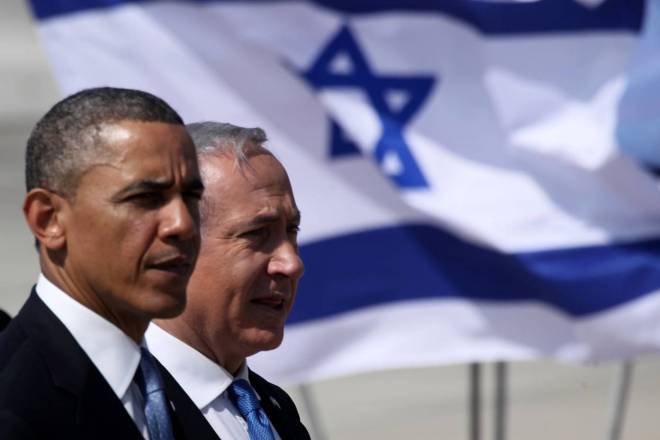
President Obama's Official Visit To Israel And The West Bank Day One

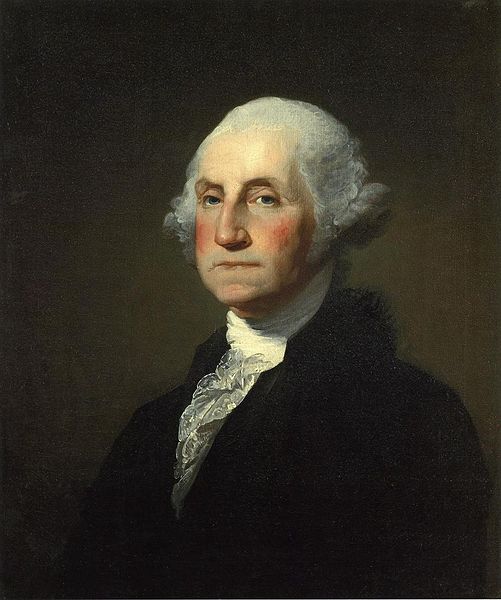
A reminder of the words of the first American president, George Washington, in his Farewell Address:

“The Nation, which indulges towards another an habitual hatred, or an habitual fondness, is in some degree a slave. It is a slave to its animosity or to its affection, either of which is sufficient to lead it astray from its duty and its interest …

501px-Gilbert_Stuart_Williamstown_Portrait_of_George_WashingtonA passionate attachment of one Nation for another produces a variety of evils. Sympathy for the favorite Nation, facilitating the illusion of an imaginary common interest, in cases where no real common interest exists, and infusing into one the enmities of the other, betrays the former into a participation in the quarrels and wars of the latter, without adequate inducement or justification.

It leads also to concessions to the favorite Nation of privileges denied to others, which is apt doubly to injure the Nation making the concessions; by unnecessarily parting with what ought to have been retained; and by exciting jealousy, ill-will, and a disposition to retaliate, in the parties from whom equal privileges are withheld. And it gives to ambitious, corrupted, or deluded citizens, (who devote themselves to the favorite nation,) facility to betray or sacrifice the interests of their own country, without odium, sometimes even with popularity; gilding, with the appearances of a virtuous sense of obligation, a commendable deference for public opinion, or a laudable zeal for public good, the base or foolish compliances of ambition, corruption, or infatuation,” – George Washington, in his Farewell Address.

And now, Barack Obama, as he arrives in Israel:

“So as I begin this visit, let me say as clearly as I can –the United States of America stands with the State of Israel because it is in our fundamental national security interest to stand with Israel. It makes us both stronger. It makes us both more prosperous. And it makes the world a better place. That’s why the United States was the very first nation to recognize the State of Israel 65 years ago. That’s why the Star of David and the Stars and Stripes fly together today. And that is why I’m confident in declaring that our alliance is eternal, it is forever – lanetzach.”

The concept of an “eternal”, and “unbreakable” alliance with any other single country is a statement George Washington would have regarded as deeply corrosive of foreign policy and domestic governance. To declare it in the language of the foreign country has even deeper resonance. It is now the governing principle of both political parties – and the primary reason we may once again be headed to war with unforeseeable consequences in the Middle East.

If anyone ever believed Obama was able to change that, or that any president can change that, they have been taught an important lesson. We’ve come a long, long way from George Washington’s vision of America. We have defined another, decades-old country half way across the world as integral to our own.

(Photo: President Barack Obama is greeted by Israeli Prime Minister Benjamin Netanyahu during an official welcoming ceremony on his arrival at Ben Gurion International Airport on March, 20, 2013 near Tel Aviv, Israel. By Marc Israel Sellem-Pool/Getty Images.)

From The Archive: The First Hathos Alert

I wrote on June 20, 2001:

John Derbyshire’s uncategorizable advice to his timid son is now up on National Review Online. Who else would encourage his offspring to fight back against a bully by bribing him with ice-cream and the words: “But I want to see the blood. Ice cream for blood.” The piece ends with the injunction that anyone who advocates single motherhood as a lifestyle option should be “sewn into a heavy leather sack with lots of broken glass and rolled down a l-o-n-g slope.” Leather? Have I created a monster? Derb has also just written what must be one of the weirdest discourses on fellatio I have ever read in New York Press. It begins: “I have been thinking about fellatio. No, no, don’t hit the back button. This is serious stuff. I have issues.” On that last sentence, I think we can all agree.

A colleague of mine – I can’t remember who, maybe they’ll email me to remind me – once coined the term “hathos” for the compulsive need to read something you find horrifying, yet irresistible. Read these pieces and you’ll know what I mean.