How Bad Will The Cuts Be?

Jonathan Cohn expects the sequester to hobble the recovery:

The recovery is already pretty weak. Taking money out of it, which is what the sequester cuts would do, would make it weaker. Non-partisan analysts, including those at the Congressional Budget Office and private firms like Macroeconomic Advisers, predict that the sequester cuts would reduce growth by anywhere from a half to a full percentage point in the next year. That would probably reduce the number of jobs in the economy by a few hundred thousand. The unemployment rate, which has been slowly dropping, would probably remain at around 8 percent.

Sharon Parrott highlights other painful cuts. Alex Koppelman, on the other hand, worries that the sequester won’t be catastrophic:

Obama made much of his reëlection campaign about the necessity of government and the good it does, and his second term will clearly be built on those themes. Important as it is to avoid the sequester going into effect, if he begins his final four years in office by painting doomsday scenarios that don’t actually come true, he may end up undermining everything he has to say about government before he even has time to really get started.

Suderman pounces on this type of argument:

That’s the real fear here: not that sequestration will result in terrible things happening, but that it won’t result in very much at all, that few will notice or be deeply upset by its effects, and that people will learn to live with a government that spends very slightly less than it was planning to over the next ten years (though still far more than it did for the vast majority of the last decade).

Release The Assassination Memos

162132935

I think my patience broke with the revelation that the Obama administration was more willing to give Butters some bullshit info on Benghazi than to give any ground on releasing the full, complete, original memos used to justify the assassination of Americans who have joined the Jihadist enemy. The cynicism was staggering. Those of us who supported Obama need to express our disgust and anger at this – especially those of us who have defended the drone program as, within key judicial and congressional constraints, sometimes the least worst option in keeping us safe.

This cannot be regarded as somehow a state secret. It divulges no plans; it just explains to American citizens the criteria by which their own president can kill them from the sky without any due process. If the torture memos could be released by this administration, as they were, so can these. And not just to some Congressional Committee – to all of us.

Here’s a question Rand Paul has asked of John Brennan and to which the administration has never given an answer:

Do you believe that the President has the power to authorize lethal force, such as a drone strike, against a US citizen on US soil, and without trial?”

What excuse does Brennan have for not answering this? I’m with a recent stellar Greenwald post on this. Until he does, he should be kept from his nominated post at the CIA. This is a core rupture of the Constitution – as core as the rupture of executive torture. It redefines the relationship between the executive and the people he or she serves. It makes our president judge, jury and executioner of any American citizen anywhere in the world, including the US. We already know that the executive seized a US citizen without charges under Bush-Cheney and tortured him into a physical wreck of a broken soul. Torture is always illegal and evil; self-defense in a just war isn’t. But if the war is against your own citizens, then the very least that those citizens deserve is a full accounting of the rationale behind such a disturbing power-grab.

The president promised more transparency on this in his State of the Union. He has not delivered yet. Maybe he will – but I cannot say I’m optimistic with John Brennan potentially running the CIA. But what staggers me is the transition from candidate Obama to president. Many of us thought this one was different; he understood the new era of mass information and social media; he grasped the need to communicate directly to Americans in all sorts of unconventional ways; he pledged to end the abuses of executive power under Bush and he promised to be the most transparent administration in history.

And yet when it comes to how he decides whether to kill you sitting in your living room, he won’t let you know the legal basis for it, or allow a check from another branch of government that is not just a rubber stamp. It’s unacceptable. And this much I know: the CIA has long held presidents hostage and after they literally got away with war crimes, the current CIA appears to be unaccountable to anyone. War criminals who destroyed the evidence of their own crimes, like Jose Rodriguez, strut on the national stage as if they are inviolable, utterly above the law and beyond the public’s scrutiny. Because they are.

It’s time for the president to remind them who pays their salaries. We do. And when the deepest constitutional protections created by the Founding Fathers against the temptation of tyranny are cast casually and arrogantly aside with a “trust us” piece of bullshit, it’s time to get angrier.

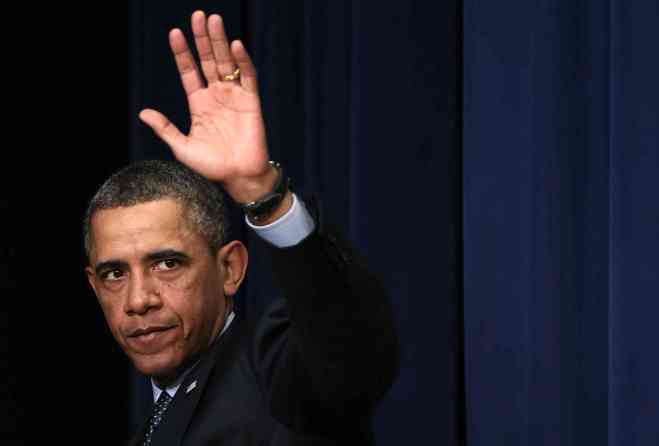
(Photo: U.S. President Barack Obama waves after speaking at an event at the Eisenhower Executive Office Building February 19, 2013 in Washington, DC. By Win McNamee/Getty Images)

Leading The Party In The Wrong Direction

Pareene Kornacki bets that Ted Cruz will hold back the GOP:

Cruz is now positioned as a major obstacle to the ideological modernization that the Republican Party is desperately in need of. If his brand of conservatism is treated as the gold standard of purity by the conservative media and conservative activists, Republican leaders will have a hard time moving the party away from its Obama-era orthodoxy. This could affect the calculations of Republican office-holders in the coming months, as Congress tackles immigration, guns and other issues on which the GOP is out of step with mainstream opinion.

Waldman’s take on the controversial new Senator:

A year or two ago, if you asked Republicans to list their next generation of stars Ted Cruz’s name would inevitably have come up. Young (he’s only 42), Latino (his father emigrated from Cuba), smart (Princeton, Harvard Law) and articulate (he was a champion debater), he looked like someone with an unlimited future. But then he got to Washington and started acting like the reincarnation of Joe McCarthy, and now, barely a month into his Senate career, we can say with a fair degree of certainty that Ted Cruz is not going to be the national superstar many predicted he’d be. If things go well, he might be the next Jim DeMint—the hard-line leader of the extremist Republicans in the Senate, someone who helps the Tea Party and aids some right-wing candidates win primaries over more mainstream Republicans. But I’m guessing that like DeMint, he won’t ever write a single piece of meaningful legislation and he’ll give the Republican party nothing but headaches as it struggles to look less like a party of haters and nutballs.

Eisenhower’s Revenge

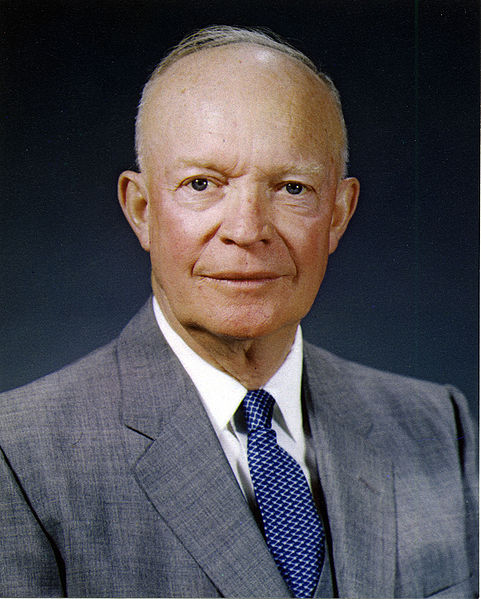
As the sequester looms, I have come to peace with it. It’s dumb, but it’s not a massive cut. It’s $83 billion, and half of it will come from the Pentagon. If you believe, as I do, that “defense” is massively over-funded and may even 481px-Dwight_D._Eisenhower,_official_photo_portrait,_May_29,_1959now be creating its own future enemies in Af-Pak and Africa to sustain its budgetary wants, then any way to bring it back to reasonable, non-hegemonic size is helpful.

More to the point, the Bush-Cheney years have destroyed the notion that the US military never makes mistakes, can never start a new Vietnam, and always has an exit plan if it invades and occupies a country (Bush and Cheney forgot theirs in their rush to find weapons that didn’t exist). Their wars – failed at worst, inconclusive at best, but indisputably budget-breaking – have shifted the country away from neo-imperialism for a while (unless the Greater Israel Lobby really can force the rest of us into a new war to keep Israel’s nukes the only game in the region).

And in a budget crisis, where the GOP is rightly demanding structural spending cuts, we have two big shiny objects to raid: Medicare, and defense. (Social security could be saved with minor tinkering.) Now if Americans were to choose between taking care of granny or policing the entire Pacific ocean for the indefinite future, I have a feeling they’d pick granny. And it turns out I’m not wrong:

In order to reduce America’s debts and deficits, more than twice as many voters said they would support defense cuts as said they would support cuts to social programs.

Forty-nine percent of respondents said they would support cutting military spending, while just 23 percent said they would support slashing Social Security and Medicare. An overwhelming majority, 69 percent, said they would oppose cuts to social programs.

The public wants cuts; and it wants them overwhelmingly from defense, rather than Medicare. So let the sequester begin. It’s the dumbest version of what the American people want – but with this Congress, dumb is as good as we’ll ever get. As for Medicare, it too needs major surgery. But Obama has pledged to cut it by the same amount as Bowles-Simpson over the next ten years. If a Republican president had said that, they’d be giving him a standing O. But this is the moderate Republican Obama – and there’s nothing more that the GOP base hates than a moderate Republican. Eisenhower would have no home in this party. He loathed its core elements more than perhaps any other Republican president apart from George H W Bush.

Green Shoots On The Right, Ctd

Two encouraging developments: the far right social conservative, Ken Cuccinelli, got raked over the coals for his extremism at a recent meeting with northern Virginia business leaders. They fear his Akin-Mourdock style could not just lose elections but scare investors from the state. Then – and yes, I know it’s not exactly ground-breaking – but Daniel Foster at NRO backs including the handful of people who comprise GOProud in the CPAC loony-right gathering. This quote managed to rustle up a smidgen of hope:

[O]ne of conservatism’s great intellectual strengths is that “conservatism” is a contested concept. If confabs like CPAC aren’t going to reflect the robust and vital internal debate about the present and future of conservatism, what are they good for?

It’s Policy, Stupid

Stuart Stevens, lead strategist for Romney’s 2012 campaign, rightly disagrees with the idea that Mitt lost because of social media. His organizational haplessness (yes, he was supposed to be the guy who knew how things worked) didn’t help, but it was his awful 1980s doctrines from a brain-dead party that brought him down:

In this fourth decade of the Internet, one of the original truisms is still true: Content is king. The ugly, clunky Drudge Report site still harvests record numbers of eyeballs because it serves up a hearty meal at a good price: free. The content rule is true across mediums. How many graphic makeovers and relaunches has CNN attempted to arrest its slow slide? …

So it is in politics. A Republican renaissance will inevitably be driven by policy. Parties must constantly reinvent themselves and prove their relevance to voters. Two of the biggest brains — and hearts — of the Bush era, Michael Gerson and Peter Wehner, laid out the challenge brilliantly in an essay in the latest Commentary magazine (“How to Save the Republican Party”). Republican media strategist and commentator Alex Castellanos has launched a search for solutions called New Republican (NewRepublican.org). These efforts are exactly what Republicans need as we regroup and plan for the future.

Justin Green seconds Stevens:

One part of the Obama campaign that drove conservatives – myself included – crazy was “Julia,” a timeline of what a young woman could expect from the government over the course of her lifetime. It was maddening seeing the Obama campaign basically saying: “Hey, government’s got this.”

But what was far more maddening was the utter lack of a concrete response from the Romney campaign. Making fun of “Julia” is one thing. Saying how Republican policies better help women than policies offered by Democrats is quite another. That’s where Romney failed, and it’s why no social media overhaul can compensate for policies that fail to address the basic needs and desires of the American electorate.

Spot The Sponsored Content

A reader writes:

This discussion about blurring the lines of advertising and journalistic content reminded me of the House of Cards ad campaign on Politico. For weeks leading up to the Netflix premiere, the political news site had a pop-up ad for House of house-of-politicoCards plastered all over their site and app. Then they started running articles with interviews from the creator and Kevin Spacey that were also preceded by the same ad as well as the banner at the bottom of the page. Then the day prior to the show’s premier they did a follow-up story, again with the banner ad at the bottom of the article (see attached screenshot). Politico even gets a shout-out on the show when Zoe leaves the world of old media to take a job with the new media site Slugline: “Six months from now, Slugline will be what Politico was a year and a half ago. Everyone at Politico reads it because Slugline’s breaking stories before they are.”

Obviously I don’t know what the contractual agreement is between the two parties, but this stuff just reminds me of shit that the right-wing media pulls when they scare their audience about out-of-control inflation and economic doomsday scenarios during a segment that segues into commercials for gold and survival seed packs. I’m all for new revenue streams, but content created in conjunction with the advertisers can be a slippery slope. One only needs to look at the cozy relationship between the tobacco companies and cable networks during the ’50s to see how a myopic deference to advertisers can do the public a disservice.

A bleg to readers: email us with more examples you find of editorial content and advertising placed perilously close together.

Crying As Incontinence

Thomas Dixon tours the strange theories on tears proposed over the years:

[T]here is a traditional Yiddish phrase for crying that translates literally as ‘pissing from the eyes’. This old idea has been reinforced by modern science in the last century and a half. In recent decades, the most widely quoted theorist of tears has been the American biochemist William H Frey II who, since the 1980s, has been arguing that the metaphor of weeping as excretion should be taken quite literally. In an interview with The New York Times in 1982, Frey claimed that crying is ‘an exocrine process’ which, ‘like exhaling, urinating, defecating and sweating’ releases toxic substances from the body — in this case, so-called ‘stress hormones’.

It gets weirder:

In a couple of articles in the 1940s, the influential American Freudian Phyllis Greenacre put forward the view that neurotic weeping in women was to be understood as a displacement of urination. Involved in this theory was the idea of ‘body-phallus identification’ and the production of tears by women as an attempt to simulate male urination.

Outsourcing Paperwork

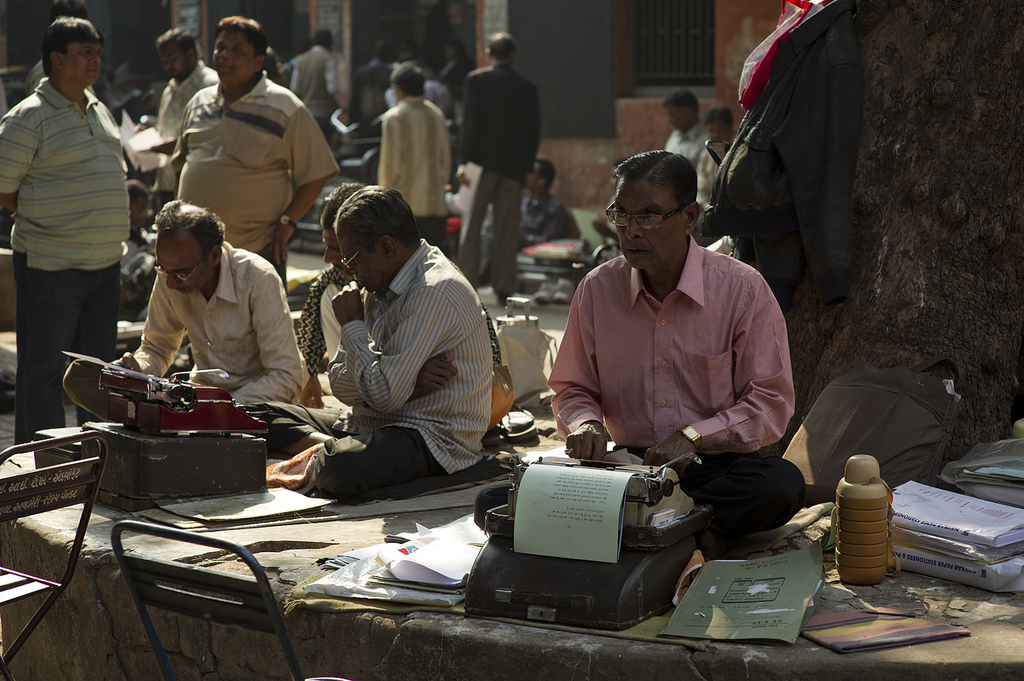
Erica Westly is fascinated by India’s typists-for-hire:

I suspect that the perversion of doing office work in the open air was part of the appeal. I also liked how the sidewalk stalls transformed what was normally an isolating profession into a social activity. Sidewalk typists interact with the community directly, and their work matters in an immediate sense. In India, which consistently ranks as one of the most bureaucratic countries in the world, paperwork is an unavoidable part of life. Even seemingly minor purchases and service requests, such as hiring an electrician, can involve filling out forms, sometimes in multiple languages. Most Indian typists can type in English and at least one official Indian language, of which there are more than 20 besides Hindi. Some of the typists’ customers are illiterate, but most simply lack the equipment and expertise to type up the forms they need themselves.

(Photo by Flickr user Padmanaba01)