Celebrating The Mass Murder Of Innocents

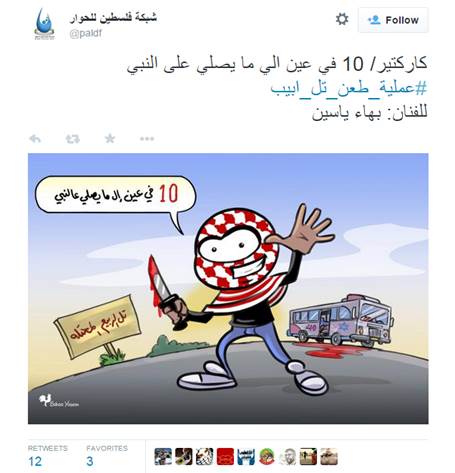
Some pro-Palestinian cartoons in the immediate wake of a mass stabbing on a public bus are beyond depraved:

img74528He’s bragging that he killed ten Israeli civilians with a knife in Tel Aviv. The street sign reads:  Tel-Arabia Tel Al-Rabia Al-Muhtalla, or “Occupied Hill of the Spring” (hill of the spring being a literal translation of the Hebrew Tel Aviv). Then this:

img74527The caption? “Good Morning, Palestine.”

Ugh.

(Translation error caught by a reader.)

Lending Money To Loved Ones

A reader dissents over how we framed this letter:

I don’t see what is so “horrible” in what Ayn Rand wrote to her niece. First, the niece didn’t ask for $25 as a gift; she asked to borrow it.  If you read the letter, Rand gives TWO examples of where a similar request was made, and the money was NOT used to accomplish the stated goal, nor was it paid back.  Second, Rand didn’t insist on charging interest, merely getting the principle back.  Third, she simply insisted the niece be honest and A) spend it on what she said, and B) pay the loan back when she had the chance instead of spending on something else.

Or if you don’t want to be horrible like her, I too could use some new clothes to improve my employment opportunities, and a $250 (inflation adjusted from 1949) Amazon gift credit in reply would help. And you shouldn’t be horrible about insisting that I really use it for clothes, or that I pay it back, much less according to some terms.  If you did insist, you would be “horrible” just like her.

This is the one thing often missed in Ayn Rand’s works: the heroes keep their promises, and pay what they owe “to the last dime”, often at great cost.

Another reader notes:

It would be nice if all of the sites bringing up this letter would put it into context.

1) Rand had previously had a misunderstanding with one of the niece’s two older sisters regarding money she’d loaned her. 2) The niece took the letter in good spirits. Rand liked her response and the girl not only got the money, but began a correspondence with Rand in which Rand was surprisingly maternal and affectionate towards her. 3) The niece’s oldest sister was one of Rand’s best friends until Rand’s death. 4) The niece the letter was sent to and her middle sister, after the misunderstanding about the loan had been cleared up, had cordial relations with Rand for years.

Another broadens the conversation:

I’m a bit miffed at how ill treated this letter is in your post. What an invaluable lesson this is about debt!  If you read the whole letter – ahem, you cut the most important part after she offers terms, which are quite reasonable, in which she warns that once you start earning money you will want to spend it on other things besides the money you owe.  This is quite right!  We all love to slap it on the credit card, and then when faced with the option to buy a new kitchen appliance, fancy meal, or pair of shoes or pay down our debt, how many of us choose the latter?  Not enough.

Most people in the US think nothing about taking on a new credit card – or a fancy new degree – and the mountain of “irresponsibly” laid down debt literally destroys their lives.  It destroys their entrepreneurial spirit; it destroys their educational, relational, and employment opportunities; it destroys their quality of life and entrenches mild- to severe poverty; and it degrades them psychologically and virtually eliminates any taste for risk taking and enterprise, locking them into “getting by” employment to constantly service the debt.

Would that they had someone as wise as Rand cautioning them to think reeeeealy hard before taking on $40,000 for that BS Degree or $10,000 for a late-model car when they could be driving around a reliable beater.  Think of the suffering that could have been alleviated if such lessons were taught to the entire generation of then-17 year old millennials who are currently groaning under their debt.

And let’s look at the massive handicap our national debt has on this same generation and their children.  Would that anyone in Congress had had an aunt as shrewd as Ms. Rand!  Look at the Greek debt or historic Latin American debt.  How “horrible” would it have been to have a tut-tutting aunt make people painfully aware of the potential repercussions of their decisions before undertaking them?  How much global suffering could have been avoided with a little more tough love from a wiry, stick-in-the-mud Aunty like Ayn Rand?

Sure, she moralizes with the girl (“I hate irresponsible people”) and makes it more personal than perhaps it needs to be.  But it is her money, and she is certainly entitled to do what she wants with it.  And why does she owe an open ended, never-to-be-paid-back line of credit to her relatives?  If all of us lent to all our relatives whenever they came a-begging, we’d be as broke as they are!

Russia And Ukraine Are Still At War

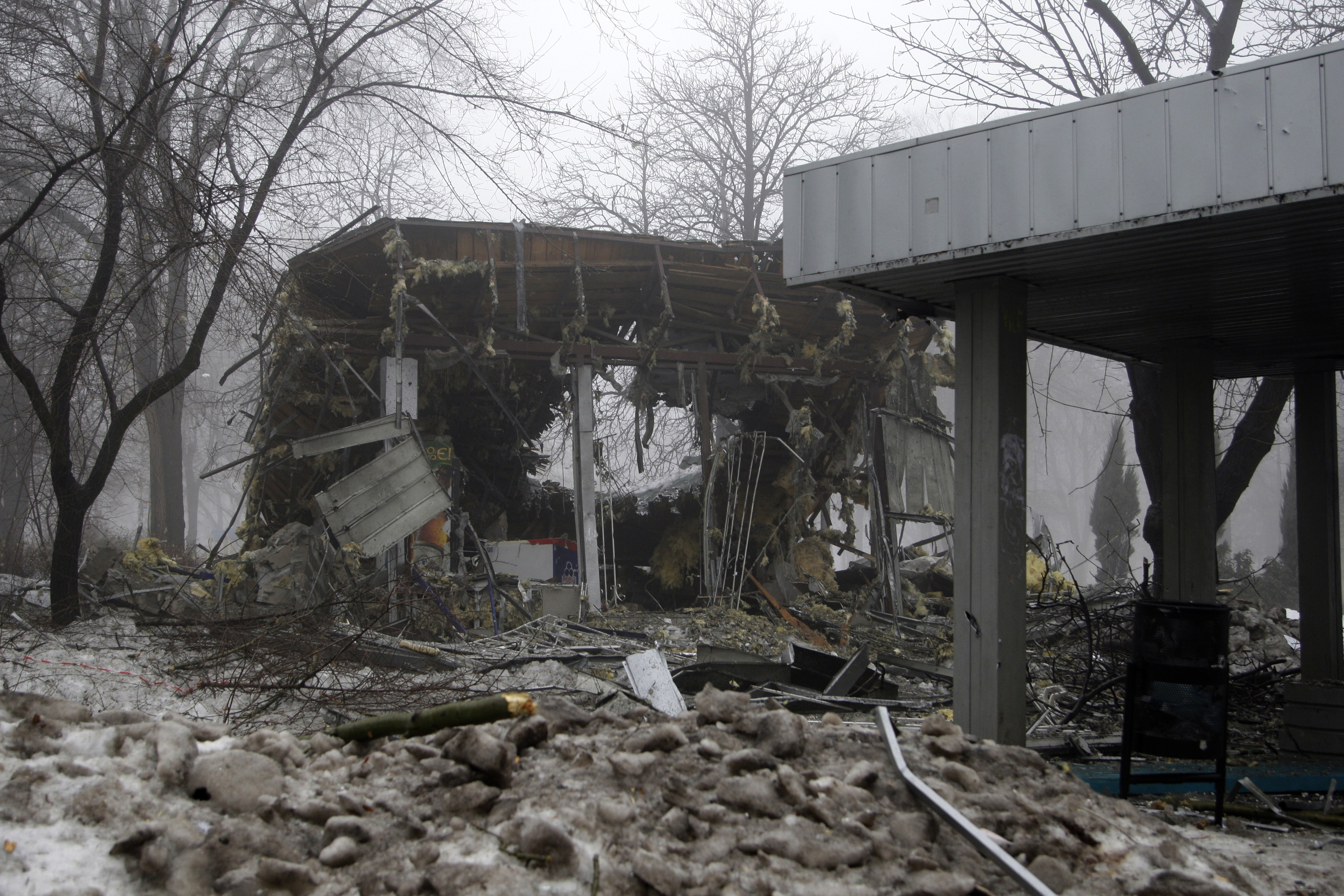
Clashes with pro-Russian separatists in Donetsk

New fighting is underway in Eastern Ukraine, breaking a months-long ceasefire. Alexander Motyl assesses the scene:

The war in eastern Ukraine will go on, despite the best efforts of the West and Kyiv to reach a negotiated settlement. For one thing, Putin’s proxies in eastern Ukraine are out-of-control warlords for whom war has become their only raison d’être. For another, Putin will want no permanent peace, as that would only stabilize Ukraine. A large-scale military assault aimed at capturing all of Ukraine, or even establishing a corridor from Russia to the Crimea, is probably out of the question, as the Ukrainian armed forces are strong enough to deter it. But low-level fighting of the kind that has characterized the Donbas for the last few months seems a sure bet. Equally likely is a continuation of terrorist attacks within Ukraine, which Ukraine will survive while Putin’s reputation as an exporter of terrorism will only grow.

Ukraine will continue to insist that the Russian-occupied territories are occupied only “temporarily,” and Russia will continue to insist that its war against Ukraine is really only an internal Ukrainian squabble, but the end result of Russia’s continued occupation of both the Donbas enclave and the Crimea will be the continued, if uneven, consolidation of Russian rule. Faced with tough economic circumstances at home, Kyiv will continue to reduce its economic relations with, and financial subsidy of, the occupied territories. The burden of supporting the increasingly desperate inhabitants will fall on Russia, which will have to decide whether it prefers to make hay from a humanitarian catastrophe of its own making or actually to help save the victims of its imperialist policies. My guess is that Putin the great humanitarian will opt for catastrophe.

Leonid Bershidsky sees no end in sight:

Regardless of the international reaction, Russia will crush Ukraine’s military hopes every time they arise, simply because it has a stronger, better-trained army. It is wishful thinking to believe the balance of forces has changed since September, when Ukrainians crumbled in the face of what were, by all accounts, just a few thousand crack Russian troops. …

[If Poroshenko] is counting on Russia to succumb to Western pressure and low oil prices and give up, he has to intensify fighting in a war he cannot win. That is an extremely risky bet, since Russia can take an inordinate amount of pain as long as its people continue to believe Putin’s cause is just. Poroshenko’s success is also predicated on Western nations’ acquiescence in being dragged deeper into the conflict, because for Ukraine to hold out even a few months, it needs better weaponry. Yet, like Putin, the Ukrainian president can’t afford to give in: He would be swept away in a tide of protest, led by fighters returning from the front lines.

In the meantime, Ukraine is teetering on the economic edge:

Ukraine faces an acute economic crisis that represents no less a threat to its survival than Russia does. Kyiv has come to rely on assistance from the International Monetary Fund and Western donors to survive; yet the Western commitment to support Ukraine financially is limited. Indeed, Moody’s has recently warned that Ukrainian default is very likely, pointing out that the country’s current bailout package provided by the IMF, EU and other donors is not sufficient to cover $10bln external debt repayments that come due this year. The Economist suggests that Ukraine needs an additional bailout of $20bln, noting that despite chatter about a “donors conference,” no government seems willing to put up the money.

Larison isn’t surprised:

All of the obstacles to bailing out Ukraine remain. Western institutions won’t lend Ukraine the money it needs without imposing strict conditions, and the Ukrainian government cannot meet those conditions without wrecking itself politically. If the money were “found” to give to Ukraine in the absence of significant reforms, most of it would likely be lost to corruption or sent on to Russia to pay Ukraine’s debts. That would be a waste of funds, and even when there are strings attached there is not much interest in Western capitals to provide a lot of aid. Western governments decided over the last year that Ukraine wasn’t worth very much to them, and under the circumstances it’s hard to fault them for reaching that decision.

Regardless, the Bloomberg Editors insist that the West keep the sanctions going:

On at least two occasions, [the sanctions] have caused Putin to scale back aggression in Ukraine — in May, when a threat to broaden sanctions pressured Russia to drop opposition to Ukraine’s presidential election, and again last fall, when a Russian military buildup and rebel plans to take three Ukrainian cities evaporated.

Just as important is that exacting a price from Russia for its military aggression unites the EU behind the vital security interests of at least four members — Poland and the three Baltic states. The measures also serve as a financial disincentive for Putin to embark on military adventures beyond Ukraine, and they erode support for him among neighbors such as Belarus and Kazakhstan, now alarmed about what Putin may intend for them.

(Photo: Buildings are destroyed during the clashes between Ukrainian security forces and pro-Russian separatists on January 20, 2015 near the airport in Donetsk, eastern Ukraine. By Alexander Ermochenko/Anadolu Agency/Getty Images)

Soaking The One Percent

The capital gains tax hikes Obama proposed last night are aimed squarely at them:

One Percent

Mark Whitehouse spells out how the richest benefit from our current tax system:

Taken together, the capital-gains and inheritance-tax breaks were worth more than $200 billion in 2013, the Congressional Budget Office estimated. The benefits accrued almost entirely to the rich: They boosted the after-tax income of the top 1 percent by more than 6 percent, and had an almost negligible effect on the lowest-earning 40 percent of U.S. households.

Andrew Flowers provides more background on capital gains:

According to the Congressional Budget Office, as of 2011, the top 1 percent of income earners in the U.S. get more than a third of their income from capital gains. For context, the typical annual income for those in the top 1 percent is about $1.4 million.

In earning so much from the sale of investments, the wealthiest 1 percent are an outlier: 36 percent of their income comes from capital gains. Those with incomes in the 96th to 99th percentile — who earn about $300,000 per year — only earn about 10 percent of their income from investments. That share is even lower for those below the 90th percentile.

Annie Lowry looks at how Obama’s proposals would impact the Romneys:

Taken together, these proposals and others would not just take aim at the wealthiest earners in America. It would take aim at dynastic wealth – the accumulation of investment assets and their light-tax passage to the next generation. It is a timely concern, one thrust into the spotlight last year by Thomas Piketty and his surprise bestseller on inequality, Capital in the Twenty-First Century. Right now, American wealth inequality is primarily driven by American income inequality. Big earners purchase houses, stocks, businesses, and other assets that swell in value over time. Inheritances don’t actually figure much into the equation. In fact, wealth transfers as a proportion of overall net worth have fallen from 29 percent in 1989 to 19 percent in 2007. But in the future, inherited wealth stands to become a bigger and bigger deal, as all those corporate executives like Mitt pass away and pass their money on. Accenture, the consulting firm, anticipates a wave of transfers totaling more than $10 trillion coming in the next decades.

That means Obama’s proposal would not just tax Romney more heavily today, it would limit his ability to create dynastic wealth for his heirs. Robin Hood, I think, would approve.

Face Of The Day

Lutz Bachmann styled as Adolf Hitler

The leader of Germany’s Pegida anti-Islamization movement in a mugshot from his Facebook page:

Lutz Bachmann, 41, a butcher’s son from Dresden and a co-founder of Pegida, posed as Hitler after a session at his hairdresser’s, complete with a Hitler hairstyle dyed black and parted on the right, and a toothbrush moustache. The image, which appeared on Bachmann’s Facebook page, was accompanied by the line “he’s back”, after a bestselling 2012 novel about Hitler, Er ist wieder da, by author Timur Vermes.

Bachmann deleted his profile shortly after being contacted by the Dresden Morgenpost newspaper.

He also just resigned the leadership of the movement on the eve of a major rally. You couldn’t really make this up, could you?

The Reality Of Theocracy

It can throw men off a high roof for being gay:

1421438213011.cached

All the grotesque punishments for men and women are because of violations of extreme Islamic purity. More images of Jihadist barbarism via The Daily Beast via Twitter, seen below:

1421755547985.cached

And a scene from the Bible, of a woman being stoned to death. This is a culture that, far from reconciling itself with modernity, is going to try to recreate its own fantasy of the 7th Century in the 21st. I fear it will have to implode or be destroyed by other Muslim powers and forces before it retreats into the dustbin of history. Our task is to preserve what’s left of civilization and hope we can outlast it, without becoming something more like it.


How To Get Ahead In Advertising

Just join the New York Times:

The Times’ job postings on the career website LinkedIn show there are at least seven new positions on the market—ranging from finance editor to social analytics manager—for T Brand Studio, a business-side operation that produces advertiser content in storytelling form. The other new positions up for grabs are business editor, technology editor, associate editor, social media associate and, on the tech side, UX designer. T Brand Studio launched roughly a year ago in conjunction with the Times‘ native advertising platform, Paid Posts.

Asked about the hiring spree, Times spokeswoman Linda Zebian said the studio did more than 40 campaigns, for companies ranging from Netflix to Shell, during its inaugural 2014 run and “we are ramping up our headcount in every way.”

The NYT has gone from dismissing the whole idea as inappropriate for the Times to embracing it full-throttle and hiring “brand journalists” to write ad copy disguised as articles. Freddie worries about the obvious next step: private corporations just buying magazines – and turning them into propaganda sheets for their interests:

Via Gawker, a private equity firm that is massively invested in for-profit colleges has purchased a controlling stake in Inside Higher Ed, a publication that covers colleges and universities. That’s about as direct a conflict of interest as you can get.

1. Inside Higher Ed should not be trusted as a source of legitimate news about for-profit colleges and universities any longer, and perhaps not trusted as a legitimate source of news, period. Treat anything published by it about for-profit colleges like PR or advertising, because that’s essentially what it’ll be.

Read the rest here.

What The Hell Is Happening In Yemen?

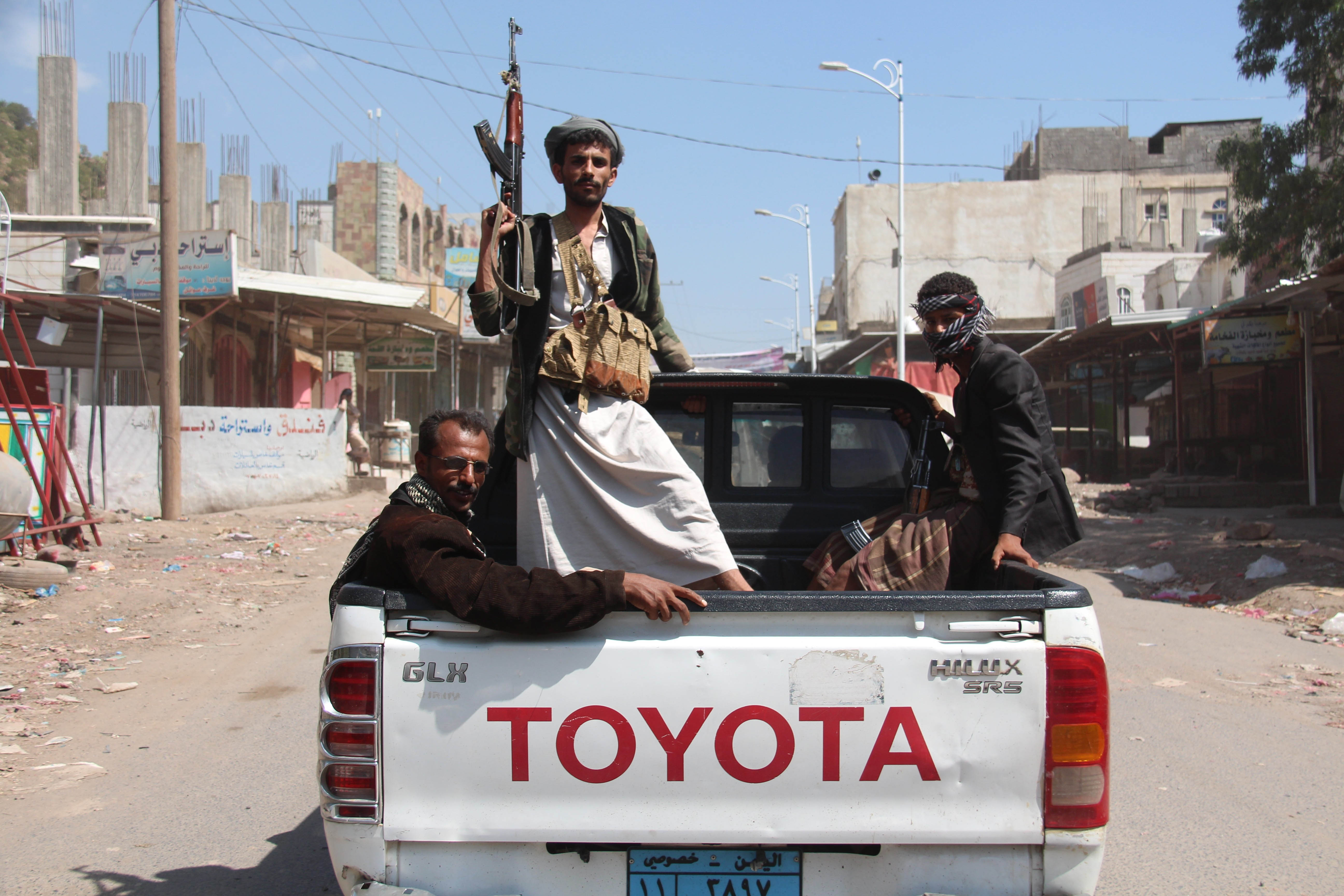
Houthis take control of al-Udayn district in Ibb, Yemen

It looks like the government may soon be overthrown, as US-backed President Abed Rabbo Mansour Hadi is reportedly being held “captive” in his home by Shiite Houthis rebels. Hakim Almasmari and Martin Chulov put the development in context:

The influence of the Houthis has expanded drastically since they stormed into Sana’a last September, rattling a nascent new order that was trying to find its feet three years after a revolt ousted veteran leader Ali Abdullah Saleh. In the five months since, Hadi had struggled to impose his government’s will. Besieged and unable to control key sections of Yemen’s military, he now seems to have few options and officials in Sana’a were on Tuesday speculating that military rule could soon be imposed across the country. The Houthi push was a death knell to a 2011 political transition backed by the Gulf states, which had removed Saleh from power after 40 years. A key selling point of the change had been to introduce broad social reforms that would transform the poorest state in the Arab world. Instead, Yemen remained beset by poverty and political torpor.

The chaos isn’t exactly new:

[T]he government and aligned tribes have been battling the Houthis in the north on-and-off for more than a decade; [al Qaeda in the Arabian Peninsula] is active in Yemen’s south, provoking regular US drone strikes; a southern secessionist movement has been gaining strength … According to the UN Office for Coordination of Humanitarian Affairs (OCHA), close to 16 million people in Yemen – more than half the population – will need humanitarian aid in 2015, of whom eight million are children. More than 330,000 Yemenis are already displaced within the country due to pockets of conflict in both the north and south.

Adam Taylor notes that US policy in the country, which Obama has heralded in the past, will now surely have to change. He points out that “if the broader U.S. policy goal in Yemen is stability, it doesn’t look like a success at all right now”:

It’s important to note that it’s not [AQAP] that is posing the threat to Hadi right now. Instead, it’s members of the Houthi rebel faction, who are believed to be backed by Shiite regional power Iran and who argue that they are oppressed by Yemen’s Sunni majority. It’s also unclear whether the Houthis want to actually force Hadi out, or just use their military success to pressure the government.

The fight against AQAP seems likely to take a hit, however: While the Houthis have battled against al-Qaeda forces before, wider chaos in the country could well help AQAP. The Houthis are also unlikely to be a willing partner for the United States, which they have accused of meddling in Yemen’s affairs in the past.

Mark Thompson reviews our track record:

Christopher Swift, a Yemen expert at Georgetown University, says U.S. efforts in Yemen have been lackluster. “Our relationships, whether they’re political or military, don’t extend beyond the capital,” he says. “The bad guys are out in the field, far away from the national capital, and to the extent we claim to have relationships out in the bush, they’re based on third-party sources or overhead surveillance.”

U.S. goals in Yemen have always been tempered. “We’ve been playing for very limited, very modest objectives in Yemen,” Swift says. “Yemen is still a place where people who want inspiration, or training, or a place to hide can go. AQAP isn’t going away. The Yemenis are not in a position to make it go away, and we’re not willing to help them defeat AQAP decisively.” Between 2011 and 2014, the U.S. pumped $343 million into Yemen, largely to fight AQAP. The U.S. is slated to provide Yemen with $125 million in arms and military training in 2015, in addition to $75 million in humanitarian aid, according to the nonprofit Security Assistance Monitor website.

Jamie Dettmer warns of a coming backlash from the Sunnis, who view the Houthis as an Iranian proxy:

At the weekend, Sunni leaders from southern provinces reacted angrily to the seizing by Houthis of the president’s chief of staff, Ahmed Awad bin Mubarak, giving them 24 hours to free him and warning they would turn off oil pumps unless he was released. Instead, the fighting escalated. Even before this de facto coup the sectarian power struggle was playing havoc with the government’s battle against AQAP, which is more in the spotlight than ever following the group’s claim of responsibility for the January 7 terror attack in Paris on the French satirical newspaper Charlie Hebdo. On Tuesday, as the presidential palace was being stormed, al Qaeda fighters came close to assassinating a top Yemen Army commander in the south, killing five of his guards in the attack, military officials said.

The extremists are issuing new threats against the West as well, and Bruce Riedel adds that a Houthis victory will further strengthen AQAP’s hand by positioning it as the protector of Sunni rights:

Yemen doesn’t feature often in American foreign policy discussions so it’s no surprise that President Obama didn’t mention it in his State of the Union speech. This is all the more true when one realizes we have very little leverage to influence the outcome in Yemen. Hadi was our best bet. But it is indicative of the complex challenges America faces in the Islamic world and the urgent need for a smarter strategy to deal with it.

The president rightly said America needs a smarter strategy to fight terror that avoids drawing us into quagmires like Iraq. He is right to say we need local partners to fight extremism. He’s right to say sending lots of American boots into civil wars is a mistake. Yemen was supposed to be a role model for this smarter approach of building local capacity and getting our allies to do more. It’s a sobering reality that it’s not working.

(Photo: The militants of a Shiite Ansarullah group, known as Houthis, settle in al-Udayn district of Ibb governorate in Yemen after taking control of the city following clashes with Ansar al-Sharia, an alias for Al-Qaeda in Yemen, on November 07, 2014. By Stringer/Anadolu Agency/Getty Images)
The Foreign Policy In Obama’s Speech

Beinart was struck by how little of it there was:

It’s easy to understand why Obama blew by the subject so quickly. For seven years, his State of the Union speeches have portrayed a nation moving from danger to safety, war to peace. And now, in his final year in office, he’s not only stopped telling Americans they are safer. He’s declaring war.

It’s not surprising that Obama devoted so much of the foreign-policy section of his speech to Cuba. He clearly hoped that by this point in his presidency he’d be taking a victory lap not only for the recession he overcame but for the wars he brought to a close. Now, instead of ending hot wars, he has to be content ending a cold one.

Fred Kaplan delivers a reality check:

It’s true, as he proclaimed, that American leadership and air power are “stopping” the advances of ISIS jihadists in Iraq and Syria, and that’s no small achievement. But his ultimate aim in those countries (“the broader strategy” that he said he’s pursuing “for a safer, more prosperous world”) is baffling.

Again, this is no surprise: He’s battling the extremists of ISIS, while advocating the ouster of Syrian President Bashar al-Assad, who’s also battling ISIS; he also says he’s “supporting a moderate opposition in Syria,” while standing by as Assad mows down its fledgling fighters. There is no clear strategy here, only a holding action. And his “broad coalition, including Arab nations,” is faltering because the interests of some of those Arab nations differ so markedly from our own.

Larison’s biggest complaint:

Obama had the gall to say this: “The American people expect us to only go to war as a last resort, and I intend to stay true to that wisdom.” The trouble I have with this is that it is very clearly not how Obama has governed so far. I assume that he won’t launch a preventive war against Iran at this point, but Obama’s record hardly inspires confidence on this score. The U.S. didn’t go to war in Libya as a last resort. Nor has the war against ISIS been waged as a last resort. Nor would airstrikes on Syria in 2013 have been launched as a last resort.

I think Obama’s pragmatism obscures his real failures on unilateral, executive branch war-making (with disastrous consequences), on basic accountability for war crimes, on closing GTMO, and empowering JSOC and the CIA to new heights of power and independence. He can’t admit that the war on ISIL was indeed a war of choice that once again inserted the US into a sectarian civil war best left to those directly threatened.

Duking It Out Over The Call To Prayer

Last week, under pressure from Christianist Franklin Graham and vague, anonymous threats of violence, Duke University withdrew a plan to let a student group broadcast the Muslim call to prayer from the the chapel tower once a week. Saletan shakes his head:

Administrators should have thought through the tower idea more carefully before proposing it. Their failure to do so puts them in a position of reducing Muslim use of public space, exactly the opposite of what they intended. By retreating under pressure, they’ve also empowered Graham and his ilk. They’ve sent the wrong message.

Michael Schulson unpacks the competing pressures:

Duke was founded as a Methodist university (that’s no longer the case, although it retains a Christian influence, and a Christian divinity school). Its chapel is clearly a church. Some will point out, correctly, that Christians have the right to ask members of other faiths not to use their facilities.

The university is clearly a pluralistic place, though. And Duke’s Muslims have been praying in the chapel basement for years. “The chapel to Duke students is a symbol of Duke, not just a symbol of Christianity,” said Ting Chen, a sophomore who attended the call-to-prayer in solidarity.

It’s a truly sad spectacle to see Duke beat this ignominious retreat. Pluralism matters. David A. Graham adds context to Duke’s dubious decision to cancel the prayer:

[O]ne might argue that while Duke’s [original gesture to allow the amplified call to prayer] was well-intentioned, the timing was wrong—why rile people up at a moment when nerves are already on edge about Islam? But I think it’s the other way around. There’s no time when it is as essential to stand on the side of a minority as when that group is under fire. …

[And it’s] a particularly bitter irony that this would happen at Duke. Abdullah Antepli, the original Muslim chaplain (he’s since moved into a broader role), has worked hard to build ties with other faith communities at Duke, especially Jewish groups. When pundits demand that moderate Muslims speak up and condemn terrorism, they’re talking about people like Antepli, who has done so repeatedly.

When Duke originally announced the plan to broadcast the prayer, Associate Dean Christy Lohr Sapp indicated the move was in part to show “a strikingly different face of Islam than is seen on the nightly news.” Comparing the plight of America’s Muslims to that of Catholics, Eboo Patel hopes history will repeat itself :

The Catholic story in America has a happy ending. Overt anti-Catholic prejudice has largely dissipated. Catholics sit in six of the nine seats on the Supreme Court and hold high political office without anyone raising Kennedy-era fears of a lackey of the pope occupying the White House. [Frankin’s father] Billy Graham was an important player in this change. Not long after Kennedy’s election, Graham was pictured bowing his head next to the new president at a prayer breakfast, he openly welcomed the ecumenical documents emerging from Vatican II, and proudly repeated what Pope John Paul II told him in a private meeting: “We are brothers.”

People change. Religions and interfaith relationships change. Countries change. On the question of the Catholic presence in America, Billy Graham certainly did, and America is stronger for it.