The Natural Gas Hype, Ctd

A reader writes:

Good piece overall, but I want to point out this sentence: “Brooks Miner adds that ‘natural gas does have a dark side: It is composed primarily of methane, which has a much stronger climate-warming effect than carbon dioxide.'” That’s misleading without context. Methane is, indeed, a potent GHG. But it only has this impact if it is allowed to escape, unburned, directly to the atmosphere. If it is burned completely, it becomes CO2 and water like any other fuel. So the global warming impact of used methane is equal only to its carbon content (which is lower, per unit of energy, than petroleum). It is only leaked methane that has this “dark side” – and since we should be economically averse to wasting fuel through leakage anyway, it’s only a problem when something goes wrong.

The other thing to note is that leaked methane will only circulate for a few decades because it will naturally combust in the atmosphere and degrade to CO2. So while its immediate impact is high, it won’t have the same centuries-long effects as a commensurate amount of carbon emission.

Another goes into greater detail and more:

It’s worth clarifying that the reason we should be worried about natural gas‘ (methane’s) relative radiative forcing is not because of its use in combustion for power generation, but because of potential leaks. When combusted, it leads to fewer emissions per kilowatt-hour than coal. The study Leber quotes found there was no difference between assuming 0% and 3% leakage, so while this is not something we should totally ignore, it’s not likely to have a huge effect.

The item from The New Republic conflates a few different studies, and in my mind, makes the future for natural gas sound more dire than it really is. They cite this study in Environmental Research Letters to say people will increase their usage, and then the EIA chart which shows no decline in coal use.  But the finding in the study to which Leber points is much more nuanced.

First, they note that “across a range of climate policies, we find that abundant natural gas decreases use of both coal and renewable energy technologies in the future.” Leber focuses on the decreased renewables, but there is a reduction in the amount of coal used. This is worse than a future in which we go heavy on renewables, but better than a future in which we go heavy on coal.

More importantly, though, is the following from their abstract: “Without a climate policy, overall electricity use also increases as the gas supply increases.” The thrust of that article as I read it, rather than being simply pessimistic about natural gas future, is rather the importance of climate policy in achieving real gains.

And this is where it gets trickier. As the authors of the article note, “Some analysts have noted that natural gas may complement and support variable renewable energy technologies such as wind and solar by providing flexible back-up power that can ramp up quickly. The model we use, MARKAL, is not well-suited to evaluating the potential for this relationship because it does not represent the details of dispatch, unit commitment, and other short-term facets of grid operation.”

As the study that you posted about in July notes, one of the biggest problems that we have going forward is that “the technology we need to succeed may exist, but most of it hasn’t been proven to scale sufficiently.” To meet any sort of goals, we need to figure out a low-carbon baseload resource (nuclear, coal with carbon capture, something) and figure out a way to design the power system to cope with the challenges of high renewable penetration. As page XI in the deep decarbonization report reports, these technologies are still developing. A renewables-only future isn’t yet realistic… the question is, in the short- and long-term, how can we maintain the reliability of the electrical grid and promote the deployment of more renewable technologies while balancing with (very real) concerns concerns about the cost of doing so and continuing worldwide development. I think that natural gas, as part of a broader climate policy, has an important role to play in getting to that future.

By the way, discussion about the promise of solar wouldn’t be complete without a mention of this new energy storage project opened by SoCal Edison recently. These kind of projects will be hugely important for our ability to ramp up the amount of solar and / or wind in our electricity mix, whatever kinds of cost advancements are being made.

(Disclaimer: the US team for the Deep Decarbonization report was mostly my colleagues from my old job. So that provides some of the background from which I draw.)

Update from a reader:

Your reader said that methane leakage is only a problem “when something goes wrong” but studies show it is a large and constant problem with natural gas extraction:

Drilling operations at several natural gas wells in southwestern Pennsylvania released methane into the atmosphere at rates that were 100 to 1,000 times greater than federal regulators had estimated, new research shows.

Using a plane that was specially equipped to measure greenhouse gas emissions in the air, scientists found that drilling activities at seven well pads in the booming Marcellus shale formation emitted 34 grams of methane per second, on average. The Environmental Protection Agency has estimated that such drilling releases between 0.04 grams and 0.30 grams of methane per second. . . .

The researchers determined that the wells leaking the most methane were in the drilling phase, a period that has not been known for high emissions. Experts had thought that methane was more likely to be released during subsequent phases of production, including hydraulic fracturing, well completion or transport through pipelines.

Bill McKibben agrees: “Up to 5 percent of the methane probably leaks out before the gas is finally burned.” Importantly, the livestock industry is responsible for 37% of methane pollution. Anyone who cares about the environment should eat plants.

And another:

I’d like to add some observations about methane’s role as a greenhouse gas. Your post correctly notes that methane has a role as a greenhouse gas only if it is leaked prior to combustion. It’s even more restricted than than that. Its role depends heavily on where the leakage takes place. I suspect the amount of gas that actually ends up in the atmosphere as methane is wildly overestimated.

Methane is highly digestible. It is essentially snack food for a wide variety of bacteria, particularly soil bacteria. The vast majority of natural gas pipes are buried several feet underground, in environments where these bacteria are widespread. Gas leakage which occurs at a slow rate from subsurface piping is very likely to be metabolized by those bacteria (and thus converted to carbon dioxide) before it ever makes it to the ground surface.

There’s an analogy for this that’s widely known in the environmental cleanup business that I work in. Gasoline leakage from subsurface pipes and tanks is a widespread problem. Given the ubiquity of the problem, you would expect to find gasoline vapors (especially the more volatile constituents like benzene) infiltrating into buildings all over the place. But in practice, this infiltration is quite rare. Why? Because soil bacteris eat the vapor-phase benzene before it gets a chance to move up toward the ground surface. By comparison, methane is far easier for bacteria to digest than benzene is, so it is very likely that subsurface methane leaks are not a big issue.

The Best Of The Dish Today

by Dish Staff

Andrew couldn’t do the BOTDT this evening because he’s giving a speech on “The Future Of The Media” at Claremont McKenna College. But there is plenty of Andrew elsewhere on the Dish today; he wondered whether new PrEP drugs will finally bridge the deep divides between HIV-positive and -negative men; he compared the British and American systems of war authorization; he posed questions over sexual fluidity; and his jaw dropped a little over Kevin D. Williamson’s draconian views on abortion, with reader input here. Breaking ebola news here. And don’t miss this kickass video of breakdancing Orthodox Jews.

Many of today’s posts were updated with your emails – read them all here.  And you can always leave your unfiltered comments at our Facebook page and @sullydish. Below, a few readers respond to our latest window contest, whose photo came from the Dish’s own Chas Danner, taken on his honeymoon. The first reader:

You are much smarter and better educated than I am, but no post makes me feel more intellectually vacant than The View From Your Window Contest.

Another fan:

I’ve been following your weekly contest for about a year.  Your readers are incredible.  If the CIA would hire some of these people, we’d find these ISIS assholes in a few hours. OR, maybe some of these people do work for the CIA and are spending their time on this contest instead of finding ISIS.

If you participate in the weekly contest and haven’t yet subscribed to the Dish, you can do so here. For years, the contest has been the most time-intensive post we put out each week, often taking up to five hours for Dish editor Chris, and now his contest successor Chas, to read through, compile, edit, and illustrate the hundreds of entries sent each week. So if you value all the hard work they do, consider subscribing for as little as $1.99 a month, or less than 50 cents a contest. And if you love the contest enough to spread the word to others, gift subscriptions are available here.

A big thanks to the 17 readers who subscribed today. Your daily dose of Dish resumes in the morning.

(Original dog video at the top of the post here)

App Of The Day

Claire Cain Miller has details:

Enter a San Francisco start-up called Shyp, which [expanded] to New York [yesterday]. For a small fee, it fetches, boxes and mails parcels for you. The other week, I had a get-well package to mail to my cousin. I opened the app, snapped a photo of the items I wanted to send and entered her address. Fifteen minutes later, someone was at my door — and that was it. No boxes, no tape, no weighing, no buying stamps, no standing in line. …

Technology has conditioned us to expect ease, efficiency and speed in almost everything we do. Once it came from sewing machines and dishwashers, later from Google and Kayak, and most recently from start-ups that provide on-demand services like Uber for cars, Instacart for groceries and Munchery for dinner. The post office, with its slow-moving lines and cumbersome packing supplies, offers exactly the opposite.

Update from a reader:

It is amazing to me that people know so little about Post Office services. You can pick up a box (or boxes); keep them at home; put the stuff you are sending in said box; go to USPS.com and click on “ship a package”. Fill out the info; print the label; pay the cost with a credit card or Paypal and either drop in a Post Office or give it to your carrier. You never have to leave home and the cost is the Post Office cost not an inflated app cost. I send all my packages this way. Maybe they should call it a “Post Office app” so people will use it!

How Do You Enforce An Abortion Ban? Ctd

Readers comment on these controversial tweets from NRO’s Kevin Williamson:

In this country, even the most vile criminals are entitled to lethal injection. Why hanging? Is that not how the theocracy in Iran hands out its moral judgments?​

Another:

I consider myself strongly pro-choice, but I do have to give Williamson props for at least being logically consistent in his beliefs, which is more than I can say for 99% of pro-lifers.  If one makes the assertion that a fetus has the same right to life as any human being, it logically follows that the termination of that fetus should be treated under the law like every other homicide.  And, under current law, this would mean that a woman who paid a doctor to perform an abortion would be participating in a “murder for hire”, which in many states is a capital offense.

Punishing only doctors is a tacit admission that a fetus IS different in some respects from living, breathing human beings.  But, of course, nothing would turn this country more in a pro-choice direction than deciding to punish women in this manner.  Which is why it will never happen, and why the pro-life rhetoric regarding personhood will never match up with reality.

Another digs into Williamson’s past:

Here’s his typical pattern.

He’ll write a column or publish a Tweet making some statement that is both literally true, yet also outrageous and offensive to anyone but hardcore cultural conservatives.  Thus, his column mansplaining that transgendered person Lavern Cox is “not a woman” is both literally true—Cox was born with a Y chromosome, and presumably the equipment that comes with it—and offensive because he uses that truth to ridicule Cox’s gender identity.  Or his column equating a black boy protesting in Ferguson with a “primate”, since it’s literally true that humans are primates, and yet pretends to ignore the centuries of racist depictions of African Americans as sub-human apes.  (Added bonus, he invoked the Constitution’s Three-Fifths Compromise when he described the boy as “a three-fifths-scale Snoop Dogg”, which would mean Snoop stands 6 feet, 7 inches tall, but sure, he didn’t mean anything racist, it was just a coincidence and he didn’t check the math before publishing the article.)

Williamson disavows animus, but it drips from his columns, trolling readers who understand he is writing about more than literal truths.  “But wait,” NRO readers demand, “Cox is NOT a woman!  Humans ARE primates!  Why is the truth so offensive to you leftists?”  But read the comments to his articles, which are full of disdain and disgust for the subjects he describes, and you see that they get his subtext.

As an added bonus, he can later republish the repugnant tweets he receives in response to his “truths” – including calls for his death – as “liberal intolerance.”  I believe he has even recycled attacks into subsequent columns about liberal intolerance.  He wins all the way around: his readers love his attacks on the lefties; he outrages the lefties; he gets more fodder for his “conservative as victim of political correctness” worldview.

Which brings us to his latest.  If you view abortion as murder, and if you support the death penalty for murder, you’d naturally support hanging every mother who’s had an abortion, right?  What other course is there?  Do you really believe he’s trying to make a reasoned point, as opposed to trolling abortion rights supporters?  Wait for his reposting outraged and vile tweets from people offended by this argument, but don’t hold your breath for the reasoned policy explanation for why it’s a good idea to hang women for having abortions, or how it would play out in reality, or why only women should be hanged and not also the men who impregnate them, because I doubt it will come.

Nature Is Free

Well, that’s not quite right. But as of next month, the journal’s sister publication Nature Communications will be. In light of the news, The Economist deems the rise of open-access academic publishing “unstoppable”:

All seven of Britain’s research councils, for example, now require that the results of the work they pay for are open-access in some way. So does the Wellcome Trust, a British charity whose medical-research budget exceeds that of many scientifically successful countries. And by 2016 every penny of public money given to British universities by the government will carry the same requirement.

Elsewhere, the story is the same.

In 2013, after years of wrangling in America’s Congress, the White House stepped in to require federal agencies that spend more than $100 million a year on research to publish the results where they can be read for free. Countless universities, societies and funding bodies in other countries have similar requirements.

Publishers, though they have often dragged their feet, are adjusting. This week the oldest, the Royal Society, and arguably the most prestigious, Nature Publishing Group (NPG) – both based in London – joined in. Each will now publish a journal that readers do not have to pay to look at.

Fiona Rutherford lauds Nature‘s move:

Receiving over 1,500 submissions a month, Nature Communications is one of NPG’s fastest growing titles. It first launched in 2010 as a digital journal, publishing both subscription content and open access. Last year, the Thomson Reuters’ Journal Citation Report ranked it third among all multidisciplinary science primary research journals, behind the multi-disciplinary Science and Nature. … For researchers who choose not to publish open access, quality is usually their main concern. Therefore, the decision for Nature Communication to fully embrace the idea by offering more options is a huge step in the right direction for the progression of scientific communication.

Face Of The Day

Secret Service Director Julia Pierson Testifies To House Committee On Recent Security Breaches At White House

Secret Service Director Julia Pierson prepares to testify to the House Oversight and Government Reform Committee on the White House perimeter breach at the Rayburn House Office Building on September 30, 2014 in Washington, DC. Pierson is giving an account of an incident involving a security breach at the White House after a man jumped the fence and was not subdued until after he had entered the mansion, deeper into the building than what it was previously reported. By Chip Somodevilla/Getty Images.

“Yes Means Yes” Becomes Law

On Sunday, Jerry Brown signed California’s controversial affirmative-consent bill. Amanda Marcotte welcomes the news:

This means that during an investigation of an alleged sexual assault, university disciplinary committees will have to ask if the sexual encounter met a standard where both parties were consenting, with consent defined as “an affirmative, conscious and voluntary agreement to engage in sexual activity.” Notice that the words “verbal” or “stone sober” are not included in that definition. The drafters understand, as most of us do when we’re actually having sex, that sometimes sexual consent is nonverbal and that there’s a difference between drunk, consensual sex and someone pushing himself on a woman who is too drunk to resist.

She calls out what she views as “misrepresentations of the bill,” explaining:

The law has no bearing on the vast majority of sexual encounters.

It only applies when a student files a sexual assault complaint. And all it does is help the disciplinary board craft its line of questioning to get to the important facts. Now, instead of starting the investigation by asking if the victim said no—and how she said no and whether her no was good enough to get her out of unwanted sex—the investigation focuses on the actions of the accused. Example questions could include, “Did she want to have sex with you?” or “Did she want to do everything you two did?”

Maya Dusenbery is really encouraged by the new law:

This paradigm shift has been a long time coming and is desperately needed. The idea that mutual desire, not the mere absence of “no,” should perhaps be the standard for an activity that’s generally agreed to be pretty fun hardly seems radical. And there’s nothing that makes me sadder about the state of our sexual culture than the fact that this bill was met by such resistance.

Others, including some on the left, are more skeptical. Michelle Goldberg is among them:

The law might force couples into dialogue about their desires—obviously a good thing—but it’s hard to see how that alone will address rape. It is, after all, a right-wing canard that acquaintance rape cases tend to stem from misunderstanding rather than predation. Research at one campus by the scholars David Lisak and Paul M. Miller shows that most rapists are serial offenders who have committed other acts of violence as well. “This portrait is more consistent with the data on recidivism among sex offenders than with the still-prevalent image of a male college student who, under the influence of alcohol, mistakenly crosses the line between sexual pressure and rape,” they write. Yet California’s law treats the campus rape crisis as a communication problem, even as it blurs the parameters of what sexual assault is.

Laurie Essig also objects to the law:

Like the antiporn laws, “yes means yes” is a bad romance between feminism and the state for two reasons: pleasure and danger. The statute equates good sex with a legalistic definition of consent rather than with the pleasures had by the parties involved. It also expands notions of criminality at a time when the criminal-justice system is regularly committing horrific acts of race- and class-biased violence.

Freddie piles on:

Even the people who show up in my comments to advocate for these policies seem to have little confidence that they will actually make it easier to prosecute sexual assault, rather than make it more confusing, more messy, more ambiguous, and more likely to produce abuse or evasion. Many who support these policies seem to do so out of a desire to be deeply committed to opposing sexual assault in an abstract sense, rather than out of the sincere conviction that these policies will reduce sexual assault in fact.  It’s not enough to want to prevent rape; you’ve got to articulate why a reduction in rape is the most likely outcome of the adoption of these policies.

The controversy seems perfectly indicative of the enduring question for today’s left: are we in the business of being good or the business of doing good?

Meanwhile, Amanda Hess illustrates how the culture of “yes means yes” is spreading – to an absurd extent, in this case:

Here’s how [the new app] works: After deciding that you would like to have sex with someone, launch the Good2Go app (free on iTunes and Google Play), hand the phone off to your potential partner, and allow him or her to navigate the process to determine if he or she is ready and willing. “Are We Good2Go?” the first screen asks, prompting the partner to answer “No, Thanks,” “Yes, but … we need to talk,” or “I’m Good2Go.” If the partner chooses door No. 1, a black screen pops up that reads “Remember! No means No! Only Yes means Yes, BUT can be changed to NO at anytime!” If he or she opts instead to have a conversation before deciding—imagine, verbally communicating with someone with whom you may imminently engage in sexual intercourse—the app pauses to allow both parties to discuss. …

When I tried this process out with a partner, it took us four minutes to navigate through all the screens, mostly because he kept asking, “Why are we using an app for this?” and “Why do I have to give them my phone number?” (More on that later.) I was confused, too: As the instigator, I wasn’t asked to confirm that I wanted to have sex or to state my own intoxication level for my partner’s consideration. (A promotional video modeling the process begins by announcing how “simple” it is, then snaps out instructions for three minutes, but questions remain.)

Perhaps the process is deliberately time-consuming: The app provides the “opportunity for two people to pause and reflect on what they really want to do, rather than entering an encounter that might lead to something one or both will later regret,” the app’s FAQ reads. Or maybe I’m just old: At 29, I find it much easier to just talk about sex than to use an app for that.

A Warm Welcome For Narendra Modi, Ctd

A reader writes:

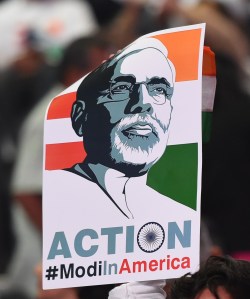
The United States should feel some pressure to enhance relations with India and Prime Minister Modi. Chinese President Xi Jinping visited India this month andUS-INDIA-DIPLOMACY-MODIsigned signed three pacts meant to boost trade and investment between the two nations. Setting aside the economic impact, the visit indicated a significant trend in two ways: It was the first time India has welcomed a Chinese head of state with a public reception since the Sino-Indian War in 1962. The leaders were said to have had an easy chemistry and seem to be looking to ease border tensions through the pragmatism of economic trade. The other aspect worth noting is that the trade pacts weren’t signed in Delhi, setting aside the tradition of making international agreements in the capital. Prime Minister Modi’s tenure as Chief Minister of the western state of Gujarat saw rapid industrial growth. He clearly was aiming to highlight the impressive development the region has made since 2001.

The Obama Administration’s outreach toward the new Prime Minister has been circumspect. There was an understandable caution given Modi’s unabashed Hindu nationalism and the Gujarat religious riots in 2002. However, a détente between India and China would certainly complicate Obama’s “Asian Pivot”. The diplomatic dance over waivers on the Iranian sanctions certainly hasn’t helped matters. The “champagne and roses” probably aren’t a bad idea.

On a shamelessly self-promoting note, I recently covered these matters in their relation to the burgeoning Asian space race. There has been a good deal of discussion about India’s recent success with the Mars Orbiter, Mangalyaan. India is the only country to have delivered on its first Mars mission. There is undeniable prestige that comes with besting China and Japan in the race to Mars. However, this has overshadowed another important development from President Xi Jinping’s trip to India: There was an agreement to forge a closer bond regarding space activities. If this does indeed come to fruition, there would be tremendous consequences for the commercial space industry and for the geopolitical balance in Asia.

But Shikha Dalmia is worried about the fate of Indians under Modi:

The Obama administration has been working to normalize relations with Modi – as it must and should – now that he is the duly elected leader of the world’s most populous democracy. As such, the White House singled him out for a dinner with the president (although Modi declared that he won’t eat anything because he’s observing a nine-day religious fast, a flamboyant display of his fabled austerity).

But such quiet gestures were not enough for Modi who has the autocrat’s instinct to be the star attraction. His gaudy displays – literally unprecedented for visiting leaders – are not merely unbecoming. They are also deeply disturbing, because they highlight Modi’s need for self-aggrandizement. That does not bode well for the massive economic decentralization – the hands-off approach – that he himself touted as essential for offering a decent standard of living to all Indians. Maybe he’ll learn to keep a lid on this tendency as he grows in office. Right now, however, it seems to pervade his economic decisions, making even many of his cheerleaders nervous about his ability to lead India’s socialist, centrally planned economy to a free-market one.

Pankaj Mishra also views the prime minister with concern:

One of Modi’s political feats is to have tapped into the complex insecurities of rising Indians with his potpourri of fantasies tinged with defiant, if under-educated, Hindu nationalism. Thus, climate change, on which India rejects all compromise, can be tackled with the help of yoga, as he put it in his speech at the United Nations, and India, which was a “golden bird” before being enslaved for a thousand years by foreigners (read Muslims and the British), will regain its glory with “make in India” manufacturing. …

It’s not too early to worry about the pernicious fallout from the ambition to turn India into a golden bird in double-quick time. For Modi’s plan to redeem India’s thousand years of slavery through labor-intensive manufacturing may be about as realizable in these days of increasing automation as Mao Zedong’s project of overtaking America’s industrial production by making steel in backyard furnaces. Scapegoats are already being sought in India just three months after Modi’s ascent. A member of Modi’s own coalition protested last week that while “discrimination and the distrust of the Muslim were covert” in the past, “now the gloves are off and the hatred is in-your-face.”

But Reihan Salam isn’t counting Modi out. He focuses on how Modi “attracted 19,000 cheering fans to a rally in Madison Square Garden on Sunday”:

There are no guarantees that Modi’s strategy will work. To become a manufacturing powerhouse, India will have to reform its ridiculously stringent labor laws, which are very much the third rail of Indian politics, and spend vast sums of money on roads and power plants and all of the other basics of industrialization. This will be an issue, as the Indian bureaucracy is famously terrible at spending money wisely.

If Modi succeeds, however, India will do more than alleviate poverty, important though that is. It will become the “big, powerful country” of Naipaul’s dreams—the kind of place that can afford to ignore Pakistan, its hostile, dysfunctional neighbor, and that won’t get pushed around by China. So you can see why Modi attracted support not just from India’s urban middle class, but also from hundreds of thousands of people of Indian descent in countries around the world, including the United States: He is promising that all of these people will be able to walk a little taller in a world that has long dismissed India as a land of “hunger and snakes.”

(Photo: A crowd of US-based supporters await the arrival of Prime Minister Narendra Modi of India for a community reception September 28, 2014 at Madison Square Garden in New York. By Don Emmert/AFP/Getty Images)

Foodies Are Fools

The evidence mounts:

Paying $27 for a burger might seem extortionate. But the chefs behind the most expensive burger in Washington, D.C. – a wagyu skirt steak burger at BLT Steak – can take comfort in new research suggesting that inflated prices can translate into inflated enjoyment:

new paper, forthcoming in the Journal of Sensory Studies, has found that we enjoy food more if we spend extra money on it. A team of researchers at the Cornell Food and Brand Lab, led by David Just, carried out an experiment on 139 unwitting diners at an Italian restaurant in upstate New York. Customers were charged either $4 or $8 for an all-you-can-eat lunch buffet of pizza, salad, breadsticks, pasta, and soup; the researchers stopped them on their way out and asked them to fill out a short questionnaire on the amount they ate, the quality of the pizza, and their enjoyment of the whole experience. Diners who paid the higher price rated the whole lunch more highly, and judged the pizza more favorably on measures of taste, satisfaction and enjoyment. “The way people appreciate taste,” said Just, is tied into “expectations based on the presentation of the food or what other people have said. They interpret taste through that lens.”

Update from a reader:

I may be a foolish foodie, but the phenomenon Alice Robb describes is, I think, that of the Veblen Good, whereby the demand for (the conspicuous consumption of) a thing is driven by its price. That must surely be universal across any luxury category, so at least we foodists (my preferred term) are in good company.