Maternal Ambivalence, Ctd

In an essay recounting her experience volunteering as a Big Sister and then as a court-appointed advocate for foster children, Meghan Daum shares her reasons for wavering on biological motherhood:

They ran the gamut from “Don’t want to be pregnant” to “Don’t want to make someone deal with me when I’m dying.” (And, for the record, I’ve never met a woman of any age and any level of inclination to have children who doesn’t have names picked out.) Chief among them was my belief that I’d be a bad mother. Not in the Joan Crawford mode but in the mode of parents you sometimes see who obviously love their kids but clearly do not love their own lives. For every way I could imagine being a good mother, I could imagine ten ways that I’d botch the job irredeemably.

More than that, I simply felt no calling to be a parent. As a role, as my role, it felt inauthentic. It felt like not what I was supposed to be doing with my life. My contribution to society was not about contributing more people to it but, rather, about doing something for the ones who were already here. Ones like [children in the Big Brothers Big Sisters program] Maricela and Kaylee. I liked the idea of taking the extra time I had because I wasn’t busy raising my own child and using it to help them. It also helped that if anyone, upon learning my feelings about having children, lobbed the predictable “selfish” grenade, I could casually let them know that I was doing my part to shape and enrich the next generation.
What Did You Accomplish This Morning?

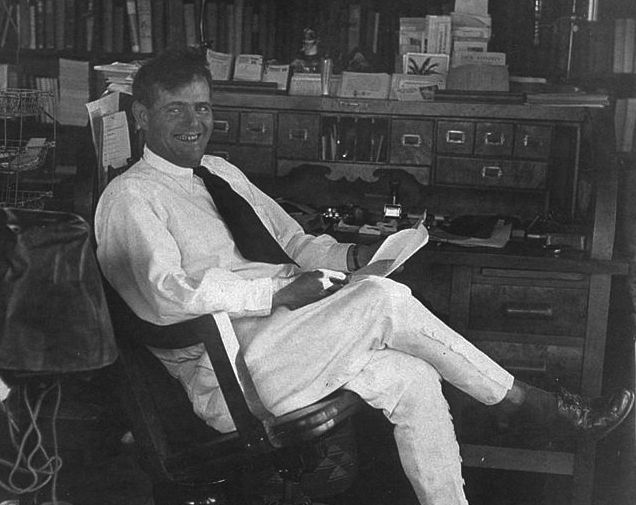
640px-JackLondon-office-1916

Probably not as much as Jack London – though the rest of your day may well be more productive than his. From James Camp’s review of a new biography of the writer:

Jack London’s writing routine was the single unchanging element of his relatively brief adult life. From the age of 22 until his death at 40, he wrote a thousand words every day, a quota he filled as a rule between 9 and 11 a.m. He slept for five hours a night, which left him with 17 hours of free time. But in his writing hours he was prolific: he produced short stories, poetry, plays, reportage, ‘hackwork’ and novels, many of them bestsellers. In 18 years, he published more than fifty books. ‘I’d rather win a water fight in the swimming pool,’ he said, ‘than write the great American novel.’

In his off hours, London ‘wanted to be where the winds of adventure blew’, as he wrote in John Barleycorn, his ‘alcoholic reminiscences’. He was a child labourer in Oakland at 14, a Bay Area pirate at 15, a transcontinental hobo at 16, an able-bodied seaman at 17, a New York State prisoner at 18, a California ‘work beast’ at 20 and a Yukon prospector at 21. He escaped penury at 23, when after a frantic apprenticeship he began selling short stories. The bulk of them were set in the Yukon or in the South Pacific and drew on the life he’d left behind. The Call of the Wild, published in 1903, made him a celebrity at 27, and subsequent additions to his CV – candidate for mayor of Oakland, no-good husband, doomed sea captain and arthritic debauchee – were a matter of public record. London’s life had a mythic quality in the eyes of his contemporaries. Earle Labor, his latest biographer, who was born in 1928, sees him in this way too. ‘The careers of few writers,’ he writes, ‘mirror so clearly the American Dream of Success and the corollary ideal of the Self-Made Man.’

(Hat tip: Micah Mattix. Photo of London in his office via Wikimedia Commons)

Piecing It All Back Together

In an engrossing account of a thalamic stroke she had at age 33, Christine Hyung-Oak Lee shares what she’s learned from seven years of recovery:

So much of memory, I … learned, is connected to emotions. That which makes me happy bypasses the process for short-term memory. I understand why it is I remember the intense events of my childhood. Why that day in the snow, being pelted by snowballs and not any other day. Why that Halloween, listening to my parents scream at each other, and not any other holiday. Why that plane ride leaving NYC for California and not any other. Why I forget all the names of all the doctors except for my neurologist, Dr. Volpi. Whose eyes were kind. Who was the first specialist on scene in the ER. Who was the one who told me I’d had a stroke. That moment.

So much of memory, I learned, is scattered in modules. Over the year, I tried to tell stories, anecdotes — and I could start a story, but I could not continue or end the narrative. Sometimes, when someone piped up and prompted me, Didn’t such and such happen next? I remembered the next part of the story.

I learned stories and memories are pieces of a puzzle, pieced together most likely by the thalamus. This means I couldn’t lie. Because I couldn’t lie, I couldn’t write fiction. But later, knowing this is how stories are told — knowing firsthand that stories are segments woven together — helps. It helps.

Face Of The Day

dish_detainee

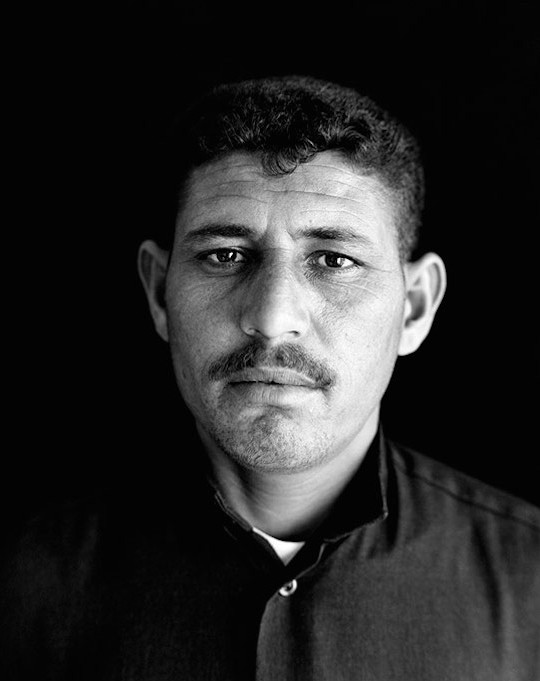
Chris Bartlett took the portraits of former Iraqi detainees:

There were close to forty former detainees who did not want their pictures taken, for those who agreed, Barttlet took the portrait in daylight on high quality film, with a deep black background and warm hued lights; an intentional difference from the small digital camera–which intensified the acidic yellows and electric greens of Abu Grahib– used to capture images detainees in crouching, cuffed, and hooded. “I wanted to put these people back in front of the camera and use photography as a humanizing force,” Bartlett says. …

When confronted with images of torture, Bartlett says, even the greatest liberal or humanist among us has the tendency to flinch and look away. “It’s such a disturbing and disgusting issue that people want to turn off from it.” Bartlett, who often works in high fashion photography, shooting subjects like candy colored Tory Burch handbags, said he wanted to take “very kind, respectful, beautiful, portraits to draw people into the subject and learn more about their stories.”

See more of Bartlett’s work here. His exhibition, “Iraqi Detainees: Ordinary People, Extraordinary Ordeals,” runs through this weekend in New York.

Associating Against Prejudice

Leon Neyfakh points to the work of Calvin Lai, a social psychologist who studies how to fight bias. Recently he tested a variety of strategies to get people to change how they view racial minorities:

The most effective, Lai found, involved exposing people to so-called counter-stereotypical images. In one intervention, which echoed the breakthrough study by Dasgupta and Greenwald from 2001, this took the form of showing people photos of widely admired black celebrities like Bill Cosby alongside notorious white evildoers like Charles Manson. In another effective approach, test subjects listened to stories, told in the second person, about a white assailant attempting to hurt them and a black man coming to their rescue. The emotional pull of the experience seemed to be key. Researchers found that making the story longer and more vivid—changing it from “With sadistic pleasure, he bashes you with his bat again and again” to “With sadistic pleasure, he beats you again and again. First to the body, then to the head. You fight to keep your eyes open and your hands up. The last things you remember are the faint smells of alcohol and chewing tobacco and his wicked grin”—was doubly effective at reducing bias.

Another approach that worked well when Lai tested it involved telling participants to imagine a scenario in which they were playing a game of dodge ball in which everyone on their team was black while everyone on the opposing team was white. A similar effective intervention also had participants imagine themselves navigating a highly threatening post-apocalyptic scenario, before being shown photos of their “friends,” who were mostly black, and their “enemies,” who were all white.

The View From Your Window Contest

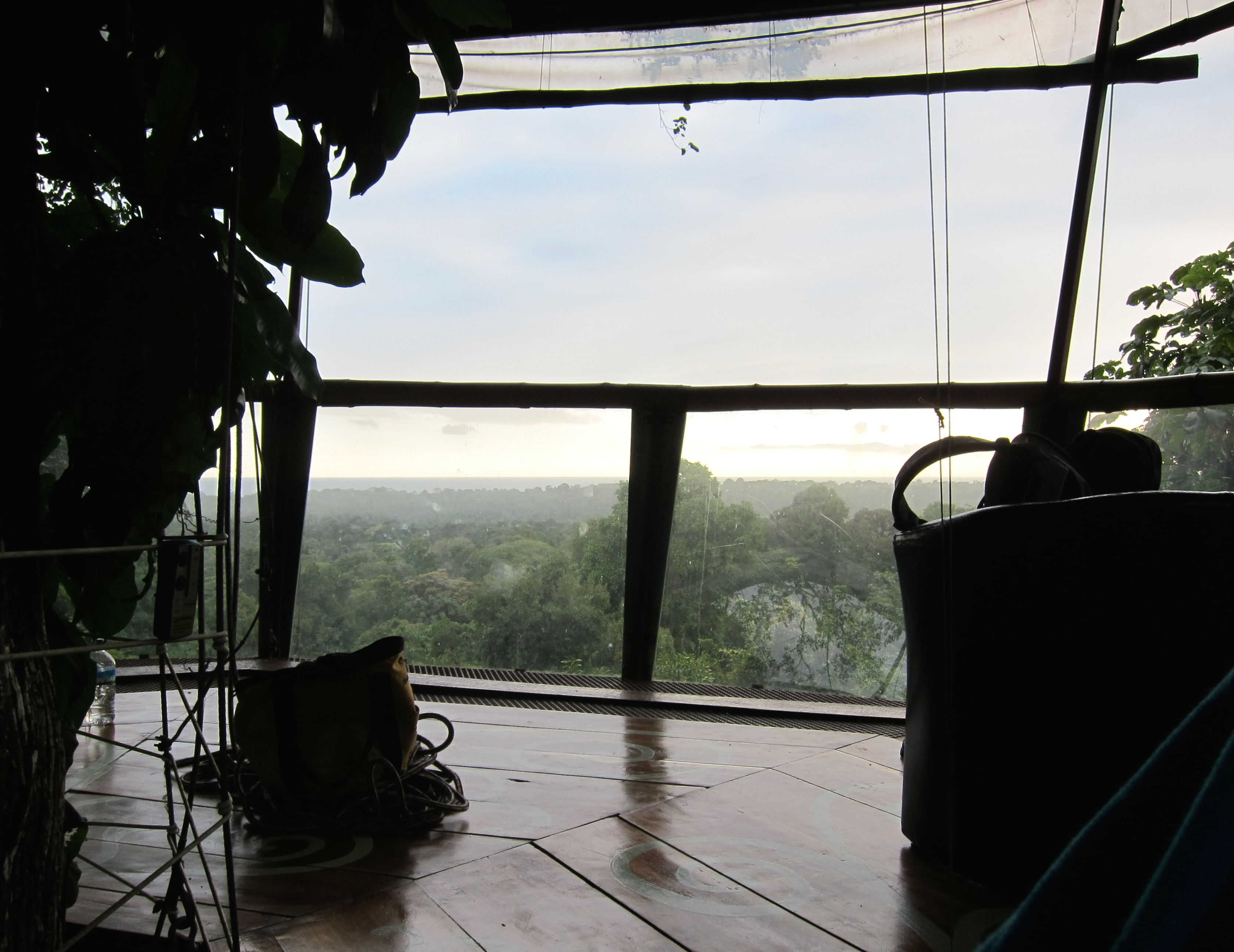
VFYWC_224

You have until noon on Tuesday to guess it. City and/or state first, then country. Please put the location in the subject heading, along with any description within the email. If no one guesses the exact location, proximity counts.  Be sure to email entries to contest@andrewsullivan.com. Winner gets a free The View From Your Window book or two free gift subscriptions to the Dish. Have at it.

Browse all our previous window view contests here.

A Short Story For Saturday

This week’s story is a classic of feminist literature, Charlotte Perkins Gilman’s “The Yellow Wallpaper.” Its opening lines give the sense that something is amiss – but you’ll want to keep reading to find out what’s really going on:

It is very seldom that mere ordinary people like John and myself secure ancestral halls for the summer.

A colonial mansion, a hereditary estate, I would say a haunted house, and reach the height of romantic felicity—but that would be asking too much of fate!

Still I will proudly declare that there is something queer about it.

Else, why should it be let so cheaply? And why have stood so long untenanted?

John laughs at me, of course, but one expects that in marriage.

John is practical in the extreme. He has no patience with faith, an intense horror of superstition, and he scoffs openly at any talk of things not to be felt and seen and put down in figures.

John is a physician, and PERHAPS—(I would not say it to a living soul, of course, but this is dead paper and a great relief to my mind)—PERHAPS that is one reason I do not get well faster.

You see he does not believe I am sick!

And what can one do?

If a physician of high standing, and one’s own husband, assures friends and relatives that there is really nothing the matter with one but temporary nervous depression—a slight hysterical tendency—what is one to do?

Read the rest here. For more of her short fiction, check out The Yellow Wallpaper and Other Stories. Peruse previous SSFSs here.


The Audience In Wonderland

The Economist praises Then She Fell, an adaptation of Alice in Wonderland that blurs boundaries between spectator and participant:

Staged in the creaking, intimate rooms of the Kingsland Ward at St John’s [in Brooklyn], “Then She Fell” provides the illusion of free-range exploration even as it carefully ushers and shepherds its explorers. All the elusiveness and illusiveness you would expect from the world of smoking caterpillars and rogue playing cards, but in a surprisingly cohesive package. Visitors variously find themselves perusing the contents of drawers and file cabinets, observing breakneck dance sequences, brushing Alice’s hair, gulping down watered-down alcoholic drinks and trying on headgear with a Mad Hatter, all the while piecing together the fragments of a story—sometimes literally, as with the scraps of a torn-up love letter. That story revolves around Lewis Carroll, the author of “Alice’s Adventures in Wonderland”, and his child-friend Alice Liddell, the model for his story’s innocent heroine. Inspired by historical speculation and incriminating evidence—the Liddell family abruptly cut contact with Carroll and pages of his diaries were removed, for example—the production surmises that, for Carroll, Alice may not only have been a muse, but an unhealthy obsession.

“Then She Fell” does what the best retellings set out to do: it offers a new framework through which to contemplate a familiar story. It may be too much to say that after watching it you’ll never see “Alice’s Adventures in Wonderland” the same way again, but at last Carroll’s creations felt curiouser and curiouser once again.

In a review of the show last year, Tara Isabella Burton offered another glimpse into the experience:

Audience members are separated and ushered into different spaces (commanded, by an imperious looking nurse, not to open any closed doors), led in threes, twos, and finally solo into various, increasingly intimate, scenes with Carroll’s novels’ most famous denizens, and with the tormented Carroll himself. (Not all audience members are allowed to witness all scenes – as I realized with some disappointment, as I spotted the Hatter’s tea party taking place in a room I was not permitted to enter). Each audience member’s experience, [co-director and performer Zach] Morris tells me, is structured: though we each view scenes in different orders, in a non-linear fashion, our own emotional arc is tightly choreographed: as we, scene by scene, are invited to develop our own stories of nostalgia and loss. Thus did I follow one of the two Alices (one, a note in the Hatter’s room hints, for each side of the looking glass), into a room with an empty mirror frame, through which I served as her reflection. Thus did I follow the White Rabbit into a closet of of freshly-painted white roses, watching him perform a virtuosic – and unsettlingly close by – dance with a butcher’s knife. Thus – ultimately – did I piece together these fragments of the Kingsland Ward’s take on Wonderland, and invented for them – in the absence of linear narrative – my own story.

That, hints Morris, is precisely the point.

The show runs through December 28th in Brooklyn.

Taking A Vow Of Friendship

Wesley Hill laments that “intimate, vowed forms of Christian friendship” have been consigned to “the rubbish heap of history” – that friendship lacks the permanence and formal commitment of marriage::

In the ancient East up until today, a rite exists—adelphopoiesis, “brother-making”—in which friends make promises to each other and solidify their commitment by sharing in the Eucharist. (Although it was primarily men who exchanged these vows, the rite was open to women as well.) In the West, 12th-century English writer Aelred of Rievaulx upheld a similar ideal. Speaking primarily of friendships between monks, Aelred writes that we call such people friends “to whom we have no qualm about entrusting our heart and all its contents.” But he goes further: “See how far love between friends should extend; namely, that they be willing to die for one another,” unmistakably echoing Jesus. Dying for one’s friends is the apex of love.

We might want to write off Aelred’s vision of “spiritual friendship” as pious idealism. But his model of devoted friendship bore noticeable fruit. In the centuries following his death, pairs of Christian friends were buried together to signal their love. Looking forward to the bodily resurrection of the dead, the shared tombs ensured for each friend that “the first figure his awakened eyes will see will be [the other friend],” notes historian Alan Bray. With that belief, 19th-century Catholic John Henry Newman was buried next to fellow cleric Ambrose St. John. After St. John’s death, Newman lamented, “I have ever thought no bereavement was equal to that of a husband’s or a wife’s, but I feel it difficult to believe that any can be greater, or any one’s sorrow greater, than mine.”

Matthew Lee Anderson hesitates at this, suggesting that friendship, as a form of love, is distinctive in transcending obligation and duty:

[I]t’s possible to think that friendships do not have or need vows because they are a lesser form of union, and that the lack of public recognition is tied to their weakness. It is also possible, though, that explicit vows and promises create obligations, and that friendship moves us into a realm beyond these. The high point of the Gospels, in my opinion, is the moment when Jesus tells his disciples that they are no longer disciples, but that they are now friends. I’m not prepared to speak of the obligations on God which exist because of the covenant established with man in creation: but it is clear that even if there were obligations, they could not possibly include that. Nor does it seem right to me that such a moment could generate obligations the ways that vows unquestionably do: what duty could bind Jesus’ friendship with us? What obligation might provide the shape to the unmerited gift of his grace? To be friends with God is to participate in a form of charity which is not incompatible with vows per se—lest we deny marriages any form of participation in it as well—but the vow-less, obligation-free character of friendship illuminates the unrestrained nature of charity in a way that a life mediated by vows and promises might not.

A Poem For Saturday

Dish poetry editor Alice Quinn writes:

This week the Poetry Society of America and the Bryant Park Reading Room joined forces to sponsor a tribute to the poet Jean Valentine with readings, recitations, and remarks by Catherine Barnett, Mark Doty, and Timothy Liu, and a reading of poems by Valentine herself, from her recent (and absolutely extraordinary) book, Little Boat.

Valentine is a contemporary poet who—like John Ashbery and the late Lucille Clifton—continues to inspire successive generations of poets. In 1965, her debut volume Dream Barker was chosen for the Yale Younger Poets Prize. Dudley Fitts, the selecting judge, described her in terms that still feel fresh and true today, praising her “quirky singular intelligence, a fusion of wit and tenderness, subserved by an unusual accuracy of pitch and rightness of tone.”

In 1969, Valentine published Pilgrims. Adrienne Rich’s moving words adorned the jacket, “Almost every poem is life lived at the edge, but lived by someone who is without cessation a poet.” Years and years later, after Jean had published many more volumes—and with her new book, Break the Glass, she is up to thirteen—Rich described Valentine’s poetry as one “of the highest order, because it lets us into spaces and meanings we couldn’t approach in any other way.”

Reading her delicate, tensile poems gives us steady access to the inward places, as Rich described, to what Emily Dickinson was indicating when she wrote of “internal difference,/Where the Meanings, are—“

This weekend, we’ll feature poems by Jean Valentine, starting with one from that early collection, Pilgrims, published by Farrar, Straus & Giroux in 1969 when (to give you a sense of the time) current volumes by John Berryman, Elizabeth Bishop, Louise Bogan, Randall Jarrell, Robert Lowell, Pablo Neruda, Edmund Wilson, and Derek Walcott were advertised on the back of the jacket. All these poems are available in Valentine’s Door in the Mountain: New and Selected Poems, 1965-2003.

“The River at Wolf” by Jean Valentine:

Coming east we left the animals
pelican beaver osprey muskrat and snake
their hair and skin and feathers
their eyes in the dark: red and green.
Your finger drawing my mouth.

Blessed are they who remember
that what they now have they once longed for.

A day a year ago last summer
God filled me with himself, like gold, inside,
deeper inside than marrow.

This close to God this close to you:
walking into the river at Wolf with
the animals. The snake’s
green skin, lit from inside. Our second life.

(From Door in the Mountain: New and Selected Poems, 1965-2003 © 2004 by Jean Valentine. Used by permission of Wesleyan University Press)