Andrew Asks Anything: Matthew Vines, Ctd

Below is another sample from my long conversation with Matthew, author of God and the Gay Christian, in which we talk about what he refers to as the “massive moral blind spot” that many fundamentalist Christians have toward their gay brethren:


A reader loved the podcast:

So I finally invested an hour-and-a-half on Vines/Sullivan.  (I’m a gay Catholic theologian, if that matters.)

1. A truly spiritual experience.
2. You did him the honor of treating him as an equal.
3. Feisty little guy.  Contradicted the Big Bad Andrew.  Loved it.vines-book
4. I expected him to be smart, but not quite THAT smart.  Sheesh.
5. You kept trying to get him to admit that taking these ancient texts quite so seriously was nuts.  He didn’t bite.  I’m with you.  Would love to have a longer discussion with him on the larger questions of philosophy of religion.  What do you make of other great texts, the Vegas, the Gita, the Quran, Buddhism?
6. The gay voice indeed.  He has one.  In Kansas.
7. A lot of what was said was not new, including placing Romans 1 at the heart of the discussion.  Can an evangelical accept the view that Paul (divinely inspired) just didn’t know about what would happen in 2000 years and so some of his comments could be culturally biased?  But once you go there… (A point you tried to make with him.)
8. I feel that he will change his views as he gets older (of course), just as he found himself changing his views merely by moving a thousand miles to a new place.

What a wonderful young  man.

Thank you so much for doing this interview and doing it at such length.  Not to get mawkish, but I admire you enormously, and have for years, especially on the topic of torture.  It’s a truly profound issue, dish-podcast-beagle-transparentbecause to refuse to destroy the image of God in another human, no matter how vile he might be, or how apparently necessary it seems, is to posit an act of faith, a point Bill Cavanaugh makes in his book on torture and the eucharist.


And so to bed.

More reader discussion here. Subscribers can listen to my entire conversation with Matthew here. If you’re not a subscriber yet, why not today? And if you have a Christian friend or family member who might enjoy the podcast, along with my upcoming one with Christian poet Christian Wiman, gift subscriptions are available here.

That Time Rhode Island Accidentally Decriminalized Prostitution

RI-07-14_at_2.59.05_PM

Ben Leubsdorf flags a study showing what happened:

A loophole in Rhode Island law that effectively decriminalized indoor prostitution in 2003 also led to significant decreases in rape and gonorrhea in the state, according to a new analysis published by the National Bureau of Economic Research. “The results suggest that decriminalization could have potentially large social benefits for the population at large – not just sex market participants,” wrote economists Scott Cunningham of Baylor University and Manisha Shah of the University of California, Los Angeles, in a working paper issued this month.

Mr. Cunningham and Ms. Shah got an opportunity to study the effects of decriminalized prostitution on crime and public health because Rhode Island lawmakers made a mistake. A 1980 change to state law dealing with street solicitation also deleted the ban on prostitution itself, in effect making the act legal if it took place indoors. The loophole apparently went unnoticed until a 2003 court decision, and remained open until indoor prostitution was banned again in 2009.

Adrianna McIntyre delves into the data:

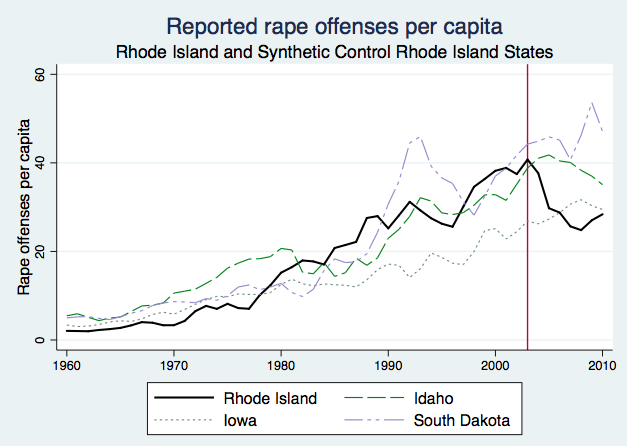
The authors found evidence that, after decriminalization, size of the indoor sex market increased – as expected – and prices commensurately fell. More surprising was the finding that forcible rape offenses fell by 31 percent in Rhode Island from 2004 to 2009, as decriminalized indoor sex work scaled up in the state. This translates to 824 fewer reported rapes. The majority of the reduction in rapes came from Providence, where the state’s sex work is concentrated.

The chart [above] depicts reported rape offenses (per 100,000 people) in Rhode Island (the black line) compared to similar control states. The red line demarcates 2003, when decriminalization took place – and only Rhode Island’s offenses drop off steeply after that.

Peter Weber adds:

[The researchers] speculate that the up to 31-percent drop in per capita rape cases was “due to men substituting away from rape toward prostitution,” and the drop in sexually transmitted diseases is likely because indoor prostitutes tend to be safer sexually than outdoor ones.

Meanwhile, Elizabeth Nolan Brown slams the FBI for shutting down MyRedBook.com, “a popular San Francisco-area website used by sexual service providers (and seekers) of all sorts”:

By almost all accounts, it was a space that not only connected sex workers with clients but also served as a sort of community forum, one which enabled sex workers to vet clients, warn about predators, and offer advice to one another. The website’s shutdown – visit MyRedBook.com and you’ll see only the seals of the FBI, Department of Justice, and Internal Revenue Service – has produced ample outrage from sex workers, who see it not only as a financial hit but also a strike against their safety. … [S]hutting down web forums where sex workers advertise isn’t going to actually stop people from buying or selling sex. But they sell this shit in the language of heroes, speaking to all the women and children they’re helping. They are liars.

The First Round of The 2016 Debates

Senators Gather To Caucus Over Hagel Nomination

That’s how Margaret Carlson characterizes Rick Perry’s and Rand Paul’s foreign policy dust-up:

For now, Paul and Perry are the proxies in the war for the foreign-policy soul of the party between the neo-isolationist/Tea Party/libertarians and the strong-on-defense establishment types. When Megyn Kelly of Fox News tells Cheney that “history has proven that you got it wrong,” you know Republicans are no longer knee-jerk hawks. Wading into this briar patch is perfect for Perry and Paul. Both need to prove they’re broader than their current resumes suggest. As governor, all Perry had to do was keep Texas safe from an invasion by Mexico. As a senator, all Paul has to do is run his mouth.

But that debate is the only real one going on right now – and it’s one that might actually have some impact. On the one hand, the Republicans cannot surely run in 2016 on a Cheney platform, as Marco Rubio appears to be planning. On the other, the Greater Israel lobby will do all it can to make sure that any recalibration toward realism and retrenchment is nipped in the bud. My bet, given reform conservatism’s complete wuss-out on the issue, is that the money will have the edge, for reasons explained by Justin Logan:

To put it bluntly, the portion of the GOP donor class that cares about foreign policy is wedded to a militaristic foreign policy, particularly in but not limited to the Middle East. Tens of millions of dollars every year are pumped into an alphabet soup of magazines, think tanks, fellowships, lobby groups and other outfits in Washington to ensure that conservative foreign policy stays unreformed. If we conceive of the Right broadly, comparatively dovish voices on the Right consist of Rand Paul, those writing at theAmerican Conservative, and the foreign and defense policy staff at the Cato Institute, the latter of which Wall Street Journal editorial page editor Paul Gigot once derisively but not entirely inaccurately referred to as “four or five people in a phone booth.” (We have actual offices, for the record.) But until there is some larger countervailing force in the conservative movement, the well-financed and well-entrenched status quo will persist.

Michael Brendan Dougherty is nonetheless hopeful that foreign policy, “one of the areas where American presidents still have relatively free rein to pursue their own course,” is shaping up to be a focal point of the next presidential election:

One of the faults of the American system of governance is that the public tends to elect presidents based on feelings about the economy. Every single poll from Gallup leading into 2012 showed that voters listed the economy as their top issue. But the truth is that presidents can do relatively little to improve the economy. Whether they want a major new executive branch program, a round of stimulus spending, or revisions to the tax code, they have to go through Congress, a body that is in the habit of resisting large-scale transformations of the American state. Usually less than 5 percent of voters claim foreign policy is a paramount issue (although some 30 percent or more will say “terrorism” is on their minds). But foreign policy is what presidents can do.

Which makes a Rand Paul-style makeover in office slightly more likely, if he isn’t Sheldoned out long before that. Kilgore looks forward to how this debate will develop as other contenders stake out their positions:

GOP divisions on foreign policy are very likely to sharpen as we move into the 2016 cycle, partially for competitive reasons but also because the candidates will be forced to project their own vision of America’s role in the world and not simply play off Obama’s record. And while Paul and Perry have staked out early and sharply divergent turf (as has to a lesser extent Marco Rubio, another neocon favorite), it’s possible other candidates will find intermediary positions–viz. Ted Cruz’s claim that he stands “halfway between” John McCain and Rand Paul on foreign policy. It will be quite the contrast from the 2012 cycle, in which the entire field lined up in support of traditional conservative positions favoring higher defense spending and aggressive confrontation with Iran, Russia and China, with the lonely exception of Rand’s father Ron.

Molly Ball observes that Paul’s opponents in this debate are not longstanding hawks:

Perhaps more interesting than this hawks-versus-libertarians dispute, which is an old argument, is who Paul’s antagonists have been. Both Perry and Cruz are politicians who’ve long been associated with the Tea Party, as Paul has. Perry, in his ill-fated 2012 campaign, warned of “military adventurism,” called for withdrawal from Afghanistan, and advocated cutting off aid to Pakistan. Cruz was lumped in with Paul in the category McCain derided as “wacko birds” after Paul’s 2013 drone filibuster. Yet both Perry and Cruz are anxious to differentiate themselves from Paul by turning him into a peacenik caricature.

Because they’re following the money! For now, anyway. Gillespie takes the opportunity to advocate for a libertarian foreign policy. To him, that means getting the government out of the business of shaping our influence around the world, and letting American liberty speak for itself:

The most powerful weapon the United States has for expanding peace and enlarging prosperity has nothing to do with guns and bullets and everything to do with the way in which we have created a nation of 300 million-plus people who generally get along peacefully while pursuing radically different visions of the good life. To the extent that we share our culture and commerce with the world rather than our drones and disdain, we will not only protect ourselves more effectively, we will actually help more people.

During the Cold War, the United States wasted millions if not billions of dollars on highly mannered, pathetic “cultural exchanges” designed to show that the “free world” could compete against communism in areas such as chess, and classical music. Yet no dissidents ever named a revolution after piano prodigy Van Cliburn; they named their revolution after the Velvet Underground.

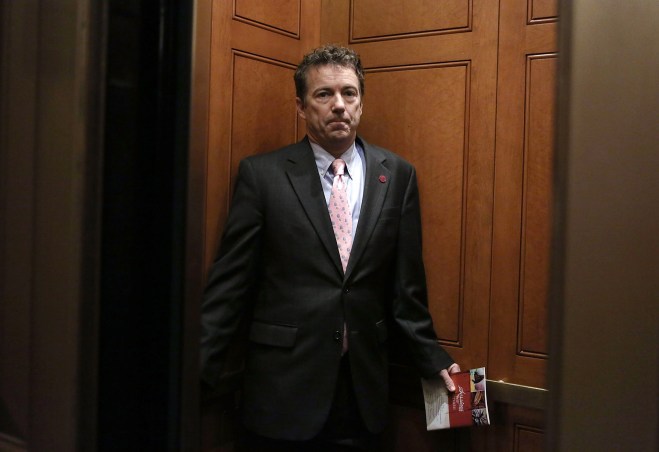
(Photo: Alex Wong/Getty)

Which Religions Does America Like?

Emma Green flags a Pew survey on how different religious groups view each other:

As the researchers pointed out, respondents were much more likely to report feeling “warmly” toward the religious group they wereReligions part of; Catholics were all about other Catholics, evangelicals were enthusiastic about evangelicals, etc. Of all the groups in the survey, Jews felt most loyal to their own tribe; their mean “warmth” rating of other Jews was “89” out of 100, which roughly translates to “we’re totally awesome guys” on Pew’s ratings scale.

Still, despite the home-team advantage of the Christians in the survey, who made up more than two-thirds of the sample, Jews got the highest overall ratings. A good chunk of the respondents said they don’t even know any Jewish people; only 60 percent said they’d ever met a Jew. These feelings of warmth toward Jews aren’t just fond personal memories of Mrs. Rosenberg from down the street, who makes an excellent kugel; they’re a sign of a broad acceptance and appreciation of Jewish culture. Outside of New York City, Jews are generally rare in terms of numbers. Yet in spite of this, they’ve become seen as normal—and popular—by the population at large.

And yet the specter of anti-Semitism forever stalking the land is almost a trope now of the Greater Israel lobby. Josh Kovensky highlights more details from the survey:

Jews and atheists, though only 2 percent of the population each, are familiar to the majority of the public, with 61 percent of Americans knowing a Jew and 59 percent knowing an atheist (that they’re aware of, at least). These two groups had the “coolest” view toward Evangelicals out of any group, with atheists giving Evangelicals a 28, a rating rivaled in its frigidity only by Evangelicals’ perception of atheists, at 25. Evangelicals rated Jews at 69as the report notes, “only Jews rate themselves more highly” at 89, the highest rating of any group by any group surveyed. The approval, however, is unrequitedJews rated Evangelicals a 34. Atheists and Evangelicals share the same self-love, with each group giving members of their own tribe an 82.

Allahpundit ponders Evangelicals’ unrequited love for Jews:

White evangelicals view Jews “warmly” with a rating of 69; Jews, meanwhile, give evangelicals a rating of … 34, which is a point lower than their rating of Muslims. Could be that evangelicals, when asked about Jews, instinctively think of Israel and foreign policy whereas Jews, most of whom lean Democratic, think mainly of domestic policy when asked about evangelical Christians. Go figure that a socially liberal, solidly Democratic group would look skeptically at the GOP’s conservative base. When you ask Jews about a Christian group that’s not closely identified with either party, i.e. Catholics, the rating shoots up to 58, the second highest number (behind Buddhists) that Jews gave to any other group. That’s the proof, I think, that the numbers here are to some extent a proxy for politics rather than a gauge of religion.

Christopher Ingraham focuses on the left-right divide in the survey:

Overall, the Democratic spread between most-liked and least-liked faith groups is 18 points, compared to 38 points among Republicans. This reflects a number of political realities, the first being that Republicans are more than three times as likely as Democrats to be white evangelical Protestants. Republicans are also more likely to say that religion plays an important role in their lives. … Religious identity is less fundamental to the Democratic party, so Democrats’ disposition toward religious groups are more muted than Republicans’. In the end this makes for a broader religious coalition, but one with less intensity of feeling.

How Gay Is America?

Not very, according to the CDC:

The National Health Interview Survey, which is the government’s premier tool for annually assessing Americans’ health and behaviors, found that 1.6 percent of adults self-identify as gay or lesbian, and 0.7 percent consider themselves bisexual. The overwhelming majority of adults, 96.6 percent, labeled themselves as straight in the 2013 survey. An additional 1.1 percent declined to answer, responded “I don’t know the answer,” or said they were “something else.”

The figures offered a slightly smaller assessment of the size of the gay, lesbian and bisexual population than other surveys, which have pegged the overall proportion at closer to 3.5 or 4 percent. In particular, the estimate for bisexuals was lower than in some other surveys.

Eugene Volokh notes that, according to the CDC, lesbian and bisexual women slightly outnumber their male counterparts:

1.8 percent of men self-identify as gay and 0.4 percent as bisexual, and 1.5 percent of women self-identify as lesbian and 0.9 percent as bisexual. The results are generally in the same ballpark as past estimates — and far below the long-debunked 10 percent estimate. But past data that I’ve seen had suggested that there were about twice as many gay or bisexual men as lesbian or bisexual women; this data suggests that there is no such gender gap.

Meanwhile, Arit John considers the importance of framing:

The survey comes up with a number that’s lower than the 3.5 to 4 percent figure found in other surveys. And as we’ve seen from past surveys, what’s asked matters. Specifically, the broadness of the answers available to respondents makes a difference.

In 2007, researchers at Cornell University interviewed 20,000 individuals in 80 communities. “Mostly heterosexual” was an option for respondents, and the results showed a higher percentage of nonheterosexuality, especially among women:

85.1 percent of the young women identified as heterosexual; 0.5 percent reported no sexual identity; and the remaining 14.4 percent were sexual but not strictly heterosexual, i.e. either lesbian or bisexual. Among young men, 94.0 percent identified themselves as heterosexual; 0.4 percent of the men reported no sexual identity; and the remaining 5.6 percent identified as gay or bisexual.

Meanwhile, the study showed that gay and lesbian Americans were healthier than US heterosexuals in some respects and less so in others – more likely to drink, for example, but also more likely to exercise.

The Limits Of Universalism

PALESTINIAN-ISRAEL-CONFLICT-FUNERAL

Fallows, in a post about the effectiveness of Israel’s US-financed Iron Dome, excerpts a moving letter from an American rabbi in Jerusalem about huddling in an air-raid shelter during a Hamas rocket raid. In a follow-up post, Jim notes that,

After quoting his message, I said that from past correspondence I knew the writer to be a person of broadly universalistic, rather than narrow, human sympathies. Although he had sent his note before the latest horror of the four Palestinian boys killed while playing on the beach, I said that I knew he must be aware of the fear and grief on both sides—with the great disproportion of the recent death and grieving occurring among the Palestinians.

Not so fast. The rabbi wrote back indignantly:

I was taken aback by your juxtaposition of my comment to your reporting of the deaths of the Palestinian children the next day. Those deaths were beyond horrible and tragic. But I found it very troubling that you sought to create a perception of parity between my experience and perspective and the death of Palestinian innocent civilians on the other. The death of those innocents lies at the feet of Hamas who began this terror offensive and continued it despite the Israeli government’s agreement to adhere to a cease fire.

The idea that there is any parity between those civilians sheltering from rockets in Israel and civilians enduring the bloody and largely unprotected siege of Gaza is something that takes the rabbi aback.

(Photo: Palestinian hospital workers prepare the body of six-year-old Osama Al-Astal, who was killed in his home along with his four-year-old sister and two relatives following an Israeli air strike, ahead of his funeral in Khan Yunis in the southern Gaza Strip on July 17, 2014. By Mahmud Hams/AFP/Getty Images.)

The Internet Is For Sleuthing

Peter Baker interviews author Deborah Halber about her book on amateur detectives who use the Internet to solve cold cases:

“An unidentified corpse is the Blanche DuBois of the forensic world: completely dependent on the kindness of strangers,” says Deborah Halber in her book about amateur Web sleuths who solve cold cases. According to a 2004 survey—the first and only of its kind—there are at least 13,486 Blanches nationwide, with about a thousand more added to the rolls each year. Amateur sleuths congregate online, swapping information and theories, looking for details or connections, poring over facial reconstructions, dental records, and serial numbers on breast implants and artificial joints. Halber says these forums have “propelled a remarkable shift in the number of cases solved, and in the relationship between the public and law enforcement.”

America has always loved the amateur detective, or the pro gone rogue. … Add the Internet to this strain of American do-it-yourself amateurism and you get the group of Web gumshoes Halber calls “the Skeleton Crew.” She recounts several cold cases, and she profiles active hunters. Some know the hurt of going years without information about a missing relative, and take satisfaction in relieving others from that pain. (This almost always means letting them know the person in question is definitely dead—a comforting if not happy finality. “I’m trying to help families get closure, because I don’t seem to be able to get it for myself,” says one sleuth.) Some are men fixated on the corpses of pretty women. Some read about a case in the news, then get sucked in by the online vortex of possibly relevant evidence, the connections radiating in every direction, the allure of scoring a “solve.” Many amateurs find, online, possibilities for creative thinking and meaning they lack in the drudgery of daily life.

Churchill’s Leading Role

Reviewing Jonathan Rose’s The Literary Churchill: Author, Reader, Actor, Michael F. Bishop appreciates the insights offered by approaching Sir Winston through the writing he both produced and loved:

Like Abraham Lincoln, the greatest statesman of the 19th century, Winston Churchill, the 640px-Churchill_waves_to_crowdsgreatest of the 20th, had a genius for language. But unlike Lincoln, Churchill made a lucrative living as an author, inflating both his bank balance and his reputation with prodigious (and shrewdly self-promoting) feats of literary craftsmanship. In this sometimes speculative but immensely enjoyable biography, Jonathan Rose shows that Churchill’s authorial and political careers were entwined and inseparable. And he convincingly argues that while “tracking down literary influences is often dismissed as a purely academic exercise . . . sometimes the lives of millions depend on what their rulers read.”

According to Rose, Churchill was principally driven in life by “the desire to frame a thrilling story” for himself, and “once we understand that as his life goal, then Churchill’s impulsive courtship of danger becomes predictable, explicable, and eminently reasonable.” To Rose, his performance on the world stage was influenced in part by the theater, especially the Victorian melodrama of his youth. This sense of life as a drama, with him in the starring role, prompted both rash judgments and acts of dazzling courage. While a more prosaic outlook might have helped him avoid misadventures, it would have deprived Britain of its “finest hour” in 1940.

In an earlier take on the book, Sam Leith had more on how Churchill’s flair for the dramatic helped  him understand Hitler’s rise:

Rose paints Churchill as a man in love with the bold stroke — the coup de théâtre — and mired in a view of the world as Victorian melodrama. While the fractured categories and stalled certainties of modernism were making the literary weather, Churchill looked backwards. His was a world of clear identities, dramatic reversals and good triumphing pluckily over evil. His ideas of everything from Irish Home Rule to the government of native populations in India are credited with having been formed by the view from the cheap seats. He spoke claptrap — which, as Rose tells us more than once, is a term from melodrama: the inspiring speech the hero makes with his back to the wall, trapping the audience into applause.

This is the stopped-clock version of how Churchill got the fascists right: Hitler was one type of melodramatic villain (dark, shouty, moustachioed); Mussolini (treacherous, semi-comic) another. It just happened that silly old Winston, who sonorously predicted the final crisis of western civilisation once a week or so, happened to coincide with the real thing. Rose’s dimmish view of Churchill seeps up like ground-water. He presents him as an egotistical lunatic obsessed with being remembered as one of the great men of history, heedless of who died to make that dream come true, and with a script for achieving it based, more or less, on a bunch of babyish Victorian pantos.

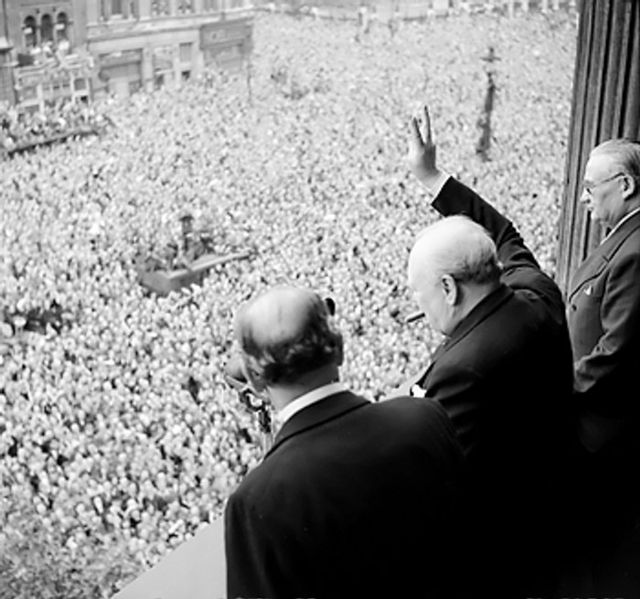
(Image: Churchill waves to crowds in Whitehall on the day he broadcast to the nation that the war with Germany had been won, 8 May 1945, via Wikimedia Commons)

Exercise Is Good For You

But some cardiologists worry that too much is bad for the heart. Lisa Rosenbaum examines their claims:

After reviewing the data and interviewing experts in the field, my own impression is that among people without known cardiovascular disease there is no compelling data to suggest that mortality significantly differs between moderate and extreme exercisers. There is thus no way to precisely define an upper limit of exercise for an average healthy individual. I suspect, though, that part of what sustains the “too much exercise can kill you” myth is the widespread recognition of the so-called exercise paradox. That is, while consistent exercise decreases the likelihood that you will have a heart attack, if you are destined to have one it is more likely to happen while you are exercising. That’s why no one can issue a blanket statement that extreme exercise is safe. It’s also why so many researchers have attempted to figure out how to make extreme exercise as safe as possible.