The Mysterious World Of Female Ejaculation, Ctd

It just got a little less so:

Researchers are now saying that squirting is essentially involuntary urination.

Female ejaculate is technically the small amount of milky white fluid that’s expressed when climaxing, New Scientist explains. Squirting, on the other hand, results in a much larger gush of a clear fluid, which comes from the urethra, the duct where urine is conveyed from the bladder. The findings, which combine biochemical analyses with pelvic ultrasounds, were published in the Journal of Sexual Medicine on Christmas Eve.

More details from that New Scientist piece:

To investigate the nature and origins of the [milky white fluid purportedly from the Skene glands], Samuel Salama, a gynaecologist at the Parly II private hospital in Le Chesnay, France, and his colleagues recruited seven women who report producing large amounts of liquid – comparable to a glass of water – at orgasm. First, these women were asked to provide a urine sample. An ultrasound scan of their pelvis confirmed that their bladder was completely empty. The women then stimulated themselves through masturbation or with a partner until they were close to having an orgasm – which took between 25 and 60 minutes.

A second pelvic ultrasound was then performed just before the women climaxed. At the point of orgasm, the squirted fluid was collected in a bag and a final pelvic scan performed. Even though the women had urinated just before stimulation began, the second scan – performed just before they climaxed – showed that their bladder had completely refilled. Each woman’s final scan showed an empty bladder, meaning the liquid squirted at orgasm almost certainly originated from the bladder.

A chemical analysis was performed on all of the fluid samples. Two women showed no difference between the chemicals present in their urine and the fluid squirted at orgasm. The other five women had a small amount of prostatic-specific antigen (PSA) present in their squirted fluid – an enzyme not detected in their initial urine sample, but which is part of the “true” female ejaculate

As a parting thought, Salama “believes every woman is capable of squirting ‘if their partner knows what they are doing'”. You can head to YouTube for that. Previous Dish on the subject here. Update from a reader:

Thank you for officially ruining female ejaculation for me. I cringed when I read the first sentence of your post and realized that all those years I was getting peed on and loving it. Dammit. Good thing I was always coming from swim practice and had my swim goggles handy!

Another:

I would dearly love to read the grant proposal for that research. Especially the informed consent form.

The World’s Best Beer Pong Player

Is a robot:

But the major innovation is how the machine grips the ball:

In the video above, you’ll see that the mechanized arm picks up each ping-pong ball in a green sphere. That sphere is known as a Versaball and it’s filled with sand. When the Versaball is pumped with air, the sand granules can move around freely and form an impression around the objects on which the sphere is placed. Once the ball is in place on top of an object, the system sucks the air out of it, causing the sand grains to tighten around the object, thereby allowing it to be lifted.

David Pescovitz covered this technology last year:

Many of tomorrow’s robots may have more in common with beanbag chairs and bouncy houses than the hulking industrial arms in factories today. Breakthroughs in the nascent field of soft robotics, in which steel skeletons and power-hungry motors make way for textiles, are beginning to move from the laboratory to the startup world. Imagine an octopuslike robot that can squirm through rubble at a disaster site but has the strength to pull bricks off an injured person. Or a machine that can safely place an elderly person in bed. Several companies are working on these problems, frequently working from research sponsored by the U.S. Defense Advanced Research Projects Agency (Darpa), the Pentagon arm that seeks and funds futuristic technology. “Soft robotics has the potential to influence all kinds of robotic and machine design,” says Gerald Van Hoy, an analyst at market research firm Gartner. “It’s a key development in the evolution of robotics.”

When Date Night Is Fright Night

Alice Robb rounds up research on what a love of scary movies suggests about their watchers. Among her findings? Scary-movie aficionados are more likely to “be a man accompanied by a frightened woman”:

In an experiment in the 1980s, a team of psychologists led by Dolf Zillmann had 36 male and 36 female undergraduates watch a horror movie in opposite-sex pairs; each viewer had to evaluate their companion’s desirability before and after the movie, and answer questions about their experience of the film. Men were most likely to enjoy the movie when paired with a woman who was distressed by it, and least likely to enjoy if the woman was unperturbed. It didn’t make the woman more attractive, though: both men and women judged their companions as less desirable as “working mates” if they showed distress.

An Annual Dry Spell

dish_drynuary

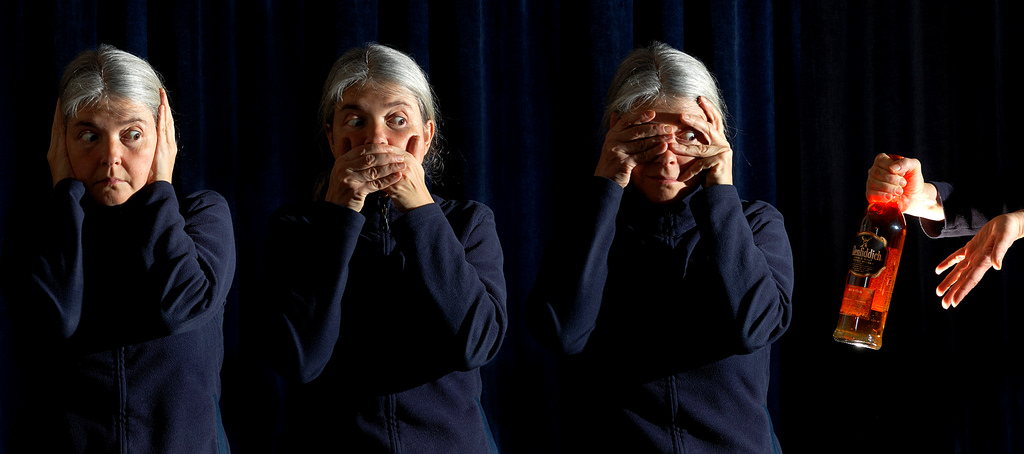
John Ore explains Drynuary, the tradition of giving up alcohol for the month following New Year’s:

Make no mistake: If you like drinking, Drynuary is hard, and it’s supposed to be. I’m not particularly religious, but I appreciate the Lenten aspect of giving up something I enjoy for an extended period of time just to say I can. (My birthday falls during Lent, so no way am I giving up drinking then.)

Drynuary forces us to consider the the role alcohol plays in our everyday lives, especially when its absence is the most obvious or stark. My wife and I don’t hibernate for a month, sipping herbal teas and avoiding glances at the stemware and the three neglected beers left in the fridge. There are still the NFL playoffs, and the college football championship, and concerts and recreational beer-league ice hockey. Our first Drynuary we met friends at a sports bar to watch football, and the amount of club soda we downed led to plenty of speculation that we were expecting. Ive been the designated driver for post-snowboarding pub crawls and I’ve had to explain to business associates why I’m not having wine with dinner while traveling for work. Half of the point of Drynuary is to live your life as you normally do, just without drinking.

For last year’s Drynuary, Jolie Kerr created a guide for the uninitiated:

If it’s so hard, doesn’t that mean you have a problem?

Yes and no. But more no than yes. Think of it this way: If you decided to give up chocolate for a month—or sourdough bread, or Irish butter, or picking at ingrown hairs, or whatever it is that you love most in this world—it would probably suck. You would probably say, “Gosh, this is hard!” Would that mean you had a problem with chocolate or sourdough bread or Irish butter or picking at ingrown hairs? Maybe. But probably not.

And what about the health effects of a month on the wagon? Amy Guttman looks at what happened when staffers at New Scientist experimented with foregoing drinking for five weeks:

Dr. Rajiv Jalan, a liver specialist at the Institute for Liver and Digestive Health at University College London, analyzed the findings. They revealed that among those in the study who gave up drinking, liver fat, a precursor to liver damage, fell by at least 15 percent. For some, it fell almost 20 percent.

Abstainers also saw their blood glucose levels — a key factor in determining diabetes risk — fall by an average of 16 percent. It was the first study to show such an immediate drop from going dry, Dr. James Ferguson, a liver specialist at Queen Elizabeth Hospital Birmingham in England, told us last year.

Update from a reader:

I really enjoyed your post on Dryanuary. As it happens, I do the same thing – go 30 days or more without consuming any alcohol – but I do it in August, instead of January. I like to joke that I am “giving my liver a break” before football season starts, but it’s become a tradition that I’ve maintained for over a dozen years now.

I originally gave it the boring name of “abstinence month,” but several years ago a friend of mine my friend started calling it “Tomadan,” a portmanteau of my first name and the Islamic holy month of fasting. And the name has since stuck so that now all my friends understand “Thomas can’t drink with us tonight because he’s on Tomadan.”

It’s not always easy. There are times when the Texas heat is such that there is nothing more I want than an ice cold beer. But I’ve always managed to resist, and at the end of the month I come away with a feeling of satisfaction that makes that first beer of football season taste so much better.

Plus, I’m a little thinner and my wallet is a little fatter.

(Photo by Flickr user Apionid)

Quote For The Day

“I love short stories because I believe they are the way we live. They are what our friends tell us, in their pain and joy, their passion and rage, their yearning and their cry against injustice. We can sit all night with our friend while he talks about the end of his marriage, and what we finally get is a collection of stories about passion, tenderness, misunderstanding, sorry, money; those hours and days and moments when he was absolutely married, whether he and his wife were screaming at each other, or sulking about the house, or making love. While his marriage was dying, he was also working, spending evening with friends, rearing children; but those are other stories. Which is why, days after hearing a painful story by a friend, we see him and say: How are you? We know that by now he may have another story to tell, or he may be in the middle of one, and we hope it is joyful,” – Andre Dubus, “Marketing,” in Broken Vessels.

A Short Story For Saturday

This weekend’s short story comes from Alice Munro, who won the Nobel Prize in Literature in 2013. “Boys and Girls” is one of her earlier stories, first published in 1968. How it begins:

My father was a fox farmer. That is, he raised silver foxes, in pens; and in the fall and early winter, when their fur was prime, he killed them and skinned them and sold their pelts to the Hudson’s Bay Company or the Montreal Fur Traders. These companies supplied us with heroic calendars to hang, one on each side of the kitchen door. Against a background of cold blue sky and black pine forests and treacherous northern rivers, plumed adventures planted the flags of England and or of France; magnificent savages bent their backs to the portage.

For several weeks before Christmas, my father worked after supper in the cellar of our house. the cellar was whitewashed , and lit by a hundred-watt bulb over the worktable. My brother Laird and I sat on the top step and watched. My father removed the pelt inside-out from the body of the fox, which looked surprisingly small, mean, and rat-like, deprived of its arrogant weight of fur. The naked, slippery bodies were collected in a sack and buried in the dump. One time the hired man, Henry Bailey, had taken a swipe at me with this sack, saying, “Christmas present!” My mother thought that was not funny. In fact she disliked the whole pelting operation–that was what the killing, skinning, and preparation of the furs was called – and wished it did not have to take place in the house. There was the smell. After the pelt had been stretched inside-out on a long board my father scraped away delicately, removing the little clotted webs of blood vessels, the bubbles of fat; the smell of blood and animal fat, which the strong primitive odor of the fox itself, penetrated all parts of the house. I found it reassuringly seasonal, like the smell of oranges and pine needles.

Henry Bailey suffered from bronchial troubles. He would cough and cough until his narrow face turned scarlet, and his light blue, derisive eyes filled up with tears; then he took the lid off the stove, and, standing well back, shot out a great clot of phlegm – hss – straight into the heart of the flames. We admired his for this performance and for his ability to make his stomach growl at will, and for his laughter, which was full of high whistlings and gurglings and involved the whole faulty machinery of his chest. It was sometimes hard to tell what he was laughing at, and always possible that it might be us.

Read the rest here. To read more of her work, checkout Selected Stories, 1968-1994. Previous SSFSs here.

Nabokov On Screen

John Colapinto looks beyond Stanley Kubrick’s Lolita to other adaptations of Vladimir Nabokov:

[When] another Nabokov novel hit the screen [in 1978] … it was, again, one of the dark-comic masterpieces from the author’s sojourn in Berlin in the nineteen-thirties: “Despair,” a novel whose plot seems tailored to a high-concept, one-sentence Hollywood pitch: “Man meets his double, swaps identities, and kills him for the insurance money.”

Like “Lolita,” the story features a highly unreliable narrator, Hermann Hermann, who also happens to be the main character—which poses real challenges to any filmmaker. Fortunately, the director was Rainer Werner Fassbinder, working from a script by the equally gifted Tom Stoppard and starring the superb Dirk Bogarde as Hermann. Fassbinder retained the Nabokovian humor but introduced his own astonishing touches, like the moment when Bogarde’s Hermann, the owner of a chocolate factory during the rise of the Nazis, stares down into a pile of baby-shaped chocolates in a bin, his eyes growing wide with premonitory horror at what suddenly seems to be a heap of corpses.

Stoppard, meanwhile, provided a script that more than matches the source author’s word play, and hints at Hermann’s creeping departure from reality, as when Hermann, obsessing over his insurance scam, mishears the word “merger” as “murder.” “Merger, murder,” Hermann says, shrugging, as if they’re all the same. Of all the Nabokov movies, this is the only one to rival Kubrick’s “Lolita,” and it is still in circulation, in libraries and on Amazon.

Faces Of The Day

dish_dolls

Ellyn Kail captions:

For Mother Love, New York-based photographer Jamie Diamond immerses herself within the subculture of Reborn dolls, true to life artificial babies crafted from materials like vinyl, doe suede, glass, and layer upon layer of paint.

The artist discovered the Reborn community while pursuing her self-portrait project I Promise to be a Good Mother, in which she used a doll to stand in for an imagined child. Behind these online collections of high end, expensive figures, she found a group of women hobbyists who worked from home studios. The process demands long-term commitment and passion, with each doll requiring dozens of paint coats and the careful insertion of each individual strand of hair into the scalp.

Most of these artists sell the dolls to other adult women collectors, who will often go on to play the role of its mother. The Reborn babies, Diamond explains, are crafted not only to resemble the real thing, but glass beads are also inserted into certain areas to mimic the physiology of living children, and they are frequently perfumed to smell like a newborn babe.

See more of Diamond’s work here.

Bored Games

roeder-worstgames-1

Oliver Roeder goes through the bottom of BoardGameGeek’s rankings, noting that games based solely on luck, like Candy Land or The Game Of Life, typically rate the lowest among more serious board-gamers. Monopoly, despite the higher level of skill it requires, doesn’t fare well either:

[P]robably due in large part to its huge popularity, Monopoly has become a bête noire for many serious board gamers. It suffers from problems that most game designers nowadays try to avoid. First, players can be eliminated. This is no fun — unless, of course, the eliminated player finds something better to do than play Monopoly — and games are meant to be fun. Second, there is often a runaway leader. Someone can snap up a juicy monopoly early on, and that quickly becomes that. The rest of the game is pro forma and boring. And games aren’t meant to be boring. Third, there is what’s known to game designers as a kingmaking problem. A losing player can often choose, typically via a lopsided trade of properties, who wins the game. This is also no fun and negates whatever skill was required to begin with.

Oh, and it also takes a really long time to play.

But Roeder defends the bad board games as well:

Through whatever quirks of history, culture and commerce, these are our first games. I — and I can’t imagine I’m alone — retain fond memories of playing Candy Land with my cousins during summers at my grandma’s house and War with my friends on the school bus. Monopoly and The Game of Life may bespeak a special American capitalist fascination — an ingrained desire to live out a make-it-or-break-it adventure.

And even if it’s not an objectively good game, Candy Land teaches lessons — playing by the rules, healthy competition, winning and losing graciously. Tic-tac-toe represents a first foray into strategy and game theory — however simple — for many children. That’s not a bad thing. These games might be “bad,” but they’re important. We start with them, and we move on to better ones.

The best-rated game? Twilight Struggle. Previous Dish here on another massively popular strategy game, Settlers of Catan.