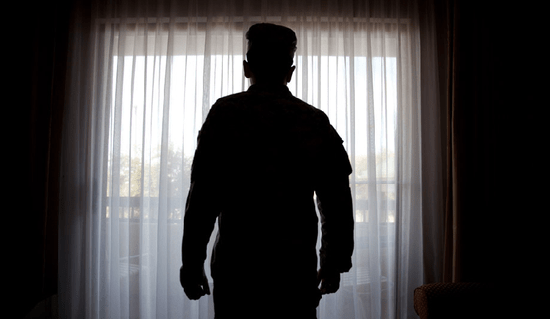
How Will This Spill Be Different?

HAYWARDChipSomodevilla:Getty

A reader writes:

I was a young man living in Britanny during the Amoco Cadiz disaster, which spilled 6 times more oil than the Exxon Valdez. The Amoco Cadiz resulted in a judgment against Amoco in 1990 for – are you ready for this? – $120 million dollars, probably 1/20th the actual cost, if that. The only way to stop this is to make the company pay for the *full cost* – and yes, that's many billions of dollars. It's not like they can't afford it. As long as it's far more profitable to take the financial hit on a spill than to prevent it, this kind of thing will continue to happen. Why would it stop?

The federal government is set to bear the overwhelming cost of the cleanup, but* Brad Plumer sees reform on the horizon:

… Senators Robert Menendez, Frank Lautenberg, and Bill Nelson are now pushing the "Big Oil Bailout Prevention Act," which would raise the liability cap on economic damages from $75 million to $10 billion. Given that BP is already spending $6 million per day on cleanup, that would be a huge deal. Presumably one argument for raising the liability limit is that it would give rig operators even more incentive to invest in safety measurers—especially in light of reports that BP fought against requirements to invest in a $500,000 remote-control shutoff switch.

(Photo: BP CEO Anthony Hayward peers out a window before leaving the U.S. Department of the Interior May 3, 2010 in Washington, DC. Hayward and other BP executives were meeting with Interior Secretary Ken Salazar, Homeland Security Secretary Janet Napolitano and others about the recent deepwater oil rig explosion and subsequent leak in the Gulf of Mexico. By Chip Somodevilla/Getty Images.)

*Update from a reader:

It appears that you may be conflating the $75 million cap on economic damages with the cost of the cleanup. The Oil Pollution Act says that the responsible party pays for all of the cleanup costs.  Talking Points Memo did a summary on who pays: "There are two broad categories of costs associated with the catastrophic BP Gulf oil spill: one is cleanup; the other is damage caused by the oil — to shoreline property, local tax revenues, the fishing and tourism industries, and other businesses and individuals." The latter category is where the "who pays?" question gets really complicated.

Quote For The Day

“Immigration has gone up which is creating friction within communities. The country is getting bigger and messier. The role of ministers has gone bureaucratic and the action of ministers has gone downhill — it is corrupt. The loss of social values is the basic problem and this is not what the Labour Party is about. I believe Gordon Brown has been the worst prime minister we have had in this country. It is a disgrace and he owes an apology to the people and the Queen,”- Labour candidate, Manish Sood, running for the safe Tory seat of North West Norfolk.

The Exposure Of Torture

A breakthrough in Britain: MI5 and MI6 will not be able to keep evidence in a civil trial secret because it pertains to their alleged collusion in the Bush-Cheney torture policy:

In their ruling, Lord Neuberger, master of the rolls, Lord Justice Maurice Kay, and Lord Justice Sullivan said that accepting the case of the security and intelligence agencies would amount to "undermining one of [the common law's] most fundamental principles".

"A further fundamental common law principle is that trials should be conducted in

public, and the judgments should be given in public.

"In our view the principle that a litigant should be able to see and hear all the evidence which is seen and heard by a court determining his case is so fundamental, so embedded in the common law that, in the absence of parliamentary authority, no judge should override it, at any rate in relation to an ordinary civil claim …"

Moreover, the judges said, if a party was to win a case where the evidence was heard in secret, there was a "substantial risk" that it "would not be vindicated and that justice would not be seen to have been done. The outcome would be likely to be a pyrrhic victory for the defendants whose reputation would be damaged by such a process, but the damage to the reputation of the court would in all probability, be even greater."

Showing Their Hands

Zz4574082041_c4b1d37372_b

Gerson addresses conservative writers in the wake of several revisions to the Arizona law:

It must be awkward to have risen to the vigorous defense of legal language that even its authors, in the end, could not defend. But the law’s advocates are making the best of things out on their sawed-off limb. The law is now more “explicit” about its true intention. It is a “clarification.” But this isn’t a clarification; it is retreat. The authors of the Arizona law initially wrote it as broadly as they thought they could get away with. But they were caught. Their retreat does not confirm their intentions were good. It confirms that the original law was deeply flawed — a dramatic, disturbing overreach.

Despite the revisions, Gerson admits that they "do not address all the problems and ambiguities in the law — and are not likely to end the controversy surrounding it." Dara Lind agrees.

(Photo by Carrie Sloan. More protest signs here and here.)

Cheney And The Gulf Spill

Bill Galston asks:

So here’s my question: what is responsible for Minerals Management Service's (the division of the Interior Department responsible for offshore drilling) change of heart between 2000 and 2003 on the crucial issue of requiring a remote control switch for offshore rigs? What we do know is that unfettered oil drilling was to Dick Cheney’s domestic concerns what the invasion of Iraq was to his foreign policy—a core objective, implacably pursued regardless of the risks. Is there a connection between his infamous secret energy task force and the corrupt mindset that came to dominate a key program within MMS? Would $500,000 per rig have been regarded as an unacceptably expensive insurance policy if a drill-baby-drill administration hadn’t placed its thumb so heavily on the scale?

Malkin Award Nominee

"[W]hy the delay in the response? You guys were pointing out, nine days before it’s even addressed. Twelve days before he made a formal comment. The question is did they let this thing leak? I mean, I know BP said 1,000 barrels a day went to 5,000. Did they let it leak a little bit and say, “boy I don’t know.” I mean, the conspiracy theorists would say, maybe they let it leak for a while and then they address the issue. […If] they’re going to try to pull drilling, that may be the way to do it," – Fox Business’ Eric Bolling.

The Reality Of DADT

DADT

Joseph Christopher Rocha, Former Petty Officer Third Class, U.S. Navy, writes a letter to the President:

After the recent letter by Secretary of Defense Robert Gates recommended the repeal of “Don’t Ask, Don’t Tell” be delayed, this is my plea to you on the behalf of the soldiers serving in silence to end this law now:

I never wanted anything more in my life than to be a career officer. My entire childhood I was exposed to abuse, violence, and crime. I came out of it all with a simple, yet overwhelming desire to serve. When my first attempt at getting into the Naval Academy failed, I waited restlessly until I turned eighteen. I enlisted on my birthday and set off to prove myself to the Academy. I was eager to leave the cruelty of my past and join a true family.

I knew I was gay, but it was irrelevant to me then. I was determined to join an elite team of handlers working with dogs trained to detect explosives. As I studied hard to pass exams and complete training, I was convinced that the current law would protect me. I knew that based on merit and achievement I would excel in the military. I never told anyone I

was gay. But a year and a half later while serving in the Middle East, I was tormented by my chief and fellow sailors, physically and emotionally, as they had their suspicions. The irony of "Don't Ask, Don't Tell" is that it protects bigots and punishes gays who comply.

Shop talk in the unit revolved around sex, either the prostitute-filled parties of days past or the escapades my comrades looked forward to. They interpreted my silence and total lack of interest as an admission of homosexuality. My higher-ups seemed to think that gave them the right to bind me to chairs, ridicule me, hose me down and lock me in a feces-filled dog kennel.

On one day in the Middle East, I was ordered by a superior to get down on my hands and knees and simulate oral sex on a person working in the kennel. We were supposed to pretend that we were in our bedroom and that the dogs were catching us in the act. Over and over, with each of the dogs in our unit, I was forced to endure this scenario.

I told no one about what I was living through. I feared that reporting the abuse would lead to an investigation into my sexuality. Frankly, as we continue to delay the repeal of this horrible law, I can’t help but wonder how many people find themselves in similar, despicable situations and remain silent. My anger today doesn’t come from the abuse, but rather from the inhumanity of a standing law that allowed for it.

Three and a half years later when the Navy started investigating claims of hazing, I had finally earned my place at the Naval Academy Preparatory School. But instead of celebration, I began to question the life of persecution, degradation, and dishonor DADT had forced on me. I questioned the institution — our great military — that would condone and endorse this kind of treatment of its own members. The only thing I had ever done wrong was to want the same thing my straight counterparts wanted: a brotherhood and something to stand for.

At NAPS I realized that a career of service under DADT would be a forfeiture of my basic human rights. It would be a forfeiture of basic job security, peace of mind, and meaningful relationships, particularly with my fellow straight service members whom I was forced to deceive and betray.

After completing a six-week officer candidate boot camp, my commanders said they wanted to offer me a leadership role. But after what happened in the Middle East and even the suicide of my close friend, I was mentally and emotionally depleted. And so — with my knees buckling — I offered my statement of resignation in writing:

"I am a homosexual. I deeply regret that my personal feelings are not compatible with Naval regulations or policy. I am proud of my service and had hoped I would be able to serve the Navy and the country for my entire career. However, the principles of honor, courage and commitment mean I must be honest with myself, courageous in my beliefs, and committed in my action. I understand that this statement will be used to end my Naval career."

They say some people are just born designed for military service. It‘s the way we are wired, and the only thing that makes us happy. For too many of us, it‘s the only family we ever had. I am sure now, more than ever, after all the loss and hardship under DADT, that all I want to do is serve as a career military officer.

Mr. President, any delay in repeal is a clear signal to our troops that their gay brothers and sisters in arms are not equal to them. I plead that you take the lead — fight for repeal — and allow qualified men and women to serve their country.

(Image by Jeff Sheng; his photobook of gay and lesbian service members can be bought here)

Feeding Africa

Robert Paarlberg says organic isn't the answer:

Africa faces a food crisis, but it's not because the continent's population is growing faster than its potential to produce food, as vintage Malthusians such as environmental advocate Lester Brown and advocacy organizations such as Population Action International would have it. Food production in Africa is vastly less than the region's known potential, and that is why so many millions are going hungry there. African farmers still use almost no fertilizer; only 4 percent of cropland has been improved with irrigation; and most of the continent's cropped area is not planted with seeds improved through scientific plant breeding, so cereal yields are only a fraction of what they could be. Africa is failing to keep up with population growth not because it has exhausted its potential, but instead because too little has been invested in reaching that potential.

One reason for this failure has been sharply diminished assistance from international donors. When agricultural modernization went out of fashion among elites in the developed world beginning in the 1980s, development assistance to farming in poor countries collapsed.

“Weapons of Mass Dilution”

Behold the homeopathic bomb:

Homeopathic bombs are comprised of 99.9% water but contain the merest trace element of explosive. The solution is then repeatedly diluted so as to leave only the memory of the explosive in the water molecules. According to the laws of homeopathy, the more that the water is diluted, the more powerful the bomb becomes.

Video via Alex Knapp.

(Hat tip: Schneier)

Popular, Bad Policies

Howard Gleckman bashes the homebuyer tax credit:

The credit-induced artificial deadline has helped create a toxic brew of hungry real estate agents, ravenous mortgage brokers, desperate sellers, and frantic and inexperienced buyers. We learned what happened with Homebuyer Credit I. That tax subsidy led to massive fraud (including a large fraction of people claiming the credit who never bothered to buy a house). It also produced both a rush to buy before it (almost) expired last fall, and the inevitable sag in sales that followed.

As my Tax Policy Center colleague Ted Gayer has noted, 85 percent of those who took last year’s credit would have purchased anyway, and the credit merely encouraged them to buy a few months sooner. As a result, Ted estimated it cost the government about $43,000 for each additional sale.

My bet is this year will be more of the same.