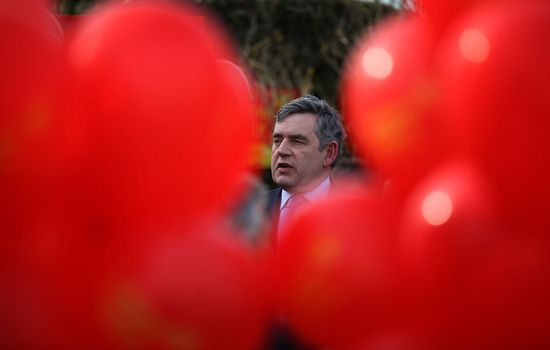
4.28 pm. Brown's final message is one of fear. Cameron offers a "clean break" from the past thirteen years "of failure." Clegg insists "something really exciting is beginning to happen." "We don't need to repeat the mistakes of the past… Don't let people persuade you that things cannot be different. They can."
In this, Clegg grasps the change mantle, the Obama message, in a restive and anti-political country. In that sense, I think he won this. And I would not be surprised to see his party emerge – historically – as the leader in this race.
4.23 pm A quote for the night: "You can't deport 900,000 people when you don't know where they live." yes, Clegg again, and he pushes Cameron for a specific number for a cap on immigrants. Cameron has no answer. A bad moment for him. I have to say that Clegg is winning this debate, with all the possible consequences that might bring.
4.13 pm Clegg pounces on the banks, arguing for smaller banks and breaking up the big ones. Again, Clegg seems able to grasp hot-button issues and present himself as a fresh approach.
4.08 pm. They are now debating a hung parliament. Cameron says that he'd handle either a clear victory 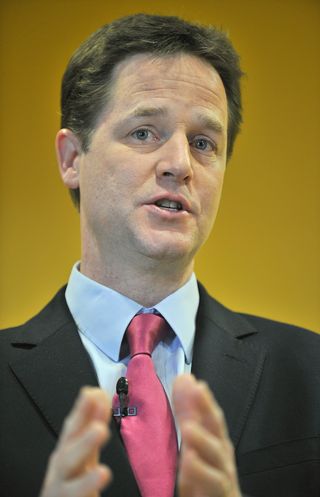 or a coalition. I cannot imagine any American politician ever conceding in advance that he might not win. Clegg reduces the debate to the following: "I don't think it's a bad thing for politicians to talk to each other." Hands down Clegg victory – against "short-term party political point-scoring." It's obviously largely bullshit, but it helps define Clegg as a fresher and more radical choice. I think he has done well in this debate, which means his momentum may well continue.
Brown calls Cameron a "risk to our economy." And calls Clegg "a risk to our national security." Brown is running on fear of change, in an electorate desperate for radical change. I think the result of the current debate is Clegg winning, Cameron coming a close second but overwhelmed by the anti-political mood, and Brown a dismal third.
4.01 pm The first real clash between Brown and Cameron – and Cameron wins. Clegg, however, deftly describes all this as a "political ping-pong." He opposes "cheap political point-scoring." Again, when Cameron or Brown wins a testy exchange, Clegg jumps in and plays the above-it-all card. That may well be effective.
3.59 pm. Now they are pandering to the elderly. Cameron does well: "It's disgusting to be frightening people in a general election… You should not be frightening people in an election campaign. It's just not right." He looks angry and resolute. He calls Labour leaflets warning the elderly about cuts under the Tories "lies." The only person offering any fiscal responsibility is Cameron, who proposes raising the male retirement age.
3.49 pm Cameron finally sounds like a Tory. "If you really want to change things, we all have our responsibilities too." Real solutions come when we all say "I have responsibilities too." He says that's the most honest answer for getting change. Clegg immediately pivots to say that "we have jobs for life for politicians." He wants an end to safe seats. Again, the anti-incumbent mood really seems to have been captured by Clegg.
I'm sorry to say that Cameron seems reasonable, positive, decent, smart … and yet somehow has no ability to go for the jugular or to distinguish himself from established politics. Maybe part of his problem is that he's been party leader for five years. He seems part of the establishment. Clegg doesn't – fair or not.
3.44 pm We're in the "general section" of the debate now. Clegg addresses the anti-incumbent mood after the expenses scandals. He immediately sides with the questioner. He talks about the fact that Gordon Brown was never directly elected as prime minister. He pleads for proportional representation. Bown's response is boilerplate. Cameron acknowledges the anger and calls for total transparency in government. Clegg pounces on the apparent sudden surge in young voters registering to vote. "They're beginning to hope we can do something different this time. Assert your right to shape your own future." I'd say Clegg is doing very well in this debate in seeming the most refreshing and radical of the candidates.
3.42 pm. Brown touts civil partnerships as a "great liberation" for gay people. All three leaders disagree with the Pope on embryonic stem cell research.
3.41 pm Clegg: "I don't believe in the Church's position on homosexuality. I don't."
3.38 pm Clegg comes out as a Catholic spouse whose kids are being brought up as Catholics. But he pulls his punches, calling for more transparency rather than criminal prosecution. Brown says the Catholic church is a "great part of our society."Cameron says he disagrees with the Pope on abortion. Yes: the Conservative leader is pro-choice.
3.37 pm A question calling for a future prime minister to distance himself from the Pope on his coming visit. 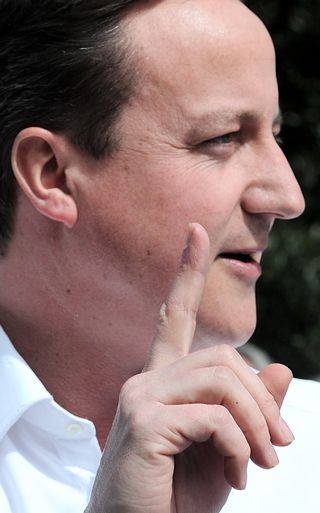 Cameron says he will support the visit, but that he doesn't agree with the Catholic church on contraception and homosexuality. He also puts a plug in in defense of faith-based charities. A deft but uninspiring response.
3.34 pm Brown goes for it with Clegg: "Your anti-Americanism is going to hurt us" on environmental policy. Clegg pushes back: the American alliance is immensely valuable, but shouldn't be a one-way street.
3.30 pm They're all out-greening each other. Cameron seems to have the better answers here – and a more human side. He has shown a little sense of humor. Brown attacks Clegg on his opposition to nuclear power and inland wind farms. Clegg's response is that it's cheaper to have a massive plan for insulation for homes. Cameron says he has insulated his home. Again, Clegg seems the odd man out. Which may hurt him – or help.
3.24 pm. Clegg invokes Obama in securing nuclear materials; Brown blasts back: "Get real. Get real." Clegg seems completely unfazed. Cameron says: "I've never said this before: 'I agree with Gordon'". Clegg's position is that there should be a greater variety of options than simply renewing the Trident nuclear system. Brown and Cameron seemed to gang up on Clegg. But, to my mind, Clegg held his own. And the way in which both Labour and Conservative are defending traditional nuclear policy plays into Clegg's message of real change.
3.23 pm. Cameron insists on a nuclear deterrent "in an unsafe world". "You can't take risks with this."
3.22 pm. Clegg and Cameron keep bashing Brown for failing to equip British soldiers sufficiently.
3. 18 pm. Missed the first few minutes. But it took Clegg only four minutes to note that he opposed the Iraq war, that Cameron voted for it, and that Brown was part of the government that took Britain in.
 The Dish