Amanpour Commits Journalism

Waterboard3small

And Theissen loses it:

THIESSEN: There have been so many misstatements told about the enhanced interrogation techniques, comparing them to the Spanish Inquisition, to the Khmer Rouge. And I have to tell you, Christiane, you’re one of the people who have spread these mistruths.

AMANPOUR: Excuse me? THIESSEN: I’m sorry. You went to S-21, the Khmer Rouge prison […] AMANPOUR: Yes, and we saw the waterboarding there that they used as a torture technique. That’s called spreading the truth! […] THIESSEN: We did not submerge people in a box full of water. […] AMANPOUR: That is called waterboarding, you can say in whichever way you want! […] You’re trying to obfuscate the debate here. […] THIESSEN: It’s nothing like what the CIA used.

Must-see segment starts at the 5:30 mark, after the jump:

The Messiah Delusion

James Surowieki assesses Obama's first year and I couldn't agree more:

Ultimately, I think Obama’s real problem has been a familiar one, namely that, inadvertently or not, he overpromised and necessarily underdelivered. This is a problem, in some sense, that all presidents run into, since voters tend to attribute to the President far more power over the economy than he actually has. But the problem was exacerbated in Obama’s case by the rhetoric of his campaign—“yes, we can” sounds great, but it doesn’t mean that it’s easy to recover from the bursting of an eight-trillion-dollar housing bubble —and the hopes that people placed in him.

I never understood the somewhat messianic qualities that certain voters ascribed to him: Obama has been exactly the kind of President I expected him to be (and the kind of President I hoped he would be), namely rational, pragmatic, thoughtful, and even-tempered. But clearly many voters—even, oddly enough, some of those who didn’t vote for him—expected a miracle worker. When they got a problem-solver instead, one with little authority over Congressional Democrats and no authority at all over obstructionist Republicans, they were disappointed.

Still, I don’t know that there was a way to avoid this—campaigning is, to some extent, always a matter of getting people to believe you'll make more of a difference than you actually can. And I don't think people’s disappointment should obscure what has been accomplished: if you had told people in March of last year, when predictions of complete doom were rampant, that the economy would be growing at a four-per-cent clip in the first quarter of 2010, few would have believed you. As has been pointed out numerous times, “Bad as things are, they would have been much worse without me,” isn’t exactly inspiring. That doesn’t make it any less true.

The Mormon Hierarchy’s “Plausible Deniability”

The transcripts for the trial are now online. Brian Moulton looks over the documents:

Perhaps the most interesting evidence presented so far were documents that detailed the coordination involved between the Catholic and Mormon churches and the Yes on 8 campaign. A letter from the Yes side’s leader thanked the Catholics for their “unusual” support and the Mormons for their “financial, organizational, and managerial contributions.” The Courage Campaign quotes a document between the Yes campaign and the LDS church as saying, the church will “… not to take the lead so as to provide plausible deniability or respectable distance so as not to show that church is directly involved.”

“Plausible deniability”. In other words, Prop 8 was a front organization for religious groups to strip others of their civil rights on doctrinal grounds. And it was governed by a Big Lie, which is odd for a church to endorse, don’t you think?

Quote For The Day

501px-Gilbert_Stuart_Williamstown_Portrait_of_George_Washington

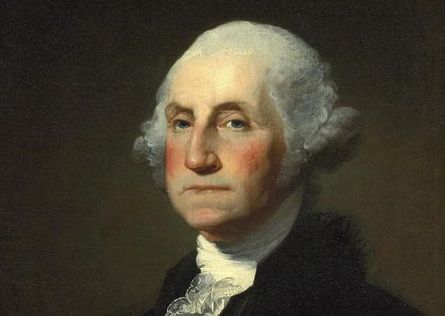
“Much indeed to be regretted, party disputes are now carried to such a length, and truth is so enveloped in mist and false representation, that it is extremely difficult to know through what channel to seek it. This difficulty to one, who is of no party, and whose sole wish is to pursue with undeviating steps a path which would lead this country to respectability, wealth, and happiness, is exceedingly to be lamented. But such, for wise purposes, it is presumed, is the turbulence of human passions in party disputes, when victory more than truth is the palm contended for,” – George Washington, in a letter to Timothy Pickering, July 27, 1795.

A Boon For Blogs?

Ezra digests the news over the NYT paywall:

Already, much of what blogs do is summarize, quote or otherwise relay information that's tucked inside a long newspaper story that busy readers don't have time to find or read. This will increase that market: A blogger with a few subscriptions can distill the information from the newspapers that readers don't have subscriptions to. Bloggers move from providing more efficient information to offering access to information. A black market for news, in a sense. Newspaper revenue might go up under this strategy, but so, I'd guess, will the relative market share of big blogs that are good at aggregation.

I've been doing this for a long while and the only thing I can say about the future of the web and journalism is: I don't know.

I can see exactly why big news organizations need to have some subscription money to survive in the short run; I can see why the Napster era of online journalism may be coming to an end. At the same time, I believe that these media bosses haven't quite absorbed the full implications of what the web has done.

They are having a hell of a time monetizing it because it is too vast, too borderless, too fluid to carve out property on it. It's like trying to make a profit in a communist state. And yet its essential nature – its open source, link-friendly, conversation of humankind democratic spirit is what makes it different from the past – and so appealing to libertarian-inclined chaps like myself. Sealing an online product off from the core online experience seems to me to be a medium at war with itself and a business not fully aware of the actual product it is creating.

I feel optimistic about the Dish's long term future (unless I keel over from exhaustion), because we've tried to take advantage of this new dimension, by being a totally open source portal, a hub, a node of conversation and argument. This brings in readers and advertizers. Are the advertizers enough to finance a news organization? Not yet, and maybe never. But are they enough to finance a very small operation with a tiny staff and little overhead? You bet.

Moreover, I suspect Ezra's right and the NYT's move makes this more valuable and profitable. The NYT may be smart in doing what it's doing, and I love its website, but it may lead to even greater traffic for blogs that can merely cite or summarize NYT pieces and have small excerpts as fair use as well. These quick digests of the best of the NYT wouldn't appeal to many intelligent and affluent readers, but they might be a very attractive feature for those who want to know what is important in the NYT but not want to spend money finding it for themselves. 

But I don't know. My grand philosophy on all this is Oakeshottian: the pursuit of intimations. I just try to figure out day by day what this new medium is trying to teach me, as far as journalism is concerned, keep experimenting, and keep blogging. I am lucky enough to leave the headache of monetizing it to others. I'm just fascinated by the ride, and more fascinated because I really have no idea where it goes next.

Playing For Time

Pelosi is a cool customer:

"There's a recognition that there's a foundation in that bill that's important. So one way or another those areas of agreement that we have will have to be advanced, whether it's by passing the Senate bill with any changes that can be made, or just taking [pieces of it]," Pelosi said. "We have to get a bill passed — we know that. That's a predicate that we all subscribe to."

That's not a surrender; it's a re-group.

How Popular Are Entitlements?

Larison tries to understand the significance of Brown's win:

[H]ow has Brown been able to rally opposition to the health care bill? By complaining that it would lead to Medicare cuts and interfere with Massachusetts’ system. In other words, he has based his candidacy around defending old entitlements against new ones. This is effective as a short-term tactic, as Brown has shown, but it should also tell the Democrats that establishing a new entitlement will be to their benefit as a matter of winning elections and popularity. In other words, Brown’s win actually proves that voters reward a candidate who voted for (statewide) universal health care and who is willing to defend it, which means that the electoral consequences of passing the federal bill should also be positive for the supporters of the bill.

On Not Taking The Rovian Bait

Jamelle Bouie takes E.D. Kain to task:

[T]he idea that there are Republican votes for a conservative health care bill (it’s already pretty moderate) is a complete fiction.  The truth is that Republicans have made a conscious choice to categorically oppose each and every one of President Obama’s priorities, under the theory that obstruction is the surest way back to political success. Judging from their success so far, I think it’s fair to say that isn’t going to change anytime soon.  To pretend otherwise, as E.D. does, is to be willfully ignorant of political reality.

Yglesias has a similar thought:

[T]he Republican strategy of holding out for total surrender is working just fine. They had an interesting theory that if you refuse to cooperate with efforts to make the country better, things won’t get better and the out-of-power party will benefit. The theory appears to be true.

That's why I keep using the term nihilism. For the GOP it's simply about power and status; they don't actually have any solutions to the problems we face. But they can stop any real solutions from being implemented. It's pure Rove. But I think it will fail – because, in the end, the public knows that we need to address these problems. If Obama can rally the ranks at the SOTU, frame the issue as doing something versus doing nothing, this could be a pivotal moment when the GOP's bluff is called. In prime time.

Call it. And that's the transformational moment, for those of us who supported Obama to get out of this cycle of polarizing nothingness. Maybe this process is necessary. Because it is educational. Because the bankruptcy of the right, the cynicism of the right, and the narcissism of the right is exposed.

In other words, don't let the Rovians get into your heads. Stick with the problems; propose solutions; demand constructive alternatives from the GOP. And wrap up health reform with budget balancing in the SOTU. 

Know hope.

Hating Your Parents

TNC shares:

I think back on it now, and would say that between the ages of eight and seventeen, I really didn't like my Dad much. I respected the hell out of him. Loved the hell of out him. Thought he was the most honorable, most fair man I'd ever known. I was also intensely afraid (well into my 20s) that I would not live up to his example. But like him? No, I didn't much like him.

If you asked him, I think he'd say that this was done by design. His guiding emotion was a fear that one of his seven kids would end up in jail, get killed over some dumb-shit, or be out on the corner. Childhood, in my house at least, wasn't a respite before the real work of adulthood, it was practice for adulthood.

It's a little sad, because I see me and my son entering into that same place. I think he may like me more than I liked my Dad. But I won't be to him, what his mother is to him. That isn't our relationship. We have another eight years together. There's a lot to learn, and some unavoidable portion of it will hurt. What gives me some hope is that I've retained my respect for my Dad, I like him a great deal now. He's one of my best friends, and my ultimate mentor. God willing, me and the boy will get to that same place.