Thumb On The Approval Rating?

Nate Silver partially defends Rasmussen:

What Rasmussen has had is a "house effect". So far in the 2010 cycle, their polling has consistently and predictably shown better results for Republican candidates than other polling firms have. But such house effects can emerge from legitimate differences of opinion about how to model the electorate. And ultimately, these differences of opinion will be tested — based on what happens next November. If Rasmussen's opinion turns out to be wildly inaccurate, that will impeach their credibility, and believe me, we will point that out. Likewise, if they turn out to be right when most other pollsters are wrong, we will point that out too.

But the problem with mixing them in with all the others is that their pool of likely voters matches no one else's. And when we are told that a big majority wants to torture the undie-bomber, we have to realize that what that really means is that a lot of older, whiter, evangelicals want to torture the undie-bomber, which, at this point, is, sadly, not news.
The End Of Insurance As We Know It

James Surowiecki argues that health insurance reform makes insurers unnecessary:

Congress’s support for community rating and universal access doesn’t fit well with its insistence that health-care reform must rely on private insurance companies. After all, measuring risk, and setting prices accordingly, is the raison d’être of a health-insurance company.

The way individual insurance works now, risk and price are linked. If you’re a triathlete with no history of cancer in your family, you’re a reasonably good risk, and so you can get an affordable policy that will protect you against unforeseen disaster; if you’re overweight with high blood pressure and a history of heart problems, your risk of becoming seriously ill is substantial, and therefore private insurers will either charge you high premiums or not offer you coverage at all. This kind of risk evaluation—what’s called “medical underwriting”—is fundamental to the insurance business. But it is precisely what all the new reform plans will ban. Congress is effectively making private insurers unnecessary, yet continuing to insist that we can’t do without them.

Drum agrees:

My take is that community rating at the national level can eventually lead to only two outcomes: (a) the end of private health insurance completely or (b) the transformation of private insurers into regulated public utilities. Roughly speaking, Option A is what you see in Canada or Sweden, Option B is what you see in Germany and the Netherlands. I'd prefer the former, but the regulated utility model works OK too, and it's hard to see how you avoid one or the other in the long run.

E.D. Kain has further thoughts.

The Day of Ashura Wrap

Last Sunday, December 27th, marked the most significant unrest in Iran since the immediate aftermath of the June elections. If you missed the Dish’s coverage of the unfolding events, they are summarized below (a comprehensive wrap of holiday blogging will be posted shortly).

Introductory post to the weekend here. YouTube clips from the conflict here, here, here, here, here, here, here, here, here, here, here, here, here, here, here, here, here, here, here, here, here, here, here, here, here, here, here, here, here, here, here, here, here, and here (underlined links are especially dramatic – and often graphic). Stunning still images are here, here, here, here, here, here, here, here, here, and here. Portraits of arrested protestors here and here. Obama’s reaction to the violence here and especially here. Karoubi reaction here. The junta’s response here.

Coverage of Mousavi’s nephew’s murder here, here, here, here, and here. Karoubi was ambushed here. Examination of a possible Baseej defection here, here, and here. Discussion of cable news neglect here, here, here, here, and here. A glance at the Corner’s neglect here and here

Andrew’s initial reactions to the day’s events here and here. Reader discussion of its significance here, here, and here. In other blog commentary, Kevin Sullivan shrugged off any significance, Josh Shahryar wrestled with the retaliatory nature of the protestors, Juan Cole noted the attacks on the banks and the widespread nature of the protests, Ali Ansari examined the Revolutionary Guards’ business interests, Stephen Walt reasserted the hands-off role the US should maintain, Masoud pointed out the isolation of Khamenei and wondered if Rafsanjani would finally make a stand, Meir Javedanfar characterized the uprising as an intifada, and Scott Lucas politely pwned Krauthammer.

— C.B.

Dissent of The Day

A reader writes:

How tiresome, that any criticism of Obama is considered racism.

I despise Obama's ideology. I can't stand the photos of tearful and worshipful supporters. I don't like the awe-struck tone you occasionally adopt when writing about him.

That said, I think the photo of him with Biden is excellent. It shows two men who appear to be intellectually engaged, unlike many photos of politicos that appear posed or that show people yelling past each other.

Can you guess my degree of racism based on my positive opinion of the photo?

No, I can't. And I agree that it is tiresome that any criticism of Obama is considered racist. But what I was drawing attention to was a specific instance in which, it seems to me, racism is pretty obviously at work. But make your own mind up.

Fingers Off The Button

The undie-bomber's possible ties to al-Queda in the Arabian Peninsula prompts Marc Lynch to outline the boundaries of reasonable debate:

Direct American military intervention in Yemen is so obviously ludicrous that it shouldn't even need to be said. Even the hyper-interventionist conservatives at the Washington Post op-ed page allow that "U.S. ground troops are not needed, for now." They never should be. The U.S. is already struggling to fully resource and equip a mission in Afghanistan which has been defined — rightly or wrongly — as vital to American security and interests. The U.S. simply does not have the resources to embark on a military mission in Yemen. If you think Afghanistan is a sinkhole, you will love Yemen. The yawning gap between the extent of U.S. interests and the resources necessary to make a difference is even greater in Yemen than in Afghanistan. And the optics of yet another American military intervention in the Arab world — under Obama, no less — would be devastating to the wider Obama outreach strategy. (On the positive side, at least committing scarce U.S. troops to Yemen would make a military strike against Iran that much less likely.)

The Hardest Language

The Economist reads up on the most difficult languages. Its pick:

Tuyuca requires verb-endings on statements to show how the speaker knows something. Diga ape-wi means that “the boy played soccer (I know because I saw him)”, while diga ape-hiyi means “the boy played soccer (I assume)”. English can provide such information, but for Tuyuca that is an obligatory ending on the verb. Evidential languages force speakers to think hard about how they learned what they say they know.

The DHS Kiss Of Death

Douthat calls head of Homeland Security the worst job in Washington:

By tapping Napolitano, Obama did her a disservice, and cost the Democratic Party a potential Senator from Arizona. By accepting, she may have accepted the death of her political career. The next successful governor to be offered the job should take note, and say no.

The Beard Of 2009?

Epits

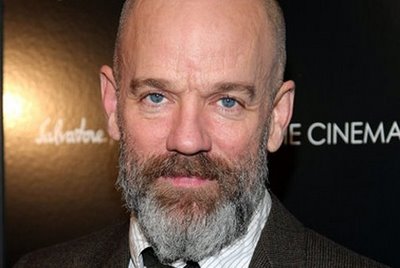
Beardrevue hyped Michael Stipe's elegant growth-rate earlier this year:

The flourish of bushy grey anchoring Stipe’s face breaks free a hitherto unforeseen regality. His beard also offers a general softening of his face, validating any previously suspected platitudes as actual nuggets of wisdom. This is a beard that completes the man.

Poseur alerts voided. A reader insists that Stipe deserves the Dish prize given two years in a row to Bruce Willis. I stick with the conclusion of our blue-ribbon committee. Willis's arful Just For Men use clearly puts him over the top. But some like a little dash of gray.