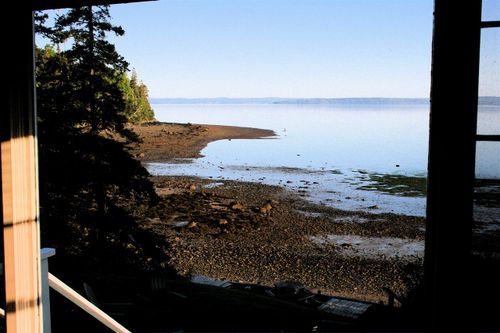
Castine, Maine, 6.13 am
Castine, Maine, 6.13 am
From a white paper by the Afghanistan Research Reachback Center:
[T]he desire for “tribal engagement” in Afghanistan, executed along the lines of the recent “Surge” strategy in Iraq, is based on an erroneous understanding of the human terrain. In fact, the way people in rural Afghanistan organize themselves is so different from rural Iraqi culture that calling them both “tribes” is deceptive. “Tribes” in Afghanistan do not act as unified groups, as they have recently in Iraq. For the most part they are not hierarchical, meaning there is no “chief” with whom to negotiate (and from whom to expect results). They are notorious for changing the form of their social organization when they are pressured by internal dissension or external forces. Whereas in some other countries tribes are structured like trees, “tribes” in Afghanistan are like jellyfish.
(Hat tip: Matt Steinglass)
Dreher uncomfortably accepts gay adoption. His mind shifted when he came across an actual living example of the good it can do. One of his commenters, the child of lesbian parents that fostered four children, speaks from experience:
On this subject, my feelings are entirely uncomplicated – anyone who stands between a hungry kid and home with food is doing something immoral. Anyone who stands between a child who is not safe and safe home is wrong. And if you think that heterosexual parents make better adoptive homes, and want to make a big deal about it, you had better have at least one adopted, high need kid if you want me to give a hoot what you think. I realize that's a much more visceral than rational response, and probably a little unfair. But as I'm sitting in my Moms' living room, cooking for tomorrow, when 28 of our family – my sisters and their husbands and kids, my aunt and her adopted daughter and her elderly mother, two former foster kids and their kids, my aunt and uncle (on step-Mom's side) and their kids are coming together, I find I simply can't come up with anything else to say.
"Look what happened. Look what happened with regard to our invasion into Afghanistan. How we apparently intentionally let bin Laden get away. How we intentionally did not follow the Taliban and al Qaeda… the previous administration… knew very well that if they would capture al Qaeda there would be no justification for an invasion in Iraq," – Democratic Congressman Maurice Hinchey.
In advance of Obama's big speech tomorrow, Andrew took stock of the situation in Afghanistan and Iraq. He also excoriated Rick Warren's silence on Ugandan gays, called out Seth Lipsky's blind praise of Palin's blind praise of Israel, mulled over Scottish independence, and, with the help of Frum, analyzed the latest polling of Republicans on fiscal values.
The debate over Swiss minarets continued here and here. The exposure of Palin's deceit also continued; Joe McGinnis revealed that she hasn't been on the bus much, Geoffrey Dunn showed that she can't even keep her quotes straight, and Craig Medred found much, much more. While many laugh off her absurdity, Yglesias and Andrew fret.
— C.B.
"[C]an you imagine Reagan in those priceless late '70s radio addresses, bellyaching about the treatment he received at the hands of cunning Ford operatives at the Republican Party's national convention? My radio talk heroes simply aren't leveling with us when they insist that the payback passages are taken out of context by the liberal media – and that the book is filled with substantive political content. I know they genuinely love Mrs. Palin, but I also know they surely could not have read, really read, this book," – Kenneth Tomlinson, in the Washington Times.
And it's a most embarrassing one. I completely misread the date on one of Charles Krauthammer's columns on climate change and he rightly excoriates me for the error. I'm not sure how it happened, but I assumed, I think, that a piece sent to me in response to the climategate issue was current and didn't check the date. It makes the post largely moot. Krauthammer does omit the gas tax idea in that column, as I noted, but he explains the small discrepancy thus:
The gas tax wasn't mentioned because it's not particularly relevant to the subject I was addressing — the ideological rigidity of climate-change activism. And because my views on the gas tax had been repeated so many times, writing about it again would have been superfluous.
I was wrong in inferring any shift of Krauthammer's position under Obama; and I apologize to Krauthammer and my readers for both the mistake and the unfair inference.
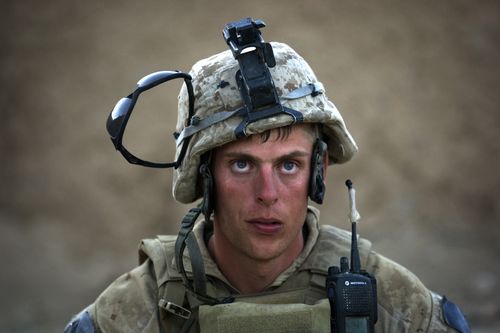
Fred Kaplan has mixed feelings about the war:
Which road is less unappetizing? I don't know. That's why I'm ambivalent.
My guess is that President Obama held so many meetings with his national-security advisers on this topic—nine, plus a 10th on Sunday night to get their orders and talking points straight—because he wanted to break through his own ambivalences; because he needed to come up with a reason (not just a rationalization) for doing whatever it is that he's decided to do, some assurance that it really does make sense, that it has a chance of working, so he can defend it to Congress, the nation, and the world with conviction. Let's hope he found something. A columnist can be ambivalent; a president can't be.
Joe Klein adds his two cents.
(Image: David Furst/Getty)
Alex Massie assembles a theory:
Other countries, not merely in western europe, have relied upon US protection so heavily that they are now largely incapable of making large-scale interventions themselves. They need the Americans. One consequence of this is that when the Americans actually ask for help there is not much their allies can usefully offer. This strengthens the American view that the US is having to shoulder too much of the burden itself. There's something to this. But if that's the case then it's partly also because America's allies appreciate that the US will do what it must in order to safeguard its interests and so, even when our own self-interest might be aligned with theirs, the less risky option is to let them go ahead on their own since they're going to do it anyway. Without the Soviet Bear, Washington's ability to leverage support is actually more limited even as its own power has increased.

 The Dish