And a test:
The Obama-Clinton Administration
“It’s not important to be perfect here, it’s important to act, to move, to start the ball rolling, to claim the evident advantages that all these plans agree with, and whatever they can get the votes for, I’m gonna support. I think it is good politics to pass this and to pass this as soon as they can. But I think the most important thing is it is the right thing for America. The worst thing to do is nothing,” – president Bill Clinton, on the Hill today.
How many of us a year ago would have foreseen the fusion of the Clinton and Obama brands in this administration? It speaks well of both parties, it seems to me. And Hillary’s globe-trotting role as a new kind of public diplomacy secretary-of-state is one the more astonishing things in the last nine months. What she did in Pakistan was quite something.
The Leno Experiment
NBC's Leno experiment is a fascinating harbinger of things to come. Fragmented TV audiences, especially in the 10PM slot, are a Catch-22 for networks. Keep the current hour-long-drama model, and they risk lose money. Or ditch the model for something with lower expectations and lower overhead, and they risk losing affiliate support. TIME magazine called Jay Leno the future of television. Everybody who works is television is probably hoping TIME magazine is wrong.
Correction
A reader writes:
When you said that “no black person could be a Mormon,” that isn’t factually correct.
Until 1979, blacks could become members of the church, it’s just that black men couldn’t hold the priesthood, something that all male members of the church about age 12 (I think) are allowed to hold. From 12-18, you are “ordained” into the Aaronic priesthood as a deacon. At 18, you join the Melchizedek priesthood and become an elder. Because priesthood membership is required to participate in most of the church’s important rituals (marriage, temple work, etc.), black people were shut out of full membership. It wasn’t even second-class citizenship — more like seventh- or eighth-class.
And the Mormon church also opposed the civil rights movement. (Romney’s dad was an honorable exception, and he backed King despite severe pushback from the Mormon authorities). They are consistent in opposing the civil rights of others deemed inferior by their religion.
Mental Health Break
(Hat tip: J-Walk Blog)
Hasan’s Talk
Reading Dana Priest's summary and then the document itself, it seems to me that in some ways, Hasan was airing an important debate. I don't glean from the notes for his lecture that he was necessarily an Islamist fanatic, merely that he could see how Islam could be seen as incompatible with military service in Iraq and Afghanistan. His view is pretty close to what many critics of Islam argue. Of course, the power-points cannot convey the tone of content of his actual remarks, so I may be wrong. But as a piece of analysis, it's admirably candid and very clear about Islam's total rejection of a separation between church and state. It seems to me from this evidence that his looming deployment, and the impossibility of a conscientious discharge, were contributing factors to his mass murder. The lecture almost reads like a cry for help, rather than a warning.
Pro-Choice, Pro-Stupak?
Nate Silver studies the Stupak amendment vote:
I was surprised at the number of Democrats who have solid pro-choice voting records but who nevertheless voted for Stupak Amendment. And the
vast majority of these Democrats voted for, not against, passage of the underlying health care bill...
I'm sure there are idiosyncratic explanations in a number of cases, but I take this as a sign that they're worried about the re-election environment they'll face in 2010. 11 of the 20 pro-choice Democrats who voted for Stupak reside in districts that are rated as vulnerable according to Cook Political (note: candidates who are leaving the House to run for Senate or governor are rated based on those races instead). And, interestingly, they seem to think that a pro-choice vote would render them more vulnerable than a pro-health care vote, even though the pro-choice position is generally more popular than the health care bill on the table at the moment (although some recent polls have shown the pro-choice position losing ground).
The Tories On Afghanistan
The party tipped to be the next British government is split on familiar lines:
Liam Fox, the Shadow Defence Secretary, and Michael Gove, the education spokesman, are staunch Atlanticists and supporters of military intervention — “neocons” to their critics, although Dr Fox prefers “neo-realist”…
Other Shadow Cabinet ministers think that the priority must be to hand over to the Afghan Army and bring British soldiers home. “There is a significant section of opinion in the parliamentary party that wants the thing over as soon as possible — you can call it isolationist or realist but it is there” one frontbencher says. George Osborne, an instinctive neocon, has, colleagues say become an “economic realist” who is struck by the cost of the war at a time when he must save billions. William Hague hovers between the two positions.
From 9/11 To Fort Hood, Ctd
A reader writes:
There is no end to the War on Terror and no way to prevent a 9/11 from happening again.
What I like about Obama is that he is trying to change how we view this conflict – it isn’t nation vs. nation or ideology vs. ideology but rather an effort to get the US out of the role of “The Great Satan” – that role is a great recruiting tool for Al Qaeda and others and unfortunately there are a seemingly endless supply of volunteers/suicide bombers. It will be a tough mission but one that can and will pay dividends if he is given the time (and support) to execute it.
Alternately, we can spend trillions of dollars and lose thousands of lives (US and others) but we won’t win as there isn’t a “loser” in this fight.
A Freedom March
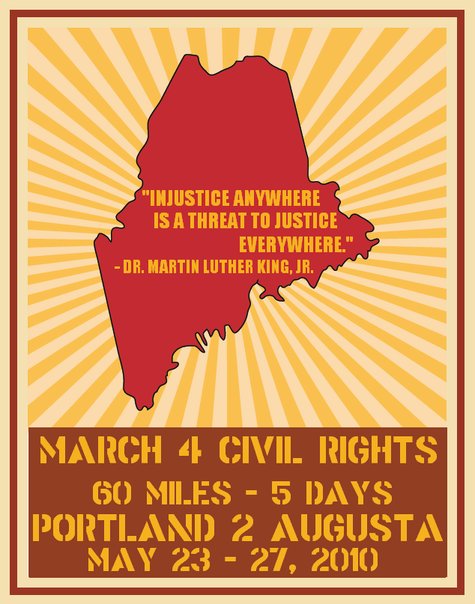
Another Facebook uprising that the old guard cannot control. Details here.
 The Dish