Public Art Meets Nudge

The Fun Theory” is an ingenuous initiative by Volkswagen:

This site is dedicated to the thought that something as simple as fun is the easiest way to change people’s behaviour for the better. Be it for yourself, for the environment, or for something entirely different, the only thing that matters is that it’s change for the better.

Go see how they get people to recycle and throw away their rubbish. Go here to submit your idea for a cash prize.

Putting All The Chips On Fail

Ed Morrissey's reaction to the GDP numbers and various other economic indicators:

If we have a double dip recession after these gimmicks end, Barack Obama won’t have George Bush to kick around any longer on the economy. He’ll own it after this.

I don't disagree. But then I have also – unlike Morrissey – noted that Bush's own reckless fiscal policies made surviving a recession without risking national bankruptcy far from easy. And his failed wars continue to drain the coffers. And his non-regulation of Wall Street undoubtedly helped precipitate the crisis. It will be impossible for historians to judge the first year of Obama if they don't understand the crushing Republican inheritance.

The Foot In The Door

Rick Hertzberg believes health insurance reform is just beginning:

The resulting [health care] “system” will be a nightmare, of course, but it won’t be as bad as the current nightmare. Once another twenty or thirty or forty million people are covered, however crappily, the issue will no longer be whether they should have coverage. It will be how to make coverage better and more efficient and more humane and, for society, less expensive in relation to outcomes.

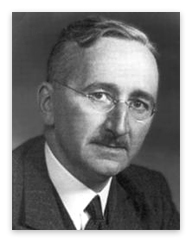
Was Hayek A Socialist?

I stick with Hayek in believing in some core government interventions where the individual cannot save himself. Finding a way to ensure that as many people as possible can get private (or semi-public) health insurance counts as one of them. But a reader notes that this Hayek position is not uncontroversial among many libertarians (which is why, despite my deep libertarian inclinations, I have never claimed the label). Here's Richard Epstein on the topic:

In sum, I think that the charge of Hayekian socialism carries with it a certain accuracy, because Hayek did not see the close intellectual and institutional connections between the Hayek government interventions that he supported and those which he opposed.

In part, Hayek made mistakes because of the political circumstances of his own time. In order to slay the dragon of central planning, he thought it imperative to concede some points to the opposition. But a second reason is at work as well, and it brings us back to the philosophical origins of Hayek's position. The central feature of Hayekian thought was its reliance on ignorance. It is ignorance that make central planning fail. It is ignorance that gives local knowledge its real bite. It is ignorance that leads us to embrace a conception of subjective value. I value my ignorance as much as the next fellow.

But truth be known, Hayek has gotten his central philosophical point only partly right.

He overstates the level of ignorance that we have, and thus underestimates the dangers of government intervention driven by knowledge of partisan advantage. It may well be that I cannot draw the demand curve for my new widget; but I do know that there are few states of the world in which I am better off without my protected monopoly that with it. And ignorant, thought I may be, I will be prepared to invest a good deal in securing that legal protection if allowed to do so by the rules of the game. With partial knowledge I can put self-interest to work in the political sphere just as I can put it to work in the economic sphere.

Truth be known, that is where Hayek goes wrong. We (collectively) may not know enough to manage a complex economic system from the center, but we (individually) do know enough to seek to rig the rule of the game to cut in our favor. Imperfect information coupled with confined self-interest offers a better set of behavioral assumptions about individual actors and social processes. Once we make those assumptions, we must be aware of the dangers that come from interferences with the contractual freedom and with legal efforts to maintain, from the center, minimum levels of security for us all.

These ideals may sound fine in the abstract, but in practice they confer too much power on government bureaucrats and often invite private behaviors that ape many of the worst characteristics of the central planning that Hayek rightly deplored. The Hayekian critique applies to the Hayekian concession on minimum welfare rights. In that important sense, the charge of Hayekian socialism sticks.

Von Hoffman Award Nominee

"It may take years, or even decades, for Democrats to relearn the lessons we thought, naively, they had learned for good under Clinton. But one day, Joe Lieberman's warnings in this campaign will look prophetic. And the principles he has espoused will once again guide the Democratic Party. It will be the work of this magazine, to whatever small degree possible, to hasten that day," – The New Republic, January 19, 2004, "Our Choice."

Colbert's take after the jump:

The Colbert Report Mon – Thurs 11:30pm / 10:30c
Joe Lieberman Is a True Independent
www.colbertnation.com

This embed is invalid

Colbert Report Full Episodes Political Humor Religion

Brothers And Sisters

BENEDICTHANDSJoeKlamar:AFP:Getty

Chris Dierkes, who has both Catholic and Anglican roots, notes an irony in the Pope's recent actions:

If personal experience and lifelong immersion in a sub-culture is any form of persuasive evidence, I can tell you that conservative Anglo-Catholicism — at the clerical level — is totally dominated by gay men.  Mostly repressed.  What used to be called when I was in seminary, the pink mafia.  And the thing that is the initial trigger for this decision is the upcoming very likely to happen decision to ordain women as bishops in the Church of England (there have already been women priests there for about 15 years or so).  Which has a certain irony in this case.  If these Anglo-Catholics join the Roman Communion they can join up with very conservative Roman Catholic groups like Regnum Christi and The Legionaries of Christ, also totally dominated by closeted gay fellows.  You don’t need to be Sigmund Freud to see the awesome tragic humor in a bunch of non-wife-having grown men wearing pink dresses (and in the Pope’s case super expensive fabulous Prada shoes!!!) telling everybody else they shouldn’t be gay.

We're not supposed to talk about this aspect of the drama in the Vatican. But there is as much an overlap of closeted gay priests and bishops with liturgical and theological orthodoxy as there is of closeted gay politicians finding ways to oppress other gays who are out and open.

Part of this is a function of generations.

If you had based your life – and sacrificed much of your emotional health – on the "intrinsic disorder" theory, you aren't exactly happy to reverse yourself in your old age. It suggests you gave up your life for an intrinsic illogic. Part is also just mysterious. But the fact that gay men have a disproportionate talent for order and theater and detail seems pretty obvious to me. No surprise then that among the best liturgical organizers are gay men – from choirmasters to priests to altar assistants. There is something very gay about a High Mass – it's almost the religious equivalent of a Broadway musical. So Benedict's sisterly outreach to the closet case smells-and-bells brigade among the Anglicans makes total sense. It's partly about keeping all the queens under one roof – and surrounded by incense and lace. 

Weird, I know. But true. And I might as well admit it: I too love the old liturgies and ceremonies and drama of Catholicism. But for me, it's not sublimation but celebration of gay men's contribution to our churches. One day, we'll be able to offer our talents without having to sacrifice our integrity as human beings. One day, when all this fearful nonsense is blown away and the church can return to the Gospels and the sacraments, and gay people can be treated as, you know, the sinners that everyone else is as well.

(Hat tip: Drum)