The Case For Jacking Up Your Bar Tab

Reihan wants to raise alcohol taxes significantly:

Great Britain has seen a staggering increase in alcohol consumption since the 1990s, much of it among teenagers. Tim Heffernan, writing in the Washington Monthly, has attributed Britain’s binge-drinking crisis to its laissez-faire alcohol market, which has allowed for the vertical integration of the liquor business. America has been shielded from U.K.–style liquor conglomerates by those post-Prohibition regulations that inflate the cost of making, moving, and selling booze, but that’s now changing thanks to big multinationals like Anheuser-Busch InBev and MillerCoors, which are working hand in glove with national retail chains like Costco to make alcohol as cheap and accessible as they can.

Why would I, a great lover of the free enterprise system, want the alcohol market to be more heavily regulated?

Precisely because I’m a believer in the power of the profit motive, I understand how deadly it can be when the product being sold is intoxication. For-profit businesses exist to increase sales. The most straightforward way to do that is not to encourage everyone to drink moderately, but to focus on the small minority of people who drink the most. That is exactly what liquor companies do, and they’ll do more of it if we let Big Liquor have its way. In Marijuana Legalization: What Everyone Needs to Know, the authors estimate that at current beer prices, it costs about $5 to $10 to get drunk, or a dollar or two per drunken hour. To get a sense of what the world would look like if that price fell significantly, go to a typical town square in England on a weekend night, where alcohol-fueled violence is rampant, or to Russia, where the ruling class has used cheap vodka as a tool to keep the population drunk, passive, and stupid for generations.

Kleiman generally agrees but nitpicks:

At some points, I would differ in emphasis. It’s hard to judge how much alcoholism is a cause of the rotten Russian polity and the decrepit Russian economy and society, and to what extent it is an effect, with people drinking because there’s nothing better to do.
Status And Sluttiness

Amanda Hess peruses a sociological study showing that slut-shaming has little to do with actual sexual behavior:

The researchers interviewed more than 50 women (all of them white) from the start of their freshman year and followed them to shortly after their graduations, asking them questions about, for example, their perceptions of ‘‘a girl who is known for having sex with a lot of guys.’’ That question was an unexpected dud, yielding few thoughts from the young women in their sample. Then the college women realized that the researchers weren’t really asking for their opinions about promiscuous women. They were asking for their thoughts about “sluts”—a campus stigma that had almost nothing to do with students’ real sexual experiences, but everything to do with their social class. …

As the sociologists got to know these women, they watched as they stratified into what they defined as “high status” and “low status” social groups, with high-status women typically emerging from affluent homes around the country and rising through the Greek system, and low-status ones coming from local middle- and working-class backgrounds and coalescing into friend groups boxed out of sorority life. They found that the groups had different conceptions of what constituted a campus slut, with the low-status women pinning sluttiness on “rich bitches in sororities,” and the high-status women aligning sluttiness with women they perceived as “trashy,” not “classy.” This class-based construction of the campus slut allowed both groups to deflect the stigma of “sluttiness” onto other women and away from themselves, establish hierarchies among social groups, and police everyone’s gender performance—including their own—along the way.

Olga Khazan’s takeaway is that sluts, like hipsters, are basically anyone you don’t like:

One of the most striking things [sociologist Elizabeth] Armstrong learned was that, despite the pervasiveness of slut-shaming, there was no cogent definition of sluttiness, or of girls who were slutty, or even evidence that the supposedly slutty behavior had transpired. In the study, she notes that though “women were convinced that sluts exist” and worked to avoid the label, some of their descriptions of sluttiness were so imprecise (‘‘had sex with a guy in front of everybody”) that they seemed to be referring to some sort of apocrypha—“a mythical slut.”

“The term is so vague and slippery that no one knows what a slut was or no one knows what you have to do to be that,” she told me. “It circulated around, though, so everyone could worry about it being attached to them.”

The Muse Behind Mad Men

In a Paris Review interview we recently flagged, Mad Men creator Matthew Weiner cites the influence of John Cheever, saying that the writer “is in every aspect” of the show. Elisabeth Donnelly elaborates:

Cheever is the closest thing that Mad Men has to a spirit animal. In his life and in his work, Cheever was a faker, a man trying very hard to fit into a box, and completely aware of it. His spirit infuses the edges of Don Draper’s American story. References abound, of course: Don and Betty lived on Bullet Park Lane — Bullet Park was the title of one of Cheever’s later novels — in Ossining, New York, the suburb where Cheever lived for much of his life. I think Cheever would be delighted to see where Matt Weiner is taking Don Draper, and the flights of profound beauty and weirdness that color Mad Men.

Rebecca Makkai also explores similarities between the show and Cheever’s fiction:

Cheever’s stories often end not with action but in a tangential and meditative fugue; Weiner’s episodes end with music, arguably the filmic equivalent. The perfect discord of Betty eating ice cream to the strains of “Sixteen Going On Seventeen” ended a dark Season 5 episode better than any cliffhanger, any plot development, could have. As with a Cheever story, we haven’t wrapped things up neatly – to do so would be an insult to the complexity of what has come before – but we’re given a tonal riff on the story, plus time to absorb it all. We’ve already seen the splash of the rock in the pond, and now we’re watching the ripples. At the end of Cheever’s “A Country Husband,” the protagonist stands in his garden after a series of social and marital humiliations, and watches a neighbor dog prance “through the tomato vines, holding in his generous mouth the remains of an evening slipper.” A lesser writer might have stopped there, but Cheever takes off for outer space: “Then it is dark; it is a night where kings in golden suits ride elephants over the mountains.” If, next spring, “Mad Men” ends on a note half that strange and sublime, I’ll be satisfied.

Join The Club!

Book clubs are nothing new, observes Nichole Bernier, but “what is new, however, is that book clubs’ appetite for reading — and the power of their consumption — is becoming a publishing influencer”:

Paula Hubert, founder of Book Movement, left a career in the literary department at William Morris to monetize the marriage of book clubs and authors online. “I saw that book clubs were creating these bestsellers, and publishers were desperate to get at them but nobody could connect them,” she says. Her website now has 35,000 clubs as members, and offers book promotions and giveaways, author interviews, book of the month designation, and ads in its email newsletters. Similarly, TLC book tours is a paid online vehicle to reach readers – but in this case, via book-reviewing bloggers, whose audience is avid book club readers.

One drawback:

The elephant in the living room is the cost of this marketing. For most authors who haven’t achieved bestselling status, the onus falls on them to pay for these promotions, or to convince their publisher to do so. For many, this is a final financial straw in an artistic career that was supposed to have been about putting words on the page, but morphed into social media management by day and visits to book clubs by night.

There’s still time to catch up with the Dish’s second Book Club selection, On Looking by Alexandra Horowitz. Read about the book here and buy it here.

Face Of The Day

Screen Shot 2014-05-29 at 11.17.59 AM

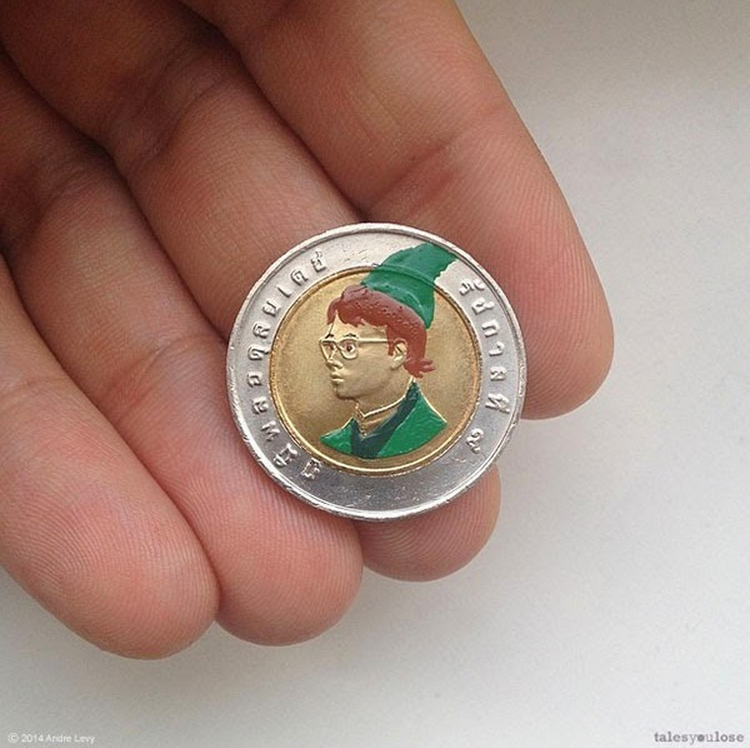
Andre Levy’s coins take on alternate identities:

Brazilian artist and designer Andre Levy has developed an interesting, playful new pastime: painting coins. In the series, which he calls Tales You Lose, Levy uses the mini-structures of the coin’s portraits or figures to create his own, partially or fully obscuring the faces of presidents and kings to recreated the likenesses of superheroes and pop-culture icons.

See more of his work here and here.

A Short Story For Saturday

This weekend’s selection is a relatively obscure short story from Marilynne Robinson, “Connie Bronson,” published in the 1986 Summer-Fall issue of The Paris Review. How it begins:

I had one friend named Connie Bronson who lived two houses up the street from me and was one year younger than I and two grades behind because she had had brain fever. She had blood-red hair and a freckle-spattered face, and was called Bones by the boys at school, who regarded her with intense loathing and in bad weather often spent whole recesses devising other, more terrible epithets for her.

All of this was a source of great sorrow to her mother, who took a job in a drugstore so that Connie could have piano and tap-dancing lessons, and gave parties for her on every pretext, ordering huge cakes from the bakery encrusted with coarse, dusty frosting and blowsy sugar-roses, calling the mothers of each of the children in Connie’s class to be sure that the parties were well-attended.

She had once even bought the girl a pony which, since her means were limited, was very old and sickly and ill-tempered, and was put up for sale again a few weeks later because it bit Connie’s hand, breaking her little finger, which, though it was set and re-set, healed veering outward at the first knuckle. This, of course, cast a shadow over those of her mother’s hopes that rested with the piano lessons, and provided another theme for the inventions of the little boys at school.

Keep reading here. For more of Robinson’s fiction, check out one of her most loved novels, Gilead. Previous SSFSs here.

Country Noir 101

ElectricLit_COUNTRYNOIR2014

Court Merrigan defines the literary genre of “country noir,” which is all about “the small, the local, the defiant and the defeated”:

Over and against the overweening hubris of the American Dream, country noir looks to the broken-down farmhouse, abandoned in a pasture, with its dreams long gone and broken. It flips the bird to social conscience, ideology and utopian hopes, turns to the bar for another red beer, contemplating the tottering of social order against the meth epidemic, the plight of returned veterans abandoned by their country, the fate of fugitives. There is no epic sweep to these stories, no recourse to a mythology which sweeps us all along to a manifest destiny.

Country noir occurs beyond the aegis of the city and the suburbs. Its rural settings bring the actions and characters into sharp relief, stripping away social context and revealing its humans as naked, trembling, and very horribly fallible. Eschewing social commentary and symbolism, country noir prefers to dwell in the more homely environs of story.

No crusaders appear. Characters may be victims, passive or flailing, of vicious social circumstance, but while there may be a good deal of awareness of the haves, they will remain have-nots. The swindling Bible salesmen in Flannery O’Connor’s “Good Country People,” for instance, certainly has some idea what he’s missing out in the pleasant homes he visits. Many lives in country noir works are worn out over amounts of money that would be beneath the notice of the prosperous; from Rueben Bourne accidentally murdering his son in the wilderness after going broke in Nathanial Hawthorne’s “Roger Malvin’s Burial” to the unnamed fugitive in Scott Wolven’s “Atomic Supernova” eking out a living in the Nevada badlands recycling metal and running drugs, the characters of country noir works are generally not economic winners.

(Image: Genealogy of country noir via Electric Literature)

Listening To Lit

TransPose is an experiment that translates text to music:

The text of a novel — with the first experiments including To Kill a Mockingbird and Alice in Wonderland — is segmented into four parts, the octaves determined by the “joy and sadness densities,” and the length of notes set by the density of those emotions. These emotions in turn are determined by a database of words linked to eight different sentiments, including joy, anticipation, anger, disgust, trust, fear, surprise, and sadness. So the sections of the book each get an emotional profile.

Most literature is obviously a bit too complicated to make this an accurate exercise, but based on the preliminary selections it isn’t far off. The TransPose piano pounds out a piece for A Clockwork Orange in the key of C Minor — with the first emotion fear and the second sadness — at a tempo of 171, while The Road clods along with the same emotions at a tempo of 42, and The Little Prince is sprightly in C Major with its emotions of trust and joy. As [project creators Hannah] Davis and [Saif] Mohammad state in their joint research paper on the project, they anticipate applications such as “audio-visual e-books that generate music when certain pages are opened — music that accentuates the mood conveyed by the text in those pages,” as well [as] film soundtracks or even a “tweet stream that is accompanied by music that captures the aggregated sentiment towards an entity.”

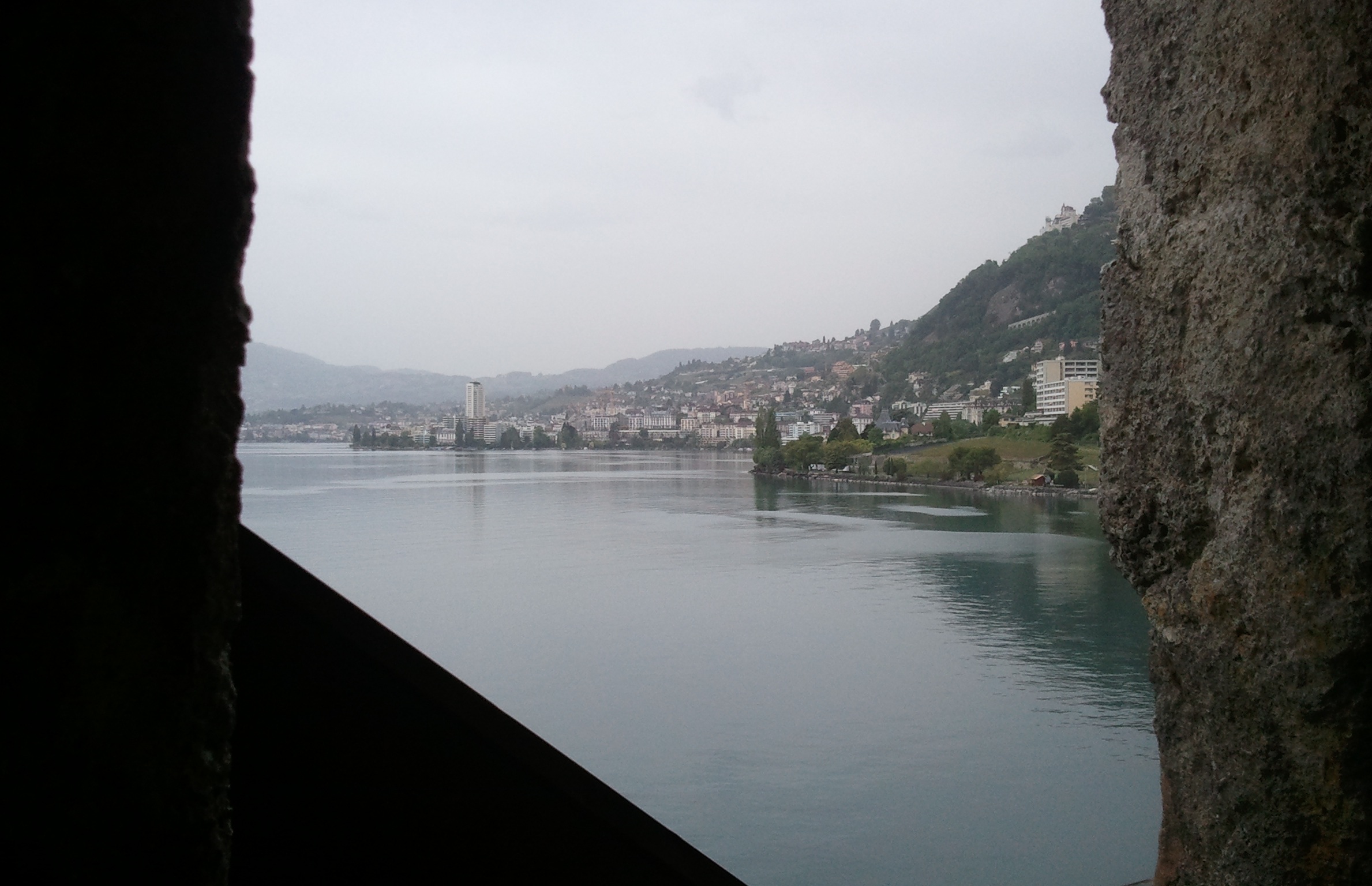
The View From Your Window Contest

VFYWC-207

You have until noon on Tuesday to guess it. City and/or state first, then country. Please put the location in the subject heading, along with any description within the email. If no one guesses the exact location, proximity counts.  Be sure to email entries to contest@andrewsullivan.com. Winner gets a free The View From Your Window book or two free gift subscriptions to the Dish. Have at it.