Where The Males Have (Little) Vaginas And The Females Have (Big) Penises, Ctd

A reader calls the headline of this post “offensive and biologically wrong”:

A new sexuality is found in nature if it gets crunched down to chicks with dicks? Bullshit! The gynosome is an amazing discovery; it is not like anything else ever found. But to reduce it to human sexuality removes the wonder of the diversity on this earth.

She points us to Annalee Newitz, who asserts that “the gynosome isn’t a penis”:

As Jason Goldman explains in an article about the gynosome, this is a hitherto unknown form of sexual organ in the animal kingdom. When female members of the Brazilian bug species Neotrogla mate with males, they insert their gynosomes into the male’s sexual organ. Once inside the male’s body, the gynosome inflates and grows spines, then absorbs both sperm and nutrients from the male for several days.

I’m sorry, but does this sound like a penis to you? When was the last time you found a penis that grew spines, absorbed nutrients, remained erect for 75 hours, or allowed its owner to get pregnant? Pretty much the only thing this organ has in common with a penis is that it’s used to penetrate a partner during sex.

She scoffs, “when it comes to sex, humans are still hopelessly in thrall to our anthropomorphic urges – which is to say, our urge to see every animal’s behavior as a reflection of our own.” Ed Yong, on the other hand, defends the characterization:

As Diane Kelly, who studies penises, points out:

“As a technical term, a penis is a reproductive structure that transfers gametes from one member of a mating pair to another.” Which is exactly what is happening here.

Newitz points to differences. “When was the last time you found a penis that grew spines, absorbed nutrients, remained erect for 75 hours, or allowed its owner to get pregnant?” Actually spines are pretty common; long sexual bouts are pretty common; and the gynosome doesn’t absorb nutrients—it collects sperm packets that contain nutrients, which the animal then eats in the normal way. The key difference is that rather than delivering sperm, it collects it—as I stated right up top. And the only reason we think of penises as sending sex cells in that direction is that we never knew any other set-up could occur. Now we do, which either forces us to introduce a new term and demand that it be used, or to expand the bounds of our old term. I prefer the latter. I’m generally a lumper, rather than a splitter.

TWSS?

The Best Of The Dish Today

Never forget E.B. White!

Today, I argued that Obama was on the verge of another meep meep in foreign policy with Syria and Iran; that Rand Paul’s criticism of Reagan’s spending and deficits is a vital part of resuscitating conservatism; and that the Onion should have the last word on the circumcision debate. Plus: climate change’s threat to global security; and the power of psilocybin in tackling anxiety.

Some brief links on the Becker book. Ronan Farrow had a terrific interview with Becker today – tough but fair. Check it out. Lisa Keen has a superb takedown, as does Kevin Jennings. Petrelis piles on to HRC’s spin. I think it’s safe to say that there have been episodes of the 700 Club that have gotten a better reception in the gay community.

You can leave your unfiltered comments at our Facebook page and @sullydish.

35 more of you became subscribers today. Join them here.

And see you in the morning.

A Two-Way Sleep

Holly Allen extols the virtues of sleeping in separate beds:

Sharing a bed is good for sleeping together, but not actually sleeping together. We all know the importance of sleep, so why then do we still choose to share our beds with the kickers, the snorers, and the human dish_twinbedsfurnaces that we love?

“Man since time immemorial has made preparation for sleep, either laying an animal pelt on the ground or using plant matter as some sort of mattress,” according to sleep expert Dr. Neil Stanley. “Originally we all slept together on the ground, mainly because we had nowhere else, but also for warmth and security.”

Warmth and security? We have flannel pajamas and deadbolts now.

There have been times throughout the history of slumber that couples did not share a bed. Ancient Romans retreated to their separate quarters in the evening. On The Dick Van Dyke Show, Laura and Rob Petrie turned in to their separate beds, and I bet they slept great.

(Image via Flickr user AZAdam)

Seeing Blue, Ctd

A reader offers some help to others:

I read your snippet on the effects of blue light with interest, as my partner has Delayed Sleep Phase Disorder. We have a whole system in place at the house for the timing of optimal lighting. This includes blue LEDs pointed at him during the day and software applications to reduce blue lights on all the media screens at night. F.lux reduces blue light in your computer/iDevice screen according to your time zone, while Twilight for Android does the same thing for your mobile. So when I’m reading the Dish late at night, I now don’t have to worry that it’s corrupting my circadian rhythm as well as my mind.

Happy Bard Day

Daniel Hannan notes the occasion:

Four-hundred-and-fifty years ago today, in a village in the West Midlands, the greatest imaginative intelligence evolved by our species was born. Lawrence Olivier called Shakespeare “the nearest thing in incarnation to the eye of God”. John Dryden wrote that, of all the poets, “he had the largest and most comprehensive soul”. Thomas Carlyle asserted, “I know not such a power of vision, such a faculty of thought, if we take all the characters of it, in any other man.” For Harold Bloom, “Bardolatry, the worship of Shakespeare, ought to be even more a secular religion than it already is. The plays remain the outward limit of human achievement: aesthetically, cognitively, in certain ways morally, even spiritually.”

Bob Duggan traces the spread of bardolatry:

Once the modern taste for the individual took hold … Shakespeare found a home beyond England’s shores. American colonists staged plays by Shakespeare as early as 1750. “There is hardly a pioneer’s hut that does not contain a few odd volumes of Shakespeare,” Alexis de Tocqueville wrote in 1835 in Democracy in America. From the very beginning of the American experiment in democracy, Shakespeare and his individualized characters inspired a government of, by, and for the people, to paraphrase the Gettysburg Address of that notorious Shakespeare lover Abraham Lincoln. As kings fell and democracies rose throughout Europe in the 19th and 20th centuries, Shakespeare (often in vernacular translation) showed the way, sometimes in the form of music, as in Giuseppe Verdi’s operas Otello and Falstaff, which provided the popular soundtrack to the political movement by which modern Italy was born.

Noting that Virginia Woolf wrote “man has Shakespeare & women have not” in an early draft of To the Lighthouse, Stefanie Peters considers what the playwright’s works have meant for women:

What has changed in 450 years of performing, reading, writing Shakespeare? The history of women interacting with Shakespeare’s plays is also the history of women’s rights, suffrage, and of the feminist movement. It is a history of women being silenced and of finding ways to speak out anyway. Shakespeare has been, and is, an uneasy ally in this history. He complicates but also enriches our idea of what a woman is. Too often we are still Katherinas, forced to compromise our dignity in order to retain our voice, or else our insistence on speaking is blamed for our tragedies, like Juliet. But the reason why we still read Shakespeare’s women, is that they are women. Goneril, Juliet, and Katherina are finally not ciphers. Whatever else they may be, they are true women, and they have true voices.

Meanwhile, Stephen Marche reflects on the best modern adaptations, Julia Fleischaker assesses booksellers’ recent claims to have discovered a dictionary Shakespeare annotated, and Roy Peter Clark shares the Shakespeare-penned sentence that changed his writing. Zooming out, Claire Hansen remarks on the author’s mystique:

Shakespeare knew very well that the spirit of a man – the reputation and fame that lingers on – jars imperfectly with the physical being of the body. That is what leads to the assassination of Julius Caesar in Shakespeare’s play: his physical limitations, his humanity, cannot match up to the imagined godliness of his mind and spirit.

In celebrating Shakespeare’s birth-date this year, it is well worth distinguishing between man and colossus. The fertile and imaginative potential of Shakespeare’s plays will continue on “so long as men can breathe or eyes can see” (Sonnet 18) – as long as there are hands and minds to enjoy them and to experiment with them, remaking the plays for the times and places of now and the future.

But this is a different phenomenon to Shakespeare the man; and any attempts to reconcile the two will always prove wanting. That, perhaps, explains the ongoing impulse to both worship and to question William Shakespeare.

Previous Dish on Shakespeare here, here, here, and here.

Ancient Survivors

Popova gushes over Rachel Sussman’s The Oldest Living Things in the World, a book of photos and essays about organisms more than 2000 years old:

With an artist’s gift for “aesthetic force” and a scientist’s rigorous respect for truth, Sussman straddles a multitude of worlds as she travels across space and time to unearth Earth’s greatest stories of resilience, stories of tragedy and triumph, past and future, but above all stories that humble our human lives, which seem like the blink of a cosmic eye against the timescales of these ancient organisms — organisms that have unflinchingly witnessed all of our own tragedies and triumphs, our wars and our revolutions, our holocausts and our renaissances, and have remained anchored to existence more firmly than we can ever hope to be. And yet a great many of these species are on the verge of extinction, in no small part due to human activity, raising the question of how our seemingly ephemeral presence in the ecosystem can have such deep and long-term impact on organisms far older and far more naturally resilient than us. …

From a broken arm in remote Sri Lanka to a heart-wrenching breakup to a well-timed sip of whisky at polar explorer Shackleton’s grave, her personal stories imbue the universality of the deeper issues she explores with an inviting dose of humanity — a gentle reminder that life, for us as much as for those ancient organisms, is often about withstanding the uncontrollable, unpredictable, and unwelcome curveballs the universe throws our way, and that resilience comes from the dignity and humility of that withstanding.

The Dish has highlighted Sussman’s work over the years.

A Pivotal Visit?

As Obama begins an East Asian tour, Keating asks whether the much-touted “pivot to Asia” is a real thing:

[T]here doesn’t seem to be much evidence that the administration is spending more of its energy on Asia, or less of it on the Middle East, than it did previously. As Gideon Rachman argues, the fact that the pivot hasn’t been much in evidence doesn’t mean that the idea wasn’t a sound one. The Pacific is an area of growing strategic and economic importance and the U.S. position still carries a significant amount of weight there.

But the fact is that more attention tends to be paid to the places where things are blowing up on a regular basis. Thankfully, despite tensions running high on the Korean peninsula and the East China Sea, Asia is not yet that place. But it means that the region is often going to be pushed to the back-burner when more obvious crises present themselves

Dan Blumenthal thinks the pivot was a bad idea from the get-go:

Yes, Asia is of emerging consequence in world affairs. All post-Cold War presidents have recognized this. And China has had the potential to pose the greatest challenge to the United States since it became the prime actor in world affairs. Without a doubt, Asia needs more U.S. attention and resources. But the United States is a global superpower with vital interests in several interlinked regions. There can be no Asia policy without a global strategy.

For example, Japan gets most of its energy from the Middle East, where Washington has played a stabilizing role. And what about India? How will Delhi play the role Washington imagines for it in Asia if the United States mishandles Afghanistan? Furthermore, all Asian powers watch Washington’s handling of the other revisionist states — Russia and Iran — for clues about its fortitude in Asia. U.S. grand strategy must account for these facts.

The editors at Bloomberg take a more nuanced line, saying the idea was good but the implementation was fumbled:

The notion of prioritizing Asia should hardly be controversial. The region, as one of the pivot’s original architects noted recently, exerts an “inescapable gravitational pull.” It is home to half the world’s population, and before the middle of this century it should account for half the world’s economic output. Already the U.S. exports 50 percent more to Asia than to Europe. The U.S. and almost every country in Asia share an overwhelming interest in ensuring a free flow of goods, information and ideas to and from the region.

But it’s obvious now that all the trumpet-blaring back in 2011 about a coming Asian Century raised expectations too high and too fast. China naturally assumed the pivot was designed to thwart its rise and grew emboldened when budget cuts slowed the movement of U.S. military assets to the region. Japan, the Philippines and other countries that had assumed the same thing now fret about U.S. staying power. From Myanmar to Vietnam, small nations lament that they haven’t received the kind of attention and money once showered on the likes of Djibouti or Tajikistan. Clearly, the White House overpromised and underdelivered.

But Michael Mazza wonders whether Obama can still pull it off:

The president will not save his pivot by racking up frequent flyer miles. “Showing up” is important, but not nearly as important as what the president has in hand upon his arrival. Assuming that “success” is defined as preservation of the peace in Asia and the establishment of relative stability, the president’s presence in the region will certainly be insufficient to achieve it.

The president has a long to-do list. He needs to reassure allies that the United States will live up to its security obligations in Asia. He likewise needs to assure them that he will not fiddle while the rest of the world burns. He needs to convince capitals across Asia that “21stcentury” America can play hardball with the world’s “20th century” powers—and play to win. He needs to demonstrate that he has a strategy for winning the peace in Asia, that the pivot is more than a slogan. This is a tall order.

Quote For The Day

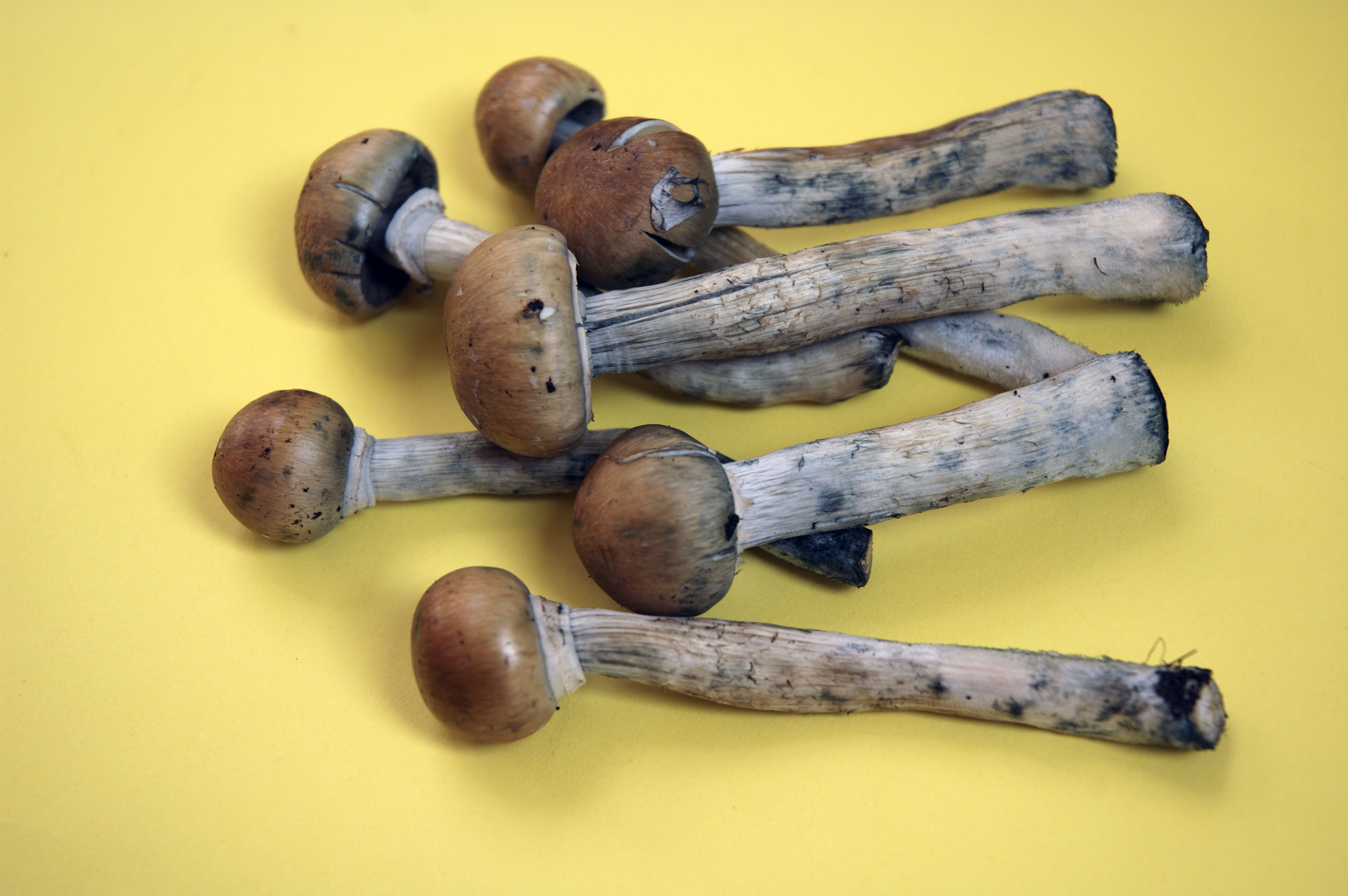
Fresh Colombian magic mushrooms legally on sale in Camden market London June 2005

“At the hospital they gave me Xanax for anxiety. Xanax doesn’t get rid of your anxiety. Xanax tells you not to feel it for awhile until it stops working and you take the next pill. The beauty of psilocybin is: it’s not medication. You’re not taking it and it solves your problem. You take it and you solve your problem yourself,” – a patient with acute anxiety, after treatment with the active ingredient in “magic mushrooms.”

Extensive Dish coverage of psilocybin here.

(Photo: Fresh Colombian magic mushrooms legally on sale in Camden market London June 2005 before such sales became a crime. By Photofusion/Universal Images Group via Getty Images.)

Hold The Vodka

Russians are turning away from the bottle, at least somewhat:

[When Dmitry] Medvedev handed the presidency back to Putin in 2012, his anti-alcohol campaign had quietly produced marked improvements in Russian health. Consumption of all types of alcohol had dropped from 18 liters per capita to 15. Suicides, homicides, and—most telling—alcohol-poisoning deaths occurred less frequently. In 2011, “only” 11,700 Russians died from alcohol poisoning, quite a drop from the average of 36,000 a year during Putin’s first eight years (2000–08) but still some 50 times higher than the rate in Europe and North America. The same year, combined life expectancy for men and women surpassed 70 years (64.3 for men, 76.1 for women) for the first time since 1986, during Mikhail Gorbachev’s anti-alcohol campaign.