Reality Check

Kevin Drum declares that an Obama endorsement “might be the kiss of death this year”:

Obama Endorsement

Nate Rawlings summarizes other parts of the poll:

President Obama’s job approval rating sank to a new low of 41 percent in a Wall Street Journal/NBC News poll released Tuesday, forecasting political headwinds for the Democratic Party in the months leading up to November’s midterm elections. … Neither party, however, has a solid edge in terms of popularity. Republicans fared one point better than Democrats – 44 percent to 43 percent – on the question of which party voters would rather have running Congress, which is within the poll’s margin of error.

Cillizza looks for historical parallels:

One in three registered voters in the NBC-WSJ poll said that their vote for Congress this fall will be intended to signal opposition to President Obama. Compare that to the 24 percent who said their vote would be a way to show support for Obama and you have the enthusiasm gap between the two party bases that likely sunk (Alex) Sink on Tuesday.

Again, past NBC-WSJ data is instructive. On the eve of the 2010 election, 35 percent said their vote was a way to show support for Obama while 34 percent said it was to show optimism.  The danger for Obama — and his party — is if his current numbers continue to tumble into a place where George W. Bush found himself in 2006; in a late October NBC-WSJ poll, 37 percent said their vote was to show opposition to Bush while just 22 percent said it was to show support.

Morrissey digs deeper into the data:

The problem for Obama and Democrats in this poll is that his personal likeability no longer keeps his overall numbers afloat. The “personal feelings” rating for Obama is now 41/44, with 15% neutral, in this poll. At the beginning of October, Obama scored 47/41, and before the August “red line” debacle it was 48/40. The “very positive” rating in this survey of 21% is the lowest of the series; a year ago it was 30%, and at the time of the last election it was 34%.

Kilgore points out that there are other polls:

Do you want to make a case that Obamacare is sinking the Obama presidency, portending a catastrophic Democratic performance in November? Well, there’s a new NBC/WSJ poll out showing Obama’s approval/disapproval ratio sinking to a new all-time low of 41/54. But if you want to argue that Obama and Democrats are slowly recovering from bad vibes over the initial Obamacare rollout, there’s also a new Bloomberg poll out showing Obama’s job approval ratio improving from 42/55 in December to 48/48 today.

Drone Regulations Fail To Launch

Susan Crawford knocks the FAA for claiming authority to regulate commercial drones but never writing any actual rules:

The Federal Aviation Administration has been asserting for years that it has broad authority over drones but hasn’t been able to come up with any rules covering their use. That didn’t stop the agency from fining a 29-year-old Swiss man, Raphael “Trappy” Pinker, for flying a Styrofoam drone over the University of Virginia. The FAA said that Trappy’s stunt, carried out in the course of filming an advertisement for the university’s medical school, amounted to a dangerous airplane flight. Last week, however, the National Transportation Safety Board declared that the agency couldn’t bar the commercial use of drones without conducting an official rule-making process.

Back in 2012, Congress told the FAA to put guidelines in place by 2013 and have a plan for detailed drone regulation by 2015. The agency will miss both of those deadlines. And its dithering has put it in an awkward legal position: The FAA may have ample potential legal authority over drones, particularly when it comes to safety, but its inability to hammer out the details is keeping it from taking a stand on their commercial use.

Josh Marshall expects drones to require a new approach to air traffic:

What interests me just as much as the privacy dimension, however, is how the proliferation of drones is about to completely challenge the way we keep flying objects safe in the air and change fundamentally how we manage air traffic. … There will just be too many things flying around and too many not under any kind of direct human control. So the FAA is in the midst of planning a new system in which every flying object or nearly every flying object has to have technology on board which constant sends out GPS-based notifications about where it is.

Frederic Lardinois thinks the ruling could encourage the administration to move faster:

For the time being, then, the legal situation around drones remains as murky as ever. While it seems plenty of real estate companies are shooting photos of houses from small quadcopters and they remain in heavy use for video production and other uses, the FAA continues to argue that commercial drone usage is essentially illegal.

Because it’s perfectly okay to fly these same small drones for non-commercial reasons (though the FAA would prefer it if people at least followed a few common-sense guidelines), the FAA seems somewhat out of step with reality on this issue.

The FAA wasn’t expected to make any rules for commercial drone usage before the end of 2015. Maybe all this activity around this court case now will get it to speed up the process a bit.

Chart Of The Day

public_v_ir_scholars

A reader writes:

I’ve been closely following your thread on “Right-Sizing the Military” and I thought you might be interested in a poll of International Relations scholars in the U.S. that my colleagues and I recently conducted. Our goal was to see what folks who study these issues for a living think about the proposed defense budget. (We also asked about a variety of issues Russia, Ukraine, and Syria.) We heard back from 900 IR scholars (out of a approximately 2,800 in the U.S.). Those who responded were statistically indistinguishable from those who did not. The margin of error is +/- 2.7 percent.

With regard to the defense budget, 75 percent of IR scholars we surveyed said we spend too much on defense, 20 percent said we spend the right amount, and 6 percent said we spend too little. This contrasts sharply with the public sentiment as recorded by a recent gallup poll (see the attached figure). Further, 27 percent said the proposed Hagel/Obama budget would enhance U.S. security, and 53 percent said it would have no effect.

We’ve published some of the results and a short essay explaining the broader goals of our on-going survey project here.  Our full survey report is in this pdf.  Even more detail on our project is in this one.

Bending Yoga Out Of Shape

Brian Palmer contends that “Yoga is the new prayer: the risk-free, cost-free solution to all of your medical problems”:

In 2006, a well-constructed study finally proved that praying to God confers no medical benefit. … God’s medical career was over. But he left a void in the public discussion of medicine, and yoga has filled it. Studies come out on a near weekly basis trumpeting the benefits of yoga for any problem. Yoga for diabetes. Yoga for high blood pressure. Yoga for heart disease. Yoga for cancer. Yoga for slow reactions. Yoga for bad grades. The quasi-miraculous healing powers of yoga are, I concede, more credible than the truly miraculous healing power of a divine being. At least there is a nexus between health and yoga—the human body—which is something you can’t say for therapeutic prayer.

The yoga studies, however, contain myriad methodological problems, some of which are similar to those that plagued prayer research.

Joshua Eaton highlights how Buddhism has also been co-opted:

Interaction among Buddhism, neuropsychology and the self-help movement has also launched a constellation of publications, gurus, life coaches and conferences that make up the mindfulness movement. Its proponents tout yoga, mindfulness and meditation as panaceas, good for everything from managing stress and increasing longevity to turning around poor urban schools and establishing world peace, all one breath at a time.

Corporate America has embraced mindfulness as a way to raise bottom lines without raising blood pressure — much to the chagrin of people like [Amanda] Ream, who feel that Buddhism’s message is much more radical.

The Other B-Word

Sheryl Sandberg and Anna Maria Chávez have launched a campaign against “bossy”:

Most dictionary entries for “bossy” provide a sentence showing its proper use, and nearly all focus on women. Examples range from the Oxford Dictionaries’ “bossy, meddling woman” to Urban Dictionary’s “She is bossy, and probably has a pair down there to produce all the testosterone.” Ngram shows that in 2008 (the most recent year available), the word appeared in books four times more often to refer to females than to males.

Behind the negative connotations lie deep-rooted stereotypes about gender. Boys are expected to be assertive, confident and opinionated, while girls should be kind, nurturing and compassionate. … How are we supposed to level the playing field for girls and women if we discourage the very traits that get them there?

Deborah Tannen supports the idea:

I once had high-ranking women and men record everything they said for a week, then shadowed them and interviewed them and their co-workers.

I found that women in authority, more often than men in similar positions, used language in ways that sounded a lot like what researchers observed among girls at play. Instead of “Do this,” women managers would say “Let’s …” or “What you could do,” or soften the impact by making their statements sound like questions.

In short, women at work are in a double bind: If they talk in these ways, which are associated with and expected of women, they seem to lack confidence, or even competence. But if they talk in ways expected of someone in authority, they are seen as too aggressive. That’s why “bossy” is not just a word but a frame of mind. Let’s agree to stop sending girls and women the message that they’ll be disliked – or worse – if they exercise authority.

But Danielle Henderson urges women to embrace their bossiness:

We should be telling girls to own the living shit out of bossiness. Instead of casting it as a pejorative, we should be reifying the idea that being bossy directly relates to confidence, and teaching girls how to harness that confidence in productive and powerful ways. This isn’t a problem of language – the problem is our backwards system that rewards women for silence and compliance, and encouraging them to be less fierce is a supremely fucked up way to counter that. What is this wilting flower, let’s-not-say-bad-words approach to empowerment?

Meanwhile, Olga Khazan warns that efforts to make girls more willing to be “bossy” may inadvertently target the introverted:

Of course it’s good to encourage girls to be leaders. But not all leaders have extroverted personalities. In fact, some of the best ones are quiet, shy loners who were likely never called “bossy” in their lives.

The anti-bossy movement aims to encourage girls to speak up “even if you aren’t sure about the answer,” but introverts prefer to process their thoughts and form solid ideas before expressing them. Studies on introverted leaders have shown that they are not any less effective than their more gregarious counterparts, and some studies have even shown that humbler leaders can inspire better-functioning management teams. Charismatic CEOs get paid more, but their firms don’t perform any better on average than those of more reserved principals.

She adds that efforts should be made to push workplaces and schools “to better recognize the talents of introverts – not to pressure girls or boys or anyone to simply act in a more extroverted way.”

Can Money Buy A Congressman’s Love?

Political science graduate students Joshua Kalla and David Broockman, in collaboration with the liberal organization CREDO Action, ran an experiment to see whether donors really get preferential access to members of Congress:

In the experiment, CREDO Action requested meetings with 191 Congressional members to talk about a pending bill. Though all of the requests were on behalf of CREDO members who had made political donations, the organization randomly selected whether to tell the elected official that they were meeting with donors or ordinary constituents.

A total of 86 congressional offices agreed to meetings. Senior staffers, such as chiefs of staff or deputy chiefs of staff, showed up to meet identified donors at 19% of those meetings, with actual members of Congress attending 8%. But only 5% of the meetings with ordinary constituents were with senior staffers, including a mere 2% with actual members. The majority of meetings, whether with donors or constituents, were with Washington D.C.-based legislative assistants or local district directors.

John Sides interviews Kalla and Broockman about their findings:

Q: What does your research tell us about the quality of American democracy?  Should it make us more concerned?

A: The results are clearly concerning. Most Americans can’t afford to contribute to campaigns in meaningful amounts, while those who can have very different priorities than the broader public. Concern that campaign donations facilitate the wealthy’s well-documented greater influence with legislators has long inspired reformers to make changes to the system of campaign finance. Our results support their concerns. If legislators are surrounding themselves with individuals who can afford to donate, they’re going to receive a distorted portrait of the public’s priorities and hear a distorted set of arguments about what is best for the country.

Jennifer Victor is skeptical of the results:

[T]his experiment has not yet been published in a peer-reviewed outlet and its findings contradict those of published research. Chin, Bond, and Geva (JOP 2000) also used an experimental design to determine whether contributing groups received more access than constituents, and they did not.  Again, Chin 2005 finds that staffers grant meetings based on contextual attributes about groups and constituents, rather than contribution history. The fact that the recently reported research depends on variation within a single group, rather than the more advantageous across-group design of the published works in this area, hinders its ability to offer a generalizable finding.

The Ways Guns Kill People, Ctd

A reader adds an important point to this post:

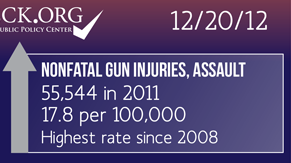
As someone who is anti-gun (I have actually fired a gun, which made me even more frightened of themFirearmFacts than before), I am perplexed by the way the anti-gun argument always seems to center around gun deaths and not gun crimes.  According to the National Crime Victimization Survey, 467,321 persons were victims of a crime committed with a firearm in 2011, which includes the 11,000 or so gun-related homicides.  To me, the issue has never been about the fear of death from guns, but the fear of victimization.

Don’t forget the injuries.

Environmentalism Is Getting Old

Relatively few millennials identify as environmentalists:

The word “environmentalist” typically conjures up images of earnest young idealists gathering petition signatures and chaining themselves to old-growth trees. But [last week’]s study finds that older Americans are more likely to call themselves environmentalists than younger ones.

Environmentalist PR guru David Fenton suggests ways to change this:

I tell clients, “Don’t use the word ‘planet,’ and don’t use the word ‘earth.’ One of the problems we have is that too much of the public thinks that environmentalists are people who care about the environment and not about people. So the environment has become a thing apart. I think that’s why millennials don’t care for the term.

Now in the case of climate — the climate will be fine. The planet will recover. We just won’t be on it. And so this language and these images — “polar bear,” “Planet Earth,” “environment” — they signal the wrong thing to most people, which is that they’re struggling and we don’t care. We have to make the environment and climate be about them and their lives and the economy and justice and all the things that people do care about. And in fact that’s what it’s about, because if we don’t solve climate change, there is going to be a lot of suffering, by average people.

Meanwhile, Scott Clement argues that talking more about climate change would do Democrats some good:

In one study, Stanford’s Bo MacInnis, Jon Krosnick and Ana Villar compared what candidates said (and didn’t say) on climate change in every 2010 congressional and Senate election to  how much Democrats won or lost by. In short, they found Democrats who took pro-green stances such as “global warming has been happening” increased their vote margin over Republicans by 3 percent compared with those who didn’t. The impact was much larger — a 9 percent vote-margin swing — when a Republican took a position doubting global warming’s existence or opposing action to address the issue. The analysis controlled for the district or state’s partisan lean in the 2008 election, as well as for whether the candidate was an incumbent.

Ask Shane Bauer Anything

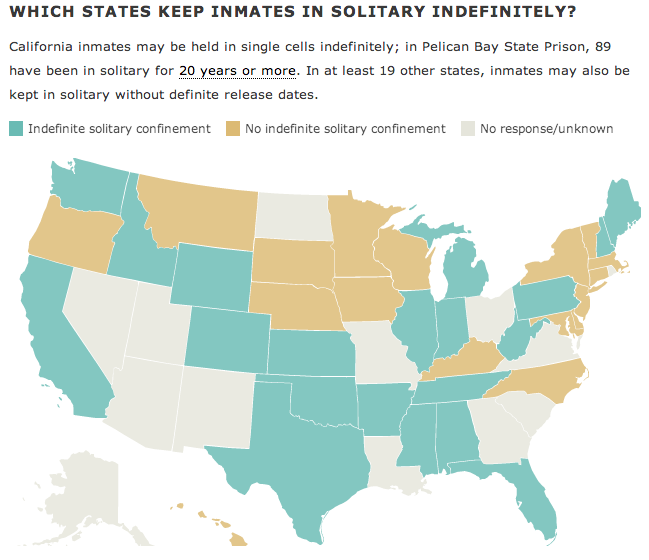
mother-jones-solitary-confinement-map

[Updated with reader-submitted questions that you can vote on below]

Shane Bauer is an investigative journalist and photographer who was one of the three American hikers imprisoned in Iran after being captured on the Iraqi border in 2009. He spent 26 months in Tehran’s notorious Evin Prison, four of them in solitary confinement. Following his release, he wrote a special report for Mother Jones about solitary confinement in America’s prison system (the report also featured the above map). Shane and his fellow former hostages, Sarah Shourd (now his wife) and Josh Fattal, have co-written the memoir, A Sliver of Light, which comes out next week. You can read an excerpt here. The Dish’s ongoing coverage of the trauma of solitary can be found here.

Let us know what you think we should ask Shane via the survey below (if you are reading on a mobile device, click here):


This embed is invalid

Cutting Out The Middlemen In Offshoring

New research delivers some surprising findings. For instance, “the majority of offshoring (57% by cost) was to locations with costs that were the same as or higher than America, such as Canada and Western Europe, rather than to low-cost developing countries (29%)—the ones typically suspected of gobbling up American work”:

By way of explanation, the researchers note that Western Europe and Canada are America’s largest and oldest trading partners, and point to a long history of foreign direct investment by American firms in these regions. Presumably, at least some of this investment and sourcing is reciprocated, though it will fall to future studies to determine how much. Interestingly, mid-cost emerging economies were almost entirely out of the mix, caught in what Mr Sturgeon calls the “middle income trap”—they are neither sufficiently attractive markets in their own right nor sources of cheap labour.