Understanding Shylock

In a review of David Nirenberg’s Anti-Judaism, Michael Walzer observes that the author “insists, rightly, that real Jews have remarkably little to do with anti-Judaism.” Elaborating on how “imaginary Jews” came to capture the minds of thinkers who had little experience with actual Jewish people, Walzer draws on Nirenberg’s discussion of Shakespeare’s The Merchant of Venice “to illustrate the difference between his anti-Judaism and the anti-Semitism that is the subject of more conventional, but equally depressing, histories”:

Shylock himself is the classic Jew: he hates Christians and desires to tyrannize over dish_shylock2 them; he loves money, more than his own daughter; he is a creature of law rather than of love. He isn’t, indeed, a clever Jew; in his attempt to use the law against his Christian enemy, he is unintelligent and inept. (A modern commentator, Kenneth Gross, asks: “What could [he] have been thinking?”) But in every other way, he is stereotypical, and so he merits the defeat and humiliation he receives—which are meant to delight the Elizabethan audience. …

Nirenberg’s question [is]: What put so many Jews (like Shylock or Marlowe’s Jew of Malta) on the new London stage, in “a city that had sheltered fewer ‘real Jews’ than perhaps any other major one in Europe”? His answer—I can’t reproduce his long and nuanced discussion—is that London was becoming a city of merchants, hence a “Jewish” city, and Shakespeare’s play is a creative response to that development, an effort to address the allegedly Judaizing features of all commercial relationships, and then to save the Christian merchants by distinguishing them from an extreme version of the Jew.
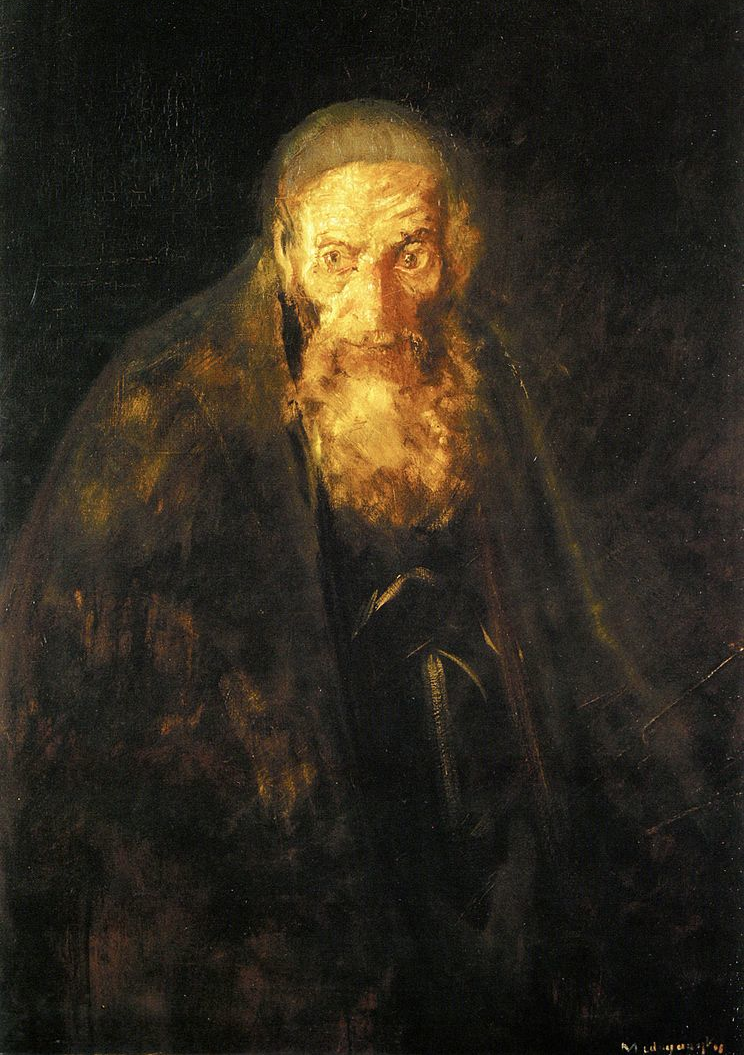
But the distinction is open to question, and so the point of the play is best summed up when Portia asks, “Which is the merchant here, and which the Jew?” The play is about law and property, contracts, oaths, pledges, and promises. Shylock is the Jew of the gospels: “I stand here for law.” But he is defeated by a better lawyer and a more literal reading of the law: Portia out-Jews the Jew—which is surely an ironical version of Christian supersession.

So Shakespeare understands the arrival of modern commerce with the help of Judaism, though he knew no Jews and had never read a page of the Talmud. He knew the Bible, though, as Shylock’s speech about Jacob multiplying Laban’s sheep (Act 1, scene 3; Genesis 30) makes clear. And Paul and the gospels were a central part of his intellectual inheritance. Shylock emerges from those latter texts, much like, though the lineage is more complicated, Burke’s “Jew brokers” and Marx’s “emancipated Jews.” The line is continuous.

Previous Dish on Nirenberg’s book here and here.

(Image of Shylock by László Mednyánszky, circa 1900, via Wikimedia Commons)

Quote For The Day

“The appeal of writing is the illusion that you can somehow bring about the completion and perfection of those things that will always elude you in real time. I suppose if we could find the life that we needed, and if it were intrinsically gratifying, that the need to narrate something outside of real-time interaction with people would really diminish. In a sense, the people we create in a book come from the people we know, but the conversations that we have with them in the book are the ones that we could never have with them in real life.

And yet the act of writing the life that we aren’t able to lead can complement the act of leading a life that we wouldn’t have been able to lead had we not the restorative power of writing and reading. This takes us back to this question of why reading and writing need to be defended. In reading and writing, in this locating the life that we have not yet been able to lead, we can make ourselves more capable of acting under fire. That’s the life of symbols. That’s what we are,” – Richard Powers.

Face Of The Day

Screen shot 2014-02-28 at 10.04.50 AM

Phillip Toledano photographed his first year as a father:

NYC-based photographer Phillip Toledano‘s series The Reluctant Father is a frank and witty account detailing his less-than-enthusiastic reaction to his newborn daughter Loulou during the first year-and-a-half of her life. Rather than experiencing the “tsunami of love” most of us have been taught to expect, he instead confesses that “it was like trying to have a relationship with a sea sponge, or a single-cell protozoa. She didn’t DO anything. Or at least, nothing I could understand,” he recalls. Nor was he enamored of the shift that occurred in his and his wife Carla’s relationship, saying he felt he’d been replaced by an “alien.” Of course, as a short time would tell, he fell utterly and completely under Loulou’s spell.

A book of his work is available here.

Refreshed By Dark Thoughts

Morgan Meis marvels at the recent critical success of Zibaldone, the lengthy diary of the 19th-century Italian poet Giacomo Leopardi, considering that the book’s “central thesis … is that life is miserable and there is nothing to be done about it”:

The seduction of Zibaldone is in reading the words of a man who hasn’t flinched from the hardest thoughts. Reading Zibaldone is like getting permission to go into a room that is usually locked. It is a chance to let the dark thoughts speak. It is a chance to look at the desolation without brushing it away. It is a chance to sit and soak in the melancholy. Right now, at this moment in history, soaking in the melancholy seems the right thing to do. We are surrounded, after all, by a civilization that seeks pleasure and distraction with a shrillness that makes Imperial Rome look reserved. The current mainstream discussion of human happiness and infinite progress is so coarse that it has been more or less abandoned to the technocrats. Reflective persons have nowhere to turn. And then a volume like Zibaldone turns up. Leopardi, in his infinite gloom, takes on the guise of a savior. This is what it must have been like to stumble across a volume of Pascal’s Pensées in the late 17th century. It is like plunging into a very cold, very fresh mountain stream after days of walking in the hot sun.

Previous Dish on Leopardi here, here, and here.

Returning To The Cosmos, Ctd

Laura Pearson recommends the revamped Cosmos TV series, which premieres tonight with Neil deGrasse Tyson stepping in for Carl Sagan:

Popular astrophysicist Neil deGrasse Tyson hosts this time around, but the plot of the 13-part series remains largely out of this world, exploring the farthest reaches of the knowable universe and the origins of life on Earth. Spoiler alert for anyone who missed Sagan’s groundbreaking Cosmos: A Personal Voyage, the instructive 1977 film strip Powers of Ten, or every science class ever: The universe is old. Mind-blowingly old and vast. To explore it is to better understand ourselves.

That’s why watching Cosmos: A Spacetime Odyssey is a matter of necessity, and what distinguishes it from what’s usually on TV—Hell’s Kitchen or Kitchen Nightmares or Hotel Hell or My Cat From Hell or whatever. Whereas the vast nebulae of reality shows entice viewers with the notion that ordinary people (and cats) can access instant fame, Cosmos shows reality as it applies to everyone, famous or not.

Matt Zoller Seitz sees plenty to admire about the new version:

The show deploys blockbuster-quality visual effects, triumphant orchestral music by Alan Silvestri (who scored Robert Zemeckis’s Contact, which is based on Sagan’s novel), and cartoon interludes rendered in the handmade style of a graphic novel to make the Big Bang, the rise of Copernican astronomy, and the basic principles of evolution seem as Hollywood-­magnificent as the latest Marvel opus. But its greatest special effect is the laid-back charisma of its host, Neil deGrasse Tyson. Affable, plainspoken, and charming without seeming full of himself, Tyson might have seemed like Sagan’s obvious successor even if the master hadn’t mentored him as a teen (a tale movingly recounted in the first episode’s final moments). He lacks Sagan’s Vulcan-like vibe but compensates with a self-­deprecating average-guyness that often morphs, delightfully, into Danny Ocean cool. (It’s hard to imagine Sagan getting away with donning shades to watch the Big Bang, as Tyson does here.)

Willa Paskin describes a segment about the 16th century monk Giordano Bruno, who was burned at the stake for holding heretical scientific beliefs, and pushes back on Seitz’s suggestion that the new Cosmos is anti-faith:

Writing in New York magazine, Matt Zoller Seitz interpreted this segment of Cosmos as “painting organized religion as an irrelevant and intellectually discredited means of understanding factual reality” and as part of the show’s larger “pushback against faith’s encroachments on the intellectual terrain of science.” (This is particularly in contrast to the sort of echt-spirituality and new-ageism that hovered around the original Cosmos. Sagan himself was agnostic.) Organized religion certainly comes in for it, but I think this segment is up to something more gentle than declaring war on blinkered anti-science evangelists. Cosmos is offering viewers a way to reconcile science and faith: Don’t let your god be too small.

In an interview, Tyson discusses how to think about the new show:

If you only think of “Cosmos” as a science documentary, then the natural obvious question would be, “Well, it’s been 35 years. What has changed?” However, “Cosmos” wasn’t only that, and it wasn’t even mostly that. “Cosmos” is mostly “Why does science matter to you? Why should you care about science? Why should society care about what scientists say? How can you empower your own destiny by becoming scientifically literate?” …

So yeah, since then, we’ve discovered nearly 1,000 planets orbiting other stars, and Europa, one of Jupiter’s moons has an ocean underneath it. There are other experiments that have gotten us closer to understanding the Big Bang. And, of course, the politics are different. Back then, we were steeped in a Cold War and using weapons that were imagined by scientists and used to hold the world hostage.

So, the climate was different than it is now, but there are other prevailing concerns that we have: What is our effect on the environment? Will we be good shepherds of this Earth as we go forward? Do we know enough to be good shepherds of this Earth? Do we understand the risk of asteroids that could render us extinct? These are broad questions, and “Cosmos” takes some element of science and shows you why it is way more relevant to your life than you ever previously imagined.

Another interview with Tyson is here. Previous Dish on the new Cosmos here.

If Plato Were Still Around

Rebecca Newberger Goldstein’s Plato at the Googleplex recreates the philosopher’s dialogues for contemporary times. David Auerbach reviews the book:

“Plato at the 92nd Street Y” pits him against the Chua-ish “Warrior Mother” Sophie Zee, discussing Republic’s hypothetical “city of pigs” and testing out in the Myers-Briggs typology as an INTJ (just like yours truly); “Plato on Cable News” has him exchanging blows with a bloviating Bill O’Reilly clone named Roy McCoy. And yes, here is Plato at the Googleplex, debating an engineer over the possibility of crowdsourcing ethics, as well as wryly comparing its communal environment to the training of young philosopher-kings in the Republic. (I used to work for Google, and believe me, we had it way better than Plato’s ascetic Guardians.)

By alternating between these new “Platonic dialogues” and a serious chronicle of Plato’s life and philosophy, Goldstein makes a plea for the continuing importance of philosophy as Plato (427–347 B.C.) conceived it, and for the enduring relevance of Plato’s contributions.

Elizabeth Toohey weighs in:

[T]here’s something moving, if also faintly depressing, about reading Plato inserted into 21st-century Western culture.

It brings to light the gap between what might have been and what is – and what we appear to be moving toward. Consider, for instance, Plato’s musing, “I do not think that rulers should be able to own substantive private property, for substantive property will immediately make them citizens of the city of the rich, with its own special interests to protect.”  It doesn’t take much imagination to deduce what Plato would have to say about PACs.

Nick Romeo interviewed Goldstein:

[Q] How do you think Plato would respond to the cultural dominance of television and cinema?

[A] He’d be very alarmed. You can’t help but think immediately of his allegory of the cave in The Republic: The lowest form of consciousness is that of prisoners in the dark staring at images. He would be quite in despair. He would think that we were enchanted by the lowest form of thinking. To think is to be active; passivity is the death of the mind.

But he wouldn’t oppose all of contemporary culture. Just this past week I started tweeting as Plato; I guess I’m not ready to stop impersonating him. And this kind of thing, the dialogue that happens on blogs and social media, I think he would be into it. I think he’d be intrigued by that aspect of popular culture: the verbal and the written exchanges.

The Case Of The Missing Deity?

A passage from Arthur Conan Doyle’s “The Naval Treaty” – in which Sherlock Holmes spots a rose in an interviewee’s apartment and waxes theological – prompts John Horgan to wonder if the detective believed in God:

“There is nothing in which deduction is so necessary as in religion. It can be built up as an exact science by the reasoner. Our highest assurance of the goodness of Providence seems to me to rest in the flowers. All other things, our powers, our desires, our food, are all really necessary for our existence in the first instance. But this rose is an extra. Its smell and its color are an embellishment of life, not a condition of it. It is only goodness which gives extras, and so I say again that we have much to hope from flowers.”

Holmes is alluding to what I call the problem of beauty. As I have explained previously, the problem of evil prevents me from believing in God, or at least an all-powerful God who gives a damn about us. But the problem of beauty keeps me from being an adamant atheist. If reality results from sheer coincidence, why is it often so heartbreakingly lovely? As the great physicist Steven Weinberg, an atheist if ever there was one, once wrote, sometimes nature “seems more beautiful than strictly necessary.”

My guess is that the hyper-empirical Holmes, if pressed, would say that he is an agnostic, because there is insufficient evidence for either belief or disbelief in a Creator. (Holmes is more rational than his own creator, Conan Doyle, who after the death of his wife and other loved ones consoled himself by believing in ghosts.)

Previous Dish on Doyle and Sherlock Holmes here, here, and here. The recent Dish thread on the varieties of atheism is here.

The fMRI Of The Beholder?

dish_manet

Roger Scruton frowns on “scientism,” which he describes as involving “the use of scientific forms and categories in order to give the appearance of science to unscientific ways of thinking.” The arts and humanities, he insists, lie beyond the reach of the empirical:

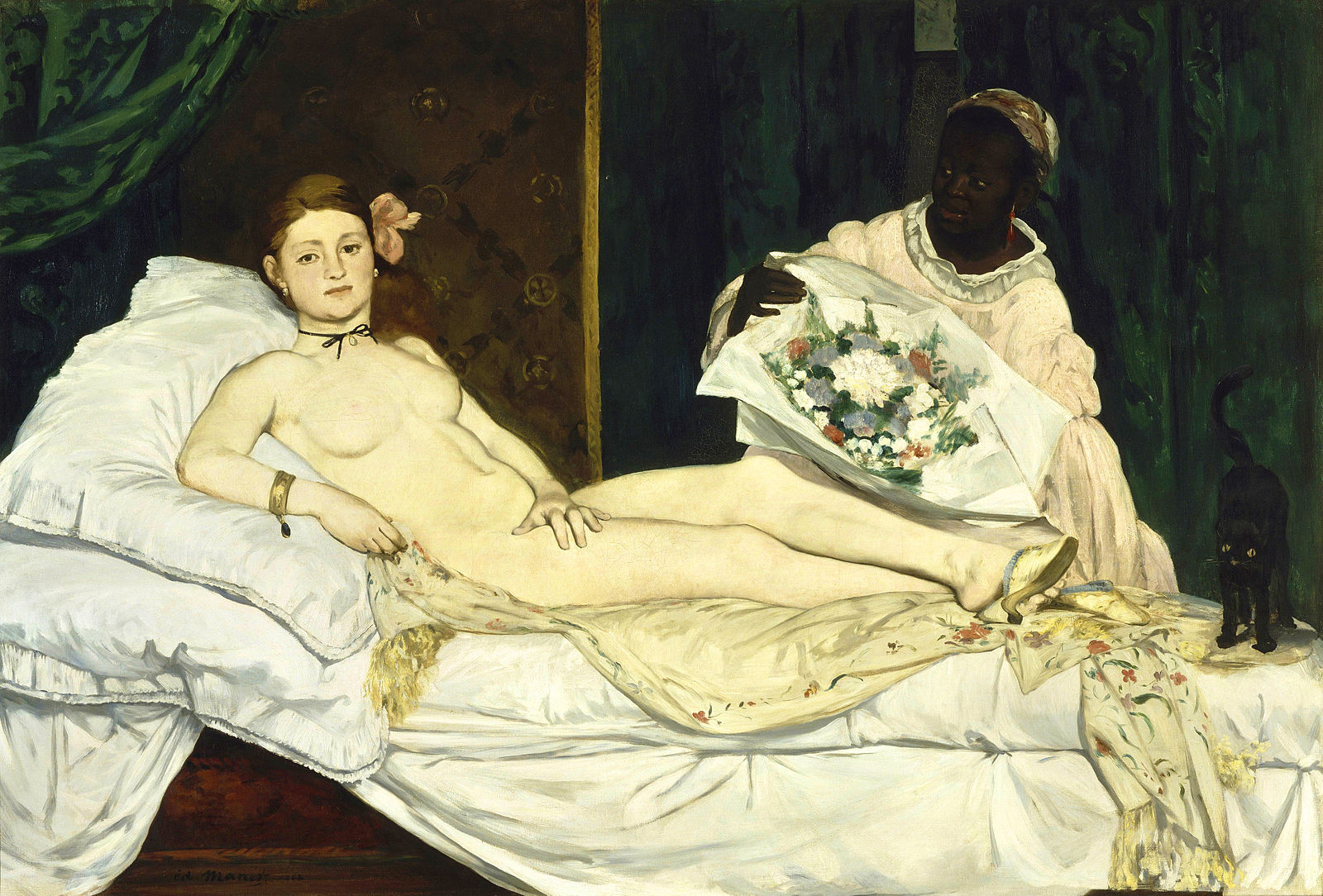
Art critics have a discipline, and it is one that involves reasoning and judgment. It is not a science, and what it describes forms no part of the physical world, which does not contain Olympia or anything else you see in Manet’s painting. Yet someone who thought that art criticism is therefore deficient and ought to be replaced by the study of pigments would surely be missing the point. There are forms of human understanding that can be neither reduced to science nor enhanced by it.

Here is where the neurothugs step in, to declare that, of course, the science of pixels won’t explain pictures, since pictures are in the eye of the beholder. But there is also such a thing as the fMRI of the beholder, and this does contain the secret of the image in the frame. Since understanding a picture is a matter of seeing it in a certain way — in such a way as to grasp its visual aspect, and the meaning which that aspect has for beings like us — then we should be examining the neural pathways involved in seeing aspects, and the connections that link those pathways to judgments of meaning.

But what, exactly, would such a study show?

Suppose we have achieved a perfect decipherment of the pathways involved in seeing an aspect and in stabilizing it in the mind of the observer. This is not a judgment of criticism, and while it might enable us to predict that the normal observer will, on confronting Titian’s picture, see a naked woman lying on a couch and looking at him, it will say nothing in answer to the critic who says: Yes, but that is not all that there is, and indeed you must see that this woman is not naked at all, but rather unclothed, that her body, as Anne Hollander shows so convincingly in Seeing Through Clothes, has the texture and the movement of the clothes she has removed, and that those eyes do not look at you but look through you, dreaming of someone you are not.

Critics don’t tell us how we do, with normal equipment, see things, but how we ought to see them, and their account of the meaning of a picture is also a recommendation, which we obey by making a free choice of our own. Neuroscience, then, remains only a science: it cannot rise to the level of intentional understanding, where meaning is created through our own voluntary acts. Hence we should not be surprised at the dreariness of neuroaesthetics, and its inability to cast light on the nature or meaning of works of art.

(Image of Olympia by Manet, 1863, via Wikimedia Commons)