Evolving To Black? Ctd

A reader balances this post:

It makes sense that we evolved in Africa with dark skin to protect against skin cancer. It also makes sense that when some of our ancestors moved to less sunny places, their descendants evolved lighter skin so we would be able to synthesize sufficient quantities of vitamin D, which our skin makes when it is exposed to the sun. Naturally selecting for lighter skin solved the vitamin D problem, and skin cancer turned out not to be much of an issue far from the equator, and with cloudier skies. It was all about striking a balance between those two competing goals. Lighter-skinned people in sunny places today need sun protection, and darker skinned people in less sunny places today may need vitamin D supplements.

The Spirit Of Stowe

Reviewing Nancy Koester’s new biography, Harriet Beecher Stowe: A Spiritual Life, Harold K. Bush highlights the under-appreciated religious convictions that informed the abolitionist’s work:

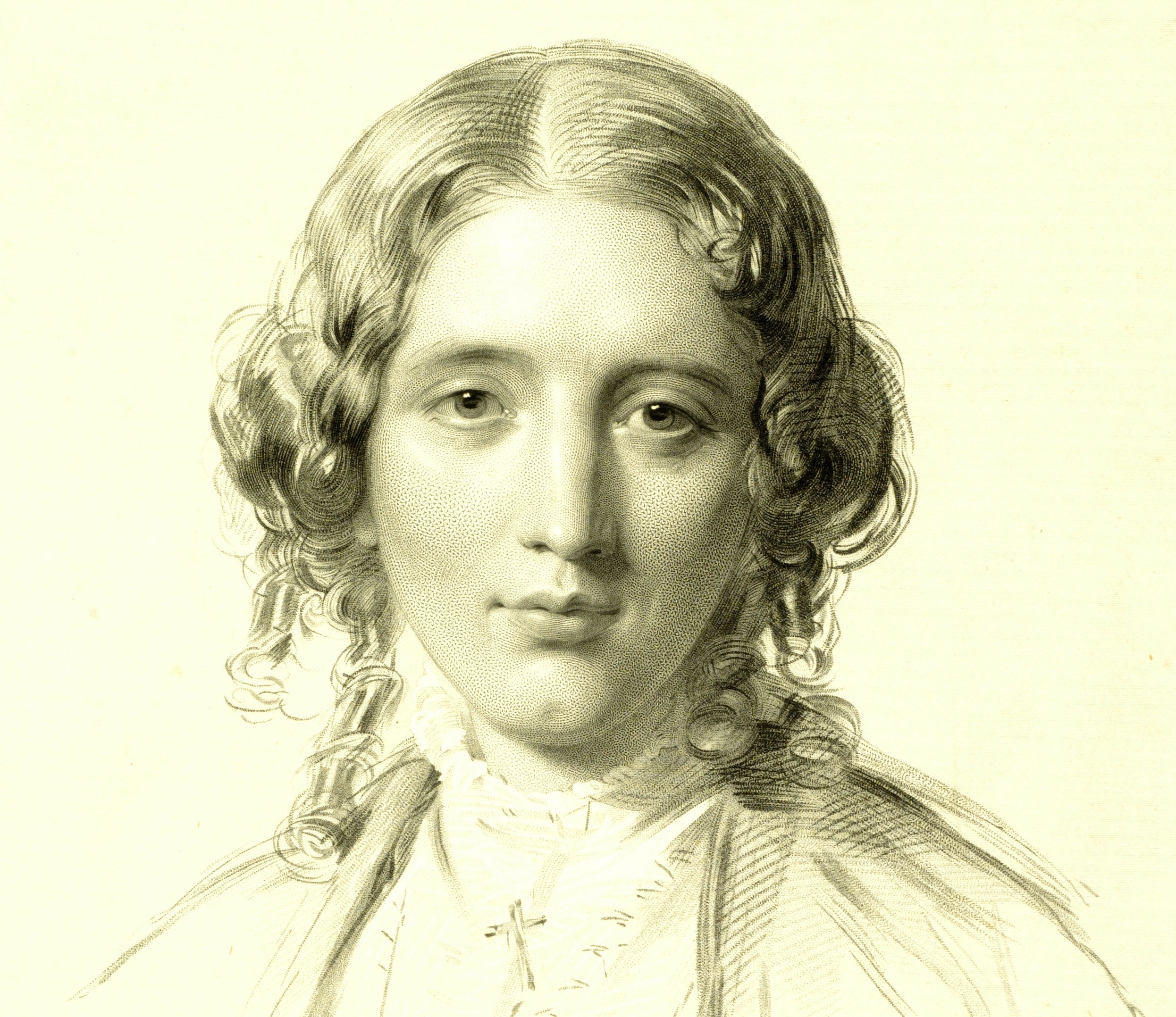
Everyone knows about Stowe’s anti-slavery emphasis. Often forgotten, however, are the deep Harriet_Beecher_Stowe_by_Francis_Holl spiritual currents at work beneath it. In Uncle Tom’s Cabin, a variety of characters have mystical experiences, and Scripture is sprinkled throughout. Tom seems to hear Eva’s voice at times after her death, as in a dream. By the time she wrote the novel, Stowe was confirmed in her conviction that faith has supernatural elements, including the dreams and visions mentioned throughout the Old Testament prophetic books, the Gospels, and the Book of Acts. She believed, moreover, that both sexes could experience these phenomena:

“I will pour out my spirit upon all flesh; and your sons and your daughters shall prophesy, your old men shall dream dreams, your young men shall see visions” (Joel 2:28, Acts 2:17). She had written in letters of yearning to be “baptized in the Spirit,” and she took a keen interest in the many variations and quirks of American Christianity.

And so, despite her rather conservative and even stodgy reputation, Harriet Beecher Stowe was quite the spiritual adventurer. In the midst of antebellum America’s vital and inventive religious landscape, she fit right in. Indeed, as Koester shows, Stowe can be viewed as a key contributor to that landscape: a deep religious thinker whose novels and voluminous spiritual writings both mirrored and shaped the thinking of American Christianity, for better or worse. Koester is at her best, and is most original, when she locates Stowe’s writing in the context of this churning spirituality. She reveals Stowe’s engagement with the religious questions of her day, and how her answers are manifested in her fiction.

(Image of portrait of Harriet Beecher Stowe, circa 1855, via Wikimedia Commons)

The Currency Conundrum In Caracas

Francisco Toro connects Venezuela’s chronic shortages of basic goods to its “deliriously dysfunctional currency exchange control system”:

Unlike a normal country, where you can trade U.S. dollars with local currency at whatever price the market will bear, the Venezuelan bolivar is fixed at 6.30 per dollar, and sold discretionally, only to those the government deems worthy. This worthiness is established on the basis of an enormously cumbersome and corruption-prone administrative process.

The real problem isn’t the red tape, though. The real problem is that 6 bolivars and 30 cents is an insanely low price for a U.S. dollar. Venezuelans will gladly pay 85 bolivars for a dollar, even though doing so is technically a crime punishable by up to 6 years in prison.

Having two prices for the dollar makes figuring out what things cost in Caracas something of a philosophical imponderable.

In another post, Toro explains how far one US dollar can go in the black market:

First, take your crisp new dollar bill to a black market currency dealer and buy yourself Bs.85.

Did you make sure to get travel insurance before you trip? Good. Now go to a doctor and buy yourself Bs.85 worth of medical attention. Any pretext will do. Don’t forget to get a receipt, though: your insurance company back home will reimburse your 85 bolivar claim at the official rate, giving you back $1 for every 6 bolivars and 30 cents you spent. So after one doctor’s visit, your $1 has already turned into $13.50. Not too bad.

But we’re just getting going here. Needless to say your next step is to take your $13.50 right back to the currency tout and buy yourself 1,150 bolivars.

Next, take your 1,150 bolivars to any reputable Caracas jeweller. There, you can get about 5.7 grams of 18-karat gold for that. As it turns out, back stateside those 5.7 grams of gold are worth $182.29. Your Caracas black market dollar dealer will be expecting your call by now: the $182.29 you netted for the gold buys you 15,495 bolivars.

This is fun, isn’t it?

How Do Blind People Dream?

Vividly:

Just as there are many ways to take in the world, there are many ways to dream about it. Blind people dream, just as they live, with a rich mix of sensory information. About 18 percent of the blind participants (both congenital and later-onset) reported tasting in at least one dream, compared with 7 percent of controls. Nearly 30 percent of the blind reported smelling in at least one dream, compared with 15 percent of controls. Almost 70 percent of the blind reported a touch sensation, compared to 45 percent of controls. And 86 percent of the blind reported hearing, compared with 64 percent of controls. (The differences are more drastic when looking only at the congenitally blind group. Among these participants, 26 percent tasted, 40 percent smelled, 67 percent touched and 93 percent heard in at least one dream.)

The Best Of The Dish Today

Ukraine Tense As Armed Standoff in Crimea Escalates

Believe it or not, but the most popular post of the day was the Beard of the Week. I’m a bad person.

Five others: a deeper conservatism; a tidal wave for equality; decriminalized weed in DC; the Pope on civil unions; and the rogue CIA.

See you in the morning.

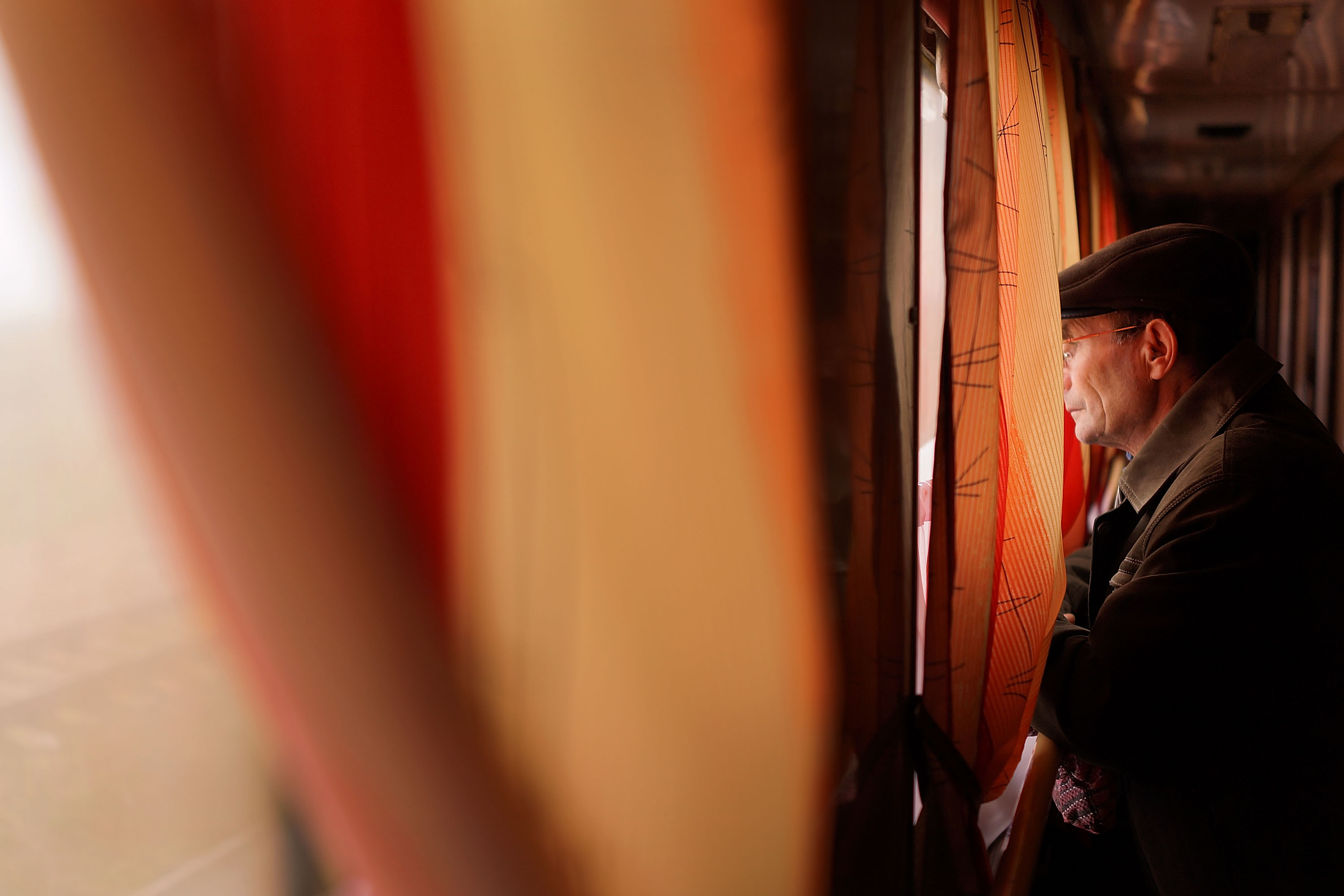
(Photo: A Ukrainian man looks out at the countryside from a train on the outskirts of the Crimean city of Simferopol on March 4, 2014 in Simferopol, Ukraine. By Spencer Platt/Getty.)

Update from a reader:

Wow.  I logged on to the Dish tonight, to see if you had any new Ukraine coverage … and there’s my favorite high school teacher front and center with a bunch of his current students.  The high school in that picture is Bishop Kelley High School in Tulsa, OK.  I’m an alum, class of ’02.  It’s a great school, and Father O’Brien was a fantastic teacher in my day, and is, i’m quite sure, doing an equally wonderful job as the school’s president. Despite the excellent scholastic education I got at BK, the religious nature of the education didn’t stick with me. But if it had, Father O’Brien, and couple of the lay Christian Brothers, would have been the reason why.

The Problem Of America’s Prisons, Ctd

In an otherwise grim report about solitary confinement, Shruti Ravindran points outs that prison officials across the country are rethinking the practice:

A recent case involving death row inmates in Unit 32, a supermax facility in Mississippi State Penitentiary at Parchman, sparked off a change of heart among prison officials, and something of a national trend. When [forensic psychiatrist Terry] Kupers evaluated the residents in Unit 32 in 2002, which reeked of malfunctioning toilets, he found that about 100 of them had severe undiagnosed or misdiagnosed mental illnesses. They hallucinated, threw feces at the guards, and howled through the night; in response, they received punishment, not treatment. After listening to the accounts of inmates who described the facility as a hellhole and insane asylum, the prison authorities gradually reduced the segregated population from 1,000 to 150, upon which violence plummeted by 70 percent.

The Mississippi experience led to a re-examination of the rationale behind solitary confinement in Colorado, Illinois, Maine, Ohio and Washington. Maine cut its segregated population by almost 60 per cent, and made it onerous to keep a prisoner in confinement for more than 72 hours. The Colorado prison authorities reviewed their segregation practices and, in 2012, announced the closure of a 316-bed administrative segregation unit that will save the state $13.6 million this year. This January, prison authorities in Illinois closed down its notoriously repressive supermax, Tamms Correctional Center, which cost the state $26 million annually, or about $64,800 per inmate per year to run.

In a history of Philadelphia’s Eastern State Penitentiary, David Kidd conveys some fascinating details about the origins of solitary in the US:

As foreboding as it was, Eastern State was designed from the beginning to implement new, more humane theories about crime and punishment. Presaging many of today’s arguments on corrections reform, the emphasis was much less on punishment and more on rehabilitation. Philadelphians, drawing on their Quaker roots, had long argued for better treatment of prisoners. They believed that if prisoners were left alone in complete silence, with nothing to occupy their minds but thoughts of their misdeeds, they would become genuinely penitent. (Hence, the building was known as a “penitentiary.”)

The place was utterly silent. Guards walked the halls with socks over their shoes. The wheels on the wagons that brought food down the long corridors were covered in leather. For 23 hours of every day, inmates were confined to a 7.5- by-12-foot cell with a church-like vaulted ceiling and small skylight. For the remaining hour they were allowed outside within their own small exercise area. Inmates in adjoining cells were never allowed outside at the same time, and any communication between prisoners was strictly forbidden.

In order to implement these new ideas in prison reform, Eastern State boasted a number of design innovations. Because each prisoner would never leave his cell, water for washing had to be brought to him and a flush toilet provided. (By comparison, running water didn’t make it into the White House until 1833.) A rudimentary system provided heat to each cell – something many Philadelphia residents couldn’t afford themselves.

Recent Dish on solitary confinement here. More posts from the archive here, here, here, and here.

Face Of The Day

Research At The Birkbeck Babylab Into Brain And Cognitive Development

Leo, aged 9 months, takes part in an experiment at the “Birkbeck Babylab” Centre for Brain and Cognitive Development in London, England. The experiment uses an electroencephalogram (EEG) to study brain activity whilst the baby examines different objects of varying complexity. Researchers at the Babylab, which is part of Birkbeck, University of London, study brain and cognitive development in infants from birth through childhood. The scientists use various experiments, often based on simple games, and test the babies’ physical or cognitive responses with sensors including: eye-tracking, brain activation and motion capture. By Oli Scarff/Getty Images.

Surrender Douthat! Ctd

A reader writes:

I find I have little sympathy for the protestations of Douthat, Dreher, etc., and here’s why: what they’re protesting is their fading ability to dictate to others how to live their lives. They have not actually lost any rights, but rather lost a position of privilege and authority from which they have called the tunes to which others have been forced to dance. What they’re upset about isn’t the loss of power over their own lives; it’s about the loss of power over others’ lives. To which I say, “Boo-freaking-hoo.”

Another is on the same page:

You quoted Rod Dreher:

American Christians are about to learn what it means to live in a country where being a faithful Christian is going to exact significant costs. It may not be persecution, but it’s still going to hurt, and in ways most Christians scarcely understand.

No. American Christians are about to learn what it means to live in a country whose culture and values and attitudes don’t fully replicate their own. That is all.

I’m sure it’s painful to discover that your world view is actually just one among many, rather than Reality Itself, and I can sympathize with the pain since I was once a child and had to endure many such painful realizations as I grew up and learned that I was not actually the central character in the universal drama.  Indeed, I’m still confronting such humbling realizations, well into my forties, on a routine basis.

As a Dish completist, I’ve been following this and related discussions carefully, and I’ve tried to exercise as much compassion as possible for those who perceive themselves to be on the losing side of a “culture war”.  That very perception is worthy of compassion – namely, that what most of us experience as progress towards a fairer, more tolerant, more enlightened society should be perceived by some as a defeat in a war.

But I’m finding my resources of compassion seriously over-taxed by Douthat’s et al. reaction to the coming of the age of marriage- equality because it is rooted in the moral and intellectual complacency of privilege.  Douthat, especially, is expending all his intellectual energy on rationalizing his prejudices rather than attempting to examine them. Even so, nobody is forcing him, or anybody, to change his attitudes or behavior – conservative Christians remain free to profess and practice their beliefs.  Indeed, this really isn’t about them at all.  And there’s the rub.

Suddenly they and their views are not the American Unum, but merely part of the Pluribus.  Their outrage (or, in Dreher’s case, apprehension and sadness) is really a reaction to a loss of prestige, a loss of a sense of centrality, a loss of the sense that this is their country and they are the normal ones, and it’s only natural and correct that the culture and the law should reflect their values and their attitudes.

Suddenly, the culture and the law are not on their side – that must be very painful.  Except that this is not about “sides”.  It’s about justice.  There aren’t actually any losers here in practical terms.  Unless by losers you mean people who have lost the privilege of denying rights to some of their fellow citizens because those citizens fail to conform to their particular standards and values.

Another quotes me:

Rod wonders if being the counter-culture “will be good for us.” In my view, it really could be. Since Constantine, Christianity’s great temptation has been to doubt the power of its truths and to seek to impose them by force. And its greatest promise has been when it truly has been the counter-culture – in the time of Jesus and the decades after, or, say, in the subversive appeal of Saint Francis’ radical vision. Why see this era as one of Benedictine retreat rather than of Franciscan evangelism? Why so dour when you can still be the counter-cultural salt of the earth?

This is a good point, yet I don’t think it gets at why conservative Christians face such a distressing conjuncture now.

For decades, they have assured us that homosexuality must be stigmatized, both in popular culture and law, because the Bible and our own natural reasoning (viz. “natural law”) are clear that it is inextricably evil and a civilization that openly tolerates it is destined for destruction. Well, they’re here, they’re queer and … life goes on, and most people have come, sometimes grudgingly, to accept that Craig and Bruce next door are not the horsemen of the Apocalypse. In fact, they’re distressingly upstanding members of the community and make a killer raspberry crumble for the library bake sale. What they were claiming to be one of the great truths of human history handed down by Yaweh himself appears to have been, shall we say, overstated.

It’s like the doomsday cultists who predict the end of the world with absolute certainty and then find themselves utterly flummoxed when the predicted day comes and goes and nothing happens. The handwaving and excuse-making are pretty lame: Oh, you don’t see the effect now, but in 20 years, we’ll find out how much gay parents damage their kids, or in 20 years, we’ll see how polygamy and incestuous marriages are the norm, etc. The apocalypse is always just over the horizon. We’re not wrong; our timeline was just off.

The larger issue at stake is the truth claims of Christianity, at least in the view of its most stringent interpreters. If the Bible can’t be trusted to be right about whether or not gay people are horrible monsters on par with murderers, swindlers, and slave dealers, what can we trust it for? Now, conservative Christianity endured (mostly) coming to terms with desegregation and interracial marriage and now evanglicals run around acting like they practically championed those things back in the day, so perhaps Dreher and Douthat and others are overstating things. But I’ve often wondered whether, as gays and gay marriage become more mainstream and, well, banal, many Christians won’t find themselves wondering why the apocalypse hasn’t come after all and what that says about Scriptural authority in a lot of other areas. That’s what’s not sitting well with a lot of Christian culture warriors right now.

More thoughts from readers on our Facebook page.
Psychedelics As Medicine

MDMA researcher Michael Mithoefer discusses the drug’s promise in treating PTSD:

Meanwhile, the first study in decades on the psychotherapeutic benefits of LSD found that it could help patients cope with life-threatening illnesses:

The controlled, double-blind study, which was conducted in Switzerland under the direction of Swiss psychiatrist Peter Gasser, measured the impact of LSD-assisted psychotherapy on 12 people with life-threatening diseases (mainly terminal cancer). “The study was a success in the sense that we did not have any noteworthy adverse effects,” Gasser says. “All participants reported a personal benefit from the treatment, and the effects were stable over time.”

Initially eight subjects received a full 200-microgram dose of LSD while the other four got one-tenth as much. After two LSD-assisted therapy sessions two to three weeks apart, the subjects in the full-dose group experienced reductions in anxiety that averaged 20 percent, as measured by the State-Trait Anxiety Inventory, while the other subjects became more anxious. When the low-dose subjects were switched to the full dose, their anxiety levels went down too. The positive effects persisted a year later. “These results indicate that when administered safely in a methodologically rigorous medically supervised psychotherapeutic setting, LSD can reduce anxiety,” Gasser and his colleagues conclude, “suggesting that larger controlled studies are warranted.”