How It Feels To Slaughter Animals
Rhys Southan Bob Comis, who raises pigs for meat, confesses that “no matter how well it’s done, I can’t help but question the killing itself”:
In a well-managed, small-scale slaughterhouse, a pig is more or less casually standing there one second, and the next second it’s unconscious on the ground, and a few seconds after that it’s dead. As far as I can tell — and I’ve seen dozens of pigs killed properly — the pig has no experience of its own death. But I experience the full brunt of that death.
It’s not the sight of blood that troubles me, but the violence of the death throes. Livestock science would assure us that these convulsions are a sign of the pigs’ insensibility, but as a witness, it is almost impossible to believe that the pigs are not thrashing around because they are in pain. And then that sudden lifelessness of the body as it is mechanically hoisted into the air, shackled by a single hind leg. I don’t think anything could be done to make the deaths of the pigs weigh less heavily on me.
I think a lot of animal farmers have the same ethical struggles me, although I’m not sure how many struggle as intensely as I do. I believe this is likely the case with even non-corporate factory farmers. Feeling nothing strikes me as mildly sociopathic.
Update from a reader:
Bob Comis has just followed up with an article in The Dodo. He has taken the next step:
In the current discourse, happy pigs are the ideal alternative to the miserable and abused pigs raised in factory farms. Happy pigs become happy meat, and happy meat is good. We should feel good about eating happy meat.
Happy meat, really? I am haunted by the ghosts of nearly 2,000 happy pigs.
(About a month ago, I had my final crisis of conscience, in a decade of more or less intense crises of conscience. Having abandoned the last vestige of what seemed to be at the time legitimate justification, happiness and a quick, painless death, I became a vegetarian. I am now in the beginning stages of the complicated process of ending my life as a pig farmer.)
Speaking of happy pigs, another reader sends along a video:
Previous Dish on swimming pigs here. One more reader:
I’m a meat eater, I confess. I like meat. That said, I also worked in a slaughterhouse for three years. I don’t think it’s woo-woo to say that I think the people who do the actual killing and dismemberment of animals pay a deep spiritual price. Problem is, in this culture there is no way to process that effectively. Some cultures have a sense of gratitude for the animals and a humility in taking the life of another creature. We don’t. Nowhere is that more pointed than on the slaughterhouse (dis)assembly line. I gave a presentation at a conference a few years ago where I asserted that the line workers carry the psycho-spiritual burden for all of us and particularly for corporate leaders and investors who profit financially. A job shifting more and more to Hispanic immigrants, among those with the least privilege in our culture. I wondered how practices might evolve if executives were expected spend time working the line, both for the sacrificed animals and for the workers. We need a genuine gratitude for both.
A Poem For Monday

“Monet’s ‘Waterlilies'” by Robert Hayden:
Today as the news from Selma and Saigon
poisons the air like fallout,
I come again to see
the serene great picture that I love.Here space and time exist in light
the eye like the eye of faith believes.
The seen, the known
dissolve in iridescence, become
illusive flesh of light
that was not, was, forever is.O light beheld as through refracting tears.
Here is the aura of that world
each of us has lost.
Here is the shadow of its joy.
(From The Collected Poems of Robert Hayden, edited by Frederick Glaysher 1970 by Robert Hayden. Used by permission of Liveright Publishing Corporation. Painting of waterlilies by Claude Monet, circa 1915, via Wikimedia Commons)
What Do Marriage Equality And Capital Punishment Have In Common?
Scott Bland draws a parallel:
Washington Gov. Jay Inslee’s decision to suspend the state’s death penalty Tuesday fits into a national trend. Eight states in the past decade have rolled back the death penalty, an accelerated pace mimicking the rapidly changing public opinion surrounding same-sex marriage that started at the same time. Public opinion over these two cultural wedge issues of the 1990s has changed dramatically since that time. And in blue states, both public opinion and public policy have moved significantly since Bill Clinton said Democrats “should no longer feel guilty about protecting the innocent” with capital punishment. (To prove he was tough on crime, Clinton left the campaign trail in 1992 to preside over the execution of convicted murderer Rickey Ray Rector.) Clinton also later signed the Defense of Marriage Act barring federal recognition of same-sex marriages two decades ago. Now, more than 100 million people live in states without the death penalty. …
Support for the death penalty for murders, which peaked at 80 percent in 1994, according to Gallup, has declined markedly since. The last time the polling company measured public opinion, in October, support was down to 60 percent, the lowest mark since the 1970s. While support for capital punishment trends downward, support for same-sex marriage has swung up at about the same rate, from 27 percent in 1996 to 54 percent last year, again according to Gallup.

Dick Cheney Has No Regrets, Ctd
A reader writes:
Permit this slow reflection from an avid Dish reader over many years, who has tended to skim your Sunday stuff. But two threads recently caught my eye and, as I pondered them over a lazy weekend, I’ve found myself (to the amazement of this life-long agnostic)
pushed towards a re-appraisal of Original Sin.
First, Dick Cheney and Donald Rumsfeld: men who commit evil without “thinking much about it” (as you write) because it’s something “other people do.” Reflecting on this it suddenly struck me that Original Sin (which I’d long mocked as an absurdity) serves precisely as a prophylactic against this kind of complacency.
I’m no theologian, but an assumption that one is evil – because we are all inherently fallen – makes it one’s job as a human being to meditate on the evil (or, if you prefer the term, “error”) permanently inherent in oneself. Our obligation is to identify it and to try to root it out. Or at least (since rooting it out is by definition impossible) to moderate it, to channel it positively, to restrict it. Hence your passion for Pope Francis: “I am a sinner” is his first reply.
Nothing one can do, as a being born into sin, can be a “no brainer” (as Cheney describes his decision to permit waterboarding). A profoundly Christian obligation to meditate on his own evil would have led Cheney (and the grinning Rumsfeld) at least to the point of “wrestling with the choice” of whether to torture, as opposed to the glib certainty you, and so many of us, find, well, evil. (I guess there’s an argument that the deliberate choice of evil is morally worse than unreflecting self-deception … but we’ll leave that for another time.)
In other words – if I may be permitted briefly to mix religion and politics – Original Sin is a concept that liberals can embrace, from an epistemological if not a theological perspective. Perhaps after all it’s not something that should be “laundered out of our culture” (to quote today’s post on Sam Harris). We need Original Sin as a restraint against our arrogant – and possibly evil – self-certainty.
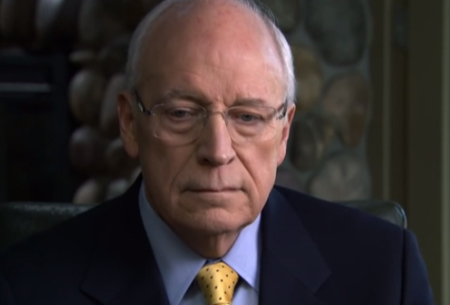
Another reader gives Cheney a civics lesson on Presidents’ Day:
The quote taken from Cheney reveals part of the problem in this thoughtless man’s life-long failure and/or inability to think. He said:
Tell me what terrorist attacks that you would have let go forward because you didn’t want to be a mean and nasty fellow. Are you gonna trade the lives of a number of people because you want to preserve your, your honor, or are you going to do your job, do what’s required first and foremost, your responsibility to safeguard the United States of America and the lives of its citizens.
But his job wasn’t to safeguard the United States of America. And it wasn’t even his job to safeguard the lives of American citizens. Presidents and Vice-Presidents do not swear to defend America or Americans. They swear that they will “preserve, protect and defend” the Constitution. The putative “no-brainer” would seem to become rather brain-intensive when this critical difference is taken into account.
To recap: No Constitutional obligation whatsoever to protect the borders, the soldiers, the buildings, or the people. On the other hand, an obligation to protect the Constitution that is as close to iron-clad and unambiguous as anything to be found in the document. He evidently never read the job description. The “honor” he sneers at is the entire point. It’s not one desideratum among many; it’s the only one.
Update from another reader, who doesn’t think it’s that simple:
Your smugly ill-informed “civics lesson”-giving reader has compelled me to do the unthinkable: stand up for Dick Cheney. (Don’t worry, I’ll be sure to shower afterwards.) To suggest that the job of the chief executive of the country does not include protecting its people and property is simply not true.
First, the presidential oath of office is not an exhaustive list of presidential duties. But even if it were, the oath is not limited to preserving, protecting and defending the Constitution. The first obligation of the oath is to “faithfully execute the Office of the President of the United States” – protecting the Constitution is mentioned second as an additional obligation. The Office of the President of the United States, per Article II of the Constitution, includes wielding the “executive Power” of the federal government and being the Commander in Chief. Article II is, fortunately or unfortunately, silent about the contours of the “executive Power,” which is why we’re still debating the powers of the executive branch 225 years later. But as the first – and possibly the only universally agreed – role of the state is to be a “night watchman,” it is absolutely within the job description of the President and Vice President to protect citizens from enemies foreign and domestic.
None of this excuses Cheney or Rumsfeld, or the dime-store Eichmanns they employed, for torturing in violation of settled U.S. law and basic morality. I just can’t abide smug sermonizing by people who don’t know what they’re talking about and reification of the Constitution by people who can’t actually have read it. Thanks for letting me vent.
A reminder of the veep’s oath of office:
I do solemnly swear (or affirm) that I will support and defend the Constitution of the United States against all enemies, foreign and domestic; that I will bear true faith and allegiance to the same; that I take this obligation freely, without any mental reservation or purpose of evasion; and that I will well and faithfully discharge the duties of the office on which I am about to enter: So help me God.
One more reader:
No doubt a level of security is necessary for democracy. Figuring out where to draw constitutional lines is often difficult. But the point about the no brainier line is that he doesn’t even consider the constitutional issues valid. This is what drives so many of us nuts whether liberal or conservative: who are you to decide for me what liberties to take away for my safety? We are entitled to make these decisions as a nation and not have the security apparatus hide behind top security clearance telling us “you can’t handle the truth” a la Jack Nicholson.
A Fuller Picture Of The Presidential Past
On a day that Americans typically celebrate with patriotism, Clarence Lusane calls attention to “a largely hidden and silenced black history of the U.S. presidency“:
George Washington’s stated antislavery convictions misaligned with his actual political behavior. While professing to abhor slavery and hope for its eventual demise, as president Washington took no real steps in that direction and in fact did everything he could to
ensure that not one of the more than 300 people he owned could secure their freedom. During the 10 years of construction of the White House, George Washington spent time in Philadelphia where a law called the Gradual Abolition Act passed in 1780. It stated that any slaves brought into the state were eligible to apply for their freedom if they were there for longer than six months. To get around the law, Washington rotated the people working for him in bondage so that they were there for less than six months each. …
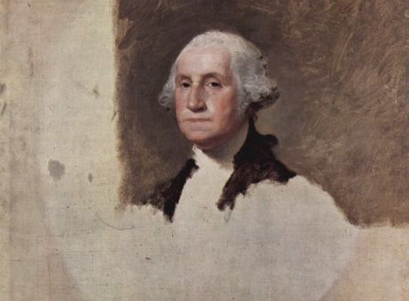
In textbooks and popular history, the White House is figuratively constructed as a repository of democratic aspirations, high principles, and ethical values. For many Americans, it is subversive to criticize the nation’s founders, the founding documents, the presidency, the president’s house, and other institutions that have come to symbolize the official story of the United States. It may be uncomfortable to give up long-held and even meaningful beliefs that in many ways build both collective and personal identities. However, erasing enslaved African Americans from the White House and the presidency presents a false portrait of our country’s history. If young people—and all the rest of us—are to understand a fuller, people’s history of the United States, they need to recognize that every aspect of early America was built on slavery.
What The Hell Just Happened In Kansas? Ctd
Some good news: the sheer breadth of the sanctioned discrimination in the bill designed to protect religious freedom has apparently doomed it. Maybe it was because, as I noted, it would be a terrible self-inflicted blow for the forces who want to stop gay couples from having stable marriages; or maybe because anti-discrimination really is now a universal maxim for the far right as well as everyone else:
Susan Wagle, a conservative Republican who is president of the Kansas Senate, raised opposition to the House measure, saying she had “grown concerned about the practical impact of the bill” and “my members don’t condone discrimination.”
A couple of final thoughts: it’s possible to mount real resistance to various crackpot, far-right initiatives … and win. And once even the far right oppose anti-gay discrimination, the terms of the debate have been set up for victory for gay equality.
Update from a reader:
I’ve enjoyed your coverage of the Kansas far-right implosion, especially since I have been working at the center of this mess for the past two weeks. I thought it might be helpful to highlight why the overwhelmingly negative response to this bill resulted in action from conservative Republicans. It’s a simple equation:
public outcry + legitimate opposition candidates = policy change. Without a legitimate challenger to Gov. Brownback, this bill could have gone forward and been signed into law without any repercussions. But the fact that Paul Davis, the presumed Democratic nominee for governor, raised over a million dollars in just four months and beat Brownback head-to-head in the only public poll to date made it impossible for Republicans to push this legislation forward over public objection.
Kansas Republicans did not wake up and realize discrimination is wrong. They did not have an awakening on the policy. Anti-discrimination is not a universal maxim in the Republican Party. Sixty nine GOP House members (out of 92) voted for this bill knowing it discriminated against the LGBTQ community. This vote shows how far-right Kansas Republicans think and act when people aren’t paying attention.
Political survival is a much more universal maxim and Gov. Brownback did not want to make a decision on this bill, so he had his Senate leaders spike it to protect his re-election campaign. It’s a less uplifting narrative, but also a helpful reminder of how to accomplish change in American politics – get organized, get loud, and scare both political parties into taking your demands seriously.
Faces Of The Day

Photographer Alex John Beck creates two portraits of a person by reflecting the left and right sides of his or her face:
Beautiful faces, both in fashion and real life, are often described as symmetrical. As such, Beck decided to reproduce the faces of several people, as though each half of their face was a mirrored replica of the other. Neither of the portraits in each pair of images offers a realistic portrayal of the subject, but rather a greatly manipulated version. It reveals how unsymmetrical faces really are and how different one would look, were they to be completely equal on both sides. The series also forces one to think about the definition of beauty.
More images from the series here.
(Photo by Alex John Beck)
Muhammad In Moscow
Robert Crews surveys Russia’s policies toward its 20 million Muslim citizens:
Moscow deals with all religious groups in Russia … in a similar way: by attempting to co-opt them. It takes only one state-backed voice to make an alleged deviation from religious orthodoxy a crime, whether that authority is from the Orthodox priesthood or a Muslim cleric loyal to and cultivated by the Kremlin. The state’s support of one interpretation of a religion may prompt the persecution of those who adhere to another interpretation.
But the government’s selective promotion of Islam corresponds with Putin’s foreign policy goals. Putin’s affirmation of Islam’s historical ties to Russia, together with then President Dmitry Medvedev’s 2009 declaration in Cairo (which Putin repeated in Ufa) that Russia was an “organic part” of the Muslim world, has framed Moscow’s quest to restore its great-power status in Asia and the Middle East. Such pronouncements also represent an answer, however muted, to the growing domestic chorus of xenophobic and racist invective that populist politicians and right-wing organizations direct against Russia’s immigrants.
What We Can Learn From Downton Abbey
Peter Lawler claims the show is ideal viewing for conservatives, as it offers lessons “on how to make our nostalgia astutely selective”:
Downton Abbey shows us what’s best and what’s ridiculous—if not necessarily much of what’s worst—about being aristocratic. It also celebrates the decent business sense of the middle class, the realistic love of the American woman, the nobility of living in service to a lord, the humane achievements of modern medical science, the struggle of both aristocratic and servant young women to become somewhat displaced in a world that has their whole lives figured out, and even what’s admirable about the progressive idealism that liberates women and the Irish. Downton highlights the tension between aristocratic traditionalism and modern progress, and forces conservatives to confront the good and bad in both.
George Will isn’t as impressed, seeing Downton as a sop to progressives:
It is fitting that PBS offers “Downton Abbey” to its disproportionately progressive audience. This series is a languid appreciation of a class structure supposedly tempered by the paternalism of the privileged. And if progressivism prevails, America will BE Downton Abbey: Upstairs, the administrators of the regulatory state will, with a feudal sense of noblesse oblige, assume responsibility for the lower orders downstairs, gently protecting them from “substandard” health insurance policies, school choice, gun ownership, large sodas and other decisions that experts consider naughty or calamitous.
Lawler thinks Will is missing the point:
Who can deny that today our upper class—our meritocratic cognitive elite—lacks and could benefit from some of the class of the Earl of Grantham and his family? That’s not to deny that the Lord Grantham is not so astute when it comes to the personal longing for freedom, turning a profit, tolerance of religious diversity, modern science, and even good government. He is astute enough, though, to accept, if reluctantly, changes that will make his way of life more sustainable and even admirable. He is also astute enough not to embrace the popular moralism that turns sins into crimes or even reasons for dismissal. My friend George Will, who finds me “normally wise and lucid,” mistakes, partly by presenting a quote out of its ironic context, my praise of the relational place called Downton Abbey as a progressive and paternalistic endorsement of the welfare state. There’s a huge difference between an aristocratic manor and a government bureaucracy! And I said Downton is an exaggeration for our edification—not a real place.
Stephen Mufson focuses on the economic lessons of Downton. Among them? “Beware of speculative bubbles fueled by cheap foreign capital”:
Faced with cash-flow problems for years, [Lord Grantham] married his rich American wife, Cora (a sort of corporate merger that only later grew more sentimental), to gain access to foreign investment, namely her family money. Nothing wrong with that: China in its early economic-reform days tapped U.S. and other foreign investment, and now many U.S. companies are looking for investments by successful Chinese firms.
Alas, Grantham violates the basic rules of financial management and fails to put his wife Cora’s injection of capital to good use. Instead of investing in his family business (the estate and its many tenant farmers) or diversifying his investments, Lord Grantham gets swept up in a speculative bubble, sinking virtually all of his wife’s money into a Canadian railway scheme that goes bust. Had he been alive today, he’d have been buying subprime mortgages or giving all his money to Bernie Madoff.


