The Ebola Election?

Cillizza calls the outbreak in the US the “October surprise” of the midterms. How the epidemic fits into the pre-existing election narrative:

The country is as anxious and uncertain as it’s been in a very long time.  Much of that anxiety had been laid at the feet of a deeply uncertain economic situation (the broad indicators improving without much to show for it closer to the ground) and the turbulence abroad (the Islamic State, Russia, the Middle East, etc.) coupled with a broader sense that the institutions that we once relied on (government, church, the justice system) are no longer reliable.

That sense of drift — caught between the old way of doing things and a not-yet-realized new way of doing things – is palpable in polling (huge majorities who say the country is headed in the wrong direction, a desire to get rid of everyone in Congress in one fell swoop) and in conversations I’ve had both with political professionals and average people. Ebola — with its sky-high mortality rate and lack of a vaccine – dovetails perfectly with those existing fears and anxieties.

Still, Waldman really wishes candidates would refrain from campaigning on it:

Here’s what I’d like to hear a candidate say when asked about this: “I don’t have an Ebola policy, because I’m running to be a legislator. It’s the job of legislators to do things like set budgets, but when there’s an actual outbreak of an infectious disease somewhere in the world, we should step back and let the people who actually know what they’re doing handle things. In this case, that’s the Centers for Disease Control. This is why we have a CDC in the first place, because if we were relying on politicians to keep us safe from infectious diseases, we’d really be screwed.”

You can call that an abdication of responsibility, but it isn’t. Even if Congress has an important role to play in setting policy priorities for agencies like the CDC, once there’s a potential crisis occuring, the idea that a bunch of yahoos like Pat Roberts should be determining the details of our response is absurd.

Nia-Malika Henderson observes that the public is weirdly confident in the government’s ability to handle an Ebola outbreak:

On the one hand, a new Washington Post/ABC News poll shows they are deeply dissatisfied with the effectiveness of the political system — a.k.a. all the people and processes that are in place to address things like health emergencies. The dissatisfaction is bipartisan, with 66 percent of Democrats and 80 percent of Republicans agreeing. But when it comes to Ebola, people are somehow confident that the federal government, which is (of course) part of that very same political system they deeply mistrust, has the ability to effectively respond to an outbreak. Again, that confidence is largely bipartisan, with 54 percent of Republicans and 76 percent of Democrats expressing confidence.

That’s still a significant gap, though. Looking at the same poll, Brendan Nyhan reflects on how partisanship drives the way people answer these questions:

This finding represents a striking reversal from the partisan divide found in a question about a potential avian influenza outbreak in 2006, when a Republican, George W. Bush, was president. An ABC/Post poll taken at the time found that 72 percent of Republicans were confident in an effective federal response compared with only 52 percent of Democrats. The partisan divide also appears to have grown as Republican disapproval of President Obama has deepened. …

These findings illustrate how people use simple partisan heuristics to make judgments about future government performance. Few people know about how the federal government responds to disease epidemics, but most people have views about President Obama and the job he is doing in office. That’s why Democrats are more confident in government’s capacity for an effective response than they were in 2006, for example, not because they approve of how the Centers for Disease Control and Prevention is being managed.
Ebola In The Air

Amber Vinson, the second nurse to contract Ebola after treating Thomas Eric Duncan in Texas, took a commercial flight from Cleveland to Dallas on Monday, one day before she entered the hospital with symptoms. Now we learn that Vinson had called the CDC to ask whether she could fly – and wasn’t told not to:

CBS News reports that Vinson called several times before boarding the flight, and reported that she had a temperature of 99.5 degrees. She was allowed to fly because only a fever of 100.4 degrees or more is considered “high risk.” “I don’t think we actually said she could fly, but they didn’t tell her she couldn’t fly,” an anonymous federal health official told the New York Times. “She called us,” he said. “I really think this one is on us.” While her symptoms did not appear until she returned home, the CDC is interviewing the 132 passengers who flew with her on Monday.

Amy Davidson is none too impressed with how CDC Director Thomas Frieden has handled this situation:

His account of how Vinson got on the plane, related in the conference call on Wednesday, was at least evasive and, depending on what he knew and what exactly Vinson was told, may have been worse. He was asked three different ways if Vinson had been told not to fly, and each time dodged the question in a way that left the impression that Vinson was some sort of rogue nurse who just got it into her head that she could fly wherever she wanted. He talked about her “self-monitoring,” and that she “should not have travelled, should not have been allowed to travel by plane or any public transport”—without mentioning that his agency was who allowed it.

Dreher is alarmed:

Do you know how many people in Texas Presbyterian hospital became exposed to Ebola via Thomas Duncan?

According to the AP, “about 70.” How many people want to have anything to do with that hospital today? Doctors, nurses, staffers, they all have to show up there to work, but patients? Would you go to an appointment in that hospital right now, knowing how lax it was with the Ebola patient? … How many other patients in that hospital were exposed inadvertently through the nurses doing “normal patient care duties” after having been shat and vomited on by Duncan? Those patients, do we know their travel schedules? And on and on.

Kent Sepkowitz tries to calm everyone down:

Speaking of air travel, the single most important epidemiologic fact arguing for the public’s safety is this: Patrick Sawyer, the American who flew from Liberia to Nigeria while sick with Ebola, spread infection to absolutely no one who shared the plane with him. This information should go a long way to assuring those Frontier Airlines passengers who accompanied the second infected nurse from Cleveland to Dallas this week.

And still more: Spain, where a nurse caring for two repatriated patients dying of Ebola herself developed the disease, has not seen a second case related to these men’s care or the ill nurse’s, despite what has been reported by local groups as a complete lack of preparation and appropriate supplies to minimize the risk of transmission. Despite a raging, unconscionable epidemic in West Africa, no other cases other than Duncan have appeared unexpectedly outside of Africa. Europe: Zero cases. USA: No further cases three weeks since Duncan’s illness began. Obviously past performance does not predict future returns and the world is not out of the danger zone but for now, the infected traveler is a rare event.

And Alex Davies notes that “despite the common belief, airplanes are not flying petri dishes … because the air in the plane is much fresher than you may think, and constantly scrubbed by high quality filters”:

When the air is pulled into the grills in the floor, pilot Patrick Smith writes in Cockpit Confidential, about half is expelled from the plane. The rest is filtered and recycled with fresh air from the compressors. High efficiency particulate air filters, installed on every commercial airliner made since the late 1980s, remove up to 99.97% of all microbes, and “there’s a total changeover of air every two or three minutes,” Smith writes. According to the WHO, “under normal conditions cabin air is cleaner than the air in most buildings.”

The highest risk of catching something nasty from your fellow travelers comes when you’re sitting on the ground. The engines aren’t running, so fresh air isn’t being pulled in. That’s why WHO recommends airlines ensure “adequate cabin ventilation” during ground delays of 30 minutes or more.

In any case, the revelation has raised the possibility of an Ebola no-fly list and sent airline stocks falling:

As of 2:50 pm on Wednesday, no doubt in response to the news, virtually every major air carrier had seen its stock drop. Shares of American Airlines had fallen nearly 1.5 percent (though they have since recovered, and closed half a percentage point up on the day), Delta had dropped by almost 2 percent, United Continental had dipped by more than 3.6 percent on the day, and Spirit Airlines had tumbled by roughly 3 percent. The dip, though particularly pronounced today, actually spans back to the beginning of the month–tracking pretty closely with rising concerns about Ebola continuing to spread. 

Ebolanomics

Screen Shot 2014-10-15 at 12.23.13 PM

Kim Yi Dionne and Laura Seay discuss how Ebola panic – coupled with ignorance of geography – is doing economic damage to African countries thousands of miles away from the outbreak:

Estimates of the economic damage to be caused by Ebola are as high as $33 billion. Whatever the ultimate cost, everyone agrees that Guinea, Sierra Leone, and Liberia’s economies will be deeply and negatively impacted. Much of that damage is likely unavoidable because people in heavily affected countries engage in “aversion behavior” — or taking actions driven by fear alone (e.g., employees not going to work for fear of being exposed to Ebola).

But this Ebola outbreak is wreaking havoc on African economies beyond the three most heavily affected by Ebola, and that damage is completely avoidable.

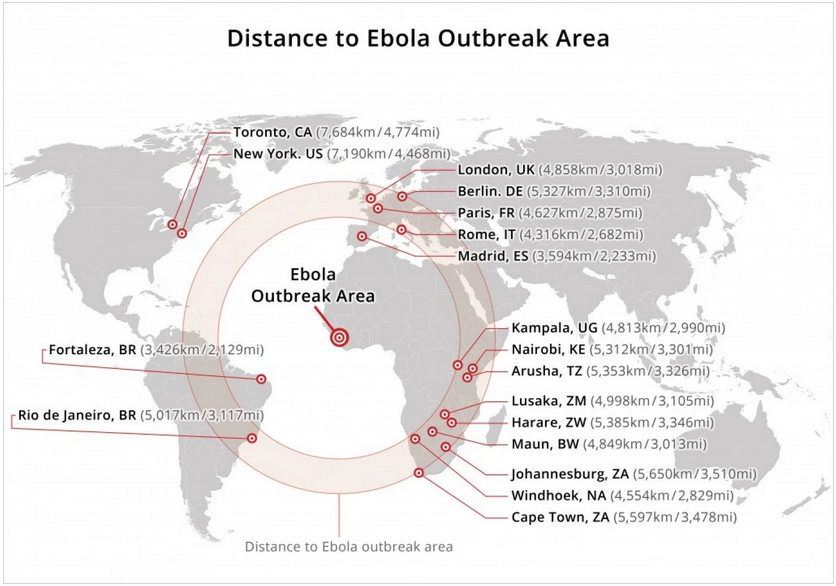
The East and Southern African safari industry provides a good example. Bookings for safaris there — including for the famed Great Migration in Kenya and Tanzania — have plummeted due to the Ebola outbreak. In a survey of 500 safari tour operators, SafariBookings.com found a majority of respondents had a decrease in bookings and an increase in cancellations. These actions are based in fear, not reality. We are faced with risk every day, and would be better suited to understand our relative risks if we appreciated where in the world some places are.

Ylan Q. Mui zooms in on Liberia, where the epidemic threatens to turn back the clock on the economic progress the country has made in recent years:

With critical public works projects in limbo and businesses struggling, the virus is threatening Liberia’s chance to escape generations of poverty and join Africa’s rising prosperity. “Liberia was moving,” said Estrada Bernard, chairman of the International Bank in Liberia and the Liberian president’s brother-in-law. “The whole thing hinges upon how well we can get this virus under control.” The best-case scenario compiled by the World Bank predicts Liberia’s economic growth will still plunge by more than half this year. Rubber, one of the nation’s biggest exports, is expected to fall 20 percent this year. Gold and diamond mining have also dropped off. Beer production plunged 30 percent during the first quarter.

And that’s not to mention the human toll of the virus in a country that currently has 2.3 million fewer boxes of sterile examination gloves than it needs. Worse still, Abby Haglage reports, thousands of children have been orphaned in the epidemic:

Of the more than 8,000 people infected with Ebola in West Africa, an estimated 20 percent of them are under the age of 18. Without solid health or proper nutrition, the chances of recovery in this demographic are even lower than for the epidemic at large. “Three out of four of children infected with Ebola in West Africa are dying—that’s a 75 percent mortality rate,” says [Save The Children president and CEO Carolyn] Miles. “These kids are already malnourished, they’re not in the best of health. They’re just not able to survive this.”

Those that do survive, or are lucky enough to have escaped infection, meet a shadowy future. According to data from UNICEF, upwards of 3,700 children have lost one or both parents to Ebola in Sierra Leone, Guinea, and Liberia thus far. Miles, who met with four different groups of orphans in Liberia on her visit, suspects the number is much higher. “I think there are thousands we don’t even know about,” she says.

Patient Three

A second health worker who had cared for Ebola patient Thomas Eric Duncan has contracted the virus:

The second worker was immediately isolated and tests conducted after they reported coming down with a fever on Tuesday. Test results came back overnight confirming the diagnosis, and interviews immediately began to identify anyone the person may have come in contact with, so they could also be monitored for symptoms. More than 100 people are currently being watched after having come in contact with Duncan before he entered the hospital. …

As news of the new infection broke, more information has been revealed about the care that Duncan received when first trying to gain treatment, and not all of it is good. National Nurses United, a California-based union, has made a number of claims about poor preparation and infection control on behalf of the nursing staff at Texas Health Presbyterian Hospital. Among the charges are claims that Duncan was left in an open room with other patients “for hours,” employees were given substandard protective gear, and hazardous waste piled up to the ceiling.

By the CDC’s account, the hospital was ill prepared to handle an Ebola patient and improvised safety protocols on the fly:

“They kept adding more protective equipment as the patient [Duncan] deteriorated. They had masks first, then face shields, then the positive-pressure respirator. They added a second pair of gloves,” said Pierre Rollin, a CDC epidemiologist. … He said the hospital originally had no full-body biohazard suits equipped with respirators but now has about a dozen. Protocols evolved at the hospital while Duncan was being treated, he said: “Collecting samples, with needles, then you have to have two people, one to watch. I think when the patient arrived they didn’t have someone to watch.”

The CDC itself was also slower to act than it should have been:

CDC Director Thomas Frieden expressed regret Tuesday that his agency had not done more to help the hospital control the infection. He said that, from now on, “Ebola response teams” will travel within hours to any hospital in the United States with a confirmed Ebola case. Already, one of those teams is in Texas and has put in place a site-manager system, requiring that someone monitor the use of personal protective equipment. “I wish we had put a team like this on the ground the day the first patient was diagnosed,” he said. “That might have prevented this infection.”

Boer Deng details how complex these hospital safety protocols can be:

It is hard to track just what goes wrong if a misstep occurs, says Maureen O’Leary, secretary of the American Biological Safety Association. A case of Ebola reported in Spain last week involved a nurse trainee who admitted that she broke protocol by touching her face with a gloved hand after handling patient waste. Removing protective items that were used during care is complicated by the specificity of the process by which it must be done: “Using a gloved hand, grasp the palm area of the other gloved hand and peel off first glove; Hold removed glove in gloved hand; Slide fingers of ungloved hand under remaining glove at wrist and peel off second glove over first glove,” the CDC’s glove-removal instructions read.

The meticulousness is necessary to distinguish between the contaminated parts of a gown or facemask and the parts that are safe to touch. Contamination often can’t be seen, so even the smallest deviation might create a problem, says Ken Anderson of the American Hospital Association. For this reason, “the sequence of removal is key” to prevent clean surfaces from touching dirty ones. The CDC recommends two possible protocols. Both end with washing hands thoroughly (for the duration of two rounds of “Happy Birthday to You,” according to Anderson).

Amesh Adalja proposes a way to ensure that any future Ebola patients are treated at facilities that are prepared to handle them:

[W]e should seriously consider designating certain medical centers as our primary response centers for any further cases that are treated in the US. Such is the model employed for many diseases including trauma, burns and strokes. In fact, such a regionalization model organically arose during the H1N1 influenza pandemic, when smaller hospitals worked in a hub-and-spoke model to transfer their sickest patients to major medical centers—a phenomenon I studied. Such tiering of levels of care is being implemented now in the UK, which has treated one airlifted Ebola case successfully.

The Grave Risks Of A Travel Ban

The debate over whether to impose a travel ban on Ebola-afflicted countries strikes Rod Dreher as a culture-war battle in the making:

I learned over the weekend that to raise the question of whether or not we should refuse Ebola Virustravelers from Ebola-infected countries is to identify oneself as a right-wing nut, and possibly even a racist. Apparently — according to some liberal readers of this blog — Limbaugh and the usual suspects are working Ebola fears into political talking points. It is therefore required of all decent and right-thinking people to take the opposite position. So I’ve learned.

This is crazy, and dangerous. I haven’t checked, but I have no doubt that talk-radio loudmouths are making political hay about this stuff; it’s what they do. They are, in fact, the enemy of clear thinking — but so are those whose thinking is dictated by a compulsion to take the other side of whatever Limbaugh says.

McArdle fails to see why the notion of a travel ban is so controversial:

Ivory Coast cut off all travel from the affected areas in August, and if you look at maps of the outbreak, this actually seems to be controlling it pretty well within their borders. Even if all it did was buy the government time to prepare, that might help them lower their fatality rate.

You can still argue, of course, that such bans are inhumane and costly. But at least from the evidence we have, closing the borders does seem possible, so we should probably stop insisting that it isn’t. And we should stop acting as if this has any relevance to U.S. immigration policy, which takes place in a much different context, and over a different timeframe, from African travel in the time of an epidemic.

But Julia Belluz and Steven Hoffman reiterate that there are sound, practical reasons to oppose a travel ban:

There are three reasons why it’s a crazy idea.

The first is that it just won’t work. In CDC Director Tom Freiden’s words, “Even when governments restrict travel and trade, people in affected countries still find a way to move and it is even harder to track them systematically.” In other words, determined people will find a way to cross borders anyway, but unlike at airports, we can’t track their movements.

The second is that it would actually make stopping the outbreak in West Africa more difficult. Dr. Anthony Fauci, director of the National Institute of Allergy and Infectious Diseases, said, “To completely seal off and don’t let planes in or out of the West African countries involved, then you could paradoxically make things much worse in the sense that you can’t get supplies in, you can’t get help in, you can’t get the kinds of things in there that we need to contain the epidemic.” …

The third reason closing borders is nuts is that it will devastate the economies of West Africa and further destroy the limited health systems there.

Aaron Blake examines how the public feels about it:

A new poll from the Washington Post and ABC News shows 67 percent of people say they would support restricting entry to the United States from countries struggling with Ebola. Another 91 percent would like to see stricter screening procedures at U.S. airports in response to the disease’s spread. …

Concern about Ebola, at this point, is real but not pervasive. About two-thirds (65 percent) say they are concerned about an Ebola outbreak in the United States. But while people are broadly concerned about an outbreak, they are not necessarily worried about that potential outbreak directly affecting them. Just 43 percent of people are worried about themselves or someone in their family becoming infected – including 20 percent who are “very worried.”

(Photo of the Ebola virus via Getty)

Ebola Politics On The Left

Alex Rogers flags the fear-mongering ad seen above, which tries to make political hay out of the Ebola crisis by blaming the lack of preparedness on budget cuts supported by Republicans:

Erica Payne, the producer of the ad and president of the Agenda Project Action Fund, blamed the Ebola crisis wholly on the Republican Party. “I think any Republican who attempts to chalk this ad up to politics is a Republican who is too afraid to examine the results of his of her actions and the very real consequences that they have,” she said. “They have developed a governing philosophy that is so fanatically anti-investment that they literally have at their doorstop death. There is no exaggeration in this.

Dr. Francis Collins, director of the NIH, tells Sam Stein that Ebola research has been hampered by stagnant funding over the past decade:

“NIH has been working on Ebola vaccines since 2001. It’s not like we suddenly woke up and thought, ‘Oh my gosh, we should have something ready here,'” Collins told The Huffington Post on Friday. “Frankly, if we had not gone through our 10-year slide in research support, we probably would have had a vaccine in time for this that would’ve gone through clinical trials and would have been ready.” …

Money, or rather the lack of it, is a big part of the problem. NIH’s purchasing power is down 23 percent from what it was a decade ago, and its budget has remained almost static. In fiscal year 2004, the agency’s budget was $28.03 billion. In FY 2013, it was $29.31 billion — barely a change, even before adjusting for inflation. The situation is even more pronounced at the National Institute of Allergy and Infectious Diseases, a subdivision of NIH, where the budget has fallen from $4.30 billion in FY 2004 to $4.25 billion in FY 2013.

But Nick Gillespie doesn’t buy that the NIH and other government health agencies are hurting for money:

According to its budget documents, the NIH got about $23 billion in fiscal 2002 (George W. Bush’s first budget year), a figure that rose to $30.2 billion in 2009 (his last budget year) before peaking at $31 billion in 2010. It dipped a bit from then and came to $30.1 billion in 2014, which is about the same amount the NIH requested in President Obama’s 2015 budget plan.

You can argue that the United States needs to be constantly and massively increasing its spending on everything and that every time spending doesn’t go up in a lockstep fashion (and faster than inflation, as it did throughout the Bush years) that you’re killing people. You can also argue that the topline budget figures for various agencies don’t matter, but then you’re really talking about the ways in which bureaucracies, especially in the budget sector, misallocate resources. The one thing you really can’t do is say that the federal government, which is not actually controlled by the Republicans (just saying), has been slashing its spending on anything.

Noah Rothman adds:

There are some conservatives who have convinced themselves that the federal government is to blame for the spread of Ebola to the United States. A few conspiratorial types insist that Washington is indifferent to the spread of this deadly bug to America, despite the fact that this claim defies Hanlon’s razor and there is no evidence to support it. There is, however, sufficient evidence to suggest the federal agencies responsible for preventing a public health crisis – from medical care, to transportation, to oversight – are simply too unwieldy and prone to human error to take the necessary precautions which might have prevented Ebola’s spread across the Atlantic. That is a debatable point, but it is apparently so dangerous to the left that they are mounting a counteroffensive.

Patient Two

Health Care Worker In Dallas Tests Positive For Ebola Virus

On Sunday, the CDC announced a second case of ebola in Texas:

The Centers for Disease Control and Prevention say that a hospital worker who cared for Thomas Eric Duncan, the Liberian patient who died of Ebola last Wednesday, has tested positive for the Ebola virus. This is the first case of Ebola being transmitted in the United States. Officials blame a “breach of protocol” during treatment of Duncan—and although all healthcare workers who came into contact with Duncan were wearing protective clothing, Dr. Thomas Frieden, the CDC director responsible for overseeing agency action against the Ebola crisis, said additional cases are possible because of the breach.

Abby Haglage and Kent Sepkowitz comment on how the nurse managed to contract the virus:

The Dallas nurse, who officials confirmed was wearing gear, was allegedly treating Duncan on his second visit to the ER where he was hospitalized and diagnosed, before eventually dying. This detail is extremely important. Though much remains unclear about Ebola and transmission, we do know that any virus is much more contagious when high amounts of virus are concentrated in the sick person’s blood. It is likely therefore that Duncan was much more contagious farther into his illness, making transmission increasingly likely. …

This may have played into Duncan’s case, which has left officials in Texas such as Health Resources chief clinical officer Dan Vargas, scratching their heads. “We’re very concerned,” Vargas told the press. “[Though we’re] confident that the precautions that we have in place are protecting our health care workers.” In other words, the protocol works but many people’s ability to follow it exactly—really exactly—may pose a substantial challenge.

Jonathan Cohn thinks about how better safety protocols could mitigate the risk to health workers:

Ideally, every facility with Ebola patients would adopt the kinds of practices that groups like Doctors Without Borders have developed and honed over the years. They have thorough checklists, for example, and follow them meticulously. They also use a buddy system or, in some cases, have trained professionals who focus on the disposal of infected material and make sure caregivers take off protective gear properly. Frequently they are “WatSan” specialists, meaning they deal with water and sanitation.

The CDC seems to be moving in that direction already: Frieden said on Sunday that “we are recommending there be a full-time individual who is responsible only for the oversight, supervision and monitoring of effective infection control while an Ebola patient is cared for.” But simply “recommending” hospitals take these steps may not be enough. CDC, or some other arm of the federal government, may need to dispatch these infection control officers and pay for their services.

“A more drastic, but possibly necessary, step would be moving all Ebola patients to hospitals that specialize in these sorts of infectious diseases,” Cohn adds. Sarah Kliff voxplains what sets these hospitals apart:

Emory, the University of Nebraska, and the National Institutes of Health have all received and successfully discharged Ebola patients. These three hospitals are among just four in the nation with specialized biocontamination units. These are units that have existed for years, with the sole purpose of handling patients with deadly, infectious dieases like SARS or Ebola.

While biocontamination units look similar to a standard hospital room, they usually have specialized air circulation systems to remove disease particles from the facility. And, perhaps more importantly, they’re staffed by doctors who have spent years training, preparing and thinking about how to stop dangerous infections from spreading.

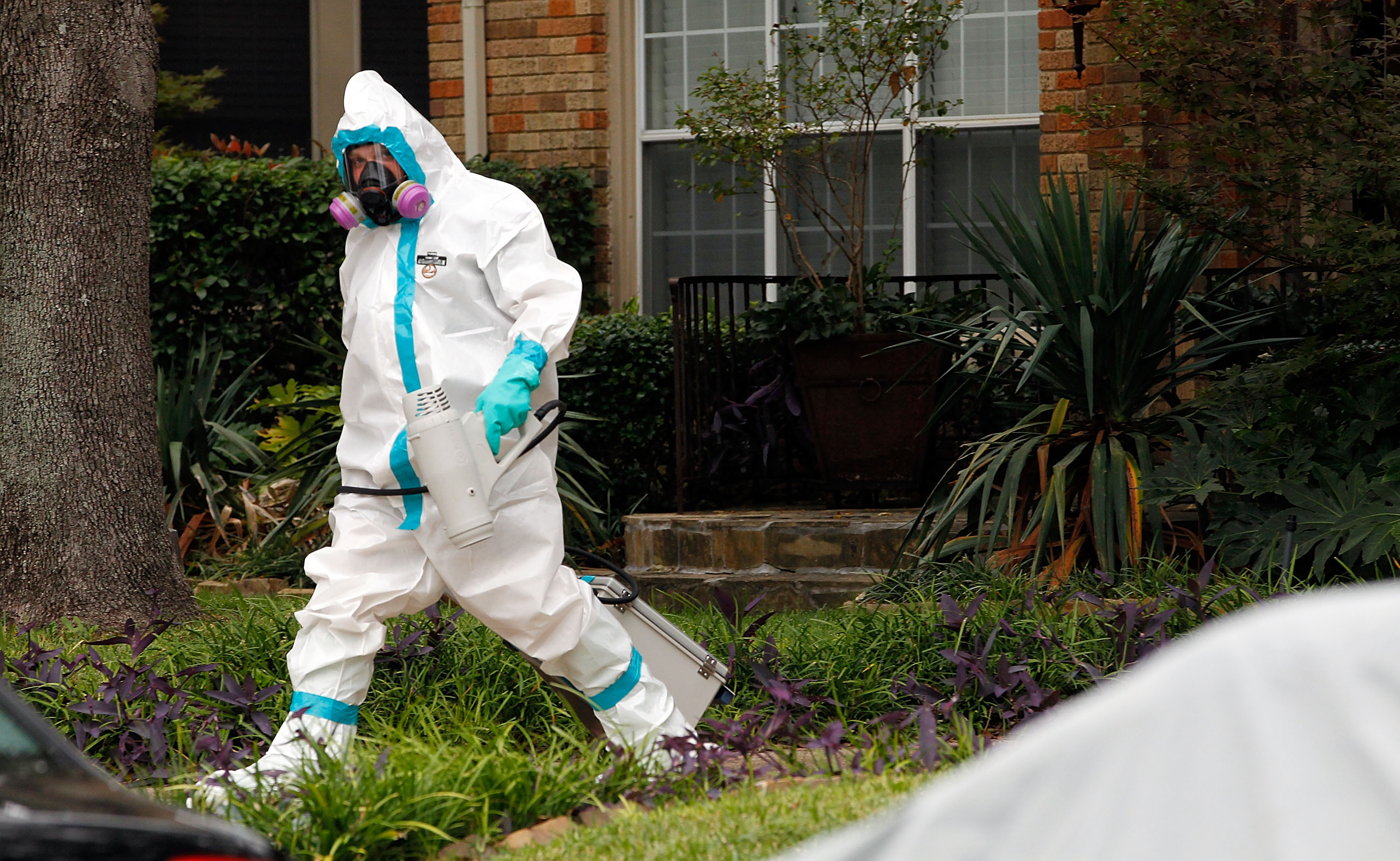
(Photo: On October 12, 2014 in Dallas, Texas a man dressed in protective hazmat clothing walks towards an apartment where a second person diagnosed with the Ebola virus resides. By Mike Stone/Getty Images)

Will “Tightening The Borders” Keep Ebola Out?

New York's Bellevue Hospital Prepares For Possible Ebola Cases

Thomas Eric Duncan, the first Ebola patient diagnosed in the US, succumbed to the virus yesterday, as the Centers for Disease Control announced that five key airports would begin screening passengers arriving from Guinea, Liberia, and Sierra Leone for signs of illness. Amanda Taub outlines the new screening protocols:

According to the CDC, over 94 percent of travelers from those three affected countries enter the US through one of the five airports that will implement the screening measures: JFK in New York City, Newark, Washington-Dulles, Chicago-O’Hare, and Atlanta. JFK, which receives more than half of those passengers, will begin screening on Saturday, October 11. Travelers will be screened at the border, immediately after they go through passport control, in a special area of the airport. Customs and Border Protection officers will take passengers’ temperatures and ask them a series of questions about their health and possible Ebola exposure.

Passengers who do not have fevers or any history of exposure to Ebola will be given information about the virus and asked to complete a temperature monitoring chart at home. Those who do have fevers or who give answers that raise concerns about possible Ebola exposure will be referred to a CDC officer in the airport, and then to public health authorities if it is determined that further monitoring is necessary.

Jonathan Cohn expects that the main benefit of these screenings will be psychological:

Experts have generally been skeptical that increased screening would make a difference, in part because the new precautions rely on candor from foreign visitors. Remember, similar screenings already take place at the points of departure in West Africa. Duncan got out of Liberia by lying and stating that he’d had no contact with an Ebola patient.

But a secondary goal of the new steps is to calm the American psyche and there’s a case for that. If it takes some extra vigilance and a quick temperature check to make the American people feel safe, and if it doesn’t divert precious resources, it’s probably a price worth payingin much the same way that security theater in the airports, following September 11, made it possible for the flying public and eventually the rest of the public to return to some form of normalcy.

And Maryn McKenna argues that emergency rooms, not airports, are the spaces we should be worrying about:

Screening passengers for fever makes it look like someone is doing something. (It’s also a surprisingly active area of engineering research; check these post-SARS papers from 2005, 2006, 2009, 2013 and this year.) But as Duncan’s case demonstrated, the critical point for “border control” of Ebola may be not the airport, but the emergency room. We already know — have known for years, in fact — that our emergency-care system is underfunded, overstressed, and asked to bear a larger burden for the health of the mass public than either hospital or outpatient care do. It is very disappointing that Duncan’s travel history was ignored in his first encounter with Texas Presbyterian — but as Texas health journalist Laura Beil pointed out on Twitter yesterday, not even slightly surprising given the churn of uninsured patients through the state’s big ERs.

Jason Millman checks in with some ER doctors:

One ER doctor in Denver, Eric Lavonas, said there was no Ebola panic yet, while another in the Bronx, Dan Murphy, said several patients came in on Tuesday fearing they were infected. Sudip Bose, an ER physician working in Chicago and Texas, said he’s seen an increase in visits after an inbound flight scare in Dallas this week. Hamad Husainy, an ER physician in Alabama, said two people who were recently hired as “scribes” to document patient visits quit those jobs because they feared being exposed to Ebola.

New York-based physician Bob Glatter said he thinks people are still being reasonable about the extremely low risk of contracting the disease in the United States. However, he thinks Ebola fears may start to pick up after Duncan’s death on Wednesday and with flu season rapidly approaching.

Pointing to a series of polls suggesting that a significant number of Americans are worried that they or their loved ones might get the disease, Waldman comments on the hysteria:

We’ve had only one case in America, and while there may be a few more like him—people who went to a place where the disease was spreading and returned before becoming symptomatic, all while evading the precautions that were in place—it won’t be more than a few. You aren’t going to get it. But fear always wins. Fear sure wins on TV, where they’re actually asking questions like “Could the virus mutate and become airborne?” And we’re all hard-wired for fear, because fear is highly adaptive from an evolutionary standpoint. The australopithecine who’s terrified of every bump in the night is the one who survives to pass on his genes.

Meanwhile, the totally-not-a-race-baiter Rush Limbaugh is telling his listeners that Barack Obama wants to let white Americans get Ebola as revenge for slavery. So of course we can all stay rational.

Meanwhile, Spanish ebola patient Teresa Romero Ramos’s dog Excalibur was put down yesterday. Barbie Latza Nadeau reports:

Despite an online petition that garnered more than 400,000 signatures and half a million tweets to try to save the dog’s life, a campaign launched by Romero’s husband Javier Limón from his quarantined quarters in the Carlos III hospital, the dog was euthanized on Wednesday evening in the couple’s apartment in suburban Madrid. Armed guards kept animal rights activists shouting “assassins” at bay.  The dog, which was never tested for the Ebola virus, was put to sleep before being removed from the locked-down apartment.  The body will be incinerated at a medical waste plant in Madrid. According to Spanish press reports, the dog’s corpse will not be tested for the virus, so no one will ever know whether or not Excalibur had the lethal disease.

Marc Champion puzzles over the outcry to save Excalibur:

I don’t remember people clashing with police to persuade their governments to do more to help stop the spread of Ebola in Africa, where more than 3,400 human beings have died from the disease. Indeed, an online petition to persuade the U.S. government to fast-track research for an Ebola drug has so far received 152,534 signatures. By that measure, we care half as much about finding a cure for Ebola as saving a dog.

Either way, Amy Davidson points out, neither mercy for Excalibur nor security theater at airports addresses the actual problem:

If it takes a dog to remind people to not be senselessly fearful in the face of a disease—not to just smother everything that’s frightening—Excalibur will have a real legacy. But that’s only true if the perspective he opens is broad: we can’t just deal with Ebola by looking at dog pictures while trying to close airports and banish images of Africa. There’s another set of scenes, the ones that we have been looking away from for months, in West Africa, where children orphaned by Ebola are fending for themselves. In Sierra Leone, gravediggers have gone on strike; it’s dangerous work, and they say that they haven’t been paid.

(Photo: A member of Bellevue’s Hospital staff wears protective clothing during a demonstration on how they would receive a suspected Ebola patient on October 8, 2014 in New York City. By Spencer Platt/Getty Images)

How Not To Handle An Ebola Patient

Barbie Latza Nadeau remarks on how Spain bungled the case of Teresa Romero Ramos, the nurse who contracted Ebola, noting that “now Europe is grappling with its worst fear—the threat of an Ebola outbreak. And even the authorities can’t argue it won’t happen”:

That Romero was allowed to mingle in public after reporting a fever when she was within the known incubation period for the virus is unacceptable.  But what makes Romero’s case particularly troubling is that Spanish health authorities and the hospital where she worked appear complicit in not immediately isolating her. … According to Spanish press reports quoting the Spanish nurses’ union, Romero called Carlos III hospital several times between September 30 and October 2 when her fever finally hit the 38.6 threshold.  Still, it took until October 6 when she had become so deathly ill she was begging for an Ebola test before anyone at the hospital where she worked reportedly reacted.

Then, rather than immediately isolating her and rushing her to the special ward used to treat the previous Ebola patients, they told her to go to the nearby emergency room at Alcorcón, where press reports say she sat in the public waiting room for several hours absent of any protective gear. “I think I have ebola,” she reportedly told anyone who would listen.  But no one took notice until her first test came back positive. By then, dripping with fevered sweat, she would have been inarguably contagious.

And now the Spanish government wants to euthanize her dog – but not if the Internet can help it:

Excalibur, a 12-year-old rescue with soulful brown eyes, was left at home by the nurse’s husband, Javier Limón, as he checked into a quarantine unit. Before leaving, he left the dog water and 33 pounds of food — enough to last it through any observation period — while spreading pleas to help the dog on social media. “The dog is fine. He has the whole house to himself, with the open terrace so he can do his business,” he told Spanish paper El Mundo. “Are they going to put me to sleep, too?” The pleas were heard. A Change.org petition to spare the dog received more than 190,000 signatures within a day. …

Excalibur was fine and at home as of Tuesday night in Madrid. The hashtag #SalvemosaExcalibur is trending locally on Twitter.

Jazz Shaw relays some research that helps explain the concerns over Excalibur:

The coverage on CNN this morning clearly missed something (as did I) in terms of transmission through dogs. A reader notes that a study was already done on this and some dogs can, in fact, be infected.

Naina Bajekal has more:

The researchers concluded that “dogs could be a potential source of human Ebola outbreaks and of virus spread during human outbreaks,” but they did not test their hypothesis that human infection could occur through licking, biting or grooming. Instead, the study assumed dogs would transmit the infection in the same way as other animals observed in experiments; those animals excreted viral particles (in saliva, urine, feces) for a short period before the virus was cleared. David Moore, an expert in infectious diseases from the London School of Hygiene and Tropical Medicine, said that since no dogs showed symptoms of the Ebola virus “there is absolutely no evidence to support a role for dogs in transmission.”

By the way, like the Spanish nurse, the case of Thomas Eric Duncan, who today became the first person to die of the disease in the US, was hardly handled in the best way:

[He] started developing symptoms of the disease once he arrived in the US. He went to a Dallas emergency room and told a nurse that he had recently been in West Africa — a region that has been ravaged by an unprecedented Ebola epidemic — but that information was not “fully communicated” to the rest of his medical team. Duncan was diagnosed with a minor infection and sent away from the hospital. He returned days later via ambulance, when his symptoms had worsened considerably.

How Scared Should We Be?

Ebola Virus

David Willman relays concerns from some Ebola experts about our knowledge of how the disease spreads, some of whom “question the official assertion that Ebola cannot be transmitted through the air”:

In late 1989, virus researcher Charles L. Bailey supervised the government’s response to an outbreak of Ebola among several dozen rhesus monkeys housed for research in Reston, Va., a suburb of Washington. What Bailey learned from the episode informs his suspicion that the current strain of Ebola afflicting humans might be spread through tiny liquid droplets propelled into the air by coughing or sneezing. “We know for a fact that the virus occurs in sputum and no one has ever done a study [disproving that] coughing or sneezing is a viable means of transmitting,” he said. Unqualified assurances that Ebola is not spread through the air, Bailey said, are “misleading.”

[Dr. C.J.] Peters, whose CDC team studied cases from 27 households that emerged during a 1995 Ebola outbreak in Democratic Republic of Congo, said that while most could be attributed to contact with infected late-stage patients or their bodily fluids, “some” infections may have occurred via “aerosol transmission.”

Jonathan Ball dismisses fears of airborne Ebola:

While respiratory transmission has been shown in the laboratory, this was using a highly artificial animal model system, and most scientists concur that the virus is not spread through the respiratory route.

Similarly, in the only study of its kind, a report in the Journal of Infectious Diseases showed that the risk of contracting Ebola virus from fomites – particles loitering in the environment – was also very small. So all of the evidence suggests that if you avoid transferring virus from an infected individual or contaminated cadaver then the risk of infection is very low indeed.

But Allahpundit sees reason to worry about Ebola mutating into a more contagious virus:

The virus simply hasn’t had much of a chance to evolve while passing from person to person. It does now, with an outcome that’s yet to be determined. Just today, the World Health Organization walked back the conventional wisdom that the virus incubates in an infected person for no more than 21 days. Turns out that a man who’s gotten the disease and survived it can still pass it through his semen for up to 70 days afterward and possibly more than 90 days. Ebola could thus continue to thrive in Africa a la HIV as a killer STD.

Neo-Neocon notes something interesting too, per the bit in the excerpt about what it means to be “symptomatic”: Both Thomas Duncan, the Dallas Ebola patient, and the nurse in Spain had “slight fevers” when they first presented themselves to doctors. Fevers associated with Ebola typically run 101.5 or more. Could it be that victims with “slight fevers” are sufficiently symptomatic to pass the disease on?

Responding to those fears, Peter Barlow makes the point that just because a virus has an opportunity to mutate doesn’t mean it will:

While this certainly seems to be a real possibility, it is worth looking at what has happened with H5N1 avian influenza (“bird flu”). This highly contagious virus is relatively common in birds in Asia. But despite numerous human infections over the past 15-20 years, it has never mutated to spread through the air.

Alex Park has more on the WHO’s statement:

The sample sizes for these studies are extremely small, and it’s unclear just how great a risk the semen of surviving men poses in the weeks following their illness. Still, officials from the Centers for Disease Control and Prevention have recommended that they use condoms. And Doctors Without Borders—which has been on the front lines of the current outbreak since its early stages—is distributing condoms to survivors, according to a spokesperson for the group. …

Semen may not be the only bodily fluid through which a patient recovering from Ebola could pass on the disease. In 2000, researchers tested the fluids of a female Ebola survivor whose blood was already clear of the virus. Fifteen days after first falling ill, Ebola was still found in the woman’s breast milk. Her child eventually died of Ebola, though the researchers could not be certain the child got sick from feeding.

Meanwhile, Scott McConnell can’t believe we haven’t issued a travel ban yet:

In defense of the current, not very rigorous, regime, President Obama argues that “in recent months we’ve had thousands of travelers arriving from West Africa and so far only one case of Ebola.” But this was in the early stages of the epidemic, before the breakout of Ebola in West Africa’s cities. Does Obama really want thousands more West Africans flying here once Ebola cases number more than a million?

The answer appears to be yes. Mark Krikorian of the Center for Immigration Studies has pointed out that 13,000 visas for travel to America have been handed out in Liberia, Sierra Leone, and Guinea—which means that so long as such travelers don’t have a fever observed by the West African screeners when boarding and can get a ticket, they’re coming to the U.S.

Some issues are complicated, but this one seems simple. So long as the epidemic is raging, why should even a single traveler come here from the Ebola-infected countries?

Karen Weintraub outlines the case against such a policy:

Many public health experts who oppose the travel ban argue that it’s simply not practical. That includes Columbia University’s [Stephen] Morse, who describes himself as a “fence-sitter” on the issue but doesn’t support a travel ban right now because people with financial means can travel to an intermediate country before entering the United States. West Africa’s many porous borders make such travel even easier, he said.

It wouldn’t make sense to ban people who fly out of Senegal—where, like the United States, there has been only one case of Ebola, Morse said. But if one person with Ebola made it there, others could, too. A ban could also encourage people to lie about where they have been, Morse said: “One of the real concerns is that if you outlaw [travel], it will discourage people from coming forth with the truth.”

Mary Katherine Ham is characteristically skeptical of the government’s actions thus far:

It’s true that the administration has some kind of process in place to deal with the possibility of infected people getting to the U.S., albeit so bare and reactive a response that even senators don’t know anything about it. It’s also true the administration constantly uses incompetence as an excuse for its own failures, which it routinely does not find out about until they are reported in the media. It’s true that the CDC has done good and competent things in the past for public health. It’s also true that government health organizations have grossly mishandled anthrax, bird flu, and smallpox in the last year.

(Photo: In this handout from the Center for Disease Control, a colorized transmission electron micrograph of an Ebola virus virion is seen. By CDC via Getty Images)