How To Contain An Epidemic

Teju Cole shares a heartening report about Nigeria’s successful public health response to the Ebola crisis:

Meanwhile, Jon Cohen suggests that Ebola survivors could help stem the spread of the disease:

As far back as 431 B.C., the Athenian historian Thucydides recognized that people who survived the plague made for excellent caregivers. As Thucydides wrote: “It was with those who had recovered from the disease that the sick and the dying found most compassion. These knew what it was from experience, and had now no fear for themselves; for the same man was never attacked twice—never at least fatally.” Nicole Lurie, HHS’ assistant secretary for preparedness and response, is one of several doctors who suspect that people who survived Ebola may have developed immunity to that strain of the virus and could care for the infected with little risk to themselves. Lurie suggests that in these West African countries, where jobs are hard to find and Ebola carries such serious stigma with it that survivors sometimes are shunned, training survivors could be a win-win.

Michaeleen Doucleff notes that the CDC and WHO are on the same page when it comes to fighting the disease, but the horizon doesn’t look good:

Both agencies agree on how to turn the tide of this epidemic: Get 70 percent of sick people into isolation and treatment centers. Right now, [WHO’s Christopher] Dye says fewer than half the people who need treatment are getting it. If all goes well, Dye expects the goal of 70 percent could be reached in several weeks.

“Our great concern is this will be an epidemic that lasts for several years,” he says. The epidemic has hit such a size – and become so widespread geographically – that Ebola could become a permanent presence in West Africa. If that happens, there would be a constant threat that Ebola could spread to other parts of the world.

Rohit Chitale of the Armed Forces Health Surveillance Center calls the international spread of Ebola “a significant possibility,” leaving poorer countries at highest risk:

The [CDC and WHO] and many nations have established guidance for entry and exit screening (e.g., thermal or fever screening at airports), and many nations had put them in place weeks or even months ago. Regardless, some cases will probably be imported into other nations. However, [if] cases occur in nations with a strong medical and public health infrastructure, like the U.S., patients that are suspected for Ebola will be isolated, exposed patients will be quarantined, and we would expect little to no spread of cases locally. So this is really not a direct threat for nations with robust health systems. But where resources are lacking and health systems are inadequate (as in West Africa), and where initial cases are not quickly discovered and managed, there is a real threat of local spread in the community from imported cases.

James Ciment argues that Americans have a special obligation to help those suffering in Liberia:

Pioneers from America settled Liberia and established it as Africa’s first republic; they modeled its institutions after our own. If we are true to our values and obligations, we will not abandon Liberia again once the current crisis has passed. Our government has earmarked an unprecedented sum to reverse the epidemic in Liberia and its neighbors. But as Americans, we can and should give as individuals. There are any number of organizations doing sterling work in fighting Ebola and aiding its victims—Doctors Without Borders, Save the Children, Global Health Ministries. Find one online and send it money now.
How Many New Ebola Cases?

Ebola

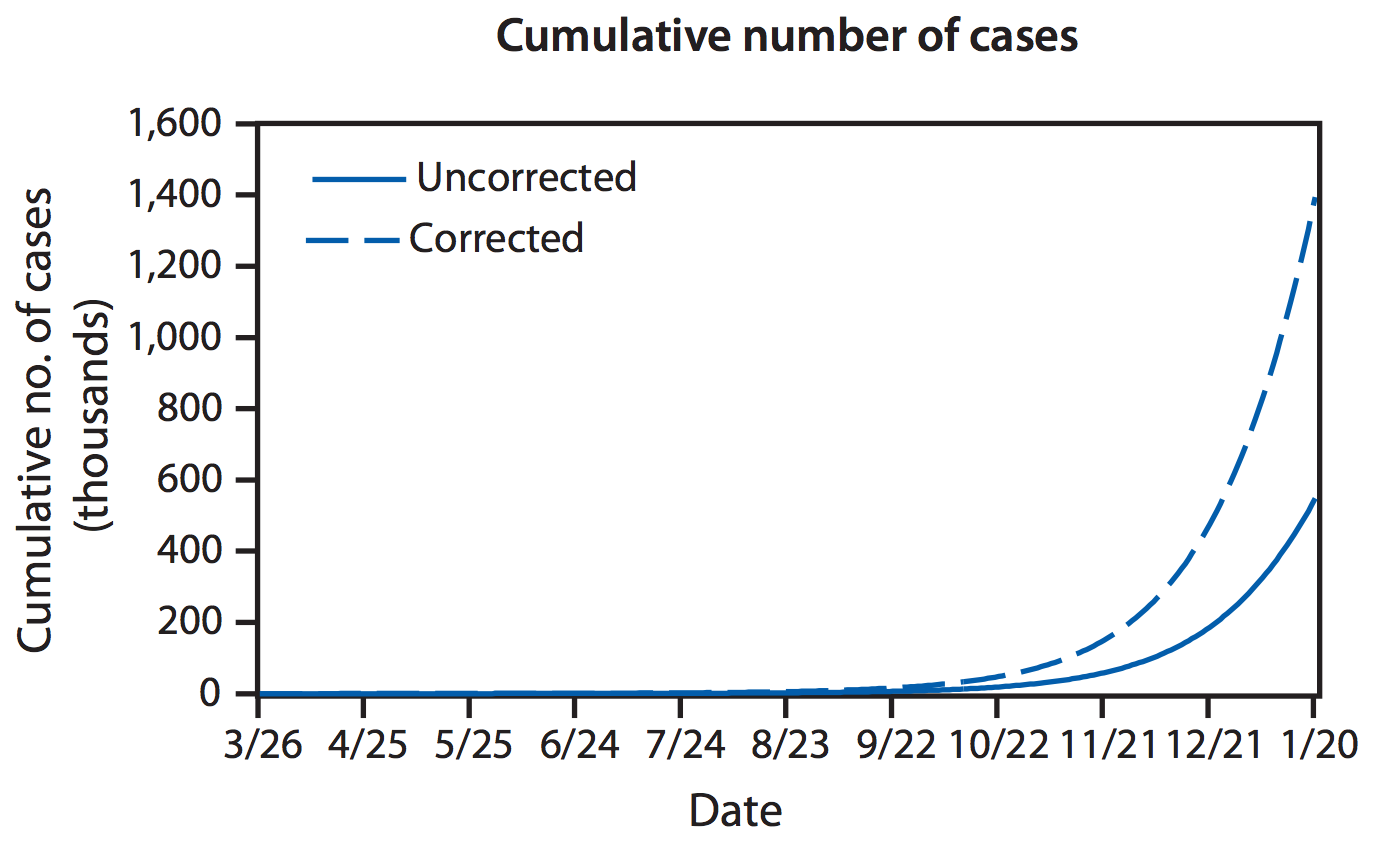
Lena Sun flags a new CDC report suggesting that 1.4 million West Africans could catch the virus by January:

The report released Tuesday is a tool the agency has developed to help with efforts to slow transmission of the epidemic and estimate the potential number of future cases. Researchers say the total number of cases is vastly underreported by a factor of 2.5 in Sierra Leone and Liberia, two of the three hardest-hit countries. Using this correction factor, researchers estimate that approximately 21,000 total cases will have occurred in Liberia and Sierra Leone by Sept. 30. Reported cases in those two countries are doubling approximately every 20 days, researchers said. “Extrapolating trends to January 20, 2015, without additional interventions or changes in community behavior,” such as much-improved safe burial practices, the researchers estimate that the number of Ebola cases in Liberia and Sierra Leone could be between approximately 550,000 to 1.4 million.

Meanwhile, Siobhán O’Grady points out a distressing pattern in aid distribution:

[A] United Nations Office for the Coordination of Humanitarian Affairs report released Monday sheds light on a different kind of neocolonialism taking form in the region’s Ebola crisis: Rather than coordinating an effort to combat the massive outbreak, the United States, the United Kingdom, and France are instead sending disproportionate amounts of aid to the territories they once controlled. This lack of coordination among the three largest donors to the fight against Ebola ignores the reality of borders between Liberia, Sierra Leone, and Guinea, where political lines are more a trace of colonialism than an accurate representation of modern-day relationships between the border communities of the three developing nations.

Zoe Chace compares the international community’s response to the Ebola outbreak to its actions following the 2010 earthquake in Haiti:

The response to the 2010 earthquake in Haiti was massive: Billions of dollars in donations poured in. “It had everything,” says Joel Charny, who works with InterAction, a group that coordinates disaster relief. “It had this element of being an act of God in one of the poorest countries on the planet that’s very close to the United States. … And the global public just mobilized tremendously.” People haven’t responded to the Ebola outbreak in the same way; it just hasn’t led to that kind of philanthropic response. From the point of view of philanthropy, the Ebola outbreak is the opposite of the Haiti earthquake. It’s far from the U.S. It’s hard to understand. The outbreak emerged over a period of months — not in one dramatic moment — and it wasn’t initially clear how bad it was. Donors like being part of a recovery story. In Haiti, buildings and lives were destroyed. The pitch was, let’s help them rebuild. In the case of Ebola, it’s been harder to make a pitch.

Not surprisingly, Tara Smith notes that the NGOs at the forefront are struggling:

Doctors Without Borders (also known by its French name,Médecins Sans Frontières, or MSF) has led the international battle against Ebola, and where its workers have had success in the past, they have been completely overwhelmed now for months. MSF International President Joanne Liu has made multiple appeals to the United Nations, begging for additional assistance, noting on Sept. 16:

As of today, MSF has sent more than 420 tonnes of supplies to the affected countries. We have 2,000 staff on the ground. We manage more than 530 beds in five different Ebola care centres. Yet we are overwhelmed. We are honestly at a loss as to how a single, private NGO is providing the bulk of isolation units and beds.

The plea has fallen on sympathetic ears, but the response has been slow and insufficient. The United States has answered the call to some extent, promising 3,000 military personnel and up to $750 million in aid. Even this massive amount is less than what the World Health Organization has called for: a minimum of $1 billion, and even that will only keep infections contained to the “tens of thousands.”

Feeding Off Our Humanity

In Liberia medical care for is restricted due to  recent outbreak of the Ebola virus.

The latest on Ebola is even more alarming than you thought:

[N]ew research suggests that the speed at which it’s spreading is totally out of proportion to past outbreaks. Thomas House, a mathematician at the UK’s University of Warwick, used historical data from outbreaks reported by the World Health Organization24 in totalto create a mathematical model for the spread of the virus. By analyzing information on the timing of the outbreaks, the number of cases, and the number of people who died, he was able to develop a model that describes the pattern of all outbreaksexcept for one. The current outbreak is off the charts.

And House can’t explain why:

“It could be a mutation,” he said. “It could be that the way that society is structured has changed as West Africa’s developed: People are in contact with more other people. It could be that control efforts or the behavioral response are just different. My model isn’t detailed enough to say exactly which one.” It is detailed enough to raise the panic level, though.

And the UN is scrambling:

Acting on the initiative of the Obama administration, the 15-nation U.N. Security Council unanimously adopted a resolution [last] week declaring the Ebola virus a threat to international peace and security, and urging the U.N.’s member states to rally financial, political, and medical support to contain the plague. The resolution was co-sponsored by 131 countries, the largest official show of international support for a Security Council resolution in history, according to the United States.

“This is likely the greatest peacetime challenge that the United Nations and its agencies have ever faced,” Margaret Chan, the director-general of the World Health Organization, warned the council this week. “None of us experienced in containing outbreaks has ever seen, in our lifetimes, an emergency on this scale, with the degree of suffering, and with this magnitude of cascading consequences.”

Benjamin Hale shudders:

The most striking thing about the virus is the way in which it propagates. True, through bodily fluids, but to suggest as much is to ignore the conditions under which bodily contact occurs. Instead, the mechanism Ebola exploits is far more insidious. This virus preys on care and love, piggybacking on the deepest, most distinctively human virtues. Affected parties are almost all medical professionals and family members, snared by Ebola while in the business of caring for their fellow humans. More strikingly, 75 percent of Ebola victims are women, people who do much of the care work throughout Africa and the rest of the world. In short, Ebola parasitizes our humanity.

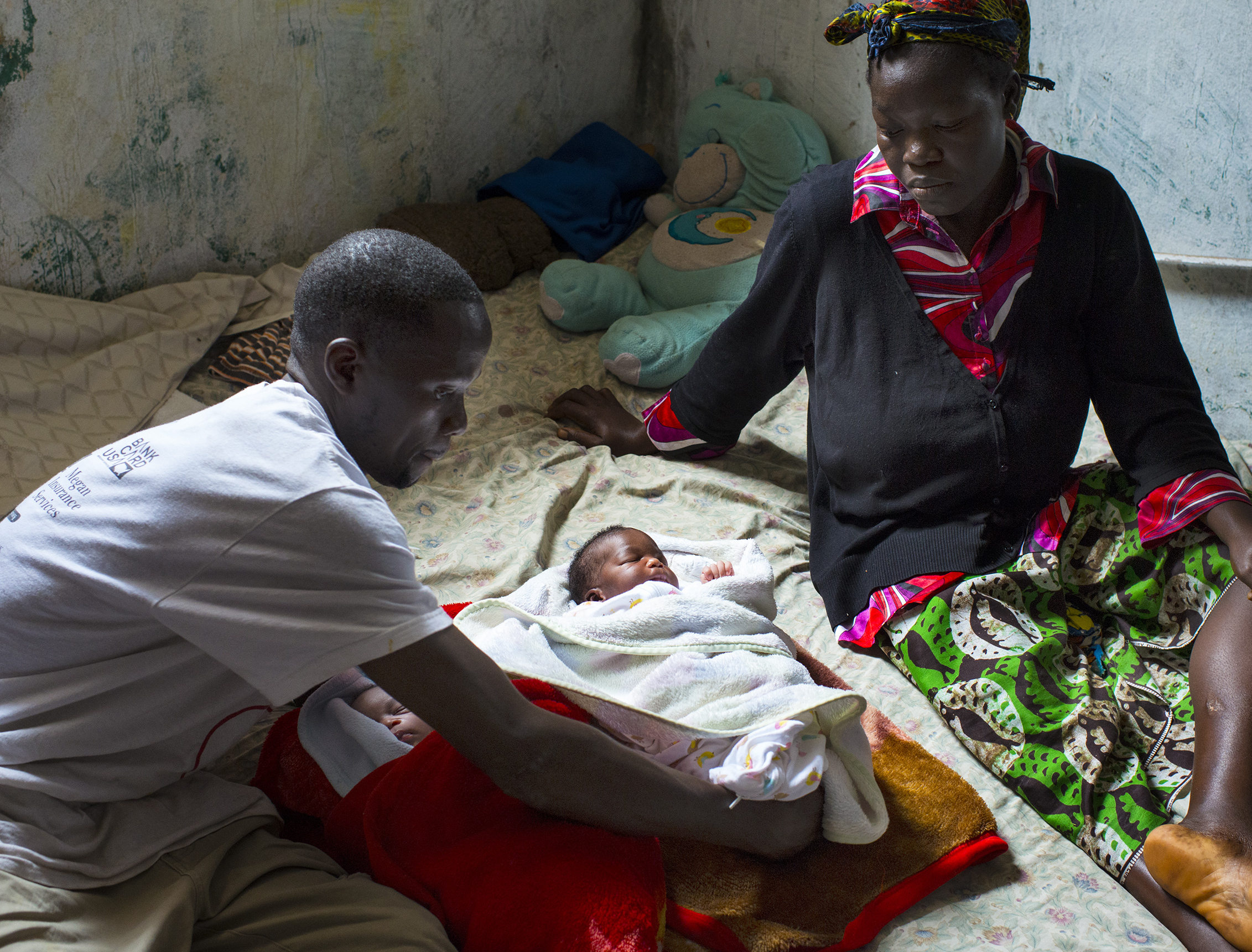
(Photo: Victor Fayiah, 40, and his wife Comfort Fayiah, 32, are seated on a mattress on the floor of a room with their twin girls, Faith and Mercy, discussing their ordeal in Monrovia, Liberia on September 19, 2014. Comfort went into labor and delivered the girls on the ground in the yard of her church assisted by a local medic and a church mother because she could not get medical care; most hospitals and clinics were closed for non-Ebola treatment. The closed facilities are an attempt to protect medical staff and other patients from Ebola. By Michel du Cille/The Washington Post via Getty Images)

West Africa’s 9/11?

The West African country of Liberia is crippled by a recent outbreak of the Ebola virus.

Compiling coverage of the Ebola epidemic from around the region, Margaret Hartmann points to a reflection by Liberian journalist Makanfi Kamara on how the outbreak, whose death toll is approaching that of September 11, 2001, is impacting her society in a similarly extreme way:

The Ebola virus has not only caused tragedy and changed the lives of people affected, but it has also drastically affected our life style. Liberians are so used to greeting each other by touch – a hand shake here, an embrace there, even a kiss. Where we used to share cups, bowls and spoons; beds, clothes and shoes; we now think thrice about potential threats of infection from our closest friends and relatives. Instead, we wash hands religiously at every door post, keep a distance beyond arm’s length and sometimes bow to greet each other like the Chinese. Some women have even put their male partners “on dryer” – a moratorium on sexual activity until the Ebola Season is over. And many men have admitted that, fearing for their own lives, they have decided to “abide by the rules of the game” – fidelity.

There are also direct and indirect psychological effects:

where members of households and families are infected with Ebola, the dichotomy of care vs. neglect persists, because of the fear of infection being transmitted. Where armed government forces go shooting at unarmed people contesting an imposed quarantine; or where family revenue streams get dried up because of epidemic-preventive regulations imposed by government or private employers; it gets really disturbing and forces people to find new ways to adapt to the situation. Then, there is the sight of dead bodies lying all over, in the streets; and the depression of thinking you could be next and the stigma it leaves you with.

Alex Park remarks on the chaos:

On Monday, Liberia’s legislature announced that the House of Representatives had canceled an “extraordinary sitting” to discuss the outbreak because its own chamber had been tainted by “a probable case of Ebola” and was being sprayed down with chlorine. The statement didn’t specify the source of the infection, but it noted that one of the chamber’s doormen had recently died after a “short illness.”

Liberia is ill-equipped to fight off the Ebola outbreak. Its entire national budget for 2013-2014 was $553 million, with only $11 million allotted for health care—about what Kanye West and Kim Kardashian are estimated to have spent on their Bel Air mansion in 2012. Despite its meager resources, last month Liberia’s legislature allocated $20 million to battle virus. But the nation had already burned through a quarter of that money by the first week of September.

James Gibney wants China to pitch in, considering its deep economic investment in Africa:

With much fanfare, China has said it will increase the number of its medical personnel in Sierra Leone to 174 and raise its total amount of assistance to roughly $37 million. I know, I know: Relative to the U.S., China remains a poor country, and its growing willingness to extend humanitarian assistance outside its borders is a good thing. But consider this: China has close to 20,000 citizens working and living in Guinea, Liberia and Sierra Leone. Setting aside U.S. money flowing into Liberia’s lucrative shipping registry, China’s investment in those three countries dwarfs that of the U.S. (In fact, China’s trading relationship with Africa overall is twice that of the U.S.) It recently signed deals for iron ore mining in the region that collectively run into the billions of dollars.

Laurie Garrett fears that the US military mobilization announced yesterday won’t be enough to curb the epidemic:

Nothing short of heroic, record-breaking mobilization is necessary at this late stage in the epidemic. Without it, I am prepared to predict that by Christmas, there could be up to 250,000 people cumulatively infected in West Africa. At least 30 nations around the world, I dare predict, will have had an isolated case gain entry inside their borders, and some will be struggling as Nigeria now is, tracking down all possibly exposed individuals and hoping to stave off secondary spread. World supplies of PPEs (personal protective equipment, or “space suits”), latex gloves, goggles, booties — all the elements of protection — will be tapped out, demand exceeding manufacturing capacity, and an ugly competition over basic equipment will be underway.

The great African economic miracle will be reversing, not just in the hard-hit countries but regionally, as the entire continent gets painted with the Ebola fear brush. Mortality due to all causes will soar in the region, as doctors, nurses, and other health care workers either succumb to Ebola, become full-time Ebola workers, or flee their jobs entirely.

But a reader objects to the doomsaying of Michael Osterholm, whose op-ed last week stoked fears of the virus mutating and becoming airborne:

Ebola is a horrible disease, but fear mongering over such an unlikely scenario hinders our ability to fight it properly.  We’ve already seen people raising concerns over flying patients back to the US for treatment when this is actually quite a safe scenario if proper precautions are taken.  The difficulty in Africa is they lack the healthcare infrastructure to take those kinds of precautions at a high enough level to prevent the disease from spreading.

It’s also worth keeping in mind that the forces of evolution not only push Ebola towards spreading more effectively but also towards being less lethal.  Dead patients don’t spread viruses very well.  So while random mutations could, in theory, make it airborne, what’s even more likely is random mutations would make Ebola non-lethal. What makes the virus scary is also what makes it evolutionarily unsound, and in the long run, that’s a good thing for all of us.

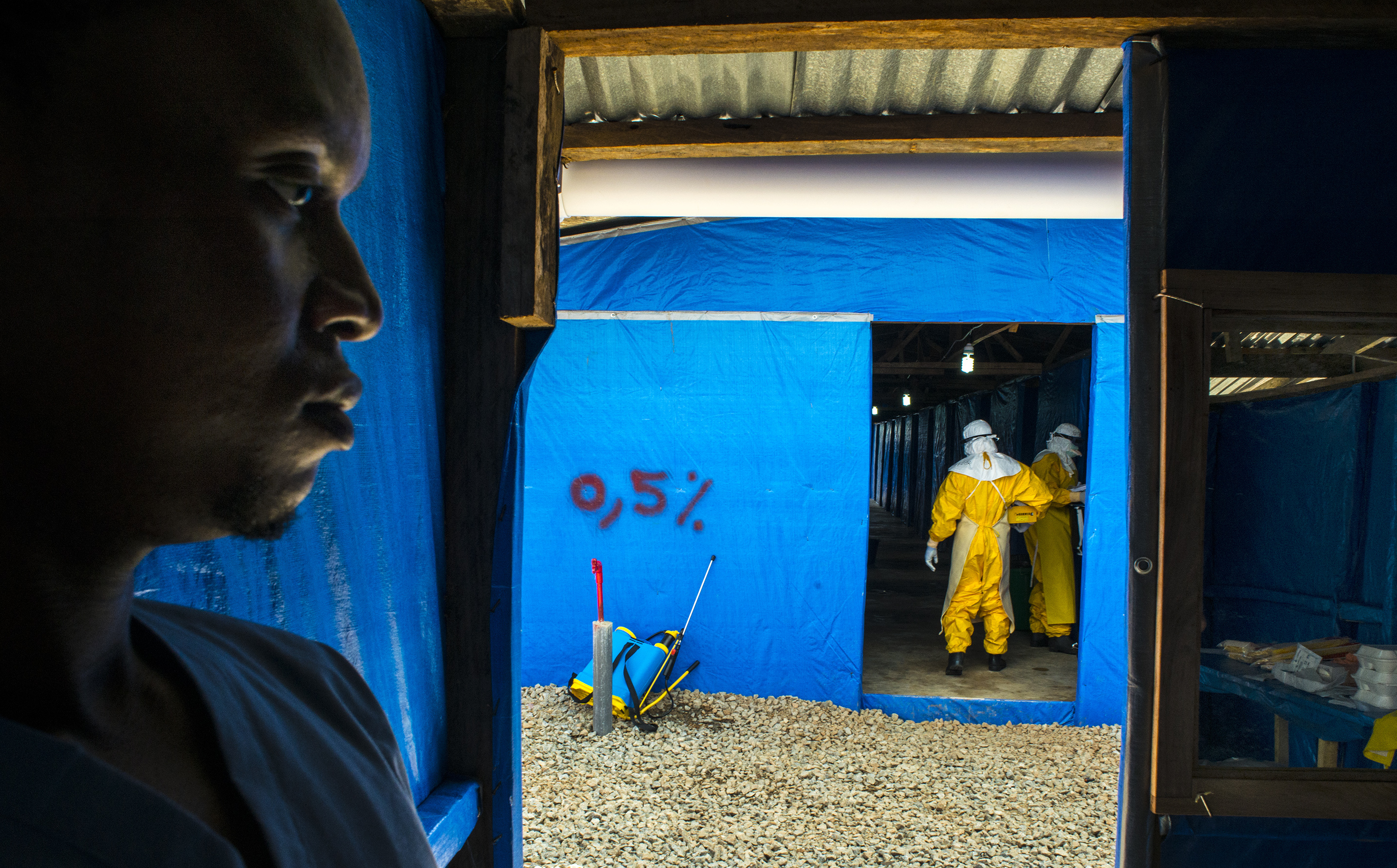
(Photo: James Momoh stands by as colleagues enter the suspected Ebola case ward Bong County Ebola Treatment Unit, on Tuesday September 16, 2014. The newly opened 50 bed unit is managed by International Medical Corp, and was built by Save the Children. By Michel du Cille/The Washington Post via Getty Images)

Boots On The Ground … For Ebola

Today, president Obama is announcing a major effort to help stem the spread of the outbreak in West Africa, relying primarily on our African military command:

The unprecedented response will include the deployment of 3,000 U.S. military forces and more than $500 million in defense spending drawn from funding normally used for efforts like the war in Afghanistan, senior administration officials outlined Monday. Obama has called America’s response to the disease a “national-security priority,” with top foreign policy and defense officials leading the government’s efforts.

The officials said Obama believes that in order to best contain the disease, the U.S. must “lead” the global response effort. In the CDC’s largest deployment in response to an epidemic, more than 100 officials from the agency are currently on the ground and $175 million has been allocated to West Africa to help combat the spread of Ebola. Those efforts will be expanded with the assistance of U.S. Africa Command, which will deploy logistics, command and control, medical, and engineering resources to affected countries.

Peter Grier explains why the Pentagon is leading this mission:

The short answer is because it is the largest and most capable US organization available for emergency action, and has money to pay for the effort. The military’s extensive airlift and health-care infrastructure can quickly plug holes in the current international fight to try and contain the Ebola outbreak. US personnel should be flowing into the area in force in about two weeks, according to the White House. … Plus, the administration has now decided it’s time to move fast. If anything, it is past time. Cases are increasing at an exponential case. UN officials on Tuesday estimated that the world will need to commit upward of $1 billion to contain the crisis.

But Hayes Brown notes that other government agencies are involved as well:

Though the main takeaway from the White House’s announcement is the AFRICOM deployment, it won’t just be the military responding to the crisis. The U.S. government will also continue its quest to find doctors willing to travel to West Africa to help tackle the crisis. The U.S. Agency for International Development has for several weeks now had on its website an appeal “to the medical community in the United States for assistance with the West Africa Ebola Outbreak,” imploring qualified medical professionals to contact organizations working in the region through the Center for International Disaster Information (CIDI).

A sizable amount of funding is also being redirected to facilitate the new initiatives being launched in not just the Pentagon and USAID, but also the State Department, Centers for Disease Control, Department of Health and Human Services and other government agencies. The administration is asking Congress to provide another $30 million to send CDC workers and equipment to the region and $58 million to help develop an effective Ebola vaccine.

Adam Taylor provides a wrap-up of what other countries are doing to help fight the epidemic. Meanwhile, Rachael Rettner pushes back on Michael Osterholm’s fears that the virus could mutate and become airborne, which would raise infection rates catastrophically:

Although it’s theoretically possible that Ebola could become airborne, “it’s pretty unlikely,” said Dr. Amesh Adalja, an infectious-disease physician at the University of Pittsburgh. “Airborne transmission may be what we fear the most, but evolutionarily speaking, it may not be the best path for the virus to take,” Adalja said. The Ebola virus does mutate, or change its genetic material,, fairly frequently, but this does not necessarily mean it can become airborne, Adalja said. The HIV virus has a high rate of mutation as well, but it has not acquired the ability to spread through the air, Adalja said. In fact, none of the 23 viruses that cause serious disease in humans have been known to mutate in a way that changed their mode of infection, according to Dr. Scott Gottlieb, former deputy commissioner at the Food and Drug Administration, who recently wrote about the topic in Forbes.

Is The Ebola Epidemic Just Getting Started?

Nishiura_fig1

Maryn McKenna flags a paper that attempts to calculate the outbreak’s reproductive number (i.e., the number of cases likely to be caused by one infected person) and comes to a startling conclusion:

The Eurosurveillance paper, by two researchers from the University of Tokyo and Arizona State University, attempts to derive what the reproductive rate has been in Guinea, Liberia and Sierra Leone. … They come up with an R of at least 1, and in some cases 2; that is, at certain points, sick persons have caused disease in two others. You can see how that could quickly get out of hand, and in fact, that is what the researchers predict. Here is their stop-you-in-your-tracks assessment:

In a worst-case hypothetical scenario, should the outbreak continue with recent trends, the case burden could gain an additional 77,181 to 277,124 cases by the end of 2014.

That is a jaw-dropping number.

In an NYT op-ed last Thursday, Michael Osterholm sounded an even more dire warning:

The current Ebola virus’s hyper-evolution is unprecedented; there has been more human-to-human transmission in the past four months than most likely occurred in the last 500 to 1,000 years. Each new infection represents trillions of throws of the genetic dice. If certain mutations occurred, it would mean that just breathing would put one at risk of contracting Ebola. Infections could spread quickly to every part of the globe, as the H1N1 influenza virus did in 2009, after its birth in Mexico. Why are public officials afraid to discuss this? They don’t want to be accused of screaming “Fire!” in a crowded theater — as I’m sure some will accuse me of doing. But the risk is real, and until we consider it, the world will not be prepared to do what is necessary to end the epidemic.

What is necessary, in his view, is a Security Council resolution that would “give the United Nations total responsibility for controlling the outbreak”. The Pentagon has asked Congress for “up to $500 million” to help fight the outbreak, but there’s a catch:

The Defense Department plans to also use at least a portion of those funds to respond to the growing refugee crisis in Iraq. When the Pentagon wants to shift that much money between its accounts, it’s required to send what’s called a reprogramming request to Congress. The Defense Department has offered no details about the breakdown, which means it’s theoretically possible the United States could spend $1 on Ebola and $499,999,999 on Iraq.

“The situations in both Iraq and West Africa are dynamic, and the funds we are seeking to reprogram will help enable [the Defense Department] to be responsive to needs on the ground in both areas as they arise,” a defense official told Foreign Policy. “Therefore, the total amount that may be used in either West Africa or Iraq under this reprogramming request may not be determined at this time.” Without more information, one is left guessing about the scale to which the Pentagon plans to respond to either problem.

The Economist reviews how the spiraling crisis has spurred the development of new drugs to treat the virus:

The arrival of new medicines will encourage health-care workers who have given up their posts to return to attend the sick. It would also help address the fear and panic that is proving so disastrous in the infected countries. But there are other difficulties. One is highlighted in a forthcoming working paper for the National Bureau of Economic Research, which finds that some Indian drugmakers are taking advantage of the lack of regulatory oversight to send their lowest-quality antibiotics to Africa.

The biggest problem remains containment, especially in the months before new medicines arrive. Virologists, such as Dr Ball at Nottingham, worry that increasing human-to-human transmission is giving Ebola the opportunity to become more transmissible. Each time the virus replicates, new mutations appear. It has accumulated and hung on to some mutations, like “cherries on a one-armed bandit”, he says. Nobody knows what would happen if Ebola hit the jackpot with a strain that is even better-adapted to humans. But the outcome could be grim, for Africa and the rest of the world.

Was The Ebola Epidemic Preventable?

Laurie Garrett argues as much, blaming the international community for not acting on the crisis early enough:

Shortly after the World Health Organization (WHO) officially declared an outbreak of the same strain of Ebola that first appeared in Zaire in 1976, outside humanitarian responders appeared on the scene to assist Guinea; they were the organizations that dominated the treatment and prevention efforts throughout the spring and into the summer, as Ebola spread to Liberia and Sierra Leone. During that time the outbreaks were largely rural, confined to easily isolated communities, and could have been stopped with inexpensive, low-technology approaches.

But the world largely ignored the unfolding epidemic, even as the sole major international responder, Doctors Without Borders (also known by its French acronym, MSF), pleaded for help and warned repeatedly that the virus was spreading out of control. The WHO was all but AWOL, its miniscule epidemic-response department slashed to smithereens by three years of budget cuts, monitoring the epidemic’s relentless growth but taking little real action. Even as the leading physicians in charge of Liberia and Sierra Leone’s Ebola responses succumbed to the virus, global action remained elusive.

Julia Belluz flags a new study that assesses the virus’s chances of making its way to America:

In a Sept. 2 article in the journal PLoS Currents: Oubtreaks, they published their findings. “Results indicate that the short-term (3 and 6 weeks) probability of international spread outside the African region is small, but not negligible,” they wrote. Ghana, the United Kingdom, Gambia, the Ivory Coast, and Belgium were the countries most at-risk of importing at least one case by Sept. 22, the date they chose as the projected cut-off for their model. Out of the 16 countries analyzed, the US ranked 13th (toward the last) for risk of importing Ebola by that time. The risk for the US was as high as 18 percent and as low as one percent.

And as Ronald Bailey notes, the same study calculates that any US outbreak would only infect about 10 people. Meanwhile, Joshua Hunt takes a look at another promising Ebola treatment, made by the pharmaceutical company Toyama Chemical:

The Fujifilm subsidiary’s small yellow tablets are marked アビガン, which is a Japanese rendering of the brand name Avigan. They inhibit the replication of viral genes within an infected cell, while also mitigating their ability to spread from one cell to another—a two-pronged approach to fighting influenza that Fujfilm says is unique. The drug was approved in March by Japan’s health ministry as a treatment for both novel and reëmerging forms of influenza, but researchers have theorized that it could be an effective emergency treatment for Ebola. …

Avigan offers new hope because, since it received regulatory approval for sale in Japan in the spring, it has been manufactured on a much larger scale than the experimental drugs being developed specifically for Ebola. Supplies of ZMapp, which was created by the San Diego-based Mapp Biopharmaceutical, have already been exhausted, and its results have been mixed. Two American doctors treated with ZMapp recovered, but a Liberian doctor who also received it died. Fujifilm’s Avigan stockpile would be sufficient to treat twenty thousand people—the exact number of infections that the World Health Organization has estimated might occur before the current outbreak is brought under control.

Ebola: A Survivor’s Tale

by Dish Staff

Kent Brantly, the doctor who caught the virus in Liberia and recovered after receiving an experimental treatment in the US, shares his experience as a caregiver and then patient:

During my own care, I often thought about the patients I had treated. Ebola is a humiliating disease that strips you of your dignity. You are removed from family and put into isolation where you cannot even see the faces of those caring for you due to the protective suits–you can only see their eyes. You have uncontrollable diarrhea and it is embarrassing. You have to rely on others to clean you up. That is why we tried our best to treat patients like our own family. Through our protective gear we spoke to each patient, calling them by name and touching them. We wanted them to know they were valuable, that they were loved, and that we were there to serve them.

Brantly, a missionary, went on to receive treatment at Emory University Hospital in Atlanta:

I finally cried for the first time when I saw my family members through a window and spoke to them over the intercom. I had not been sure I would ever see them again. When I finally recovered, the nurses excitedly helped me leave the isolation room, and I held my wife in my arms for the first time in a month.

Even when I was facing death, I remained full of faith. I did not want to be faithful to God all the way up to serving in Liberia for ten months, only to give up at the end because I was sick. Though we cannot return to Liberia right now, it is clear we have been given a new platform for helping the people of Liberia.

Recent Dish on the ebola crisis here.

Fight Ebola, Increase Hunger

by Dish Staff

A couple weeks ago, Laurie Garrett advocated for a stronger response to the outbreak. Yesterday, Adia Benton and Kim Yi Dionne called out Garrett for fear-mongering:

In her recommendations, Garrett often draws on her experience reporting on the Ebola epidemic in 1995 in Zaire (the work that won her a Pulitzer Prize). During this outbreak, Zaire’s ruler, the notorious Mobutu Sese Seko, isolated Kikwit, the affected region, with military force to keep people from leaving the city of 400,000 people. Honestly: Is Mobutu’s a model of health governance we want to repeat? Under his militarized quarantine, prices of food escalated, and people were deprived of common household goods. There is growing evidence that this is happening in Sierra Leone, Liberia and Guinea.

Indeed, it appears that steps intended “to prevent the disease’s spread have hampered both food production and caused prices to soar”:

The Ebola outbreak is causing food harvests to dwindle in West Africa, the U.N.’s Food and Agriculture Organization said Tuesday. After infecting and killing more than 1,550 people across five countries, the disease has also put food supply “at serious risk,” with the F.A.O. issuing a special alert for Liberia, Sierra Leone, and Guinea, the three countries most heavily affected by the outbreak.

Elizabeth Barber has more details:

“Even prior to the Ebola outbreak, households in some of the most affected areas were spending up to 80% of their incomes on food,” Vincent Martin, head of an FAO unit in Dakar, Senegal, said in a statement. “Now these latest price spikes are effectively putting food completely out of their reach.”

Worst Ebola Outbreak Ever

by Dish Staff

Screen_Shot_2014-08-28_at_12.40.09_PM.0

Julia Belluz puts the West African epidemic in stark perspective:

The current Ebola outbreak in West Africa has now killed more people than all previous Ebola outbreaks combined. The latest World Health Organization data on this year’s Ebola outbreak in West Africa shows 3,069 probable and confirmed cases and 1,552 deaths. The number of cases continues to accelerate, with 40 percent of the total cases occurring in the last 21 days.

The WHO is warning that the epidemic could rage for another six to nine months, infect as many as 20,000 people, and cost half a billion dollars to contain. And yet, Chris Blattman cautions, “we must make sure the cure is not worse than the disease”:

All the negative hype will hinder, and might even destroy, Liberia’s economy for the next 5 or 10 years. Maybe the optimal response to a disease outbreak is overhype, to get the most resources possible. I’m worried about the aftershock. The cost to everyone who survives the disease looks to be very, very high in terms of lost growth, jobs, social programs, and the like. What might be the consequences of hype? Here’s a US survey that suggests 40% of Americans are concerned about an outbreak at home and that a quarter think their family might get it. And that was two weeks ago. Frankly that smells like it might be a poorly worded question or interpretation, but either way, I think “large scale irrational fears” adequately sums up the situation.

Leah Breen looks in on Liberia, where ebola has just made a bad situation worse:

According to the World Food Program, 64 percent of Liberians live in poverty. Infrastructure is poor—buildings in Monrovia that were looted during the war remain abandoned. Only 14 percent of Liberians attend secondary school. Liberians have good reason to believe that their government is not doing enough to increase quality of life in the country. Hospitals are often long distances from towns and villages, and the ones that do exist aren’t properly equipped. Citizens know that government officials often leave Liberia for the United States or Europe to seek medical attention. Since there are few clinics or hospitals outside of the capital, most Liberians have had little experience with the formal health system. When health workers appeared in communities to combat Ebola, citizens were skeptical of why the government was suddenly paying attention to them.

Sarah Kliff reports that a vaccine is starting human trials next month:

The NIH will start a Phase I trial in September with three volunteers who have already enrolled in the experiment. The NIH hopes to expand the trial group to 20 people, and report initial results about the vaccine’s efficacy by the end of the year. The new vaccine was developed in partnership between the federal government and GlaxoSmithKline, one of the world’s largest pharmaceutical companies. It comes as the Ebola outbreak shows no sign of abating, with the World Health Organization projecting Thursday morning the virus could infect as many as 20,000 people. “This public health emergency demands an all-hands-on-deck response,” said Anthony Fauci, director of the National Institute of Allergy and Infectious Disease. “We have accelerated the timeline for testing vaccines we have been working on for many years.”

But Kent Sepkowitz notes that a vaccine won’t do much to curb the current crisis:

Fauci was very careful to state that for the current outbreak in West Africa, the best approach will not be the vaccine or any new treatments, but rather the approach being used today and last week and last month and last year: early diagnosis, prompt isolation, and use of “personal protective equipment” including gowns, gloves, and masks. In other words, the vaccine being studied almost certainly will have no impact on the current West Africa crisis. Given the pace of useable science, even with the compressed, hurry-up-already system the candidate vaccine is being ushered through, preliminary results on safety and the vaccine’s ability to provoke a meaningful immune response will not be available until the end of the calendar year—at a point when the now 6-month long epidemic likely will have finally fizzled out.

Frank L. Smith III highlights the role military research played in the vaccine’s development:

Currently, most funding for biodefense comes from civilian sponsors in the United States, not the military. Aside from Zmapp, most of their therapies for other dangerous pathogens—like Marburg virus and Staphylococcal enterotoxin B—get funding from the U.S. National Institutes of Allergy and Infectious Diseases. Again, Zmapp may fail. Most experimental drugs do. But other medical countermeasures for Ebola relate directly to investments in biodefense, as well. For example, research into one Ebola vaccine began when the U.S. National Institutes of Health asked a Canadian company to reapply technology it had developed for anthrax to also fight Ebola. Several other potential therapies for Ebola—such as TKM-Ebola and AVI-7537—also resulted from private collaboration with USAMRIID. So did the GSK/NIAID Ebola vaccine that authorities have just approved for human trials. Therefore, what little hope there is for vaccines and therapies against naturally occurring Ebola depends in part on research and development for biodefense.

Susannah Locke relays the findings of research into the epidemiological origins of the current outbreak:

Using genetic sequences from current and previous outbreaks, the researchers mapped out a family tree that puts a common ancestor of the recent West African outbreak some place in Central Africa roughly around 2004. This contradicts an earlier hypothesis that the virus had been hanging around West Africa for much longer than that.

The data, on the whole, supports what epidemiologists have already deduced about how the virus spread into Sierra Leone. More than a dozen women became infected after attending the funeral of a traditional healer who had been treating Guinean Ebola patients and contracted the disease. One surprise from the paper is that two different strains of Ebola came out of that funeral. This suggests that either the healer was infected with two different strains or that another person at the funeral was already infected. As Ebola then traveled across Sierra Leone, a third strain of the virus appeared.