Face Of The Day

by Dish Staff

Ebola outbreak in Sierra Leone

A soldier inspects a woman with an infrared thermometer for signs of fever, one of the symptoms of Ebola, at a checkpoint in Nikabo, a village in Kenema, Sierra Leone, on August 27, 2014. According to the World Health Organization, the outbreak has now killed more than 1,500 people across four West African countries, including at least 120 healthcare workers. Photo by Mohammed Elshamy/Anadolu Agency/Getty Images.

Also, a reader passes along this heartbreaking update on Saah Exco, the ten-year-old Liberian boy we featured last week on the Dish.

Can Ebola Be Stopped In Its Tracks?

by Dish Staff

Kent Sepkowitz argues that better public-health infrastructure could stop the outbreaks:

[W]hat this second 2014 Ebola epidemic likely represents yet again is the fact many countries simply do not have the health care dollars to deal with this sort (or just about any sort) of infectious disease. The infrastructure does not exist. And infrastructure is not just masks and gowns, but rules about when to use masks and gowns, trucks to bring new supplies of masks and gowns, a stock room guy to keep track of supplies and order when things are low, a supplier with supplies, highways that are paved and dependable so the masks and gowns can get from here to there, cash on hand to keep equipment moving and on and on—all of it is missing. …

The Ebola virus outbreaks of 2014 have shown us that Ebola, like HIV and many other infections with effective preventions, containments, and treatments, will remain uncontrolled as long as the world allows it. As such, it reminds us that health is a basic human right and its maintenance not just a public health imperative—but a moral one.

Clair MacDougall dissects Liberia’s ill-thought-out quarantine experiment:

From the outset, the quarantine project was destined to fail. The sheer size and population of West Point, which sits on a peninsula next to Monrovia’s mainland, were stumbling blocks. The outcast township — made up of ex-combatants from Liberia’s brutal civil war that ended in 2003, marginalized youth, and migrants from Guinea and Sierra Leone — is one of Liberia’s most complicated communities. Consent for a quarantine was neither won nor sought from residents, including community leaders; health organizations working to help the government fight Ebola did not endorse it either. Making matters worse, many people who live in West Point do not understand how Ebola is transmitted and distrust the government, which has become synonymous with deception and corruption for many Liberians.

Brendan Nyhan (NYT) describes the role misinformation plays in impeding progress against the disease. He believe it’s “especially important to avoid the victim-blaming impulse”:

Anyone facing such a terrifying outbreak would be panicked, distrustful of outsiders bearing a potential death sentence, and eager for any shred of hope.

In particular, research suggests that conspiracy theories can be psychologically reassuring in situations like this — seeing conspiracies in randomness or attributing negative events to enemies can restore feelings of control when people encounter unpredictable threats. Until we can help people feel as if the situation is coming under control, we shouldn’t be surprised if they try to regain psychological equilibrium however they can.

And John Campbell notes that there isn’t just one Ebola crisis on the continent:

The DRC outbreak appears to be unrelated to Ebola in west Africa. The DRC strain of the virus is much less deadly, with a mortality rate of about 20 percent, rather than up to 90 percent in Sierra Leone, Liberia, and Guinea. The eastern part of the DRC has been the venue of almost constant warfare for nearly a generation. Infrastructure, including hospitals, has largely collapsed. The region would appear to be ripe for a new outbreak of Ebola.

Ebola Is Mostly Killing Women

by Dish Staff

Liberia Battles Spreading Ebola Epidemic

Lauren Wolfe wants more attention paid to that fact:

Data show that many infectious diseases affect one gender more than another. Sometimes it’s men, as with dengue fever. Sometimes it’s women generally, as with E. coliHIV/AIDS (more than half the people living with the virus are female), and Ebola in some previous outbreaks. Sometimes it’s pregnant women and mothers, as with H1N1 (an outbreak in Australia is currently infecting women over men by a 25 percent margin).

Yet when women are the primary victims of an epidemic, few are willing to recognize that this is the case, ask why, and build responses accordingly. Indeed, experts say that too little is being done to put even the small amount that is known about gender differences and infectious diseases into practice — to determine in advance of outbreaks, for instance, how understanding gender roles might help in the development of a containment or prevention strategy. Not only that, but there is too little research being done to understand how infectious diseases affect the sexes differently on a biological level. It’s like Groundhog Day each time a disease surges, and people are losing their lives because of it. “We can’t get past the ‘interesting observation’ stage,” says Johns Hopkins University professor Sabra Klein. Public health officials generally gather data on age and sex in a crisis, but “nobody goes somewhere with it.”

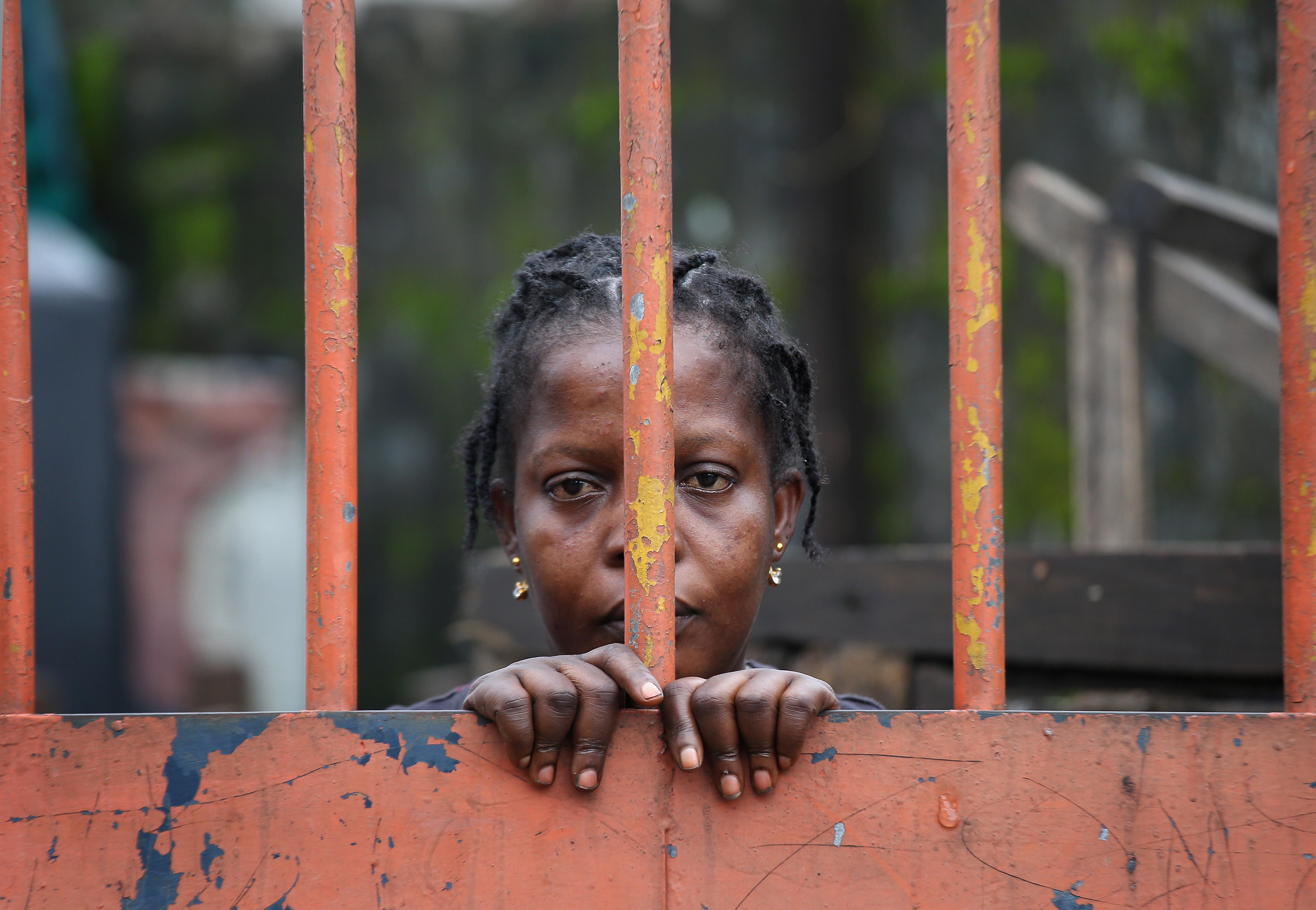
(Photo: A West Point slum resident looks from behind closed gates on the second day of the government’s Ebola quarantine in her neighborhood on August 21, 2014 in Monrovia, Liberia. By John Moore/Getty Images)

The Ebola Outbreak Grows Worse

by Dish Staff

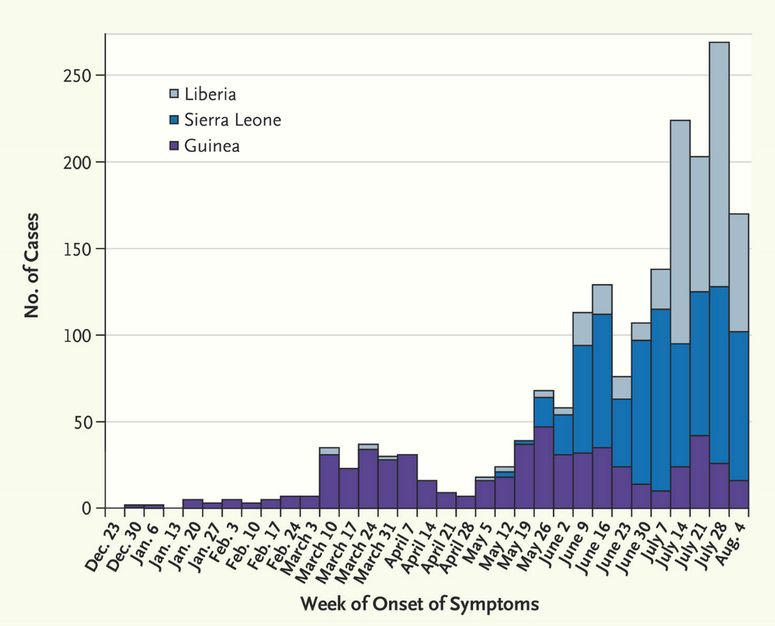
Julia Belluz flags an eye-opening chart on the growing severity of the Ebola crisis:

Ebola Chart

The situation is dire in West Point, a Liberian slum:

Tens of thousands of people are trapped in a slum in Liberia’s capital, Monrovia, after officials put the neighborhood under strict quarantine to prevent the spread of Ebola. Clashes broke out on Wednesday, as riot police and soldiers attempted to barricade angry residents. Days earlier, locals had raided a holding center for suspected Ebola patients, pulling out mattresses covered in blood, which could spread the disease.

Per Liljas provides more details:

On Saturday, a health center was looted and Ebola patients sent running, after a rumor spread that infected people were being brought in from other parts of the country. Others refused to believe the disease existed. “There is no Ebola,” some protesters attacking the clinic shouted. “There is a high level of disbelief in the government in West Point,” Sanj Srikanthan, the International Rescue Committee’s emergency response director in Liberia, tells TIME. “The government has made a concerted effort to reach out to community leaders, youth groups and churches with the message that the only way to contain the disease is to understand it. But some people still believe Ebola is a conspiracy, and those people we need to reach.”

Raphael Frankfurter is unsurprised “that aggressive, opaque public health measures are met with suspicion, resistance, and anger”:

In public health, the emphasis on “harmful behaviors” arising from ignorance fails to acknowledge the complex socioeconomic factors and structural conditions that can lead to poor health.

In the wake of the first Ebola cases in Guinea, the Guinean government and later the Sierra Leonean government launched a massive campaign to persuade people not to hunt and consume bushmeat, which is thought to carry Ebola. Though well-intentioned, these campaigns did not adequately consider that malnutrition is widespread in rural West Africa, and villages in which the population heavily relies on bushmeat are often healthier—in our experience, they even have significantly lower rates of malnourishment. It wasn’t just an issue of people “not knowing” not to eat fruit bats and gorillas—bushmeat was their only source of protein. Continuing to eat it can be understood as a rational decision based on a risk assessment—malnutrition will likely always lead to more deaths in West Africa than an Ebola outbreak.

But I’ve also observed through four years of fieldwork in Sierra Leone that public health interventions that rely on the passive reception of “medical facts” by target communities and that hinge on getting “them” to think like “us,” are simply ineffective. To health workers, taking patients home to die in surrounded by their families, to be collectively buried and remembered in their villages might be considered “irrational” or “contributing to the spread of the disease.” But these practices also allow for a kind of solidarity and resilience in the face of capricious, cruel disease.

Liljas emphasizes the desperation of aid workers as they continue to battle the ebola outbreak in West Africa with limited support from overstretched international organizations:

[T]he biggest unmet need is for additional well-trained health workers. Professionals on the ground are exhausted, and several hundred have died in part because of a lack of training. MSF and other organizations are stretched to breaking point, some of them because of their involvement in other crises. USAID, for example, is responding to four humanitarian crises at the same time: South Sudan, Syria, Iraq and the Ebola outbreak. It must also weigh up whether to put people at risk.

David Francis details how the virus is also endangering the region’s fragile economy:

The outbreak comes at an inopportune time for the region. Prior to the outbreak, the Nigerian economy was being celebrated as the largest in Africa, with a GDP of $510 billion, compared with second-place South Africa, with a GDP of $353 billion. Sierra Leone is attempting to draw foreign investment to its diamond industry and saw its GDP grow 20.1 percent from 2012 to 2013. In 2013, Guinea’s GDP grew a modest 2 percent.

All of these positives are now overshadowed by the bleak prediction of Ebola’s ramifications in the region. The World Bank estimates that Guinea’s GDP will shrink between 3.5 and 4.5 percent this year as Ebola roils the agricultural sector and discourages regional trade. Liberia’s finance minister, Amara Konneh, lowered the country’s GDP estimates by 5.9 percent because of the outbreak. Bismarck Rewane, CEO of the Financial Derivatives Company, a Lagos-based financial advisory and research firm that manages $18 million in assets, told CNBC Africa on Monday, Aug. 18, that Nigeria could lose at least $3.5 billion of its $510 billion GDP. Moody’s has already warned that the virus could hinder the region’s energy sector.

Face Of The Day

Liberia Battles Spreading Ebola Epidemic

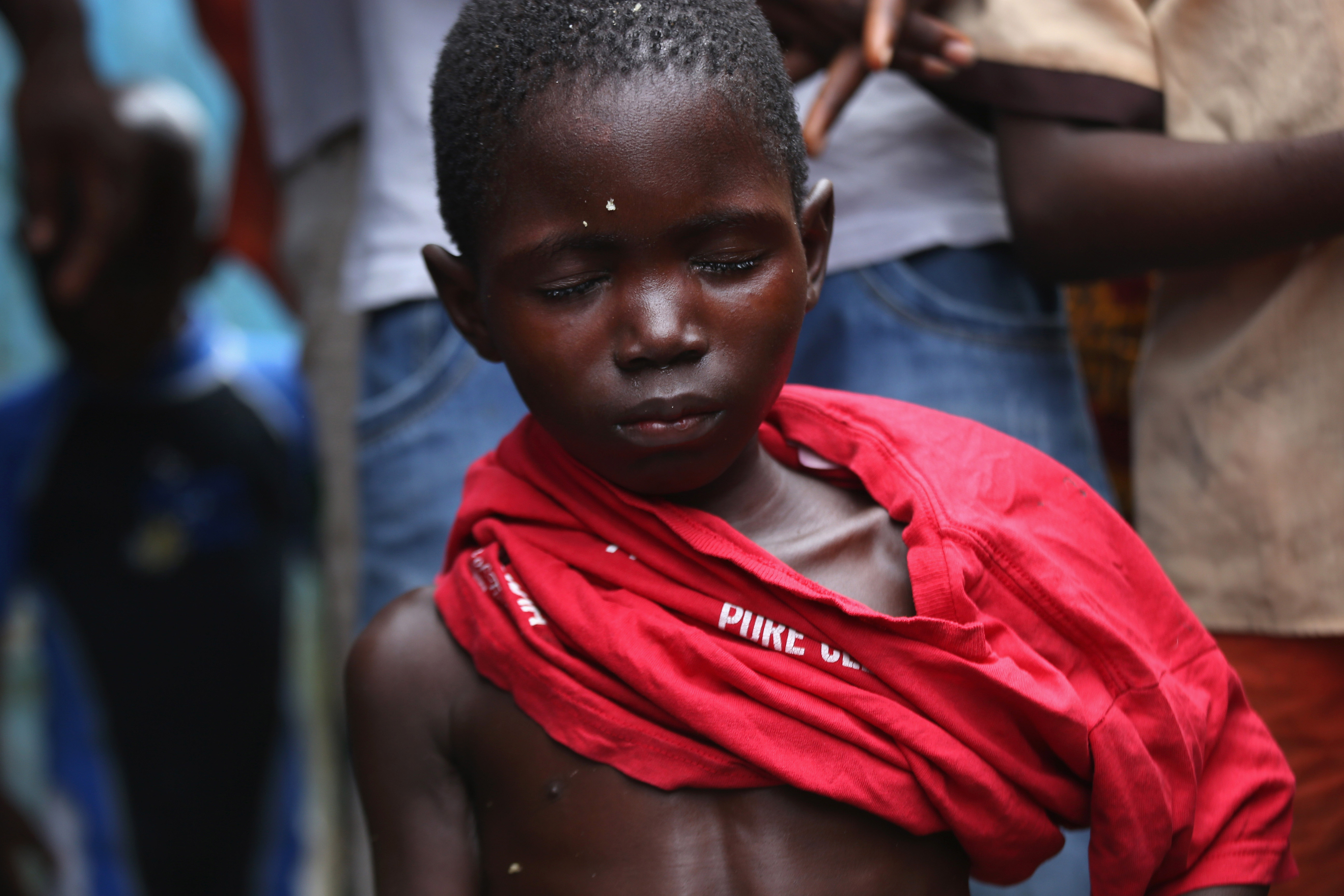
Local residents dress a sick Saah Exco, 10, after bathing him in a back alley of the West Point slum on August 19, 2014 in Monrovia, Liberia. According to a community organizer, Saah’s mother died of suspected but untested Ebola in West Point before he was brought to the isolation center on the evening of August 13th with his brother Tamba, 6, aunt Ma Hawa, and cousins. His brother died on August 15th. Saah fled the center that same day with several other patients before it was overrun by a mob of slum residents on August 16th. Once out in the neighborhood, Saah was not sheltered, as he was suspected of having Ebola, so he’s been sleeping outside. Residents reportedly began giving him medication, a drip, and oral rehydration liquids today. The whereabouts and condition of his aunt and cousins, who left the facility when it was overrun by the mob, is still unknown at this time. The Ebola virus has killed more than 1,000 people in four African nations, more in Liberia than any other country. Photo by John Moore/Getty Images.

View Alan Taylor’s heartbreaking gallery of images from the Liberian Ebola crisis here.

Getting Medieval On Ebola?

by Dish Staff

With regards to containing the outbreak, Stephen Mihm describes a medieval approach called “cordon sanitaire” that’s currently being used in Liberia, Guinea, and Sierra Leone:

The problem, then as now, is the logistical challenge of completely eliminating any movement in or out of a large territory. One critic, writing in the 1880s about cholera outbreaks in Europe, observed that officials could “close every railroad line and every Alpine wheel route,” but refugees “would improvise a hundred footpaths through the mountains to find a way home.”

Moreover, the use of a cordon sanitaire in the past, while ostensibly aimed at restricting the movement of people, often had the opposite effect. In the Egyptian cholera epidemics of the late 19th century, imperial administrators used the cordon sanitaire, only to find that it panicked the populace. Many people fled the area out of fear that they would perish if left behind.

The practice can, notes Mihm, even cause further deaths: “It is perhaps not surprising that by the late 19th century many people came to denounce the practice as a relic of the Dark Ages.” Meanwhile, Dr. Philip Rosoff questions the use of experimental drugs:

If you read the WHO release on the ethics of using these drugs, they emphasize a couple of points: it should be okay to use them, but informed consent should be gotten. That seems to be self-evident but I’m not sure what informed consent means under situations of such desperation when a drug that’s never been used in people is held out as a life saver.

And he adds that this type of scenario makes good science unlikely:

[T]he WHO talks about collecting data but that’s going to be almost impossible to do. It’ll be impossible to decide whether it’s effective or not because it’s not going to be used under controlled circumstances. When people get better, we’ll have no idea whether it was because people are using the drug, or if somebody dies after getting the drug you don’t know whether it’s the disease or the drug. Because these patients are so sick, it may not be possible to detect side effects that you could under more controlled circumstances.

And then there are the entirely fake treatments, like Garcinia Cambogia powder, being marketed to the paranoid. Michael Byrne notes a silver-based dietary supplement which may have already scammed its way into Nigeria:

Of particular concern is a product called NanoSilver, sold by the Natural Solutions Foundation. The product is basically a solution of tiny silver particles, and purports to be something of a cure-all for infections of any stripe. Silver has demonstrated antimicrobal properties and, in the hands of the supplement industry, this can only mean that it treats whatever disease is handy. And while indeed silver is effective in surface antibiotic applications—as a disinfectant coating for medical devices, or a antimicrobal protectant utilized around public spaces—it is also fairly toxic to humans. And despite the howling chorus of natural heath boosters (just Google “silver particles cure”) the concept hasn’t really been shown to cure or treat anything once it’s inside the human body.

Previous Dish coverage of the Ebola outbreak here.

Fighting Ebola With … Shoes?  

by Dish Staff

Stephen T. Fomba, who grew up poor in Sierra Leone, suggests it:

I didn’t mind growing up this way, for I didn’t mind work and did not know what I did not have. But I hated having to make these walks barefoot because we could not afford shoes. The injuries were too much. I sustained burns from the hot ground and rocks; wounds from sharp stones, thorns, and even broken bottles; infections from unknown bacteria; and various ailments—red skins, open sores that took very long to heal, fevers. Even when hurt or ill, I had to keep walking, often as many as 20 miles a day, usually under a hot sun.

We rarely think about the perils of walking barefoot. But according to one widely cited estimate, some 300 million children on earth don’t have shoes. Many illnesses and infections come from the ground, caused by stepping on sharp objects or touching saliva, blood, or bodily fluids. And it’s not merely those who can’t afford shoes who have to go barefoot; many millions of people around the world own poor quality shoes, but have to be careful not to overuse them to avoid early wear and tear. Shoes are for special occasions.

Blair Glencorse and Brooks Marmon instead focus on the “clear link between this governance failure and the current health crisis”

 In places where governments are so rarely willing or able act in the interests of their citizens, we can begin to understand why the disease continues to disseminate. Health services, which barely exist in many places, are shunned because the unsanitary conditions of hospitals and heath centers have made them hubs for the spread of the virus. Many hospital staff — already underpaid and ill-equipped — have become victims themselves. Foreign health workers sent to help are ignored and even chased away by scared locals. A group of Liberians explained to us recently that they think Ebola is a ploy by the government to steal even more money from Western donors.

As a result, the Ebola challenges are now evolving into larger problems of instability in the region. Economic activity has ground to a standstill as borders have closed, movement is restricted, and flights are canceled.  This is happening in countries where up to 50 percent of the population already earns less than 50 cents a day. Mistrust, misunderstandings, and ill-will are growing as people continue to die.

Laurie Garrett, who “was in the Ebola outbreak in Kikwit, Zaire (now the Democratic Republic of Congo) in 1995,” lends her perspective:

How long will this state of siege last? Recent statements from WHOMSF, Samaritan’s Purse, and other institutions leading the fight alongside the governments warn the world that it will be at least six months, and quite possibly a year, before Ebola can be defeated. Despite all the brouhaha here in the United States and Canada about application of experimental drugs and vaccines never clinically tested for safety or effectiveness to the African crisis, this siege will end not with magic bullets, but smart, heroic strategies that find infected people swiftly, place them behind cordoned quarantine barriers, and bury the dead rapidly after their demise without families’ contact or viewing. Yes, it is heartless and can seem cruel, but strategic isolations, coupled with vast urban campaigns of capture of the infected constitute the only hopes for ending the state of siege.


A Cure For Ebola? Ctd

by Dish Staff

Doctors Without Borders physician Armand Sprecher argues that it would be unwise to administer the unproven Ebola treatment ZMapp to every West African patient:

If the patients have a more than seventy percent chance of dying, why not try something, even if it is not guaranteed to work? One reason is that doctors have a limited amount of time that we can spend with our patients. … There is not a lot of extra time to experiment with unproven therapies. And there are many such therapies. Dozens are brought to my attention with every outbreak. Some have shown promise in rodent models, others in test tubes, and some are of only theoretical benefit. Experience has shown that such potential almost always fails to produce a benefit in non-human primate studies, our best analog of human disease. We cannot subject our patients to all of the possible things that might work. We have to choose wisely.

He adds:

It is not because these drugs are expensive or intended just for North Americans and Europeans that they are unavailable to Africans. They are unavailable because they are not yet ready.

For the antibodies used for the two Americans, only a handful of treatments exist in the world. None of these drugs has gone through the clinical trials needed for their approval for use by drug regulatory agencies. Médecins Sans Frontières hopes to play a role in facilitating the eventual trials that will bring these drugs to market, and from there to see to it that they are made available to the patients that need them.

Meanwhile, Jason Millman examines how public health organizations are working to incentivize companies to develop cures for diseases such as Ebola:

The [World Health Organization] has looked into a “prize fund” approach, among other ideas. Under this model, a centralized fund would reward drug manufacturers at the end of the drug development process or for hitting research and development milestones along the way.

The United States has its own efforts, too. In 2007, the Food and Drug Administration created a voucher program meant to encourage the development of cures for neglected diseases — if a company receives FDA approval for such a drug, the company would then receive a voucher to speed up the agency’s review time for another drug application. However, just four vouchers have reportedly been awarded under this program so far. The National Institutes of Health has also run the Rare Diseases Clinical Research Network since 2012 to try to fill in the funding gap. The NIH network is studying about 90 rare diseases at almost 100 U.S. and international academic institutions, according to an agency fact sheet.

On a related note, New Scientist‘s Andy Coghlan observers that the specific way Ebola kills “has only just been discovered.” He explains:

In essence, the virus blocks what would usually be an instant response to infection, paralyzing the body’s entire immune system … Normally, the body responds to infections by producing a substance called interferon, which acts as a fast-track message to white blood cells, telling them to mobilize genes and proteins. [Researcher Gaya] Amarasinghe’s team found that the Ebola virus produces a substance called VP24, which blocks the channel through which interferon usually travels, crippling the immune system. With its usual protective mechanisms knocked out, a cell is then defenseless against the virus. Amarasinghe says that drugs which target VP24 might provide alternative ways to combat the virus.

Recent Dish on Ebola here.

A Cure For Ebola? Ctd

by Dish Staff

Yesterday the World Health Organization determined that it is “ethically sound” to administer promising but unproven Ebola treatments on a wide scale, countering earlier criticism that one such treatment, the experimental antibody therapy ZMapp, had been made available exclusively to Westerners. The Liberian government has announced that it will be administering the drug to two afflicted doctors in the country, but as Josh Lowensohn notes, it remains unclear just how much medicine will ultimately make it to West Africa:

Supplies of the drug have also dwindled due to difficulties producing it, though Canada today said it would donate 800 to 1,000 doses of the drug to be used in aid efforts. A separate drug called TKM-Ebola, which is also developed in Canada, could end up being used as well after getting a nod from the US Food and Drug Administration last week to restart human testing of the drug on those who are already infected.

Peter Loftus notes ominously, “The maker of the experimental Ebola drug that was given to two infected Americans said Monday that its supply has been exhausted after the company provided doses to a West African nation [presumably Liberia]”:

Mapp Biopharmaceutical Inc. said in a brief online statement it had complied with every request for the drug that had the necessary legal and regulatory authorization. The company said it provided the drug, called ZMapp, at no cost in all cases. San Diego-based Mapp didn’t name any countries that requested the drug and didn’t release additional details.

Alexandra Sifferlin considers how health officials will make the tough decisions about administering the drugs:

[N]ow the question is: With not enough to go around, who gets them? That’s ultimately at the discretion of the countries themselves, and before that happens, there’s a waiting period as the WHO formulates another panel of technical experts to create guidelines for the best use of these drugs. Some of the questions they will try to answer are: At what stage of the disease are the drugs or vaccines effective? Are they effective at the beginning of the disease or at the later stages? What are the safety issues related to the drugs? What’s the efficacy of the drug—do 30 percent of people respond or 50 percent?

“It think [who gets the drugs] is one of the most difficult questions to answer,” says Dr. Abha Saxena, the coordinator for the global ethics team at WHO. “There is a limited supply and there is a lot of demand. But who gets it is contextual, it will depend upon on the country, the situation, and they type of drug that will eventually go forward into either trial or compassionate use.” The panel will meet by the end of this month.

Meanwhile, Amanda Taub suggests that “most of the people Ebola kills may never actually contract it”:

New, worrying information from Sierra Leone suggests that damage from the disease may go far beyond deaths from the Ebola virus itself. Rather, Ebola is claiming more victims by damaging already-weak local health systems and their ability to respond to other medical problems, from malaria to emergency c-sections. The ebola-driven rise in deaths from those other maladies may outpace the deaths from ebola itself.

The effect of the loss of services may be severe. Even before the Ebola outbreak, Sierra Leone was ranked the seventh-worst country in the world for maternal and child mortality. In 2012, the aid group Save the Children reported that 18 percent of children in Sierra Leone did not survive to age 5, and one in 25 women died of childbirth or pregnancy-related causes. If these fears prove correct, those numbers may be about to get much worse.

The Diseases We Neglect

by Dish Staff

Ebola

Charles Kenny remarks that new Ebola treatments are in the works only because “the Department of Defense had taken interest in the disease as a bioterror threat and was financing development of the drug ZMapp as a potential response”:

Ebola is the exception: Only a little more than 1 percent of new drugs approved between 1975 and 2004 were designed to address tropical diseases that account for more than 10 percent of the years lost to premature death and disability worldwide. Research and trials for tropical diseases focusing on cheap prophylactics, such as vaccines, and easily administered treatments for sufferers should be a priority for global support.

Funding is only part of the problem.

A lot of resources at the country level are wasted on doctors who don’t bother to diagnosehealth-care workers who don’t turn up, and expensive hospitals catering only to the elite. While the WHO has some significant accomplishments in global health—not least negotiating the International Health Regulations themselves and leading the fight to eradicate smallpox and polio—it is far from a paragon of effectiveness. The WHO has undertaken some reforms since then, but a 2011 U.K. government review of the organization suggested it was “weak” in some areas, from financial resource management through transparency to its focus on poor countries.

Jeremy Youde points his finger at thrifty governments rather than the WHO:

For an international organization tasked with overseeing global responses to health emergencies, WHO is woefully under-resourced. Over the past two years, the organization has seen its budget decrease by 12 percent and cut more than 300 jobs. The current budget saw cuts to WHO’s outbreak and crisis response of more than 50 percent from the previous budget, from $469 million in 2012-13 to $228 million for 2014-15. This is the very budget line that the organization needs to rely upon in order to respond to Ebola. After it announced it needed $71 million to implement its Ebola response plan, WHO now has to hope member-states or private organizations agree to contribute.

(Chart from Quartz.)