Obamacare’s Biggest Winners

Kevin Quealey and Margot Sanger-Katz identify them. The law has most helped “people between the ages of 18 and 34; blacks; Hispanics; and people who live in rural areas”:

Each of these trends is going in the opposite direction of larger economic patterns. Young people have fared substantially worse in the job market than older people in recent years. Blacks and Hispanics have fared worse than whites and Asians. Rural areas have fallen further behind larger metropolitan areas. Women are the one modest exception. They have benefited more from Obamacare than men, and they have received larger raises in recent years. But of course women still make considerably less money than men, so an economic benefit for women still pushes against inequality in many ways.

Meanwhile, Suderman takes issue with the Democrats’ “keep it and fix it” campaign theme:

The problem for Democrats is that, despite their pledges to fix the law, they have offered little in the way of meaningful tweaks. As The Washington Examiner’s Byron York noted last week, when [Democratic Sen. Jeanne] Shaheen was asked in a debate about her ideas, she the only proposal she could name was a committee to study website problems. It was all but an admission that she had no fixes.

Somewhat more substantive is the proposal from Sens. Mark Warner (D-Va.) and Mark Begich (D-Alaska) to add a lower tier of less expensive plans to the system. The basic concept of expanding the range of available products on the exchanges is not without merit, but this version would come with problems. As Ramesh Ponnuru notes, it would create a less expensive insurance product focused on covering routine expenses—exactly the kind of insurance we should want to discourage. That low-cost option, meanwhile, would attract healthy people, and could destabilize existing coverage.

Ezra voxplains the Warner and Begich plan:

The Expanded Consumer Choice Act is a brief bill — less than 2,000 words in all. What it does is open Obamacare’s exchanges to a new kind of insurance product: a “copper plan,” that is both skimpier, and more affordable, than the plans being offered today. Obamacare names its insurance tiers after metals: there are the platinum plans, which cover 90 percent of an enrollee’s expected health costs; the gold plans, which cover 80 percent; the silver plans, which cover 70 percent; and the bronze plans, which cover — you guessed it — 60 percent.

Copper plans cover 50 percent of expected health costs (or, as the health wonks put it, they have an “actuarial value” of 50 percent). That means premiums are cheaper than the platinum, gold, bronze or silver plans — the consulting group Avalere Health estimates that copper plan premiums would be 18 percent lower than bronze plan premiums. But if you get sick, the deductibles and co-pays are much higher. Larry Levitt, a vice president at the Kaiser Family Foundation, says that the deductibles would have to be in the range of $9,000 — which would make them higher than the $6,350 out-of-pocket maximum that the law currently allows.

Catching Catcalls On Camera

This video is making the rounds:

The backstory:

In August 2014, Rob Bliss of Rob Bliss Creative reached out to Hollaback! to partner on a PSA highlighting the impact of street harassment. He was inspired by his girlfriend — who gets street harassed all the time — and Shoshana B. Roberts volunteered to be the subject of his PSA. For 10 hours, Rob walked in front of Shoshana with a camera in his backpack, while Shoshana walked silently with two mics in her hands.

Megan Garber admits “there are approximately 5,000 caveats here”:

Among them: This is an ad (for the Hollaback campaign). It is produced by a “viral advertising” agency. It is not science. It is unclear whether it is even pseudo-science. Could the whole thing have been staged? Yes. Could it have been selectively edited? Certainly.

Still. There’s a reason that the video is currently going viral on YouTube—the way similar videos have gone viral on YouTube—which is that, sourcing questions aside, the experience it records will resonate with pretty much any woman who has ever walked down a street. (Or, for that matter, who has been online.) What is it like to be a woman? Sometimes, sadly, it’s uncannily like this.

Amanda Hess gauged some reactions from guys watching the video:

“I knew this stuff happened—I see and hear it every once in a while—but the frequency of the remarks was astounding,” one colleague told me. “As a (fairly obvious) gay guy, I like to think I know something about being surveilled and self-aware in public, but this style of direct confrontation is pretty rare,” another said. The video is a “great reminder of how even the most ‘innocuous’-seeming comments pile up over the course of an hour, day, and life to feel oppressive and awful,” added a third.

Emily Badger looks though a “a 302-page guide to state laws that may be applied to street harassers”:

New York’s disorderly conduct law bars obscene language or gestures in a public place. Its harassment law bars someone from making alarming or seriously annoying comments to you at least twice (both violations: a $250 fine and/or up to 15 days in jail). Meanwhile, in Arkansas, Arizona, Colorado, Georgia, Kentucky, Minnesota, and Pennsylvania, it’s illegal to follow people (as happens to the woman in the video twice). In the District of Columbia, it’s illegal to engage in abusive language or conduct that disturbs a person’s path through public space.

Though she strongly disapproves of street harassment, Lizzie Crocker rejects criminalizing it:

According to Hollaback’s mission statement, the group is interested in modifying the law to punish offenders (and raising significant First Amendment concerns). Because comments such as those documented in their latest video, they explain, are the “most pervasive forms of gender-based violence and one of the least legislated against.” The group hopes to “inspire legislators, the police, and other authorities to take this issue seriously—to approach it with sensitivity, and to create policies that make everyone feel safe” because catcalling is a “gateway crime” that ultimately “makes gender-based violence OK.”

Hollaback is right to shine a light on these creepy comments from creepy strangers. We should be offended. Such behavior should be considered socially unacceptable. But let’s not get the law involved. Because while calling a passerby “sexy” may be uncouth, it shouldn’t be illegal.

Ebola Federalism

While the federal government plays a leading role in keeping Ebola out of the US – to the extent that it’s possible – governors have the authority to come up with their own protocols for dealing with suspected patients who arrive in their states. Josh Voorhees sees a few problems with that:

Consider the rules that greet medical workers upon their arrival at one of five federally mandated points of entry. Land in New York City or Newark, and they face a mandatory 21-day quarantine, regardless of risk level. Arrive in Chicago, and they should be prepared for the same—unless, that is, they wore “protective clothing” while treating patients. Fly into Atlanta, and they can either agree to check in twice daily with health officials or be involuntarily quarantined at a “state-designated facility.” Touch down at Dulles International in Virginia, and they face the same active monitoring but without the threat of forced isolation. …

America’s governors, meanwhile, say they are just doing their jobs. “My first responsibility is to protect the public health and safety of the people of New Jersey,” [Chris] Christie told the Today show on Tuesday. That’s exactly the problem. The fact that a governor, almost by definition, focuses first and foremost on the short-term risk to his own state leaves him unable to consider the bigger picture.

In a speech yesterday, Obama implicitly scolded Christie and other governors who have opted for extraordinary measures such as mandatory quarantines for reacting to the epidemic “based on our fear”. Gregg Gonsalves harshly criticizes these governors, whom he says “have dealt a serious blow to the credibility of the CDC and the NIH as well”:

By instituting evidence-free policies, these politicians are effectively telling the American people, “You can’t trust the folks in Atlanta or Bethesda to take care of you, and you can’t believe their version of the facts; we know better.” It is a message that is not easily forgotten. The governors’ words and actions play into a general distrust of government and a sort of scientific denialism, where each person gets to decide what the facts are. It creates confusion about which institutions Americans should listen to, and whose advice they should follow, when it comes to public health. In ignoring the expertise and mandates of the CDC and the NIH, the governors are claiming, wrongly, that the public should look closer to home for correct guidance. The risks of this situation cannot be overstated.

In an editorial in the New England Journal of Medicine, seven doctors and public health experts underscore that mandatory quarantines are unnecessary given what we know about how Ebola is transmitted, and may in fact do more harm than good:

A cynic would say that all these “facts” [about the science of Ebola transmission] are derived from observation and that it pays to be 100% safe and to isolate anyone with a remote chance of carrying the virus. What harm can that approach do besides inconveniencing a few health care workers?

We strongly disagree. Hundreds of years of experience show that to stop an epidemic of this type requires controlling it at its source. Médecins sans Frontières, the World Health Organization, the U.S. Agency for International Development (USAID), and many other organizations say we need tens of thousands of additional volunteers to control the epidemic. We are far short of that goal, so the need for workers on the ground is great. These responsible, skilled health care workers who are risking their lives to help others are also helping by stemming the epidemic at its source. If we add barriers making it harder for volunteers to return to their community, we are hurting ourselves.

Would a 21-day, at-home quarantine with state reimbursement for lost work really inhibit health workers from volunteering in West Africa? These are people who are already intending to travel across the ocean to the most virulent hot zone on the planet – but a three-week paid vacation at home is a deal-breaker? If the threat of quarantine is enough to scare health workers away from volunteering, Amy Davidson argues, West Africa is screwed:

[Kaci] Hickox spent the night before she headed home to America watching a young girl die; that is hard enough. If the prospect of three weeks in a tent in a Jersey parking lot or, God forbid, reading the works of Andrew Cuomo discourages them, the argument goes, then the disease will spread out of control in Liberia, Sierra Leone, and Guinea, more people will flee those countries, and the United States will face a far greater risk than that posed by a doctor going to a bowling alley in Williamsburg. This is practical, but it raises another question: why, exactly, is the burden being put on already overwhelmed volunteers in the first place? Can’t we do more, and more directly? What does it say about the help available to West Africa if a little bullying by Chris Christie could make it all fall apart?

Clive Crook sensibly maintains that science alone can’t answer the policy question of how best to respond to the outbreak:

You don’t have to be a cynic, a slanted term, to argue for “better safe than sorry.” The calculus isn’t simple, either. The crucial thing, though, is that the doctors’ sensible conclusion doesn’t rest solely on the science. It requires a delicate judgment about many different risks and costs — the risk of extra U.S. cases in the short run, the risk of discouraging health workers from traveling to West Africa so that the disease keeps spreading there, the cost in civil liberty of restricting people’s movements, and so on. I agree with the doctors about where the balance lies, but the issue isn’t easy and, in any event, it isn’t just about the science of Ebola.

New Feminism; Old Moralism

timthumb.php

Anita Sarkeesian had a lovely piece in the NYT yesterday, explaining why she is happy that “gamer culture” as it once was is a much diluted phenomenon. Its points are as valid as the foul attacks on her (and so many others) are indefensible in any shape or form. Money quote:

The time for invisible boundaries that guard the “purity” of gaming as a niche subculture is over. The violent macho power fantasy will no longer define what gaming is all about. Those who police the borders of our hobby, the ones who try to shame and threaten women like me into silence, have already lost. The new reality is that video games are maturing, evolving and becoming more diverse.

Those of us who critique the industry are simply saying that games matter. We know games can tell different, broader stories, be quirky and emotional, and give us more ways to win and have fun. As others have recently suggested, the term “gamer” is no longer useful as an identity because games are for everyone.

This is basically an echo of my “let a thousand nerds bloom”. But then you come across some recent tweets of hers:

Reading right along, you realize she’s actually not that interested in letting a thousand nerds bloom. She’s interested in suppressing a certain subculture because of her contention that it leads to violence, rape and murder. That subculture is what she regards as “toxic masculinity”:

This agenda leads her to see a school shooting thus:

Her op-ed is, I’d say, in this broader context, a little disingenuous. In one version of her argument, gamer culture is simply dying out as it is supplanted and complemented by a new diversity. On the other hand:

Women are being driven out, they’re being driven offline; this isn’t just in gaming, this is happening across the board online, especially with women who participate in or work in male-dominated industries.

So which is it: women are being drummed out of games and male-dominated industries (on Democracy Now)? Or are they so triumphant that even her mom is playing games now? In the NYT, she’s proclaiming a great, diverse future for games and gamers; in her Twitter feed, she clearly wants to see this very male subculture “addressed” as a matter of urgency.

I’m not pointing this out to defend the gamergaters. After reading all your emails, and diving further into the virtual vortex of madness that has come to define this eruption, I’ve been convinced I’ve been a little too even-handed in sympathizing with the plight of the angry white nerd. I can’t see a world in which their version of gamer culture is truly under threat. But Sarkeesian clearly wishes it were:

Underlying this belief in the importance of changing other people’s subculture is an argument. For Sarkeesian, it seems that all differences between men and women, or between masculine or feminine identities, are entirely a function of culture, and can only be understood within a paradigm of patriarchy. All I can say is that I disagree. Of course culture matters a lot – but it doesn’t go all the way down. To deny the power of testosterone, or the stark difference it makes in all species on planet earth, can therefore lead you to misread what can and cannot be changed. My view is that there are certain aspects of testosterone that will always make men and male culture different: it’s gonna be inherently more aggressive, more physical, and more sexual in an objectifying way, and more promiscuous. The task of a mature society is not to abolish this difference (which is impossible), but to harness it to more constructive ends.

And so , in advanced Western cultures, we divert male physical aggression and in-group loyalty away from militias and gang warfare toward the spectacle of the NFL or professional wrestling or recreational hunting; we create a culture of sports that can channel a lot of what men want to do in peaceful and socially integrative ways; we allow safe spaces for this kind of culture to exist – and that includes things like violent video games and objectifying porn. And we attempt to offer a model of masculinity that can coopt the pride and ego of a testosteroned will to power into something more gentle. We praise good fathers and diligent husbands.

What a mature society does not seek to do is expunge human nature itself. All such projects backfire, or result in new forms of oppression. And there is a tendency – certainly in Sarkeesian’s work – to problematize maleness itself, to seek to expunge it, to remove all differences between the sexes for the sake of justice and fairness. Her defense will be that she is not attacking men as such – just a “toxic culture of masculinity.” And yet her prose often slips into generalizations that would never be tolerated if used against another group; and it’s hard to see what characteristics of maleness she believes are innate or at least unchangeable.

What worries me in this new era of “checking your privilege” is that men may be punished merely for being men. When liberals actually defend the conviction of the innocent in a murky world of “affirmative consent” pour décourager les autres, you see exactly where this can lead. And my concern is not just that it will not work, but that it may well provoke a backlash that compounds the problem. And that backlash, in turn, will only encourage well-intentioned people to double down on the project.

A little moderation can go a long way. And a little realism even further. Leave Kenny McCormick alone.

A Declaration Of War On Francis, Ctd

Ross has written a moving and eloquent response to my post and other critiques of his recent column. I urge you to read it – it has all the usual marks of Douthat’s extreme intelligence and nuanced reasoning, with more than a little humility thrown in. It reminds me once again how converts can sometimes see the faith with more stringent acuity than those of us for whom Catholicism is both a faith and the background music to our entire lives.

And I’m not going to differ with him on the radical nature of Catholicism’s teachings on sex and marriage. The prohibition of divorce made VATICAN-MOZAMBIQUE-POPEJesus different – although you can interpret the context and meaning of that prohibition in different ways (such as Jesus defending women’s dignity and rights within a marriage, as opposed to mere aversion to adultery). I’m not arguing – and I see no one arguing – for an end to this prohibition as such. What the Pope is proposing is a new pastoral approach toward those who, for truly human reasons, have seen their marriage fail, have managed to construct a new one, and who want to be fully part of the church again. That is all.

But for Ross, this proposed change is far more significant. By allowing such individuals to receive communion, he worries that the entire edifice of the church’s sexual teachings – and possibly more – will crumble. For me, that’s an exaggerated fear. There is a balance between truth and mercy here, as I think we all agree. The question is: where does that balance best lie? I find the church’s withholding of the sacraments from one class of flawed Christians as a way to buttress a particular doctrine to be far too lacking in mercy. But then I find all deliberate withholding of the sacraments to be lacking in mercy. To publicly say to an entire group of people, “Sure, you can come to Mass, but never approach the altar for communion” is to create the very division between the outwardly obedient Catholics and a phalanx of black sheep that Jesus so often railed against.

What is more integral to our faith: that we do not mistake the outward signs of virtue for virtue itself, or that we uphold the doctrines even if they give us two classes of Christians? I think what Francis is saying is: God will judge, and the church’s primary mission is to treat the sick, nourish the wounded, and bring everyone to Christ’s table who seems to be earnestly seeking to follow God. Yes, in an individual case, a priest may decide that someone is not really ready for communion – but only on an individual, pastoral basis. And he may also come to the opposite conclusion. But to insist on an absolute rule for an entire class of people can damage the church and distort its deepest mission. That’s the core of Francis’s message about gay Catholics as well: how do we really know that these long marginalized Christians are really the problem, and that an arrogant and self-righteous hierarchy isn’t? That’s why I immediately associate this question with the teachings on how “the last shall be first and the first last,” or with the deeply counter-intuitive parable of the Prodigal Son.

In that parable, we really do have justice pitted against mercy; and Jesus is clear that God is about mercy before anything. It is indeed not fair that the faithful older brother is utterly taken for granted and never given the extraordinary mercy and love that the younger son is suddenly showered with. But what matters is the sincerity of the younger son’s desire to be with his father again. Ross will counter that the prodigal son isn’t asking to retain some aspects of his previously sinful life. But in the parable, the father does not put any conditions on his welcome for the younger son. It is unconditional:

The son said to him, ‘Father, I have sinned against heaven and against you. I am no longer worthy to be called your son.’ But the father said to his servants, ‘Quick! Bring the best robe and put it on him. Put a ring on his finger and sandals on his feet. Bring the fattened calf and kill it. Let’s have a feast and celebrate. For this son of mine was dead and is alive again; he was lost and is found.’

The older son has a legitimate grievance. If he has walked the walk of no sex outside marriage, and entered into a life-long, monogamous marriage always open to life, what on earth is the church doing embracing someone who has failed to live up to these standards? But the father is pretty clear in his response:

‘My son,’ the father said, ‘you are always with me, and everything I have is yours. But we had to celebrate and be glad, because this brother of yours was dead and is alive again; he was lost and is found.’

I think that is what the Pope is trying to say in these respects: that the church should not become a club for insiders that turns away those who have publicly failed in some of its strictures. And when you come down to it, actually enforcing the rules that Ross favors requires believing that the debate is

over whether to admit the divorced-and-remarried, people in unions that the church has traditionally considered adulterous, back to communion while they’re still in a sexual relationship with their new spouse.

So this is the real stopping point.

Are you now or have you ever been having sex with your re-married spouse? And here again, I think the Pope is saying: do we really have to go there? And do we ask these kinds of questions of others more publicly and outwardly obedient to the church? Do we ask married couples how much sex they’re having, if any? Do we actually inquire into their use of contraceptives? Their porn-habits? Their sexual objectification of their spouse? The truth is: as a practical matter, we don’t police these sins as a class when it comes to giving communion. So why should the relationships of gay couples or re-married ones be so marked for exclusion? Just because they are more easily labeled and identified?

Does less judgment and more mercy in these respects threaten the entire super-structure? Ross quotes another convert, Richard John Neuhaus, to the effect that it will. And there lies a key difference. I believe that the truths of the church are far, far larger than any teachings about sex; that adherence to an edifice of unchangeable and detailed orthodoxy is not the core reason for being a Catholic; that we have emphasized sexual morality in the recent past – to the exclusion of so much else – far beyond what is justified by a healthy perspective on these matters; and that a little Catholic mercy in these murky waters is not the beginning of the end of everything.

I may be wrong. But I do know, from my own experience as a gay Catholic, that the hierarchy has been terribly rigid, cruel and mistaken about sexual matters in ways that have inflicted enormous pain and anguish on many people simply trying to love God and their neighbor. The hierarchy’s own sexual crimes – where mercy toward child-rapists was, for a long time, the reflexive response – brought the hypocrisy of this into a more glaring light. We can learn from this and enter into a debate about how to move forward without fearing at every moment that everything is at stake.

Or as John Paul II once said:

Be not afraid! Of what should we not be afraid? We should not fear the truth about ourselves.

How Do You Say “Chickenshit” In Hebrew?

After a “senior Obama administration official” calls the Israeli prime minister a “chickenshit”, Goldblog wonders whether the strained relationship between the Obama and Netanyahu administrations is finally reaching a breaking point:

What does all this unhappiness mean for the near future? For one thing, it means that Netanyahu—who has preemptively “written off” the Obama administration—will almost certainly have a harder time than usual making his case against a potentially weak Iran nuclear deal, once he realizes that writing off the administration was an unwise thing to do. This also means that the post-November White House will be much less interested in defending Israel from hostile resolutions at the United Nations, where Israel is regularly scapegoated. The Obama administration may be looking to make Israel pay direct costs for its settlement policies. …

Netanyahu, and the even more hawkish ministers around him, seem to have decided that their short-term political futures rest on a platform that can be boiled down to this formula: “The whole world is against us. Only we can protect Israel from what’s coming.” For an Israeli public traumatized by Hamas violence and anti-Semitism, and by fear that the chaos and brutality of the Arab world will one day sweep over them, this formula has its charms. But for Israel’s future as an ally of the United States, this formula is a disaster.

The “chickenshit” comment referred in part to the Obama administration’s realization that, for all his bluster, Bibi will never follow through on his repeated threats to start a war with Iran over its alleged nuclear weapons program. Larison considers that a reasonable assessment, reiterating that a US- or Israel-led war with Iran would likely be a disaster:

Two years ago, Daniel Levy made the case that Netanyahu was too risk-averse as a politician to do anything as hazardous and potentially disastrous as starting a war with Iran. That seemed very plausible at the time, and I still find it persuasive. It has never made much sense that the Israeli government would launch an attack on Iran’s nuclear facilities. Even if Netanyahu were inclined to do this, which he reportedly isn’t, starting a preventive war against Iran wouldn’t prevent Iran from acquiring nuclear weapons. On the contrary, a foreign attack would probably make the acquisition of such weapons a priority for the Iranian government.

Walter Russell Mead mulls what it means if the administration’s “chickenshit” assessment of Netanyahu is correct:

If this is in fact the conclusion U.S. senior officials have reached, their Middle East policy becomes clearer: The Israelis and the Sunnis are whiners who complain about U.S. policy toward Iran but are unable to do anything about it or come up with an alternative. If the threat of Israeli military action is really off the table (and we should remember that this wouldn’t be the first time a U.S. administration misjudged Israeli intentions), then it’s very unlikely that a strong international coalition in favor of tough sanctions against Iran can long survive. Many of the European countries that have supported sanctions on Iran have been trying to deter Israeli military action as much as to influence Iran’s behavior. If Israel has missed its chance for military action, or is perceived to lack the will to take it, then as that perception spreads we will have to expect significant changes in the politics of the region and in the attitudes of the Europeans.

Allahpundit, on the other hand, finds the insult outrageous:

Let me understand this. Netanyahu considered attacking Iran, we pressured him not to do it, and now we’re mocking him as a “chickensh*t” for taking our advice?

John Allen Gay is mystified at what purpose this sniping serves. He believes it could damage the chances of a nuclear deal with Iran:

The Iran negotiations come to a head on November 24. If there’s a deal, the administration will come under immense pressure at home, particularly from Israel’s strongest defenders in Congress. A better relationship with Israel would mitigate that pressure. And if there’s not a deal, the administration may wish to extend the interim deal with Iran—another political friction point in which pro-Israel factions will be at odds with the administration. Yet the White House has opened fire early, and rather than attacking Netanyahu’s Iran approach, it’s engaging in playground name-calling. It’s hard to see what good this will do, and the damage could be serious. There has been a growing feeling in Washington that Israel would not have been willing to push Congress to confront the president on Iran, that it would prefer to live with a tolerable deal than to have an open battle with its closest ally. If Congress is already attacking Obama on Israel and if Israel and America are already fighting each other, these incentives change.

Larison is less concerned about that:

That’s possible, but the administration may assume that it is going to bypass Congress on the nuclear deal anyway so that this doesn’t matter as much. More to the point, Netanyahu already made his opposition to the interim deal very clear, so it’s doubtful that Israeli opposition to a final deal would be kept in check by keeping these criticisms under wraps. The administration may also assume that the Iran hawks in Congress intent on sabotaging the deal will be committed to doing so no matter what the state of the U.S.-Israel relationship is, so there is nothing to be lost by broadcasting that the relationship is in very bad shape. That’s the trouble with being implacable foes of diplomacy–no one has any incentive to treat you as anything more than an obstacle to be overcome. That appears to be how the administration sees Netanyahu as well, and they are treating him and the rest of his government accordingly.

Ilan Ben Zion rounds up the reaction in the Israeli press, which had some difficulty translating the key term:

Israel Hayom writes that the vulgarity expressed by American officials in the Atlantic article brings relations between the two countries to an all-time low. It explains to its readers that chickenshit is “a derogatory slang term whose meaning is ‘coward.’” Haaretz simply translates the insult that put the two allies’ relations on tenterhooks as “pathetic coward.” Yedioth Ahronoth uses the same translation, and also includes the litany of terms American officials used to berate Netanyahu that Goldberg listed.

Update from a reader:

I find it surprising that all of the pundits (and the Hebrew translators) are assuming chickenshit = coward and seem totally unaware of the meaning that the word has long had in the US military. While it is possible that the unnamed “senior Obama administration official” did indeed intend to call Netanyahu a coward, I think it’s just as likely, if not more so, that he meant this:

“Chickenshit refers to behavior that makes military life worse than it need be: petty harassment of the weak by the strong; open scrimmage for power and authority and prestige; sadism thinly disguised as necessary discipline; a constant ‘paying off of old scores’; and insistence on the letter rather than the spirit of ordinances.”

― Paul Fussell, Wartime: Understanding and Behavior in the Second World War

The Agenda Of A GOP Congress

Ramesh Ponnuru lowers expectations:

The two things Republicans would most want to do with control of both houses of Congress involve getting popular conservative legislation to the president’s desk. If the president signs the legislation, public policy moves rightward. If he vetoes it, he pays a political price and Republicans can tell the public they need to elect more of their party’s candidates in the next election. There is a tradeoff between these goals: A party with a commanding position in both houses of Congress facing an opposing-party president has to choose whether to pass something the president could conceivably sign or something that he will feel obliged to veto. For the most part, Republicans will be spared that choice if they win the Senate. They won’t be able to pass much legislation in the first place.

We can predict that this frustrating situation will cause Republicans to lash out at one another. During the struggles over the government shutdown and the debt ceiling in 2013, Republicans who urged caution often said that conservatives needed to understand how little could be accomplished with a majority in only one of the two legislative chambers. The truth is that they cannot accomplish much more with control of both chambers, but those words will be flung in Republican leaders’ faces. The result could be another round of budget brinkmanship, depending on how many Republicans are under the impression that refusing to raise the debt ceiling or fund the government gives conservatives leverage to force the Democrats to go along with their policy goals.

The scenario he hopes for:

Republicans, with nominal control of the Senate, will not be able to “prove they can govern” because they will not in fact be able to govern. They can, however, work to prove that they have an attractive governing agenda, advancing legislation to reform federal policies on taxes, energy, health care, and higher education in ways that raise Americans’ standard of living. Most of that legislation would fall victim to filibusters, and some of it to vetoes. Offering and fighting for it would nonetheless lay the groundwork for a successful 2016 campaign, ideally followed by the enactment of much of it.

A nice thought, but House Republicans aren’t going to simply fall in line. Jay Newton-Small explains what Boehner has to look forward to in light of losing “a whopping 25 incumbents to retirement this cycle and another three in primary defeats”:

Ten of the 28 seats up for grabs because of retirements and primary losses are in swing districts where “Republicans have succeeded in nominating candidates who are conciliators, people who have proven that they will work with the business community, get things done,” says David Wasserman, who tracks House races for the nonpartisan Cook Political Report. “In the 18 districts that are safe, Boehner’s going to end up with his fair share of rebels, people who campaigned against the Republicans’ and Democrats’ status quo in Washington.”

To put things in perspective, one of the first votes of this current Congress was to fund the government for the rest of fiscal year 2013. That measure squeaked by the in the House 230-189. All 28 of the retirees and primary losers voted for the measure. If Boehner had lost just 12 votes—never mind 18—the government would have shut down.

The Plight Of The Yazidis Still Isn’t Over, Ctd

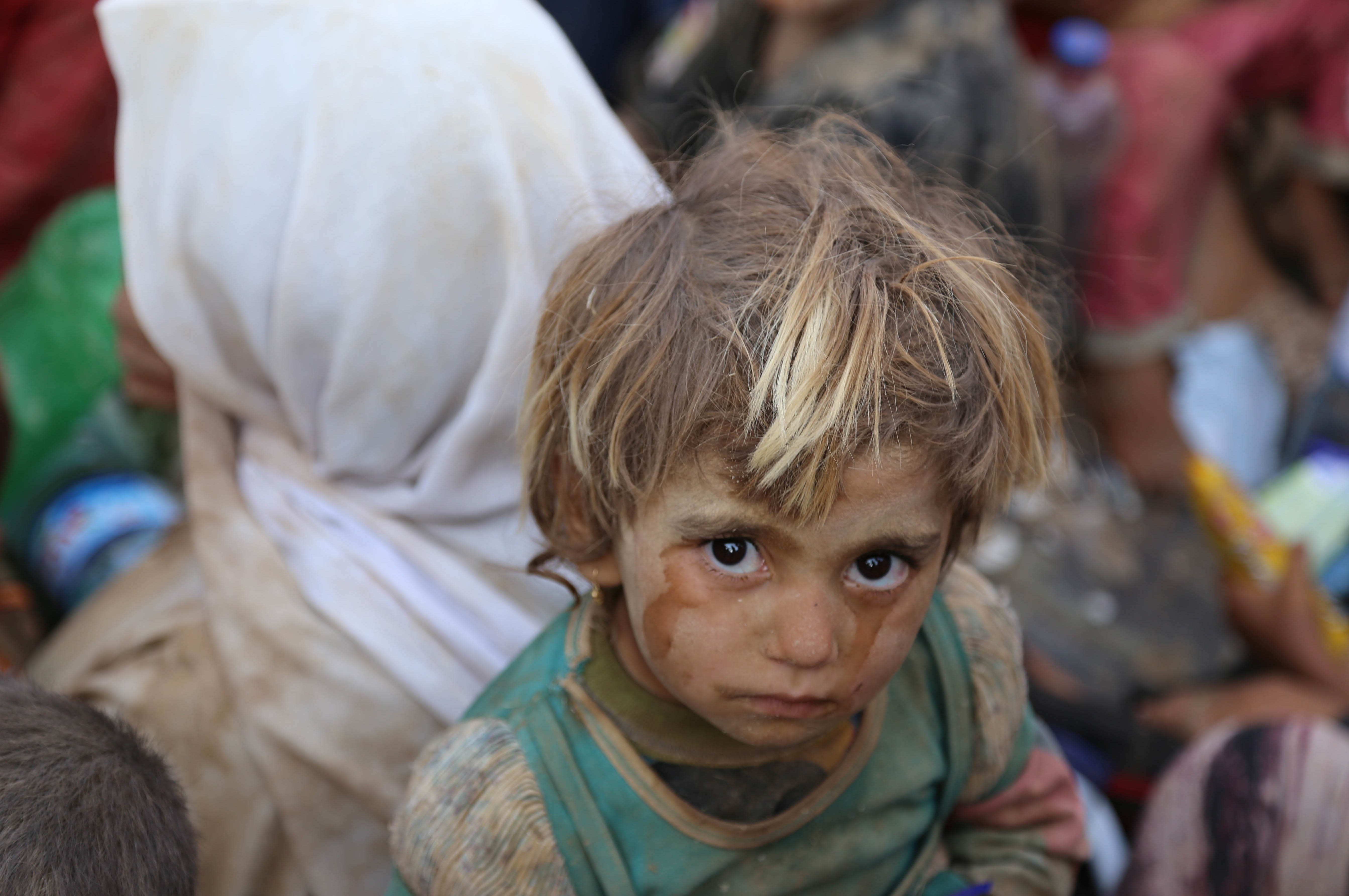
Yezidis trapped in the Sinjar mountains arrive in Syria's Haseki

ISIS militants returned last week to further harass the hundreds of Yazidis who remain on Mount Sinjar. Joel Wing provides an update on the fighting:

During the second week of the month the Kurds said that they were liberating Sinjar, which was taken by the Islamic State in August, but then it was revealed that IS had actually surrounded Mount Sinjar and were trying to take it once again. On October 20 there were clashes in all the surrounding areas such as Khazir, Bartella, Bashiqa, Tilkaif and Mount Sinjar itself. IS was able to seize two towns north of the mountain that day as Yazidi fighters ran out of ammunition. Twenty peshmerga were also killed and 51 wounded. On Mount Sinjar there are two Yazidi militias resisting the IS push. They told Rudaw that they had not received supplies for weeks. There are also YPG, PKK, and peshmerga fighters in the area as well. IS has cut off the supply routes to the mountain and the Yazidi forces are desperate for weapons and ammunition.

With hundreds of thousands of Yazidis displaced from their homes and unable to return, and with international attention having shifted to the battle for Kobani, Sheren Khalel and Matthew Vickery fear that the Yazidis won’t get the help they need before winter arrives:

Since news about the Yazidis first appeared in the headlines, more substantial — and much-needed — relief efforts have stumbled. Liene Veide, the public information officer for the Office of the U.N. High Commissioner for Refugees (UNHCR), says the organization is doing all it can for internally displaced persons and refugees in the region, but that more funding and manpower is required. Coordination, it seems, is another problem: The United Nations is working with other local Kurdish organizations, along with the Kurdish Regional Government, to deliver aid, but some communities are receiving assistance multiple times, while others are getting none at all due to a lack of communication between these different organizations, Veide explained.

According to Veide, even with the new UNHCR camps currently in the planning stage in for Iraq, there still won’t be room for everyone. “What we are working on now is absolutely not enough for the whole number — absolutely not,” Veide says.

Cathy Otten reports on the psychological trauma the displaced Yazidis have endured and the limited treatment options available to them:

It’s mid-morning in the hospital and patients crowd the narrow corridors outside Dr [Haitham] Abdalrazak’s office in Zakho General Hospital. He estimates that over 70 percent of Yazidi IDPs in Zakho, a small city in Dohuk Province near the Turkish border, are suffering from trauma. Abdalrazak has a kind, serious expression. He says about 20 percent of his patients have considered suicide and about five percent have attempted it. … Meanwhile, Doctors Without Borders warns that PTSD, anxiety and depression are now also affecting displaced children. The organisation has been offering psychological support to displaced people in their Dohuk mobile clinics since August, but do not have any psychiatrists working with them in the area.

(Photo: Thousands of Yezidis trapped in the Sinjar mountains without food and water for days, due to the Islamic State (IS) violence, arrive in Haseki city of Syria on August 10, 2014. By Feriq Ferec/Anadolu Agency/Getty Images)

ISIS On The Rio Grande?

Musa al-Gharbi argues that Mexico’s drug cartels are in every last respect more violent and dangerous than the Islamic State, from their body count (16,000 killed last year) to their use of child soldiers, kidnapping, torture, rape, and slavery:

Some may argue that despite the asymmetries, the cartels are less of a threat than ISIL because ISIL is unified around an ideology, which is antithetical to the prevailing international order, while the cartels are concerned primarily with money. This is not true.

A good deal of the cartels’ violence is perpetrated ritualistically as part of their religion, which is centered, quite literally, on the worship of death. The narcos build and support churches all across Mexico to perpetuate their eschatology. One of the cartels, the Knights Templar (whose name evokes religious warfare), even boasts about its leader’s death and resurrection. When cartel members are killed, they are buried in lavish mausoleums, regarded as martyrs and commemorated in popular songs glorifying their exploits in all their brutality. Many of their members view the “martyrs” as heroes who died resisting an international order that exploits Latin America and fighting the feckless governments that enable it. The cartels see their role as compensating for state failures in governance. The narco gospel, which derives from Catholicism, is swiftly making inroads in the United States and Central America.

In short, the cartels’ ideological disposition is no less pronounced than ISIL’s, if not worse.

Editorial Selection By Algorithm

Ravi Somaiya delves into Facebook’s impact on journalism:

The social media company is increasingly becoming to the news business what Amazon is to book publishing — a behemoth that provides access to hundreds of millions of consumers and wields enormous power. About 30 percent of adults in the United States get their news on Facebook, according to a study from the Pew Research Center. The fortunes of a news site, in short, can rise or fall depending on how it performs in Facebook’s News Feed. …

The shift raises questions about the ability of computers to curate news, a role traditionally played by editors. It also has broader implications for the way people consume information, and thus how they see the world.

Jay Rosen challenges some of Facebook’s assertions about its news feed:

It’s not us exercising judgment, it’s you. We’re not the editors, you are. If this is what Facebook is saying — and I think it’s a fair summary of [Facebook engineer Greg] Marra’s comments to the New York Times — the statement is a lie.

I say a lie, not just an untruth, because anyone who works day-to-day on the code for News Feed knows how much judgment goes into it. It simply isn’t true that an algorithmic filter can be designed to remove the designers from the equation. It’s an assertion that melts on contact. No one smart enough to work at Facebook could believe it. And I’m not sure why it’s sitting there unchallenged in a New York Times story. For that doesn’t even rise to the level of “he said, she said.” It’s just: he said, poof!

Now, if Greg Marra and his team want to make the point that in perfecting their algorithm they’re not trying to pick the day’s most important stories and feature them in the News Feed, the way an old fashioned front page or home page editor would, and so in that sense they are not really “editors” and don’t think in journalistic terms, fine, okay, that’s a defensible point. But don’t try to suggest that the power has thereby shifted to the users, and the designers are just channeling your choices. (If I’m the editor of my News Feed, where are my controls?)