The Nobel’s Mysterious Winner

Today, the French writer Patrick Modiano was awarded this year’s Nobel Prize in Literature. The Guardian notes that “Modiano is well known in France but something of an unknown quantity for even the most widely read people in other countries”:

[The Nobel Academy’s permanent secretary Peter] Englund said: “Patrick Modiano is a well-known name in France but not anywhere else. He writes children’s books, movie scripts but mainly novels. His themes are memory, identity and time. His best known work is called Missing Person. It’s the story about a detective who has lost his memory and his final case is finding out who he really is; he is tracing his own steps through history to find out who he is.”

He added: “They are small books, 130, 150 pages, which are always variations of the same theme – memory, loss, identity, seeking. Those are his important themes: memory, identity, and time.”

Modiano spoke to Julien Bisson in a rare interview in 2011:

“Actually, I never thought of doing anything else,” he says of his literary career. “I had no diploma, no definite goal to achieve. But it is tough for a young writer to begin so early. Really, I prefer not to read my early books. Not that I don’t like them, but I don’t recognize myself anymore, like an old actor watching himself as a young leading man.”

Modiano’s novels all delve into the puzzle of identity:

How can I track evidence of my existence through the traces of the past? Obsessed with the troubled and shameful period of the Occupation—during which his father had engaged in some shady dealings—Modiano returns to this theme in all of his novels, book after book building a remarkably homogeneous work. “After each novel, I have the impression that I have cleared it all away,” he says between two silences. “But I know I’ll come back over and over again to tiny details, little things that are part of what I am. In the end, we are all determined by the place and the time in which we were born.” The place, for him, is Paris, the city he writes about constantly, describing the evolution of its streets, its habits and its people. In fact, Modiano might very well be to Paris what Woody Allen is to New York: a memory and a conscience.

In a 2010 piece for The Millions, J.P. Smith wrote about reading Modiano in French:

His theme is unchanging; his style, “la petite musique,” as the French say, is virtually the same from book to book. There is nothing “big” about his work, and readers have grown accustomed to considering each succeeding volume as an added chapter to an ongoing literary project. His twenty-five published novels rarely are longer than 200 pages, and in them his characters, who seem to drift, under different names, into first this novel, then another, wander the streets of Paris looking for a familiar place, a remembered face, some link to their elusive past, some ghost from a half-remembered encounter that might shed some light on one’s history. Phone numbers and addresses are dredged up from the past, only to bring more cryptic clues and, if not dead ends, then the kind of silence that hides a deeper and more painful truth.

In a review of Missing Person, Ted Gioia emphasized that “Modiano doesn’t hesitate in shaking up the conventions of the mystery genre”:

The missing person in the title … is the detective himself. Guy Roland suffers from amnesia, the period of his life before launching his career as a private investigator is almost a complete blank. Even his name and nationality are a mystery to him. Now after a career of solving other people’s problems, he turns to his own. …

Those who like the mystery genre for its neat resolutions and the comforting sense of closure from a crime solved, justice up-held, and a perpetrator punished, will only get a queasy sensation from Missing Person. In this quest for identity, the very notion of self begins to fade under close scrutiny. “Do not our lives dissolve into the evening?” our narrator concludes, as he accepts the possibility that the person he is seeking will never be found, his identity as ephemeral as “the sand holds the traces of our footsteps but a few moments.”

Meanwhile, Emma Brockes uses Modiano’s win to explore the politics of the Nobel awards, remarking that “the real scandal of Patrick Modiano’s Nobel win is that Philip Roth is a huge loser – again”:

There are lots of theories about Nobel “bias”, few of them involving the possibility that writers from non-English speaking countries, many of whom readers in the west have neither read nor heard of, might actually be quite good. The Royal Swedish Academy’s appointed judges themselves say they don’t like the effects of the creative writing school battery farms on the New York publishing scene. More widely, the Nobel is seen as the perfect platform from which to counter US cultural hegemony; and there’s a notion that the snobbish Nobel judges don’t like to reward authors who actually sell. …

Anyway, Modiano won. Good for him and his many fans around the world. Now on to the more important question: Who becomes the next Philip Roth, champion novelist whose once-a-year loss we can all get behind?


A Path Through Washington’s Gridlock?

Gerald Seib imagines that “full GOP control of Congress might well shift Republicans’ focus from stopping him to making things happen.” Chait doesn’t buy it:

Washington already has divided control. Now, to be sure, Republicans control just one chamber of Congress at the moment. Seib argues that the calculus might change if they win control of the other chamber as well.

For this to be true, you would have to imagine that there are deals that could be struck between the Republican House and President Obama that the Democratic Senate would block but that a Republican Senate would agree to. What reason is there to think that any such deal exists? Has Harry Reid actually blocked an agreement between John Boehner and Obama?

Maybe, argues Brian Beutler:

A better way to think about the difference between a Democratic and GOP Senate is to look at where along the political spectrum the center of negotiations will lie. Right now, because Democrats control the Senate, it lies further to the left than it would under GOP control, which makes all tentative agreements much harder to sell to the Republican House.

Move things to the right a bit, and the question becomes whether Obama would be willing to cut more conservative deals that aren’t currently in the offing. I don’t know what the answer is, but it isn’t crazy to think a lame-duck president might sign off on legislation that would, under the current arrangement, be tantamount to surrender. And when you look at it that way, it’s reasonable to imagine that Obama-Boehner-McConnell might cut more deals than Obama-Boehner-Reid. They’d just be worse deals.

A Monumental Error

Yigal Schleifer spotlights how a new memorial to the victims of the Nazi occupation reflects the revisionist nationalism of Prime Minister Viktor Orbán and his Fidesz party, and hints at the creeping resurgence of Hungarian anti-Semitism:

The government is erecting the monument to honor the victims of Nazi Germany’s March 1944 occupation of Hungary—including 565,000 Jews. But the country’s opposition parties and Jewish groups are unhappy: They believe the monument—a historically and artistically challenged creation that will feature an eagle (Germany) swooping down on the archangel Gabriel (Hungary)—whitewashes the extensive and troubling role Hungary’s Nazi-sympathizing government played in the massive deportation of Jews to Auschwitz.

The Fidesz ex-party official I’m with explains that the monument is a powerful example of how Orban has reached back into Hungary’s history for inspiration. “It isn’t modern right-wing politics, but a 19th-century conservatism that plays well with the Hungarian sense of the past. That’s what he’s doing here,” he says, pointing toward the monument site.

The official approach to the memory of the Holocaust fits uncomfortably into all of this. On the one hand, Fidesz has been credited with taking positive steps, such as setting aside 2014 as a year to commemorate the Holocaust and dispensing government funds for memorial projects and events. On the other hand, as with the monument in Szabadsag Square, Fidesz is being accused of rewriting history by offering up a narrative in which Hungarian responsibility for the systematic deportation of nearly 440,000 Jews—the majority to Auschwitz-Birkenau—is diminished: The monument portrays all Hungarians, by linking it to the 45-year Soviet occupation and the continuum of Hungarian suffering. During my stay in Hungary, it was the construction of the monument that almost every government critic I spoke to—Jewish or not—considered the defining symbol of the Orban government’s efforts to toy with the past in order to bolster its political future.

Pumped To Throw The Pigskin

Chait defends football against its critics. He draws a distinction between pro and amateur players:

More than a million boys play high-school football every year. If the effects of those games remotely approached those afflicting former professionals, there would be millions of American men walking around with brain damage and a national epidemic of male suicide. The tragic cases of brain-damaged NFL veterans that have filled the news — the Junior Seaus, the Dave Duersons — would be replicated on a scale a thousand times as large. That something like this has escaped attention until now defies plausibility.

It is true that the improvements of weight-training methods have made high-school football players, at least at the highest levels of competition, bigger and stronger than those of a generation ago, which may produce as-yet-unrealized hazards. And we do know that it may be a series of minor concussions that ultimately poses the biggest threat to the brains of football players. Thankfully, we also have data about how common concussions are in other sports, and that data gives us no reason to consider high-school football a dramatically riskier activity.

He calls football “the most exciting thing that has ever happened to me”:

This is not because my life is a failure, and it is not because football stole my youth. Football’s enemies have an accurate sociological observation, but their conclusion is backward. Nothing else pumped so much adrenaline through me that I couldn’t feel my feet underneath me as I ran and could barely remember my name, or made me weep or scream uncontrollably. It is the adventure of your life, a chance to prove yourself as a man before other boy-men who, even if you never see them again, you will always regard as brothers-in-arms.

This is an increasingly antiquated conception of male socialization. George Orwell, the old socialist, was well ahead of his time when he scribbled out an angry rant against the sporting ethic, which, he wrote, “is bound up with hatred, jealousy, boastfulness, disregard of all rules and sadistic pleasure in witnessing violence: in other words it is war minus the shooting.” That is all more or less true. But shooting is precisely the problem with war. War minus the shooting is actually pretty great.

Relatedly, Ian McGugan looks at how football fans are made:

[Sports economist Stefan] Szymanski told me that when he moved his family from Britain to Michigan three years ago, his two teenage sons were already N.F.L. fanatics — not because of television, but because of PlayStation. “A new generation is consuming games in new ways,” he says. “The gap between the virtual and the real is narrowing, and the N.F.L. is in an excellent position to capitalize on that.” A virtual N.F.L. could offer fans the opportunity to play along with real games and compare their play calls with real ones. It might also allow fans a way to indulge their appetite for violence in a virtual world while allowing the real game to become safer.

Research also suggests that early exposure makes all the difference. Lorenz Kueng, an assistant professor of finance at Northwestern University, co-wrote a recent study of Russian drinking habits, in which he found that men’s preference for vodka or beer varied widely by generation and depended on the beverage’s availability around when a person turned 18. “The research suggests,” Kueng told me, “that your first exposure to a product could shape your long-term preference to a large degree.” It’s not a huge stretch to suggest that consumption habits for sports are just as persistent.

The Dish’s thread from a couple years back on the dangers of professional football is here.

Red-Light States?

Sex And Religion

Ingraham presents a study finding that porn-related Google searches are more common in conservative states:

Cara C. MacInnis and Gordon Hodson of Brock University found that residents of more religious and more politically conservative states — often in the South — are more likely to Google things like ‘‘sex,’’ ‘‘gay sex,’’ ‘‘porn,’’ ‘‘xxx’’, ‘‘free porn,’’ and ‘‘gay porn” than their peers in more secular states. The study, published this month in the journal Archives of Sexual Behavior, analyzed state-level Google Trends data for 2011 and 2012, and combined it with measures of religiosity and political conservatism from Gallup surveys. “Overall,” the authors say, “a reliable positive association of moderate-to-large association size exists between state-level religiosity and searches for the term ‘sex.’” They observed similar patterns for Google image searches for sex with political conservatism.

Morrissey rolls his eyes:

The abstract proposes, “These findings were interpreted in terms of the paradoxical hypothesis that a greater preponderance of right-leaning ideologies is associated with greater preoccupation with sexual content in private internet activity.” Except that the researchers didn’t do the hard work of actually identifying and studying those specific populations of “right-leaning ideologies”;

that would require time and effort in crafting a study of several populations, along with control groups, and then perhaps reaching some conclusions that actually show real correlation and perhaps causation.

Instead, they based their studies on entire states’ Google trends without any control over which populations did the searching. There’s nothing in the abstract or the Post’s recap, for instance, that even posits that religious and/or political conservatives use the Internet overall at the same rate as other populations, or more or less so. There is no data presented at all that assigns that traffic to specific subgroups; the authors just assumed that the controlling factor had to be “right-leaning ideologies” without ever establishing that as a fact, or even a data-supported hypothesis.

Questions For The Day

A Medical Marijuana Operation In Colorado Run By Kristi Kelly, Co-Founder Of Good Meds Network

Tom Angell has been spending some time at the Library of Congress reading through newly available papers from the estate of Carl Sagan, the scientist who might just have had more impact on the popular culture than any other in his time. What’s truly fascinating is how Sagan’s employment by NASA made it all but impossible for him to publicly say what he privately believed: that cannabis is a positive good for individuals and for society as a whole. But mainly, they also reveal a true scientist’s frustration with prejudice over data, and with easy answers to conventional questions.

After the jump is the full text of a letter Sagan wrote to the president of the Drug policy Foundation, responding to the idea of a televised debate on drug laws. It is largely a series of questions – and they remain as relevant today as ever:

sagan-trebach-letter

Know dope.

(Photo: Pots of cannabis inside a medical cannabis cultivation facility in Denver, Colorado, U.S., on Monday, March 4, 2013.   This is inside a warehouse in Denver, and is one of the facilities that Kristi Kelly, Co-Founder of Good Meds Network, operates. By Matthew Staver/For The Washington Post via Getty Images.)

How Not To Handle An Ebola Patient

Barbie Latza Nadeau remarks on how Spain bungled the case of Teresa Romero Ramos, the nurse who contracted Ebola, noting that “now Europe is grappling with its worst fear—the threat of an Ebola outbreak. And even the authorities can’t argue it won’t happen”:

That Romero was allowed to mingle in public after reporting a fever when she was within the known incubation period for the virus is unacceptable.  But what makes Romero’s case particularly troubling is that Spanish health authorities and the hospital where she worked appear complicit in not immediately isolating her. … According to Spanish press reports quoting the Spanish nurses’ union, Romero called Carlos III hospital several times between September 30 and October 2 when her fever finally hit the 38.6 threshold.  Still, it took until October 6 when she had become so deathly ill she was begging for an Ebola test before anyone at the hospital where she worked reportedly reacted.

Then, rather than immediately isolating her and rushing her to the special ward used to treat the previous Ebola patients, they told her to go to the nearby emergency room at Alcorcón, where press reports say she sat in the public waiting room for several hours absent of any protective gear. “I think I have ebola,” she reportedly told anyone who would listen.  But no one took notice until her first test came back positive. By then, dripping with fevered sweat, she would have been inarguably contagious.

And now the Spanish government wants to euthanize her dog – but not if the Internet can help it:

Excalibur, a 12-year-old rescue with soulful brown eyes, was left at home by the nurse’s husband, Javier Limón, as he checked into a quarantine unit. Before leaving, he left the dog water and 33 pounds of food — enough to last it through any observation period — while spreading pleas to help the dog on social media. “The dog is fine. He has the whole house to himself, with the open terrace so he can do his business,” he told Spanish paper El Mundo. “Are they going to put me to sleep, too?” The pleas were heard. A Change.org petition to spare the dog received more than 190,000 signatures within a day. …

Excalibur was fine and at home as of Tuesday night in Madrid. The hashtag #SalvemosaExcalibur is trending locally on Twitter.

Jazz Shaw relays some research that helps explain the concerns over Excalibur:

The coverage on CNN this morning clearly missed something (as did I) in terms of transmission through dogs. A reader notes that a study was already done on this and some dogs can, in fact, be infected.

Naina Bajekal has more:

The researchers concluded that “dogs could be a potential source of human Ebola outbreaks and of virus spread during human outbreaks,” but they did not test their hypothesis that human infection could occur through licking, biting or grooming. Instead, the study assumed dogs would transmit the infection in the same way as other animals observed in experiments; those animals excreted viral particles (in saliva, urine, feces) for a short period before the virus was cleared. David Moore, an expert in infectious diseases from the London School of Hygiene and Tropical Medicine, said that since no dogs showed symptoms of the Ebola virus “there is absolutely no evidence to support a role for dogs in transmission.”

By the way, like the Spanish nurse, the case of Thomas Eric Duncan, who today became the first person to die of the disease in the US, was hardly handled in the best way:

[He] started developing symptoms of the disease once he arrived in the US. He went to a Dallas emergency room and told a nurse that he had recently been in West Africa — a region that has been ravaged by an unprecedented Ebola epidemic — but that information was not “fully communicated” to the rest of his medical team. Duncan was diagnosed with a minor infection and sent away from the hospital. He returned days later via ambulance, when his symptoms had worsened considerably.

The Geography Of Bedtimes

Bedtimes

Sarah Kliff captions the above map:

Jawbone … put together a map of when people go to sleep. And there you see mostly people who live in large cities and college towns staying up later. That shows that people in Brooklyn, NY tend to have the latest bed time in the United States (they turn down, on average, at 12:07 a.m.) where as people living in Maui, Hawaii get to bed the earliest at 10:31 p.m.

While Brooklynites do stay up late for the United States, separate Jawbone datashows they pale in comparison to urbanites in other major cities. In Moscow, the average Jawbone wearer goes to bed at 12:46 a.m.

Roberto A. Ferdman adds some important context:

To be clear, the people Jawbone analyzed are those who own and use a Jawbone device, meaning that they are likely of a higher socio-economic background, and, imaginably, inclined to exercise or at least monitor their health.​

There’s also the likelihood that not all counties are represented equally. While Jawbone hasn’t divulged how many people  were observed in each county, it’s pretty reasonable to assume that far more were tracked in New York City than rural Montana.

Countrywide, some of the trends Jawbone unearthed merely confirm what we already suspected. People who live on the West Coast, for instance, are pretty good about getting to bed early, and people who live on the East Coast, generally speaking, are not. Cities also tend to go to sleep later than rural counties—again, no surprise here.

Over at Jawbone’s blog, Tyler Nolan Jawbone notes that “it’s also clear how our sleep can be shaped by daylight”:

On the western extremes of time zones, people tend to go to bed later, and on the eastern edges they go to bed earlier (for example, look at the Central Time Zone). The starkest difference can be seen on the Kentucky/Tennessee borders between Eastern Time and Central Time …

Our Priorities At The End Of Life

In an excerpt from his new book, Atul Gawande shares what he has learned about death and dying:

As recently as 1945, most deaths occurred in the home. By the 1980s, just 17 percent did. Lacking a coherent view of how people might live successfully all the way to the very end, we have allowed our fates to be controlled by medicine, technology, and strangers.

But not all of us have.

That takes, however, at least two kinds of courage. The first is the courage to confront the reality of mortality—the courage to seek out the truth of what is to be feared and what is to be hoped when one is seriously ill. Such courage is difficult enough, but even more daunting is the second kind of courage—the courage to act on the truth we find.

His conclusion:

[O]ur most cruel failure in how we treat the sick and the aged is the failure to recognize that they have priorities beyond merely being safe and living longer; that the chance to shape one’s story is essential to sustaining meaning in life; and that we have the opportunity to refashion our institutions, culture, and conversations to transform the possibilities for the last chapters of all of our lives.

Recent Dish on Gawande’s book here.

Panetta’s Plaint

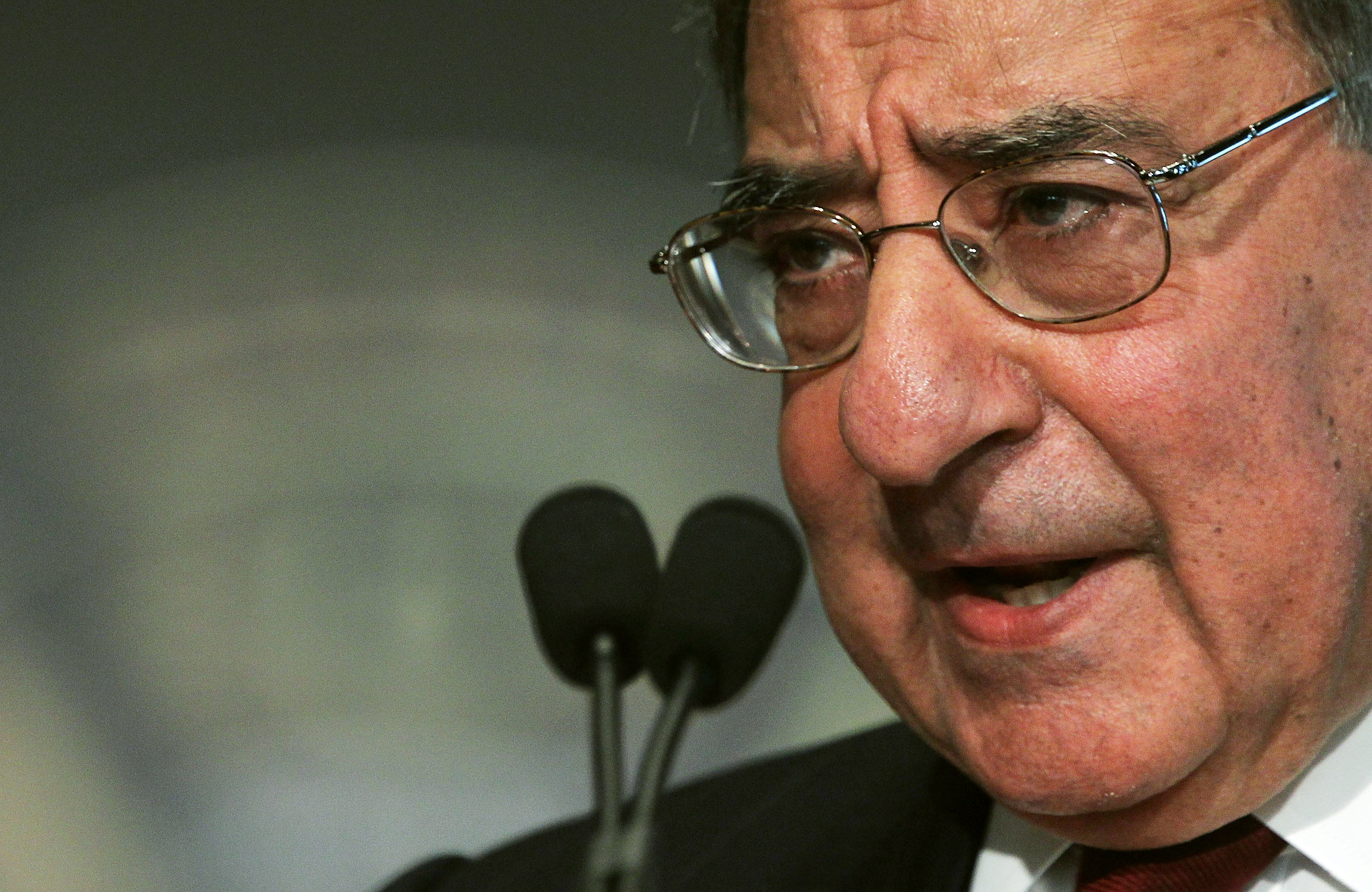
Panetta Gives Speech On  Leadership and Public Service

In his new book Worthy Fights: A Memoir of Leadership in War and Peace, the former defense secretary harshly criticizes Obama’s handling of Iraq and Syria:

Mr. Panetta, who was C.I.A. director before taking over the Pentagon, recounted decisions that he disagreed with, including the withdrawal of all troops from Iraq in 2011, the failure to intervene in Syria’s civil war by arming rebels and the abrupt reversal of Mr. Obama’s decision to strike Syria in retaliation for using chemical weapons on civilians. Mr. Obama “vacillated” over the Syria strike and “by failing to respond, it sent the wrong message to the world,” he wrote. Had the president followed different courses, Mr. Panetta said in the interview, the United States would be in a stronger position as it now tries to counter the rise of the extremist Islamic State in Iraq and Syria. He added that he believed the president has turned a corner and “is going a long way in terms of repairing some of the damage I think took place as a result of the credibility issue that was raised on Syria.”

Beinart finds the “credibility” argument about Syria silly:

Since he declared war on ISIS, the Obama administration has been recruiting other countries to join the United States. And whatever you think of the war itself, that diplomatic effort has been remarkably successful. Ten different Arab countries have agreed to participate in the anti-ISIS campaign. Even John McCain and Lindsey Graham have praised the administration’s coalition-building skills. All this illustrates the silliness of Panetta’s claim.

It was one thing to speculate a few months ago that Obama’s chemical-weapons about-face would make it harder for the U.S. to convince allies to join a military coalition the next time. But the next time is now here. Roughly a year after supposedly squandering America’s credibility by standing down on chemical weapons, Obama has mustered enough credibility to convince a bevy of Arab countries to help us bomb fellow Arab Muslims in the heart of the Middle East.

And Drum responds to Panetta’s assertion about working in the Obama admin, that “for the first four years, and the time I spent there, I thought he was a strong leader on security issues. … But these last two years I think he kind of lost his way”:

Think about this. Panetta isn’t even a super hawkish Democrat. Just moderately hawkish. But his basic worldview is simple: as long as Obama is launching lots of drone attacks and surging lots of troops and bombing plenty of Middle Eastern countries—then he’s a “strong leader on security issues.” But when Obama starts to think that maybe reflexive military action hasn’t acquitted itself too well over the past few years—in that case he’s “kind of lost his way.”

That’s the default view of practically everyone in Washington: Using military force shows strong leadership. Declining to use military force shows weakness. But most folks inside the Beltway don’t even seem to realize they feel this way. It’s just part of the air they breathe: never really noticed, always taken for granted, and invariably the difficult but sadly necessary answer for whichever new and supposedly unique problem we’re addressing right now. This is what Obama is up against.

Panetta also believes that the fight against ISIS could turn into a “30-year war” and will likely require the deployment of ground forces. That statement understandably upsets Greenwald:

Only in America are new 30-year wars spoken of so casually, the way other countries speak of weather changes. He added that the war “will have to extend beyond Islamic State to include emerging threats in Nigeria, Somalia, Yemen, Libya and elsewhere.” And elsewhere: not just a new decades-long war with no temporal limits, but no geographic ones either. … At this point, it is literally inconceivable to imagine the U.S. not at war. It would be shocking if that happened in our lifetime. U.S. officials are now all but openly saying this. “Endless War” is not dramatic rhetorical license but a precise description of America’s foreign policy.

Panetta is, of course, not the first former cabinet member to come out with a book critical of the president’s leadership. Dana Millbank wonders why this is:

The lack of message discipline is puzzling, because Obama rewards and promotes loyalists. But he’s a cerebral leader, and he may lack the personal attachments that make aides want to charge the hill for him. Also, as MSNBC reporter Alex Seitz-Wald tweeted in response to a question I posed, Panetta, Gates and Clinton didn’t owe their careers to Obama. Clinton was a rival, Gates was a Bush holdover, and Panetta is a Democratic eminence grise. Loyalty didn’t trump book sales — or Clinton’s need to distance herself from Obama before a presidential run.

(Photo: Leon Panetta delivers remarks at Gaston Hall of Georgetown University February 6, 2013 in Washington, DC. By Alex Wong/Getty Images)