The Shifting Senate Map

Senate Sabato

Larry J. Sabato and Kyle Kondik updated their Senate forecasts:

So many undecided contests are winnable for the GOP that the party would have to have a string of bad luck — combined with a truly exceptional Democratic get-out-the-vote program — to snatch defeat from the wide-open jaws of victory. Or Republicans would have to truly shoot themselves in the foot in at least one race, which has become a clear possibility over the last few weeks in Kansas.

Yesterday, Andrew Prokop flagged a Kansas poll:

Senate Democrats have gotten bad polling news in several states lately. But the unexpectedly competitive Kansas race has been a consistent bright spot — even though the party technically isn’t fielding a candidate. On Wednesday, the party got more good news in the state, as a new USA Today / Suffolk University poll showed Kansas Senator Pat Roberts (R) is trailing independent Greg Orman by five points, with the incumbent winning only 41 percent of the vote.

Enten makes the case that this “was actually a bad result for Orman”:

Twice previously, Public Policy Polling (PPP) found Orman up by 10 percentage points in a two-way matchup with Roberts. Fox News had Orman ahead by 6 points. Moreover, Suffolk has traditionally had a Democratic-leaning house effect, a measure of how a pollster’s results compare to other polls. The model adjusts for this, nudging Suffolk’s result 2 percentage point toward the GOP. Fox News surveys have a 3 percentage-point pro-Republican house effect, and PPP has a negligible one.

Aaron Blake wonders whether Orman’s lead can hold up:

The poll shows Orman’s favorable rating at 39 percent and his unfavorable rating at 25 percent. Those are good numbers — if they hold when more voters get to know him. Even among Republicans, Orman’s favorable/unfavorable split is a pretty-close 29/34. But lots of people still have yet to be introduced to Greg Orman, and it’s quite simply very hard to emerge from a hard-fought campaign with positive numbers like that. How does his positive image hold up after he’s carpet-bombed with ads labeling him a liberal (with little backup)?

Margaret Carlson comments on the Kansas Senate and governor races:

If [Kansas governor Sam] Brownback loses, his grand experiment dies with him, and his misadventure will give pause to other Republican governors who want to push through a right-wing agenda, even in conservative states.

As for Roberts, if he loses a fourth term to an independent, it shows that overly comfortable incumbents can be taken down by challengers other than Tea Party populists. President Barack Obama’s ability to enjoy two more years with Democrats in control of the Senate may come down to the victory of a candidate no one had heard of six weeks ago in a state where no one expected an upset.

Sargent thinks it’s no “exaggeration to say that three of the most important state-level experiments in conservative reform — all of which were outgrowths of the 2010 Republican triumph fueled by the Tea Party insurgency of Obama’s first term — are all, to varying degrees, standing in judgment before voters”:

Whoever wins in Wisconsin, Kansas, and North Carolina, it would probably be a mistake to read too much into what it says about public opinion and conservatism, since political races turn on so many factors. Indeed we may end up with something of a split verdict. But it’s striking that this cycle is shaping up as something of a test not just of the policies of the national party in possession of the White House, but of conservative governance as well.

John Cloud traveled to Alaska to cover another pivotal race:

Alaska is a notoriously difficult place to poll, but everyone assumes the contest is a dead heat. What has so far been a gentlemanly race between a good man who lost his dad here and a warrior who followed his wife here is about to change, for the meanera function of the stakes and the money that’s gushing in. Not just Rove’s millions, but Harry Reid’s, too. The moment Begich and I emerged from his SUV, a man paid to follow his every move with a camera asked why Begich opposed more oil-drilling jobs for Alaskans. (A strange question, since Begich has voted for more drilling and promises to vote for more.) Once we were out of camera range, Begich turned to me and smiled. He looked, for a moment, like a politician. “They will try anything,” he said. “But I know the state I grew up in. They don’t have that.”

Despite that, Republicans may be gaining ground in Alaska:

A survey shared with The Hill by Republican pollster Marc Hellenthal conducted for a coalition focused on ballot amendments found Sullivan with a lead over Begich, 46 percent to 42 percent. Dittman Research, a Republican firm that has a strong track record in the state, found Sullivan leading Begich 49 percent to 43 percent in a poll conducted for the pro-Sullivan U.S. Chamber of Commerce. Two recent automated polls also found Sullivan with a lead, though a pair of Democratic polls released in mid-September had Begich up by 5 points.

Last week, Sean Trende theorized that undecided voters may break towards Republicans:

The Democrats’ problem is that they seemingly find themselves in a position similar to that of Republicans in 2006: They are in tight races.  But so far, they seem unable to move past where the fundamentals suggest they should be able to go: Recall again that their maximum showing has generally been bounded at 47 percent.  … [S]ooner or later the undecided voters will begin to decide.  And given that the Democrats are winning the votes of almost everyone who approves of the president’s job, they will have an uphill — though hardly insurmountable — battle with undecided voters.

If this theory is right, we should expect to see these races continue on the basic trajectory we’ve seen over the past few weeks: Democrats holding at their current levels.  Eventually, Republicans should begin or continue to improve, as undecided voters engage and make up their minds, and as Republicans narrow the spending battles.  Even if this theory is true, it won’t occur in every race, but it will be the general tendency.

Rove, as is his habit, talks up the GOP’s chances:

In the Real Clear Politics average of public polls, there has been a clear movement since Sept. 22 toward the GOP. Despite a significant recent increase in negative attack ads from Sen. Reid’s Super PAC and liberal and labor special-interest groups, 10 of the 11 Republicans in the most competitive races for Democratic Senate seats improved or maintained their ballot position. Republicans now lead in contests for eight Democratic seats, enough for a GOP majority

 

When Does Spanking Become Abuse?

Two readers offer a startling contrast to this one’s story of trauma and terror:

I’m not often in agreement with Sean Hannity, but I must agree that Adrian Peterson should not lose his career or go to jail over the abuse of his kid. I don’t see a whole lot of people asking us folks who were actually hit. The courts. The judges. The politicians. The do-gooders, tolerant of everybody except those they deem unworthy of tolerance and understanding. Hardly anyone seems to think that the opinion of the victims should matter the most.

Is it a crime? Should it be a crime? I don’t know where to draw the line, and I’ve been there. At my ripe old-age of 62, I still vividly remember my father hitting my oldest brother – strapped spread eagle to his bed – until his back was covered with deep scarlet welts. I remember my legs shaking so much as it happened that I could hardly stand. I remember my mother smacking me over and over and over again with a fly swatter – her choice of punishment weapon. I remember my father putting a cigarette in my face, threatening to burn me with it.

And never ever ever would I have wanted my father to lose his career or to have to go to jail.

Do the people who propose this actually believe this would have made our life better? It would have done the opposite. Thank goodness that there was no Internet back then, and thank goodness that the media seemed to concentrate on real news and investigative reporting instead of the human interest stories they concentrate on now.

It surprises people that survivors of childhood violence love their parents. Why shouldn’t we? In the same way that I love my country but still feel free to criticize her, and would do anything to protect her, I can criticize my parents (and I freely do), but I fiercely defend their right to have lived their lives the way they saw fit and not to get thrown in jail for it or lose their financial means of support.

I survived – scarred, mutilated and torn – from a war waged everyday during my childhood. To take away my father’s livelihood or jail my parents would have been like dropping a nuclear warhead upon us. I doubt that I would have survived the chaos that ensued from that kind of retribution from society. This “Gotcha” mentality that exists today is just another example of destroying the village to save it.

“Scarred, mutilated and torn” is light-years from a swat on the butt. Another reader:

God damn it, Andrew. When I was a kid, my mother hit me. Repeatedly; always. My brother and I knew it was coming. She did it out of anger, and in an attempt to correct our incorrect behavior. Rarely did it achieve the latter goal, but given the nature of our disobedience – which was sometimes flagrant – she was right to be made, and we indeed deserved to be punished.

And as ineffective as the hitting was, want to know what would have been even less effective? The “time-out”; the “Go sit in that chair and think about what you did.” We would have outright laughed at that, my brother and I – punishment that isn’t really punishment. Well, the hitting forced us to actually respect my mother. Getting punishment that wasn’t really punishment would have diminished that respect.

So while I feel for your reader who seems to be describing her own PTSD at having been punishes, and while her punishment far exceeded what I had to endure, must we really go down the forever a victim road here? She writes of how corporal punishment is a way to try and intimidate, dominate, and control – and you know what? That’s true. Particularly disobedient children need to have their spirit broken. They need to understand authority – because if they don’t, they’re sure going to learn all about it later on.

A parent who spanks his or her child WITHIN REASON (and your reader’s case is that her corporal punishment wasn’t within reason – or was it that all corporal punishment is the moral equivalent of what she endured?) … that parent is saying: In life, there are rules, and you must respect them. And if you don’t respect them, there will be consequences – in this house, and out there in the broader society. For based on the nature of your misbehavior, the broader society is unlikely to respond with, “Now you go sit in that chair and think about what you did.”

When we talk about the coddled generation, or “Generation Wuss,” as Bret Easton Ellis calls it, it’s no coincidence that this generation – the fragile flowers, unable to handle real adversity – is the first one to have been raised in an era where corporal punishment, even the mildest forms, was increasingly regarded as barbaric. And I’d ask: is this generation, then, any better off, any better behaved, are they more respectful of authority, are they more disciplined – or is the opposite in fact true?

“Disobedient children need to have their spirit broken”? Jesus. And regarding the reader’s flip comment about society unlikely to punish people by putting them in time out: is society instead supposed to beat them into submission? Hitting people, especially when those people are small and defenseless and dependent on your care, is such a lazy and cruel way to discourage bad behavior.

What Hobby Lobby Hath Wrought

In her dissenting opinion last June, Ruth Bader Ginsburg warned that the Hobby Lobby ruling would have far-reaching, unintended consequences. Others agreed. Looking at how the case has been applied in lower courts, Toobin argues that the Notorious RBG was right; the ruling is “opening the door for the religiously observant to claim privileges that are not available to anyone else”:

One such matter is Perez v. Paragon Contractors, a case that arose out of a Department of Labor investigation into the use of child labor by members of the Fundamentalist Church of Jesus Christ of Latter-day Saints. (The F.L.D.S. church is an exiled offshoot of the Mormon Church.) In the case, Vernon Steed, a leader of the F.L.D.S. church, refused to answer questions by federal investigators, asserting that he made a religious vow not to discuss church matters. Applying Hobby Lobby, David Sam, a district-court judge in Utah, agreed with Steed, holding that his testimony would amount to a “substantial burden” on his religious beliefs—a standard used in Hobby Lobby—and excused him from testifying.

But Ilya Somin maintains that the court made the right call, and that denying constitutional rights to corporations would in fact be disastrous:

If we consistently apply the principle that corporations are not entitled to constitutional rights because they are not real people, then the government would be free to censor newspapers and TV stations that use the corporate form, including the New York Times and CNN. Similarly, it would be free to take corporate property without paying the “just compensation” required by the Fifth Amendment, or search it in ways that would otherwise be forbidden by the Fourth Amendment’s ban on unreasonable searches and seizures. It could also regulate or ban services at houses of worship owned by the many religious organizations that use the corporate form. CNN, the New York Times, and the Catholic Church are no more “real” persons than Hobby Lobby Stores is. …

Had the Court ruled that either corporations in general or for-profit ones specifically cannot “exercise religion,” it would have led to the gutting of legal protection for religious freedom in numerous commercial contexts.

Meanwhile, Dawinder Sidhu points to an upcoming case, Holt v. Hobbs, which “will test whether the Roberts Court’s stance on religious freedom includes a minority faith, Islam, practiced by a disfavored member of our society: a prisoner”:

Holt involves Gregory Holt, an inmate in Arkansas also known as Abdul Maalik Muhammad. A dispute arose between Holt and the state’s Department of Correction when he sought to grow a one-half-inch beard in observance of his faith. According to the department’s grooming policies, inmates may only grow a “neatly trimmed mustache.” …

If Hobby Lobby and federal law are faithfully applied, Holt should prevail. Prisoners surrender many of their rights at the prison gates. “Lawful incarceration brings about the necessary withdrawal or limitation of many privileges and rights,” the Supreme Court wrote in Price v. Johnston more than 60 years ago. In 2000, however, Congress enacted the Religious Land Use and Institutionalized Persons Act (RLUIPA) to help safeguard inmates’ religious freedom. The law states that the government may not place a substantial burden on a prisoner’s ability to practice his or her religion unless that burden is the “least-restrictive means” to achieve a “compelling” goal.

“The Rick Scott Is Perfect”

Jessica Roy calls this College Republican National Committee ad “just a teensy bit tone-deaf”:

Esther Breger piles on:

The ads, which somehow cost $1 million dollars, are part of CRNC’s campaign to reach young voters in a “culturally relevant way,” as CRNC’s Alex Smith told the Wall Street Journal. (Smith, by the way, is a woman.) And to be fair, Democratic campaigns have also struggled painfully in their attempts to be hip and with it, though at least their gifs and co-opted memes show some awareness of a cultural world beyond basic cable. (Note to Alex Smith: The median age of “Say Yes to the Dress” viewers is 44.)

Bernstein spots perhaps a bigger problem with the ad – it is being used in multiple states:

Making cookie-cutter ads is just asking for trouble.

See, not only does Brittney the “undecided voter” “think that “The Rick Scott is perfect,” she feels the same way about “The Rick Snyder,” “The Tom Corbett” and three other dresses. The ads are identical, only the candidate names change (never mind that Brittney can’t vote in six states in November).

But whatever their quality and however mockery-worthy they are, the ads are open invitations for Democratic opponents to hammer the dreaded Outside Interests Who Don’t Care About [insert name of state here]’s Values. It’s a classic example of the way elections are conducted in the U.S.: Candidates’ campaign organizations are seemingly in charge, but decentralized party and quasi-party organizations step in and help — or embarrass — them.

Waldman also discusses ad strategy more generally:

[W]hen you’re trying to reach out to a particular group, it’s important to communicate to them that you respect them and you understand their concerns. And these ads do precisely the opposite. Instead of talking about the things that are important to women, they take the same message they’d offer to anyone else, and just put in what they consider a womanly context (wedding dresses! boyfriends!). Imagine that a candidate went before an audience of Hispanics and said, “Let me explain this in a way you can relate to: My economic plan is like a really good tamale. My opponent’s economic plan is like the worst tamale you ever ate. Understand?” And he’d expect everyone in the audience to turn to each other and say, “I may not care for his position on immigration, but that tamale analogy showed me that he really gets us.”

The Censor As Literary Critic

Drawing on his new book Censors at Work: How States Shaped Literature, Robert Darnton declares that censorship is “essentially political; it is wielded by the state” – but also finds that its historical use has gone far beyond just banning certain texts:

Reading was an essential aspect of censoring, not only in the act of vetting texts, which often led to competing exegeses, but also as an aspect of the inner workings of the state, because contested readings could lead to power struggles, which sometimes led to public scandals. Not only did censors perceive nuances of hidden meaning, but they also understood the way published texts reverberated in the public.

Their sophistication should not be surprising in the case of the GDR [East Germany], because they included authors, scholars, and critics. Eminent authors also functioned as censors in eighteenth-century France, and the surveillance of vernacular literatures in India was carried out by learned librarians as well as district officers with a keen eye for the folkways of the “natives.” To dismiss censorship as crude repression by ignorant bureaucrats is to get it wrong. Although it varied enormously, it usually was a complex process that required talent and training and that extended deep into the social order.

It also could be positive. The approbations of the French censors testified to the excellence of the books deemed worthy of a royal privilege. They often resemble promotional blurbs on the back of the dust jackets on books today. Column 16 in the secret “catalogues” of the India Civil Service sometimes read like modern book reviews, and they frequently lauded the books they kept under surveillance. While acting as censors, East German editors worked hard to improve the quality of the texts they vetted. Despite its ideological function, the reworking of texts had resemblances to the editing done by professionals in open societies. From start to finish, the novels of the GDR bore the marks of intervention by the censors. Some censors complained that they had done most of the work.

Jonathan Yardley offers more details on the situation writers faced in East Germany:

As for East Germany between the end of World War II and the fall of the Berlin Wall in 1989, “censorship was not supposed to exist,” because “it was forbidden by the constitution, which guaranteed freedom of expression.” Like so much else during the hegemony of communism there and elsewhere, that was institutionalized hypocrisy pure and simple. The system of book censorship was elaborate and rigidly hierarchical, starting at the top with Erich Honecker, general secretary of the central committee of the Communist Party, who took an active interest in the system’s quotidian operation, but becoming somewhat less rigid lower in the ranks. Darnton was able to talk to two “veterans of the state machinery for making books conform to the Party line,” who did not like being called censors and who insisted that “most censorship took place in the heads of writers, and what the writers failed to cut usually got filtered out by editors in publishing houses.” Anyone who has written for an institution is familiar with the practice of self-censorship, but it is a far more risky and ambiguous task when performed within an institution as inflexible as the Communist Party than it is when performed by a writer for an American newspaper or magazine.

The Shake-Up At The Secret Service

Secret Service Director Julia Pierson Testifies To House Committee On Recent Security Breaches At White House

After a series of security breaches, Secret Service director Julia Pierson resigned yesterday. Bryce Covert doesn’t fault Pierson:

This is the first year since 2010 that the agency isn’t operating with a budget below what it requested. And since that year, personnel levels have seen a severe decline. In her testimony before Congress, Pierson said that the agency’s current 550 employees is below “optimal level.”

The understaffing, for which Pierson was not responsible, could have played a significant role in the breach that led to her losing her position. Former secret service agents told the Washington Post that the incident may have been related to the severe staffing shortage in the division responsible for securing the White House. It’s gotten so bad that the agency has had to fly agents in from around the country, who are less familiar with the grounds and response plans.

Ron Fournier mostly blames the state of the Secret Service on the decision “fold it into the fledgling monstrosity that would come to be known as the Homeland Security Department”:

Secret Service personnel, particularly those in uniform, are often paid less today than law-enforcement officials in other agencies. More than the money, the agency’s declining reputation in the law-enforcement community—a trend that goes back to 2003—has hurt morale and recruitment. Also diminished are efforts to develop the agency’s “brand,” the little-known marketing efforts that supported books and movies and other pop-culture references to the Secret Service, which in turn made the presidential detail an iconic, aspirational profession.

People used to worry that the Secret Service had too much independence, that its agents and leaders were bureaucratic cowboys who answered to almost nobody. There was something to those concerns, but at least presidential security wasn’t a laughing matter.

Ed Morrissey agrees:

Fournier called the reorganization in 2003 a “Bush-era mistake,” which made some conservatives bristle, but that’s accurate. George W. Bush could have, and should have, resisted the creation of DHS entirely. Many conservatives, myself among them, opposed the creation of even more bureaucratic overhead in this consolidation as well as the later consolidation of intelligence agencies into the [Director of National Intelligence].

Ambinder recommends some reforms. Among them:

Employees of the Secret Service should never, ever face repercussions for bringing to the attention of their superiors any observation, fact or suggestion that challenges received wisdom about how we protect people. It seems inconceivable that anyone would be afraid to speak their minds, especially about security problems affecting the president or his family. But recent events, including the decision of some employees to speak directly to Congress and to the press, are plain proof that this stigma exists within the Secret Service. Every manager must be held responsible for ensuring that every direct report feels empowered to speak out.

Jelani Cobb examines the big picture:

The Secret Service that was antsy about the prospect of a newly inaugurated Obama walking along Pennsylvania Avenue in January, 2009, is, as Voxreported, handling three times the number of death threats that attended other Presidencies. It is doing so on a severely limited budget. Speaking before a House inquiry into the security lapses, Pierson remarked that the budget sequester has left the Service nearly five hundred and fifty people short of their optimum number of personnel. This at a time when the factions we need to be most concerned with are driven not only by the President’s identity but by American foreign policy and the dictates of the interminable war on terror. What signal does Secret Service ineptitude send to foreign adversaries?

And Cillizza considers why stories about the secret service resonate:

[T]he creeping question in most Americans’ minds that is raised by all of this: If people with, at best, uncertain intentions can get that close to the president of the United States, what does that mean for my safety and the safety of my family? It’s a conversation — or at least a strain of thinking — that has been active in the American consciousness since the terrorist attacks of Sept. 11, 2001. That’s when the idea of all the horrible things we saw happening in far off places weren’t so far off after all hit home. It fostered a sense of vulnerability that we had previously not known for decades — if ever.

(Photo: Secret Service Director Julia Pierson. By Chip Somodevilla/Getty Images.)

“Sorrow Casts Its Shadow, And Joy Lives Under It”

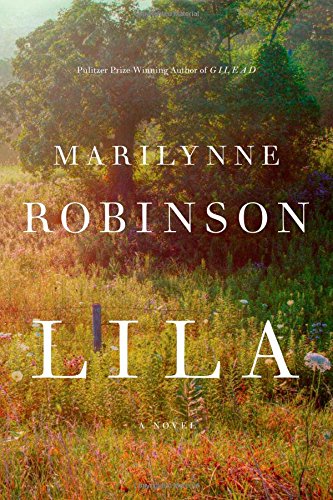
Marilynne Robinson’s much-anticipated Lila returns to the small town in Iowa where two previous novels, Gilead and Home, were set – but this time, she focuses on the woman who drifted into the life of the much older Rev. John Ames and gave him an unexpected son. Reviewing the book, Leslie Jamison marvels at the story Robinson tells, which grapples with “what makes grace necessary at all—shame and its afterlife, loss and its residue, the limits and betrayals of intimacy”:

The novel weaves together two narrative threads: the present arc of courtship, marriage, and Lilapregnancy; and the entire past life that delivered Lila to Ames’s church in the first place. Ames, marked by early grief after his first wife and their baby died in childbirth decades earlier, is no stranger to loss himself. “I had learned not to set my heart on anything,” he tells Lila, and she is drawn to this. “He looked as if he’d had his share of loneliness, and that was all right. It was one thing she understood about him.” When you’re scalded, touch hurts: one of the scalded recognizes another, and touches carefully, always. They are both haunted—Lila by the ghost of Doll, the wild woman who cared for her, and Ames by the specter of the life he never got to live with his first family. Part of the beauty of their bond is a mutual willingness to honor the integrity of their former lives. He prays for the “damned” souls of her past, and she begins to tend the grave of his late wife, clearing weeds and pruning the roses.

Lila takes as its core concern what might have constituted, in another narrative, a happy ending: two lonely souls who never expected happiness somehow finding it. But Robinson’s quest is to illuminate how fraught this happiness is, shadowed by fears of its dissolution and the perverse urge to hasten that dissolution before it arrives unbidden.

Jamison adds these thoughts about the grace suffusing Robinson’s writing:

Sorrow casts its shadow, and joy lives under it, surviving in its shade. This bleed between joy and sorrow doesn’t mean happiness is impossible, or inevitably contaminated; instead it reveals a more capacious vision of happiness than we might have imagined—not grace will never deliver you from this mess, but grace is this mess. Or at least, grace is in the mess with you.

Robinson’s grace is all the things we don’t have names for: the immortal souls we may or may not have, a doll with rag limbs loved to tatters. It’s sweet wild berries eaten in a field after a man baptizes the woman he will someday marry. Grace is money for a boy who may have killed his father; it’s one wife restoring the roses on the grave of another. Grace here isn’t a refutation of loss but a way of granting sorrow and joy their respective deeds of title. It offers itself to the doomed and the blessed among us, which is to say all of us. “Pity us, yes, but we are brave,” Lila realizes, “and wild, more life in us than we can bear, the fire infolding itself in us.”

If you can’t wait a few weeks until the novel’s publication date, read an excerpt from it here.

Obama’s War Budget

Jessica Schulberg reads a new report that attempts to tally the cost of the ISIS war so far:

Due to the vaguely defined scope of the conflictPresident Barack Obama has vowed not to deploy U.S. combat troopsit has been hard to put a dollar amount on the operation. But a Center for Strategic and Budgetary Assessments (CSBA) report released Monday estimates that the U.S. has already spent between $780-$930 million in Iraq and Syria. In just the past month, the cost was $250-$400 million, or $9-$14 million per day. …

Because Obama has yet outline any long-term plan for U.S. efforts in Iraq and Syria, CSBA’s long-term cost estimates are based on likely hypothetical levels of warfare. If the U.S. draws down airstrikes to approximately 100 targets a month (there have been 200 targets this month, but air campaigns usually peak early because targets learn to hide) and caps U.S. personnel at 2,000, the cost is estimated to be between $2.4 and $3.8 billion a year. But if the administration follows recommendations to deploy 25,000 ground forces and raises the number of air strikes to 200 a month, it will be closer to $13-$22 billion annually.

“To put this in perspective,” she adds, “the U.S. spent approximately $1.1 billion in total direct expenditures in the 2011 NATO-led intervention in Libya.” But  notes that these estimates are “far less than the roughly $150 billion the U.S. spent during the peak years of the Afghan (2011) and Iraq (2008) wars.” Business Insider looks at where the money to fight ISIS is coming from:

The Pentagon has said that financing for the ISIS fight will come from the Overseas Contingency Operation fund, an account exempt from budget caps that was created for the wars in both Afghanistan and Iraq last decade.

Earlier this year, Obama sought to dwindle the budget for that account down to about $59 billion from $85 billion, reflecting the decline of operations in Afghanistan. But the spending bill passed by Congress last month continues to fund the OCO at the $85 billion level.

Meanwhile, Kate Brannen tries to see through the fog over the $5 billion counterterrorism fund the White House proposed in June, including the $500 million Congress has already approved to arm the Syrian rebels:

According to multiple sources — both inside the military and on Capitol Hill — the fund’s purpose is murky because it was mostly conceived by National Security Council staff within the White House with little input from budget or policy experts at either the Pentagon or Foggy Bottom. A few days after the West Point speech, while visiting Poland, Obama announced another new fund. This one was $1 billion for a European Reassurance Initiative, again taking Pentagon officials by surprise, Defense Department and congressional sources told Foreign Policy.

In both instances, the Pentagon was given pots of money and was basically told to figure out how to spend the money, rather than asked what it really needed, one Pentagon official said. If the Pentagon had proposed the counterterrorism fund, it would have been “dead on arrival” at the White House, a former senior Defense Department official said.

A Climate Polemic Against Capitalism

Naomi Klein’s new book, This Changes Everything, argues that capitalism is largely to blame for our climate crisis. How Klein describes her book in an interview:

Changes EverythingWhat I’m arguing in this book is that we need to return to the progressive tradition of responding to deep crisis by trying to get at the root causes of the crisis. And the best example of that is the way in which the progressive movement responded to the Great Depression. It became an opportunity to change the way we organized our economies, to regulate banks, to launch social programs that got at the roots of inequality.

If we really believed that climate change is an existential crisis, if we believed climate change is a weapon of mass destruction, as John Kerry said, why on Earth would you leave it to the vagaries of the market?

In another interview, Klein clarifies her position:

I’m not saying that markets have no role in combatting climate change. I think the right market incentives can play a huge role—we can point to all kinds of companies doing great stuff. The issue is not to say the market has no role. It’s the idea of leaving this to the market. We can mint solar and wind millionaires and still not get there because we have these hard targets we have to meet. There will have to be a strong role for the public sector, a strong role for regulations and, yes, incentives. But the idea of just leaving our collective fate to the market is madness. You wouldn’t treat any other existential crisis in that way.

Zachary Karabell strongly disagrees with Klein’s thesis. He fears that “rhetoric risks obscuring just how much is being done by large companies around the world to reduce their carbon emissions and environmental footprint”:

None of us should lose sight of working toward a less resource-intensive future. Getting there requires massive investment of trillions of dollars and concerted effort at multiple levels of society. Dismissing a key element of that change—the multinationals and global NGOs that are trying to make these changes in spite of the sclerosis and opposition of so many governments and in the face of powerful lobbies—may galvanize some activists. But barring a synchronous overthrow of the entire global capitalist system, we need the assiduous efforts of multinationals that simultaneously strive to make heaps of money and to reduce their environmental impact. Without them, we would be many steps closer to the environmental Armageddon that Klein and so many of us fear is nigh.

Rebecca Henderson argues along the same lines:

We need to build a social movement that can insist that our leaders put in place the policies that will enable us to deal with the threat of climate change. And while we may struggle with longer-term priorities, we’re also a species that will do almost anything to ensure the welfare of our children. We need to rediscover the old idea that responsive, democratically controlled government has a central role to play in ensuring that the rules of the game are fair, and in dealing with problems like climate change: tough, long-term collective action problems that can only be addressed by the state.

But that doesn’t mean that we should abandon capitalism. With the right policies, capitalism properly understood is perfectly well equipped to prepare us to face the risk of large scale climate change. In fact, it’s the only thing that can.

And Will Boisvert calls the book “a garbled mess stumbling endlessly over its own contradictions”:

Her understanding of the technical aspects of energy policy — indispensable for any serious discussion of sustainability — is weak and biased, marked by a myopic boosterism of renewables and an unthinking rejection of nuclear power and other low-carbon energy sources. Having declared climate change an “existential crisis for the human species,” [15] she rules out some of the most effective means of dealing with it.

Her attack on globalization and trade sometimes clashes with rather than supports her goal of rapid decarbonization. Her abhorrence of industrial civilization misconstrues its complex, sometimes positive impact on the environment. Her politics veer between calls for massive government initiatives and celebrations of an extreme localism and populism that are likely to hobble state action. And her rhapsodic ideal of a society that stands in “humility before nature” [267] glosses over the inherent tension between natural limits and human aspiration — and what that implies for her goals of development and liberation.

John Gray is much more sympathetic. He calls Klein’s latest “a powerful and urgent book that anyone who cares about climate change will want to read.” But he finds it “hard to resist the conclusion that she shrinks from facing the true scale of the problem”

When I read The Shock Doctrine (Guardian review headline: “The end of the world as we know it”), I was unconvinced that corporate and political elites understood what they were doing in promoting the wildly leveraged capitalism of that time, which was already beginning to implode. The idea that corporate elites are in charge of the world is even less convincing today. …

Another problem with pinning all the blame for climate crisis on corporate elites is that humanly caused environmental destruction long predates the rise of capitalism. As Klein herself observes in an interesting chapter on what she calls “extractivism” – the economic model that treats the Earth as a bundle of resources waiting to be exploited – human activity was already changing the climate centuries ago. “We started treating the atmosphere as a waste dump when we began using coal on a commercial scale in the late 1700s and engaged in similarly reckless ecological practices well before that.” Moreover, though Klein doesn’t explore the fact, it’s worth bearing in mind that the extractive model was applied on a vast scale in the centrally planned economies of the former Soviet Union and Mao’s China, where some of the largest and worst 20th-century environmental catastrophes occurred.

However, Chris Bentley is against dismissing Klein out of hand:

We haven’t made significant progress, Klein argues, because we’ve been expecting solutions from the very same institutions that created the problem in the first place.

As for who should be the agents of this change, Klein reports on the front lines of grassroots movements from Montana to Greece — an unofficial coalition of shared interests that she dubs “Blockadia.” Klein says the answer is to empower the communities that stand to lose the most: among them, indigenous peoples threatened by mining and drilling operations, the world’s developing nations, and activists resisting austerity amid widening socioeconomic inequality.

While “power to the people” may seem an uninspired way to change the world’s dominating socioeconomic systems, Klein’s sharp analysis makes a compelling case that a mass awakening is part of the answer.

Would You Eat A Black Bun?

https://twitter.com/Creative_Boom/status/516994707751047169

Tiffanie Wen discusses the reception of a black burger in Burger King restaurants in Japan:

Americans have been both intrigued and repulsed by the images. “Finally #BurgerKing makes a burger the way your body sees it … disgusting and cancer-causing,” one Twitter user wrote. Another tweeted: “It’s the black cheese that freaks me out the most. It looks like the kind of rubber they use to make gimp masks.”

But the burger is enjoying a “favorable reception” in Japan, according to the Guardian—so why do Americans have such a negative response to it?

She offers an answer:

McDonald’s and other international chains have long adjusted their recipes and menus to cater to local tastes. Last year Thrillist dedicated a post to the best foreign McDonald’s products from around the world. (I’d personally love to try the deep-fried Camembert “cheese melt dippers” from branches in Ireland.)

With regards to the KURO burgers, Garber says, “Black in the U.S. simply doesn’t convey a favorable food meaning. It means charred or burnt or moldy or spoiled or inedible.” But in Japan, black is positively associated with food. Eva Hyatt, a professor of marketing at Appalachian State University, told New York Magazine that people in Japan are exposed to more black foods, including seaweed, bean paste-based foods, black walnut powder, squid ink, and other grey foods.”

Clint Rainey notes that McDonalds has followed suit with a black burger of its own, “and the limited-edition burger is now available at three Tokyo branches”: