Dissents Of The Day

Several readers jump on this quote of mine:

“Clinton’s developing a new formula for politics: stand for nothing but winning power. And the Democrats seem perfectly happy with it.” Perfectly happy? No. Accepting of reality? Trying to be.

There’s no new formula here. It’s just Machiavellian. Ask yourself: Why on earth would Hillary stake out a position in favor of some philosophy, doctrine, or model that she plans to sell us on?  One that already has its legions of paid detractors?  A nice, book-length box into which she can spend 8 years cramming the world?  Instead she takes on the unsexy and, obviously, less academically palatable task of judging the world as it is: a 3D chess game where the rules change constantly.

Labeling and categorizing reality based on something you read is just another ideology. I don’t think Hillary stands for “nothing” because she’s not into that game. I think she stands for enlightened self-interest, as expressed through a desire to see America win those games in which she chooses to engage, to the greater glory of, of course, herself.

The question should not be, “Is Hillary Clinton a moral leader?” The question should be, “Is Hillary Clinton America’s best bet to lead in a post-moral world?”

It’s not craven, cynical, or even strictly selfish of her.  It’s her acknowledgement that we live “after history.”  It’s intuitive, I think.  It’s that bedrock Clinton talent of fingering the wind.  Is she right?  She’s a better bet than Ted Cruz, or some other deluded hack.

Another:

While I’m personally horrified by the prospect of Hillary Clinton running for president, her policy vacuity may be the only thing I don’t hold against her. You write, “Clinton’s developing a new formula for politics: stand for nothing but winning power. And the Democrats seem perfectly happy with it.”

In other news, the sun rises in the east and the sky is blue. Vacuous standard-bearer candidates are the norm, not the exception, in American history. And rightly so: Prior to WWII, the president had so little real power that his personality only mattered in the most unusual of crises. (Which is to say, Washington and Lincoln.) People usually voted the party, not the man. And since WWII, the executive branch has become so large that while the more powerful president’s personal gifts and faults matter more than formerly, the hundreds of appointed bureaucrats drawn from his party’s activists matter much more to most policy questions than does the president himself. Or herself. So people today should vote the party, not the man, and public opinion research suggests that in the main they do so.

Historically, a candidate who stands for something usually loses his party’s nomination to a candidate whose policy vacuity makes him an empty vessel for voters to fill with their own preferences. American parties usually nominate Zachary Taylor, not Henry Clay. “Availability” was once the polite term for the virtue of being a supposedly electable policy cipher. Abraham Lincoln was “available,” as were Ulysses Grant, Grover Cleveland, Dwight Eisenhower, and Bill Clinton. As were Theodore Roosevelt and Harry Truman when nominated for vice president.

In the modern era, only Goldwater, McGovern, and Reagan stand out as true policy candidates (Obama had much the effect of a policy candidate, but his stated policy disagreements with Hillary in 2007-08 were minuscule. Perhaps call Obama a “biography” candidate, alongside Kennedy.) All other major nominees were “available” – to the extent that they had any known strong policy commitments, they were nominated in spite of them, not because of them.

So, Hillary Clinton. Vacuous? Yes. Troublingly so? Not in the context of American politics and history.

The trick, ultimately, is not demanding that every presidential candidate be a policy genius. The trick is reducing the reach of executive authority so that the vacuous mediocrities we tend to elect can do less harm. If we had given George W. Bush the powers and duties held by Rutherford B. Hayes, the world would barely have noted his time in office.

Another piles one:

I was a very strong supporter of Obama from as soon as he gave that speech at the 2004 Democratic convention, and now I’m perfectly happy with electing Hillary Clinton as a Democratic President who stands for nothing. Why?

Two reasons: first, because I just want Hillary to maintain what Obama has achieved. I don’t believe she could have passed the stimulus or the ACA or even Dodd Frank, but he did. Now she can keep the Republicans from dismantling those and flushing the country down the toilet like they did under the Bush administration. She also doesn’t need to stand for anything to elect liberal justices to the Supreme Court who will begin to undo the current court’s disastrous decisions on guns, corporate speech, and women’s rights. He didn’t get immigration reform or cap-and-trade, and neither will she against a group of Republican Know Nothings.

Which brings me the second reason I want her: the first female President will probably win big, and losing three (or four!) consecutive elections against rising demographic odds and twelve (or sixteen!) years of obstruction and no new ideas will eventually bring about the implosion of the current Republican party, which is focused only on taxes and abortion, and the recreation of a Republican party that can compromise again. Obama did the heavy lifting on the liberal agenda as much as can be done, and frankly I don’t want the Democrats to go all Elizabeth Warren off the deep end, with post office banks and $15 minimum wages. All I want is someone to put liberals on the Supreme Court and wait for the Republicans’ own bile to wear them down to nothing. And who better to do that than Hillary Rodham Clinton?

A Cure For Ebola?

Kent Brantly and Nancy Writebol, the American ebola patients now being treated in the isolation unit at Emory University Hospital, received an experimental treatment while still in Liberia that may have saved their lives. James Hamblin looks into just what this “top-secret serum” is:

[It’s] a monoclonal antibody. Administration of monoclonal antibodies is an increasingly common but time-tested approach to eradicating interlopers in the human body. In a basic monoclonal antibody paradigm, scientists infect an animal (in this case mice) with a disease, the mice mount an immune response (antibodies to fight the disease), and then the scientists harvest those antibodies and give them to infected humans. It’s an especially promising area in cancer treatment.

In this case, the proprietary blend of three monoclonal antibodies known as zMapp had never been tested in humans. It had previously been tested in eight monkeys with Ebola who survived—though all received treatment within 48 hours of being infected. A monkey treated outside of that exposure window did not survive. That means very little is known about the safety and effectiveness of this treatment—so little that outside of extreme circumstances like this, it would not be legal to use. [Sanjay] Gupta speculates that the FDA may have allowed it under the compassionate use exemption.

John Timmer has more on the treatment:

Fortunately, Mapp [Biopharmaceutical, the drug company working on zMapp,] has been publishing papers describing its progress on an Ebola treatment as it went along, so it’s possible to understand how the therapy was developed and how it operates.

Despite its fearsome behavior, Ebola is a fairly simple virus, with only seven genes. The gene that is essential for the virus to attach to human cells, called Ebola glycoprotein, has been identified previously. Antibodies that stick to this protein would be expected to block infection of new cells and target any virus circulating in the blood stream for destruction. The problem appears to be that an effective antibody response comes too late for the patients. (The virus also takes steps to tone down the immune response.) Mapp decided to do the immune system’s job for it by making antibodies that can then be injected into infected individuals to perform the same function. The challenges are making the right ones and making enough of them.

Shirley Li notes that zMapp isn’t the only experimental ebola treatment out there:

So why ZMapp, of all the experimental solutions to Ebola, of which there are many? Perhaps it comes down to Mapp’s recent successes: The NIH included Mapp in its $28 million five-year grant awarded to five companies to research Ebola further in March. A press release dated July 15, 2014 revealed that Defyrus, a private life sciences biodefense company based in Canada, had partnered with Mapp’s San Diego-based commercialization partner firm Leaf Biopharmaceutical Inc., to push the ZMapp serum’s clinical development. And just last week, the Defense Threat Reduction Agency announced it awarded a contract to Mapp to continue development of the serum.

Still, fighting Ebola means a multi-pronged attack. While Mapp’s method focuses on eradicating the disease after infection, the NIH has been working on preventing it in the first place. In the NIH’s case, it’s working to promote development of antibodies within the subject, instead of injecting them from an outside source that survived Ebola.

Steven Hoffman and Julia Belluz blame the lack of an effective ebola treatment until now on the way pharmaceutical companies prioritize their R&D:

Ebola will continue to move through Africa — this time, and again in the future — not only because of the viral reservoirs and broken health systems specific to the continent. There are much larger issues at play here. Namely, the global institutions we designed to promote health innovation, trade, and investment perpetuate its spread and prevent its resolution.

This shouldn’t be news. Most all of the money for research and development in health comes from the private sector. They naturally have a singular focus — making money — and they do that by selling patent-protected products to many people who can and are willing to pay very high monopoly prices. Not by developing medicines and vaccines for the world’s poorest people, like those suffering with Ebola. Right now, more money goes into fighting baldness and erectile dysfunction than hemorrhagic fevers like dengue or Ebola.

Follow all of our ebola coverage here. Update from a reader:

In the past I have been very critical of your coverage and thoughts on scientific matters; it’s incredibly frustrating to see published opinions littered with “rookie mistakes” from people who lack scientific training. As someone who is highly educated in these matters and has to compete for diminishing public funds, I have no tolerance for the long history of scientific inaccuracy from the media.

Having said that, your coverage of the Ebola epidemic has been pleasantly accurate and appropriate. I especially appreciate you highlighting Steven Hoffman and Julia Belluz’s article. They highlight a searing problem in our current research system; research priorities go towards profitable markets. The federal government is supposed to offset that, but thanks to the current batch of Republicans, worthwhile funding opportunities are going unfunded.

A colleague of my boss recently received a perfect score on a federal grant, but it did not get funded. There was nothing wrong with the grant scientifically, conceptually, or practically; they just ran out of money. The big problem is that funding opportunities aren’t growing while the scientific community is expanding. This has led us to the current ultra-competitive environment where there is no lack of sound ideas, projects, and causes that can directly be addressed and make real, lasting impacts on people’s lives.

But there’s no profit there, so Big Pharma researches ED, makes boner pills instead, and sleeps on beds of cash while poor people die of Ebola. “And the beat goes on…”

The Creatures From The Green Lagoon

Toledo, Ohio Contends With Contaminated Tap Water For Third Day

Life in northwest Ohio is returning to normal after the mayor of Toledo lifted a drinking-water ban that affected some half a million metro-area residents. Ben Richmond offers a recap of the past days’ events:

On Saturday, Toledo officials issued a warning not to drink the water after they discovered high levels of the toxin microcystin in the water, coming from a huge bloom of the cyanobacteria (or “blue-green algae”) microcystis in Lake Erie’s Maumee Bay, where the city of 284,000 draws its drinking water. Boiling tap water only concentrates the toxins further, so residents were left emptying store shelves of bottled water and lining up at water distribution centers, as their water supply turned a sickly shade of Satanic vomit-green.

According to the Environmental Protection Agency, “the presence of high levels of cyanotoxins in recreational water and drinking water may cause a wide range of symptoms in humans including fever, headaches, muscle and joint pain, blisters, stomach cramps, diarrhea, vomiting, mouth ulcers, and allergic reactions.” It gets worse: Microsystin has also been linked to liver inflammation and hemorrhage, kidney damage, and “potential tumor growth,” the EPA adds.

The restrictions were lifted Monday, although the long-term outlook for the area’s water system remains uncertain. Agricultural pollution appears to have be the culprit, Richmond notes:

Nature might provide the sunshine and warm weather that allows the cyanobacteria to flourish, but its farms and towns near waterways that give the blue-green algae their super-food: phosphorus. High use of phosphorus-based fertilizers and the presence of livestock near water supplies, combined with waste-water and run-off from towns and cities near the waterways has raised the levels of phosphorus in the lake, leading to record-breaking blooms in 2011, and above average blooms since.

Brad Plumer adds that climate change may bear some blame:

The number of heavy rain events in the Midwest has increased some 37 percent since the 1950s. That’s significant, since it’s the really heavy storms that wash away the most phosphorus from farm soil and cities into the watershed. … One 2013 study in the Proceedings of the National Academies of Sciences predicted that algae blooms in Lake Erie were likely to increase in the years ahead — even if farming practices stay the same. That’s because, as the planet warms, the atmosphere will be able to hold more moisture and heavier rainfall events in the Midwest will become more and more common.

Meanwhile, Gwynn Guilford registers the national scale of the problem:

Lake Erie is notorious for its algal blooms. But it’s hardly the only body of water in the US that sees these ecological catastrophes in the summer of 2013 alone. For instance, Oregon had to commute its Midsummer Triathalon down to a biathalon in Aug. 2013 due to toxic slime clogging Blue Lake. Kentucky reported its first toxic algae problems in the state’s history only in 2013, after visitors to four lakes complained of rashes and stomach pain; the blooms are back again this year. In Florida, toxic algae in Indian River Lagoon killed more than 120 manatees in 2013, say some scientists.

Mark Berman zooms out:

The water issue in the US pales in comparison to the clean water shortages in other parts of the globe. There are 783 million people without access to clean water around the world, according to the United Nations. But the Toledo ban still speaks to the sensitivity of water systems in the US, which are relied upon by hundreds of millions of people and can be severely affected by natural occurrences or outside contaminants.

Meanwhile, Rebecca Leber observes that there’s little in the way of regulatory oversight when it comes to such issues:

Testing for microcystin isn’t federally mandated, nor is it required in the state of Ohio. As a result, many towns don’t have emergency response plans in place and vary in how often they test water samples for the toxin. The Toledo Blade reported that water treatment officials across Ohio have asked the EPA for additional guidance on testing for microcystin. That lack of guidance can result in confusion, even risk to the public’s safety: State officials had assured Toledo residents that the water plant had enough sophisticated “safeguards in place to neutralize the toxin and remove it before it can get into the water supply.” The tap-water ban was announced eight days later.

The Bloomberg editors concur:

Lake Erie, which was known as “North America’s Dead Sea” in the late 1960s, was saved mainly by the Clean Water Act of 1972, which required sewage-treatment plants and industry to limit how much pollution they discharged into US streams and rivers. It was an enormous undertaking, with the federal government spending more than $60 billion nationwide to improve treatment facilities. …  What’s clear is that today’s regulations aren’t up to the job of safeguarding the US’s drinking-water supply. Rules that mandate stricter rules for fertilizer application should be adopted. Lawmakers also should tie the availability of federal subsidies to farms, such as crop insurance, to farm-management practices that reduce runoff. In the meantime, cities like Toledo will be stuck paying the bill as they spend more money to monitor, test and filter water.

(Photo: Algae from Lake Erie washes ashore at Maumee Bay State Park in Oregon, Ohio, on August 4. By Aaron P. Bernstein/Getty Images)

What’s Your Favorite Place To Read? Ctd

IMG_0238

Sending the above photo, a reader answers:

This spot (so I can get high).

Another in Boston:

My favorite place is the MBTA’s Red Line. I get on at Alewife (the end of the line) so I always get a seat, and I read all the way to Downtown Crossing.  I’ve been doing this commute for twelve years and I think I’ve read more in this fifth of my life than in the other four-fifths combined.

Another can’t pick just one:

My number one most favorite place to read is in the bathtub.  For a while, I had a water-proof protective case for my i-Pad, because I was afraid I would drop it in the tub, but then decided that it was too annoying, so now I just take my chances.  So far, so good.  A bonus is that, unlike books, which get a little waterlogged just from little drops of water on my hands even when I don’t actually drop the book in the tub,  the i-Pad is amazingly impervious to water.  My screen often looks like it is quite dirty, though, when in fact, it is just streaked with soap.

My second most favorite place to read is on the train.

I hate commuting, it sucks, but the one good thing about it is that for 70 minutes a day, 35 minutes each way (plus whatever time I am on the train waiting for it to leave) I am stuck sitting in one place, and can read uninterrupted, without guilt that I should be doing something else.  I try to sit in the quiet car, all the way in the back where no one bothers me.

Finally, I like to read in restaurants, while I am having lunch on a work day usually.  Even when I’m very busy at work, I will usually find time to grab a bite to eat, and will read while I do so.  The i-Pad also has increased my reading efficiency in this regard.  When I am reading a physical book (which I still do regularly, although not nearly as much as I read on my i-Pad) the book will flip shut if I have to let go to pick up a sandwich or cut something, so I may have to put the book down between bites, or balance a ketchup bottle on it to keep it open.  With the i-Pad, I just prop it up, and read hands free.

More reader responses here. Update from another:

I have lots of favorite places to read, but I’m also the mom to 19 month old, so life is not as flexible as it used to be. So right now, my favorite place to read is on my couch, after the boy has gone to bed, with a glass of wine on the side table and the sweet silent hiss of the baby monitor in my ear. It’s heaven when I can stay up late enough to get through a chapter.

I’m loving this thread, which is a nice break amidst all the heartbreak.

Can You Relate?

Rebecca Mead tut-tuts those who, like Ira Glass, would relate to art rather than identify with it:

Identification with a character is one of the pleasures of reading, or of watching movies, or of seeing plays, though if it is where one’s engagement with the work begins, it should not be where critical thought ends. The concept of identification implies that the reader or viewer is, to some degree at least, actively engaged with the work in question: she is thinking herself into the experience of the characters on the page or screen or stage.

But to demand that a work be “relatable” expresses a different expectation: that the work itself be somehow accommodating to, or reflective of, the experience of the reader or viewer. The reader or viewer remains passive in the face of the book or movie or play: she expects the work to be done for her. If the concept of identification suggested that an individual experiences a work as a mirror in which he might recognize himself, the notion of relatability implies that the work in question serves like a selfie: a flattering confirmation of an individual’s solipsism.

But Freddie suggests that Mead’s concerns about contemporary self-absorption are misplaced:

Selfies are the opposite of solipsism; they are the creation of a perspective that is entirely alien to the person taking them. None of us can naturally see our own face. We build mirrors precisely to get outside of our own perspective. We use the camera to put ourselves in the position of other people. Call that what you’d like, but it isn’t solipsistic.

Complaints that we’re all self-obsessed are evergreen, but I think that they badly miss the point in our current technological moment. Rather than being obsessed with our own point of view, I think we are instead in an era in which we are obsessed with the gaze of others. Yes, we are watching others watch us, and so there’s a second order sense in which we are still the subject of our own drama. But rather than being uninterested in the point of view of others, I think we have constructed an immense digital apparatus to focus on little else.

Meanwhile, Alan Jacobs wonders just how much “relatability” differs from “identification,” asking, “Is wanting the work to be a mirror really so different from wanting it to be a selfie?”:

People, especially young people, used to say, when explaining their dislike of a book, “I just couldn’t identify with it” or “I just couldn’t identify with the characters.” Now they say, “it just wasn’t relatable.” Both of these are just shorthand ways of saying “This work bored me and I think it’s the work’s fault, not mine.” …

I think what the language of relatability and the language of identification typically, if not invariably, connote – and they do this whether used positively or negatively – is weakness of response. And this is why the terms remain so vague, maddeningly so for those of a verbally critical bent. When people really love a work, or really hate it, they enjoy explaining why. When they sorta kinda like it, or sorta kinda dislike it, they say that it was or wasn’t relatable, or that they could or couldn’t identify with the characters. “Relatable” and “identify” are words that ought to come with a shrug pre-attached.

On a skeptical note, Derek Thompson warns, “If you don’t like relatability, you’re going to hate the history of American theater”:

Long Day’s Journey Into Night is nearly autobiographical and, famously, scarringly relatable to any family that has suffered from a form of addiction; Angels in America and The Normal Heart took on the AIDS crisis at the height of the AIDS crisis. A Raisin in the SunDeath of a Salesmen? These aren’t exactly Mesozoic dramas. The Crucible might be the most famous American play that isn’t about contemporary American life, but as a metaphor for America in the Cold War, its politics couldn’t be any more current for its contemporary audience.

The point isn’t that great art has to be about contemporary life. I’m not sure great art has to be anything. But so much wonderful theater has served, historically, as an exaggerated mirror held up to a country at a specific moment in history that it’s shocking to see a writer blast the idea that “[a play] be somehow accommodating to, or reflective of, the experience of the reader or viewer.” Ira Glass did not invent the idea that great plays ought to reflect their times.

Meanwhile, Alyssa Rosenberg makes sense of “relatability” in light of the politics of representation:

For certain classes of people, consuming mass culture is a constant exercise in empathy. If you’re anything but a straight, white man, action movies are an opportunity to exult in the strength and persistence of people who look nothing like you. Cable television has taken people of all backgrounds into a journey through the troubled mind of the middle-aged man that is well into its second decade.

Demands for “relatable” stories or characters can, in these circumstances, be a cry of “enough!” If traveling into someone else’s mind and experiences through fiction is meant to be morally improving work, we must acknowledge that sometimes that work can be tiring.

ISIS Gains Ground In Northern Iraq

Screen Shot 2014-08-04 at 2.26.16 PM

The Islamic State has taken over the town of Sinjar in the country’s northwest, near the Syrian border. Sinjar is the homeland of the Yazidis, a religious minority that Joshua Landis warns is now in grave danger of persecution:

One of the few remaining non-Abrahamic religions of the Middle-East, the Yazidis are a particularly vulnerable group lacking advocacy in the region. Not belonging to the small set of religions carrying the Islamic label “People of the Book,” Yazidis are branded mushrikiin (polytheists) by Salafis/jihadists and became targets of high levels of terrorist attacks and mass killing orchestrated by al-Qaida-affiliated jihadists, following the instability brought about by the War in Iraq.

Today’s IS assault is already bringing about devastating consequences for Yazidis, who make up about 340,000 of Sinjar’s 400,000 inhabitants (this is a high estimate). Many have fled on foot through the desert, without food or water. Others fleeing in cars for Dohuk have been unable to make a clean escape, due to the inability of the roads to accommodate such a large flux of people. Thousands of cars are currently stranded west of the Tigris River.

Andrew Slater also fears for Sinjar’s religious minorities:

By the afternoon of Sunday, August 4, with ISIS in full control of Sinjar, terrified families from the area began their dangerous exodus. The speed with which ISIS engulfed the entire mountain range attests to the large numbers of fighters they brought to bear for this major offensive. Villagers in the Sinjar area gave accounts of girls and young women from their families being abducted by ISIS fighters and carried away. Countless families fled to the mountains above their villages where they are currently surrounded by ISIS controlled areas and are desperately calling friends and family members who escaped, pleading for help. Pictures of families hiding in the mountains have circulated widely on Iraqi social media.

Besides the Sayyida Zainab mosque, ISIS forces were reported to have blown up the Sharif Al-Deen shrine on the Sinjar mountainside, a holy place for Yezidis. The ISIS flag was also raised over the only remaining church in the Sinjar area. Within 24 hours, Sinjar has been transformed from a bustling community into a string of ghost towns.

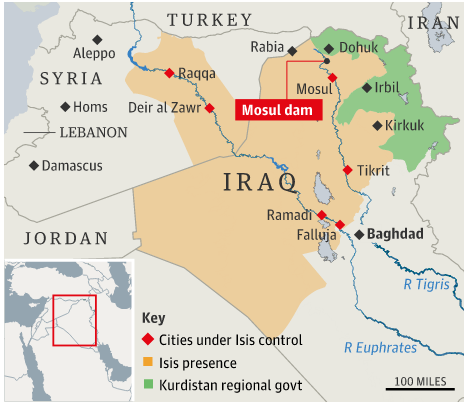
In its rampage through northern Iraq, ISIS may also have captured Iraq’s largest dam:

Capture of the electricity-generating Mosul Dam, which was reported by Iraqi state television, could give the forces of the Islamic State (Isis) the ability to flood Iraqi cities or withhold water from farms, raising the stakes in their bid to topple prime minister Nuri al-Maliki’s Shia-led government. “The terrorist gangs of the Islamic State have taken control of Mosul dam after the withdrawal of Kurdish forces without a fight,” said Iraqi state television of the claimed 24 hour offensive. Kurdish officials conceded losses to Isis but denied the dam had been surrendered. A Kurdish official in Washington told Reuters the dam was still under the control of Kurdish “peshmerga” troops, although he said towns around the dam had fallen to Isis.

Meanwhile, jihadists affiliated with ISIS and the Syrian jihadist rebel group Jabhat al-Nusra have taken over the Lebanese border town of Arsal, but Zack Beauchamp assures us that this isn’t as scary as it seems:

ISIS’s actions in Arsal aren’t part of a deliberate expansion of the caliphate into Lebanon. Rather, Lebanese forces picked a fight with ISIS fighters who’d been pushed out of Syria. In purely geographic terms, this interpretation of the fighting makes more sense. … Lebanon, down near Damascus in the west, is really far from ISIS’ bases in north-central Iraq and northern Syria. It would be very, very hard for ISIS control territory far away in Lebanon in the same way it controls the caliphate proper.

That said, ISIS’ presence in Lebanon really could be destabilizing all the same. The Arsal fighting alone has already displaced 3,000 people and killed at least 11 Lebanese soldiers. And while ISIS is not trying to seize territory in Lebanon outright (not yet, anyway), the group is ramping up terrorist attacks there. “They’ve been bombing things, trying to get cells in Tripoli [and] Damascus,” Smyth says. “They’ve tried to use these different cells to bomb Iranian and Hezbollah targets there.”

In any case, Keating remarks that these developments are changing the calculus regarding ISIS’s staying power:

A few weeks ago, it seemed unlikely that ISIS could hold out for that long given the sheer number of regional actors it had picked fights with. But it seems like it’s not only holding out, it’s expanding its activities into new areas and taking on new rivals. It’s hard to imagine how it will be contained unless the various forces fighting it can somehow find a way to coordinate. For now, the center of the conflict seems to be the Mosul Dam. Will the prospect of power cuts or catastrophic flooding be enough to get Maliki’s government to work with his Kurdish rivals?

Siddhartha Mahanta notices that ISIS’s recent gains have prompted the Baghdad government to start cooperating with the Kurds:

That massive setback — which the peshmerga claim is a strategic retreat — reportedly led Maliki to back up the peshmerga with air support, as Reuters reported on Monday. “We will attack them until they are completely destroyed; we will never show any mercy,” a Kurdish colonel told the news agency. “We have given them enough chances and we will even take Mosul back. I believe within the next 48-72 hours it will be over.” So while Maliki is making good on his threat to use legal power to seize Kurd-claimed oil, he’s also sending in the planes to back the Kurds just as the myth of their apparent invincibility takes a potentially serious hit. It’s either a shrewd political move or a truly desperate cry for help. Baghdad and Erbil. These days, theirs is a tale of two frenemies.

And Dexter Filkins argues that we should be helping the peshmerga, too:

The militants in ISIS have swept across much of northern and western Iraq, and there is no sign that they have any intention of slowing down. In a surprising—and encouraging—turn, Maliki has apparently ordered the Iraqi Air Force to carry out air strikes to help the Kurds. That said, the Iraqi Army has proved itself utterly ineffectual in combating ISIS. If the U.S. decided to help the Kurds, there would be no guarantee that the Kurds wouldn’t later use those weapons to further their own interests. But what other choice is there? If anyone is likely to slow down ISIS, it’s going to be the Kurds—regardless of whatever they’re planning to do later on.

The Imaginary War On Whites

On Fox News Sunday, Ron Fournier made the rather banal observation that the GOP “cannot be the party of the future beyond November, if you’re seen as the party of white people.” In response, while talking with Laura Ingraham, Republican Congressman Mo Brooks went overboard:

This is a part of the war on whites that’s being launched by the Democratic Party. And the way in which they’re launching this war is by claiming that whites hate everybody else. It’s a part of the strategy that Barack Obama implemented in 2008, continued in 2012, where he divides us all on race, on sex, greed, envy, class warfare, all those kinds of things.

Fournier defends himself:

I do feel compelled to remind Brooks that nothing I said should surprise him, because his party leaders agree with me. If I am part of a war on whites, so is RNC Chairman Reince Priebus and the 2,600 fellow Republicans interviewed for the “RNC Growth Opportunity Book 2013,” the so-called GOP autopsy.

“If Hispanic Americans perceive that a GOP nominee or candidate does not want them in the United States (i.e., self-deportation), they will not pay attention to our next sentence,” the report reads. “It does not matter what we say about education, jobs, or the economy; if Hispanics think we do not want them here, they will close their ears to our policies.” …

What I said is indisputably, if uncomfortably, true. Unless a broader swath of the GOP community learns to accept and adapt to the fact that the United States will soon be a majority-minority nation, the Republican Party is doomed not to lead it. Finally, sir, bury the straw men: Blanket amnesty and wide-open borders aren’t the price for political relevancy. For starters, let’s try compassion, wide-open minds, and compromise.

Chait snickers at Brooks’ comments:

Brooks is characteristically fuzzy on both the motive and the mechanics of the current War on Whites. On the surface, you might find it silly to imagine that the Democrats would antagonize the majority segment of the American public. Democrats definitely need white people (whites supplied 56 percent of Barack Obama’s vote in 2012; nonwhites supplied just 11 percent of Mitt Romney’s votes). White people have other uses for Democrats, like providing campaign donations, filling cabinet roles and Congressional seats, and so on. From a pure strategic standpoint, launching a war on white people would seem like a bad idea.

Steven Taylor adds:

One thing is for sure:  Brooks does not understand (or does not wish to acknowledge) the way in which certain factors tend to align (such as race, economic status, and policy preferences) and he, like many conservatives of his ilk, have no self-awareness of how the structure of US historical development might have sorted persons by color into certain economic strata.  He certainly lacks a tremendous amount of self-awareness if, in a multi-paragraph manifesto of how there is a “war on whites” he can say “I don’t know of a single Republican who has made an appeal for votes based on skin color.”

In general, I want to say something intelligent and helpful in terms of maybe getting some readers who really don’t get how problematic these views are, but really all I can think are various insults (and the ones in Spanish are the most fun, given the context).

Weigel joins the conversation:

What will the fallout be for Brooks? Nothing—his district, which hugs the Tennessee border, voted by a 2-1 margin for Mitt Romney over Barack Obama. No Democrat bothered to run against him this year. Honestly, there’s less to Brooks’ “war on whites” riff than the headline suggests. Other conservatives, most notably Stanley Kurtz, have described the Obama administration’s urban-focused transportation and energy policies as a “war on the suburbs,” ways to get the people who fled the cities (white people, though that’s not made explicit) to come back in. And the politics of welfare and food stamps have always tracked with opinions about race.

But Brooks wasn’t saying any of that. He tried to coin a phrase—like “war on women”—insisting that accusing Democrats of waging this fight was calling out racism.

Kilgore sighs:

I dunno: it strikes me as entirely consistent with the twisted logic we hear all the time about the only racists being race-card-playing liberals that demonize conservative white folks who are “color-blind” in their hostility to anything black and brown folks deem highly objectionable.

Obama’s Imperial Presidency? Ctd

Yesterday, Eric Posner defended Obama’s legal right to unilaterally legalize large numbers of undocumented immigrants. Reihan counters:

What Posner neglects is that the deferred action contemplated by the Obama administration does in fact represent a departure from current practice, as it would grant a broad class of unauthorized immigrants a work permit. A work permit is a valuable asset that would essentially turn unauthorized immigrants into authorized immigrants for various economic purposes, and it is the desirability of this formal legal status that has served as the impetus for the push for comprehensive immigration legislation.

Very few unauthorized immigrants have access to such work permits. (Seriously, ask anyone: formal legal status in the form of a federal work permit is pretty important to unauthorized immigrants and their allies, and it’s pretty different from de facto non-enforcement. Jessica Vaughan of the Center for Immigration Studies has addressed the extraordinary cases in which deferred action has been used in the past. Think Haitians fleeing the ravages of the 2010 earthquake or foreign students displaced by Hurricane Katrina.) If there were no meaningful difference between today’s semi-official policy towards unauthorized immigrants who don’t commit serious crimes and the status the president (reportedly) intends to offer them, we wouldn’t be having a roiling immigration debate.

I have to say I’m inclined to agree with Reihan on this. Robert Delahunty makes related points:

The White House keeps repeating that the president will be forced to act unilaterally on immigration because of a “do-nothing” Congress. That in itself is an admission the president would be taking action of a legislative kind.

Other presidents have not cast their grants of temporary relief to illegal aliens in such dramatic terms. And Obama himself acknowledged in his first term that he had no constitutional power to take the kind of steps he seems ready to authorize now.

Second, the White House plan will almost certainly include work authorization provisions. But ordering that measure would go beyond mere executive inaction. To confer such legal rights, the president would need a delegation of affirmative authority from Congress. To say that Congress has under-funded its deportation mandates is not enough. Where is this affirmative delegation?

Third and perhaps most important, Posner overlooks a massively obvious fact: a new presidential non-enforcement decision on immigration this campaign season comes against a pattern of repeated refusals to enforce the law in both immigration and other contexts. The administration’s unauthorized postponement last July of the employer mandate in its own health care law is but one of dozens of examples of this pattern.

For me, a critical point is that Obama himself has said before that he did not have the power to do this. It was part of his argument for putting pressure on the Congress. How would he square that contradiction? The legislature does not exist to obey the president – and if not, have him do the work by executive action. I completely understand the temptation. We do not have opposition in Congress; we have de facto nullification of a presidency. Nonetheless, it seems to me that Obama would be giving the GOP a weapon to add a smidgen of credibility to their otherwise absurd case for impeachment. He should resist it.

Andrew Asks Anything: Rich Juzwiak, Ctd

Below is another clip from my conversation with Rich (first sample here). In it, we tackle condoms – why men don’t like them, and why the opportunity to live without fear of HIV and, in some cases, without rubbers is one worth grasping:


A reader writes:

I really enjoyed listening to your insightful conversation with Juzwiak.  Most of my friends, gay or straight, don’t have the patience to read Love Undetectable, but they may be willing to listen to this conversation.  It beautifully distills what it was like to come of age during the plague of the ’90s and of its impact upon our generation’s attitudes towards sexuality, risk, and death.

I deal with a number of grad students/postdocs who are in their thirties, and I am just realizing that their generation has love-undetectablenever experienced anything comparable, and most have never dealt with death.  Recently, one of the grad students died unexpectedly of a rare disease, and it hit some of the other students hard.  I think they were upset that I did not display equal levels of grief.  In response, I told them a bit about my experiences during the height of the AIDS epidemic … about calling a friend in New Orleans to tell him about the death of a mutual friend, and his response was flat and unemotional.  He said, “I’m sorry if I seem cold, but the truth is that I simply don’t have any more tears to shed; I’ve been to thirteen funerals just this month.”

My students simply couldn’t imagine the magnitude of such loss of a social circle, nor realize how it impacted dating, friendships, and having sex.  Now, if they wish to understand, they have something to listen to.

Another dissents:

Perhaps it is a reflection of my sixty plus years, but I had a real visceral negative reaction to your conversation that multiple random sexual hookups constitute a community. In my life I have bed-hopped, bathhouse visited, and anonymously interacted with countless dicks and asses (as well as dick-heads and assholes), but MY Gay community came together when my contemporaries battled the scourge of AIDS, the terrifying unknowns, the constant anxiety of looking for that first red lesion … my history is littered with the names of the fallen, my own personal World War III.

After the terror of HIV subsided just a bit, my community was formed with men and women, of all sexual stripes, who lobbied, battled, organized for equal protections under the law and advanced the reality of same sex marriage and adoption

As a freshman at Georgetown University in 1970, I would tiptoe past the open bar-room door of the first Gay Establishment I had ever known on Wisconsin Avenue. To think in my lifetime I can check into just about any hotel in the world (excluding Russia and Uganda) with a same-sex partner and be shown a room with one bed, is astounding. And that is because we organized to become a political, economic, and religious force that peacefully brought about change

When I think of our Male Gay community, I think of all the brilliant artists, authors, teachers, health care providers, athletes and scientists who excelled in their fields. I don’t think about how many men they hooked up with, furtively or openly, and that is the furthest thing from my mind when I identify with my tribe.

It’s not what I focus on much of the time either. But it’s there and deserves some elucidation given the obloquy directed at it from gays and straights alike. Another adds:

The push for Truvada needs to be tempered with some medical judgment. My doctor took me off it because I had a kidney stone, because he said that if I got another kidney stone and Truvada backed up in my kidneys, it could potentially damage my kidneys. So there needs to be some awareness that Truvada DOES have potential side effects.

Indeed it does, as all drugs do. This blog has addressed the potential side effects many times, namely in our long-running thread, “Why Aren’t Gay Men On The Pill?

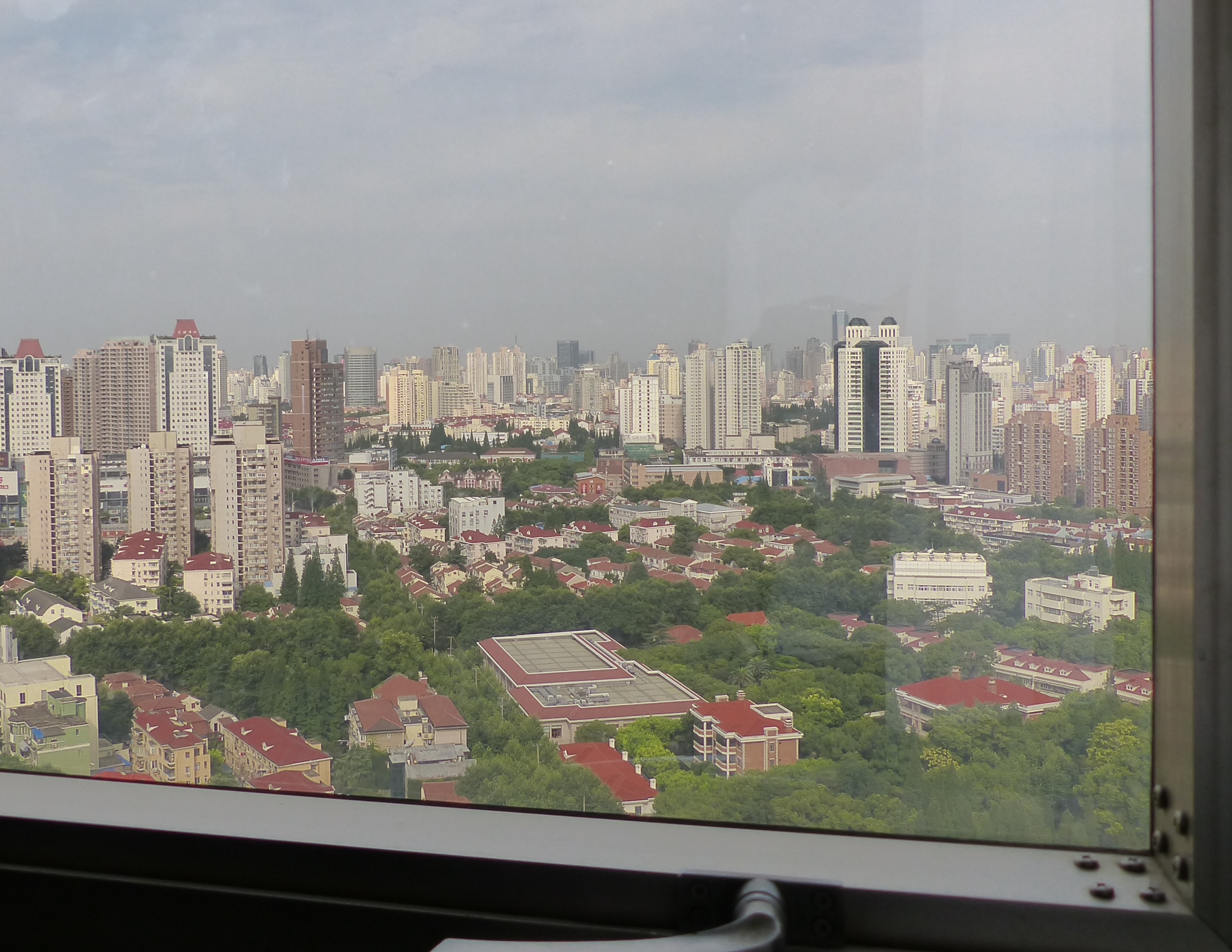
The View From Your Window Contest: Winner #216

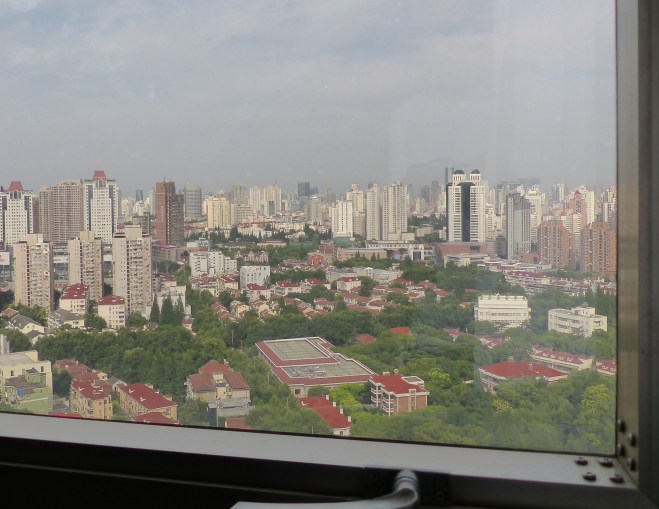
VFYWC_216

A reader starts us off with an enviable recent vacation:

Sao Paulo, Brazil. Was just there for the World Cup, and the view seems exactly like it – perhaps the green areas are part of Jardins or Jardim Paulista, and the high rises and skyscrapers are coming up near Avenida Paulista on the right of the photo. The building in the right side, middleground of the photo with two white towers, capped by black pyramids are definitely in Berrini district, or Morumbi just adjacent. I’m positive I was able to see them, while in Berrini district. I could be wrong, but this feels so like Sao Paulo.

Another:

This one was frustrating. It seemed simple but did not turn out to be (at least for me.)  I kept wanting it to be Kuala Lumpur, but couldn’t make it fit.  The language uses characters, so this should be somewhere in Asia.  There is the tower in the background, which looks somewhat like the tower in Macau.  It also looks a tiny bit like the one in Harbin, but this does not look like Harbin’s climate as I see some little palm trees down there.  The tower also resembles Kyoto’s, but the rest of the city doesn’t.  So I’m going with Macau.  No clue which window, and no more time to put into this.  Gah.

Another player is also wrong but more cheerful:

It’s Milan! I’ve never played before and I know that some clever Dishhead will produce coordinates, building, room, ambient temperature and a brief review of the grocery just around the corner, but for one fleeting moment I feel like I’m in this thing! Hope I’m not wrong for all the exuberance.

A veteran player of the contest shows off:

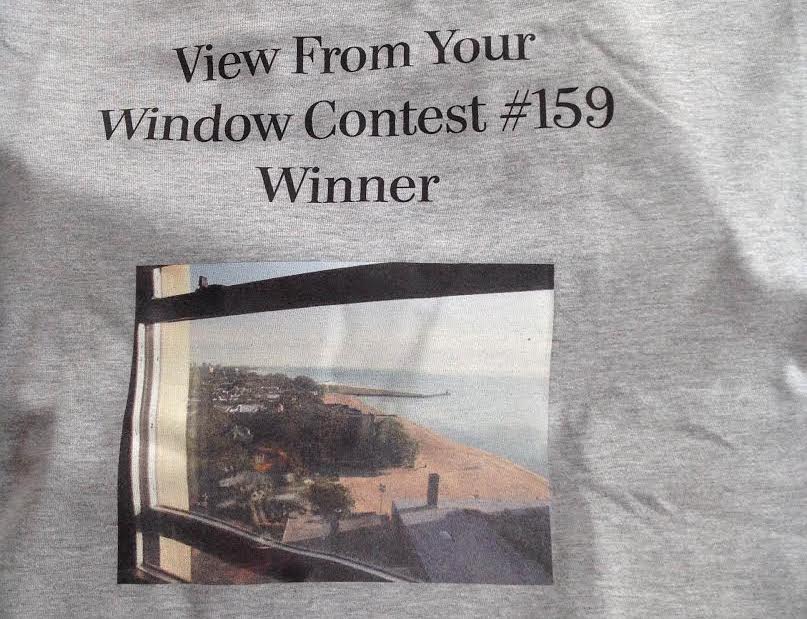
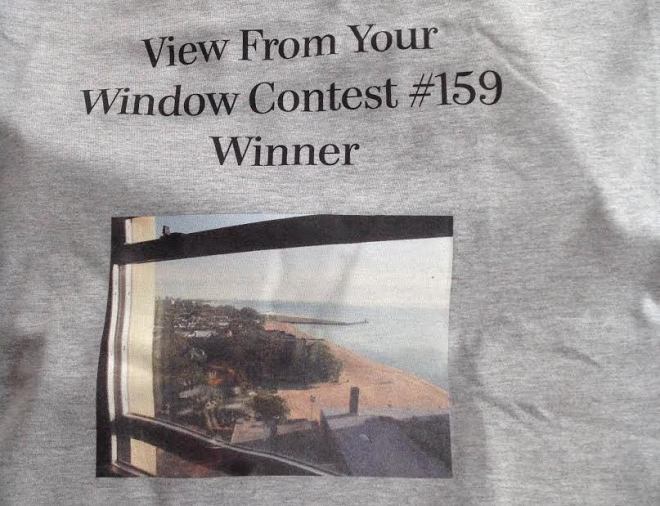
Just thought I would send a snap of my Dish t-shirt:
VFYW-shirt

Read his winning entry here. And buy your own official Dish t-shirt or polo here. Back to the contest:

Mexico City, based only on the population density and pollution, plus that church center-right dwarfed by the high-rise apartment building.

Another nearly nails the right country:

This one turned out to be tougher than it looked at first. Everything is so new! It’s got to be one of China’s pop-up cities or a boom area near a more traditional one. Having been to Shanghai and Shenzhen, it looks a little like Shanghai and Shenzhen (but then again, what doesn’t). But it’s all a little subdued for China, and a little bit short on outdoor advertising. And maybe the roadways aren’t quite prominent enough.

Guessing Singapore. Google maps shows a bunch of different neighborhoods that look like they could be right, but as close as I can get is to guess somewhere in the Redhill/Bukit Merah neighborhood.

But most other players did correctly peg the People’s Republic:

The photo immediately says “China” – no where else has such a hodge-podge of skyscrapers. Problem is all the cities have the same hodge-podge. Looks more like a 2nd tier city, so will go for Chengdu.

The skyscrapers weren’t of much use, it seems:

I’m pretty sure we are in China for this week’s contest, given the amount of tall structures, architecture, and what my be Chinese script on some of the buildings.  I also think it is likely not a large city given the absence of super-tall skyscrapers (though perhaps it is just the view).  But otherwise, I am completely stumped.  Despite many hours spent on various skyscraper related forums, Wikipedia, and Google Maps, I can’t narrow things down any further.  I thought either the tall red roofed buildings or the white tower with a black core would be identifiable either through skyline images or the database at skyscraperpage.com, I’ve had no luck.  So I’m guessing Changsha, China.

The key challenge this week was clearly China itself:

How can a city be so simultaneously huge and utterly unfamiliar at the same time? Almost certainly by being in China. The sign on the red peaked roof near the upper left of the photo seems to bear this out. There are some palm trees amongst the foliage in the foreground. Lots of smog. Still, none of the images I look at of Beijing, Shanghai, Guangzhou, etc., seem to match up. Surely this is one of the biggest cities in the world, right? I’m guessing Shenzhen, because why the hell not? Though it feels absurd to be guessing with such a wide view.

There was another difficulty zooming in on China as well:

At +/- 5,000 feet the Google Earth images are crisp. Somewhere around 2,500 feet the images get milky & grainy, plus the buildings also flip orientation making it very hard to make out any details. Then at around 1,000 feet you can’t zoom in any further. This is much higher up than practically anywhere else. Google must have had a very interesting conversation with the Chinese Government.

Another contestant:

I’m pretty sure I’m wrong, but at least it’s one for the heat map! Qingdao, China – Badaguan neighborhood.

Added:

This embed is invalid

Another reader nails down the city:

I have worked on this on and off for three days and I’m getting nowhere. Google is of no help to me.

  • There are highrises on the left with red mansard roofs, one of which seems to contain Chinese characters. This could be a Chinese city. Or it could just be a city with a Chinese company. At least now I know what Palladian windows are.
  • Evergreen coniferous trees – a northern climate?
  • On the left edge, halfway down, there’s a partial logo; the name is blurry, but if it’s the western alphabet, it looks like it ends in -here or -hare or -nere or -nare. I did a slew of Google image searches for the logo and came up empty.
  • In the midground, in front of some conifers, there are Western-looking buildings. One looks vaguely Dutch; is this a former Dutch colony in Asia? Or another city with a former Western presence like Shanghai? Or this is actually a Western city?
  • There are a bunch of short buildings with red roofs.
  • It looks vaguely like an ex-Soviet central Asian republic, one of the -stans. Or somewhere else in Asia. For all I know it could be western Canada. Or I could be completely wrong.

This seems like a place either you know or you don’t. But Shanghai has lots of 19th-century Western architecture, so I’m going with Shanghai.

Another reader:

Lots of newish and modern dense pack high rise residences. A few older ones with external air conditioner units predominant in Asia. Lots of red roofs and what looks like Chinese characters on the top of one building on the left side.  I have never been there but Shanghai is the best I can do with so few distinctive features. Smog is probably obscuring more detail.

My father was a career Army officer and served with the Joint US Military Advisory Group, China in Shanghai during 1948 until being evacuated to Tokyo in January 1949 as the Chinese Nationalist Army was collapsing in the face of Mao’s communist forces.

Another:

Oh, man. The poor folks trying to triangulate the actual window from this week’s view. I’m guessing a lot of people will tease out Shanghai, as it apparently boasts the world’s largest skyline, but that could also make finding the few distinctive buildings in the frame truly difficult. I think I got lucky by tracking it down inside of an hour – some weeks just go like that, and I was owed some luck after last week.

The view overlooks Jiaotong University. Props to this week’s submitter who was clearly angling for a contest view by narrowly clipping the nearby Grand Gate towers, just out of frame to the left and somewhat of a giveaway.

Another thinks he’s got the hotel:

I think this week’s content will prove to be a challenge. There are Chinese characters on one of the buildings. So, this must be an urban area in China. But which one? My initial guess is that this is Shanghai. But we see none of the iconic Shanghai skyscrapers. Making things more difficult, Shanghai does not have StreetView. On top of that, Google’s aerial view of Shanghai of a bit offset from the underlying base map. After looking around the city for a while, I happened on a rooftop that matched the building in the lower center of the view.

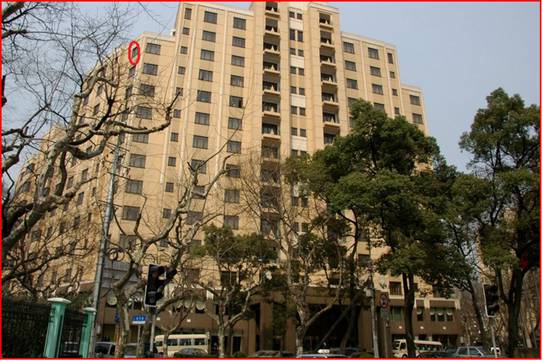
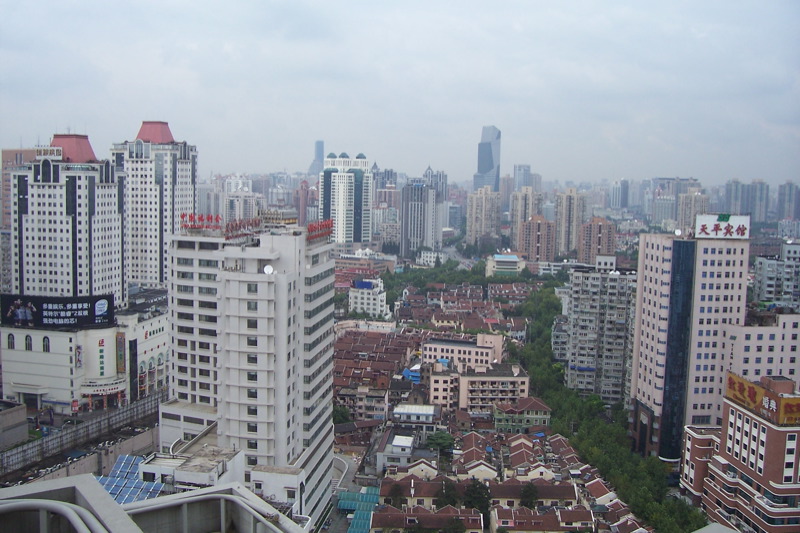
This week’s view comes from the Hengshan Picardie Hotel in Shanghai, China. The view is looking west-southwest towards Jiaotong University. Here is the layout of the view:
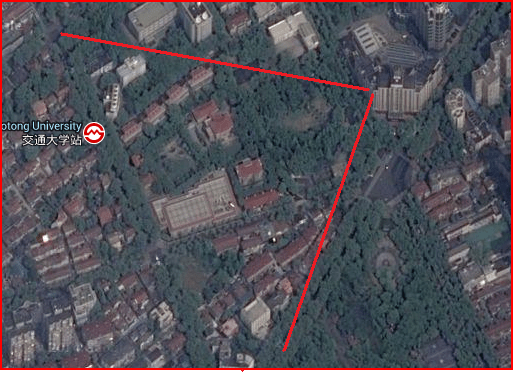
image001

And here is my guess for the window:

image004

Nope. But our favorite (and only) GIF-making player nails it:
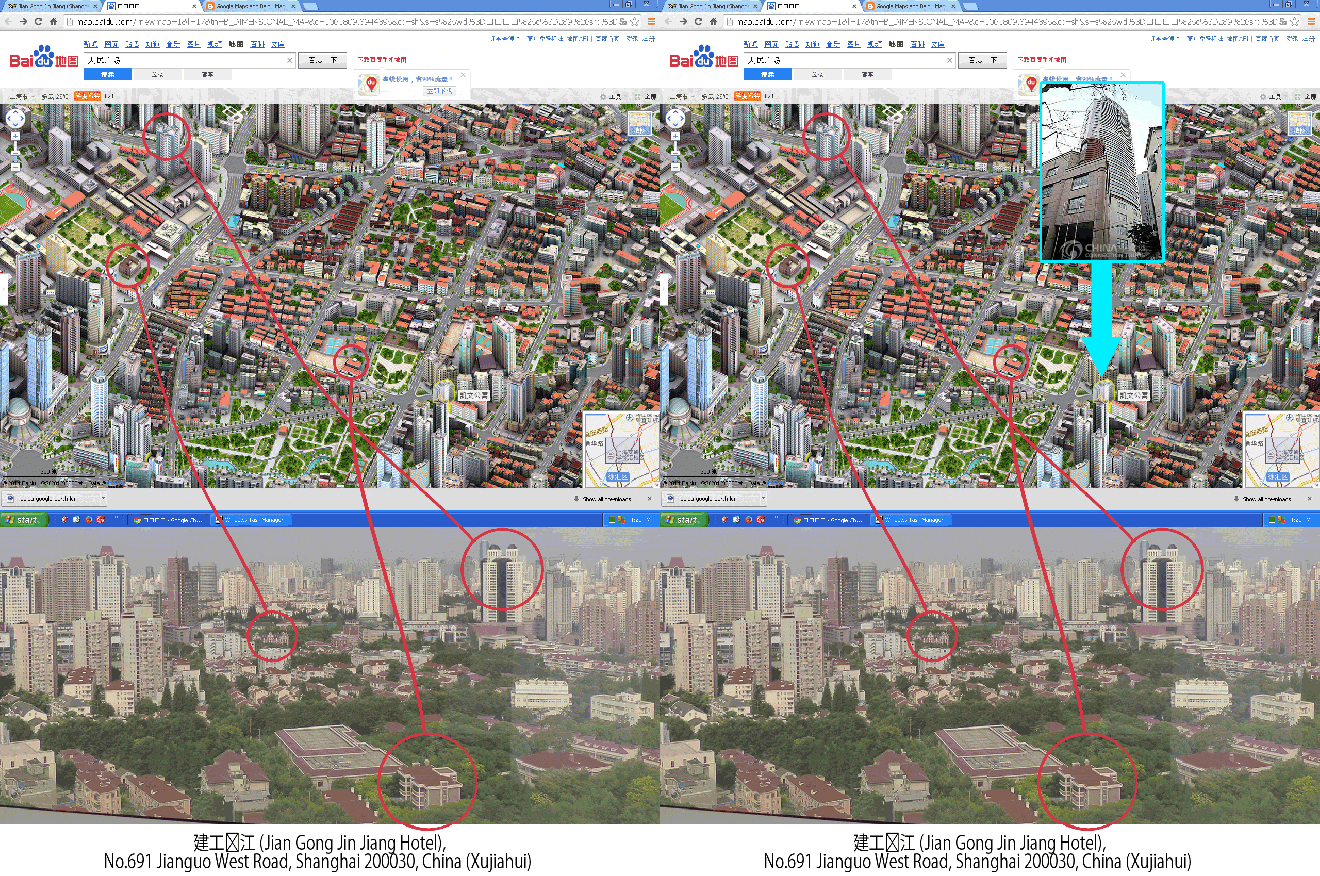
jian-gong-jin-jiang-bitch

Found it by Google Mapping the top twenty universities in China. Shanghai Jiaotong University was number seven. In trying to find a good image of the building, I discovered Baidu, China’s google. Their 3D maps look like Sim City! I’ll guess the 20th floor for no reason at all.

A veteran contestant has another angle:

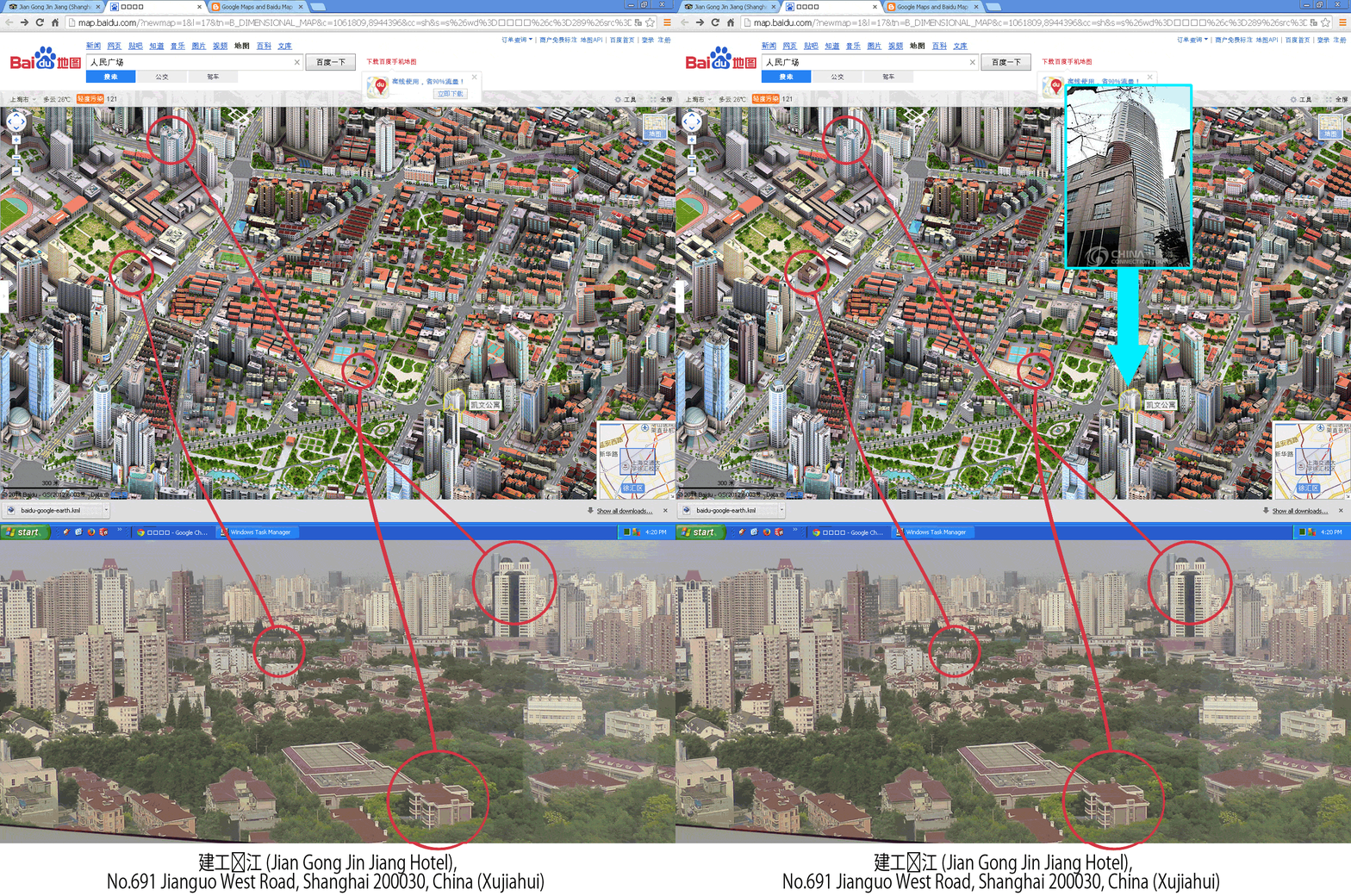
This week’s picture was taken in Shanghai, China, from the west side of the Jian Gong Jin Jiang Hotel, in the Xuhui district; as for the floor, let’s say the 28th (the floor under the penthouse). Here is the same view, from a different angle:
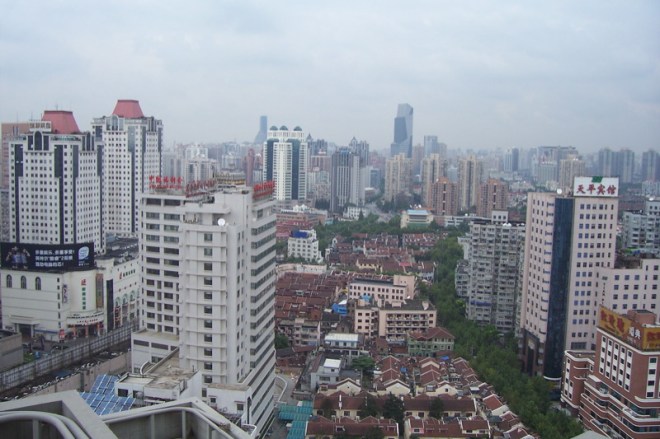
other_angle

This one was tough but doable; ideally suited to rebuild a little self-confidence in your contestants after last week’s débâcle, isn’t it?

Debacle? They can’t all be easy! A VFYW team:

At first we thought … awe crap, a massive skyline with millions of tall buildings and some Shanghaivaguely Chinese looking writing.  There are over 100 cities in China with more than one million people! This is going to be impossible.  But the buildings in the foreground had a vaguely university-esque feel. From there, some Google searching and the university (and then the hotel) were identified. However, unfortunately China is not included in the Google Street View database. So we learned about and tinkered with map.qq.com which, while being a good substitute for Google Maps, unfortunately is only in Chinese. Anyways, after some fumbling through the map we identified the best possible street view of the Jiangong Jinjiang Hotel Shanghai.  Let’s say its the 23rd floor.

Chini had to take a deep breath this week:

VFYW Shanghai Overhead Marked - Copy

I’ve been worried that we’d get one like this for a while. Normally when you narrow it down to a city finding the viewer’s location isn’t too much trouble. But with certain developing cities, like Sao Paulo for example, the sheer number of high-rises means that finding one specific building can take a lot of work. So when this one popped up I was really hoping that we were somewhere else in China; Wuhan, Tianjin, anywhere with a more modest skyline. But nope, we’re in the biggest one of them all.
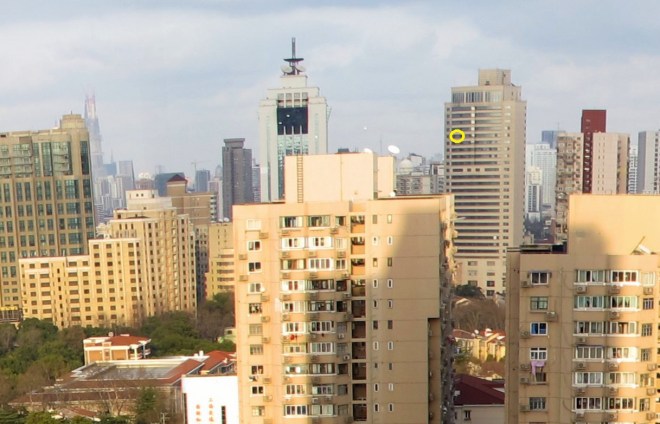
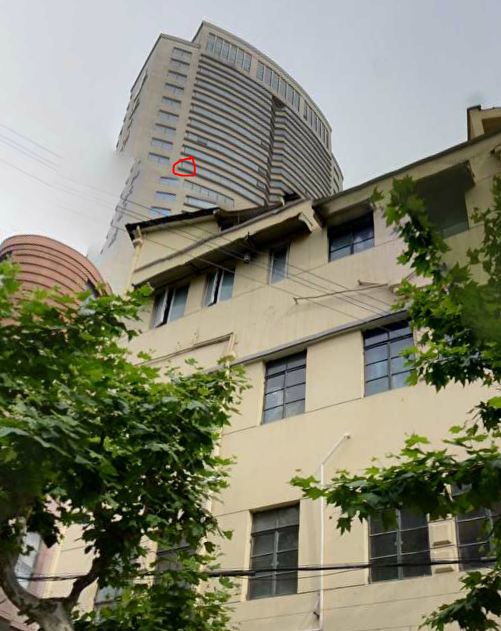
VFYW Shanghai Actual Window Marked - Copy

This week’s view comes from the Xujiahui neighborhood of Shanghai, China. The picture was taken on roughly the 23rd story of the Jian Gong Jin Jiang Hotel and looks almost due west along a heading of 267.03 degrees over the roofs of the former French Concession.

Only one player, a former winner, correctly guesses the right floor of the hotel:

This week’s photo comes from the Jin Jiang Hotel in Xuhui district of Shanghai, China, located at 691 Jianguo West Rd.  I’ll guess the 27th floor.  It took a while to find the hotel, but this picture displaying some of the distinctive skyscrapers in the contest photo greatly helped find the location.
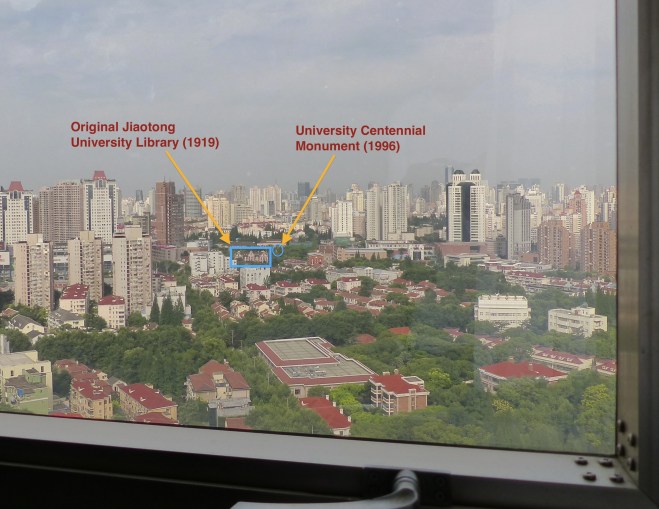
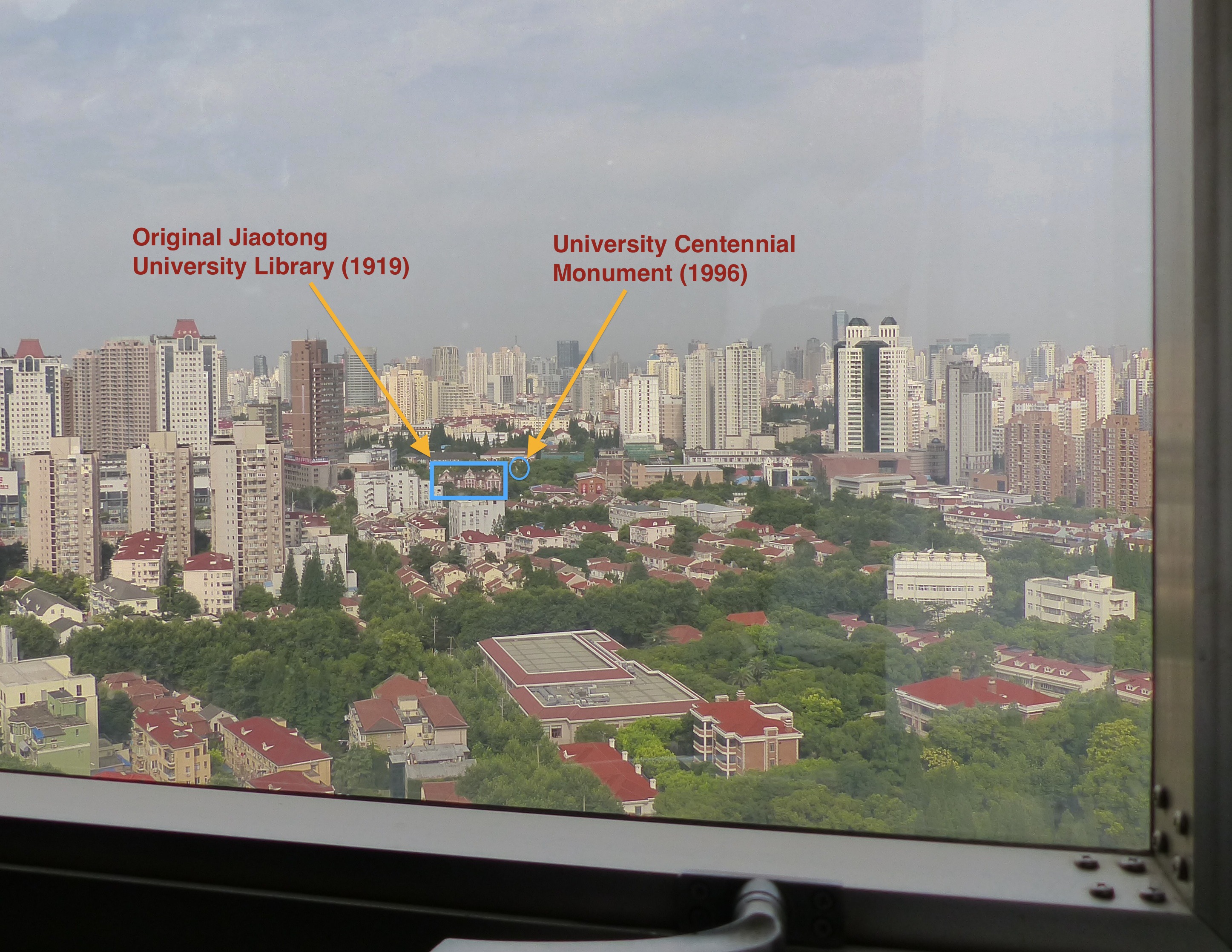
vfywc_216 with labels

In the photo, we are looking west over the Xuhui campus of the Shanghai Jiao Tong University. The university’s original library building and more recent centennial monument are visible in the middle of the contest picture.  NBA great Yao Ming is currently enrolled at this prestigious university which boasts former leader Jiang Zemin as an alum.  The university excels in technical fields and, allegedly, offers its expertise to assist the People Liberation’s Army spy on U.S. and other western companies.

For some reason, the discussion of the university’s involvement in cyber spying disappeared from its wikipedia page a couple of months after newspapers reported on the matter.  It seems a user named Bwfrank removed the discussion from the page and abruptly stopped revising wikipedia pages.  Prior to that, Bwfrank focused on editing the university’s page, articles on the Chinese and US space programs, and Japanese anime.

This week’s winner, though he doesn’t name the hotel, IDs the building and was one floor off with a long record of correct guesses without a win:
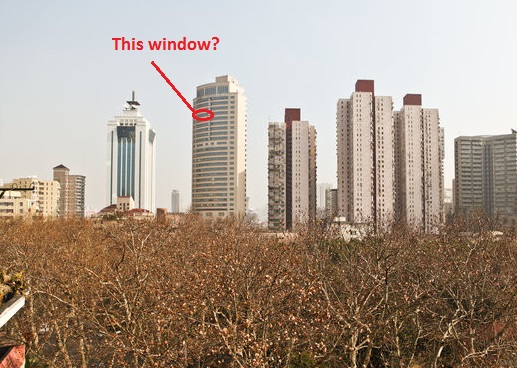
shanghai-176-kang-ping-lu

The occasional bits of writing viewable on the buildings appeared Chinese to my untrained eye, so that was where the search began.  Shanghai, Shenzhen, Guangzhou, Beijing, Tianjin, even Hong Kong. After a lot of frustration I ended up looking around the Pacific Rim:  Phnom Penh, Bangkok, Hanoi, Ho-Chi-Minh City, Manila, Singapore, Kuala Lumpur, Jakarta.  At this point all I had really learned was that Southeast Asia has a crapload of tall buildings, and after a while they all start to look the same.

Fortunately my wife is more astute than I am and found a similar view from a hotel near Jiaotong University in Shanghai: the place I had searched first and long since given up on.  The lack of Google Street View makes it hard to be precise, but this was taken from around the 26th floor of a building across the street from the Hengshan Picardie Hotel.  It looks like an office building.  The view is looking west-by-southwest over the university campus.

It seemed at first like it should be an easy one, but not being able to read Chinese was (unsurprisingly) a big handicap when searching.  I’ll be curious to see how difficult other people found this.

Congrats! Details from the photo’s submitter:

The view is of French Concession West, Shanghai. Taken at 8am from room 82707 on the 27th floor of Jian Gong Jin Jiang Hotel.

I thought when I took this shot it would be a great VFYW contest: before seeing this view I don’t think I’d have even guessed the right continent, and I suspect there are plenty of people familiar with Shanghai who wouldn’t be able to place it either.

This was my first visit to Asia. I was a tourist in Shanghai for nine days, spending much of my time walking around and seeing the city up close. It’s a wonderful city and I can’t wait to go back. I live in New York, so being in a megacity wasn’t a novelty, and Shanghai’s culture and architecture are heavily European influenced, so I didn’t experience too much culture shock. What DID shock me, though, was the fact that I never once felt the slightest bit threatened, physically or materially (although I always take proper precautions against pickpocketing), even in the grittier parts of town. I don’t know if that’s peculiar to Shanghai or if it’s the same elsewhere in China, but I have never felt safer anywhere else in the world.

(Archive: Text|Gallery)