Nymphomaniac Mania

by Katie Zavadski and Jessie Roberts

Nymphomaniac, the third installment of Lars von Trier’s Depression trilogy, opened in theaters this weekend (and is available on demand here):

The smut in question involves Joe (Charlotte Gainsbourg), a woman who’s found lying beaten and bruised in an alleyway by nearby resident Seligman (Stellan Skarsgård). Taken back to his apartment where she gets into bed, she recounts, over the course of both volumes, the erotic adventures of her life: her early days trawling train cars with her friend looking to see who can screw the most men (the prize: a bag of chocolates); her recurring encounters with Jerome ([Shia] LaBeouf), the man to whom she lost her virginity; her juggling numerous lovers a night; and her eventual frigidness and subsequent career as a criminal debt collector. Joe is a self-professed nymphomaniac, and her story is of alternately embracing and struggling against her “dirty, filthy lust.”

Will Leitch praises von Trier as “a beautiful lunatic”:

The movie is ostensibly a look at a lifelong nymphomaniac (played by Gainsbourg as an adult and newcomer Stacy Martin as a younger woman) telling the story of her life and her addiction to an academic named Seligman (Stellan Skarsgård) who finds her in the street. That’s not what it’s really about, though: It’s about von Trier, as always, exorcising his personal demons in plain view, in the most over-the-top, lunatic ways as possible. If you take a step back from it and realize that von Trier is essentially filming sex shows with Hollywood actors and having them do horrible things to each other and occasionally showing two-minute montages of flaccid penises, and he’s doing all this to let us know he feels lonely a lot and wonders if maybe he’s a bad person … it’s sort of the most insane thing in the world. Fortunately: He’s so, so good at it. Von Trier is an idiot, but, you know, the genius kind.

David Denby finds the film best when it’s “bookish and artificial”:

Von Trier links his hungry woman to philosophical ideas, mathematics, digressions of all sorts. Sex, it turns out, is meaningless without interpretation. The character has only one way of experiencing her life; the director has many ways of telling it. He gives us a catalogue of male members belonging to Joe’s lovers, and, in medical-textbook mode, drawings and photographs of female genitalia. However profane, “Nymphomaniac” is a modern variant of illustrated seventeenth-century books of miscellaneous erudition, like “Angler” or Robert Burton’s “Anatomy of Melancholy,” and of such eighteenth-century libertine texts as the Marquis d’Argens’s “Thérèse Philosophe”—a volume in which the sexual “education” of the heroine gets interrupted by discourses on the truth of philosophical materialism and the falsity of religion.

But Eric Sasson isn’t impressed:

I suspect that von Trier, like many of his European counterparts, views American sexual mores as fairly puritanical. And yet there’s something awfully retrograde about a film which offers us a nymphomaniac only to have a man defend her. For all the talk of Nymphomaniac being a “shocking” film from a “radical” director, von Trier’s depictions of a woman incapable of enjoying sex and despising her sexuality are fairly conventional. A truly novel film would star a sexually adventurous woman, not devoid of love and compensating for her lack of it, not hating herself, but instead embracing her sexuality and feeling content with her decisions.

Lindy West isn’t sold either:

I’m not wholly certain that woman-as-sexually-compulsive-cypher is a thought experiment new enough or true enough to bother undertaking. I didn’t hate it and I didn’t love it and I wasn’t scandalized in the ways I expected (this much explicit sex becomes mundane—by design, I expect); Nymphomaniac just feels like a slightly tedious and under-justified art film. Like American Apparel Ad: The Movie—long on the male gaze and short on female humanity; long on self-importance and short on meaning.

Andrew O’Hehir is split:

I wouldn’t call it a masterpiece or a failure; it’s a thrilling, uproarious visual and intellectual journey that doesn’t always connect and surely will not please every viewer, but along the way breaks free of all established notions about what a respectable movie is and how it’s supposed to behave. Von Trier sometimes writes awkward lines of dialogue for Joe, where she speaks all too obviously for his political or philosophical views. He also creates episodes of brilliant verbal repartee, ludicrous slapstick comedy and piercing emotional power, often overlapping. Arguably “Nymphomaniac” has way too much sex, but isn’t that the point? The most intimate, most transcendent and most liberating of human experiences is also a commodity, an unquenchable cultural obsession and an incurable addiction.
Liquid Comedy?

by Jessie Roberts

Wayne Curtis investigates whether drinking can make you funnier. He looks to an experiment by Joel Warner and Peter McGraw, authors of The Humor Code: A Global Search for What Makes Things Funny:

The instructions to the subjects were straightforward: Come up with a gag. Have a drink. Repeat. After each round, the subjects [all from the creative team at Grey New York, an advertising firm] were asked to rate their drunkenness on a seven-point scale ranging from “sober” to “shit-faced.” (McGraw admits that his study “will never make its way into a peer-reviewed journal.”) They were also asked to rate their own jokes, on a scale of “slightly amusing” to “hilarious.” The jokes were later judged independently by a sober online panel.

The experiment was designed in part to test McGraw’s “benign violation” theory of humor, one in a long line of attempts to offer a universal explanation of what circumstances make us laugh. McGraw theorizes that humor arises when something “wrong, unsettling, or threatening” overlaps with a safe, nonthreatening context. So somebody falling down the stairs (violation) is funny, but only if the person lands unhurt (benign). Slapping is funny; stabbing is not. A faux-clueless Sarah Silverman saying racist things is funny; a drunk and hostile Mel Gibson is not. Each gag the Grey New York folks created was to take the form of a Venn diagram illustrating benign violation. Among the early contributions were two circles labeled “Grandpa” and “Erection,” the overlap of which was deemed “funny.”

The results?

“Drinking reduces inhibition,” McGraw says. “But it opens the door to failure, with failure likely to be on the side of going too far.” In the end, only three of the ad folks lasted for five stiff drinks at the Hurricane Club before they decided to call it quits. Among the final gags was a Venn diagram with “cancer” in one circle and “unpoppable pimple” in the other. The creator rated it hysterical. The online panel, not so much. “As people became more intoxicated, they thought they were funnier, but a sober audience didn’t see it that way,” Warner notes.

Taming The Rebel Music

by Katie Zavadski

Hisham Aidi’s Rebel Music looks at hip-hop, Islam, and international diplomacy:

The 9/11 attacks brought a new dimension to the relationship between Islam and hip-hop. In December 2001, John Walker Lindh, a young American, was found behind enemy lines in Afghanistan. Just how did this middle-class boy from Marin County end up joining the Taliban? His online postings, analysts argued, offered a clue: in hip-hop chat rooms, Lindh often posed as black, adopting the name Doodoo or Prof J. “Our blackness does not make white people hate us, it is THEIR racism that causes the hate,” he once wrote. Experts traced Lindh’s path to Afghanistan back to his mother taking him, at age 12, to see Spike Lee’s film Malcolm X, after which he read Alex Haley’s Autobiography of Malcolm X and began listening to hip-hop. After this episode, American and European officials began to speak of rap’s potential to radicalize.

In the mid-2000s, amid the Abu Ghraib scandal and the resurgence of the Taliban, the State Department recast hip-hop as a tool rather than just a threat. Karen Hughes, then undersecretary of state for public diplomacy, launched an initiative called Rhythm Road and sent “hip-hop envoys”—rappers, dancers, DJs—abroad. The tours have since covered the broad arc of the Muslim world, stretching from Senegal and Ivory Coast, across North Africa and the Middle East, to Mongolia, Pakistan, and Indonesia. As part of a campaign costing $1.5 million per year, the artists stage performances and hold workshops; those who are Muslim speak to local media about what it’s like to practice Islam in the U.S. The trips aim not only to exhibit the integration of American Muslims, but also, according to planners, to promote democracy and foster dissent. In 2010, after one such performance in Damascus, then-Secretary of State Hillary Clinton described hip-hop as a “chess piece” in the “multi-dimensional chess” game that is “cultural diplomacy.”

Yet the result, writes Aidi in an excerpt from his book, was often a patronizing interpretation of what fell under the umbrella of acceptability:

[W]hen in April 2007 the [British] Home Office introduced Prevent, an initiative to stop British Muslim youth from being lured into violent extremism, it made sure that hip-hop figured prominently. Muslim organizations in Britain would receive Prevent funding to organize “Spittin’ Light” hip-hop shows, where American and British Muslim rappers with “mainstream interpretations” of Islam would parade their talents. The initiative was directed at younger Muslims, who may not have been associated with mosques or other religious institutions. Prevent’s advocates claim that art can provide Muslims with “an acceptable outlet for strong emotions.” Given Prevent’s involvement in the arts, leaders of cultural organizations—wooed by the American embassy and the British government—are unsure of whether to accept state funds.

“Art is inspiring, art can create conversations that we can’t have in real life, and Muslim artists should be allowed to speak about anything,” says Hassan Mahmadallie, a theater director and officer of the Arts Council of England. “But Prevent is in effect putting limits on the speech of Muslim artists, funding only those the government considers ‘good’ Muslims.”

I wish we had statistics on how successful these programs are. They strike me as somewhat counterproductive: one of the chief complaints levied against the West by purveyors of radical Islamic ideology, after all, is that we try to export our norms onto Muslim-majority countries. Would a youth drawn to that kind of rhetoric be more incensed if he found out the British or American government was purposefully pushing another brand of Islam? Would that push someone on the edge further to the extreme?

In 2007, we covered the Muslim punk rock scene – which Andrew dubbed a type of “South Park Islam” – here.

(Video: Members of the Vice Verse All Stars discuss their participation in the Rhythm Road program in 2010)

Raw Fish And Red Tape

by Tracy R. Walsh

Eveline Chao notes that health inspectors in major cities tend to come down hardest on ethnic eateries. For example, in New York City:

Chinatown’s 293 restaurants paid $600,000 in inspection-related fines from July 2012 to March 2013, versus $30.3 million paid citywide – a disproportionately high amount for such a small community, according to Rada Tarnovsky the president of Letter Grade Consulting (LGC), a company that helps restaurants navigate the grading scheme. … Chinatown is not the only community disproportionately affected by the grading system. A Huffington Post analysis found that the percentage of Chinese, Indian, Korean, Latin American, and African restaurants with grades below A hovered around the 30s. Worse, 54 percent of Pakistani restaurants and 58 percent of Bangladeshi restaurants scored as such. (It’s worth noting that Department of Health’s online food protection course is available only in English, Spanish, and Chinese.)

In addition to language barriers, Chao sees at root “a larger clash between tradition and bureaucracy”: Continue reading Raw Fish And Red Tape

Reading Down South

by Jessie Roberts

Ed Winstead contemplates what makes the fiction of the American South so distinctive:

In 2009 The Oxford American polled 134 Southern writers and academics and put together a list of the greatest Southern novels of all time based on their responses. All save one, The Adventures of Huckleberry Finn, were published between 1929 and 1960. What we think of when we think of “Southern fiction” exists now almost entirely within the boundaries of the two generations of writers that occupied that space. Asked to name great American authors, we’ll give answers that span time from Hawthorne and Melville to Whitman to DeLillo. Ask for great Southern ones and you’ll more than likely get a name from the Southern Renaissance: William Faulkner, Harper Lee, Flannery O’Connor, Walker Percy, Eudora Welty, Thomas Wolfe—all of them sandwiched into the same couple of post-Agrarian decades. …

“Southern,” as a descriptor of literature, is immediately familiar, possessed of a thrilling, evocative, almost ontological power.

It is a primary descriptor, and alone among American literary geographies in that respect. Faulkner’s work is essentially “Southern” in the same way that Thomas Pynchon’s is essentially “postmodern,” but not, you’ll note, “Northeastern.” To displace Faulkner from his South would be to remove an essential quality; he would functionally cease to exist in a recognizable way.

It applies to the rest of the list, too (with O’Connor the possible exception, being inoculated somewhat by her Catholicism). It is impossible to imagine these writers divorced from the South. This is unusual, and a product of the unusual circumstances that gave rise to them. Faulkner, Lee, Percy, and Welty were no more Southern than Edgar Allen Poe or Sidney Lanier or Kate Chopin, and yet their writing, in the context of the South at that time, definitively was. There’s a universal appeal to their work, to be certain, but it’s also very much a regional literature, one grappling with a very specific set of circumstances in a fixed time, and correspondingly, one with very specific interests: the wearing away of the old Southern social structures, the economic uncertainty inherent in family farming, and overt, systematized racism (which, while undoubtedly still present in the South today, is very much changed from what it was).

The Daring Book For Everyone

by Tracy R. Walsh

Hector Tobar reports that “a campaign in the United Kingdom that seeks to pressure publishers to stop titling and labeling children’s books as being ‘for boys’ and ‘for girls’ is quickly gaining momentum”:

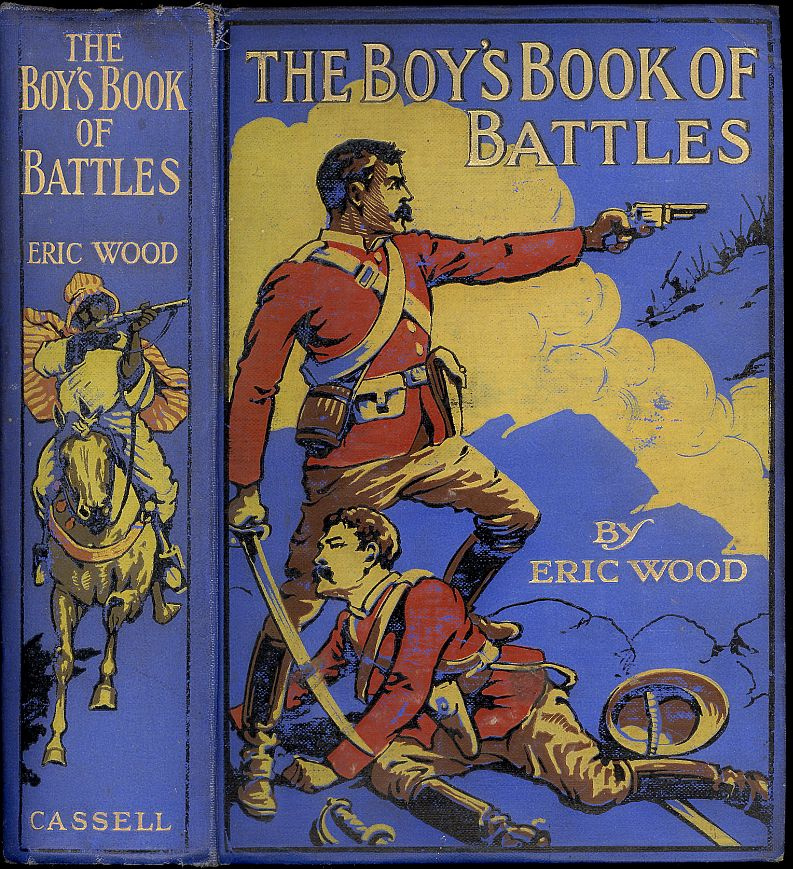
“We’re asking children’s publishers to take the ‘Boys’ and ‘Girls’ labels off books and 9265589249_9ff49ca3ec_b allow children to choose freely what kinds of stories and activity books interest them,” says the statement by the Let Books Be Books campaign. Such labels, the organizers of the campaign say, “send out very limiting messages to children about what kinds of things are appropriate for girls or for boys.”

On Sunday, the campaign got an important boost when the newspaper the Independent announced it would no longer review such books, or even blog about them. … The Guardian reports that one of Britain’s biggest bookstore chains, Waterstones, as well as U.K. “Children’s Laureate” Malorie Blackman, and U.K. Poet Laureate Carol Ann Duffy have also announced their support.

Independent literary editor Katy Guest explains why she supports the campaign:

Splitting children’s books strictly along gender lines is not even good publishing. Just like other successful children’s books, The Hunger Games was not aimed at girls or boys; like JK Rowling, Roald Dahl, Robert Muchamore and others, Collins just wrote great stories, and readers bought them in their millions. Now, Dahl’s Matilda is published with a pink cover, and I have heard one bookseller report seeing a mother snatching a copy from her small son’s hands saying “That’s for girls” as she replaced it on the shelf. … What we are doing by pigeon-holing children is badly letting them down. And books, above all things, should be available to any child who is interested in them.

Happily, as the literary editor of The Independent on Sunday, there is something that I can do about this. So I promise now that the newspaper and this website will not be reviewing any book which is explicitly aimed at just girls, or just boys.

But some remain skeptical:

Catherine Pearlman, a social worker who works as an assistant professor at the College of New Rochelle and writes the periodic “Family Coach” column for Speakeasy, said via email that there is a “gender divide” across many children’s items like books, toys and clothes. But, Pearlman said, “I don’t think simply deciding not to review any book with a gender line solves the problem.”

“Maybe it would be more powerful to review a book and point out how much more interesting it could have been if marketed to both boys and girls,” Pearlman said. “Also just shunning ‘princess for girls’ books doesn’t eliminate the fact that so many girls love those stories. If they connect to reading through those stories what a shame to try to take that away.”

(Photo by Flickr user Book Life)

Feel This Book

by Jessie Roberts

Researchers at MIT have developed a wearable reading device called Sensory Fiction:

Sensory Fiction was inspired by two sci-fi visions of what media in the future will look like. The first is Neil Stephenson’s steampunk classic, The Diamond Age, a novel that features interactive books with built in AIs. (The book that is often seen as the fictional inspiration for many of today’s technologies, like the iPad and Siri.) The other is The Girl Who Was Plugged In, a 1974 novella by James Tiptree, Jr. about a future in which the desperate are allowed to pay to take over the bodies of attractive human vessels.

“You feel this story in your gut,” Hope says about The Girl Who Was Plugged In. “It is an amazing example of the power of fiction to make us feel and empathize with a protagonist. Because our imaginations and emotions were so strongly moved by this story, we wondered how we could heighten the experience.”

Kathleen Volk Miller shudders:

As the protagonist’s emotional or physical state changes, so does the reader’s, via ambient light, slight vibrations, and, get this: localized temperature fluctuations and constricting airbags that actually change the reader’s heart rate. The emotional response I’m getting right now, without wearing the device, is: fear. The device has airbags?

Let’s discuss the obvious. For instance: if a book is well-written, we don’t need a “shiver simulator.” I mean, no one told me to be sad when Anna threw herself in front of a train. Can a device make my heart feel scooped out like so many books have through the years (most recently, Jesmyn Ward’s Men We Reaped)? … I am no Luddite, but I see the very reason we go to books —to get lost in an different world, to empathize with an other, to escape — might get lost if our emotions and even our physical reactions are forced. Rather than transport us to another world, these reading augmenters force us into someone else’s perception of another world.

In January, Alison Flood remarked on how the concept resonated with other writers:

The Arthur C Clarke award-winning science fiction novelist Chris Beckett wrote about a similar invention in his novel Marcher, although his “sensory” experience comes in the form of a video game:

In the spare bedroom on the first floor a group of young men were gathered around a TV. They were all plugged into a device called a dreamer, very popular in that world, though unknown in this, and were playing the classic dreamer game called Ripper Killer. They had on 3D goggles and wore things called moodpads on their heads which gave low-voltage jolts to the hypothalamus in order to induce elation, longing or (as was famously the case with Ripper Killer) terror.

Adam Roberts, another prize-winning science fiction writer, found the idea of “sensory” fiction “amazing”, but also “infantalising, like reverting to those sorts of books we buy for toddlers that have buttons in them to generate relevant sound-effects”.

The New Longform

by Jessie Roberts

Last week, Teju Cole published a 4,000-word non-fiction essay on immigration, A Piece Of The Wall, entirely on Twitter. In an interview with BuzzFeed, he talked about why he chose to tell the story in tweets:

What made you decide that this specific essay would be best presented in this medium?

Teju Cole: I’ll answer that by saying I didn’t think this essay could be “best” presented in this medium, but I asked the opposite question:

Why does a serious longform investigative piece have to be in print in a major magazine? In various parts of West Africa, there are different iterations of the idea that “white people like paper so much that they even wipe their butts with it.” You know, you spend your life staring at paper, you spend paper money, proof of ownership of everything is on paper, you fill your house with paper, and when you die, the announcement is in the paper.

I love paper too. I love print. But maybe not everything has to be on it. And in the case of Twitter (and, before that, blogging), I just feel so strongly that there’s an audience here, and audience that deserves to be treated with the same seriousness as the paper crowd. …

I’m not getting my hopes up, but the point of writing about these things, and hoping they reach a big audience, has nothing to do with “innovation” or with “writing.” It’s about the hope that more and more people will have their conscience moved about the plight of other human beings. In the case of drones, for example, I think that all the writing and sorrow about it has led to a scaling back of operations: It continues, it’s still awful, but the rate has been scaled back, and this has been in specific response to public criticism. I continue to believe the emperor has a soul.

Earlier this month, Cole assessed (NYT) how Twitter has affected his writing, noting that “being active on Twitter … means that the literary part of my brain — the part that tries to make good sentences — is engaged all the time. My memory is worse than it was a few years ago, but I hope that my ability to write a good sentence has improved.” Follow Cole’s latest tweets here.

Undercover MD

by Tracy R. Walsh

Taking a page from Nellie Bly, the psychiatrist who blogs as “Simple Citizen” spent a day as an inpatient at the adolescent Residential Treatment Center where he ordinarily works:

I first learn how boring the morning is, and how many times you get woken up. First they shine a flashlight on you every 15 minutes during the night to make sure you are still in bed, alive, and not hurting yourself or trying to commit suicide. Then the phlebotomist wakes up anyone who needs their blood drawn for labs that have been ordered. (likely by me)

Then we get woken up again by the sound of “med-pass” when all the kids who take morning medications have to go to the nurse one by one, take their pills, swallow, open their mouths and move their tongues all around to show that they really swallowed and didn’t “cheek” the pill. Then it’s shower time. I have to push the button every 25 seconds to keep the hot water coming, and there is no bathroom door or shower door – there are curtains only. The curtains are only held up by Velcro, so you couldn’t use them to hang yourself.

After a day in the facility, he concludes:

I see how residential treatment can help. I also see how it can drive you up the wall, make you want to scream, and leave you overweight and out of shape when you leave after 90 days. I can see how it seems pointless at times. I felt a little bit of the helplessness these kids must feel, and that was even knowing that I wasn’t really locked in there. How would it be to spend 90 days there? How about 180 days like some kids I’ve seen?  Or worse – be told you’re going to Disneyland with a short stop on the way and then find out your parents lied to you and they’ve admitted you to a locked psychiatric facility?  (It’s happened multiple times.)

Dinah Miller praises this type of experiment while noting its limitations:

I don’t believe these experiences are anything like the real thing, nor do I believe they are meant to be. For one thing, the person having them has not gone through the lifetime of events, traumas, distresses that led the inmate or patient to be in those places. Or in the case of the patient, the doctor also is not experiencing both the internal discomfort that comes with the mental illness, or the side effects which come with the medications, or the emotional upheaval that comes from having been left there by their family … Still, I like that these people did this, it’s good that they want to try to understand what their charges are going through. Even if it’s not a complete understanding, it still acknowledges that the condition is different with a willingness to see and understand what the other is going through, for better or for worse.

Voyeurism vs Journalism

by Jessie Roberts

Erika Thorkelson worries that camera phones encourage people to document others’ bad behavior rather than attempt to intervene:

Many professional journalists agonize over the ethics of this kind of reporting. Some argue that journalistic objectivity overrides any particular responsibility to act. Photojournalists train themselves to grab their cameras and start shooting before they fully recognize what’s happening around them, believing that documenting the moment does more long-term good than acting to stop it, or at least fulfills a separate but necessary societal obligation. But what happens when everyone with a camera phone sees him or herself as a journalist on a story, when everyone is a fly on the wall?

[This] brings to mind a classic This American Life story from 2007 about a craze for fake newscasts that took over an elementary school [see above video].

Children built elaborate cameras out of construction paper and toilet paper rolls, and began reporting on everything they saw. The school’s principal told Ira Glass that the trend reached its height when he discovered a brutal fight in the schoolyard, one student pummeling the other. Crowding around the fight, students were “breathlessly reporting” on what they saw, turning it into a news story rather than going for help.

Thanks to our phones, most of us carry cameras everywhere we go. Like journalists reporting on our own lives, our experiences become part of a narrative, honed in order to endear us to our various social media connections. We live with our faces angled toward the screens of our various devices, oblivious to the events beyond the viewfinder. Our bodies stilled to reduce shaking and our eyes trained on the screen, our filming—no matter how well-framed or widely shared, no matter how much attention we receive for it afterward—remains passive. We project the control we exert over the image we’re creating onto the experience itself, giving us a false sense of power, when in reality we have done very little.