Taking Classes In Living

After discovering a “spiritual program” that helped lift him out of “an acute psychological crisis,” Marshall Poe advocates for colleges and universities to offer classes in religious practice to their students:

Upon reflection, it occurred to me that all religions, if seriously practiced, do precisely what this “religion” had done for me: They teach you how to live. It is true, of course, that clerics often tell their flocks to believe things that are frankly unbelievable. And some even tell the faithful that if they don’t believe these incredible things they will suffer some harsh penalty, like going to hell. But most clerics of my acquaintance are not very interested in fire and brimstone. Rather, they are interested in making sure those in their care are spiritually fit. The way they do this—and, so far as I know, always have—is to give people a higher purpose and a set of guidelines necessary to pursue that purpose. They bring order to the thoughts and actions of people whose thoughts and actions are naturally disordered. They give people a way of life.

It was in this way that I became convinced that college classes in religious practice might help suffering undergraduates learn to live successfully. The classes would at the very least introduce undergraduates to the idea that there were practical ways to alleviate their suffering. They would plant the seed. Even if the students chose not to follow the practice they had learned, their recollection of it would remain in store for the day they would need it. The day would inevitably come and when it did, they would have someplace to turn for help.

Related Dish on studying theology at university here.

Breaking The Spell Of Stone-Age Beliefs

Last July, Brendan Borrell attended the James Randi Educational Foundation’s 15th annual “Amaz!ng Meeting,” which he describes as “perhaps the world’s preeminent gathering of self-proclaimed skeptics, people dedicated to debunking and demystifying anything that smacks of the supernatural.” Borrell profiles Leo Igwe, a speaker at the convention who campaigns against witchcraft in Africa:

If any attendees know anything about Igwe, it is for his “Manifesto for a Skeptical Africa,” published on the foundation’s website in October of 2012. In it, he criticizes African societies for their inability to think critically about the traditional beliefs he calls “Stone-Age spiritual abracadabra.” He is in Las Vegas to talk about the resurgence of literal witch-hunts in Sub-Saharan Africa, and the rise of accusations lobbed at children, particularly in countries ravaged by conflict and where levels of education are low. While sorcery has always been a part of traditional belief systems in Africa, the stigmatization of children as witches seems to be a recent invention. In two Niger Delta states alone, Akwa Ibom and Cross River, there have been hundreds of documented cases of children being beaten, burned, beheaded, doused in acid or boiling water, poisoned, or buried alive. Like his self-righteous colleagues in the Western world, Igwe can be mocking and sarcastic, but he also knows he is on a deadly serious crusade.

During his talk, Igwe displays a picture of a Ghanaian man inside a thatch-roofed hut performing a traditional soothsaying ritual with seashells. As he pauses on the image Igwe declares, “Friends, these are the fakers. He uses cowries and throws them on the ground and is staring at them as if there is something he is seeing.” Igwe’s voice rises in pitch, volume, and tempo, and he continues in an exasperated tone: “He is seeing nothing! It’s fake!” There are a few chuckles in the audience, but mostly silence, as if no one is quite sure how to balance their skeptical instincts against their cross-cultural sensitivities. The soothsayer may well be a charlatan, but only Igwe had the right to ridicule him.

Returning To The Cosmos, Ctd

The Neil deGrasse Tyson reboot of Cosmos premiered last Sunday. Audra Wolfe counters claims that the show will revolutionize popular support for science, writing dismissively of “Cold War-era fantasies that confuse the public understanding of science with its appreciation”:

It’s a wonderful sentiment, this idea that exposure to the wonders of science will allow people to transcend social, political, and cultural differences. But it’s also obviously wrong, given how much 20th-century warfare depended directly on the products of science. (Historian of technology Patrick McCray has compiled a helpful list of some of the ways that scientists have, in fact, “led armies into battle.”) …

Looking back on the 1980s, it’s hard to say how much public support for scientific research, including the planetary exploration missions so dear to Sagan’s heart, can be credited directly to programs like Cosmos, and how much depended on Congressional support for a space industry that might play some yet-to-be-determined role in World War III. Today, the federal government continues to invest in R&D, but those funds skew toward defense projects, health research, and technology-oriented innovation. Instead of space war, defense R&D focuses on cybersecurity, remote-sensing technologies, and neurowarfare. NASA, meanwhile, limps along. That seems unlikely to change, whether Cosmos scores 5 or 500 million viewers.

But Chris Mooney maintains that “scientific knowledge, and wanting to do something about the problems that science reveals, are inseparable”:

And as soon as you want to change something in the world because of science, you inevitably run up against interests, emotions, and denial. Global warming is the case in point: Just as Carl Sagan worried about nuclear holocaust because of science, so we today worry about the planet’s steady warming. Indeed, that kind of thinking is central to the Cosmos legacy. Asked … about the warming of the planet, Tyson explained the ultimate message of Cosmos: “You are equipped and empowered with this cosmic perspective, achieved by the methods and tools of science, applied to the universe. And are you going to be a good shepherd, or a bad shepherd? Are you going to use your wisdom to protect civilization, or will you go at it in a shortsighted enough way to either destroy it, or be complicit in its destruction? If you can’t bring your scientific knowledge to bear on those kinds of decisions, then why even waste your time?”

So in the end, we should all thank Tyson—as well as Fox, National Geographic, and the show’s many writers and producers—for making the new Cosmos happen. It will contribute immeasurably to the appreciation of science in America and beyond. It will make kids think harder about pursuing science careers by showing them that the cosmos is intensely awesome, and the act of understanding it is downright heroic.

Previous Dish on the series here and here.

(Video: The Verge interviews Tyson about the new Cosmos)

Life And Death In The Wild

Eva Saulitis describes hiking “streams and bear trails and muskegs and mountains” in Prince William Sound, Alaska. The environment has taken on a different meaning for her since she learned she has an incurable form of breast cancer:

In “King Of The River,” a poem by Stanley Kunitz, he … watches salmon battling up a stream, and the parallel he draws with human life and striving and passion and aging is tight and explicit and maybe even a little overwrought—at least I saw it that way when I first read the poem. I was in my thirties then, and my health was a given. Now the poem reads more like a biblical truth. The great clock of your life / is slowing down, / and the small clocks run wild. These great clocks and small clocks are the very texture of our days on earth.

Yet for most of us, most of the time, they tick on unheard. In the society in which I live, in that other world, across the mountains—far from this wild place where death is explicit and occurs in plain sight, where it is ordinary and everyday and unremarkable—people don’t talk about dying.

People rarely witness the dying of their fellow humans (much less the animals they eat). Special people minister to the dying. Sometimes people in their travail fly overseas and pay strangers to hasten their dying. We have no charnel grounds, only cemeteries shaded by big trees, mowed and tended by groundskeepers. Or we’re handed the ashes of our loved ones, in sealed urns or handsome boxes, to disperse at sea or from mountain peaks.

Facing death in a death-phobic culture is lonely. But in wild places like Prince William Sound or the woods and sloughs behind my house, it is different. The salmon dying in their stream tell me I am not alone. The evidence is everywhere: in the skull of an immature eagle I found in the woods; in the bones of a moose in the gully below my house; in the corpse of a wasp on the windowsill; in the fall of a birch leaf from its branch. These things tell me death is true, right, graceful; not tragic, not failure, not defeat. For this you were born, writes Stanley Kunitz. For this you were born, say the salmon. A tough, gritty fisherman friend I knew in my twenties called Prince William Sound “God’s country.” It still is, and I am in good company here.

Against Reluctant Atheism

In a long riff on Nietzsche and the “death of God,” Terry Eagleton encourages us to follow the German philosopher in recognizing that you can’t ditch the divine “while still clinging to religious values”:

Reluctant atheism has a long history. Machiavelli thought that religious ideas, however vacuous, were a useful means of terrorizing and pacifying the mob. Voltaire feared infecting his own domestic servants with his impiety. Gibbon, one of the most notorious skeptics of all time, considered that the religious doctrines he despised could nonetheless prove socially useful. There is something unpleasantly disingenuous about this entire legacy. “I don’t happen to believe myself, but it is politically expedient that you should” is the catchphrase of thinkers supposedly devoted to the integrity of the intellect. One can imagine how they might react to being informed that their own most cherished convictions—civil rights, freedom of speech, democratic government and the like—were of course all nonsense, but politically convenient nonsense, and so not to be scrapped. It took the barefaced audacity of Friedrich Nietzsche to point out that the problem was less the death of God than the bad faith of Man, who in an astonishing act of cognitive dissonance had murdered his Maker but continued to protest that he was still alive. It was thus that men and women failed to see in the divine obsequies an opportunity to remake themselves.

Meanwhile, Peter Watson, author of the recently published The Age of Atheists: How We Have Sought to Live Since the Death of God, explains why he chose to begin his account of atheism with Nietzsche:

In 1882 Nietzsche declared, roundly, in strikingly clear language, that “God is dead”, adding that we had killed him. And this was a mere twenty years after Darwin’s Origin of Species, which is rightly understood as the greatest blow to Christianity. But Nietzsche’s work deserves recognition as a near-second. Darwinism was assimilated more quickly in Germany than in Britain, because the idea of evolution was especially prevalent there. Darwin remarks in one of his letters that his ideas had gone down better in Germany than anywhere else. And the history of Kulturkampf in Germany – the battle between Protestantism and Catholicism – meant that religion was under attack anyway, by its own adherents.  Other people responded to Nietzsche more than to anyone else – Ibsen, for example, W. B. Yeats, Robert Graves, James Joyce. In Germany there was the phenomenon of the Nietzschean generations – young people who lived his philosophy in specially-created communities. And people responded to Nietzsche because, his writing style was so pithy, to the point, memorable, and crystal clear. It is Nietzsche who tells us plainly, eloquently, that there is nothing external to, or higher than, life itself, no “beyond” or “above”, no transcendence and nothing metaphysical. This was dangerous thinking at the time, and has remained threatening for many people.

The Dish’s recent thread on atheism is here.

Is Religious Experience Irrational? Ctd

Damon Linker continues the debate the Dish featured the past two weekends about the nature of religious experience in a secular age, arguing that “[r]eligious experience — in modernity no less than in premodern contexts — transcends intellect and reason”:

God can call at any time, at any place, overturning a lifetime of thinking and acting and living — including a lifetime of thinking and acting and living within established, settled religious traditions. The call requires and demands an act of surrender to an externally issued, absolute, unrelativizable command.

Read in the light of [philosopher Leo] Strauss’ description of primal religious experience, [David] Sessions’ insistence that the potential convert not abandon “intellectual rigor” appears to be an example of how one can foreclose the possibility of religious experience by refusing it pre-emptively. Accepting the authority of critical biblical scholarship and academic theology (among other modern intellectual pursuits) may guarantee that the authoritative call of God will never be heard, rendering genuine religious experience impossible.

Dreher nods:

How can you hear the voice of the authentic prophet if you have decided in advance that a prophet must fit certain narrow criteria to be listened to. Who wants to pay attention to a wild man of the desert who ears animal skins and eats locusts and honey? That rural carpenter of Nazareth claims to be the Messiah of Israel, but everybody knows when moshiach comes, he will be a warrior king, so pay that loon no mind. If you rule out ahead of time the possibility of theophany (God breaking into the natural world and showing Himself), you won’t see it when it happens. Linker says that we are responsible for our own disenchantment.

James K.A. Smith, author of a forthcoming book on the philosopher Charles Taylor, the figure whose work spurred much of this debate, tries to clarify the terms involved:

I think this conversation has over-identified “the secular” with the phenomenon of “disenchantment”—the sense that we live in a world unhooked from transcendence, devoid of the divine, no longer enchanted by spirits or the Spirit. If a “secular” age is a disenchanted age, then it raises the sorts of questions Linker and Sessions are asking: Can one still experience enchantment in a secular age?  Indeed, if disenchantment is just synonymous with modernity, then it would seem like religious belief is precluded: To live in a secular age is a matter of growing up and refusing to believe in sprites and fairies and gods and God. Get over it. Wake up and smell the disenchantment. …

But that notion of “secularization” is precisely what Taylor is calling into question. So it’s odd to see people railing against Taylor as if his account of disenchantment rules out religious experience. Taylor has his own account of disenchantment, but disenchantment is not what he sees as the kernel of secularization.  Instead, for Taylor, ours is a “secular” age because it is an age in which all of our beliefs are contestable. It is a shift, not in what we can believe (or “experience”), but in what is believable. Ours is a “secular” age, not because we’re all doomed to inhabit the world as disenchanted, but because even those who experience it as enchanted have to realize that not everyone does. Taylor never suggests that belief, conversion, and religious experience are impossible in a secular age. Instead he emphasizes that they are “fragilized”—undertaken and experienced with a sense that our neighbors don’t share our convictions.

Face Of The Day

prison

After finding out that a friend had been sentenced to 36 years in prison, Trent Bell began to photograph inmates at Maine State Prison:

The project was to capture and print large, almost life-sized photographs of inmates from within Maine State Prison, have them write a letter to their younger selves and superimpose those handwritten letters as vignettes around the inmate. The idea behind it being to display these images in a gallery for public viewing, in hopes that it brought a much more human element to individuals we often look at only as convicts living in a cell.

Leon Watson quotes from some of the letters:

[One inmate], named Peter, starts off his letter saying: ‘It’s great to be able to talk to you, I’m 55 years old, and living in prison for the last six years. Let me tell ya kid, it’s no way to live.’

Jack told himself: ‘Much more will be expected of you from these so-called friends. However impressing them won’t be worth it because in the end it’s you sitting in a cold cell.’

In another heart-wrenching letter, a prisoner, who did not leave his name, said: ‘I want to reach out to you and hopefully help save you from becoming me.’ On a similar note, Wes said: ‘Dear Wes, I’m reaching out to you today and I pray that the words of my heart are encouraging enough to keep you from making bad choices that could change your life forever.’

More about Bell’s work here, here, and here.

Religion With No Guarantees

In an interview, the philosopher John Caputo draws on the work of Jacques Derrida to explain what it means to approach religion through “deconstruction” – a way of thinking that “involves questioning and undermining the sorts of sharp distinctions traditionally so important for philosophy,” including the distinctions between atheists, agnostics, and believers:

Maybe [the suggestion that God’s promises might not be reliable] disturbs what “most people” think religion is — assuming they are thinking about it — but maybe a lot of these people wake up in the middle of the night feeling the same disturbance, disturbed by a more religionless religion going on in the religion meant to give them comfort. Even for people who are content with the contents of the traditions they inherit, deconstruction is a life-giving force, forcing them to reinvent what has been inherited and to give it a future. But religion for Derrida is not a way to link up with saving supernatural powers; it is a mode of being-in-the-world, of being faithful to the promise of the world.

The comparison with Augustine is telling.

Unlike Augustine, he does not think a thing has to last forever to be worthy of our unconditional love. Still, he says he has been asking himself all his life Augustine’s question, “What do I love when I love my God?” But where Augustine thinks that there is a supernaturally revealed answer to this question, Derrida does not. He describes himself as a man of prayer, but where Augustine thinks he knows to whom he is praying, Derrida does not. When I asked him this question once he responded, “If I knew that, I would know everything” — he would be omniscient, God!

This not-knowing does not defeat his religion or his prayer. It is constitutive of them, constituting a faith that cannot be kept safe from doubt, a hope that cannot be kept safe from despair. We live in the distance between these pairs.

For more, check out Caputo’s book on the matter, The Prayers and Tears of Jacques Derrida: Religion without Religion.

Holy Crimea

Mara Kozelsky reminds us of Crimea’s significance in the history of the Russian Orthodox church:

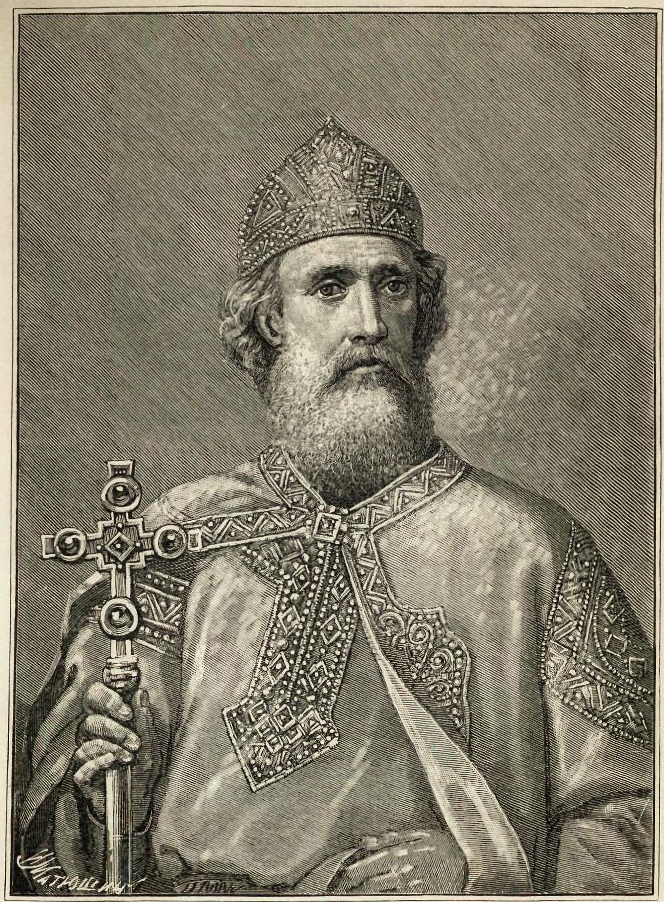
Crimea sits at the heart of both the Third Rome idea and Nicholas I’s nationality platform, because it was on the peninsula that Byzantium Vladimirpassed the mantle of Orthodoxy to Russia. In the ancient Greek colonial city of Chersonesos, the Byzantine emperor baptized the Kyivan Rus Prince Vladimir. Prince Vladimir’s conversion has been described by an early Russian nationalist as “the most important event in the history of all Russian lands,” because the conversion “began a new period of our existence in every respect: our enlightenment, customs, judiciary and building of our nation, our religious faith  and our morality.”

Beyond Prince Vladimir’s conversion, Crimea gave Russia a first century Christian pedigree.  Roman Emperor Trajan exiled the first century pope Clement to Crimea, where he founded an early Christian community that hid among neolithic caves. Some biblical scholars also believe St. Andrew the Apostle passed through Crimea en route to his mission field in Scythia.  Until the communists imposed an official policy of atheism, Russian archaeologists, historians and biblical scholars combed over the peninsula looking for the exact location of Prince Vladimir’s conversion and evidence supporting the first century legends. The Russian Orthodox Church, meanwhile, established a network of monasteries on the peninsula and promoted pilgrimages to “Russian or Crimean Athos.” Crimea became Russia’s very own holy place.

Boris Barkanov stresses the symbolic value of Ukraine writ large:

Ukraine (Kiev especially) is at the very heart of the origin myth of the Russian nation and civilization.  An analogous case is the significance of the Temple Mount and the Dome of the Rock (al-Aqsa Mosque) in Jerusalem to Jews and Muslims respectively.  This means that for Russian and Ukrainian nationalists, Ukraine is what UC Berkeley political scientist Ron Hassner has called a “sacred space.”  It appears indivisible, but has to be shared to avoid conflict and violence.  The same is true for Tatar, Ukrainian, and Russian nationalists regarding Crimea.  Defusing such conflicts requires thoughtful, innovative solutions that empower moderate, rather than radical, political forces on all sides.

Alexander Motyl, responding to an op-ed by Henry Kissinger from last week, pushes back on parts of this narrative:

Pace Kissinger, the Russian religion did not spread from “what was called Kievan-Rus.” What spread was Orthodox Christianity and it spread from Constantinople, thanks in no small measure due to the proselyting efforts of Ss. Cyril and Methodius, both Greeks. True, Ukraine “has been part of Russia for centuries,” but it’s been no less a part of the Mongol empire, the Grand Duchy of Lithuania, the Polish Commonwealth, the Habsburg Empire, and the Ottoman Empire.

(Illustration of Vladimir I of Kiev via Wikimedia Commons)

“Better Sung Than Said” Ctd

A reader writes:

Choral music is a rich source of deeply expressed faith, as Giles Fraser notes, and music based on Lent offers particularly striking examples. The most famous such piece may be the Allegri Miserere [seen above]. Backstory here. The score of the piece was a closely guarded Vatican secret for more than a century, until the church made the mistake of inviting a 12-year-old boy named Wolfgang Amadeus Mozart to hear it. He listened twice and transcribed it from memory, and the score was published shortly thereafter.

Update from a reader:

“Choral music is a rich source of deeply expressed faith” – while this is undoubtedly true, I’m convinced there is another aspect that is being missed in this discussion.

I am from a Scottish Presbyterian background and started singing in my secondary school choir. At a Scottish university I auditioned with two choirs in freshers week and much to my surprise was invited to join one of them. I was exposed to the English choral (Anglican) tradition: with one of many highlights being learning psalm singing reading pointing at choral evensong services. Now based in Silicon Valley, I’m again a long-term member of a choir singing broadly sacred music, this time specializing in late mediaeval and renaissance times. Our repertoire spans 400 years: the diversity of styles is immense. Rehearsing, learning and performing roughly 10 news pieces for each concert is a great diversion from everyday life in high-tech.

Now to my point: I don’t believe in God, despite regularly singing some of the most exquisite sacred music you could ever hear. Which prompts me to think about how many of the composers of the music were believers? The bulk of surviving manuscripts of music from renaissance times are sacred – not a huge surprise as the church in those times was the seat of learning. If you were a talented singer or composer in those times, what were your options if your talents (like mine) are consonant with sacred music? Which gets me thinking, how many of the giants of the sacred music were atheists: Byrd, Tallis, Palestrina, Victoria, Josquin, Dufay?