Re-Learning How To Make Love

Sonya Lea’s husband had an invasive surgery to treat his cancer, during which he lost his memory and forgot how to have sex:

His hand reaches out, enfolds my hip. It’s the first time he has moved toward me since the surgery. I do not cry, though I wish I could. In my mind, I add sex to the list of things forgotten. Things like the day we met, the day we married, the days our children were born. I think about the ways I have made myself a “we” — who we are, and what we like and what we don’t like, what we do and what we will never do — and I watch those things vanish, too. After a while, I watch him sleep. The man who taught me to explore has become as unknowing as a stranger in a strange land.

At first I think the teenage sex will dissipate, that the fast intercourse, few words and all-boy appetite will be replaced by the experienced sexuality the two of us shared before the cancer treatment. Three years after the brain injury, it still isn’t possible for him to ask for what he wants, or conduct a conversation, or remember the ways my body responds. And that’s not even important, because we’re in survival mode, trying to get our children through college, and help him relearn his career, and sell the house, and apply for disability. My husband suffers both long-term and short-term memory loss, making remembering arduous. Still, the brain changes have made his desire immense. He artlessly reaches for me, his man-hands grasp my breasts before an exchange of words, glances, clinches. Even though I’m angry at what’s happened to us, I cannot ignore his longing.

China’s Power Isn’t Its Military

Zack Beauchamp believes that China will never replace America as a global hegemon:

Chinese foreign policy, to date, has been characterized by a sort of realist incrementalism. China has displayed no interest in taking over America’s role as protector of the global commons; that’s altogether too altruistic a task. Instead, China is content to let the United States and its allies keep the sea lanes open and free ride off of their efforts. A powerful China, in other words, would most likely to be happy to pursue its own interests inside the existing global order rather than supplanting it.

Charles Kenny notes how China is economically constrained:

If trade was severely disrupted by war today, China’s economy would grind to a halt because a lot of what it does isn’t the complete manufacturing process, it’s some bit of a larger supply chain. That makes the disruption of trade much more damaging to an economy. So, for that reason and because China is just much more integrated into the global trade system, I think that China would have to think a lot harder about declaring war on somebody than the United States did in 1914. (And by the way, the United States was busy invading lots of places in 1914.)

But Elizabeth Economy, co-author of By All Means Necessarylooks at how China’s desire for natural resources is reshaping the world:

Chinese companies are not very strong in undertaking environmental impact assessments back at home, and you can see throughout Latin America, Southeast Asia, and Africa — they often don’t undertake environmental impact assessments abroad, either. Similarly, in their labor practices, Chinese miners are often poorly paid, and the conditions are challenging, to say the least in terms of labor safety. And we found across the board, in countries like Papua New Guinea to Peru, when miners are asked to compare the practices at Chinese mines with those at others, they uniformly rated the Chinese mines much lower.

And you can also see it in corruption: The way that the Chinese do deals at home for land, through the back door between officials and businesses to appropriate land. Well, when companies go to Brazil, they think that’s the way business can be done there as well. And China does have something akin to the Foreign Corrupt Practices Act, but they don’t have any monitoring or enforcement mechanisms.

So China has a different way of going out of securing resources than we typically see, and it’s impacts can be pretty substantial when you’re looking at a set of governance issues.

Ask Reza Aslan Anything: What Do We Know About Jesus?

A reader is asking:

In another video after the jump, Reza gives a fascinating account of the earliest non-Christian evidence of Jesus (followed by several comments from readers):

Here he addresses the Resurrection:

A reader writes:

Lutheran Seminarian here. Regarding Reza Aslan’s video about why Jesus would be confused about ritual of the Catholic Mass, the reading of and commentary on texts would have been part of Jesus’s religious environment. Moreover, the Eucharist, the Mass itself, was instituted by Jesus. Jesus might be confused by the structure of the Catholic Church, but the core of the Mass itself wold probably feel remarkably familiar.

Another:

If we assume, as Aslan does, this human being named Jesus, who only speaks a long dead language and doesn’t have any cultural or historic context for a modern church, let alone the cars, the lights, the amplified sound, and all the weird clothes, wanders into a contemporary Catholic church, I don’t think he’d even understand he was in a place of worship. Even if he wandered into even a modern synagog, I think he’d be equally confused. Does Aslan really think Jesus would recognize this as a synagog?

The officials of wherever he wandered into – Catholic church, Protestant church, or synagog – would be confronted with a smelly, oddly dressed man who was babbling in some unknown language. They would likely call the police, who, if they didn’t shoot him or stun gun him, would take him to a hospital, which would be vastly more confusing to Jesus. All told, Aslan’s version of Jesus would likely be admitted to a psychiatric hospital within hours, assuming the police didn’t kill him first.

Another:

I’m enjoying the Reza Aslan video thread. I’m going through a prolonged and serious reevaluation of my faith, so his themes play into that well. One point I want to pick up on, and emphasize, is the idea that Jesus’ message is not the same as Christianity. Of course, there is a lot of unpacking to do on that issue, but the short point is that Paul repackaged Jesus’ message into a Gentile/Roman-friendly message. Without that, Jesus’s message would have stopped with the Ebionites.

Of course that means, on some level, I’m denying – or at least seriously struggling – with the miraculous aspects of Jesus’ life.

If you’re just joining the thread, Reza Asland is an Iranian-American writer and scholar of religions. He is the author of No god but God: The Origins, Evolution, and Future of Islam and, most recently, Zealot, which offers an interpretation of the life and mission of the historical Jesus. Previous Dish on Zealot herehere and here. Our full Ask Anything archive is here.

How Scientific Is Astrology?

dish_horoscopes

Skeptical stargazers are increasingly rare:

[A] substantial minority of Americans, ranging from 31 to 45 percent depending on the year, say consider astrology either “very scientific” or “sort of scientific.” That’s bad enough—the NSF [National Science Foundation] report compares it with China, where 92 percent of the public does not believe in horoscopes—but the new evidence suggests we are also moving in the wrong direction. Indeed, the percentage of Americans who say astrology is scientifically bunk has been declining ever since a high point for astrology skepticism in 2004, when it hit 66 percent.

The recent increase in astrological credulity was most dramatic among those with less science education and less “factual knowledge,” NSF reported. In the latter group, there was a staggering 17 percentage point decline in how many people were willing to say astrology is unscientific, from 52 percent in 2010 to just 35 percent in 2012. Also apparently to blame are younger Americans, aged 18 to 24, where an actual majority considers astrology at least “sort of” scientific, and those aged 35 to 44. In 2010, 64 percent of this age group considered astrology totally bunk; in 2012, by contrast, only 51 percent did, a 13 percentage point change.

Update from a reader:

Just to let you know: the claim that 40% of Americans believe astrology is scientific is complete bullshit. As I suspected when I saw the result, many confused “astrology” with “astronomy”.  The poll did not explain the difference.  As a professional astronomer, this happens to me quite a bit.  With a cold poll, I am guessing that many people, hearing the word “scientific”, got even more confused.

Another:

I had to laugh out loud when I saw the update from the professional astronomer saying that the results of the recent survey were “complete bullshit.”  Once again we see astronomers overreacting in sheer panic at the mere thought that millions and millions of Americans actually use and enjoy astrology.  The horror, the horror! Here are the facts:

1) The professional astronomer should have actually read the study before offering his/her de facto statement of absolute scientific truth. The study is available online for anyone to see (pdf). The astrology survey in question is on page 1729 of the survey.  While the astronomer is correct that people often confuse astrology and astronomy, the drafters of the survey made it very clear that they were specifically referring to astrology. They ask two very pointed, specific questions:

1062. Now, for a new subject. Do you ever read a horoscope or your personal astrology report?

1063. Would you say that astrology is very scientific, sort of scientific, or not at all scientific?

So each interviewee was prompted with detailed astrological language to help prevent the confusion between astronomy and astrology.  The professional astronomer is shooting from the hip (his own opinions), not from the actual facts as stated in the report.

2) “Complete bullshit” would assume that closer to 0% of the population believes in astrology. According to the latest survey from the Pew Research Center’s Religion & Public Life Project, 25% of the American population believes in astrology. The question again was framed in a manner that would allow no confusion between astronomy and astrology. 25% is over 78 million people.  For someone to discount nearly a quarter of our nation’s population is incredibly insulting.  And unscientific.

Previous Dish on horoscopes here, here, and here.

Dick Cheney Has No Regrets, Ctd

A reader writes:

Permit this slow reflection from an avid Dish reader over many years, who has tended to skim your Sunday stuff. But two threads recently caught my eye and, as I pondered them over a lazy weekend, I’ve found myself (to the amazement of this life-long agnostic) cheney-no-regretspushed towards a re-appraisal of Original Sin.
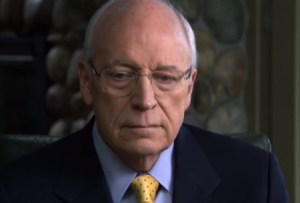
First, Dick Cheney and Donald Rumsfeld: men who commit evil without “thinking much about it” (as you write) because it’s something “other people do.” Reflecting on this it suddenly struck me that Original Sin (which I’d long mocked as an absurdity) serves precisely as a prophylactic against this kind of complacency.

I’m no theologian, but an assumption that one is evil – because we are all inherently fallen – makes it one’s job as a human being to meditate on the evil (or, if you prefer the term, “error”) permanently inherent in oneself. Our obligation is to identify it and to try to root it out. Or at least (since rooting it out is by definition impossible) to moderate it, to channel it positively, to restrict it. Hence your passion for Pope Francis: “I am a sinner” is his first reply.

Nothing one can do, as a being born into sin, can be a “no brainer” (as Cheney describes his decision to permit waterboarding). A profoundly Christian obligation to meditate on his own evil would have led Cheney (and the grinning Rumsfeld) at least to the point of “wrestling with the choice” of whether to torture, as opposed to the glib certainty you, and so many of us, find, well, evil. (I guess there’s an argument that the deliberate choice of evil is morally worse than unreflecting self-deception … but we’ll leave that for another time.)

In other words – if I may be permitted briefly to mix religion and politics – Original Sin is a concept that liberals can embrace, from an epistemological if not a theological perspective. Perhaps after all it’s not something that should be “laundered out of our culture” (to quote today’s post on Sam Harris). We need Original Sin as a restraint against our arrogant – and possibly evil – self-certainty.

Another reader gives Cheney a civics lesson on Presidents’ Day:

The quote taken from Cheney reveals part of the problem in this thoughtless man’s life-long failure and/or inability to think. He said:

Tell me what terrorist attacks that you would have let go forward because you didn’t want to be a mean and nasty fellow. Are you gonna trade the lives of a number of people because you want to preserve your, your honor, or are you going to do your job, do what’s required first and foremost, your responsibility to safeguard the United States of America and the lives of its citizens.

But his job wasn’t to safeguard the United States of America. And it wasn’t even his job to safeguard the lives of American citizens. Presidents and Vice-Presidents do not swear to defend America or Americans. They swear that they will “preserve, protect and defend” the Constitution. The putative “no-brainer” would seem to become rather brain-intensive when this critical difference is taken into account.

To recap: No Constitutional obligation whatsoever to protect the borders, the soldiers, the buildings, or the people. On the other hand, an obligation to protect the Constitution that is as close to iron-clad and unambiguous as anything to be found in the document. He evidently never read the job description. The “honor” he sneers at is the entire point. It’s not one desideratum among many; it’s the only one.

Update from another reader, who doesn’t think it’s that simple:

Your smugly ill-informed “civics lesson”-giving reader has compelled me to do the unthinkable: stand up for Dick Cheney. (Don’t worry, I’ll be sure to shower afterwards.) To suggest that the job of the chief executive of the country does not include protecting its people and property is simply not true.

First, the presidential oath of office is not an exhaustive list of presidential duties. But even if it were, the oath is not limited to preserving, protecting and defending the Constitution. The first obligation of the oath is to “faithfully execute the Office of the President of the United States” – protecting the Constitution is mentioned second as an additional obligation. The Office of the President of the United States, per Article II of the Constitution, includes wielding the “executive Power” of the federal government and being the Commander in Chief. Article II is, fortunately or unfortunately, silent about the contours of the “executive Power,” which is why we’re still debating the powers of the executive branch 225 years later. But as the first – and possibly the only universally agreed – role of the state is to be a “night watchman,” it is absolutely within the job description of the President and Vice President to protect citizens from enemies foreign and domestic.

None of this excuses Cheney or Rumsfeld, or the dime-store Eichmanns they employed, for torturing in violation of settled U.S. law and basic morality. I just can’t abide smug sermonizing by people who don’t know what they’re talking about and reification of the Constitution by people who can’t actually have read it. Thanks for letting me vent.

A reminder of the veep’s oath of office:

I do solemnly swear (or affirm) that I will support and defend the Constitution of the United States against all enemies, foreign and domestic; that I will bear true faith and allegiance to the same; that I take this obligation freely, without any mental reservation or purpose of evasion; and that I will well and faithfully discharge the duties of the office on which I am about to enter: So help me God.

One more reader:

No doubt a level of security is necessary for democracy. Figuring out where to draw constitutional lines is often difficult. But the point about the no brainier line is that he doesn’t even consider the constitutional issues valid. This is what drives so many of us nuts whether liberal or conservative: who are you to decide for me what liberties to take away for my safety?  We are entitled to make these decisions as a nation and not have the security apparatus hide behind top security clearance telling us “you can’t handle the truth” a la Jack Nicholson.

What The Hell Just Happened In Kansas? Ctd

Some good news: the sheer breadth of the sanctioned discrimination in the bill designed to protect religious freedom has apparently doomed it. Maybe it was because, as I noted, it would be a terrible self-inflicted blow for the forces who want to stop gay couples from having stable marriages; or maybe because anti-discrimination really is now a universal maxim for the far right as well as everyone else:

Susan Wagle, a conservative Republican who is president of the Kansas Senate, raised opposition to the House measure, saying she had “grown concerned about the practical impact of the bill” and “my members don’t condone discrimination.”

A couple of final thoughts: it’s possible to mount real resistance to various crackpot, far-right initiatives … and win. And once even the far right oppose anti-gay discrimination, the terms of the debate have been set up for victory for gay equality.

Update from a reader:

I’ve enjoyed your coverage of the Kansas far-right implosion, especially since I have been working at the center of this mess for the past two weeks. I thought it might be helpful to highlight why the overwhelmingly negative response to this bill resulted in action from conservative Republicans. It’s a simple equation:

public outcry + legitimate opposition candidates = policy change. Without a legitimate challenger to Gov. Brownback, this bill could have gone forward and been signed into law without any repercussions. But the fact that Paul Davis, the presumed Democratic nominee for governor, raised over a million dollars in just four months and beat Brownback head-to-head in the only public poll to date made it impossible for Republicans to push this legislation forward over public objection.

Kansas Republicans did not wake up and realize discrimination is wrong. They did not have an awakening on the policy. Anti-discrimination is not a universal maxim in the Republican Party. Sixty nine GOP House members (out of 92) voted for this bill knowing it discriminated against the LGBTQ community. This vote shows how far-right Kansas Republicans think and act when people aren’t paying attention.

Political survival is a much more universal maxim and Gov. Brownback did not want to make a decision on this bill, so he had his Senate leaders spike it to protect his re-election campaign. It’s a less uplifting narrative, but also a helpful reminder of how to accomplish change in American politics – get organized, get loud, and scare both political parties into taking your demands seriously.

What We Can Learn From Downton Abbey

Peter Lawler claims the show is ideal viewing for conservatives, as it offers lessons “on how to make our nostalgia astutely selective”:

Downton Abbey shows us what’s best and what’s ridiculous—if not necessarily much of what’s worst—about being aristocratic. It also cele­brates the decent business sense of the middle class, the realistic love of the American woman, the nobility of living in service to a lord, the humane achieve­ments of modern medical sci­ence, the struggle of both aristo­cratic and servant young women to become somewhat displaced in a world that has their whole lives figured out, and even what’s admirable about the progressive idealism that liberates women and the Irish. Downton highlights the tension between aristocratic tradition­alism and modern progress, and forces conservatives to confront the good and bad in both.

George Will isn’t as impressed, seeing Downton as a sop to progressives:

It is fitting that PBS offers “Downton Abbey” to its disproportionately progressive audience. This series is a languid appreciation of a class structure supposedly tempered by the paternalism of the privileged. And if progressivism prevails, America will BE Downton Abbey: Upstairs, the administrators of the regulatory state will, with a feudal sense of noblesse oblige, assume responsibility for the lower orders downstairs, gently protecting them from “substandard” health insurance policies, school choice, gun ownership, large sodas and other decisions that experts consider naughty or calamitous.

Lawler thinks Will is missing the point:

Who can deny that today our upper class—our meritocratic cognitive elite—lacks and could benefit from some of the class of the Earl of Grantham and his family? That’s not to deny that the Lord Grantham is not so astute when it comes to the personal longing for freedom, turning a profit, tolerance of religious diversity, modern science, and even good government. He is astute enough, though, to accept, if reluctantly, changes that will make his way of life more sustainable and even admirable. He is also astute enough not to embrace the popular moralism that turns sins into crimes or even reasons for dismissal. My friend George Will, who finds me “normally wise and lucid,” mistakes, partly by presenting a quote out of its ironic context, my praise of the relational place called Downton Abbey as a progressive and paternalistic endorsement of the welfare state. There’s a huge difference between an aristocratic manor and a government bureaucracy! And I said Downton is an exaggeration for our edification—not a real place.

Stephen Mufson focuses on the economic lessons of Downton. Among them? “Beware of speculative bubbles fueled by cheap foreign capital”:

Faced with cash-flow problems for years, [Lord Grantham] married his rich American wife, Cora (a sort of corporate merger that only later grew more sentimental), to gain access to foreign investment, namely her family money. Nothing wrong with that: China in its early economic-reform days tapped U.S. and other foreign investment, and now many U.S. companies are looking for investments by successful Chinese firms.

Alas, Grantham violates the basic rules of financial management and fails to put his wife Cora’s injection of capital to good use. Instead of investing in his family business (the estate and its many tenant farmers) or diversifying his investments, Lord Grantham gets swept up in a speculative bubble, sinking virtually all of his wife’s money into a Canadian railway scheme that goes bust. Had he been alive today, he’d have been buying subprime mortgages or giving all his money to Bernie Madoff.

The Doctrine Of DFW

The works of David Foster Wallace inspired Joseph Winkler to return to the Talmud after falling away from Orthodoxy:

Through it all, from the religious passion to the expansive freedom of a secular life, I remained devoted to the works of Wallace. His voice—restless, wild, voracious, endlessly curious, reflective, and most important, unabashedly genuine—always made me feel less lonely, comforted in my self-doubts, and invigorated in my thoughts. He challenged readers to challenge themselves, assuming that the deepest questions belong to the province of everyone and that above all, past the religious, sexual, societal divides, we all desire deep intimacy despite the cynicism of our culture. He was also the smartest and funniest writer I ever read, and he expanded my intellectual tastes and desires. As I left the religious world, Wallace provided a sense of grounding in a world largely new to me, and his playful curiosity served as a guide through the secular culture I chose to embrace. When he hanged himself on Sept. 12, 2008, I instinctively went into shiva mode.

Wallace, in hindsight, besides his Talmudic nature, was always a rabbi to me, in a post-postmodern world where old values only meant anything if you so chose. In a new world in which I couldn’t believe in old dogma, his work still tackled morality, the nature of belief, obligations, responsibility, and the human spirit.

In an essay claiming Wallace was some manner of conservative, James Santel plumbs related themes:

What strikes me as absent from Wallace’s essays isn’t sincerity or even necessarily optimism; what’s missing is faith.

Wallace was narrowly correct in saying that we’re all marooned in our own skulls, and that we ultimately have to make up our own minds about things. But most of us draw a line where Wallace couldn’t in his interview, just before “true empathy’s impossible.” If by “true empathy” Wallace means total inhabitance of another’s inner workings, then yes, true empathy is impossible. But most of us don’t go there. In order to get along in life, we put our faith in the good will of people we love, or in higher beings, or in the rule of law, or in inspiring public figures like John McCain and Barack Obama. Some of us even put our faith in literature.

This is the real tragedy of Wallace’s conservatism. It entailed a curious blindness to the extent to which his writing, imbued as it was with the rare ability to dissect contemporary problems with humanity and humor, reached people, inspiring in his readers a rare devotion born of the sense that Wallace was speaking directly to them. (If you need evidence of this, look at the memorial to Wallace on the McSweeney’s website.) And yet Wallace, widely regarded as the premier literary talent of his generation, ultimately had little faith in his chosen medium. Heavily influenced by Wittgenstein, he saw language as at best the faded messages we seal into bottles and toss into uncertain waters from our little desert island, hoping they reach someone else’s. Wallace (“It goes without saying that this is just one person’s opinion”) could never totally buy into this project. “It might just be that easy,” he told his interviewer in 1993. But for Wallace, blessed and cursed with that endlessly perceptive mind, it was never that easy.

Previous Dish on DFW here, here, and here.

No Free Will, No Law And Order?

In a long review of Sam Harris’ Free Will, Daniel Dennett squirms at the practical, political consequences of full-throated determinism:

Harris, like the other scientists who have recently mounted a campaign to convince the world that free will is an illusion, has a laudable motive: to launder the ancient stain of Sin and Guilt out of our culture, and abolish the cruel and all too usual punishments that we zestfully mete out to the Guilty. As they point out, our zealous search for “justice” is often little more than our instinctual yearning for retaliation dressed up to look respectable. The result, especially in the United States, is a barbaric system of imprisonment—to say nothing of capital punishment—that should make all citizens ashamed. By all means, let’s join hands and reform the legal system, reduce its excesses and restore a measure of dignity—and freedom!—to those whom the state must punish. But the idea that all punishment is, in the end, unjustifiable and should be abolished because nobody is ever really responsible, because nobody has “real” free will is not only not supported by science or philosophical argument; it is blind to the chilling lessons of the not so distant past. Do we want to medicalize all violators of the laws, giving them indefinitely large amounts of involuntary “therapy” in “asylums” (the poor dears, they aren’t responsible, but for the good of the society we have to institutionalize them)? I hope not.

Harris shrugs off the complaint:

These concerns, while not irrational, have nothing to do with the philosophical or scientific merits of the case. They also arise out of a failure to understand the practical consequences of my view. I am no more inclined to release dangerous criminals back onto our streets than you are.

In my book, I argue that an honest look at the causal underpinnings of human behavior, as well as at one’s own moment-to-moment experience, reveals free will to be an illusion. (I would say the same about the conventional sense of “self,” but that requires more discussion, and it is the topic of my next book.) I also claim that this fact has consequences—good ones, for the most part—and that is another reason it is worth exploring. But I have not argued for my position primarily out of concern for the consequences of accepting it. And I believe you have.

The Basis Of God

Adam Gopnik ponders shifting cultural attitudes toward atheism and belief:

[T]he need for God never vanishes. Mel Brooks’s 2000 Year Old Man, asked to explain the origin of God, admits that early humans first adored “a guy in our village named Phil, and for a time we worshipped him.” Phil “was big, and mean, and he could break you in two with his bare hands!” One day, a thunderstorm came up, and a lightning bolt hit Phil. “We gathered around and saw that he was dead. Then we said to one another, ‘There’s something bigger than Phil!’ ” The basic urge to recognize something bigger than Phil still gives theistic theories an audience, even as their explanations of the lightning-maker turn ever gappier and gassier. …

As the explanations get more desperately minute, the apologies get ever vaster. David Bentley Hart’s recent “The Experience of God: Being, Consciousness, Bliss” (Yale) doesn’t even attempt to make God the unmoved mover, the Big Banger who got the party started; instead, it roots the proof of his existence in the existence of the universe itself. Since you can explain the universe only by means of some other bit of the universe, why is there a universe (or many of them)? The answer to this unanswerable question is God. He stands outside everything, “the infinite to which nothing can add and from which nothing can subtract,” the ultimate ground of being. This notion, maximalist in conception, is minimalist in effect. Something that much bigger than Phil is so remote from Phil’s problems that he might as well not be there for Phil at all. This God is obviously not the God who makes rules about frying bacon or puts harps in the hands of angels. A God who communicates with no one and causes nothing seems a surprisingly trivial acquisition for cosmology—the dinner guest legendary for his wit who spends the meal mumbling with his mouth full.

Dreher protests:

I can only assume, in charity, that Gopnik read Hart’s book too quickly, because this is a significant distortion of the theologian’s arguments. Hart is not arguing for a specific idea of God; he is rather making a more general argument. He is attempting to establish why there is Something rather than Nothing, and to show that atheist claims are actually less reasonable than monotheistic claims. Hart returns to classical metaphysics to make his argument. … It is very, very far from the case that Hart argues for “a God who communicates with no one and causes nothing,” and it is actually shocking that Gopnik alleges this. True, Hart is talking in abstractions, but these abstractions are necessary to establish the metaphysical basis for his claims.

Douthat challenges (NYT) Gopnik’s assessment of people who have replaced “the old-time religion with a more abstract, post-personal God”:

Of course there are believers whose conception of divinity is functionally deistic, liberal religious intellectuals for whom apophatic faith substitutes for revelation rather than enriching it, and probably Gopnik’s social circle includes more examples of this type than it does of Hart’s more traditional sort. But make a list of prominent Christian scholars and philosophers and theologians (to say nothing of apologists and popularizers … artists and novelists … or, God help us, journalists), and you’ll find that plenty of the names — from Charles Taylor to Alvin Plantinga, Alasdair McIntyre to N.T. Wright, Rowan Williams to Joseph Ratzinger — do actually believe in all that Nicene Creed business, believe that the God of philosophy can still care about Phil and Ross and Adam, and share Hart’s view that religion can be intellectually rigorous without making prayer empty and miracles impossible.

In an interview, Gary Cutting and Alvin Plantinga further explore (NYT) the issue:

G.G.: … [I]sn’t the theist on thin ice in suggesting the need for God as an explanation of the universe? There’s always the possibility that we’ll find a scientific account that explains what we claimed only God could explain. After all, that’s what happened when Darwin developed his theory of evolution. In fact, isn’t a major support for atheism the very fact that we no longer need God to explain the world?

A.P.: Some atheists seem to think that a sufficient reason for atheism is the fact (as they say) that we no longer need God to explain natural phenomena — lightning and thunder for example. We now have science.

As a justification of atheism, this is pretty lame. We no longer need the moon to explain or account for lunacy; it hardly follows that belief in the nonexistence of the moon (a-moonism?) is justified. A-moonism on this ground would be sensible only if the sole ground for belief in the existence of the moon was its explanatory power with respect to lunacy. (And even so, the justified attitude would be agnosticism with respect to the moon, not a-moonism.) The same thing goes with belief in God: Atheism on this sort of basis would be justified only if the explanatory power of theism were the only reason for belief in God. And even then, agnosticism would be the justified attitude, not atheism.

Previous Dish on faith and Hart’s book here and here.