A Clinton Never Forgets

The State Funeral Of Former South African President Nelson Mandela

No one should be that shocked that a political dynasty in a major party that has been at the highest levels for decades would keep tabs on their friends and enemies. We’ve all watched House of Cards. Of course, in the white-knuckled campaign of 2008, which the Clintons were hoping would be a coronation, they were hurt, bewildered and betrayed by so many Democrats who saw in Obama something they didn’t always see in the Clintons: a political vision not entirely eclipsed by calculation. And you can see why they might have wanted to keep score of the hurt and the betrayal.

But the comprehensiveness of the list, the care with which it was constructed (on a scale of one to seven, for some reason), and the rawness of the feelings behind it should remind people that the Clintons have not changed:

They carefully noted who had endorsed Hillary, who had backed Obama, and who had stayed on the sidelines—standard operating procedure for any high-end political organization. But the data went into much more nuanced detail. “We wanted to have a record of who endorsed us and who didn’t,” a member of Hillary’s campaign team said, “and of those who endorsed us, who went the extra mile and who was just kind of there. And of those who didn’t endorse us, those who understandably didn’t endorse us because they are [Congressional Black Caucus] members or Illinois members. And then, of course, those who endorsed him but really should have been with her … that burned her.”

The list’s complexity and nuance aren’t shocking. But as Jonathan Allen and Amie Parnes note:

The difference is the Clintons, because of their popularity and the positions they’ve held, retain more power to reward and punish than anyone else in modern politics.

The minute they finished one campaign they were strategizing in minute detail for the next.

But that isn’t what troubles me about the story. What troubles me is the resilience of the entourage. Jake Weisberg long ago framed the Clinton circle of friends, allies, donors, ambassadors, and courtiers as a web of “Clincest” – constantly bubbling with money, networking, favors, back-scratching, threats, charm offenses and old ties. That Clincest remains. And it is a problem.

Notice, for example, the two list-makers, in Politico magazine’s excerpt from HRC: State Secrets and the Rebirth of Hillary Clinton. One, Kris Balderston, has been with them for two decades; the other, Adrienne Elrod, is an almost text-book example of Clincest:

Elrod, a toned 31-year-old blonde with a raspy Ozark drawl, had an even longer history with the Clintons that went back to her childhood in Siloam Springs, a town of 15,000 people in northwestern Arkansas. She had known Bill Clinton since at least the age of five. Her father, John Elrod, a prominent lawyer in Fayetteville, first befriended the future president at Arkansas Boys State, an annual civics camp for high school juniors, when they were teenagers. Like Bill Clinton, Adrienne Elrod had a twinkle in her blue eyes and a broad smile that conveyed warmth instantaneously. She had first found work in the Clinton White House after a 1996 internship there, then became a Democratic Party political operative and later held senior posts on Capitol Hill. She joined the Hillary Clinton for President outfit as a communications aide and then shifted into Balderston’s delegate-courting congressional-relations office in March. Trusted because of her deep ties to the Clinton network, Elrod helped Balderston finalize the list.

My italics. Again, there’s absolutely nothing wrong or that surprising about a politician retaining loyal friends from way-back-when, a coterie of trusted advisers, truth-telling friends and shoulders to cry on, in the glare of public office. But what distinguishes the Clintons is the sheer scale of the enterprise, the meticulousness of the extended family, the way in which money is interlaced with everything, and the remarkable loyalty of the Clinton court through the huge ups and downs of their political careers.

If the Clintons get their third and fourth terms in the White House, they will bring this vast retinue with them, with all the attendant baggage. And by that I mean the paybacks for supporting Obama (man, can you imagine that long list?) and the unhealthy atmosphere of a secluded clique where an open administration should be. Those cliques can lead to insular thinking, the kind of paranoia that led Hillary Clinton into her famous gaffe of a “vast right-wing conspiracy” (which, even if true, needlessly made Matt Drudge’s and Roger Ailes’ year).

It’s what led to all the utterly unnecessary hunkering down over minor “scandals” that, in time, were shown to be largely, if not entirely, in the eye of the beholders (including mine), and could have been defused with a little more transparency and access to those outside the inner circle of flacks and hangers-on.

I should be candid here. I believe Bill Clinton was a very good president, who sabotaged himself needlessly on many occasions. I believe Hillary Clinton was a good, if not spectacular, secretary of state. I believe their public behavior after their defeat has been close to exemplary. And I sure am not going to engage in a constant stream of Clinton-baiting if she decides to run for the presidency again. At this point, she absolutely deserves a fresh look. But it would be equally wrong to forget the patterns that led to their previous acts of self-destruction or the network of friends and dubious money-makers who seem not to have gone away, but to be reassembling in very similar dynamics for the next big push. They were and can be a liability. And it seems the Clintons still don’t see it that way at all.

(Photo: Hillary Clinton, Former United States President Bill Clinton and Chelsea Clinton during the official memorial service for former South African President Nelson Mandela at the FNB Stadium on December 10, 2013 in Soweto, South Africa. By Lefty Shivambu/Gallo Images/Getty Images.)
The Costliest Olympics

OLY-2014-RUSSIA

Joshua Yaffa explains how Sochi came to cost $51 billion:

Once Russian officials settled on Sochi as a host city … they guaranteed themselves a costly engineering challenge, since organizers didn’t have much choice as to where to put Olympic venues. Sochi, once a place of recuperation for Soviet workers under Stalin, sits on a narrow slope of land between the mountains and the sea, with no wide, flat space for large stadiums and arenas. The only feasible site was the Imereti Valley, a patch of flood-prone lowlands 20 miles from the center of Sochi. … Russia would have to build everything from scratch.

The fact that Putin saw the Olympics as a personal legacy made the problems worse:

Putin’s vow to spare no expense provided cover for sloppiness and mistakes in construction. When a road leading up to Krasnaya Polyana wasn’t finished on time, for example, a helicopter had to deliver the cement needed to build ski lifts. At the same time, the government’s willingness to overspend encouraged organizers to indulge their grandest, most over-the-top visions. At one point the team responsible for the opening ceremonies decided it wanted a closed stadium at Fisht and not the retractable roof that had been originally planned. That left the construction team only three months to procure a quantity of steel that would have ordinarily taken a year to get on-site. Damon Lavelle, an architect at the British firm Populous who worked on early plans for the venue, says it’s no longer so much a stadium as “the world’s largest theater.” The show for the opening ceremonies is said to include six locomotives, the troika from Nikolai Gogol’s Dead Souls, and Peter the Great commanding five ships.

Last month, Sean Guillory pointed out that Olympic laborers are getting shortchanged:

There is an estimated 70,000 laborers working in construction, 16,000 are foreign labor. They work long hours and for little pay. In its detailed report on worker abuses, [Human Rights Watch] reported that workers got typically paid $1.80 to $2.60 an hour with a monthly average salary of $455 to $605. Their pay is routinely delayed, and sometimes they’re never paid at all. One HRW respondent, Yunus, said “I have no written contract. I got paid only in February: 2,400 rubles [$77] for December. I wasn’t paid after that. I worked for 70 full days without pay. We worked from 8 a.m. to 8 p.m. with no days off.” He quit before receiving the wages owned to him.

Fnally, Barry Petchesky emphasizes the geographical unsuitability of Sochi as Olympic venue:

The actual city of Sochi sits on a slope—the only land flat enough to build an Olympic village and stadiums is 20 miles away, on a small slide of flood-prone soil. And flood it has. A new cargo port was destroyed in storms, causing millions in damage and delays, after officials failed to heed scientists’ warnings that the site was vulnerable. Underground streams have caused an embankment near the Olympic park to collapse and be rebuilt multiple times. The ski jump was constructed without geologic testing, and construction crews cleared trees whose roots stabilized the muddy soil. A major landslide occurred in 2012.

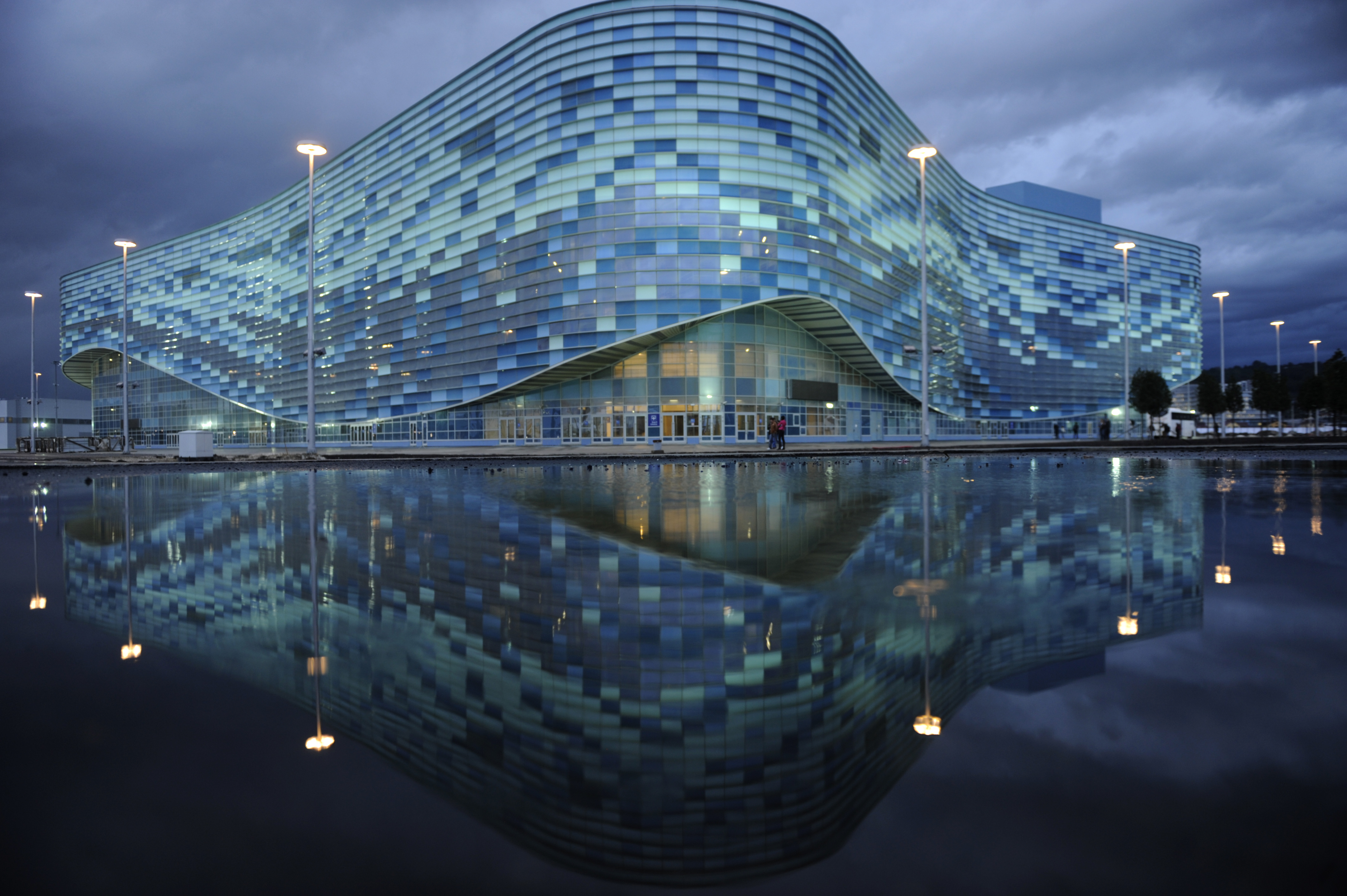
(Photo: A picture taken on September 25, 2013 shows the figure-skating and speed-skating arena at the Olympic Park in Sochi. Sochi will host the 2014 Winter Olympics starting on February 7, 2014. By Mikhail Mordasov/AFP/Getty Images)

A Better Banksy

dish_spy

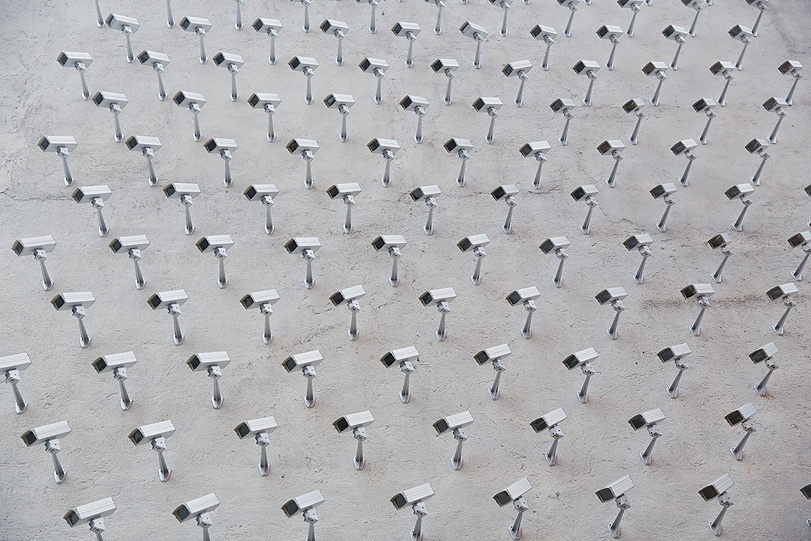
A street artist known as the “Spanish Banksy” installed 150 cameras on the side of a building in Madrid to start a conversation about the surveillance state. Zach Sokol praises Cameras as “less obnoxious than any street art by Banksy”:

Yes, this public art could be called “obvious” as well, but the choice to put the cameras on the plain wall of a plain building on a side street makes this work more interesting than when Banksy put a truck full of “screaming” stuffed farm animals in the Meatpacking District. It’s melodramatic and trite to put the USDA Organic x Build-A-Bear work in the area of Manhattan that includes both the literal meat packers and the luxury brands and upper echelon of material and consumer culture. The installation was one huge wink that ended in an even bigger sigh. The smoke and mirrors spectacle was enthralling for all of five minutes–a bottle rocket, disguised a 4th of July fireworks extravaganza.

SpY, on the other hand, picked a spot where no one might notice his work. It’d be one thing if he put the cameras in Madrid’s Plaza Mayor, or another place with heavy foot traffic, but this tucked-away side street adds more layers to his work: Who exactly would be watched on this side street? Do places and urban spaces suddenly become “important” if they are being watched? Could the information gathered by the NSA and privacy-invading groups actually be useless and nothing to sweat over? Maybe our tracked phone calls and emails are about as relevant as a dusty side street in a slow-paced city. Cameras also complements other manipulations of security cameras, including the Insecurity Camera built at the School for Poetic Computation.

Previous Dish on Banksy here, here, and here.

(Photo by SpY. More here, here, and here.)

Teetering Between Peace And War

Javad Zarif

The striking thing about the long and delicate rapprochement with newly empowered moderate forces in Iran is how far from the national conversation it is. There are few heated TV debates; Twitter is relatively quiet; the blogosphere sits in two camps of near calcified intellectual hostility; only AIPAC slouches forth from time to time to threaten negotiation-ending new sanctions in the Senate.

And yet we have had two breakthroughs since the last elections in Iran: first the actual interim agreement between the major powers and Iran, and now a secondary practical deal to begin ramping down Iran’s nuclear program starting January 20. That second deal was announced around lunchtime today. All of it appears to be reversible at any point if one of the parties does not appear to be living up to its side of the bargain:

Giving details about the deal, Deputy Foreign Minister Araqchi told state television that each party’s commitments would be implemented “in one day”. “After the first step is taken, then in a short period of time we will again start our contacts for resumption of negotiations for the implementation of the final step.” He added: “We don’t trust them. … Each step has been designed in a way that allows us to stop carrying out our commitments if we see the other party is not fulfilling its commitments.”

It would be foolish to try and glean clues from nuances in public statements, but I don’t find the lack of trust to be a deal-breaker. The honesty about such a lack of trust is what gives the deal a chance to work. But the more fearful and reactionary factions in both countries’ legislatures are doing their best to unravel the detente. In Iran, a big majority of the parliament appears recklessly willing to sanction new uranium enrichment of up to 90 percent (allegedly for powering submarines); in the US, the Senate is also brandishing possible new sanctions that would end the detente if enacted, and require humiliating concessions Iran will never agree to. But neither legislature has yet acted – and the positioning and jockeying may be an inevitable part of what president Obama has claimed is only a 50-50 chance of success.

I don’t have any illusions about parts of the Iranian regime, or about Israeli hopes to scuttle any accord in favor of another unpredictable and polarizing war in the Middle East.

But I do think that this opening – if it is handled right – could avoid an avoidable conflict, open up many new options for US foreign policy in the Middle East, and empower pragmatism in both the US and Iran to mutual advantage. From Afghanistan to Iraq, the US and Iran have cooperated before and can cooperate again. The two peoples are natural allies; and the more the people of Iran get to taste the benefits of ending the brinksmanship and polarization and terror-mongering of their religious extremists, the more possibility there will be for more engagement.

There should be no permanent enemies in world affairs; just the pursuit of permanent interests. This time, we’re close to a rare alignment between Washington and Tehran, Obama and Rouhani. The only serious alternative to this deal, if containment has been ruled out by Obama, is a war. We’d be crazy not to hope it doesn’t come to that.

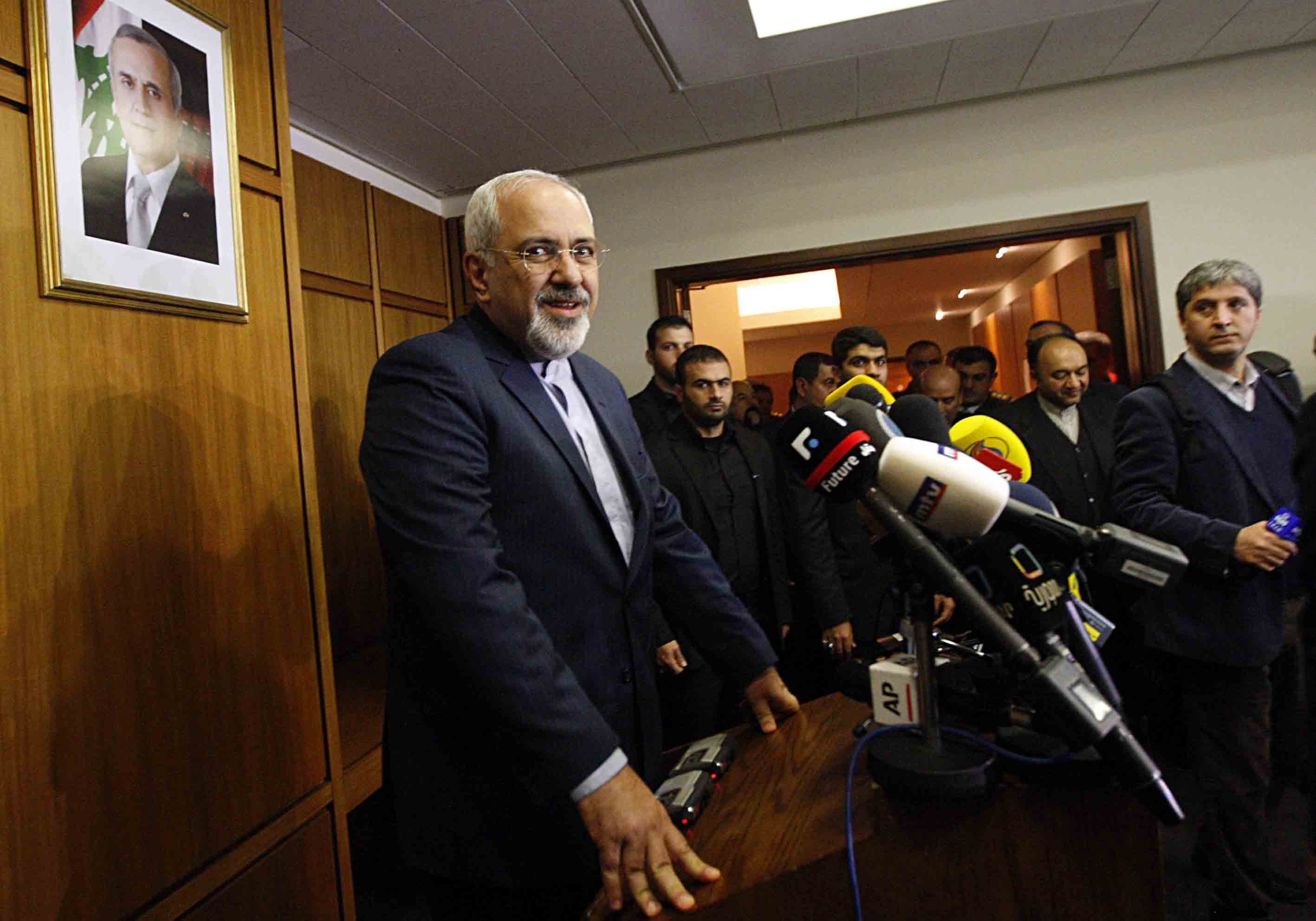
(Photo: Iranian FM Javad Zarif holds a press conference upon his arrival in Beirut, Lebanon, January 12,2014. By Bilal Jawich/Anadolu Agency/Getty Images.)

Medieval Mental Healthcare

The Belgian town Geel has been known as a refuge for the mentally ill for over 700 years. Mike Jay describes how the town’s “family care” treatment tradition developed:

Among the people of Geel, the term ‘mentally ill’ is never heard: even words such as ‘psychiatric’ and ‘patient’ are carefully hedged with finger-waggling and scare quotes. The family care system, as it’s known, is resolutely non-medical. … [T]he most common collective term is simply ‘boarders’, which defines them at the most pragmatic level by their social, not mental, condition. These are people who, whatever their diagnosis, have come here because they’re unable to cope on their own, and because they have no family or friends who can look after them. …

During the Renaissance, Geel became famous as a place of sanctuary for the mad, who arrived and stayed for reasons both spiritual and opportunistic. Some pilgrims came in hope of a cure. In other cases, it seems that families from local villages took the chance to abandon troublesome relatives whom they couldn’t afford to keep. The people of Geel absorbed them all as an act of charity and Christian piety, but also put them to work as free labour on their farms.

Today, the system continues along much the same lines. A boarder is treated as a member of the family:

involved in everything, and particularly encouraged to form a strong bond with the children, a relationship that is seen as beneficial to both parties. The boarder’s conduct is expected to meet the same basic standards as everybody else’s, though it’s also understood that he or she might not have the same coping resources as others. Odd behaviour is ignored where possible, and when necessary dealt with discreetly. Those who meet these standards are ‘good’; others can be described as ‘difficult’, but never ‘bad’, ‘dumb’ or ‘crazy’. Boarders who are unable to cope on this basis will be readmitted to the hospital: this is inevitably seen as a punishment, and everyone hopes the stay ‘inside’ will be as brief as possible.

The people of Geel don’t regard any of this as therapy: it’s simply ‘family care’. But throughout the town’s long history, many both inside and outside the psychiatric profession have wondered whether this is not only a form of therapy in itself, but perhaps the best form there is.

The Weakness Of Love

Nick Ripatrazone urges a renewed appreciation for the great Catholic short story writer Andre Dubus, whose earthy characters he describes as “trapped in worlds timed by their immediate needs” – smoking, drinking, sex. He especially dwells on Dubus’ powerful tale, “A Father’s Story,” centered on the moral dilemma confronting its main character, Tom Ripley:

Ripley is divorced, owns and boards horses, and tells the reader about his daily Catholic rituals for the first half of the story. This telling would lumber forward in the hands of lesser writers, but Dubus makes the prose confessional, and we later learn the reason Ripley needs forgiveness. His grown daughter, Jennifer, spent a night drinking with friends. She struck a man while driving home, and weeps to her father in the early morning. He drives his pickup to the scene and voices simultaneous prayers: that the man was alive, and, “if he were dead, they would not get Jennifer.” The man is dead, and Ripley chooses his daughter over morality, over even God. He disposes of the body, and this is what he tells God: “I would do it again. For when she knocked on my door, then called me, she woke what had flowed dormant in my blood since her birth, so that what rose from the bed was not a stable owner or a Catholic or any other Luke Ripley I had lived with for a long time, but the father of a girl.”

Thomas Kennedy notes that the spiritual evolution of Dubus’s characters “might be seen as a growth to this ‘weakness’ [of love], to the openness of heart that, in weighing love against principle, chooses the former, although without releasing the latter.” This is the “moral paradox of the contemporary Catholic portrayed by Dubus, the encompassment into a single tension of the heart of the law of the Old Testament and the love of the New.” “A Father’s Story” is often misread. As the father of twin daughters, I fully understand Luke Ripley’s decision. Dubus recognizes that sometimes we must act poorly, immorally, in order to love. I cannot think of another writer who forces me to question God.

The Dish has given Dubus plenty of love – check out QFTDs from him here, here, and here. Previous Dish on “A Father’s Story” here.

One Year After “One Today”

Last year around this time, Richard Blanco, a gay Cuban-American, was named the Inaugural poet, the occasion for his writing the poem “One Today.” In an interview for his new memoir, For All of Us, One Today, Blanco discusses how growing up gay in a homophobic environment – his grandmother would tell him, “I’d rather have a granddaughter who’s a whore than a grandson who is a faggot like you” – impacted his writing:

When you’re a kid, you love her unconditionally, and you want to be loved, and at the time, you are just trying to please your grandmother. You act like she tells you not to act. What essentially made sense to me was that my grandmother ultimately made me a writer. She made this prancing little kid with his coloring books and his Play-Doh, she squashed the hell out of him, but she made him an observer of the world versus a participant. She made the little boy with an incredible will to survive — to learn how to read people, and most of all, how to read her emotionally, to know how to act, how to respond, and not be called faggot.

That made me a great observer of human nature, an introvert, and after all, what do writers do but look at the world and write about it. In some ways that was the forgiving moment. I was able to make sense of why my grandmother was in my life. I never had a forgiving moment with her face to face, as the poem describes. It was a great irony that she died without being able to speak. And the silence made me make peace with myself. That’s the only way I can make sense out of her. I don’t think I forgave her more than I just moved on.

Previous Dish on Blanco here, here, and here.

Educating Away Extremism

Alison Smale reports (NYT) on Islam classes offered to German primary school students “using state-trained teachers and specially written textbooks” in an effort “to better integrate the nation’s large Muslim minority and counter the growing influence of radical religious thinking”:

The Hesse curriculum effectively places Islamic instruction on equal footing with similarly state-approved ethics training in the Protestant and Catholic faiths. By offering young Muslims a basic introduction to Islam as early as first grade, emphasizing its teachings on tolerance and acceptance, the authorities hope to inoculate young people against more extreme religious views while also signaling state acceptance of their faith.

Leah Libresco argues that the classes “might be a cautionary tale for religious conservatives who want to see their faith more closely woven into state education”:

When running classes in Islam, generally, the German schools run into the same conflicts that must come up when they give students classes in generic Protestantism. Already, in one community, a group of Sunni parents are trying to keep members of the Ahmadiyya reformist sect from influencing the curriculum. When schools teach religion as a matter of ethics, not history, school administrators must either run ecumenical councils or, more likely, just set a curriculum more in line with the school’s goals than the faith’s …

The separation between church and state is there for the protection of both institutions. The state has enormous power to shape culture, and it’s natural for religious communities to want that power deployed molding the culture in their own image.

But the state’s power will serve the state’s ends. So state-sponsored religious education will still, ultimately, be designed to raise good citizens, not good Christians.

In The Grip Of Grief

Mark Slouka struggles to come to terms with the death of his father:

[A]s far as I can tell, there is no after-map or, more precisely, we each begin making our own the instant the news reaches us that someone we loved is gone. Which is unsettling: this terra is your own, brother, and as incognita as they come. Kübler-Ross? Sorry, the good doctor can’t help you here. The run-up to death may have its stages, as clearly marked as the Tour de France, but past Paris, so to speak, for those remaining on the field, things get fuzzy quick.

No search engine can find you. The guides have disappeared—they don’t know this place. And what were you going to do, anyway, Google: “Dad, who used to tip up sixty-pound rocks so I could grab the red-backed salamanders hiding underneath them when I was four”? No, in the aftermath of loss, the ones you love will keep you whole, but the journey is yours alone. Whatever you do, whatever you feel, becomes the map.

So it’s a problem. Because I miss him. Because I want to tear down this fucking wall between us with my hands. Because the angels and the harps don’t work for me. Because it wasn’t Our Heavenly Father who carried me out to the car at dawn when I was a child, who laid me down on the back seat of the DeSoto and covered me, who was there as I grew, who embarrassed me, disappointed me, loved me.

After experiencing the loss of their parents, Rebecca Soffer and Gabrielle Birkner started a website, Modern Loss, for mourners in their 20s and 30s:

“This project is called Modern Loss for a reason,” said Soffer. “Older generations seemed to deal traditionally with discussing loss in different ways than we do. And that is a huge generalization, but I didn’t get from people my age ‘they’re in a better place now,’ or ‘now they’re an angel,’ or ‘it was meant to be’ as much as I did from older people, because they’re used to saying that. They’re used to brushing it under the rug, they’re used to not being open about the excruciating aspects of loss.” Birkner and Soffer envisioned a site that would match their group’s conversations: loose, occasionally sarcastic, wide-ranging, and nonjudgmental. Without encouraging readers to wallow in their grief, it would seek to remind them that there is no expiration date to sadness. “The narrative of the long arc of loss is forever. It doesn’t have to own you, but you’re going to experience it in many different ways. It’s OK, because we still experience it,” said Soffer.

“Who Am I When Nobody Pays Attention?”

In an interview about his new book, The Slavery of Death, Richard Beck thinks through the question:

The answer most of us would give, shaped as we are by the culture, is this: you’re a nobody. If you’re not someone who “stands out” you’re a nobody. Brene Brown calls this the “shame-based fear of being ordinary.” Nobody wants to be ordinary. We want to be extraordinary.

And why is that? Because of existential (death) anxiety. We want our lives to matter, to be noteworthy and significant in the face of death. We don’t want to fade away, we want to leave a dent in the universe. So we grasp at anything that makes us stand out from the crowd, that allows us to make and leave a mark. And so we get caught up in the neurotic social comparison game–online, at work, and in our social relationships. The main symptom of this “shame-based fear of being ordinary” is envy/jealousy fused with a feeling of inferiority and inadequacy. The trouble with this, and here is the pastoral turn, is that everywhere we see Jesus asking us to “take the last place.” To be a servant. To be the littlest, least, and last.

But that is impossible if our egos are being driven by a neurotic and shamed-based anxiety. Because the reality of Good Friday is that if you become like Jesus–if you carry his cross–nobody will pay attention, no one will say thank you, no one will recognize your work. That’s crucifixion. Of the ego, of the self, of our aspirations to be “a somebody.”

So that’s the rub. Jesus asks us to become a “nobody” in the eyes of the world. In our own eyes. But because of our death-infected neurosis–the shamed-based fear of being ordinary–we can’t accept Jesus’s offer. We don’t want to take up the cross. It’s too embarrassing. We don’t want to be a servant. No one will applaud or like us on Facebook.

The Dish previously has featured Beck’s work here, here, and here.