A New Evil Face

Nicholas Schmidle acquaints readers with Maulana Fazlullah, the new head of the Pakistani Taliban:

Fazlullah was an inspired choice, by the Taliban’s warped standards. He is young and ruthless, and has taken responsibility for a panoply of barbaric acts over the years: floggings, suicide PAKISTAN-UNREST-TALIBANbombings, even the attempted assassination of Malala Yousafzai, a teen-age girl who survived gunshots to the head and neck, and who has become an even more driven advocate for girls’ education. (She recently addressed the United Nations and appeared on “The Daily Show.”) Last summer, his men kidnapped and beheaded seventeen Pakistani soldiers.

But what distinguishes Fazlullah from his predecessors is his evangelism. He is as much a rebel and a crusader—bent on imposing his harsh interpretation of sharia on others – as he is a terrorist. He was perhaps the first militant leader to declare jihad against the Pakistani government. When the Pakistani Taliban announced their existence a month later, they turned their guns on the state, toppling a long-standing relationship between elements inside the Pakistani government and jihadists in Pakistan and Afghanistan. Compared to their Afghan counterparts, the Pakistani Taliban have turned into a sophisticated group with global reach—they planned the failed attack on Times Square, in 2010 – as a result of their alliance with Al Qaeda. Still, some members are reportedly amenable to peace talks with officials in Islamabad. Fazlullah is not one of them.

He has not received a wholly warm welcome from the group; “several furious commanders from a rival clan stood up and left” when he was named the new leader. Colin Freeman considers the implications:

Fazlullah, despite his reputation as a hardliner’s hardliner, is considered a relative outsider within the ranks, as he hails from the Swat Valley rather than the Taliban’s traditional strongholds in Pakistan’s tribally-administered region. … “There are reports of serious infighting among them that might come to the fore in the near future,” said Saifullah Mahsud, director of the FATA Research Centre, a Pakistani think tank. While a failure to agree on a new leader could compromise the group’s operation effectiveness, it could equally lead to even more bloodshed as different commanders and factions embark on their own rampages. The group already stands accused accused of killing thousands of Pakistani civilians in recent years, as well as trying to impose sharia law in places like Swat.

Meanwhile, Karachi-based novelist Mohammed Hanif argues that Pakistan “seems to have lost the will to fight its old foe, Fazlullah, and his followers”:

When [Fazlullah’s predecessor Hakimullah] Mehsud was killed, instead of celebrating or letting out quiet sighs of relief, politicians and journalists reacted as if they had lost a favorite son. He had killed many of us, but we weren’t craving vengeance; we were ready to make up and cuddle. Why does Pakistan’s political and military élite celebrate the very people it is fighting? The logic – or its absence – goes like this: Hakimullah Mehsud was our enemy. But the United States is also our enemy. So how dare the Americans kill him? And how dare they kill him when we had made up our minds to talk to him?

The popular narrative in Pakistan holds that the Taliban’s fight is simply a reaction to American drone strikes: it’s a war between American kids sitting in front of LCD screens eating their TV dinners and our own men in the north, who are better Muslims than we are. The Pakistani logic seems to be that if America stops killing them, they’ll stop killing us. But the truth is that the Taliban leadership has made no such promises. They have only said that if the government stops drone strikes, and stops coöperating with America’s war in Afghanistan, they would be willing to talk. But what would they talk about? The little problem they have with Pakistan is that it’s an infidel state – almost as bad as America, but with some potential; they believe that they can somehow make us all better Muslims. Our Taliban are simply saying, “Save us from the U.S. drones, so we can continue to kill you infidels in peace.”

Pakistan’s rulers have developed a strange fetish for lionizing its tormenters. Watching the proceedings in Pakistan’s parliament last week, after Mehsud’s murder, you could have mistaken it all for a Taliban meeting. “This is not just the killing of one person,” Pakistan’s interior minister, Chaudhry Nisar Ali Khan, said. “It’s the death of all peace efforts.” It was mentioned, but only in passing, that since Pakistan had proposed talks with Mehsud in September, the peacemaker and his allies had killed an Army generalblown up a church filled with worshippers, and killed hundreds of other civilians. … In their collective hankering for one true Sharia, the leaders of Pakistan’s political and security establishment – and their American backers – have long since lost their bearings.

(Photo by Thir Khan/AFP/Getty Images)

Remembering Moms Mabley

Lisa Derrick recommends the new HBO documentary “Whoopi Goldberg Presents Moms Mabley,” about the first female comedian to make a living in stand-up:

Born Loretta Mary Aitken, Mabley began working as a stand-up in the late 1920s, and made a living on the Chitlin’ Circuit—the vaudeville clubs, speakeasies and theaters throughout the eastern, southern, and upper mid-west areas of the United States where African-American performers were able to perform during segregation. In the early days of her performances, Mabley wore androgynous clothes on stage and worked blue, performing XXX-rated routines. As she developed her act, Mabley took on the persona of granny or great auntie, wearing a floral house dress and a drooping hat. She took out her dentures for her stand-up routine—at the time dentures were common—and riffed on her character’s desire for young men and her distaste of old ones, addressing the imbalance of sexual power, as well as hitting on politics, race, war, and other social issues.

Neil Drumming explains that Mabley’s “broke-down hat, old housedress, and ill-fitting shoes” were “more than a visual gag”:

[T]his entire “Moms” persona was Mabley’s method of making herself non-threatening — a tactic that even the most successful female comedians utilize in order to deliver their unique message in a male-dominated field. “People don’t want to hear the truth,” [Joan] Rivers elaborates. “And if you are going to hear the truth, it’s got to come from a homely lady, a lady that’s no competition, a lady that ain’t gonna take your husband, a lady that is okay, that you can trust because she’s harmless.” This insight strikes home as soon as you hear Mabley’s subtle, irreverent commentary on Civil Rights and the political climate of the ’60s.

Diana Anderson-Minshall says that “Mabley’s stage persona reflected her core political values, but did little to suggest she was a lesbian”:

According to Keith Stern’s Queers in History, Mabley came out as a lesbian in her act when she was 79, and worked the lesbian club circuit until her death a couple of years later. … “I had always heard rumors and had never seen any proof,” Goldberg says. “People said, ‘Well, I saw her at [a lesbian club] or I saw her here and I saw her there.’ But there was never anything where you could say, ‘Look, here you go.’” That is, until Goldberg stumbled onto a card picturing Mabley decked out in a man’s suit. It was signed “Mr. Moms.” “Baby, when we found that,” Goldberg recalls, “I was like, Hey, I can say it now!”

Previous Dish on female comedians here and here.

“Germany Has Turned Into A Giant Brothel”

1418768893_75bb6eccb2_b

In sharp contrast with the Swedes:

[In 2001, Germany’s Social Democrats and Greens] wanted to raise the legal and social status of prostitutes. So they enacted a law to remove the stigma from sex work by, for example, giving prostitutes full rights to health insurance, pensions and other benefits. “Exploiting” sex workers remained criminal, but merely employing them or providing them with a venue became legal. The idea was that responsible employers running safe and clean brothels would drive pimps out of the market.

Germany thus embarked on an experiment in liberalization just as Sweden, a country culturally similar in many ways, was going in the opposite direction. In 1999 the Swedes had made it criminal to pay for sex (pimping was already a crime). By stigmatizing not the prostitutes but the men who paid them, even putting them in jail, the Swedes hoped to come close to eliminating prostitution.

The results?

Prostitution seems to have declined in Sweden (unless it has merely gone deep underground), whereas Germany has turned into a giant brothel and even a destination for European sex tourism. The best guess is that Germany has about 400,000 prostitutes catering to 1m men a day. Mocking the spirit of the 2001 law, exactly 44 of them, including four men, have registered for welfare benefits.

Update from a reader:

You should link to sources that are skeptical of the Swedish model bullshit. Start here and go on to the Australian Prostitution Licensing Authority’s analysis of the Swedish model. No one outside of radical circles and the Swedish government believes their model is working. In the meantime, charges of trafficking in Germany have fallen in half in the last ten years.

Another:

Your reader mentioned the Queensland Prostitution Licensing Authority analysis; if you’d like to read, link, or download a copy of that, the pdf is here. If you would rather just read a synopsis, that would be here.

(Photo: Exterior of a Frankfurt brothel by Chris Pirillo)

“The Zen Predator Of The Upper East Side”

That’s the title of Mark Oppenheimer’s new e-book, detailing the troubling life and times of Eido Shimano, the Zen Buddhist monk with a history of exploiting the women who came to him for spiritual guidance. A teaser from the book:

Eido Shimano, the Japanese Zen Buddhist monk whose exploitative relationships with female followers over a fifty-year period were to tear apart the American Buddhist community, arrived in the United States in August 1960, at the age of 27, to study at the University of Hawaii. He moved in with Bob Aitken, a Zen teacher who had first been exposed to Zen as a prisoner of war in a Japanese camp, afterwards studying with leading Japanese masters. Shimano stayed in Hawaii for four years, then left for New York City, promptly to organize one of the country’s great sanghas, or Zen communities. Until the women he serially abused finally began to speak out, in the last two years or so, Shimano was a pillar—the pillar—of the New York City community of Zen Buddhists.

Jay Michaelson reviews the book:

As with many religious sex scandals, this is old news to insiders. Other Zen roshis with similar allegations against them include Richard Baker, Joshu Sasaki, Taizan Maezumi—the list goes on, really. The pattern is disturbingly familiar from Catholic, Ultra-Orthodox Jewish, and similar systematic abuse scandals: insiders made aware, positive values of spiritual teacher stressed, abuse hushed up, abuse repeated.

Yet in Shimano’s case, the facts are murkier.

First, all of his “victims,” if that’s even the right word, were adults; this was not a case of predation of teenagers, as in the Catholic Church. Second, none were raped, in the narrowest (and legal) sense of the term. And while some sexual acts are alleged to have been coerced, most of Shimano’s reported liaisons were consensual—that is, if there can ever be consent within a power relationship such as that between guru and disciple, which perhaps there cannot. Finally, while Shimano was married, it’s not known what his wife made of the allegations, or when she knew of them.

Then there’s the matter of culture. Shimano’s actions are inexcusable by Japanese, American, or any other cultural standard. Yet they did take place within a system of power and patriarchy that includes male sexual philandering within it. How different was Shimano’s behavior from that of a typical Japanese businessman? This is neither to excuse his conduct nor make generalizations about other cultures – but it is to recognize that Western terms such as “sex offender” may not completely fit.

James Ford praises Oppenheimer’s treatment of a complicated subject:

I don’t think it will prove to be the last word, it’s really too early for that. And the book, at sixty-seven pages really more an essay, is brief. So brief he doesn’t even mention the efforts on the part of Reverend Shimano’s Dharma successor the Reverend Genjo Marinello to address the issue, which would be required in any comprehensive review of what had transpired. But it shows enough, and it is devastating. …

And [Oppenheimer] avoids some of the possible traps for the unwary. For instance much has been made in some corners of the fact Reverend Shimano, who received his formal authorization in a public ceremony witnessed by perhaps a hundred people, turned out not to have been registered at the home temple in Japan. This is significant. But people have gone on to suggest therefore he didn’t actually have Dharma transmission, the critical authorization for a Zen teacher. Oppenheimer simply cuts through this as “arcane controversies…” And, instead, keeps his focus on the confusions of the heart that allow such things to happen, both for victim and perpetrator.

The Italian Nietzsche

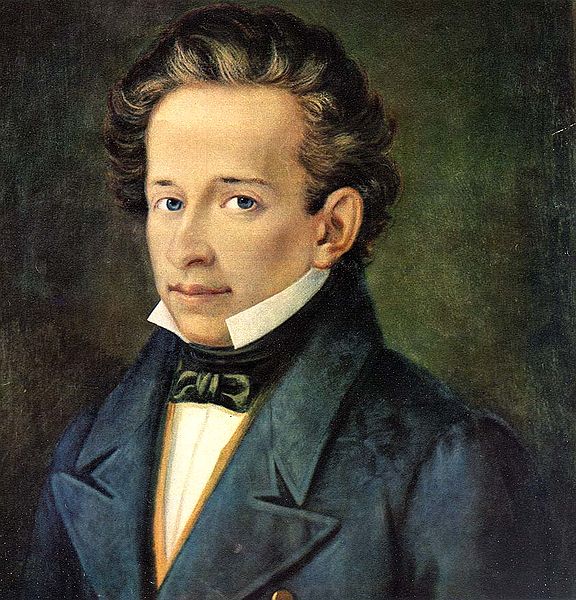
Adam Kirsch reviews the newly translated, mammoth diary of Giacomo Leopardi, Zibaldone, and finds the poet presaged Nietzsche with his dark meditations on modernity:

Leopardi envies the ancients, who were history’s children. The young Leopardi, who dish_Leopardi had seen little of life and did not at all like what he saw, took the Greek epics and the Latin orations as evidence that there was once a time when men lived heroically and single-mindedly. The cruelty of the ancients, as we see it in the Iliad, was not for Leopardi a reason to prefer the moderns. On the contrary, the belligerence of antiquity was a sign of its greater authenticity and capacity for faith. At moments Leopardi suggests that the xenophobic patriotism of the ancient Greeks, their capacity for utterly dehumanizing and exterminating their foes, was a technique of thought that the moderns would do well to cultivate: “Society cannot subsist without love of the homeland, and hatred of foreigners.”

Here Leopardi strikes a note that would become familiar from Nietzsche, and later from fascism:

the belief that the modern world must re-barbarize itself. Yet this is Leopardi’s view only at rare moments, when he seems carried away by his own speculations. Temperamentally he is anything but violent, and far from being contemptuous of the mind, he is in his own way absolutely pious toward it—in just the way that Nietzsche would observe that the nihilist remains pious toward one thing, which is the truth. And the truth, for Leopardi as for Nietzsche, is that there is no truth. This is the revolutionary insight that enlightened thought has brought us, overturning in the process two thousand years of Christian and Platonic thought about the nature of the good. “The truth about good and evil, that one thing is good and the other is bad, is believed to be naturally absolute, when in fact it is only relative…. There is almost no other absolute truth, except that All is relative. This must be the basis for all metaphysics.”

Previous Dish on Zibaldone here and here.

(Image of Leopardi c. 1820 via Wikimedia Commons)

A Speech That Defined America – For Good And Ill

Richard Gamble rethinks Lincoln’s Gettysburg Address, describing it as when “the wartime president fused his epoch’s most powerful and disruptive tendencies—nationalism, democratism, and German idealism—into a civil religion indebted to the language of Christianity but devoid of its content”:

For anyone who does not already know something specific about the Civil War, the speech creates no picture in the mind. It could be adapted to almost any battlefield in any war for “freedom” in the 19th century or thereafter. Perhaps the speech’s vacancies account for its longevity and proven usefulness beyond 1863—even beyond America’s borders. Lincoln’s speech can be interpreted as a highly compressed Periclean funeral oration, as Garry Wills showed definitively in his 1992 book Lincoln at Gettysburg. But unlike Pericles’ performance, this speech names no Athens, no Sparta, no actual time, place, people, or circumstances at all.

Into this empty vessel Lincoln poured the 19th-century’s potent ideologies of nationalism, democratism, and romantic idealism. Together, these movements have become inseparable from the modern American self-understanding. They have become part of our civil religion and what we likewise ought to call our “civil history” and “civil philosophy”—that is, religion, history, and philosophy pursued not for their own sake, not for the truth, but deployed as instruments of government to tell useful stories about a people and their identity and mission.

Gamble goes on to argue that all this amounted to redefining America, as Lincoln put in his speech, as a nation dedicated to a “proposition” – that all men were created equal – and that this proved problematic:

Embedded in the Gettysburg Address, the proposition defined the making of America and why it fought a costly war. We cannot know how Lincoln would have wielded the proposition in pursuit of America’s postwar domestic and foreign policy; his death in 1865 left that question open, as Republicans and even Democrats used the martyred president and his words to endorse everything from limited government to consolidated power, from anti-imperialism to overseas expansion. Under all this confusion, however, Lincoln’s propositional nation helped move America from the old exceptionalism to the new. He helped America become less like itself and more like the emerging European nation-states of mid-century, each pursuing its God-given benevolent mission.

A propositional nation like Lincoln’s is “teleocratic,” in philosopher Michael Oakeshott’s use of the word, as distinct from “nomocratic.” That is, it governs itself by the never-ending pursuit of an abstract “idea” rather than by a regime of law that allows individuals and local communities to live ordinary lives and to find their highest calling in causes other than the nation-state. Lincoln left all Americans, North and South, with a purpose-driven nation.

But, at the time, not everyone understood the greatness of the speech. The Patriot-News printed this correction last week:

In the editorial about President Abraham Lincoln’s speech delivered Nov. 19, 1863, in Gettysburg, the Patriot & Union failed to recognize its momentous importance, timeless eloquence, and lasting significance. The Patriot-News regrets the error.

You can read Lincoln’s speech here.

Breaking Faith In Science

Jerry Coyne rejects the arguments of those “who claim that science and religion are compatible” because, supposedly, “science, like religion, rests on faith: faith in the accuracy of what we observe, in the laws of nature, or in the value of reason.” Not so fast, he says:

The conflation of faith as “unevidenced belief” with faith as “justified confidence” is simply a word trick used to buttress religion. In fact, you’ll never hear a scientist saying, “I have faith in evolution” or “I have faith in electrons.” Not only is such language alien to us, but we know full well how those words can be misused in the name of religion.

What about the public and other scientists’ respect for authority? Isn’t that a kind of faith? Not really. When Richard Dawkins talks or writes about evolution, or Lisa Randall about physics, scientists in other fields—and the public—have confidence that they’re right. But that, too, is based on the doubt and criticism inherent in science (but not religion): the understanding that their expertise has been continuously vetted by other biologists or physicists. In contrast, a priest’s claims about God are no more demonstrable than anyone else’s. We know no more now about the divine than we did 1,000 years ago.

Why scientists don’t have “faith” in the laws of nature or in reason:

The orderliness of nature—the set of so-called natural laws—is not an assumption but an observation. It is logically possible that the speed of light could vary from place to place, and while we’d have to adjust our theories to account for that, or dispense with certain theories altogether, it wouldn’t be a disaster. Other natural laws, such as the relative masses of neutrons and protons, probably can’t be violated in our universe. We wouldn’t be here to observe them if they were—our bodies depend on regularities of chemistry and physics. We take nature as we find it, and sometimes it behaves predictably.

What about faith in reason? Wrong again. Reason—the habit of being critical, logical, and of learning from experience—is not an a priori assumption but a tool that’s been shown to work. It’s what produced antibiotics, computers, and our ability to sequence DNA. We don’t have faith in reason; we use reason because, unlike revelation, it produces results and understanding. Even discussing why we should use reason employs reason!

A Godless Gathering

Alice Robb visited the church for atheists founded by Sanderson Jones and Pippa Evans, known as The Sunday Assembly, when it recently passed through Washington, DC:

British comedians Sanderson Jones and Pippa Evans … are hipper, gentler, and less intellectual than your typical secularist preachers. And they’re working from a very different premise—that non-theists are missing out on the benefits of being part of a spiritual community. By providing skeptics with a non-religious place to sing, socialize, and discuss values—they’ve described the assembly as “part foot-stomping show, part atheist church”—they want to reach people who may be turned off by more strident or academic streams of atheism.

“We don’t really use many labels to describe ourselves,” Jones told me. “We do this in a way that appeals to normal people.” Unlike activists like [Manual for Creating Atheists author Peter] Boghossian, Jones and Evans say they’re not out to convert anyone. “We want to make sure everyone is welcome,” said Jones.

Sounds nice, but Evans and Jones are so wary of giving offense or excluding anyone that it’s unclear what, if anything, they do believe.

Robb notes that the group’s “lack of boundaries makes for a muddled, or even nonexistent, message”:

We sang songs by Queen and Bon Jovi. We closed our eyes for a minute of silent reflection. Jones talked about gratitude. Upon command, we introduced ourselves to our neighbors and played an awkward clapping game. My partner, who found the event on meetup.com, told me he wouldn’t be coming back. A fan of Dawkins and Daniel Dennett, he said he’s looking for something more cerebral.

Jones told the assembled they were witnessing the birth of a local community, but I’m not so sure. Religious institutions breed communities because their members share a background or at least some core beliefs and values; they perform rituals together and define themselves in opposition to other groups. The only thing the people sitting around me agreed on was that they’re all human. They had diverse and sometimes incongruent beliefs. One woman identified herself to me as agnostic, while a middle-aged man called himself a “praying atheist”; a recovering food addict, he said he invented a female deity to help him through his 12-step program. It was all very inoffensive, but is a shared belief in being human enough of a foundation for a community? Why congregate if there’s nothing to bind the congregation but our membership of the same species?

Previous Dish on the Sunday Assembly here.

Evangelizing The Inner City

In an interview, Detroit pastor Christopher Brooks, author of the forthcoming Urban Apologetics, discusses how he tries to overcome the “disconnection” between typical arguments for Christianity and the realities faced by urban minorities:

Many people in our community are simply asking, “How do we make it in this country right now?” Unfortunately, traditional Protestant apologetics has rarely addressed questions of justice. Pick up a Catholic catechism, and you will find a section on social consciousness, social responsibility, and social justice. But in the average evangelical systematic theology, it’s not there. Sadly, in the black community, we have conceded these issues either to liberation theology or to black nationalist groups like the Nation of Islam. There needs to be a strong evangelical voice in our urban areas that says, “Here is what the gospel has to say about justice.”

White evangelicals typically are drawn to the righteousness of God—the importance of right doctrine and right practices—whereas African Americans and minorities are drawn more to the justice of God. Yet Psalm 89 says the foundations of God’s throne are righteousness and justice. We can’t bifurcate the ethics of God into categories of righteousness—issues like abortion and human sexuality—or justice—issues like educational and economic equality.

One way his congregation is living that message:

Our church has embraced adoption and foster care in a huge way. The foster-care system is disproportionately populated by minority children. There has been an antagonistic relationship with the state because of the perception that the state somehow profits from pulling our children out of our homes.

But as we were studying Scripture, talking about the Father God, we encountered the language of adoption in Ephesians 1 and the orphan and the widow in James 1:27. We had to ask, “What is our obligation to the orphans in our community?”

We have a goal that there would be no children in our community waiting for a home. There are about 2,000 children waiting, and our goal is to be able to find 2,000 homes for them. We have 3,000 churches in Detroit. So if each church can get just one family to adopt, we can eliminate the need for children to wait. That is a matter of praxis and apologetics: showing how the gospel makes a difference.