A Cornell computer scientist and a Facebook engineer have developed an algorithm (pdf) they claim “can identify one’s spouse or romantic partner — and even if a relationship is likely to break up”:
Their key finding was that the total number of mutual friends two people share — embeddedness, in social networking terms — is actually a fairly weak indicator of romantic relationships. Far better, they found, was a network measure that they call dispersion. This yardstick measures mutual friends, but also friends from the further-flung reaches of a person’s network neighborhood. High dispersion occurs when a couple’s mutual friends are not well connected to one another.
The researchers were able to identify who was dating whom with 60 percent accuracy, much better than the 2 percent accuracy they’d get from random guessing. High dispersion also seems to be correlated with longer relationships. The study found that couples were 50 percent more likely to break up in the next two months if the dispersion algorithm failed to guess that they were dating.
The scientists also looked at metrics such as how many times a user viewed another’s profile, attendance at the same events, and messages sent. Dispersion turned out to be the most overall accurate metric for determining romantic relationships. The researchers used multiple sets of anonymous data, including a large data set from 1.3 million Facebook users.
Judith Shulevitz shudders at how easy it’s become to be a one-mother NSA:
For the iPhone I will soon be buying [my son], I can get an iPhone Spy Stick, to be plugged into a USB port while he sleeps; it downloads Web histories, e-mails, and text messages, even the deleted ones. Or I can get Mobile Spy, software that would let me follow, in real time, his online activity and geographical location. Also available are an innocent-looking iPhone Dock Camera that would recharge his battery while surreptitiously recording video in his room, and a voice-activated audio monitor, presumably for the wild parties he’s going to throw when his father and I go out of town.
Had such science-fiction-worthy products somehow become acceptable while I wasn’t watching? Apparently they had.
When ZDNet conducted an online debate about parental espionage a few weeks ago, 82 percent of respondents agreed with the statement that parents “should be able to observe the full data feeds of what their children post and receive via Facebook, text, email, and any other application or service used on their devices. It is a parent’s right to ‘violate’ their child’s notion of ‘privacy.’” When a media researcher interviewed 21 parents in three Canadian cities in 2011, only three said that they had faith in their children and that they found such hypervigilance “harmful.”
Nora Caplan-Brickler wonders if teenagers might be better at monitoring each other than adults ever could be:
There’s already good evidence that letting teenagers police themselves can work. An organization called Students for Sensible Drug Policy has long advocated “Good Samaritan Policies” (or “amnesty” policies), which can encourage kids to report their own and their friends’ binge drinking and drug abuse by pledging that they won’t get in trouble for calling 911. Good sex-ed policies can create a similar environment around reporting harassment and assault (though offering anonymity or amnesty in those cases is more ethically jumbled). A study at Cornell in 2006 showed that amnesty policies had increased the number of 911 calls—some life-saving—while the level of drinking and debauchery stayed constant. When it counts, asking kids to play NSA on one another can work.
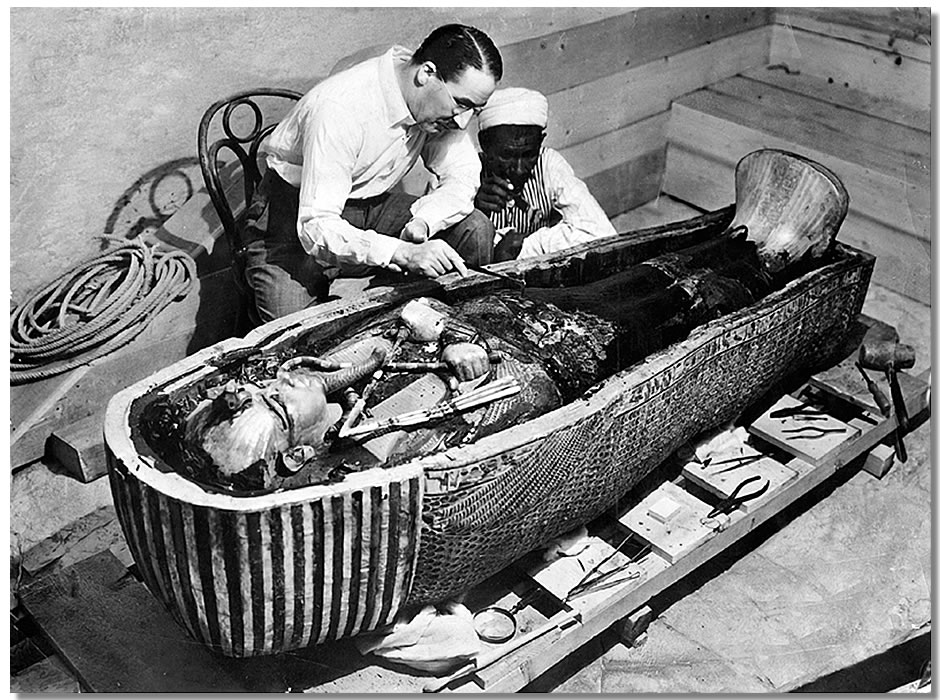
Jo Marchant traces the legend of King Tut’s curse, which took root as soon as the pharaoh’s mummy was discovered in 1922 by archaeologist Howard Carter and his financial backer, George Herbert, the fifth Earl of Carnarvon. The latter died in Cairo two weeks after the excavation:
The idea of the mummy’s curse was already a popular story, but Carnarvon’s demise (and [superstitious novelist Marie] Corelli’s apparent prediction of it) turned it into one of the great legends of the age. Rumours quickly spread that Carter had found warnings in the tomb itself. There were reports of a clay tablet, allegedly found over the tomb’s entrance, that read: ‘Death shall come on swift wings to whoever toucheth the tomb of Pharaoh.’
According to the stories, Carter buried it in the sand in case it scared his labourers into stopping their work. The whole situation was a gift for journalists who, four months after the tomb’s discovery, were desperate for more Tutankhamun-related news. Once the curse story took off, they began running daily updates, roping in scholars to debate whether evil spirits were to blame for Carnarvon’s demise. Ernest Budge, a curator at the British Museum, dismissed the theory as ‘bunkum’. The adventure writer Rider Haggard complained that it served only ‘to swell the rising tide of superstition which at present seems to be overflowing the world’. Carter himself apparently said that his answer to the curse was ‘spherical and in the plural’.
But plenty of respected names supported a paranormal explanation. The Oriental scholar J C Mardrus (known for his translation of the Thousand and One Nights) suggested that ‘dynamic powers’ killed the Earl. Impatient with the argument that, were spirits really guarding the tomb, they would have taken out Carter, too, Sir Arthur Conan Doyle insisted: ‘One might as well say that because bulldogs do not bite everybody, therefore bulldogs do not exist!’
(Image: Howard Carter opens the innermost shrine of King Tutankhamen’s tomb near Luxor, Egypt, 1923, via Wikimedia Commons)
Angela Watercutter praises Kimberly Peirce’s new film adaptation of Stephen King’s Carrie for giving its female lead agency and self-awareness, unlike most horror films:
[T]he men in the audience … identify with her as she wreaks her revenge. Why? King has a theory: “One reason for the success of the story in both print and film, I think, lies in this: Carrie’s revenge is something that any student who has ever had his gym shorts pulled down in Phys Ed or his glasses thumb-rubbed in study hall could approve of.” In other words, [film professor Carol J.] Clover writes, a young man who’s been humiliated in a locker room can identify with a young woman pelted with tampons in a gym shower; King also suggests the “possibility that male viewers are quite prepared to identify not just with screen females, but with screen females in the horror-film world, screen females in fear and pain.” The new version of Carrie states this almost flat-out, using Carrie’s eventual prom date, Tommy Ross, who relates her locker-room torture to his own experiences being bullied in grade school.
Devon Maloney identifies bullying as the film’s true monster:
This is the reason one remakes Carrie in 2013: to reframe unadulterated, schmaltzy horror into a more nuanced, realistic terror, the one that leaves you, on the one hand, oddly charged if you’ve ever felt been a victim, or scouring your mental Rolodex for the Carries of your own teenaged past if you were one of the kids dishing it out. This Carrie does what it ought to do: It proves that every generation needs its own cautionary tale about preying on the vulnerable until its circumstances are no longer relevant.
On the other hand, Eli Yudin and Carey O’Donnell see Carrie’s abusive, fanatical mother (played by Julianne Moore) as “the real horror of the movie”:
Our first glimpse of the twisted matriarch is in the very opening of the movie, as Moore gives birth to her daughter alone on her bed. She cries out to God, believing her labor is punishment for a sin she committed (premarital sex), and is convinced she is dying. When she first looks down at the infant between her legs, she views her as an immediate threat and raises a pair of scissors above the baby. However, Margaret spares her daughter after she looks into the baby’s eyes, and immediately cradles her, giving us a perfect summary of their relationship. Moore captures this love/hate seesaw wonderfully: she hates Carrie for being the physical reminder of what she views was her most dire disobedience to God, but realizes that Carrie provides her with the only remaining trace of humanity left in her, a mother’s unconditional love for her child.
Rather than [actor Piper] Laurie’s operatic Margaret [from Brian De Palma’s 1976 adaptation], Moore’s religious rants are hushed, coo-like, making for a more menacing contrast when she hits her daughter in the face with books, drags her into her “prayer closet”, and digs her fingernails and sewing tools into her own flesh. She’s a ghoul in every sense of the word, one that Peirce makes clear Carrie is so desperately trying not to become.
But Richard Corliss pans the move, saying “virtually ever scene in Peirce’s film is a pallid duplicate of De Palma’s”:
After Carrie’s transformation on prom night, when the event is called off due to high body count, she goes walking through the town’s streets like a Godzella unchained. De Palma showed [actor Sissy] Spacek dispatching [actors Nancy] Allen and [John] Travolta with a killer gaze that sent the bad kids’ car into an eight-turn rollover and a quick burst into flames. Peirce draws out the comeuppance, delaying Carrie’s climactic confrontation with her mother. It’s just unnecessary, like the rest of the movie.
Matt Goulding reports on a push to add traditional Japanese cooking to the UNESCO’s list of “intangible world heritages”:
Most people know UNESCO as the cultural arm of the United Nations dedicated to protecting important landmarks and features in the physical world: Angkor Wat, the Grand Canyon, the Taj Mahal. But in 2008, they expanded their heritage protection program to include intangible cultural artifacts – as they describe them, “traditions or living expressions inherited from our ancestors and passed on to our descendants.” To date, they’ve added 257 items to their list of safeguarded customs, from well-known cultural staples like Brazilian Carnival to more obscure traditions like the gong culture of the Vietnamese highlands. Along with the petition to safeguard Japanese cuisine, there are 31 other proposals being examined this fall by the world body, including Korean kimchi-making, Turkish coffee culture, and the Belgian tradition of shrimp fishing on horseback.
Goulding notes that while “preserving a building or a monument is relatively straightforward, the objective of the intangible heritage program is considerably more opaque”:
UNESCO officials are careful not to use the words protect or preserve, as it implies freezing or impeding growth. What’s at hand is even more delicate: educating communities on the importance of their greatest cultural traditions, without stunting their development or dictating their future.
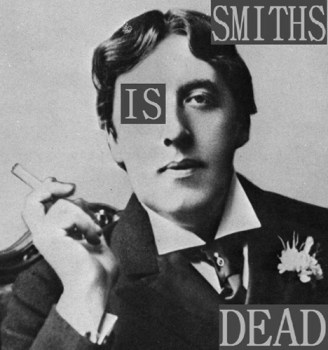
Moira Donegan studies the creative and personal similarities between Morrissey and his idol and muse, Oscar Wilde:
As two Irishmen, they pretended to be more English than the English. Morrissey had little of the formal education whose affectations he adopted; Wilde was absent from the rituals of heterosexual sociality whose ridiculousness he mimed. They were outsiders, and therefore they perhaps had the luxury of disinterested observation. But such an analysis overlooks what is perhaps the emotional crux of their work, the core that becomes lucid only after repeated readings. For though they each lay claim to certain forms of social exception, neither Morrissey nor Wilde is wholly comfortable or unqualifiedly smug in his position as an outsider. Both men’s work is tinged, too, with a desire for belonging.
The problem with using humor to conceal your anxieties is that it tends to be a pretty weak disguise.
In jokes, the psyche often rears its head where it’s not supposed to. This might be why there is a sincere and disquieting bitterness detectible in these men’s work beneath all the snark and sheen. Why would Morrissey quip, in “Cemetery Gates,” that Keats and Yates are on your side, if he had no desire to demonstrate the erudition that is held as a standard of worthiness by the sort of people who admire Keats and Yates? Why would Wilde write When I was young I thought that money was the most important thing in life; now that I am old I know that it is, if he did not wish to show himself to be a self-conscious member of the leisure class?One of the prices of upward mobility—be it an upward mobility of wealth, culture, education, or just social popularity—is the twinging shame of knowing that you’re not quite a native in this new strata of yours. It can be difficult to shake the dark suspicion that you will be rejected as readily as you were welcomed, once your new admirers discover that you’re a fraud.
Recent Dish on Wilde here and recent coverage of Morrissey’s new autobiography here.
Today is the 75th anniversary of Orson Welles’ War of the Worldsbroadcast. Marc Wortman calls it “arguably the most widely known delusion in United States, and perhaps world, history”:
The New York Times front page story the next morning reported that “a wave of mass hysteria seized thousands of radio listeners throughout the nation…[leading them] to believe that an interplanetary conflict had started with invading Martians spreading wide death and destruction in New Jersey and New York.” But what made so many Americans so gullible? It was a case of the jitters, a nation primed to jump at the word “Boo!”
Jefferson Pooley and Michael Socolow calls this episode of hysteria a “myth”:
The supposed panic was so tiny as to be practically immeasurable on the night of the broadcast. Despite repeated assertions to the contrary in the PBS and NPR programs, almost nobody was fooled by Welles’ broadcast.
How did the story of panicked listeners begin?
Blame America’s newspapers. Radio had siphoned off advertising revenue from print during the Depression, badly damaging the newspaper industry. So the papers seized the opportunity presented by Welles’ program to discredit radio as a source of news. The newspaper industry sensationalized the panic to prove to advertisers, and regulators, that radio management was irresponsible and not to be trusted. In an editorial titled “Terror by Radio,” the New York Times reproached “radio officials” for approving the interweaving of “blood-curdling fiction” with news flashes “offered in exactly the manner that real news would have been given.” Warned Editor and Publisher, the newspaper industry’s trade journal, “The nation as a whole continues to face the danger of incomplete, misunderstood news over a medium which has yet to prove … that it is competent to perform the news job.”
Hundreds of thousands—if not millions—of people who purchase coverage independently are now receiving letters from insurers canceling policies that do not comply with new Affordable Care Act (ACA) regulations. In cancelling such plans, some insurers are telling customers they will be automatically enrolled in alternative ACA-compliant coverage unless they object.
This could be a major snag in the ACA’s plan to subsidize insurance purchased on the individual market. New tax credits, available to individuals earning less than 400 percent of the federal poverty level, or about $46,000 per year, can only be accessed through new ACA insurance marketplaces. Those who purchase coverage outside the exchanges cannot claim subsidies, even if they qualify for them, according to the Centers for Medicare and Medicaid Services, the agency overseeing implementation of the ACA. Automatic enrollment directly through an insurer would avoid the exchanges, and the subsidies, entirely.
Scott Gottlieb identifies another potential problem with the ACA:
The potential woes stem from an oversight made by the architects of Obamacare.
Under the law, insurers who offer policies inside the Obamacare exchanges are required to treat their enrollees inside and outside the exchange as a single risk pool. Among other things, this provision was meant to reduce the chance that insurers would steer healthier patients into plans sold outside the exchanges.
But the law doesn’t prevent insurers from offering plans exclusively outside the exchange. If they are entirely outside the exchange, they get to create their own risk pool, and aren’t subject to the same pricing that burdens plans inside the exchange. (See this Commonwealth Fund Brief for a fuller explanation)
As the pool inside the exchange becomes older, sicker, and costlier, more plans will have an economic incentive to get out of the Obamacare market altogether.
Once outside, they are free to price their products to match a better risk pool.
Other provisions will further encourage plans to drop out.
Obviously we need to make some fixes to the law. But how can we when the House will only vote to repeal it? I remain gobsmacked that the president did not meticulously prepare his core domestic policy initiative. I know the broader project makes sense, but is he really trying to prove that in practice, technocratic government is an oxymoron?
The NYT recently reported that the government was recently “seeking to aid the Pakistan Taliban in their fight against Pakistan’s security forces.” Isaac Chotiner sighs:
To describe the Afghan government’s initiative as insane would be generous. Yes, it is true that Afghan resentment at Pakistan is understandable and deep, and that the country’s weariness and anger about being treated in a colonial manner by its larger and nuclear-armed neighbor makes plenty of sense. But the idea that this is going to help Afghanistan emerge from its decades-long troubles is far-fetched, to say the least.
For starters, Pakistan is much, much more powerful than Afghanistan, and is unlikely to take kindly to this particular proxy war. Secondly, the attempt to discriminate among different Taliban factions is destined for disaster. Indeed, this is precisely what has motivated Pakistani policy in Afghanistan for the past decade, with horrific results…for Pakistan. There may be distinctions to be made among different Taliban factions, but they are all extreme and interconnected, and nurturing some of them while opposing others has brought Pakistan to its current, blood-soaked impasse.
Meanwhile, Yochi Dreazen fears that Afghanistan’s future will look a lot like Iraq’s present:
It’s impossible to say how much of Iraq’s current carnage could have been prevented by a continued US military presence in the country, but a pair of retired officers with long experience in the country said the withdrawal of elite Special Operations Forces like the Navy SEALs and the Army’s Delta Force made it significantly harder for the Iraqis to track down and kill individual militants. The withdrawal also meant that Iraqi troops were no longer receiving video footage from U.S. drones and surveillance aircraft. Iraq recently asked the U.S. to send the drone aircraft back to the country, but the White House said no.
Karzai could get a similar cold shoulder from the administration, which has made clear that it’s running out of patience with Karzai’s dithering over a troop immunity deal. Secretary of State John Kerry spent two days in Kabul earlier this month trying to get Karzai to budge, but the Afghan leader said he opposed giving troops protecting from Afghan law and would instead refer the matter to a gathering of key Afghan tribal and religious leaders known as a Loya Jirga. The Obama administration wanted to close the Afghan deal by the end of October, a deadline which now seems impossible, and White House officials are now openly saying that they might pull all U.S. troops out of Afghanistan at the end of 2014, when most foreign troops are already set to leave the country.
The plants and animals of Chernobyl are bouncing back:
Lately, some weird reports have been coming from the Chernobyl Exclusion Zone – wild animals have returned, and, for the most part, they seem fine. Moose, deer, beaver, wild boar, otter, badger, horses, elk, ducks, swans, storks and more are now being hunted by bears, lynx and packs of wolves, all of which look physically normal (but test high for radioactive contamination). In fact, even early effects of mutations in plants, including malformations and even glowing are now mostly limited to the five most-contaminated places.
Although not everyone is ready to agree that Chernobyl is proof that nature can heal herself, scientists agree that studying the unique ecosystem, and how certain species appear to be thriving, has produced data that will ultimately help our understanding of long term radiation effects. For example, wheat seeds taken from the site shortly after the accident produced mutations that continue to this day, yet soybeans grown near the reactor in 2009 seem to have adapted to the higher radiation. Similarly, migrant birds, like barn swallows, seem to struggle more with the radiation in the zone than resident species. As one expert explained, they’re studying the zone’s flora and fauna to learn the answer to a simple question: “Are we more like barn swallows or soybeans?”
Meanwhile, in Fukushima:
#Fukushima horse breeder braves high radiation to care for animals http://t.co/0b4yhuwfRm 16 of his 30 horses just died this year. Hm.
I’m one of those scientists managing a research group that is trying to tease out answers to radiation effects on animals and plants. There are not a lot of robust studies that include radiation dose AND measured effect for organisms in natural settings. Unfortunately what you find are a lot of anecdotal reports that play into peoples existing stereotypes about radiation exposure and impact. Even with Chernobyl and Fukushima, funding for this type of research is piddling. Particularly in the USA. So you get stories like “Chernobyl is a wildlife paradise – or death trap.”
(Photo: Stray dogs play in front of the Chernobyl nuclear power plant. By Sergei Supinsky/AFP/Getty Images)
 Morrissey had little of the formal education whose affectations he adopted; Wilde was absent from the rituals of heterosexual sociality whose ridiculousness he mimed. They were outsiders, and therefore they perhaps had the luxury of disinterested observation. But such an analysis overlooks what is perhaps the emotional crux of their work, the core that becomes lucid only after repeated readings. For though they each lay claim to certain forms of social exception, neither Morrissey nor Wilde is wholly comfortable or unqualifiedly smug in his position as an outsider. Both men’s work is tinged, too, with a desire for belonging.


