The Serendipity In Online Dating

Several readers take the thread on subculture dating in a different direction:

The Internet creates efficiencies in the market for everything, people looking for dates included. I stuck with online dating for a long time because my experiences with offline dating were no better. After 75-plus online dates and several relationships with women I met online, I finally met my wife – and it was her first online date. We’ve now been married for nearly a year and have a 7-week-old baby.

Another:

My husband and I met on Match.com in late 2001 and discovered within two rounds of emails that we had attended the same church in the early ’80s and undoubtedly met. We married our exes in that church the same year. We knew several people in common, including his former boss, who confirmed to me his employment and good character. Our connections went back to the 1950s when a member of his extended family knew my parents. My husband grew up in a Boston suburb where his mother bought his first pair of hard-soled shoes. More than 30 years later I lived in that same suburb and bought my son’s first pair of hard-soled shoes in the same store. My husband, who is white, recalls having a crush on a Black woman in the choir, who we established was me. I did not see white men as potential romantic partners and have no recollection of the man to whom I’m now married.

Both of our marriages had ended and eventually each of us decided to look for companionship online. I was looking for about a year, met seven intelligent, attractive men in person without establishing a significant bond with any of them, so I decided to take down my profile in one week. My husband joined the site two days after my decision. Less than an hour after he posted his profile, I saw it and got in touch – having decided to include white men in my dating search. Before meeting in person we had numerous phone conversations and suspected we might get married one day. The moment we laid eyes on each other – three weeks after meeting online – we knew we’d spend the rest of our lives together. We lived in separate cities. I moved with my son seven months after the online meeting. It is very fortunate that I had lived in that same city for years and was delighted to move back. We married one year after our initial online encounter.

My husband and I are atheists – more evidence of our compatibility – and don’t ascribe to the idea that we were “meant to be together”, implying that a supernatural force controls human experiences. But serendipitous things happen and some transcend rational explanation. I see it as life-altering good luck.

A male reader:

I’m very excited to be writing to you as a brand new (five minutes ago) Dish subscriber! I have to weigh in on the serendipity thread. My husband and I met in an AOL chat room.

We were both looking for “the one” and had been single long enough, and had dated enough, to have developed fairly keen selection and rejection abilities. We lived about 90 minutes from each other in NJ at the time, had exhausted our respective local dating pools, and had recently expanded into more GU (geographically undesirable) potential mates.

Our first date was to the NY Auto Show at the Javits Center (how’s that for breaking stereotypes?). Feeling the electricity crackling between us, neither of us could focus on the show, so we left after about an hour, heading to Greenwich Village to find something more intimate to do. Despite having worked in Lower Manhattan for nearly 10 years, and knowing it like the back of my hand, I was so distracted driving down the West Side Highway, I suddenly realized we were at Battery Park, having driven right past the Village.

We went to see a movie we had heard about: It’s My Party about a man dying of AIDS (great first date stuff, huh?!). We held hands and cried together. After the movie, we found a romantic little restaurant, held hands on the candlelit table and stared into each others eyes throughout the meal. We were utterly oblivious to our surroundings, each other’s faces cameoed in focus with everything else around us a blur.

Despite the late hour, we simply could not bear to part and decided to drive the 90 minutes to my house, even though my date had to be home early the next morning for a family function. We made love the rest of the night (okay… we don’t break every gay sterotype. Guys can indeed be guys). As I drove him home, bleary-eyed the next morning, I said “I love you” while still on our first date, which by then had run 22 hours. The only reason he didn’t respond in kind until that evening was because he didn’t want to say “Me too!”

He moved in with me less than two months later. We bought a home together and merged our finances after 9 months. That was over 17 years ago. We’ve spent the past 10-plus years full-time RVing around North America, living and working together, side-by-side 24/7, in about 400 square feet. When people openly wonder how we can live and work together in such a small space without killing each other, it makes us realize that we must have about the best relationship in the world.

If that isn’t serendipity, I don’t know what is.

Another reader’s story:

Serendipity is a weird and fickle mistress. After I finished my grad degree in the UK, I returned to the states and, due to the economic downturn, was only able to find temp work. My first day, I found a girl who was absolutely perfect – a certain type of Manic Pixie Dream Girl. She had been in the UK exactly when I had. She and I shared a love of the same music (the Smiths chief among them), We enjoyed walks in the forest, smoking pot over drinking, and debating politics. It was, to a large extent, love at first sight, and it seemed like this was just exactly the kind of conventional meeting that would lead to the ultimate relationship.

At the same time, I’d been maintaining a profile on the free dating site OKCupid. I’d had some success getting laid from the site, and I’d had a few three- to four-month-long relationships from it, but nothing had ever been lasting. While I was (non-exclusively) seeing the woman described above, I met another woman who didn’t have much in common with me. I mean, we both liked music, but she was definitely not my “type.” However, as our relationship progressed over a period of a few months, it became clear that whatever we lacked “in common,” we got along brilliantly. I mean, it was uncanny how much we just liked each other.

To many, the first woman would seem like the best match. We hadn’t “had” to meet online; we’d met through far more conventional means. However, that relationship went up in flames; it was an awful match. We ended up loathing each other because our personalities, for whatever reason, didn’t mesh.

However, the second woman and I continued to see each other. And continued. And four weeks ago tonight, we were married, after four years of dating. I have never met someone that I simply clicked with so well – and someone who was willing to put up with my rather massive amounts of shit.

As I said, serendipity is a weird and fickle mistress. Had I listened to serendipity, I would have been broken by the fact that the first woman and I had not worked out. But thanks to online dating, I found someone who matched me perfectly – we don’t have everything in common, but we click. THAT is what love is all about: you find someone who makes you feel good and who you can make feel good. Far more important than the “old school” ideas of how one is supposed to meet his or her mate. I got married thanks to online dating. And I couldn’t be prouder of that.
Rubio Retreats

He is backing off from his previous support for comprehensive immigration reform. Issac Chotiner sees this as proof of Rubio’s “political cluelessness”:

This leads to the larger question of what exactly Rubio was thinking when he decided to support the Senate bill in the first place. I have argued previouslythat it was political suicide for him to get behind the comprehensive approach: if such a bill had passed, Rubio would have been tarred as the most visible supporter of Obama’s biggest second term achievement. (Good luck running on that). And if it fails, as now appears likely, what did he gain by pissing off a bunch of the voters he will need for 2016?

Chotiner expects no movement on immigration reform before the midterms:

Pretend you are a House Republican, and thus in almost all cases are from a very conservative district. What is your incentive to pass an immigration bill before November 2014? Not only would it make you vulnerable to a primary challenge, but it isn’t even obvious that it would strengthen your position in the general election, especially considering the way House districts are drawn, and that non-presidential election years tend to have older and whiter electorates.

Chait, meanwhile, tries to make sense of the GOP’s latest immigration reform spin.

Revving Up The Fight For Equal Rights

Max Fisher covers a renewed push among Saudi women for expanded civil rights:

Saudi Arabian women are subject to some of the most severe legal restrictions in the world, of which the de facto driving ban is perhaps the best-known — and it has become the focus of a campaign by Saudi women for broader rights. The campaign has grown dramatically since it began, in May 2011, with a single drive. A 32-year-old information technology consultant named Manal al-Sharif was filmed by women’s rights activist Wajeha al-Huwaider driving around and reeling off arguments for dropping the ban. The two posted the video to YouTube, and police arrested Sharif the next day, charging her with disturbing public order. Sharif was released after a week in prison, but that video, and her passionate message, had already spread among the country’s increasingly well-educated and well-connected women.

Juan Cole rips the country after political pressure forced many women to abandon their driving protests, which were scheduled for Saturday:

It is about the most pitiful thing one can imagine– a state that disallows protest altogether as a means of enforcing a brutal patriarchal order that deprives women of the basic right of mobility. Inability to drive limits women’s ability to pursue not just their careers (Saudi women have high rates of literacy and education) but even just hobbies. Wealthy women have chauffeurs, but contrary to stereotypes not all Saudi families are rich or can afford to hire drivers. Supportive Saudi husbands sometimes have to spend a lot of their time driving family members around.

Saudi comedian Hisham Fageeh made the video above to coincide with the protests:

While the video has a light-hearted vibe, the ironic satire is sharp, and because the reasons given by ultra-conservative Saudis for keeping women away from the driver’s seat are so surreal, they do make easy targets. There’s the claim, for instance, that driving might damage women’s reproductive organs. “Ovaries, so safe and well,” Fageeh intones, “so you can make lots and lots of babies.”

“Your feet is your only carriage, but only inside the house. And when I say it I mean it,” Fageeh sings in another line, addressing Saudi Arabia’s male guardianship law which strictly limits a woman’s ability to travel, work, open a bank account, marry, or undergo certain medical procedures without the consent of a male guardian. In some cases, this guardian could be a young son.

And, finally, Caitlin Dewey reminds us that Saudi Arabia is just one of a number of countries that maintain severe restrictions on women’s rights:

According to one measurement, though, there are actually several countries that rank lower on women’s rights than Saudi Arabia. The World Economic Forum, which publishes the preeminent ranking on gender gap issues, ranked Saudi Arabia 10th from the bottom in its 2013 report – ahead of Mali, Morocco, Iran, Cote d’Ivoire, Mauritania, Syria, Chad, Pakistan and Yemen. Women’s rights abuses are by no means limited to North Africa, West Africa or the Middle East, though that’s where we tend to hear such stories most frequently.


Coverage You Can’t Keep, Ctd

Cohn explains why insurance companies are terminating policies:

One of Obamacare’s primary goals is to make sure everybody has a decent health insurance policy. Under the law, every plan should include a comprehensive set of benefits and put some limits on what people pay out-of-pocket. The policies now available in the non-group market frequently don’t meet those standards. They might leave out benefits like maternity or mental health—or they might have truly exorbitant deductibles. Starting next year, insurers can’t sell new policies unless they meet Obamacare’s standards. That will tend to make insurance more expensive.

A TPM reader provides a positive personal perspective on these terminations:

I’ve been self-employed for 13 years. Most of that time, I’ve had an HSA with a high-deductible policy; the deductible has ranged from $3,000 to $5,500. A traditional individual policy would be cost-prohibitive because–although I have low blood pressure, heart rate, and cholesterol, work out regularly, take no prescriptions, and have no chronic conditions–I’m deemed to have preexisting conditions, basically because I’ve dared seek medical attention in the past. I was once rejected by an insurer based on a single episode of sciatica five years earlier. I don’t think people who have had employer-provided coverage have any idea what the individual health insurance market has been like.

Anyway, you may have seen in the past couple of days how some insurers are being forced to drop thousands of individual policies because they’re not ACA-compliant. My current policy is among those, so I’ve looked for a new policy with my insurer (Anthem). And, thanks to the ACA, I can finally get a more traditional policy because the insurer has to offer ACA-compliant plans and can’t exclude for preexisting conditions. As a result, I’m switching to a Silver level plan with a $2,000 deductible, free preventive care, reasonable co-pays ($30-$45) for doctors’ visits pre-deductible and reasonable co-insurance (25%) post-deductible, all for a premium that’s only $20 more than what I was paying. Significantly better coverage, in other words, for about $240 more per year. The media, however, are depicting the end of those policies as a bad thing, apparently because insureds may have to pay more now. But they don’t mention that these insureds will be getting much better coverage. It’s not an apples-to-apples comparison.

A Meh Bargain

The budget negotiators have stopped pretending that a major deal is doable:

Congressional leaders are already ruling out a big breakthrough in what amounts to the first budget conference in four years, and the eighth major budget commission in three years. It will not lead to a “grand bargain,” according to Senate majority leader Harry Reid and House Budget Committee chairman Paul Ryan. Indeed, the two Congressmen required for any deal that would reform the tax code — House Ways and Means Committee chairman Dave Camp and Senate Finance Committee chairman Max Baucus — have not been appointed to join the group.

So what will the conference do? The 28 members are required to send a report of recommendations to the full chambers by Dec. 13. The conference will likely focus on crafting a small deal to avert the next fiscal crisis early next year.

How Chait will evaluate the results:

If you want to judge whether any agreement makes sense, the best guide is not whether Democrats win revenue, but whether they win permanent changes in policy. The domestic appropriations budget gets written year by year. Trading away permanent changes to Social Security or Medicare in return for temporary increases in the discretionary budget is a bad deal — it would boost the recovery, but at the cost of handing conservatives a one-sided victory over the scope of government. If Obama gives Republicans permanent changes in return for temporary concessions, it will be clear Republicans out-negotiated him on sequestration. If Obama can get other permanent policy victories — different (and more regressive) forms of taxation, or funding for early childhood education — that is the sort of victory that could be traded for long-term entitlement cuts.

I have to say I don’t agree. To get some infrastructure stimulus now while cutting entitlements in the future would be perfectly acceptable to me. I want more boost to get out of this recession, as well as credible entitlement and defense cuts for the future. Collender’s advice to me and other onlookers:

The bottom line is that its important not to overreact to anything the budget conference committee does this week. Not only will the meetings be very preliminary; they almost certainly will be virtually insignificant.

The Church Of Lou Reed

Yesterday the legendary rocker died at the age of 71. Alex Abramovich pays tribute to his influence as a founding member of the Velvet Underground:

For Reed, rock and roll was not a religion; it was religion itself. Repetitions, drones: these were the ways into trance states, and Reed’s way around an ‘all right!’ was rooted in the old Pentecostal church, where the words ‘I feel all right!’ signalled your readiness to receive the Holy Spirit. In his self-reflexive masterpiece, ‘Rock and Roll’, music promised answers that religion could no longer provide. … Over the years, the Velvet Underground became a kind of church in which teenage pilgrims found one another.

Jody Rosen remembers Reed as “a pop star for adults”:

His vocal phrasing was modeled on Bob Dylan’s, but unlike Dylan and other songwriters steeped in folk, Reed never came on like Methuselah—never tried to sound like the old-as-the-hills Voice of the American Musical Unconscious. Instead, Reed did something novel: he wrote and sang rock songs like a grownup. In an interview in the mid-eighties, Reed said: “My interest—all the way back with the Velvets—[has] been in one really simple guiding-light idea: take rock & roll, the pop format, and make it for adults. With subject matter written for adults so adults, like myself, could listen to it.”

Michael Musto eulogizes the artist as a “NYC original” and “cool personified”:

The godfather of punk, with a heavy dose of glam, Lou collaborated with all the right people, and always seemed to eventually make up with them in time to collaborate with them some more.

I thought Lou would be around forever—not only to keep creating, but as a walking reminder of New York’s days of skinny ties and colorful nihilism. He was rock and roll royalty, as photographer/director Timothy Greenfield-Sanders, a longtime friend of Lou’s, just noted to me. Said Greenfield-Sanders:

“I remember standing onstage at Madison Square Garden for David Bowie’s 50th birthday in 1997, getting ready to photograph Lou, who was about to play with his old friend from the Transformer days. Bowie announced the upcoming performance by saying, ‘And now, the king of New York, Lou Reed.’ Lou was the king of New York. Lou represented what we all loved about New York, what was cool, edgy, transgressive. Lou was why we came to New York.”

From Marc Campbell’s tribute:

It has been said that The Velvet Underground spawned more bands than it sold albums. It’s true. Lou opened up the field for millions of us. There are few modern singer/songwriters that haven’t been influenced by his direct way of telling a story in song without hyped-up sentiment or maudlin platitudes. His hard-edged, cynical style, shot through with harsh beauty and tenderness, created a new level of sophistication and adultness in rock that hadn’t much been heard before him. He cut through the cute shit and talked about the raw side of city life like Cole Porter on a cocktail of crystal meth and Seconal. … The shit he wrote about, the shit he lived, could kill you. But you can’t write with the insight he did about the darker side of life, the lost souls and broken hearts, without having an incredible sense of empathy and love.

Chal Ravens’s obituary quotes from Reed’s own recent review of Kanye West’s Yeezus:

“I have never thought of music as a challenge,” he offered. “You always figure the audience is at least as smart as you are. You do this because you like it, you think what you’re making is beautiful. And if you think it’s beautiful, maybe they’ll think it’s beautiful.”

Listen to some of his best songs here.

Keller vs Greenwald: Why Not Both?

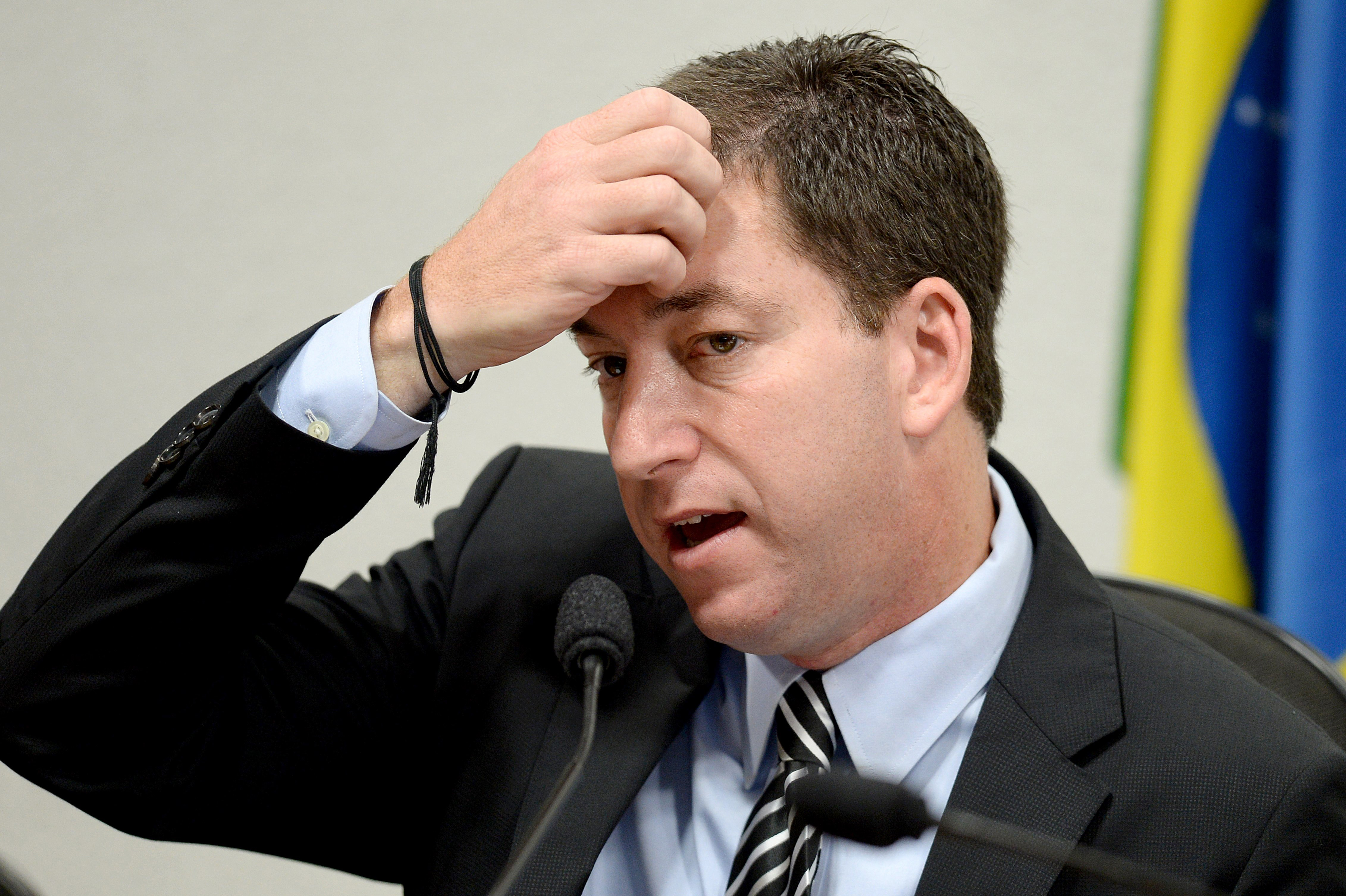
BRAZIL-US-ESPIONAGE-GREENWALD

Their exchange is one of the high moments of debate as journalism evolves in the digital era. If you haven’t, do yourself a favor and read it. I come down in favor of both approaches, i.e. alleged “objectivity” or an attempt at impartiality in competition with a press more open about its own biases and point of view. I think readers deserve both. In Britain – though it is far from working perfectly – the biases of the papers make more sense because of the massive resources of the BBC aspiring to impartiality.

But on the basis of this exchange, I think Glenn has the advantage. And that’s because his idea of journalism is inherently more honest – declaring your biases is always more transparent than concealing them. That’s why, I think, the web has rewarded individual stars who report and write but make no bones about where they are coming from. In the end, they seem more reliable and accountable because of their biases than institutions pretending to be above it all. In the NYT, the hidden biases are pretty obvious: an embedded liberal mindset in choosing what to cover, and how; and a self-understanding as a responsible and deeply connected institution in an American system of governance. These things sometimes coexist easily – as a liberal paper covering the Obama administration, for example, with sympathetic toughness. And sometimes, they don’t – as a liberal paper covering the Bush administration, for example, and becoming implicit with its newspeak.

On the latter, Glenn’s strongest point is about the NYT’s decision not to call torture torture when reporting on the torture regime of Bush and Cheney.  Keller still has no good answer here – except, quite obviously, his desire not to burn bridges with an administration and not become a lightning rod for right-wing press critics. Trying to appear objective, in other words, by appeasing both sides in a dispute, is not actually being objective or impartial. It’s enabling war crimes – which I think the New York Times did under Bill Keller’s leadership. No one ever hesitated to use the word torture to describe waterboarding in the past, and the NYT itself did so when other countries were guilty. So hiding your biases, and trying to appear objective, can mean the opposite of honest. That’s why, up there, the Dish has a simple motto: biased and balanced. You know where I’m coming from; and you can also judge if we fairly provide counter-points and dissent. The Dish evolved toward the “biased and balanced” mindset out of a desire to get things right, after I had proven myself all-too able to get things wrong.

Of course, I’m not running (as of yet) original reporting. But reporting, to me, is about finding stuff out, and publishing it without fear, and being accountable for it.

That means publishing without fear of being called leftist by the right, or of being called fascist by the left; publishing without fear of unsettling and even enraging governments; without fear of upsetting, offending, or even boring, readers because some difficult truths need to be gotten out there; and without fear of being called unpatriotic, or biased. That requires enormous discipline, constant tough judgment calls, brass balls, and discriminating restraint. Withholding the truth – unless for fear of risking others’ lives – is something you only do in extraordinarily rare circumstances. So, to take an obvious example, reporting about Iran’s nuclear program without noting Israel’s nuclear and chemical weapons – a key piece of context the NYT routinely refuses to note – is not impartial. And bias is best concealed within an allegedly unbiased news outlet.

Equally, it means matching revelations from democratic societies with revelations from autocracies. A press that constantly make the US government unable to keep secrets reliably needs to put in a lot of effort to do the same with far less porous regimes. It means careful consideration of internal government documents before publishing; it means eschewing excess zeal in revealing secrets, in favor of measured and responsible explanation of the broader issues involved. That’s called balance.

We have yet to see what Glenn and his future colleagues will produce under much more strenuous institutional boundaries. But we need him. And with any luck, the competition will sharpen the NYT as well. There is a golden mean here – one which the NYT aspires to but often fails to achieve. It will only do better with Glenn nipping at their heels.

(Photo: The Guardian’s Brazil-based reporter Glenn Greenwald, who was among the first to reveal Washington’s vast electronic surveillance program, testifies before the investigative committee of the Brazilian Senate that examines charges of espionage by the United States in Brasilia on October 9, 2013. By Evaristo Sa, AFP/Getty Images.)

The Healthcare.gov Deadline

On Friday, the administration announced that, “By the end of November, HealthCare.gov will work smoothly for the vast majority of users.” Chait parses this promise:

The administration is obviously putting its neck on the line here. If it fails to hit the deadline, all political hell will break loose. (There is a little wiggle room, as the promise applies to “the vast majority of users.”) Therefore, presumably, the administration is extremely confident it can hit this deadline. On the other hand, it was also extremely confident it could have the site working reasonably well by October 1. So Obama apparently believes not only that his administration can fix the technical problem, but also that it has already fixed the managerial problem that caused it to underestimate its technical problem.

Ezra weighs in:

[T]here’s one more possibility: That the White House is simply buying time.

Saying they can this done by the end of November takes some of the pressure off until then. And if they fail, well, that’s such a disaster for the law that adding the extra hit to credibility that would be lost from failing the timeline is almost irrelevant. It’s like skinning your knee after cutting off your foot.

Drum adds:

If there’s a reason for caution, it’s this: teams that are fixing bugs are usually under enormous pressure to offer up the most optimistic date possible for getting the system working. This suggests that the end of November is the absolute earliest plausible date for getting the Obamacare website working well. Take it with a grain of salt.

Sarah Kliff chimes in:

[Late November], perhaps not coincidentally, is the point at which most health-care experts believe the site needs to be up and running without causing serious damage to the Affordable Care Act’s first-year open enrollment numbers. It gives shoppers a few weeks to shop for coverage and purchase a plan before Dec. 15, the last day to purchase a plan that begins Jan. 1.

Using The Gender Card For Genocide

In Hitler’s Furies: German Women in the Nazi Killing Fields, Wendy Lower documents how German women contributed to the horrors of the Holocaust. An excerpt:

For the young women who were assigned to the East or who volunteered to go—to fulfill their ambitions and the regime’s expectations, to experience something new, and to further the Nazi cause — witnessing the realities of the Holocaust had usually several effects: it hardened their determination; it confused or eroded their sense of morality (as is clear in the assertion that the Jews in the ghetto “don’t feel this humiliation”); and it triggered the search for outlets to escape what was unpleasant or repulsive, for opiates such as sexual pleasure and alcohol. Vodka flowed in nightly parties with, as one secretary recalled, the “nice lads in the office.” Moral transgressions seemed to go unnoticed, or at least unpunished. Scenes of unfettered greed and violence were common. Those who tried to stay away from what was happening around them found few places untouched by the war’s devastation, and little solace.

In a review of the book, Michael Kimmage calls the aftermath – when some guilty women defended themselves as “incapable of crime because they were women and mothers” – “the bleakest page of a bleak book”:

In many cases, Holocaust survivors were able to testify against women who had committed horrendous crimes, and either the women were not tried or their accusers were not believed. If incarcerated, the women were released—often early. Johanna Altvater—the woman who undertook to murder Jews on her own—was tried and acquitted twice. She worked, after the war, in a child welfare office.

The biography of a woman named Erna Petri is no less extraordinary. Put on trial in East Germany, she “confessed to murdering six Jewish children between six and twelve years of age.” She was found guilty and imprisoned. After German reunification, she negotiated her release, possibly with the help of Stille Hilfe (Silent Aid), a postwar SS organization in Germany. She moved to a Bavarian village “where she enjoyed the Alpine mountains and lakes with Gudrun Burwitz, the daughter of Heinrich Himmler and a prominent member of Silent Aid.” The entire village attended her funeral.

This is a new genre of Holocaust story. Unlike Schindler’s List, a cinematic version of it would be unbearable.

Recent Dish on women’s role in the Third Reich here.

The Look Of Terror

Branding Terrora design book by former UN counter-terrorism analyst Artur Beifuss and creative director Francesco Trivini Bellini, catalogs the logos of 65 terrorist organizations across the globe. Jez Owen is a fan:

To be able to study the real thing … is an unusual opportunity for designers and dish_JAT historians. What we discover is that it is a rhetoric of idealism combined with a heavy dose of pageantry that drives these logos, and in turn the organizations that they represent. … Whilst some of the marks are theatrically elaborate, others are incredibly simple; where some are expertly created, others are crudely drawn; many employ cliché upon cliché: however, all apparently have the capacity to convey powerful messages. A world emerges where aesthetic and graphic design skills take second place to connotation. The goal, first and foremost, is to persuade.

Owen’s objection:

Branding Terror is a tour de force of visual research with one fundamental flaw: its categorization as a design book. As one reads, one can’t help feeling that to talk about terrorism in pure graphic terms is to ignore the violence that has been and will be committed in its name, that a discussion of color references and font choices trivializes the subject.

In a July review, Dawn Perlmutter scorned the book: “The authors should stick to producing art books, as they have no training in the significant subtleties of the subliminal and covert imagery contained in terrorist propaganda”:

The book “Branding Terror” essentially sugarcoats the jihadist threat by applying a biased interpretation of the emblems, minimizing the iconography of martyrdom and sanitizing obvious violent indicators, such as the black flags of jihad and swords that are depicted in many of the Islamist logos. The sword is described throughout the book as a premodern weapon that represents the historical struggle in early Islam. Two crossed swords in the emblem of the Indonesian group Jemmah Anshorut Tauhid are described as indicating “JAT’s commitment to jihad. As a pre-modern weapon, the sword is linked to early Islamic jihad campaigns; it is also associated with the purity and nobility of early Islamic heroes. By using swords as a design element JAT confers legitimacy on its jihadi activities, and portrays them as a modern extension of historical jihadi campaigns” (p. 187). There is no reference at all to the swords’ significance in representing “the sword verses” in the Quran, which jihadists use to justify their violence or that they represents Jihad by the sword (jihad bis saif), which refers to armed fighting in holy war. …

Merrell, the book’s publisher, claims on its website that “Branding Terror does not seek to make any political statements; rather, it offers insight into an understudied area of counter-intelligence, and provides an original and provocative source of inspiration for graphic designers.” The statement that this book’s aim is to be a source of inspiration for graphic designers is truly obscene and makes it clear that the authors have no concept of what these symbols represent. These groups are not selling cereal; they are selling fear and their “brand” is backed up by murder, suicide attacks, beheadings and bombings. They are not misunderstood freedom fighters, or peaceful protestors — they are mass murderers. Sugarcoating the violence minimizes the threat, and referring to their emblems as “brands” also diminishes the seriousness of their violent ideologies.

(Image of Jemmah Anshorut Tauhid emblem via TRAC)